
“As a result of what you have done, the world’s never been closer together …. We can reach for the stars just as you have reached so far for the stars,” said President Richard Nixon to the #Apollo50th crew who had a successful voyage to land and walk on the Moon. Tune in on Wednesday, July 24 starting at 12:45 p.m. EDT as we broadcast historic footage of this moment
Category: Astronomie
-

Prospecting the Moon
A European drill and sample analysis package will search for water ice and other chemicals under the lunar surface onboard the Russian-led Luna-27 mission to the South Polar region of the Moon.
Operating at temperatures of less than –100 °C and drilling over one metre down, Prospect first needs to penetrate the lunar surface. This video features a series of drilling tests carried out at the Leonardo facilities in Italy in 2019.
Prospect includes a miniature laboratory called ProSPA which will analyse the soil samples retrieved by the drill. Precise measurements will help unearth the secrets of the Moon’s history and indicate whether future explorers could use lunar resources on their missions to help set up a lunar base.
The lunar south polar region is of great interest to lunar researchers and explorers because the low angle of the Sun over the horizon leads to areas of partial or even complete shadow. These shadowed areas and permanently dark crater floors, where sunlight never reaches, are believed to hide water ice and other frozen substances that could be analysed to better understand the natural processes that formed them, and used to produce resources such as oxygen and propellant in the future.
Learn more about PROSPECT: http://bit.ly/ESAprospect
★ Subscribe: http://bit.ly/ESAsubscribe and click twice on the bell button to receive our notifications.
Check out our full video catalog: http://bit.ly/SpaceInVideos
Follow us on Twitter: http://bit.ly/ESAonTwitter
On Facebook: http://bit.ly/ESAonFacebook
On Instagram: http://bit.ly/ESAonInstagram
On Flickr: http://bit.ly/ESAonFlickrWe are Europe’s gateway to space. Our mission is to shape the development of Europe’s space capability and ensure that investment in space continues to deliver benefits to the citizens of Europe and the world. Check out http://www.esa.int/ESA to get up to speed on everything space related.
Copyright information about our videos is available here: http://www.esa.int/spaceinvideos/Terms_and_Conditions
#ESA
#PROSPECT
#Explore -

NASA Remembers Legendary Flight Director Chris Kraft
Christopher C. Kraft, Jr., who died July 22, 2019, created the concept of NASA’s Mission Control and developed its organization, operational procedures and culture, then made it a critical element of the success of the nation’s human spaceflight programs.
“America has truly lost a national treasure today with the passing of one of NASA’s earliest pioneers – flight director Chris Kraft,” NASA Administrator Jim Bridenstine said in a statement. “We send our deepest condolences to the Kraft family.”
This video is available for download from NASA’s Image and Video Library: https://images.nasa.gov/details-NHQ_2019_0722_NASA%20Remembers%20Legendary%20Flight%20Director%20Chris%20Kraft.html
-

Celebrating the 50th anniversary of Apollo 11 on This Week @NASA – July 22, 2019
Celebrating the 50th anniversary of Apollo 11, moving toward the first flight of our Artemis Program, and a new crew to the space station on an historic date for humans in space … a few of the stories to tell you about – This Week at NASA!
This video is available for download from NASA’s Image and Video Library: https://images.nasa.gov/details-NHQ_2019_0722_Celebrating%20the%2050th%20anniversary%20of%20Apollo%2011%20on%20This%20Week%20@NASA%20%E2%80%93%20July%2022,%202019.html
-

Beyond launch and docking highlights
ESA astronaut Luca Parmitano has arrived on the International Space Station following a six-hour flight in the Russian Soyuz MS-13 spacecraft alongside NASA astronaut Drew Morgan and Roscosmos cosmonaut Alexander Skvortsov.
The trio were launched from the Baikonur Cosmodrome in Kazakhstan at 16:28 GMT (18:28 CEST) on Saturday 20 July and orbited Earth four times before docking to the Station’s Zvezda service module at 22:50 GMT (00:50 CEST).
This mission to the International Space Station is the second for Luca, the third for Alexander and the first for Drew. They were warmly welcomed by NASA astronauts Christina Koch and Nick Hague and current International Space Station commander Alexey Ovchinin of Roscosmos, bringing the number of humans in orbit to six.
This clip shows highlights from preparations prior to launch, liftoff, docking and hatch opening as the crew start to settle into their new home and workplace.
Luca will live and work in orbit for the six-month duration of his Beyond mission. There, he will support over 50 European experiments and more than 200 international experiments in microgravity.
During the latter part of his mission, Expedition 61, he will take up the role of Space Station commander. He is the first Italian and third European astronaut ever appointed to this role, after ESA astronauts Alexander Gerst in 2018 and Frank De Winne in 2009.
Follow Luca’s Beyond Mission: http://bit.ly/ESALucaParmitano
★ Subscribe: http://bit.ly/ESAsubscribe and click twice on the bell button to receive our notifications.
Check out our full video catalog: http://bit.ly/SpaceInVideos
Follow us on Twitter: http://bit.ly/ESAonTwitter
On Facebook: http://bit.ly/ESAonFacebook
On Instagram: http://bit.ly/ESAonInstagram
On Flickr: http://bit.ly/ESAonFlickrWe are Europe’s gateway to space. Our mission is to shape the development of Europe’s space capability and ensure that investment in space continues to deliver benefits to the citizens of Europe and the world. Check out http://www.esa.int/ESA to get up to speed on everything space related.
Copyright information about our videos is available here: http://www.esa.int/spaceinvideos/Terms_and_Conditions
#ESA
#MissionBeyond
#LucaParmitano -
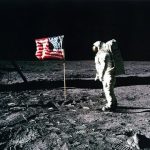
Historic Apollo 11 Moonwalk Footage
Starting at 10:38 p.m. EDT on July 20, 2019, NASA TV replayed the historic footage of the #Apollo11 Moonwalk in real time as it happened 50 years ago. Relive our #Apollo50th broadcast:
-
Historic Apollo 11 Moon Landing Footage
Join us for a trip down memory lane! Starting at 4:02 p.m. EDT on July 20, 2019, NASA TV replayed the original footage of the 1969 Moon landing. Relive the moment:
-
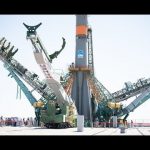
July 2019 Expedition 60 Crew Launch to the International Space Station
Fifty years to the day that humans stepped on the Moon in a giant leap for humanity, three space travelers are launching to our orbiting laboratory. NASA’s Andrew Morgan, Roscosmos’ Alexander Skvortsov and European Space Agency’s Luca Parmitano will launch at 12:28 p.m. EDT aboard the Soyuz MS-13 rocket for a six journey journey to the International Space Station. Tune in starting at 11:30 a.m. EDT to see launch coverage:
-
Fit for space – Soyuz training
In the first episode of our ‘Fit for space’ training series, ESA astronauts Samantha Cristoforetti and Luca Parmitano share how crewmembers prepare for their journey to the International Space Station in the Russian Soyuz spacecraft.
Training for the critical moments of Soyuz spaceflight – launch, ascent, docking and landing – take place at Roscosmos’ Gagarin Cosmonaut Training Centre (GCTC) in Star City, Russia. Here, astronauts use sophisticated Soyuz simulators to practice procedures and respond to emergency situations.
The Soyuz simulators at GCTC are designed to act and be operated in exactly the same way as the spacecraft itself. Astronauts must demonstrate their proficiency in manually controlling the Soyuz to prepare for the unlikely event that automated and ground-based operations fail.
They also prepare for emergency events that could occur onboard the International Space Station itself.
★ Subscribe: http://bit.ly/ESAsubscribe and click twice on the bell button to receive our notifications.
Check out our full video catalog: http://bit.ly/SpaceInVideos
Follow us on Twitter: http://bit.ly/ESAonTwitter
On Facebook: http://bit.ly/ESAonFacebook
On Instagram: http://bit.ly/ESAonInstagram
On Flickr: http://bit.ly/ESAonFlickrWe are Europe’s gateway to space. Our mission is to shape the development of Europe’s space capability and ensure that investment in space continues to deliver benefits to the citizens of Europe and the world. Check out http://www.esa.int/ESA to get up to speed on everything space related.
Copyright information about our videos is available here: http://www.esa.int/spaceinvideos/Terms_and_Conditions
#ESA
#LucaParmitano
#SamanthaCristoforetti -
Soyuz ride to the Space Station
The ride to the International Space Station sees astronauts launched on top of a rocket fuelled by 300 tonnes of propellant. Where on Earth do astronauts take off? When do they experience weightlessness for the first time? And how long does the trip take?
Watch in just over a minute the events from launch to docking. This video is based on a training lesson for ESA astronauts, and it features footage taken from inside the Soyuz spacecraft.
Watch the extended version: http://bit.ly/JourneyToISS
Credits: ESA/NASA/Roscosmos/Google Earth
★ Subscribe: http://bit.ly/ESAsubscribe and click twice on the bell button to receive our notifications.
Check out our full video catalog: http://bit.ly/SpaceInVideos
Follow us on Twitter: http://bit.ly/ESAonTwitter
On Facebook: http://bit.ly/ESAonFacebook
On Instagram: http://bit.ly/ESAonInstagram
On Flickr: http://bit.ly/ESAonFlickrWe are Europe’s gateway to space. Our mission is to shape the development of Europe’s space capability and ensure that investment in space continues to deliver benefits to the citizens of Europe and the world. Check out http://www.esa.int/ESA to get up to speed on everything space related.
Copyright information about our videos is available here: http://www.esa.int/spaceinvideos/Terms_and_Conditions
#ESA
#Soyuz
#InternationalSpaceStation -
We Go as the Artemis Generation
We Go: To the Moon and on to Mars. Our generation, the Artemis generation, will explore farther than we’ve ever gone before. The Artemis program will send the first woman and next man to walk on the surface of the Moon and build a sustainable base to prepare for missions to Mars and beyond.
-
NASA in Silicon Valley Live: Apollo 50th Anniversary Preview
#Apollo50th: Let’s talk about it! 🚀 Join us for an episode of NASA in Silicon Valley Live where we’ll discuss #Apollo11, the people who contributed to the mission and its impact on humanity. Tune in starting at 7 p.m. EDT:
-

Fifty Years of Apollo Technologies in Your Life
In 1969 when NASA astronauts took one small step on the lunar surface, the feat resulted in a giant leap forward in innovations for humanity. The many challenges NASA overcame on the way to the Moon led the agency and its partners to devise new inventions and techniques that spread into public life, and we are still reaping the benefits of those technology developments today. As with the many spinoffs from the Apollo era, the technologies we’re building for today’s missions to the Moon and on to Mars will transform our lives for generations to come.
Learn more about NASA technology transfer: https://spinoff.nasa.gov
-
The Moon camera
Which camera to send to the Moon? The iconic images taken with the Hasselblad 500 series captivated the world. Today, Hasselblad cameras are synonymous with the Apollo missions. We visited Gothenburg to find out how a Swedish camera made it to the Moon.
Learn more: http://bit.ly/BuzzAldrinAndTheEagle
★ Subscribe: http://bit.ly/ESAsubscribe and click twice on the bell button to receive our notifications.
Check out our full video catalog: http://bit.ly/SpaceInVideos
Follow us on Twitter: http://bit.ly/ESAonTwitter
On Facebook: http://bit.ly/ESAonFacebook
On Instagram: http://bit.ly/ESAonInstagram
On Flickr: http://bit.ly/ESAonFlickrWe are Europe’s gateway to space. Our mission is to shape the development of Europe’s space capability and ensure that investment in space continues to deliver benefits to the citizens of Europe and the world. Check out http://www.esa.int/ESA to get up to speed on everything space related.
Copyright information about our videos is available here: http://www.esa.int/spaceinvideos/Terms_and_Conditions
#ESA
#Apollo
#Hasselblad -
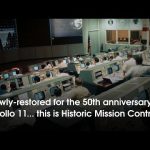
Mission Control at NASA Johnson Space Center: History and Restoration
“This is Mission Control, Houston.” From this legendary room, America conducted some of its most amazing space missions. This video montage captures the significance of the Historic Mission Control Center at the NASA Johnson Space Center, which has undergone a massive restoration to bring the room back to life as it appeared during the Apollo era. Historians and technicians have made every effort to ensure historical accuracy and to preserve this room for future generations. As NASA looks to send humans deeper into space than ever before with the Artemis Program, Historic Mission Control will serve as a reminder that anything is possible.
News release: https://go.nasa.gov/30eykLm
Download this video: https://images.nasa.gov/details-jsc2019m000564_HistoricMissionControl_FB_MP4.html -
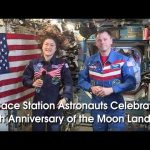
NASA Astronauts Celebrate the 50th Anniversary of the Moon Landing On Board the Space Station
NASA Astronauts Christina Koch and Nick Hague join the world in celebrating the 50th anniversary of the Apollo 11 Moon landing — only, they do it from around 250 miles (~400 km) above the Earth’s surface on board the International Space Station.
The accomplishments of the Apollo program did not only take humans farther than ever before, but they have prepared us to take humans even farther. Learn more about our plans to bring humans to the Moon, Mars and beyond with our Artemis program: https://www.nasa.gov/specials/moon2mars/
-
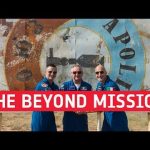
The Beyond mission
ESA astronaut Luca Parmitano is about to be launched to the International Space Station from the Baikonur Cosmodrome in Kazakhstan.
The six-month Beyond mission will be the Italian astronaut’s second flight to the Space Station.
He will be conducting an extensive series of scientific experiments and has multiple spacewalks planned to repair the antimatter hunter Alpha Magnetic Spectrometer-02. During the second half of his expedition, Luca will become the third European commander of the Space Station.
Follow Luca’s Beyond Mission: http://bit.ly/ESALucaParmitano
★ Subscribe: http://bit.ly/ESAsubscribe and click twice on the bell button to receive our notifications.
Check out our full video catalog: http://bit.ly/SpaceInVideos
Follow us on Twitter: http://bit.ly/ESAonTwitter
On Facebook: http://bit.ly/ESAonFacebook
On Instagram: http://bit.ly/ESAonInstagram
On Flickr: http://bit.ly/ESAonFlickrWe are Europe’s gateway to space. Our mission is to shape the development of Europe’s space capability and ensure that investment in space continues to deliver benefits to the citizens of Europe and the world. Check out http://www.esa.int/ESA to get up to speed on everything space related.
Copyright information about our videos is available here: http://www.esa.int/spaceinvideos/Terms_and_Conditions
#ESA
#LucaParmitano
#MissionBeyond -
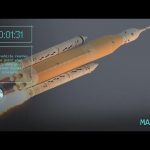
A Virtual Glimpse into our Artemis 1 Mission on This Week @NASA – July 12, 2019
A virtual glimpse into our Artemis 1 mission, a key piece of hardware arrives for our Orion spacecraft, and a testing milestone for our Space Launch System rocket.
This video is available for download from NASA’s Image and Video Library: https://images.nasa.gov/details-NHQ_2019_0712_A%20Virtual%20Glimpse%20into%20our%20Artemis%201%20Mission%20on%20This%20Week%20@NASA%20%E2%80%93%20July%2012,%202019.html
-

Preparing for the Beyond mission
On 20 July 2019, our astronaut Luca Parmitano will be launched to the International Space Station from the Baikonur Cosmodrome in Kazakhstan.
He will fly to the Station alongside Russian Cosmonaut Alexander Skvortsov and US Astronaut Andrew Morgan in a Russian Soyuz MS-13 spacecraft.
Named ‘Beyond’, this is Luca’s second space mission since joining our Astronaut Corps in 2009.
Follow Luca’s Beyond Mission: http://bit.ly/ESALucaParmitano
★ Subscribe: http://bit.ly/ESAsubscribe and click twice on the bell button to receive our notifications.
Check out our full video catalog: http://bit.ly/SpaceInVideos
Follow us on Twitter: http://bit.ly/ESAonTwitter
On Facebook: http://bit.ly/ESAonFacebook
On Instagram: http://bit.ly/ESAonInstagram
On Flickr: http://bit.ly/ESAonFlickrWe are Europe’s gateway to space. Our mission is to shape the development of Europe’s space capability and ensure that investment in space continues to deliver benefits to the citizens of Europe and the world. Check out http://www.esa.int/ESA to get up to speed on everything space related.
Copyright information about our videos is available here: http://www.esa.int/spaceinvideos/Terms_and_Conditions
#ESA
#LucaParmitano
#MissionBeyond -
How to survive on another planet with Lucie Poulet | Space Bites
Plans for human space exploration in the next decades are to leave Earth orbit and go to destinations such as the Moon and Mars. But what are the challenges associated with human survival in space and what kind of research is needed to address these challenges?
Life-support systems expert Lucie Poulet participated in four Mars analogue missions as a crew member and has over eight years of experience working on regenerative life-support systems with various groups such as the Micro-Ecological Life-Support System Alternative (MELiSSA) project and the German Aerospace Center, DLR, in Bremen, Germany.
Space Bites hosts the best talks on space exploration from the most inspiring and knowledgeable speakers from the field. Held at the technical heart of the European Space Agency in The Netherlands, the lectures illustrate challenges of space.
To know more about the exploration of the Moon visit http://lunarexploration.esa.int
★ Subscribe: http://bit.ly/ESAsubscribe and click twice on the bell button to receive our notifications.
Check out our full video catalog: http://bit.ly/SpaceInVideos
Follow us on Twitter: http://bit.ly/ESAonTwitter
On Facebook: http://bit.ly/ESAonFacebook
On Instagram: http://bit.ly/ESAonInstagram
On Pinterest: https://bit.ly/ESAonPinterest
On Flickr: http://bit.ly/ESAonFlickrWe are Europe’s gateway to space. Our mission is to shape the development of Europe’s space capability and ensure that investment in space continues to deliver benefits to the citizens of Europe and the world. Check out https://www.esa.int/ to get up to speed on everything space related.
Copyright information about our videos is available here: https://www.esa.int/ESA_Multimedia/Terms_and_Conditions
#ESA
#SpaceBites
#MELiSSA -

Meet SpaceBok
Astronauts on the Moon found themselves hopping around, rather than simply walking. Switzerland’s SpaceBok planetary exploration robot has followed their example, launching all four legs off the ground during tests at our technical heart.
SpaceBokis a quadruped robot designed and built by a Swiss student team from ETH Zurich and ZHAW Zurich, currently being tested using Automation and Robotics Laboratories (ARL) facilities at our technical centre in the Netherlands. The robot is being used to investigate the potential of ‘dynamic walking’ and jumping to get around in low gravity environments.
SpaceBok could potentially go up to 2 m high in lunar gravity, although such a height poses new challenges. Once it comes off the ground the legged robot needs to stabilise itself to come down again safely – like a mini-spacecraft.So, like a spacecraft. SpaceBok uses a reaction wheel to control its orientation
Learn more: http://bit.ly/JumpingSpaceRobotFliesLikeASpacecraft
Credit: ETH Zurich/ZHAW Zurich/ESA
★ Subscribe: http://bit.ly/ESAsubscribe and click twice on the bell button to receive our notifications.
Check out our full video catalog: http://bit.ly/SpaceInVideos
Follow us on Twitter: http://bit.ly/ESAonTwitter
On Facebook: http://bit.ly/ESAonFacebook
On Instagram: http://bit.ly/ESAonInstagram
On Flickr: http://bit.ly/ESAonFlickrWe are Europe’s gateway to space. Our mission is to shape the development of Europe’s space capability and ensure that investment in space continues to deliver benefits to the citizens of Europe and the world. Check out http://www.esa.int/ESA to get up to speed on everything space related.
Copyright information about our videos is available here: http://www.esa.int/spaceinvideos/Terms_and_Conditions
#ESA
#SpaceBok
#Robotics -
A Successful Milestone Test for Our Artemis Program on This Week @NASA – July 5, 2019
A milestone test for our Artemis Program, an update on our Commercial Lunar Payload Services project, and more honors for a NASA icon … a few of the stories to tell you about – This Week at NASA!
This video is available for download from NASA’s Image and Video Library: https://images.nasa.gov/details-NHQ_2019_0705_A%20Successful%20Milestone%20Test%20for%20Our%20Artemis%20Program%20on%20This%20Week%20@NASA%20%E2%80%93%20July%205,%202019.html
-
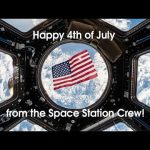
Happy 4th of July from the Space Station Crew
Aboard the International Space Station, Expedition 60 Flight Engineers Nick Hague and Christina Koch of NASA honored America’s 243rd birthday by wishing Americans at home and around the world a happy 4th of July.
Learn more about the research on board our orbiting laboratory: https://www.nasa.gov/mission_pages/station/main/index.html
-

Launch of Orion Spacecraft Ascent Abort-2 Test
Watch a fully functional launch abort system (LAS) and test Orion spacecraft launch to an altitude of 31,000 feet at Mach 1.15 (more than 1,000 mph)! On July 2, 2019, NASA successfully demonstrated the Orion spacecraft’s launch abort system can outrun a speeding rocket and pull astronauts to safety during an emergency during launch. News release: https://go.nasa.gov/2Xg7mkJ Orion was launched atop a Northrop Grumman provided booster from Launch Pad 46 at Cape Canaveral Air Force Station in Florida. The test is another milestone in the agency’s preparation for Artemis missions to the Moon that will lead to astronaut missions to Mars.
-

Earth from space: Gulf of Taranto
Copernicus Sentinel-2 takes us over the Gulf of Taranto, located on the inner heel of southern Italy, in this week’s edition of the Earth from Space programme.
Download the image: https://www.esa.int/spaceinimages/Images/2019/06/Gulf_of_Taranto_Italy
★ Subscribe: http://bit.ly/ESAsubscribe and click twice on the bell button to receive our notifications.
Check out our full video catalog: http://bit.ly/SpaceInVideos
Follow us on Twitter: http://bit.ly/ESAonTwitter
On Facebook: http://bit.ly/ESAonFacebook
On Instagram: http://bit.ly/ESAonInstagram
On Flickr: http://bit.ly/ESAonFlickrWe are Europe’s gateway to space. Our mission is to shape the development of Europe’s space capability and ensure that investment in space continues to deliver benefits to the citizens of Europe and the world. Check out http://www.esa.int/ESA to get up to speed on everything space related.
Copyright information about our videos is available here: http://www.esa.int/spaceinvideos/Terms_and_Conditions
#ESA
#EarthFromSpace
#Taranto -
Hera: Our planetary defence mission
Hera will show us things we’ve never seen before. Astrophysicist and Queen guitarist Brian May tells the story of our mission that would be humanity’s first-ever spacecraft to visit a double asteroid.
The asteroid system – named Didymos – is typical of the thousands that pose an impact risk to our planet, and even the smaller of the two would be big enough to destroy an entire city if it were to collide with Earth.
Hera will help us to find out if it would be possible to deflect such an asteroid on a collision course with Earth. The mission will revolutionise our understanding of asteroids and how to protect ourselves from them, and therefore could be crucial for saving our planet.
First, NASA will crash its DART spacecraft into the smaller asteroid – known as Didymoon – before Hera comes in to map the resulting impact crater and measure the asteroid’s mass. Hera will carry two CubeSats on board, which will be able to fly much closer to the asteroid’s surface, carrying out crucial scientific studies, before touching down. Hera’s up-close observations will turn asteroid deflection into a well-understood planetary defence technique.
The Hera mission will be presented to our Space19+ meeting this November, where Europe’s space ministers will take a final decision on flying the mission, as part of the Agency’s broader planetary defence initiatives that aim to protect European and world citizens.
Learn more about Hera: http://bit.ly/ESAHera
Copyright: ESA – Science Office
★ Subscribe: http://bit.ly/ESAsubscribe and click twice on the bell button to receive our notifications.
Check out our full video catalog: http://bit.ly/SpaceInVideos
Follow us on Twitter: http://bit.ly/ESAonTwitter
On Facebook: http://bit.ly/ESAonFacebook
On Instagram: http://bit.ly/ESAonInstagram
On Flickr: http://bit.ly/ESAonFlickrWe are Europe’s gateway to space. Our mission is to shape the development of Europe’s space capability and ensure that investment in space continues to deliver benefits to the citizens of Europe and the world. Check out http://www.esa.int/ESA to get up to speed on everything space related.
Copyright information about our videos is available here: http://www.esa.int/spaceinvideos/Terms_and_Conditions
#ESA
#PlanetaryDefense
#HERAmission -
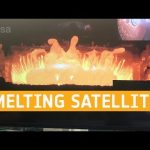
Melting a piece of a satellite
Researchers took one of the heaviest, bulkiest parts of an Earth-orbiting satellite, placed it in a plasma wind tunnel, then proceeded to melt it into vapour. Their goal was to better understand how satellites burn up during reentry, to minimise the risk of endangering anyone on the ground.
Taking place as part of our Clean Space initiative, the fiery testing occurred inside a plasma wind tunnel, reproducing reentry conditions, at the DLR German Aerospace Center’s site in Cologne.
A magnetotorquer – designed to interact magnetically with Earth’s magnetic field to shift satellite orientation – was heated to several thousands of degrees C within the hypersonic plasma.As part of a larger effort called CleanSat, we are developing technologies and techniques to ensure future low-orbiting satellites are designed according to the concept of ‘D4D’ – design for demise – ensuring they will burn up entirely when they reenter the atmosphere.
Credit: ESA/DLR/Belstead Research
Learn more: http://bit.ly/MeltingASatelliteAPieceAtATime
★ Subscribe: http://bit.ly/ESAsubscribe and click twice on the bell button to receive our notifications.
Check out our full video catalog: http://bit.ly/SpaceInVideos
Follow us on Twitter: http://bit.ly/ESAonTwitter
On Facebook: http://bit.ly/ESAonFacebook
On Instagram: http://bit.ly/ESAonInstagram
On Flickr: http://bit.ly/ESAonFlickrWe are Europe’s gateway to space. Our mission is to shape the development of Europe’s space capability and ensure that investment in space continues to deliver benefits to the citizens of Europe and the world. Check out http://www.esa.int/ESA to get up to speed on everything space related.
Copyright information about our videos is available here: http://www.esa.int/spaceinvideos/Terms_and_Conditions
#ESA
#Melting
#CleanSpace -
NASA in Silicon Valley Live: Moon 2024
Our greatest adventures remain ahead of us as our #Artemis program will send the first woman and next man to the Moon in five years! Join us at 6 p.m. EDT for a new episode of NASA in Silicon Valley Live to learn about our plans to explore the lunar surface and eventually send humans to Mars.
-

NASA Explorers: Giant Leaps
What does a half-century of lunar science sound like? Join Moon data expert Ernie Wright on a musical time-traveling journey through the Apollo program and the exploration era of today. We explore what we knew about the Moon before Apollo, what we discovered because of it and the mysteries today’s scientists are working to solve.
Elena, from Nantes, France, shares her memory of watching the Apollo 11 landing from a friend’s house in Seattle.
You can find the series, soundtrack, artwork, and more here: https://www.nasa.gov/nasa-explorers-apollo
Join the NASA Explorers community on Facebook: https://www.facebook.com/NASAExplorersSeries/
Credit: NASA’s Goddard Space Flight Center
Katie Atkinson (GSFC Interns): Narrator
Katie Atkinson (GSFC Interns): Producer
Haley Reed (ADNET): Producer
Micheala Sosby (NASA/GSFC): Producer
Aaron E. Lepsch (ADNET): Technical SupportData sonification by SYSTEM Sounds/Matt Russo and Andrew Santaguida
Music by Lee Rosevere and Daniel WyantisThis video is public domain and along with other supporting visualizations can be downloaded from the Scientific Visualization Studio at: https://svs.gsfc.nasa.gov/13204
-
Introducing NASA Explorers: Apollo, an Audio Series
NASA Explorers: Apollo is an audio series that tells stories of the Moon and the people who explore it. During the Apollo program, the Moon became a part of the human domain. Twelve astronauts walked on the lunar surface, conducted research there and collected Moon rocks to bring back to Earth for study. Fifty years after humanity’s first steps on the Moon, today’s lunar scientists are searching for answers to the big questions: How did the Moon form? How did our solar system evolve? Did the Moon help life on Earth get its start?
Meet a Moon detective, scientists who study space rocks and people from all over the world whose lives were shaped by the epic adventures of the Apollo program. You can listen to NASA Explorers: Apollo on Apple Podcasts, SoundCloud, Google Play and Facebook Watch.
You can find the series, soundtrack, artwork, and more here: https://www.nasa.gov/nasa-explorers-apollo
Join the NASA Explorers community on Facebook: https://www.facebook.com/NASAExplorersSeries/
Credit: NASA’s Goddard Space Flight Center
Kaliah Hobbs (GSFC Interns): Lead Producer
Haley Reed (ADNET): Lead Producer
Katie Atkinson (GSFC Interns): Narrator
Katie Atkinson (GSFC Interns): Producer
Micheala Sosby (NASA/GSFC): Producer
Aaron E. Lepsch (ADNET): Technical SupportMusic credits: “Tycho’s Daydream” by Daniel Wyantis
This video is public domain and along with other supporting visualizations can be downloaded from the Scientific Visualization Studio at: https://svs.gsfc.nasa.gov/13204
-

Administrator Bridenstine Discusses Our Artemis Program on This Week @NASA – June 14, 2019
The latest about our Artemis program, an astronaut shares her story with students, and another record-breaking maneuver by one or our spacecraft … a few of the stories to tell you about – This Week at NASA!
This video is available for download from NASA’s Image and Video Library: https://images.nasa.gov/details-NHQ_2019_0614_Administrator%20Bridenstine%20Discusses%20Our%20Artemis%20Program%20on%20This%20Week%20@NASA%20%E2%80%93%20June%2014,%202019.html
-

Earth from space: East Bali
The Copernicus Sentinel-2 mission takes us over East Bali, in this week’s edition of the Earth from Space programme.
Download the image: https://www.esa.int/spaceinimages/Images/2019/06/East_Bali_Indonesia
★ Subscribe: http://bit.ly/ESAsubscribe and click twice on the bell button to receive our notifications.
Check out our full video catalog: http://bit.ly/SpaceInVideos
Follow us on Twitter: http://bit.ly/ESAonTwitter
On Facebook: http://bit.ly/ESAonFacebook
On Instagram: http://bit.ly/ESAonInstagram
On Flickr: http://bit.ly/ESAonFlickrWe are Europe’s gateway to space. Our mission is to shape the development of Europe’s space capability and ensure that investment in space continues to deliver benefits to the citizens of Europe and the world. Check out http://www.esa.int/ESA to get up to speed on everything space related.
Copyright information about our videos is available here: http://www.esa.int/spaceinvideos/Terms_and_Conditions
#ESA
#EarthFromSpace
#Bali -

A Sign of Progress: Honoring NASA’s Hidden Figures
Thanks to new signage, visitors to NASA Headquarters in Washington, D.C. will be reminded of the contributions of the “hidden figures” essential to the success of early spaceflight. The renaming honors Katherine Johnson, Dorothy Vaughan, and Mary Jackson, who were featured in Margot Lee Shetterly’s book – and the movie – Hidden Figures, as well as all women who honorably serve their country, advancing equality, and contributing to the United States space program. News release: https://go.nasa.gov/HiddenFiguresWay
On June 12, Administrator Jim Bridenstine joined U.S. Senator Ted Cruz of Texas, D.C. Council Chairman Phil Mendelson and author Margot Lee Shetterly for the renaming of the street in front of NASA Headquarters in Washington – E Street SW – to “Hidden Figures Way.”
Learn about NASA’s hidden and modern figures: https://www.nasa.gov/modernfigures
-
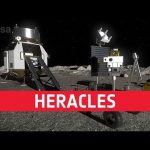
Heracles
Overview of the Heracles mission. We are leading an alliance of international space agencies to prepare a robotic mission to the Moon to retrieve samples and return them to Earth.
The video shows a launch on an Ariane 6 rocket, separation from the rocket boosters over Earth and a transfer to the Moon.
The Heracles lander will target a previously unexplored region near the lunar South Pole as an interesting area for researchers. A lander with a rover inside and ascent module on top will land there.
Monitored and controlled from the lunar Gateway, the rover will scout the terrain in preparation for the future arrival of astronauts, and collect samples.
The ascent module will take off from the surface and fly to the Gateway with the samples taken by the rover.
When the ascent module carrying the sample container arrives, the Gateway’s robotic arm will capture it and extract the sample container. The sample container will be received by the astronauts via a science airlock and pack it in NASA’s Orion spacecraft that is powered by the European Service Module.
Orion will fly to Earth with astronauts and land with the Heracles lunar samples for analysis in the best laboratories on Earth.
Other goals of the mission include testing new hardware, demonstrating technology and gaining experience in operations while strengthening international partnerships in exploration. Its development will provide an Ariane 64-based lunar cargo lander available for commercialisation by European and partners’ industry.
Heracles is an international programme to use the Gateway to the fullest and deliver samples to scientists on Earth using new technology that is more capable and lighter than previous missions.
Credits: ESA – Ducros – ATG/medialab
★ Subscribe: http://bit.ly/ESAsubscribe and click twice on the bell button to receive our notifications.
Check out our full video catalog: http://bit.ly/SpaceInVideos
Follow us on Twitter: http://bit.ly/ESAonTwitter
On Facebook: http://bit.ly/ESAonFacebook
On Instagram: http://bit.ly/ESAonInstagram
On Flickr: http://bit.ly/ESAonFlickrWe are Europe’s gateway to space. Our mission is to shape the development of Europe’s space capability and ensure that investment in space continues to deliver benefits to the citizens of Europe and the world. Check out http://www.esa.int/ESA to get up to speed on everything space related.
Copyright information about our videos is available here: http://www.esa.int/spaceinvideos/Terms_and_Conditions
#ESA
#Gateway
#Heracles -
Opening the International Space Station for Commercial Business on This Week @NASA – June 7, 2019
The International Space Station is open for commercial business, another space station resupply mission successfully completed, and making a virtual landing on the Moon … a few of the stories to tell you about – This Week at NASA!
This video is available for download from NASA’s Image and Video Library: https://images.nasa.gov/details-NHQ_2019_0607_Opening%20the%20International%20Space%20Station%20for%20Commercial%20Business%20on%20This%20Week%20@NASA%20%E2%80%93%20June%207,%202019.html
-
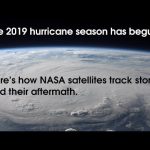
How NASA Earth Satellites Track Hurricanes
NASA has a unique and important view of hurricanes around the planet. Satellites and aircraft watch as storms form, travel across the ocean and sometimes, make landfall. After the hurricanes have passed, the satellites and aircraft see the aftermath of hurricanes, from downed forests to mass power loss. Complete transcript available.
Music credit: “Northern Breeze” by Denis Levaillant [SACEM], “Stunning Horizon” by Maxime Lebidois [SACEM], Ronan Maillard [SACEM], “Magnetic Force” by JC Lemay [SACEM] from Killer Tracks
This video is public domain and along with other supporting visualizations can be downloaded from the Scientific Visualization Studio at: http://svs.gsfc.nasa.gov/13216
Credit: NASA’s Goddard Space Flight Center/Joy Ng
-
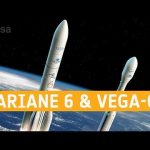
A new generation of European Launch Vehicles
We strive for the future of Europe in space and key to this endeavour is maintaining access to space.
This objective is accomplished by supporting the development of new launch vehicles and next year will be an important year: Vega-C and Ariane 6 will fly for the first time.
Vega-C is an enhanced version of Europe’s current Vega, with increased power and capacity.
Ariane 6 is Europe’s next heavy-lift launcher which will replace Ariane 5. With Ariane 6 the approach is evolving for the assembly and production processes, and also in the sharing of responsibilities between us and Industry.
In parallel to preparing a new generation of launchers, we are also working on its first reusable spacecraft, Space Rider, that will fly on top of a Vega-C and which should be confirmed at Space19+, the Ministerial Conference in Seville in November 2019.
Already, the future of European Space transportation is clearly visible in Kourou where Vega-C and Ariane 6 are step-by-step becoming a reality.
★ Subscribe: http://bit.ly/ESAsubscribe and click twice on the bell button to receive our notifications.
Check out our full video catalog: http://bit.ly/SpaceInVideos
Follow us on Twitter: http://bit.ly/ESAonTwitter
On Facebook: http://bit.ly/ESAonFacebook
On Instagram: http://bit.ly/ESAonInstagram
On Flickr: http://bit.ly/ESAonFlickrWe are Europe’s gateway to space. Our mission is to shape the development of Europe’s space capability and ensure that investment in space continues to deliver benefits to the citizens of Europe and the world. Check out http://www.esa.int/ESA to get up to speed on everything space related.
Copyright information about our videos is available here: http://www.esa.int/spaceinvideos/Terms_and_Conditions
#ESA
#Ariane6
#VegaC -
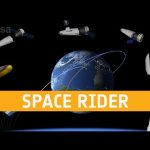
Space Rider animation
This animation shows the launch of our reusable lifting body called Space Rider atop Vega-C.
On reaching low-Earth orbit, Space Rider will serve as an unmanned high-tech space laboratory operating for periods longer than two months. It offers an array of orbit altitudes and inclinations for a large variety of experiments and demonstrations in microgravity.
After each mission Space Rider will return to Earth to land on ground to return its cargo before minimal refurbishment for its next mission.
More info about Space Rider: https://bit.ly/ESASpaceRider
★ Subscribe: http://bit.ly/ESAsubscribe and click twice on the bell button to receive our notifications.
Check out our full video catalog: http://bit.ly/SpaceInVideos
Follow us on Twitter: http://bit.ly/ESAonTwitter
On Facebook: http://bit.ly/ESAonFacebook
On Instagram: http://bit.ly/ESAonInstagram
On Flickr: http://bit.ly/ESAonFlickrWe are Europe’s gateway to space. Our mission is to shape the development of Europe’s space capability and ensure that investment in space continues to deliver benefits to the citizens of Europe and the world. Check out http://www.esa.int/ESA to get up to speed on everything space related.
Copyright information about our videos is available here: http://www.esa.int/spaceinvideos/Terms_and_Conditions
#ESA
#SpaceRider
#Rocket -

NASA Explorers: Cryo Kids
#NASAExplorers come in all ages! In this week’s bonus episode, we headed back to Alaska to check in with some of our tiniest Explorers. They’re following in the scientists’ footsteps, working with NASA’s GLOBE program to measure when and where snow and ice are freezing. Plus, stick around for a thank you message from our scientists to the young Explorers collecting their data.
Learn more about GLOBE and the work of student scientists around the planet: https://www.globe.gov/
-

Sunset Timelapse from the International Space Station
Enjoy this sped-up Earth view, captured by the Expedition 59 astronauts currently onboard the International Space Station. The station orbits the Earth every 90 minutes — meaning this sunset you see is actually one of 16 the station residents see each day!