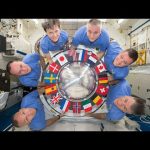
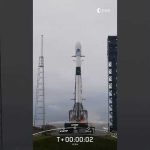
The 31st SpaceX commercial resupply mission to the International Space Station lifted off on a Falcon 9 rocket from our Kennedy Space Center in Florida at 9:29 p.m. EST, Monday, Nov. 4 (0229 UTC, Tuesday, Nov. 5), delivering science investigations, supplies, and holiday food to the orbiting lab.
SpaceX’s Dragon spacecraft carried several new experiments to the station, including the Coronal Diagnostic Experiment, to examine solar wind and how it forms. Dragon also delivered Antarctic moss to observe the combined effects of cosmic radiation and microgravity on plants. Other investigations include a device to test cold welding of metals in microgravity and an investigation that studies how space impacts different materials.
1️⃣ Space near Mercury is HOT. Sending a spacecraft there is a bit like asking a laptop to work inside a hot pizza oven! Some spacecraft have gotten close to Mercury but none have remained in this scorching heat continuously. This means we still don’t have high-resolution data covering Mercury’s entire surface.
2️⃣ It’s difficult to observe from Earth: Because Mercury is very close to the Sun, when we try to look at it from Earth, it’s often lost in the Sun’s glare.
3️⃣ It’s hard to reach: Mercury is not that far, but according to some estimates, it would take less energy to get to Pluto than to get to Mercury. The Sun’s strong gravitational pull means that spacecraft need to use a lot of energy to slow down enough to orbit Mercury.
But our BepiColombo mission, will help us learn a lot more about Mercury when it enters into orbit in 2026! It’s the most advanced spacecraft ever sent to Mercury. It will help us answer many questions, such as: Why is there ice in the polar craters of the scorched planet? And what are the mysterious ‘hollows’ on its surface?
This interactive Q&A will explore how NASA’s cutting-edge technology and research are helping to combat climate change and to develop solutions for a greener planet.
In this mosaic image stretching 340 light-years across, Webb’s Near-Infrared Camera (NIRCam) displays the Tarantula Nebula star-forming region in a new light, including tens of thousands of never-before-seen young stars that were previously shrouded in cosmic dust. The most active region appears to sparkle with massive young stars, appearing pale blue. Scattered among them are still-embedded stars, appearing red, yet to emerge from the dusty cocoon of the nebula. NIRCam is able to detect these dust-enshrouded stars thanks to its unprecedented resolution at near-infrared wavelengths.
📹 ESA – European Space Agency 📸 NASA, ESA, CSA, and STScI, N. Bartmann 🎶 Haunted House – Goosebumps
In mythology, centaurs are half-human, half-horse creatures, but in space, they’re celestial objects orbiting the Sun between Jupiter and Neptune.
Centaurs are “hybrid” objects in the sense that they share characteristics with trans-Neptunian objects from the Kuiper Belt reservoir and short-period comets. A team of scientists used the James Web Telescope to study Centaur 29P.
While data from previous observations of Centaur 29P showed a carbon monoxide (CO) gas jet pointed toward Earth, Webb parsed the jet’s composition in greater detail, and also detected multiple never-before-seen features of the centaur: two jets of carbon dioxide (CO2) emanating in the north and south directions, and another jet of CO pointing toward the north.
Centaur 29P’s different CO and CO2 abundances suggest that the body may be composed of different pieces that coalesced together during its formation. However, other scenarios to explain Centaur 29P’s outgassing activity are still being considered.
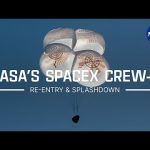
Watch Crew-8 return to Earth, concluding their mission to the International Space Station. Their SpaceX Dragon spacecraft is scheduled for splashdown off the coast of Florida on Friday, Oct. 25 at approximately 3:29 a.m. EDT (0729 UTC).
NASA astronauts Michael Barratt, Matthew Dominick, and Jeanette Epps and Roscosmos cosmonaut Alexander Grebenkin are coming home after seven months aboard the orbiting lab, conducting scientific experiments and technology demonstrations.
Astronauts Butch Wilmore and Suni Williams, who launched to the station aboard NASA’s Boeing Crew Flight Test (CFT) this summer, will return to Earth with the two members of NASA’s SpaceX Crew-9 mission in the spring of 2025. Learn more about CFT: https://nasa.gov/starliner-faq
In 2022 NASA’s DART spacecraft made history, and changed the Solar System forever, by impacting the Dimorphos asteroid and measurably shifting its orbit around the larger Didymos asteroid. In the process a plume of debris was thrown out into space.
The latest modelling, available on the preprint server arXiv and accepted for publication in the September volume of The Planetary Science Journal, shows how small meteoroids from that debris could eventually reach both Mars and Earth – potentially in an observable (although quite safe) manner.
Aurelia works on VR experiences that recreate locations in space.
Sometimes, her work takes her beyond the office. Recently, Aurelia attended Gamescom , the world’s biggest video game event, where her team showcased MUSE, a VR project she helped design!
NASA+ is our ad-free, no cost, family-friendly streaming service, featuring NASA’s Emmy-award-winning live coverage and new, original video series: https://plus.nasa.gov
Our fall 2024 lineup includes: “The Color of Space,” “Other Worlds,” “Far Out,” “An Ocean in Bloom,” “Expanding Universe,” “Space Out,” “Planetary Defenders,” and “Our Alien Earth.”
NASA+ is available on most major platforms via the NASA App on iOS and Android mobile and tablet devices, streaming media players such as Roku, Apple TV, and Fire TV, and on the web across desktop and mobile devices.
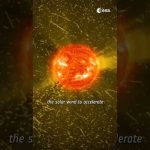
Fast’ solar wind moves with speeds above 500 km/s. Curiously, this wind exits the Sun’s corona with lower speeds, so something speeds it up as it moves farther away. The million-degree wind naturally cools down as it expands into a larger volume and becomes less dense, much like the air on Earth as you climb a mountain. And yet, it cools more slowly than expected from this effect alone.
So, what provides the necessary energy to accelerate and heat the fastest parts of the solar wind?
Data from our Solar Orbiter and NASA’s Parker Solar Probe have provided conclusive evidence that the answer is large-scale oscillations in the Sun’s magnetic field, known as Alfvén waves.
Discover the first page of ESA Euclid’s great cosmic atlas and marvel at millions of stars and galaxies captured in pristine detail, in a huge 208-gigapixel mosaic. The mosaic covers an area of the Southern Sky more than 500 times the area of the full Moon as seen from Earth.
This video takes you through a rare sky dive. Starting from a vast cosmic panorama bedazzled by some 14 million galaxies, a series of ever-deeper zooms brings you to a crisp view of a swirling spiral galaxy, in a final image enlarged 600 times compared to the full mosaic.
Although the scenes are enticing, they are not taken for their beauty, but to help us advance our understanding of the cosmos. Many of the 14 million galaxies in the initial vista will be used to study the hidden influence of dark matter and dark energy on the Universe.
Unveiled as a teaser of the wide survey, the mosaic accounts for 1% of the area that Euclid will cover over six years, and was obtained by combining 260 observations collected in just two weeks.
This first chunk of Euclid’s survey was revealed on 15 October 2024 at the International Astronautical Congress in Milan, Italy, by ESA’s Director General Josef Aschbacher and Director of Science Carole Mundell.
————————————————— Copyright: ESA/Euclid/Euclid Consortium/NASA, CEA Paris-Saclay, image processing by J.-C. Cuillandre, E. Bertin, G. Anselmi; ESA/Gaia/DPAC; ESA/Planck Collaboration —————————————————
★ Subscribe: http://bit.ly/ESAsubscribe and click twice on the bell button to receive our notifications.
We are Europe’s gateway to space. Our mission is to shape the development of Europe’s space capability and ensure that investment in space continues to deliver benefits to the citizens of Europe and the world. Check out https://www.esa.int/ to get up to speed on everything space related.
“New things are possible—more things are possible—because we are going together. And we’re going together, as nations, now more than ever before.”
NASA Administrator Bill Nelson speaks to the power, the promise, and the potential of NASA’s international partnerships, and how those partnerships help humanity reach new possibilities.
Credit: NASA Producer: Shane Apple Music: Universal Production Music
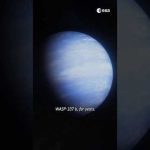
Data collected using the NASA/ESA/CSA James Webb Space Telescope, combined with earlier observations from the NASA/ESA Hubble Space Telescope, show surprisingly little methane (CH4) in the atmosphere of WASP-107 b, indicating that the interior of the planet must be significantly hotter and the core much more massive than previously estimated.
📹 ESA – European Space Agency 📸 NASA, ESA, CSA, R. Crawford
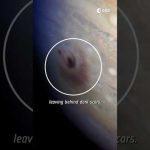
In 2013, our Herschel telescope solved the mystery of water in Jupiter’s upper atmosphere, tracing it back to the impact of comet Shoemaker-Levy 9 in July 1994.
This finding paved the way for our Juice mission, set to reach Jupiter in 2031. Juice’s observations will give us a better chance of understanding how Jupiter’s atmosphere responds to such events.
ESA’s Hera mission lifted off on a SpaceX Falcon 9 from Cape Canaveral Space Force Station in Florida, USA, on 7 October at 10:52 local time (16:52 CEST, 14:52 UTC).
Hera is ESA’s first planetary defence mission. It will fly to a unique target among the 1.3 million asteroids in our Solar System – the only body to have had its orbit shifted by human action – to solve lingering unknowns associated with its deflection.
Hera will carry out the first detailed survey of a ‘binary’ – or double-body – asteroid, 65803 Didymos, which is orbited by a smaller body, Dimorphos. Hera’s main focus will be Dimorphos, whose orbit around the main body was previously altered by NASA’s kinetic-impacting DART spacecraft.
By sharpening scientific understanding of this ‘kinetic impact’ technique of asteroid deflection, Hera should turn the experiment into a well-understood and repeatable technique for protecting Earth from an asteroid on a collision course.
We are Europe’s gateway to space. Our mission is to shape the development of Europe’s space capability and ensure that investment in space continues to deliver benefits to the citizens of Europe and the world. Check out https://www.esa.int/ to get up to speed on everything space related.
ESA’s Hera mission lifted off on a SpaceX Falcon 9 from Cape Canaveral Space Force Station in Florida, USA, on 7 October at 10:52 local time (16:52 CEST, 14:52 UTC).
Hera is ESA’s first planetary defence mission. It will fly to a unique target among the 1.3 million asteroids in our Solar System – the only body to have had its orbit shifted by human action – to solve lingering unknowns associated with its deflection.
Hera will carry out the first detailed survey of a ‘binary’ – or double-body – asteroid, 65803 Didymos, which is orbited by a smaller body, Dimorphos. Hera’s main focus will be Dimorphos, whose orbit around the main body was previously altered by NASA’s kinetic-impacting DART spacecraft.
By sharpening scientific understanding of this ‘kinetic impact’ technique of asteroid deflection, Hera should turn the experiment into a well-understood and repeatable technique for protecting Earth from an asteroid on a collision course.
————————————————— 📸 ESA – S. Corvaja Copyright: ESA/SpaceX —————————————————
★ Subscribe: http://bit.ly/ESAsubscribe and click twice on the bell button to receive our notifications.
We are Europe’s gateway to space. Our mission is to shape the development of Europe’s space capability and ensure that investment in space continues to deliver benefits to the citizens of Europe and the world. Check out https://www.esa.int/ to get up to speed on everything space related.
Hera, ESA’s first planetary defence mission, is headed to space.
Hera will fly to a unique target among the 1.3 million known asteroids of our Solar System – the first body to have had its orbit shifted by human action – to probe lingering unknowns related to its deflection.
————————————————— Credits: ESA/SpaceX ————————————————— Chapters: 00:00 Start of ESA WebTV programme – live from ESA’s European Space Operations Centre in Darmstadt, Germany 18:30 SpaceX live broadcast begins 36:15 Hera lift-off 1:53:00 – Hera separates from Falcon 9 launcher: End of SpaceX live broadcast, ESA WebTV programme continues 1:57:20 Acquisition of the first signals from the Hera spacecraft 2:13:26 End of ESA WebTV programme
★ Subscribe: http://bit.ly/ESAsubscribe and click twice on the bell button to receive our notifications.
We are Europe’s gateway to space. Our mission is to shape the development of Europe’s space capability and ensure that investment in space continues to deliver benefits to the citizens of Europe and the world. Check out https://www.esa.int/ to get up to speed on everything space related.
Hera, ESA’s first planetary defence mission, is headed to space.
Hera will fly to a unique target among the 1.3 million known asteroids of our Solar System – the first body to have had its orbit shifted by human action – to probe lingering unknowns related to its deflection.
Hera is scheduled for launch on a SpaceX Falcon 9 rocket from Cape Canaveral Space Force Station in Florida, USA, today, Monday 7 October, at 16:52 CEST / 15:52 BST.
—————————————————
Credits: ESA – European Space Agency
—————————————————
Chapters: 00:00 What is Hera? 01:07 Why do we need to protect our planet? 02:22 How did we pick this asteroid to explore? 03:36 What are we expecting to see on Dimorphos? 05:56 How do we get there? 07:48 What type of technology do we need to inspect an asteroid? 10:49 Conclusion
★ Subscribe: http://bit.ly/ESAsubscribe and click twice on the bell button to receive our notifications.
We are Europe’s gateway to space. Our mission is to shape the development of Europe’s space capability and ensure that investment in space continues to deliver benefits to the citizens of Europe and the world. Check out https://www.esa.int/ to get up to speed on everything space related.
Live interviews and highlights from the ESA Open Day at ESTEC, featuring ESA astronauts Andreas Mogensen and André Kuipers, NASA astronaut Anna Fisher, The Expanse actor Steven Strait and more.
The ESA Open Day is an annual event where ESA opens the doors of the European Space Research and Technology Centre in the Netherlands to the public.
We are Europe’s gateway to space. Our mission is to shape the development of Europe’s space capability and ensure that investment in space continues to deliver benefits to the citizens of Europe and the world. Check out https://www.esa.int/ to get up to speed on everything space related.
This tiny satellite will study the surface of the asteroid Dimorphos up close, helping us learn more about asteroid deflection and space safety. With groundbreaking sensors and instruments, Milani is ready to explore this binary asteroid system alongside Hera and Juventas
Stay tuned for more on Hera’s thrilling mission!
📹 ESA – European Space Agency 📸 ESA/Science Office
Meet Ian Carnelli, project manager for Hera, our planetary defense mission that will very soon be launched into space.
Hera will be, along with NASA’s DART spacecraft, humankind’s first probe to rendezvous with a binary asteroid system, a little understood class making up around 15% of all known asteroids.
Join mission experts as they discuss NASA’s Europa Clipper mission to an ocean moon of Jupiter and answer your questions live. Submit questions in the chat using #AskNASA.
Clipper is set to launch on a journey to discover the secrets hidden under this moon’s icy crust. Does Europa have conditions to support life?
Europa Clipper is set to launch in October 2024 from NASA’s Kennedy Space Center in Florida. It will arrive at Jupiter in 2030. Learn more about the mission: https://science.nasa.gov/mission/europa-clipper/
NASA astronauts Michael Barratt, Matthew Dominick, and Jeanette Epps and Roscosmos cosmonaut Alexander Grebenkin are returning to Earth after several months aboard the International Space Station conducting scientific experiments and technology demonstrations for the agency’s SpaceX Crew-8 mission.
A shoebox-sized spacecraft from our Hera mission that’s about to explore the binary asteroid system of Didymos and its moon, Dimorphos – a space rock the size of the Great Pyramid!
Using its cutting-edge radar system, Juventas will reveal whether Dimorphos is a solid monolith or simply a loose pile of rubble. Plus, it’s going to gently land and measure the asteroid’s gravity—something never done before!
This tiny spacecraft is set to rewrite what we know about asteroids and could one day help protect our planet.
Stay tuned for more on Hera’s thrilling mission!
📸 ESA – European Space Agency 📹 ESA/Science Office
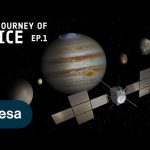
ESA’s Jupiter Icy Moons Explorer (Juice), is on an epic eight-year journey to Jupiter. This first episode of ‘The journey of Juice’ tells the story of Juice’s first months in space, from its launch on 14 April 2023 to its lunar-Earth gravity assist (LEGA for short) in August 2024. This flyby was not only the first double gravity assist manoeuvre of its kind, it was also a perfect opportunity to test out the spacecraft’s cameras and science instruments.
In this episode, Juice’s Mission Manager Nicolas Altobelli explains how the spacecraft will become the first ever human-made machine to orbit a moon of another planet, in this case Jupiter’s largest moon Ganymede.
You’ll also hear from Claire Vallat and Marc Costa at the European Space Astronomy Centre (ESAC) near Madrid, Spain. Juice will perform incredibly complex measurements once it reaches Jupiter, and the Science Operations team at ESAC is making sure we get the most out of every instrument.
Meanwhile, the Flight Control team at the European Space Operations Centre (ESOC) in Darmstadt, Germany, makes sure Juice is and stays on the right path. This episode shows what happened ‘behind the scenes’ before and during the lunar-Earth flyby, and stars Ignacio Tanco, Angela Dietz and members of the Juice Flight Control team as they do what they do best.
Finally, we highlight the ESA tracking station network (Estrack), another crucial component for Juice. Maintenance and Operations Engineer Belén Goméz gives a tour of the facility at Cebreros.
Following the very successful lunar-Earth flyby, Juice is now on its way to planet Venus for its next flyby. On 31 August 2025, this flyby will give Juice its second gravity boost. Tune back in next year for episode two of this series!
This series follows on from ‘The making of Juice’ series, which covered the planning, testing and launch of this once-in-a-generation mission.
Credit: ESA/Lightcurve Films, original music by William Zeitler
Acknowledgments: Direction, main camera, sound, editing, post-production: Maarten Roos. Camera at Cebreros during LEGA: Mikel Larequi. LEGA timelapse: Mark McCaughrean and Simeon Schmauß. Special thanks to Marc Costa (ESA – ESAC) and Jorge Fauste (ESA – Estrack)
★ Subscribe: http://bit.ly/ESAsubscribe and click twice on the bell button to receive our notifications.
We are Europe’s gateway to space. Our mission is to shape the development of Europe’s space capability and ensure that investment in space continues to deliver benefits to the citizens of Europe and the world. Check out https://www.esa.int/ to get up to speed on everything space related.
Watch the launch of NASA’s SpaceX #Crew9, the first human spaceflight mission to launch from Space Launch Complex 40 at Cape Canaveral Space Force Station in Florida. Liftoff on Saturday, Sept. 28 is set for 1:17 p.m. EDT (1717 UTC).
The Dragon spacecraft will carry NASA astronaut Nick Hague and Roscosmos cosmonaut Aleksandr Gorbunov to the International Space Station for a science mission of approximately five months. This will be Hague’s second mission to the orbiting laboratory, and Gorbunov’s first spaceflight.
Hague and Gorbunov will fly to the space station as commander and mission specialist, respectively. NASA astronauts Butch Wilmore and Suni Williams, who launched aboard the Starliner spacecraft in June, will fly home with Hague and Gorbunov in February 2025.
Orbiting more than 200 miles (320 km) above Earth, the International Space Station is a powerhouse of cutting-edge science that is unlocking discoveries not possible on Earth. We’re testing technologies that are critical to our return to the Moon and contributing to medical and social breakthroughs that improve life on our home planet.
After more than two decades of results, we continue to inspire future generations from a platform that is one of the largest international collaborations of our time.
Our Hera spacecraft will soon start its journey to the distant asteroid moon Dimorphos orbiting around its parent body Didymos.
One of the first features Hera will look for is the crater left on Dimorphos by its predecessor mission DART, which impacted the asteroid to deflect its orbit.
Yet, more recent impact simulations suggest no crater will be found. The DART impact is likely to have remodelled the entire body instead – a significant finding for both asteroid science and planetary defence.
NASA Administrator Bill Nelson speaks to the power of NASA’s climate-related data to help the world understand climate change and take action.
“The challenge of the climate crisis is here and now. Let’s answer it—from above.”
Most of what humanity knows about our changing planet comes from NASA’s more than two-dozen satellites and instruments—and from the agency’s observations for over 60 years.
For more information about how NASA in conjunction with the rest of the federal government studies our changing planet, visit https://earth.gov/
Credit: NASA Producer: Daniel Lauchu Music: Universal Production Music
Watch live as NASA astronaut Tracy Dyson and Roscosmos cosmonauts Nikolai Chub and Oleg Kononenko return home from the International Space Station. Their Soyuz MS-25 spacecraft will head for a parachute-assisted landing on the steppe of Kazakhstan at 8 a.m. EDT Monday, Sept. 23 (1200 UTC).
Dyson will conclude her third spaceflight with the landing of the Soyuz. Dyson’s mission spanned 184 days, 2,944 orbits of the Earth, and a journey of 78 million miles. While on orbit, she conducted an array of experiments and technology demonstrations that contribute to advancements for humanity on Earth and NASA’s trajectory to the Moon and Mars.
Meet Codi, the cutting-edge rover being tested in the UK as it gears up for future Mars missions! This high-tech explorer navigates challenging landscapes and collects “lightsabre” samples with precision. And did you know? There’s a bit of fun on the side—Kevin the piglet, the team’s adorable mascot, is named after actor Kevin Bacon!
NASA celebrates the fifth anniversary of renaming the street in front of its headquarters in Washington, D.C. Hidden Figures Way.
The renaming honors the remarkable legacies of Katherine Johnson, Dorothy Vaughan, and Mary W. Jackson, who were featured in Shetterly’s book – and the subsequent movie – Hidden Figures, as well as all women who honorably serve their country, advancing equality, and contributing to the United States space program.
In this last episode of the Young Professional Satellite docu series, we follow the team’s last steps to make their dream come true: sending their satellite to space.
After securing the crucial final assembly and battery connection, we take you inside the thermal vacuum tests (TVAC) to see how YPSat is tested under the extreme temperatures of space; through vibration tests to ensure its structural integrity during launch; and electromagnetic compatibility (EMC) tests to prevent interference with the launcher’s systems.
As we approach the European Space Agency’s traditional Flight Acceptance Review, the satellite is officially certified for flight. With the integration complete and final battery charge applied, control is handed over to the rocket. The only task left for the teams on the ground is to analyse one last time the rocket’s trajectory and await the critical first signal.
As tension builds up on launch day, watch as the team retrieves YPSat’s data and decodes breathtaking images and videos from its mission.
—————————————————
Credits: Directed and produced by Chilled Winston: https://chilledwinston.com/ and Emma de Cocker Powered by ESA – European Space Agency Soundtracks from Epidemic Sound
—————————————————
Chapters: 00:00 – Introduction 01:30 – Final Assembly 02:49 – The Test Campaign 06:42 – Final Launch Preparations 10:01 – Ariane 6 Launch 11:38 – Gathering & Decoding the Footage 15:15 – Unveiling the Footage 17:08 – Watch at the End
★ Subscribe: http://bit.ly/ESAsubscribe and click twice on the bell button to receive our notifications.
We are Europe’s gateway to space. Our mission is to shape the development of Europe’s space capability and ensure that investment in space continues to deliver benefits to the citizens of Europe and the world. Check out https://www.esa.int/ to get up to speed on everything space related.
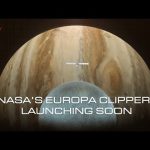
NASA is set to launch the Europa Clipper spacecraft to explore Europa, an ocean moon orbiting Jupiter.
Europa Clipper’s launch period opens on Thursday, Oct. 10, 2024. Liftoff on Oct. 10, 2024 is slated for 12:31 p.m. EDT (1631 UTC). The spacecraft, the largest NASA has ever built for a planetary mission, will launch on a SpaceX Falcon Heavy rocket from Launch Complex 39A at NASA’s Kennedy Space Center in Florida.
Europa is one of the most promising places in our solar system to find an environment suitable for life beyond Earth. Evidence suggests that the ocean beneath Europa’s icy surface could contain the ingredients for life — water, the right chemistry, and energy. While Europa Clipper is not a life-detection mission, it will answer key questions about the moon’s potential habitability.
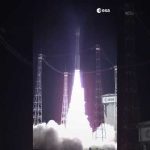
The third Copernicus Sentinel-2 satellite, Sentinel-2C, has launched aboard the last Vega rocket, flight VV24, from Europe’s Spaceport in French Guiana. The rocket lifted off on 5 September at 03:50 CEST (4 September 22:50 local time).
Sentinel-2C was the last liftoff for the Vega rocket – after 12 years of service this was the final flight, the original Vega is being retired to make way for an upgraded Vega-C.
🎥 ESA – European Space Agency Credits: ESA/CNES/Arianespace
Our solar system has a number of worlds with water, but is Earth the only one with the right environment to support life? That’s the question NASA’s Europa Clipper aims to answer.
Europa Clipper is the first mission dedicated to studying Jupiter’s moon Europa, which scientists believe has a salty ocean under its icy shell. While not designed to detect life, the spacecraft is equipped with nine science instruments and a gravity experiment, which will all help determine whether this moon could be habitable. Europa Clipper will orbit Jupiter and make 49 flybys of Europa, taking detailed measurements and high-resolution pictures.
Europa Clipper is set to launch in October 2024 from NASA’s Kennedy Space Center in Florida, arriving at Jupiter in 2030. Watch it lift off live: https://plus.nasa.gov