Category: Astronomie

  • Timelapse of BepiColombo’s fourth Mercury flyby

    Timelapse of BepiColombo’s fourth Mercury flyby

    Watch the closest flyby of a planet ever, as the ESA/JAXA BepiColombo spacecraft sped past Mercury during its latest encounter on 4 September 2024.

    This flyby marked BepiColombo’s closest approach to Mercury yet, and for the first time, the spacecraft had a clear view of Mercury’s south pole.

    This timelapse is made up of 128 different images captured by all three of BepiColombo’s monitoring cameras, M-CAM 1, 2 and 3. We see the planet move in and out of the fields of view of M-CAM 2 and 3, before M-CAM 1 sees the planet receding into the distance at the end of the video.
    The first few images are taken in the days and weeks before the flyby. Mercury first appears in an image taken at 23:50 CEST (21:50 UTC) on 4 September, at a distance of 191 km. Closest approach was at 23:48 CEST at a distance of 165 km.

    The sequence ends around 24 hours later, on 5 September 2024, when BepiColombo was about 243 000 km from Mercury.

    During the flyby it was possible to identify various geological features that BepiColombo will study in more detail once in orbit around the planet. Four minutes after closest approach, a large ‘peak ring basin’ called Vivaldi came into view.

    This crater was named after the famous Italian composer Antonio Vivaldi (1678–1741). The flyover of Vivaldi crater was the inspiration for using Antonio Vivaldi’s ‘Four Seasons’ as the soundtrack for this timelapse.

    Peak ring basins are mysterious craters created by powerful asteroid or comet impacts, so-called because of the inner ring of peaks on an otherwise flattish floor.

    A couple of minutes later, another peak ring basin came into view: newly named Stoddart. The name was recently assigned following a request from the M-CAM team, who realised that this crater would be visible in these images and decided it would be worth naming considering its potential interest for scientists in the future.

    BepiColombo’s three monitoring cameras provided 1024 x 1024 pixel snapshots. Their main purpose is to monitor the spacecraft’s various booms and antennas, hence why we see parts of the spacecraft in the foreground. The photos that they capture of Mercury during the flybys are a bonus.

    The 4 September gravity assist flyby was the fourth at Mercury and the seventh of nine planetary flybys overall. During its eight-year cruise to the smallest and innermost planet of the Solar System, BepiColombo makes one flyby at Earth, two at Venus and six at Mercury, to help steer itself on course for entering orbit around Mercury in 2026.

    BepiColombo is an international collaboration between ESA and JAXA.

    BepiColombo’s best images yet highlight fourth Mercury flyby: https://www.esa.int/Science_Exploration/Space_Science/BepiColombo/BepiColombo_s_best_images_yet_highlight_fourth_Mercury_flyby

    BepiColombo images in ESA’s Planetary Science: https://psa.esa.int/psa/#/pages/home

    Processing notes: The BepiColombo monitoring cameras provide 1024 x 1024 pixel images. These raw images have been lightly processed. The M-CAM 1 images have been cropped to 995 x 995 pixels.

    Credits: ESA/BepiColombo/MTM
    Acknowledgements: Image processing and video production by Mark McCaughrean

    ★ Subscribe: http://bit.ly/ESAsubscribe and click twice on the bell button to receive our notifications.

    Check out our full video catalog: http://bit.ly/SpaceInVideos
    Follow us on Twitter: http://bit.ly/ESAonTwitter
    On Facebook: http://bit.ly/ESAonFacebook
    On Instagram: http://bit.ly/ESAonInstagram
    On LinkedIn: https://bit.ly/ESAonLinkedIn
    On Pinterest: https://bit.ly/ESAonPinterest
    On Flickr: http://bit.ly/ESAonFlickr

    We are Europe’s gateway to space. Our mission is to shape the development of Europe’s space capability and ensure that investment in space continues to deliver benefits to the citizens of Europe and the world. Check out https://www.esa.int/ to get up to speed on everything space related.

    Copyright information about our videos is available here: https://www.esa.int/ESA_Multimedia/Terms_and_Conditions

    #ESA #BepiColombo #Mercury
  • Below the surface | ExoMars Rosalind Franklin mission

    Below the surface | ExoMars Rosalind Franklin mission

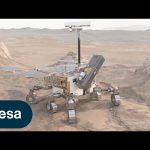
    Watch the second episode of the ExoMars Rosalind Franklin rover mission – Europe’s ambitious exploration journey to search for past and present signs of life on Mars.

    This episode starts with Rosalind searching for traces of life below the martian surface using a ground penetrating radar and a set of cameras.

    The rover will dig, collect, and investigate the chemical composition of material collected by a drill. Rosalind Franklin will be the first rover to reach a depth of up to two metres deep below the surface, acquiring samples that have been protected from surface radiation and extreme temperatures.

    Rosalind Franklin uses the WISDOM radar to help scientists on Earth decide where to drill. Besides identifying the most promising targets for sampling, WISDOM will help the rover avoid potential hazards, such as the presence of buried rocks that could damage the drill.
    The scientific eyes of the rover are set on the Panoramic Camera suite known as PanCam. The Close-UP Imager (CLUPI) sits on the side of the drill box, a camera designed to acquire high-resolution, colour, close-up images of outcrops, rocks and soils. PanCam and CLUPI will help scientists find the most promising spots to drill. These instruments can also investigate very fine outcrop details and image drill samples before they are sent into the rover’s laboratory.
    After the rover retracts its drill, the sample is in a special chamber at the tip. Under the reduced martian gravity (38% of Earth’s), the material drops onto a special “hand” that the rover can extend to the front to collect drill samples.
    The mission will serve to demonstrate key technologies that Europe needs to master for future planetary exploration missions.

    The ExoMars rover series show the rover and martian landscapes as true to reality as possible for a simulation.

    Check ESA’s ExoMars website and our frequently asked questions for the latest updates.

    Credits: ESA – European Space
    Production: Mlabspace for ESA
    3D animation: ESA/Mlabspace
    Video footage: ESA/NASA, Shutterstock
    Music composed by Valentin Joudrier

    ★ Subscribe: http://bit.ly/ESAsubscribe and click twice on the bell button to receive our notifications.

    Check out our full video catalog: http://bit.ly/SpaceInVideos
    Follow us on Twitter: http://bit.ly/ESAonTwitter
    On Facebook: http://bit.ly/ESAonFacebook
    On Instagram: http://bit.ly/ESAonInstagram
    On LinkedIn: https://bit.ly/ESAonLinkedIn
    On Pinterest: https://bit.ly/ESAonPinterest
    On Flickr: http://bit.ly/ESAonFlickr

    We are Europe’s gateway to space. Our mission is to shape the development of Europe’s space capability and ensure that investment in space continues to deliver benefits to the citizens of Europe and the world. Check out https://www.esa.int/ to get up to speed on everything space related.

    Copyright information about our videos is available here: https://www.esa.int/ESA_Multimedia/Terms_and_Conditions

    #ESA #ExoMars #Mars

  • NASA Astronaut Don Pettit Soyuz MS-26 Launch

    NASA Astronaut Don Pettit Soyuz MS-26 Launch

    NASA astronaut Don Pettit is set to lift off on his fourth mission to the International Space Station on Wednesday, Sept. 11. Live NASA coverage begins at 11:15 a.m. EDT (1555 UTC) for a 12:23 p.m. (1623 UTC) launch from the Baikonur Cosmodrome in Kazakhstan.

    Pettit’s first trip to the orbiting laboratory was in 2002, where he served as the NASA Science Officer aboard the station as part of Expedition 6. Pettit later traveled to the station aboard space shuttle Endeavour on STS-126, and most recently went to space in 2011. Pettit has a Ph.D. in chemical engineering from the University of Arizona.

    Pettit will launch aboard the Roscosmos Soyuz MS-26 spacecraft, accompanied by cosmonauts Alexey Ovchinin and Ivan Vagner, where they will spend six months on the International Space Station before returning to Earth in the spring of 2025.

    Learn more about the mission and its timeline: https://go.nasa.gov/4gtwsGH
    Get the latest mission updates: https://blogs.nasa.gov/spacestation/

    Credit: NASA

    #NASA #Astronaut #SpaceStation

  • Why we are sending a spacecraft to Dimorphos  ☄️ #shorts

    Why we are sending a spacecraft to Dimorphos ☄️ #shorts

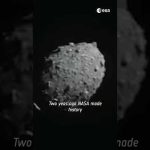
    On 26 September 2022, NASA’s approximately half-tonne Double Asteroid Redirect Test (DART) spacecraft impacted the Dimorphos asteroid at an approximate speed of 6.1 km/s, shortening its orbit around Didymos by more than half an hour.

    Our Hera spacecraft will be launched this October to reach Dimorphos and perform a close-up ‘crash scene investigation’, gathering data on the asteroid’s mass, structure and make-up to turn this kinetic impact method of planetary defence into a well understood and repeatable technique.

    📸 ESA – European Space Agency
    📹 ESA/NASA

    #ESA #NASA #Hera

  • This is how ESA stores Earth observation data

    This is how ESA stores Earth observation data

    Join us as we enter ESA’s Heritage Missions data archive, which stores Earth observation data dating back to the 1970s.

    ESA preserves this historical record from past satellite missions, which provides valuable information for long-term studies. The datasets from these missions are not only preserved, but continuously improved over time with reprocessing activities that make them compatible with products acquired by more recent missions and apply new processing algorithms that can improve the accuracy and quality of the products.

    The presenter, Malì, is wearing an ESA t-shirt in the video, which is available for sale on the ESA online shop: https://www.esaspaceshop.com/earth-outline-in-rubber-relief-t-shirt-for-adults.html

    Credits: ESA – European Space Agency

    ★ Subscribe: http://bit.ly/ESAsubscribe and click twice on the bell button to receive our notifications.

    Check out our full video catalog: http://bit.ly/SpaceInVideos
    Follow us on Twitter: http://bit.ly/ESAonTwitter
    On Facebook: http://bit.ly/ESAonFacebook
    On Instagram: http://bit.ly/ESAonInstagram
    On LinkedIn: https://bit.ly/ESAonLinkedIn
    On Pinterest: https://bit.ly/ESAonPinterest
    On Flickr: http://bit.ly/ESAonFlickr

    We are Europe’s gateway to space. Our mission is to shape the development of Europe’s space capability and ensure that investment in space continues to deliver benefits to the citizens of Europe and the world. Check out https://www.esa.int/ to get up to speed on everything space related.

    Copyright information about our videos is available here: https://www.esa.int/ESA_Multimedia/Terms_and_Conditions

    #ESA #EarthObservation #Archive

  • It’s the beginning of the end for Cluster…  🛰️ #shorts

    It’s the beginning of the end for Cluster… 🛰️ #shorts

    Today, Salsa, the first of four satellites that make up our Cluster mission, will reenter Earth’s atmosphere over the South Pacific Ocean Uninhabited Area.

    This marks the end of the historic mission, over 24 years after it was sent into space to measure Earth’s magnetic environment. Though the remaining three satellites will also stop making scientific observations, discoveries using existing mission data are expected for years to come.

    This ‘targeted reentry’ is the first of its kind. ESA’s efforts to ensure a clean end to the Cluster mission go beyond international standards, making the agency a world-leader in sustainable space exploration.

    📹 ESA – European Space Agency

    #ESA #Cluster #Satellite

  • Cluster reentry explained: world’s first targeted reentry

    Cluster reentry explained: world’s first targeted reentry

    The first of four satellites that make up ESA’s Cluster mission is coming safely back down to Earth, marking a brilliant end to this remarkable mission.

    The satellite’s orbit was tweaked back in January to target a region as far as possible from populated regions. This ensures that any spacecraft parts that survive the reentry will fall over open ocean.

    During 24 years in space, Cluster has sent back precious data on how the Sun interacts with Earth’s magnetic field, helping us better understand and forecast potentially dangerous space weather.

    With this first ever targeted reentry, Cluster goes down in history for a different reason, taking ESA well beyond international space safety standards and helping ensure the long-term sustainability of space activities.

    Credits: ESA – European Space Agency

    Chapters:
    00:00 Introduction to the Cluster Mission
    02:17 How do we deorbit a satellite?
    05:05 Why does Cluster’s reentry matter so much?
    06:15 Conclusion

    ★ Subscribe: http://bit.ly/ESAsubscribe and click twice on the bell button to receive our notifications.

    Check out our full video catalog: http://bit.ly/SpaceInVideos
    Follow us on Twitter: http://bit.ly/ESAonTwitter
    On Facebook: http://bit.ly/ESAonFacebook
    On Instagram: http://bit.ly/ESAonInstagram
    On LinkedIn: https://bit.ly/ESAonLinkedIn
    On Pinterest: https://bit.ly/ESAonPinterest
    On Flickr: http://bit.ly/ESAonFlickr

    We are Europe’s gateway to space. Our mission is to shape the development of Europe’s space capability and ensure that investment in space continues to deliver benefits to the citizens of Europe and the world. Check out https://www.esa.int/ to get up to speed on everything space related.

    Copyright information about our videos is available here: https://www.esa.int/ESA_Multimedia/Terms_and_Conditions

    #ESA #Satellite #Reentry

  • NASA’s Boeing Crew Flight Test Re-entry and Landing

    NASA’s Boeing Crew Flight Test Re-entry and Landing

    Watch live as Boeing’s uncrewed Starliner spacecraft leaves low Earth orbit, reenters Earth’s atmosphere, and touches down at White Sands Space Harbor in New Mexico. Starliner is scheduled to begin its deorbit burn at 11:17 p.m. EDT on Friday, Sept. 6 (0317 UTC Sept. 7), with landing scheduled for 12:01 a.m. EDT (0401 UTC) on Saturday, Sept. 7.

    NASA astronauts Butch Wilmore and Suni Williams launched aboard Starliner on June 5 for its first crewed flight, arriving at the International Space Station on June 6. As Starliner approached the orbiting laboratory, NASA and Boeing identified helium leaks and experienced issues with the spacecraft reaction control thrusters. For the safety of the astronauts, NASA announced on Aug. 24 that Starliner would return to Earth from the station without a crew. Wilmore and Williams will remain aboard the station and return home in February 2025 on the SpaceX Dragon spacecraft as part of NASA’s SpaceX Crew-9 mission.

    Following Starliner’s return to Earth, a post-landing news conference is scheduled for 1:30 a.m. EDT (0530 UTC).

    Check out the full schedule for Starliner’s return: https://go.nasa.gov/3TayjWx
    Learn more about Starliner and what’s going on aboard the ISS: https://nasa.gov/starliner-faq
    Follow the latest Starliner mission updates: https://blogs.nasa.gov/boeing-crew-flight-test/

    Credit: NASA

    #NASA #Starliner #Space

  • NASA’s Boeing Crew Flight Test Undocking

    NASA’s Boeing Crew Flight Test Undocking

    Watch live as Boeing’s Starliner spacecraft departs from the International Space Station for a landing at White Sands Space Harbor in New Mexico. The uncrewed spacecraft is scheduled to autonomously undock from the station at approximately 6:04 p.m. EDT (2204 UTC) Friday, Sept. 6, to begin the journey home, weather conditions permitting.

    NASA astronauts Butch Wilmore and Suni Williams launched aboard Boeing’s Starliner spacecraft on June 5 for its first crewed flight, arriving at the space station on June 6. As Starliner approached the orbiting laboratory, NASA and Boeing identified helium leaks and experienced issues with the spacecraft reaction control thrusters. For the safety of the astronauts, NASA announced on Aug. 24 that Starliner will return to Earth from the station without a crew. Wilmore and Williams will remain aboard the station and return home in February 2025 aboard the SpaceX Dragon spacecraft with two other crew members assigned to NASA’s SpaceX Crew-9 mission.

    Learn more about Starliner’s return to Earth: https://www.nasa.gov/news-release/nasa-sets-coverage-for-starliner-news-conference-return-to-earth/
    Learn more about the Commercial Crew Program: https://www.nasa.gov/humans-in-space/commercial-space/commercial-crew-program/

    Credit: NASA

    #NASA #Starliner #Boeing #SpaceStation #Spacecraft

  • Liftoff of Sentinel-2C on the last Vega rocket

    Liftoff of Sentinel-2C on the last Vega rocket

    The Copernicus Sentinel-2C satellite lifted off on 5 September at 03:50 CEST (4 September 22:50 local time) aboard the last Vega rocket, flight VV24, from Europe’s Spaceport in French Guiana.

    Sentinel-2C will continue the legacy of delivering high-resolution data that are essential to Copernicus – the Earth observation component of the EU Space Programme. Developed, built and operated by ESA, the Copernicus Sentinel-2 mission provides high-resolution optical imagery for a wide range of applications including land, water and atmospheric monitoring.

    Sentinel-2C was the last liftoff for the Vega rocket – after 12 years of service this was the final flight, the original Vega is being retired to make way for an upgraded Vega-C.

    Credits: ESA/CNES/Arianespace

    Chapters:
    00:00 Waiting for liftoff
    01:10 Liftoff
    04:25 Second stage separation
    06:18 Sentinel-2C separation
    06:46 Acquisition of signal
    07:23 Statements

    ★ Subscribe: http://bit.ly/ESAsubscribe and click twice on the bell button to receive our notifications.

    Check out our full video catalog: http://bit.ly/SpaceInVideos
    Follow us on Twitter: http://bit.ly/ESAonTwitter
    On Facebook: http://bit.ly/ESAonFacebook
    On Instagram: http://bit.ly/ESAonInstagram
    On LinkedIn: https://bit.ly/ESAonLinkedIn
    On Pinterest: https://bit.ly/ESAonPinterest
    On Flickr: http://bit.ly/ESAonFlickr

    We are Europe’s gateway to space. Our mission is to shape the development of Europe’s space capability and ensure that investment in space continues to deliver benefits to the citizens of Europe and the world. Check out https://www.esa.int/ to get up to speed on everything space related.

    Copyright information about our videos is available here: https://www.esa.int/ESA_Multimedia/Terms_and_Conditions

    #ESA #Vega #Sentinel-2C

  • Live High-Definition Views from the International Space Station (Official NASA Stream)

    Live High-Definition Views from the International Space Station (Official NASA Stream)

    Live views from the International Space Station are streaming from an external camera mounted on the station’s Harmony module.

    The camera is looking forward at an angle so that International Docking Adapter 2 is visible. If the Harmony module camera is not available due to operational considerations for a longer period of time, a continuous loop of recorded Earth views will be displayed with the caption “Previously Recorded.”

    The space station orbits Earth about 250 miles (425 kilometers) above the surface. An international partnership of five space agencies from 15 countries operates the station, and it has been continuously occupied since November 2000. It’s a microgravity laboratory where science, research, and human innovation make way for new technologies and research breakthroughs not possible on Earth. More: https://go.nasa.gov/3CkVtC8

    Did you know you can spot the station without a telescope? It looks like a fast-moving star, but you have to know when to look up. Sign up for text messages or email alerts to let you know when (and where) to spot the station and wave to the crew: https://spotthestation.nasa.gov

    https://nasa.gov/iss

    Credit: NASA

  • Live Video from the International Space Station (Official NASA Stream)

    Live Video from the International Space Station (Official NASA Stream)

    Watch live video from the International Space Station, including inside views when the crew aboard the space station is on duty. Views of Earth are also streamed from an external camera located outside of the space station. During periods of signal loss due to handover between communications satellites, a blue screen is displayed.

    The space station orbits Earth about 250 miles (425 kilometers) above the surface. An international partnership of five space agencies from 15 countries operates the station, and it has been continuously occupied since November 2000. It’s a microgravity laboratory where science, research, and human innovation make way for new technologies and research breakthroughs not possible on Earth. More: https://go.nasa.gov/3CkVtC8

    Did you know you can spot the station without a telescope? It looks like a fast-moving star, but you have to know when to look up. Sign up for text messages or email alerts to let you know when (and where) to spot the station and wave to the crew: https://spotthestation.nasa.gov

    https://nasa.gov/iss

    Credit: NASA

  • Vega for ESA: the story

    Vega for ESA: the story

    Vega joined the family of launch vehicles at Europe’s Spaceport in French Guiana in 2012. At 30-m tall the rocket weighs 137 tonnes on the launch pad and reaches orbit with three solid-propellant powered stages before the fourth liquid-propellant stage takes over. By rocket standards Vega is lightweight and powerful, the first three stages burn through their fuel and bringing Vega and its satellites to space in just six minutes.

    Specialising in launches of small satellites to orbits flying the Earth’s poles, Vega has an impressive roster of missions that it has sent to space. Flagship ESA missions that flew Vega include technology demonstrator and Earth vegetation watcher Proba-V and wind-monitoring satellite Aeolus. Vega’s heaviest payload launched was the 1906-kg LISA Pathfinder, a forerunner to LISA that will measure gravitational waves in space..

    In 2015 Vega launched three ESA missions in one year, including reentry demonstrator IXV that showed Europe has the technology to launch a vehicle to space and return it safely to Earth. In less than two hours Vega accelerated IXV to speeds of 27 000 km/h at a height of 412 km before the reentry vehicle splashed down in the Atlantic Ocean. This demonstration mission was a precursor to the reuseable Space Rider spacecraft that will offer regular access to space for research and in orbit validation and demonstration missions and is paired with the Vega family of launchers.

    With its Vespa secondary payload adapter, first launched in 2013 on Vega’s second flight, Vega offered different options for payload ride-sharing where multiple satellites are launched on one rocket. In 2020 a variant of Vespa called the Small Spacecraft Mission Service transported over 50 satellites at once to orbit.

    Sentinel-2C is the last payload that the Vega rocket launches into space – after 12 years of service. Fittingly the Sentinel-2A and Sentinel-2B satellites were launched on Vega marking a logical conclusion to Vega’s stellar roster of satellites launched.

    Credits: ESA – European Space Agency

    ★ Subscribe: http://bit.ly/ESAsubscribe and click twice on the bell button to receive our notifications.

    Check out our full video catalog: http://bit.ly/SpaceInVideos
    Follow us on Twitter: http://bit.ly/ESAonTwitter
    On Facebook: http://bit.ly/ESAonFacebook
    On Instagram: http://bit.ly/ESAonInstagram
    On LinkedIn: https://bit.ly/ESAonLinkedIn
    On Pinterest: https://bit.ly/ESAonPinterest
    On Flickr: http://bit.ly/ESAonFlickr

    We are Europe’s gateway to space. Our mission is to shape the development of Europe’s space capability and ensure that investment in space continues to deliver benefits to the citizens of Europe and the world. Check out https://www.esa.int/ to get up to speed on everything space related.

    Copyright information about our videos is available here: https://www.esa.int/ESA_Multimedia/Terms_and_Conditions

    #ESA #Vega #Rocket

  • Final Vega rocket to carry Sentinel-2C into orbit 🚀 #shorts

    Final Vega rocket to carry Sentinel-2C into orbit 🚀 #shorts

    It’s time to say goodbye to our rocket with its final liftoff.

    On this last flight, it will carry the Copernicus Sentinel-2C, into orbit. Vega already delivered Sentinel-2A and 2B to space in 2015 and 2017 ensuring constant monitoring of our planet for precision farming, water quality monitoring, natural disaster management and detecting methane emissions.

    Since its inaugural flight in 2012, Vega has launched over 20 times, serving Europe with precision and excellence. Now, Vega-C is ready to take the reins, bringing more power and capacity to future missions.

    📹 ESA – European Space Agency

    #ESA #Rocket #Satellite

  • Sentinel-2C: ready for liftoff

    Sentinel-2C: ready for liftoff

    Sentinel-2C is ready for launch! The new satellite will soon join its Copernicus Sentinel-2 family in orbit – where it will continue to provide detailed views of Earth’s land and coastal waters.

    The mission is based on a constellation of two identical satellites: Sentinel-2A and Sentinel-2B. The constellation was originally designed to monitor land surfaces – but its scope has since expanded.

    It now covers a wide range of applications including deforestation, water quality, monitoring natural disasters, methane emissions and much more.
    Sentinel-2C, once in orbit, will replace the Sentinel-2A unit – prolonging the life of the Sentinel-2 mission – ensuring a continuous supply of data for Copernicus, the Earth observation component of the EU Space Programme.

    Tune in to ESA WebTV on 4 September from 03:30 CEST to watch the satellite soar into space on the last Vega rocket to be launched from Europe’s Spaceport in Kourou, French Guiana.

    Credits: ESA – European Space Agency

    ★ Subscribe: http://bit.ly/ESAsubscribe and click twice on the bell button to receive our notifications.

    Check out our full video catalog: http://bit.ly/SpaceInVideos
    Follow us on Twitter: http://bit.ly/ESAonTwitter
    On Facebook: http://bit.ly/ESAonFacebook
    On Instagram: http://bit.ly/ESAonInstagram
    On LinkedIn: https://bit.ly/ESAonLinkedIn
    On Pinterest: https://bit.ly/ESAonPinterest
    On Flickr: http://bit.ly/ESAonFlickr

    We are Europe’s gateway to space. Our mission is to shape the development of Europe’s space capability and ensure that investment in space continues to deliver benefits to the citizens of Europe and the world. Check out https://www.esa.int/ to get up to speed on everything space related.

    Copyright information about our videos is available here: https://www.esa.int/ESA_Multimedia/Terms_and_Conditions

    #ESA #Sentinel-2C #Satellite

  • Mars’ vast system of deep and steep valleys 🔴 #shorts

    Mars’ vast system of deep and steep valleys 🔴 #shorts

    Noctis Labyrinthus is vast system of deep and steep valleys that stretches out for around 1190 km, roughly the length of Italy here on Earth.

    It is nestled between the colossal martian ‘Grand Canyon’ (Valles Marineris) and the tallest volcanoes in the Solar System (the Tharsis region).

    The intense volcanism in the nearby Tharsis region is to blame for the formation of these features; this volcanism caused large areas of martian crust to arch upwards and become stretched and tectonically stressed, leading to it thinning out, faulting and subsiding.

    📹 ESA – European Space Agency
    🖥️ ESA/DLR/FU Berlin

    #ESA #Mars #Space

  • Timelapse of Juice’s lunar-Earth flyby

    Timelapse of Juice’s lunar-Earth flyby

    On 19–20 August 2024, Juice successfully completed a world-first lunar-Earth flyby, with flight controllers guiding the spacecraft first past the Moon, then past Earth. The gravity of the two changed Juice’s speed and direction, sending it on a shortcut to Jupiter via Venus.

    The closest approach to the Moon was at 23:15 CEST on 19 August, deflecting Juice towards a closest approach to Earth just over 24 hours later at 23:56 CEST on 20 August. In the hours before and after both close approaches, Juice’s two monitoring cameras captured photos, giving us a unique ‘Juice eye view’ of our home planet.

    Juice’s two monitoring cameras provide 1024 x 1024 pixel snapshots that can be processed in colour. Their main purpose is to monitor the spacecraft’s various booms and antennas, especially during the challenging period after launch. The photos they captured of the Moon and Earth during the lunar-Earth flyby are a bonus.

    The piece of music that accompanies the images is called 11,2 km/s. It was composed by Gautier Acher back in 2015, and selected as the official theme music for ESA’s Estrack ground station network to mark its 40th anniversary (more information). The music is available under a CC BY-NC-SA licence.

    Juice rerouted to Venus in world’s first lunar-Earth flyby: https://www.esa.int/Science_Exploration/Space_Science/Juice/Juice_rerouted_to_Venus_in_world_s_first_lunar-Earth_flyby

    Juice’s lunar-Earth flyby: all you need to know: https://www.esa.int/Science_Exploration/Space_Science/Juice/Juice_s_lunar-Earth_flyby_all_you_need_to_know

    Processing notes: The Juice monitoring cameras provide 1024 x 1024 pixel images. Upscaling software was used to convert the images into 2160 x 2160 pixel images, which match the 3480 x2160 pixel resolution of the 4K movie format.

    Credits: ESA – European Space Agency
    Acknowledgements: Simeon Schmauß & Mark McCaughrean

    ★ Subscribe: http://bit.ly/ESAsubscribe and click twice on the bell button to receive our notifications.

    Check out our full video catalog: http://bit.ly/SpaceInVideos
    Follow us on Twitter: http://bit.ly/ESAonTwitter
    On Facebook: http://bit.ly/ESAonFacebook
    On Instagram: http://bit.ly/ESAonInstagram
    On LinkedIn: https://bit.ly/ESAonLinkedIn
    On Pinterest: https://bit.ly/ESAonPinterest
    On Flickr: http://bit.ly/ESAonFlickr

    We are Europe’s gateway to space. Our mission is to shape the development of Europe’s space capability and ensure that investment in space continues to deliver benefits to the citizens of Europe and the world. Check out https://www.esa.int/ to get up to speed on everything space related.

    Copyright information about our videos is available here: https://www.esa.int/ESA_Multimedia/Terms_and_Conditions

    #ESA #Juice #Timelapse

  • How 6G centrifuges prepare astronauts for space travel 🧑‍🚀 #shorts

    How 6G centrifuges prepare astronauts for space travel 🧑‍🚀 #shorts

    Human centrifuges simulate the gravitational forces, known as g-forces, experienced by astronauts during launch and return to Earth.

    The g-forces in this centrifuge were directed from the chest to the back, reaching acceleration levels up to 6G (equivalent to 4.5 times Earth’s gravity).

    The astronaut candidates reclined on their backs, reflecting the position astronauts assume in their launch vehicles.

    Equipped with biomonitoring devices, they communicated with medical staff during the spin, describing the effects felt on their bodies.

    📹 ESA – European Space Agency
    🖥️ ESA

    #ESA #Astronauts #Centrifuge

  • NASA’s Boeing Crew Flight Test Status News Conference

    NASA’s Boeing Crew Flight Test Status News Conference

    NASA hosts a live news conference at 1 p.m. EDT from the agency’s Johnson Space Center in Houston, following the internal Agency Test Flight Readiness Review for NASA’s Boeing Crew Flight Test.

    NASA’s Boeing Crew Flight Test launched on June 5 on a ULA (United Launch Alliance) Atlas V rocket from Space Launch Complex-41 at Cape Canaveral Space Force Station in Florida. It is an end-to-end test of the Starliner system as part of the agency’s Commercial Crew Program.

    More: https://www.nasa.gov/news-release/leadership-to-discuss-nasas-boeing-crew-flight-test/
    For NASA’s blog and additional information about the mission, visit: https://www.nasa.gov/commercialcrew

    Credit: NASA

    #NASA #SpaceStation #Starliner

  • Juice rerouted to Venus in world’s first lunar-Earth flyby 🧃 #shorts

    Juice rerouted to Venus in world’s first lunar-Earth flyby 🧃 #shorts

    Our Juice spacecraft returned to Earth to complete the world’s first Lunar-Earth gravity assist.

    Flight controllers guided the spacecraft past the Moon and then the Earth, ‘braking’ the spacecraft.

    This manoeuvre may seem counterintuitive but will allow Juice to take a shortcut via Venus on its way to Jupiter.

    📹 ESA – European Space Agency
    🖥️ ESA

  • NASA Science Live: Climate Edition – Extreme Weather

    NASA Science Live: Climate Edition – Extreme Weather

    As Earth’s climate changes, we’re seeing shifts in the intensity of events such as record-breaking heat waves, severe floods, prolonged droughts, devastating wildfires, and stronger hurricanes. Join NASA’s Chief Scientist Dr. Kate Calvin and climate expert Dr. Michelle Hawkins on Wednesday, Aug. 21 at 3 p.m. EDT on NASA Science Live as they discuss the science behind these changes. Have questions? Ask them in our live chat during the broadcast.

    Thumbnail credit: NASA

    #NASA #Earth #Climate

  • Live High-Definition Views from the International Space Station (Official NASA Stream)

    Live High-Definition Views from the International Space Station (Official NASA Stream)

    Live views from the International Space Station are streaming from an external camera mounted on the station’s Harmony module.

    The camera is looking forward at an angle so that International Docking Adapter 2 is visible. If the Harmony module camera is not available due to operational considerations for a longer period of time, a continuous loop of recorded Earth views will be displayed with the caption “Previously Recorded.”

    The space station orbits Earth about 250 miles (425 kilometers) above the surface. An international partnership of five space agencies from 15 countries operates the station, and it has been continuously occupied since November 2000. It’s a microgravity laboratory where science, research, and human innovation make way for new technologies and research breakthroughs not possible on Earth. More: https://go.nasa.gov/3CkVtC8

    Did you know you can spot the station without a telescope? It looks like a fast-moving star, but you have to know when to look up. Sign up for text messages or email alerts to let you know when (and where) to spot the station and wave to the crew: https://spotthestation.nasa.gov

    https://nasa.gov/iss

    Credit: NASA

  • Juice: Live from the Moon + Q&A with the team

    Juice: Live from the Moon + Q&A with the team

    Join us for Juice’s flyby of the Moon. We’ll be sharing images as soon as we can after Juice sends them down to Earth. Be among the first people in the world to see these images, and ask your questions about the mission and its lunar-Earth flyby to our panel of Juice team members.

    The images will be captured using Juice’s two ‘monitoring cameras’, designed to watch the unfolding of Juice’s solar panels, antennas and booms in space in the weeks after the spacecraft launched into space in April 2023. The cameras have successfully completed their task. But we thought… what will we see if we point them at the Moon?

    We don’t know how the images will look. It’s the first time the cameras will point at a big bright object in space. And we’re sharing them publicly before we’ve had a chance to process them at all.

    Let’s see what happens!

    Read more: https://www.esa.int/Science_Exploration/Space_Science/Juice/Juice_s_lunar-Earth_flyby_all_you_need_to_know

    ★ Subscribe: http://bit.ly/ESAsubscribe and click twice on the bell button to receive our notifications.

    Check out our full video catalog: http://bit.ly/SpaceInVideos
    Follow us on Twitter: http://bit.ly/ESAonTwitter
    On Facebook: http://bit.ly/ESAonFacebook
    On Instagram: http://bit.ly/ESAonInstagram
    On LinkedIn: https://bit.ly/ESAonLinkedIn
    On Pinterest: https://bit.ly/ESAonPinterest
    On Flickr: http://bit.ly/ESAonFlickr

    We are Europe’s gateway to space. Our mission is to shape the development of Europe’s space capability and ensure that investment in space continues to deliver benefits to the citizens of Europe and the world. Check out https://www.esa.int/ to get up to speed on everything space related.

    Copyright information about our videos is available here: https://www.esa.int/ESA_Multimedia/Terms_and_Conditions

    #ESA #Juice #Moon

  • Why Juice is coming back to Earth

    Why Juice is coming back to Earth

    ESA’s Jupiter Icy Moons Explorer (Juice) returns to Earth on 19–20 August 2024, to complete the world’s first Lunar-Earth gravity assist. Flight controllers will guide the spacecraft past the Moon and then Earth itself, ‘braking’ the spacecraft. This manoeuvre may seem counterintuitive but will allow Juice to take a shortcut via Venus on it’s way to Jupiter.

    Juice has already travelled more than 1000 million km to the giant planet but it still has a long way to go even though Jupiter is on average ‘just’ 800 million km away from Earth. Join us as we explain why Juice’s journey to Jupiter is taking sooo long.

    Read more: https://www.esa.int/Science_Exploration/Space_Science/Juice/Juice_s_lunar-Earth_flyby_all_you_need_to_know

    Read more: https://www.esa.int/Enabling_Support/Operations/Juice_why_s_it_taking_sooo_long

    Credits: ESA – European Space Agency

    —————————————————

    Chapters:
    00:00 Introduction
    00:59 Why is the journey so long?
    05:15 What is a flyby?
    06:10 Lunar-Earth gravity assist
    08:05 Conclusion

    ★ Subscribe: http://bit.ly/ESAsubscribe and click twice on the bell button to receive our notifications.

    Check out our full video catalog: http://bit.ly/SpaceInVideos
    Follow us on Twitter: http://bit.ly/ESAonTwitter
    On Facebook: http://bit.ly/ESAonFacebook
    On Instagram: http://bit.ly/ESAonInstagram
    On LinkedIn: https://bit.ly/ESAonLinkedIn
    On Pinterest: https://bit.ly/ESAonPinterest
    On Flickr: http://bit.ly/ESAonFlickr

    We are Europe’s gateway to space. Our mission is to shape the development of Europe’s space capability and ensure that investment in space continues to deliver benefits to the citizens of Europe and the world. Check out https://www.esa.int/ to get up to speed on everything space related.

    Copyright information about our videos is available here: https://www.esa.int/ESA_Multimedia/Terms_and_Conditions

    #ESA #Juice #Jupiter

  • How do foams behave in space? ⛓️ #shorts

    How do foams behave in space? ⛓️ #shorts

    On Earth, the mixture of gas and liquid that makes up a foam quickly starts to change. Gravity pulls the liquid between the bubbles downwards, and small bubbles shrink while the larger ones tend to grow at the expense of others. As the liquid is drawn downwards due to gravity the bubbles lose their strength and rupture, collapsing back to a liquid state.

    This is annoying for researchers as it limits the time they can study foams and interferes with their experiments. But in space foams are more stable as the liquid does not drain to the bottom in weightlessness.

    📹 @EuropeanSpaceAgency
    📸 ESA – European Space Agency

    #ESA #Foam #Space

  • Advancing weather forecasting in a changing climate

    Advancing weather forecasting in a changing climate

    The effects of the climate crisis are felt more acutely in the Arctic than anywhere else on the planet. The weather in the Arctic is not only severe, but it changes extremely quickly. More frequent data are urgently needed to improve weather forecasts for this susceptible polar region.

    Enter ESA’s Arctic Weather Satellite: a brand new prototype mission to show exactly how this can be achieved. The satellite will provide precise, short-term weather forecasts for the Arctic region. It is equipped with a 19-channel cross-track scanning microwave radiometer which will provide high-resolution humidity and temperature soundings of the atmosphere in all weather conditions.

    The Arctic Weather Satellite is the forerunner of a potential constellation of satellites, called EPS-Sterna, that ESA would build for Eumetsat if this first prototype Arctic Weather Satellite performs well.

    Credits: ESA – European Space Agency

    ★ Subscribe: http://bit.ly/ESAsubscribe and click twice on the bell button to receive our notifications.

    Check out our full video catalog: http://bit.ly/SpaceInVideos
    Follow us on Twitter: http://bit.ly/ESAonTwitter
    On Facebook: http://bit.ly/ESAonFacebook
    On Instagram: http://bit.ly/ESAonInstagram
    On LinkedIn: https://bit.ly/ESAonLinkedIn
    On Pinterest: https://bit.ly/ESAonPinterest
    On Flickr: http://bit.ly/ESAonFlickr

    We are Europe’s gateway to space. Our mission is to shape the development of Europe’s space capability and ensure that investment in space continues to deliver benefits to the citizens of Europe and the world. Check out https://www.esa.int/ to get up to speed on everything space related.

    Copyright information about our videos is available here: https://www.esa.int/ESA_Multimedia/Terms_and_Conditions

    #ESA #Satellite #ArcticWeatherSatellite

  • Zoom into interacting galaxies Arp 142 🔎 #shorts

    Zoom into interacting galaxies Arp 142 🔎 #shorts

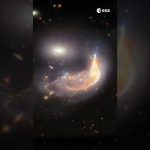
    This video takes the viewer on a journey through space to the interacting galaxies known as Arp 142.

    The distorted spiral galaxy at the centre, the Penguin, and the compact elliptical galaxy at the left, the Egg, are locked in an active embrace. A new near- and mid-infrared image from the James Webb Space Telescope, taken to mark its second year of science, shows that their interaction is marked by a faint upside-down U-shaped blue glow.

    The pair, known jointly as Arp 142, made their first pass between 25 and 75 million years ago — causing ‘fireworks’, or new star formation, in the Penguin. In the most extreme cases, mergers can cause galaxies to form thousands of new stars per year for a few million years. For the Penguin, research has shown that about 100 to 200 stars have formed per year. By comparison, our Milky Way galaxy (which is not interacting with a galaxy of the same size) forms roughly six to seven new stars per year.

    Arp 142 lies 326 million light-years from Earth in the constellation Hydra.

    Credit: NASA, ESA, CSA, STScI, N. Bartmann (ESA/Webb)

    #ESA #Webb #Universe

  • Our Mars Express captured this unexpected visitor. 🌚 #shorts

    Our Mars Express captured this unexpected visitor. 🌚 #shorts

    It can be seen as a dark blob passing through to the lower left.

    Phobos sits very close to Mars by Solar System standards, orbiting just 6000 km from Mars’s surface. For context, our own moon lies about 385 000 km away from Earth’s surface.

    📹 ESA/NASA – Andreas Mogensen
    📸 ESA/DLR/FU Berlin

    #ESA #Mars #Phobos

  • NASA Hidden Figure Dorothy J. Vaughan (Narrated by Octavia Spencer)

    NASA Hidden Figure Dorothy J. Vaughan (Narrated by Octavia Spencer)

    Dorothy J. Vaughan was a pioneer human computer and visionary who was integral in the expansion of a diverse workforce across NASA.

    She began her career with the National Advisory Committee for Aeronautics in 1943 as part of the segregated West Area Computing Unit, an all-black group of female mathematicians.
    Their ground-breaking work and remarkable contributions left an indelible mark on the NASA community.

    Promoted to lead the West Area Computers in 1949, Vaughan was NACA’s first black supervisor and one of its few female supervisors. She was a steadfast advocate for the women who worked as human computers, and for all the individuals under her leadership.

    Dorothy Vaughan helmed West Computing for nearly a decade. In 1958, when the NACA made the transition to NASA, segregated facilities, including the West Computing office, were abolished. Dorothy Vaughan and many of the former West Computers joined the new Analysis and Computation Division (ACD), a racially and gender-integrated group on the frontier of electronic computing. Dorothy Vaughan became an expert FORTRAN programmer, and she also contributed to the Scout Launch Vehicle Program.

    Through her exceptional leadership and dedication to the betterment of all individuals – particularly women of color, her legacy informed the agency’s current diverse workforce.

    Innovators like Vaughan laid the foundation for NASA to revisit the Moon for the first time since the Apollo era, this time with the first woman and first person of color under the Artemis program.

    https://www.nasa.gov/people/dorothy-vaughan/

    Credit: NASA
    Producer: Sonnet Apple

  • NASA’s Northrop Grumman 21st Cargo Resupply Services Launch

    NASA’s Northrop Grumman 21st Cargo Resupply Services Launch

    Watch a delivery of cargo, science, and supplies launch to the International Space Station! NASA, Northrop Grumman, and SpaceX are now targeting no earlier than 11:02 a.m. EDT (1502 UTC) on Sunday, Aug. 4, for liftoff of Northrop Grumman’s uncrewed Cygnus spacecraft, carried on the SpaceX Falcon 9 rocket, from Space Launch Complex 40 at Cape Canaveral Space Force Station in Florida.

    Scientific investigations traveling in the spacecraft include tests of water recovery technology and a process to produce blood and immune stem cells in microgravity, studies of the effects of spaceflight on engineered liver tissue and microorganism DNA, and live science demonstrations for students.

    Updates: https://blogs.nasa.gov/commercialresupply/
    About the mission: https://www.nasa.gov/general/overview-for-nasas-northrop-grumman-21st-commercial-resupply-mission/

    Credit: NASA

    #Launch #NASA #SpaceStation #RocketLaunch

  • Is it easier to catch a cold in space? 🤧 #shorts

    Is it easier to catch a cold in space? 🤧 #shorts

    Stress is a common response when the body finds itself in unfamiliar environments, such as space. Prolonged exposure to stress can weaken the body’s defensive mechanisms, making it more susceptible to illness.

    Our astronaut Andreas Mogensen was in space, was part of a study to explore how space travel affects the human immune system.

    Before, during and after his Huginn mission, Andreas collected both blood and saliva samples to reveal how the body’s defences adjust to space.

    This research is crucial for developing strategies to manage the health challenges faced by astronauts on long missions.

    📹 ESA/NASA – Andreas Mogensen
    📸 CADMOS, Ludwig-Maximilians-Universität

    #ESA #Astronaut #Illness

  • Could the Arctic turn green? 🌿 #shorts

    Could the Arctic turn green? 🌿 #shorts

    The Arctic Ocean has been going through so many changes.

    Sea ice is now seasonal, melting and disappearing from large areas during the summer months.

    This rapid warming is affecting not only the marine ecosystem but it will have widespread consequences that affect all of us.

    Tell this to an Arctic lover!

    🎥 ESA – European Space Agency
    🎞️ UiT / BREATHE, @pexels

    #ESA #Arctic #EarthObservation

  • Live Video from the International Space Station (Official NASA Stream)

    Live Video from the International Space Station (Official NASA Stream)

    Watch live video from the International Space Station, including inside views when the crew aboard the space station is on duty. Views of Earth are also streamed from an external camera located outside of the space station. During periods of signal loss due to handover between communications satellites, a blue screen is displayed.

    The space station orbits Earth about 250 miles (425 kilometers) above the surface. An international partnership of five space agencies from 15 countries operates the station, and it has been continuously occupied since November 2000. It’s a microgravity laboratory where science, research, and human innovation make way for new technologies and research breakthroughs not possible on Earth. More: https://go.nasa.gov/3CkVtC8

    Did you know you can spot the station without a telescope? It looks like a fast-moving star, but you have to know when to look up. Sign up for text messages or email alerts to let you know when (and where) to spot the station and wave to the crew: https://spotthestation.nasa.gov

    https://nasa.gov/iss

    Credit: NASA

  • NASA TV Is Now NASA+

    NASA TV Is Now NASA+

    This summer, NASA will be cutting the cord and going “full-stream” ahead. Our cable channel NASA TV will now be NASA+! With no subscription needed, you can now watch live missions and other NASA content all at your fingertips. Visit plus.nasa.gov today!

    Credit: NASA
    Producer: Phil Sexton

  • Do you remember the auroras back in May? 🌞 #shorts

    Do you remember the auroras back in May? 🌞 #shorts

    In the weekend of 10–12 May 2024, the biggest solar storm to hit Earth in over 20 years swept over our planet. This produced an intense geomagnetic storm, creating beautiful auroras.

    The culprit? An active sunspot region called AR3664. As it rotated away from Earth’s view around 14 May, it sent out the strongest flare yet (class X8.79), causing large radio blackouts on Earth. But the fact that we could not see it anymore from Earth did not mean that this monster had gone to sleep.

    Watching the Sun’s far side on 20 May, Solar Orbiter’s X-ray instrument STIX observed a massive flare with an estimated class of X12. This makes it the strongest flare yet of the current solar cycle, and in the top ten flares since 1996.

    📹 ESA – European Space Agency
    📸 ESA & NASA/Solar Orbiter/EUI

    #ESA #Aurora #SpaceWeather

  • Olympics on the International Space Station

    Olympics on the International Space Station

    The 2024 Olympic Games officially began in Paris, France on July 26, with athletes coming from around the world to compete.

    Meanwhile, *above* the world — on our orbiting laboratory, the International Space Station — NASA’s astronauts are getting into the Olympic spirit. Check out their training montage from space, followed by a message to Earth from astronaut Matt Dominick.

    Learn more about the station: https://www.nasa.gov/international-space-station/

    Link to download: https://images.nasa.gov/details/Olympics%20on%20the%20International%20Space%20Station

    Credit: NASA
    Producer: Jamie Quinn

  • How Europe’s biggest rocket came to be: Ariane 6 montage

    How Europe’s biggest rocket came to be: Ariane 6 montage

    The first half of 2024 saw hundreds of people across Europe building, cajoling, shipping, lowering, integrating, securing and protecting the precious pieces and parts that came together to create Ariane 6 – Europe’s new heavy-lift rocket.

    Huge engines, boosters and outer shells met tiny screws, electrical boards and masses of supercooled fuel. All this came together at Europe’s Spaceport in French Guiana, for the spectacular first launch of Ariane 6 on 9 July 2024, restoring Europe’s access to space.

    Get a glimpse at the teamwork, skill and care that went into this moment over many months, in this montage of Ariane 6 images, videos and timelapse photography spanning 30 January to 9 July 2024.

    ★ Subscribe: http://bit.ly/ESAsubscribe and click twice on the bell button to receive our notifications.

    Check out our full video catalog: http://bit.ly/SpaceInVideos
    Follow us on Twitter: http://bit.ly/ESAonTwitter
    On Facebook: http://bit.ly/ESAonFacebook
    On Instagram: http://bit.ly/ESAonInstagram
    On LinkedIn: https://bit.ly/ESAonLinkedIn
    On Pinterest: https://bit.ly/ESAonPinterest
    On Flickr: http://bit.ly/ESAonFlickr

    We are Europe’s gateway to space. Our mission is to shape the development of Europe’s space capability and ensure that investment in space continues to deliver benefits to the citizens of Europe and the world. Check out https://www.esa.int/ to get up to speed on everything space related.

    Copyright information about our videos is available here: https://www.esa.int/ESA_Multimedia/Terms_and_Conditions

    #ESA #Ariane6 #Rocket

  • Could we use AI to guide spacecraft in space? 🛰️ #shorts

    Could we use AI to guide spacecraft in space? 🛰️ #shorts

    Drones are being raced at Delft University of Technology’s ‘Cyber Zoo’ to test the performance of neural-network-based AI control systems planned for next-generation space missions.

    The drones have to complete a course as fast as possible, showing how quickly and efficiently they can react, just like a spacecraft would need to in space.

    Normally, spacecraft manoeuvres are planned on the ground and then uploaded to the spacecraft to be carried out. But space is full of unpredictable events! Whenever the spacecraft deviates from its planned path for whatever reason, it has to use a lot of fuel and resources to get back on track.

    Instead, with this alternative AI control system that’s being tested here, the spacecraft would continuously recalculate and adjusts its path in real-time from wherever it is.
    This approach would be much more efficient because the spacecraft could handle unexpected changes better and use fewer resources to stay on course.

    📹 ESA – European Space Agency
    📸 ESA/TU Delft

    #ESA #AI #Satellite

  • Did you know we almost had a second moon? 🌚  #shorts

    Did you know we almost had a second moon? 🌚 #shorts

    In 2016, scientists spotted Kamo’oalewa ,a 40 to 100 metre object, during a planetary defence survey to discover space rocks that could possibly hit our planet.

    At first, the object appeared to orbit Earth in a similar way to our Moon. But astronomers found it was actually orbiting the Sun on a very similar path to Earth. So, Kamo’oalewa was demoted from a potential new moon to a near-Earth asteroid and a quasi-satellite to Earth.

    However, the asteroid’s connection to the Moon could run deeper. The object’s Earth-like orbit and Moon-like composition may indicate that it was created when a chunk of the Moon was thrown into space by an asteroid impact.

    📹 ESA – European Space Agency

    #ESA #Moon #InternationalMoonDay

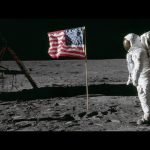
  • NASA Administrator Bill Nelson on the 55th Anniversary of Apollo 11

    NASA Administrator Bill Nelson on the 55th Anniversary of Apollo 11

    “Space can unite a troubled country in troubled times. And no moment united the country quite like when the Eagle landed, as all of planet Earth watched from below.”

    For the 55th anniversary of the Apollo 11 Moon landing, and in the midst of times that recall the era when the Moon landing took place, NASA Administrator Bill Nelson shares a message on the special power of space to bring people together—and the hope that this anniversary will be a time for reflection and healing.

    Learn more about Apollo missions at https://www.nasa.gov/the-apollo-program/

    Credit: NASA
    Producer: Shane Apple