NASA astronaut Randy Bresnik captured this footage with a GoPro camera on Oct. 20, 2017 during a spacewalk outside the International Space Station. Bresnik reflected on this quiet moment, “Sometimes on a #spacewalk, you just have to take a moment to enjoy the beauty of our planet Earth. This Go-Pro footage is from our spacewalk where Joe Acaba and I refurbished the Canadarm2 robotic arm and the Dextre robotic arm extension.”
Read more about the spacewalk: https://blogs.nasa.gov/spacestation/2017/10/20/expedition-53-spacewalk-successfully-comes-to-an-end/
Follow Randy Bresnik: https://twitter.com/astrokomrade
https://www.facebook.com/AstroKomrade/
https://www.instagram.com/astrokomrade/
Category: Astronomie
-

Action Cam Footage From October 2017 Spacewalk
-

New Details about Interstellar Visitor on This Week @NASA – November 24, 2017
New data reveal that the interstellar asteroid that recently zipped through our solar system is rocky, cigar-shaped, and has a somewhat reddish hue. It’s the first confirmed object from another star observed in our solar system, and was discovered Oct. 19 by the University of Hawaii’s Pan-STARRS1 telescope team, funded by NASA’s Near-Earth Object Observations Program. The telescope team named it ‘Oumuamua (oh MOO-uh MOO-uh) – Hawaiian for “a messenger from afar arriving first.” The unusually-shaped asteroid, which is up to a quarter mile long and perhaps 10 times as long as it is wide, may provide new clues into how other solar systems formed. Also, Advanced Weather Satellite Launched, James Webb Space Telescope Completes Final Cryogenic Testing, Recurring Martian Streaks: Flowing Sand, Not Water? and Happy Thanksgiving, from Space!
This video is available for download from NASA’s Image and Video Library: https://images.nasa.gov/details-NHQ_2017_1124_New%20Details%20about%20Interstellar%20Visitor%20on%20This%20Week%20@NASA%20%E2%80%93%20November%2024,%202017.html
-
ESA Euronews: Space debris
Space debris has become a pressing issue, with objects in orbit flying out of control, posing a risk to satellites and to astronauts. We attended a meeting of space debris experts at ESA’s ESTEC technology base in the Netherlands to find out more about what can be done to deal with the problem.
This video is also available in the following languages:
German: https://www.youtube.com/watch?v=cQAje74nQuI
French: https://www.youtube.com/watch?v=fXcrMQ5WjFI
Italian: https://www.youtube.com/watch?v=Jp26l0PnMzo
Spanish: https://www.youtube.com/watch?v=j7XXKHKlBPo
Portuguese: https://www.youtube.com/watch?v=K_NIAMWBofk
Greek: https://www.youtube.com/watch?v=F4cl5p2kpKA
Hungarian: https://www.youtube.com/watch?v=4N4bfQSHTbM -

ESA Euronews: Lixo espacial
O lixo espacial é um problema premente na órbita da Terra. Existem milhões de objetos a voar pelo espaço, descontrolados, colocando em perigo satélites e astronautas.
Em busca de uma solução para evitar uma colisão trágica para lá da última fronteira ou, quem sabe, o infortúnio de um qualquer detrito cair e atingir alguém na Terra, cerca de 200 cientistas reúnem-se todos os anos na Holanda, na base da Agência Espacial Europeia (ESA, na sigla original), para debater a limpeza do espaço e confrontar ideias sobre o desenvolvimento, por exemplo, de satélites mais seguros no fim de vida.
Existem quase 8000 toneladas de lixo espacial em órbita, incluindo cerca 29.000 objetos com mais de dez centímetros e mais de um milhão pequenos demais para poderem ser seguidos.
As colisões acontecem e todos os pedaços, mesmo os mais pequenos de apenas um milímetro, revelam-se perigosos, sublinha a diretora do gabinete da ESA para a limpeza do espaço.
-
ESA Euronews: I detriti spaziali
I detriti spaziali sono un problema sempre più urgente. In orbita ci sono circa 8mila tonnellate di detriti spaziali: 29mila oggetti di oltre 10 centimetri e più di un milione di frammenti troppo piccoli per essere tracciati. Sono un pericolo per i satelliti e per gli astronauti. Le collisioni sono possibili, perciò ogni detrito rappresenta un pericolo.
Ogni anno 200 esperti in materia di spazzatura spaziale si riuniscono nella sede dell’Esa per affrontare la questione. Tra loro ci sono i rappresentanti delle agenzie spaziali e delle aziende che producono satelliti e razzi.
-

ESA Euronews: Mit kezdjünk az űrtörmelékkel?
Körülbelül 8 000 tonna törmelék kering az űrben. 29 000 10 cm méretű, és több mint egymillió darab ennél is kisebb tárgy.
Az ütközések megtörténnek, és minden törmelék veszélyt jelent. Ezen a ponton még egy nagyon kicsi törmelék is jelentős, mert a sebessége, amivel utazik, ha egy másik testet vagy műholdat elér, felrobbanthatja azt, így még a legapróbb törmelékeknek is fontos a szerepük.
Minden évben 200 európai űrkutatási szakember találkozik az Európai Űrügynökség, az ESA hollandiai technológiai központjában, hogy megvitassák a fontos kérdéseket.
Ők képviselik a fontosabb szereplőket, és mindannyian egyetértenek abban, hogy mit kell tenniük.
-
ESA Euronews: «διαστημικά σκουπίδια»
Καλωσήλθατε στην εκπομπή Space. Ας ρίξουμε μια προσεκτική ματιά στο πιεστικό πρόβλημα των «διαστημικών σκουπιδιών». Υπάρχουν εκατομμύρια τέτοια αντικείμενα στο διάστημα εκτός ελέγχου. Ενέχουν κινδύνους για τους δορυφόρους και τους αστροναύτες. Τι μπορεί να γίνει; Βρισκόμαστε στη βάση του Ευρωπαϊκού Οργανισμού Διαστήματος στην Ολλανδία.
Υπάρχουν περίπου 8.000 τόνοι διαστημικών σκουπιδιών σε τροχιά — 29.000 αντικείμενα εντοπισμένα μεγέθους πάνω από 10 εκατοστά και πάνω από ένα εκατομμύριο μικρά «διαστημικά σκουπίδια .
-

ESA Euronews: Débris spatiaux
Dans ce numéro de Space, Jeremy Wilks s’est penché sur l’épineuse question des débris spatiaux, avec les experts du centre européen de technologie spatiale de l’Agence Spatiale Européenne, aux Pays-Bas.
-
ESA Euronews: Los desechos espaciales
Este mes estamos observando de cerca el apremiante problema de los desechos espaciales. Literalmente hay millones de objetos en órbita volando fuera de control. ¿Qué se puede hacer?.
Estamos en el Centro Europeo de Investigación y Tecnología Espacial de los Países Bajos para averiguarlo.
Se estima que hay 8.000 toneladas de desechos espaciales orbitando: 29.000 objetos rastreados de más de 10 centímetros de tamaño y más de un millón de fragmentos demasiado pequeños para poder seguir.Haz colisiones y cada pedazo de escombro es un peligro.
-
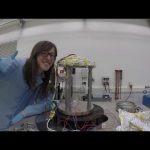
Aleks’ experience as an ESA Young Graduate Trainee
Aleksandra, 24, from Latvia, shares her experience as an ESA YGT. In this video, the Aerospace Engineer speaks about her work in the thermal analysis and verification section, working with measurements at cryogenic temperatures. Aleks also shows her experiment set up in the Mechanical Systems Laboratory (MSL).
Apply now for new Young Graduate Trainee opportunities:
http://www.esa.int/About_Us/Careers_at_ESA/Apply_now_for_new_Young_Graduate_Trainee_opportunities -
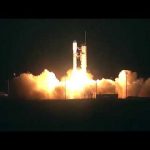
NASA Launches NOAA Weather Satellite to Improve Forecasts
Early on the morning of Saturday, Nov. 18, NASA successfully launched for the National Oceanic and Atmospheric Administration (NOAA) the first in a series of four advanced polar-orbiting satellites, equipped with next-generation technology and designed to improve the accuracy of U.S. weather forecasts out to seven days. The Joint Polar Satellite System-1 (JPSS-1) lifted off on a United Launch Alliance Delta II rocket from Vandenberg Air Force Base on California’s central coast. JPSS-1 data will improve weather forecasting and help agencies involved with post-storm recovery by visualizing storm damage and the geographic extent of power outages.
This video is available for download from NASA’s Image and Video Library: https://images.nasa.gov/details-NHQ_2017_1118_NASA%20Launches%20NOAA%20Weather%20Satellite%20to%20Improve%20Forecasts.html
-
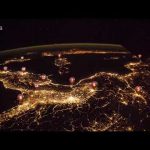
Test your geography skills in this timelapse over Europe!
It’s time to test your geography skills! Can you name one or more cities in this night timelapse over Europe?
If yes, go and write your answers on Paolo’s social media accounts (Twitter, Facebook or Instagram) as a comment or a reply to his video using the hashtag #timelapsechallenge. Stay tuned for the answers!
A series of nighttime photos were taken by ESA astronaut Paolo Nespoli to create this time-lapse of the Earth as seen from the Space Station.
ESA astronaut Paolo Nespoli in currently working and living on board the International Space Station as part of the Italian Space Agency’s long-duration VITA mission.
Find out the answers here: https://www.youtube.com/watch?v=SsrgFFPpRKI
Follow the VITA mission: http://blogs.esa.int/VITAmission/
Connect with Paolo via http://paolonespoli.esa.intPaolo on Twitter: http://www.twitter.com/astro_paolo
Paolo on Facebook: https://www.facebook.com/ESAPaoloNespoli/
Paolo on Instagram: https://www.instagram.com/astro_paolo/ -
Earth from Space: Salar de Atacama
Earth from Space is presented by Kelsea Brennan-Wessels from the ESA Web-TV virtual studios. In the 248th edition, discover Chile’s largest salt flat in the Atacama Desert.
See also http://www.esa.int/spaceinimages/Images/2017/11/Salar_de_Atacama_Chile to download the image.
-
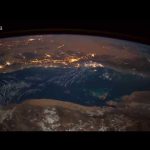
A meteoroid as seen from the Space Station… make a wish!
A series of night-time photos were taken by ESA astronaut Paolo Nespoli on 5 November around 22:33 GMT, here shown in a time-lapse with a 1-second interval, while the Space Station was flying from the southern Atlantic Ocean over to Kazakhstan.
Paolo was lucky enough to capture a fast fireball falling to Earth over the Atlantic Ocean, off the South Africa west coast — look closely between 00:07 and 00:08 seconds at upper right in this video.
A fireball is basically a very bright meteoroid — a small bit of natural “space rock” — entering Earth’s atmosphere and burning brighter than the background stars. This particular meteoroid was moving much faster than typical, with an estimated speed of around 40 km/s, according to experts working on near-Earth objects (NEOs) in ESA’s Space Situational Awareness Programme.
“This speed is actually quite fast for meteoroids, which typically enter the atmosphere at around 20 km/s,” says Rüdiger Jehn, SSA NEO segment co-manager.
ESA astronaut Paolo Nespoli in currently working and living on board the International Space Station as part of the Italian Space Agency’s long-duration VITA mission.
Follow the VITA mission: http://blogs.esa.int/VITAmission/
Connect with Paolo via http://paolonespoli.esa.int -
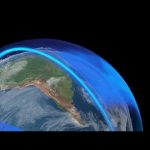
Monitoring ozone
The ozone layer protects life on Earth from ultraviolet radiation but it is also a powerful greenhouse gas. Satellites can provide measurements of atmospheric ozone and monitor distribution changes with the seasons.
Credit: ESA/CCI Ozone and Aerosol teams/Planetary
Visions -
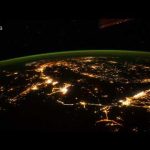
From the Black Sea to Oman, across the Persian Gulf!
A series of nighttime photos were taken by ESA astronaut Paolo Nespoli to create this time-lapse of the Earth from the Black Sea to Oman as seen from the International Space Station.
ESA astronaut Paolo Nespoli in currently working and living on board the International Space Station as part of the Italian Space Agency’s long-duration VITA mission.
Follow the VITA mission: http://blogs.esa.int/VITAmission/
Connect with Paolo via http://paolonespoli.esa.int -
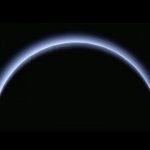
Pluto’s mysteries
European scientists are learning more about Pluto’s mysteries from NASA’s New Horizons mission, even as the spacecraft continues its summer hibernation. Data sent back from the spacecraft reveals a dynamic planet filled with unusual features that are helping scientists understand this unusually dynamic and icy world.
-
Earth from Space: special edition
Discover more about our planet with the Earth from Space video programme. This special edition celebrates three years of successful operations of the Copernicus Sentinel-1 constellation.
More about Sentinel-1:
http://www.esa.int/Our_Activities/Observing_the_Earth/Copernicus/Sentinel-1Credits:
BAS/S. Burrel
BAS-Karl Tuplin
Cesbio
CNR IREA
CNRS
COMET
Copernicus Emergency Management Service
Copernicus Marine Environment Monitoring Service
CPOM
DLR
DMI
ENVEO
ESA/ATG medialab
ESA/CNES/Arianspace
Gamma Remote Sensing
INGV
IPGP
NORUT
Oceandatalab
Planetary Visions
PPO.labs
Tigernet
University of Leeds -
NASA Earth and Space Air Prize
Breathable air is necessary to sustain humans both on Earth as well as in space.
NASA is working with the Robert Wood Johnson Foundation (RWJF) to sponsor the Earth and Space Air Prize competition for a solution that could improve air quality and health in space and on Earth. This project is a technology innovation challenge to promote development of robust, durable, inexpensive, efficient, lightweight, and easy-to-use aerosol sensors for space and Earth environments. The competition asks teams or individuals to design and develop specialized sensor technology that has the potential to be useful in spaceflight as well as on Earth anywhere outdoors in a community where people may be exposed to airborne particles.To learn more about the rules and to register for the competition please visit www.earthspaceairprize.org
This video can also be located at:
https://images.nasa.gov/details-NHQ_2017_1026_Air%20Prize_FINAL.html -
All the beauty of Italy from the Space Station
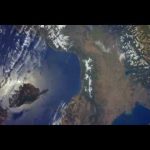
Filmed with a RED Dragon camera aboard the International Space Station by ESA astronaut Paolo Nespoli on 29 August 2017, the video is shown in real time as the ISS flew over Italy.
Background song “Daylight” by Roob Sebastian.
ESA astronaut Paolo Nespoli in currently working and living aboard the International Space Station as part of the Italian Space Agency long duration VITA mission.
Follow the VITA mission: http://blogs.esa.int/VITAmission/
Connect with Paolo via http://paolonespoli.esa.int -

Africa and its colours, from the Space Station (time-lapse)
A series of day-time photos were taken by ESA astronaut Paolo Nespoli to create this time-lapse of Africa as seen from the Space Station.
ESA astronaut Paolo Nespoli in currently working and living aboard the International Space Station as part of the Italian Space Agency long duration VITA mission.
Follow the VITA mission: http://blogs.esa.int/VITAmission/
Connect with Paolo via http://paolonespoli.esa.int -
NASA’s New “Gravity Assist” Podcast Debuts Nov. 15
Join us November 15 for the debut of the new NASA podcast, “Gravity Assist,” hosted by Dr. Jim Green, NASA’s director of planetary science. Gravity Assist is a virtual tour of the solar system and beyond with the top scientists in the world as your guides. The weekly podcast kicks off with a special 10-part series on the solar system that begins with the Sun, and takes you outward to Pluto and beyond.
This video is available for download from NASA’s Image and Video Library: https://images.nasa.gov/#/details-NHQ_2017_1027_NASA%E2%80%99s%20New%20%E2%80%9CGravity%20Assist%E2%80%9D%20Podcast%20Debuts%20Nov.15.html
-
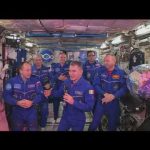
Pence Visits Mars InSight Facility on This Week @NASA – October 27, 2017
On Oct. 26, Vice President Mike Pence joined our Associate Administrator for Science, Thomas Zurbuchen for a close-up view of the agency’s Mars InSight spacecraft, during a visit to the Littleton, Colorado facilities of Lockheed Martin. InSight is being prepped for a May 2018 launch to the Red Planet, with landing targeted for next November. The mission will study the deep interior of Mars, with a primary goal of helping scientists understand how rocky planets – including Earth – formed and evolved. The vice president also visited a Virtual Reality lab that featured demos of the company’s human exploration efforts, including our Orion spacecraft. Orion will launch on the agency’s Space Launch System rocket, and take humans farther into the solar system than ever before. Also, Interstellar Visitor from Beyond the Solar System, Space Station Crew Talks with Pope Francis, Dawn Finds Possible Ancient Ocean Remnants at Ceres, and Take a Walk on Mars!
This video is available for download from NASA’s Image and Video Library: https://images.nasa.gov/#/details-NHQ_2017_1027_Pence%20Visits%20Mars%20InSight%20Facility%20on%20This%20Week%20@NASA%20%E2%80%93%20October%2027,%202017.html
-
Happy Halloween from NASA
If school wasn’t scary enough… here is a spooky/amusing take on watching a classroom film on Halloween.
NASA wishes you a safe and happy Halloween -
Paxi – Cykl hydrologiczny
Paxi przybywa na Planetę Ziemia. Razem z nim dowiedz się więcej o obiegu wody w przyrodzie. W tym filmie, przeznaczonym dla dzieci w wieku 6-12 lat, Paxi tłumaczy jak działa obieg wody.
-
Earth from Space: Washington DC
Earth from Space is presented by Kelsea Brennan-Wessels from the ESA Web-TV virtual studios. Explore the US capital with Sentinel-2 in the 245th edition.
See also http://www.esa.int/spaceinimages/Images/2017/10/Washington_DC to download the image.
-
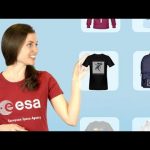
ESAshop: ESA products at your fingertips
If you’re looking for the perfect gift for a space enthusiast, the ESAshop is for you. From clothing and accessories to phone cases and backpacks, you’ll find a wide range of products to suit all ages.
The store offers three different product lines: classic, design and United Space in Europe.
Children are soon set to have their own product line featuring ESA mascot Paxi. Ordering is easy: simply click on the items you want, choose the colour and size, then head to the checkout.
All items are printed on demand and delivered to your door, wherever you are in the world.
Why not visit ESAshop and have a look around?
https://www.esa.int/esashop -
Paxi – El Ciclo del agua
Únete a Paxi en su viaje por el planeta Tierra, y aprende sobre el ciclo del agua.
En este vídeo, apto para niños de 6 a 12 años, Paxi explica cómo funciona el ciclo del agua.
-
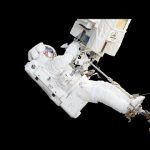
First Light Detected from Gravitational Wave Event on This Week @NASA – October 20, 2017
For the first time, NASA scientists have detected light tied to a gravitational-wave event. The gravitational wave – caused by an explosive merger of two neutron stars, about 130 million light-years from Earth – produced a gamma-ray burst and a rarely seen flare-up called a “kilonova”. The phenomenon was captured by our Fermi, Swift, Hubble, Chandra and Spitzer missions, along with dozens of NASA-funded ground-based observatories. Also, Trio of Station Spacewalks Completed, Fresh Findings from Cassini, and Test of SLS RS-25 Flight Engine!
This video is available for download from NASA’s Image and Video Library: https://images.nasa.gov/#/details-NHQ_20171023_This%20Week%20@%20NASA.html
-

NASA Tests RS-25 Flight Engine for Space Launch System
Engineers at NASA’s Stennis Space Center in Mississippi on Oct. 19 completed a hot-fire test of RS-25 rocket engine E2063, a flight engine for NASA’s new Space Launch System (SLS) rocket. Engine E2063 is scheduled to help power SLS on its Exploration Mission-2 (EM-2), the first flight of the new rocket to carry humans.
This video is available for download from NASA’s Image and Video Library: https://images.nasa.gov/#/details-NASA%20Tests%20RS-25%20Flight%20Engine%20for%20Space%20Launch%20System.html
-
Paxi – Koloběh vody
Připoj se k Paximu při poznávání koloběhu vody na planetě Zemi. Ve videu pro děti od 6 do 12 let Paxi vysvětlí, jak funguje koloběh vody
-
Paxi – Der Wasserkreislauf
Begleite Paxi bei seinem Besuch auf den Planeten Erde und lerne den Wasserkreislauf kennen.
In diesem Video, das sich an Kinder zwischen 6 und 12 Jahren richtet, erklärt Paxi, wie der Wasserkreislauf funktioniert.
-
Paxi – Le cycle de l’eau
Suis Paxi durant sa visite sur la Terre pour en savoir plus sur le cycle de l’eau.
Cette vidéo a été conçue pour les enfants âgés de 6 à 12 ans.
-
Paxi – De waterkringloop
Ga mee met Paxi als hij een bezoek brengt aan de aarde en kom meer te weten over de waterkringloop.
In deze video, bestemd voor kinderen van 6 tot 12 jaar, legt Paxi uit hoe de waterkringloop werkt.
-
Paxi – Il ciclo dell’acqua
Seguite Paxi mentre visita il pianeta Terra, per saperne di più sul ciclo dell’acqua.
In questo video, indirizzato ai ragazzi tra i 6 ed i 12 anni, Paxi spiega come funziona il ciclo dell’acqua.
-
Paxi – Circuitul apei în natură
Haideți să vizităm alături de Paxi planeta Pămant și să învățăm despre circuitul apei in natură.
Acest clip video se adresează copiilor între 6 și 12 ani. Paxi explică circuitul apei în natură.
-
Paxi – O ciclo da água
Junta-te ao Paxi nesta visita ao planeta Terra e aprende mais sobre o ciclo da água.
Recomendado para crianças entre os 6 e os 12 anos.
-
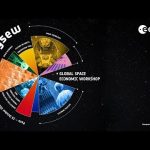
ESA Global Space Economic Workshop
ESA’s Global Space Economic Workshop on 13 October 2017 in Paris broughts together leaders of major space and non-space European stakeholders from institutions and commercial sectors, to interactively discuss space-led innovation opportunities and challenges offered by the on-going transformations that are driven by the digital economy and the current and future trends in the global market.
More info:
http://www.esa.int/About_Us/Business_with_ESA/GSEW/Global_Space_Economic_Workshop -

October Spacewalks Aboard the Space Station on This Week @NASA – October 13, 2017
The Oct. 10th spacewalk outside the International Space Station was the second in less than a week by NASA’s Randy Bresnik and Mark Vande Hei – and one of three U.S. spacewalks planned for October. The astronauts lubricated the new latching end effector they installed on the Canadarm2 robotic arm on Oct. 5. They also replaced a faulty camera system and completed several other tasks. Joe Acaba will join Bresnik for the next spacewalk – currently scheduled for Oct. 20. Also, California Wildfires Seen from Space, NASA Pinpoints Cause of Earth’s Record CO2 Levels, Send Your Name to Mars, Celebrating the First Piloted Supersonic Flight, and Potential Asteroid Warning Network Tested!
This video is available for download from NASA’s Image and Video Library: https://images.nasa.gov/#/details-NHQ_2017_1013_October%20Spacewalks%20Aboard%20the%20Space%20Station%20on%20This%20Week%20@NASA%20%E2%80%93%20October%2013,%202017.html
-
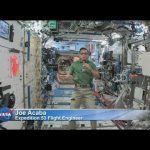
NASA Hispanic Heritage Month Event, ¡Latinos STEM Up!
On Oct. 12, NASA’s Hispanic Outreach and Leadership Alliance (HOLA) celebrated Hispanic Heritage month with a panel discussion of the contributions of Hispanics to NASA’s mission and the importance of Hispanic representation in science, technology, engineering and mathematics (STEM) education and careers.
This video is available for download from NASA’s Image and Video Library: https://images.nasa.gov/#/details-NHQ_%202017_1012_NASA%20Hispanic%20Heritage%20Month%20Event,%20%C2%A1Latinos%20STEM%20Up!.html