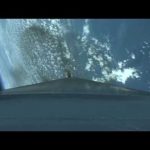
On April 18, Orbital ATK’s Cygnus cargo space craft launched from Cape Canaveral Air Force Station in Florida aboard a United Launch Alliance rocket, on Orbital ATK’s seventh resupply mission to the International Space Station. Cygnus is packed with 7,600 pounds of supplies and research for the crew aboard the orbiting laboratory.
Category: Astronomie
-

Space debris – a journey to Earth (3D stereoscopic)
Space debris – a journey to Earth (3D stereoscopic version) takes the audience on a journey from the outer solar system back to our home planet. The objects encountered along the way are manmade. Originally designed to explore the universe, these are now a challenge for modern space flight. An estimated number of 700,000 objects larger than 1 cm and 170 million objects larger than 1mm are expected to reside in Earth orbits.
The video gives a closer look at the different regions used for space flight and explains how mitigation and removal measures could preserve future usage of these orbits.
A 2D version of this video is available at: https://www.youtube.com/watch?v=zT7typHkpVg
Produced for the 7th European Conference on Space Debris, 18-21 April 2017.
Follow the conference live via: https://livestream.com/esa/spacedebris2017
Credit: ESA/ID&Sense/ONiRiXEL, CC BY-SA 3.0 IGO (https://creativecommons.org/licenses/by-sa/3.0/igo/)
-
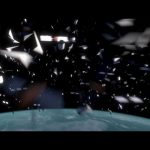
Space debris – a journey to Earth
Space debris – a journey to Earth takes the audience on a journey from the outer solar system back to our home planet. The objects encountered along the way are manmade. Originally designed to explore the universe, these are now a challenge for modern space flight. An estimated number of 700,000 objects larger than 1 cm and 170 million objects larger than 1mm are expected to reside in Earth orbits.
The video gives a closer look at the different regions used for space flight and explains how mitigation and removal measures could preserve future usage of these orbits.
Produced for the 7th European Conference on Space Debris, 18-21 April 2017.
A 3D stereoscopic version of this video is available here: https://www.youtube.com/watch?v=EzrMHWjQCtc
Follow the conference live via: https://livestream.com/esa/spacedebris2017
Credit: ESA/ID&Sense/ONiRiXEL, CC BY-SA 3.0 IGO (https://creativecommons.org/licenses/by-sa/3.0/igo/)
-

Oceans Beyond Earth on This Week @NASA – April 14, 2017
Two long-running NASA missions are providing new details about ocean bearing moons of Jupiter and Saturn – further heightening scientific interest in these and other “ocean worlds” in our solar system and beyond. The details – discussed during an April 13 NASA science briefing – include the announcement by the Cassini mission that a key ingredient for life has been found in the ocean on Saturn’s moon Enceladus. Meanwhile, researchers using the Hubble Space Telescope observed a probable plume erupting from the surface of Jupiter’s moon Europa, at the same location where Hubble saw evidence of a plume in 2014. Researchers say this could be circumstantial evidence of water erupting from the moon’s interior. Hubble’s monitoring of plume activity on Europa and Cassini’s long-term investigation of Enceladus are laying the groundwork for NASA’s Europa Clipper mission, which is being planned for launch in the 2020s. Also, Expedition 50 Returns Home Safely, Next Space Station Crew at Launch Site, Student Launch Event, Groundbreaking for New Lab, and Yuri’s Night, First Space Shuttle Mission Celebrated!
-

Earth from Space: Central-eastern Brazil
Earth from Space is presented by Kelsea Brennan-Wessels from the ESA Web-TV virtual studios. In the 225th edition, Sentinel-2 takes us over vast agricultural fields in Brazil.
See also http://www.esa.int/spaceinimages/Images/2017/04/Central-eastern_Brazil to download the image.
-
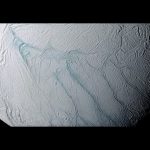
NASA Reveals New Discoveries on Oceans Beyond Earth During Science Briefing
During a NASA science briefing on April 13, representatives from the agency discussed new results about ocean worlds in our solar system based on data gathered by NASA’s Cassini spacecraft and the Hubble Space Telescope.
The two veteran missions are providing tantalizing new details about icy, ocean-bearing moons of Jupiter and Saturn, further enhancing the scientific interest of these and other “ocean worlds” in our solar system and beyond.
New research from Cassini indicates that hydrogen gas, which could potentially provide a chemical energy source for life, is pouring into the ocean of Saturn’s icy moon Enceladus from hydrothermal vents in the seafloor. The Cassini spacecraft detected the hydrogen in the plume of gas and icy material spraying from Enceladus during its deepest dive through the plume on Oct. 28, 2015.This means that ocean microbes — if any exist there — could use the hydrogen to produce energy
NASA’s Hubble Space Telescope saw a probable plume of material erupting from the moon’s surface on 2016, at the same location where Hubble saw evidence of a plume in 2014. These images bolster evidence that the Europa plumes could be a real phenomenon, flaring up intermittently in the same region on the moon’s surface.
Both Cassini and Hubble investigations are laying the groundwork for NASA’s Europa Clipper mission, which is being planned for launch in the 2020s.
-
Concours d’écriture : les coups de cœur de Thomas Pesquet
Trois mois après le coup d’envoi depuis la Station spatiale internationale du concours d’écriture “Faites voyager vos histoires dans l’Espace”, 8400 participants issus des quatre coins du monde ont imaginé une suite aux voyages du Petit Prince de Saint-Exupéry. Thomas Pesquet a choisi ses deux coups de cœur parmi les textes lauréats.
Plus d’informations sur le concours : http://www.missionproxima.com/concours-ecriture
-

The motion of two million stars
This video reveals the changing face of our Galaxy, tracing the motion of two million stars five million years into the future using data from the Tycho-Gaia Astrometric Solution, one of the products of the first Gaia data release. This provides a preview of the stellar motions that will be revealed in Gaia’s future data releases, which will enable scientists to investigate the formation history of our Galaxy.
The stars are plotted in Galactic coordinates and using a rectangular projection: in this, the plane of the Milky Way stands out as the horizontal band with greater density of stars.
The video starts from the positions of stars as measured by Gaia between 2014 and 2015, and shows how these positions are expected to evolve. The frames in the video are separated by 750 years, and the overall sequence covers five million years. The stripes visible in the early frames reflect the way Gaia scans the sky and the preliminary nature of the first data release; these artefacts are gradually washed out in the video as stars move across the sky.
The shape of the Orion constellation can be spotted towards the right edge of the frame, just below the Galactic Plane, at the beginning of the video. As the sequence proceeds, the familiar shape of this constellation (and others) evolves into a new pattern. Two stellar clusters – groups of stars that were born together and consequently move together – can be seen towards the left edge of the frame: these are the alpha Persei (Per OB3) and Pleiades open clusters.
More about this video:
http://sci.esa.int/gaia/59004-two-million-stars-on-the-move/Credit: ESA/Gaia/DPAC CC BY-SA 3.0 IGO: https://creativecommons.org/licenses/by-sa/3.0/igo/
-
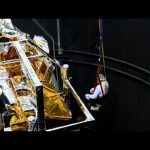
Making moves on MetOp
It’s known colloquially as a ‘flying Dutchman’ operation: lowering an engineer down into ESA’s Large Space Simulator to make adjustments on the test item within; in this case the payload module of the newest in the MetOp series of weather satellites. The LSS is the largest vacuum chamber in Europe, based at ESA’s Test Centre in Noordwijk, the Netherlands.
MetOp is a set of three polar-orbiting satellites whose temperature and humidity observations from a relatively close 800 km-altitude orbit have sharpened the accuracy of weather forecasting. Procured by ESA for Eumetsat, the European Organisation for the Exploitation of Meteorological Satellites, MetOp-A was launched in 2006 and MetOp-B in 2012, with MetOp-C due to follow next year.
The 2.1 tonne module carries a suite of meteorology and climatology instruments, variously procured by ESA or sourced from Eumetsat, France’s CNES space agency and the US National Oceanic and Atmospheric Administration. Once testing is complete, MetOp-C’s payload module will travel to the Airbus Defence and Space facility in Toulouse, France, to be integrated with its service module – the segment of the satellite providing attitude and orbit control, electrical power and communications, and hosting the main computer. The launch of MetOp-C by Soyuz from Europe’s Spaceport in French Guiana is scheduled for October 2018.
-

Dealing with space debris
Earth is surrounded by a cloud of space debris. This material ranges from dead satellites and rocket stages to fragments of material and even flecks of paint… and all this junk could do enormous damage to working satellites.
During 18–21 April, experts from around the world will meet at ESA’s European Space Operations Centre, Darmstadt, Germany for the 7th European Conference on Space Debris.
Delegates will discuss the extent of the debris problem and what can be done to ensure that satellites we rely on – providing us with services such as navigation, TV and weather forecasting – can operate safely in the future.
Talks will address acute issues like current practices in debris avoidance, novel concepts for removing debris, and the deployment of large constellations of several thousand satellites for telecommunications.
The conference will be opened by ESA Director General Jan Woerner and NASA’s former orbital debris chief scientist, Donald Kessler.
On 18 April and 21 April, live webcasts will cover the keynote address and press briefing, respectively. Details via esa.int/debris.
More information
ESA Space Debris http://www.esa.int/debris
ESA CleanSpace http://www.esa.int/CleanSpace -

NASA Cassini Mission Prepares for “Grand Finale” on This Week @NASA – April 7, 2017
NASA held a news conference April 4 at the Jet Propulsion Laboratory, with participation from NASA headquarters, to preview the final phase of the Cassini spacecraft’s mission to Saturn. On April 26, Cassini will begin its “Grand Finale” – a series of deep dives between the planet and its rings. No other mission has ever explored this unique region that is so close to the planet. Cassini will make 22 orbits that swoop between the rings and the planet before ending its 20-year mission on Sept. 15, with a final plunge into Saturn. The mission team hopes to gain powerful insights into the planet’s internal structure and the origins of the rings, obtain the first-ever sampling of Saturn’s atmosphere and particles coming from the main rings, and capture the closest-ever views of Saturn’s clouds and inner rings. Also, Next Space Station Crew Travels to Launch Site, New Target Launch Date for Orbital ATK Mission to ISS, Lightfoot Visits Industry Partners, Human Exploration Rover Challenge, and John Glenn Interred at Arlington National Cemetery.
-

Earth from Space: Vojvodina, Serbia
Earth from Space is presented by Kelsea Brennan-Wessels from the ESA Web-TV virtual studios. In the 224th edition, Sentinel-2 takes us over northern Serbia to the region of Vojvodina.
See also http://www.esa.int/spaceinimages/Images/2017/04/Vojvodina_Serbia to download the image.
Animation credit:
ESA/ATG medialab -

Orion and the European Service Module
NASA’s Orion spacecraft will take astronauts to destinations at or beyond low Earth orbit. In January 2013, it was announced that ESA would provide the European Service Module (ESM) for Orion’s first uncrewed mission. Derived from ESA’s Automated Transfer Vehicle cargo spacecraft, the ESM will provide life support, propulsion and structural functions for Orion. In February 2017, a contract was signed for a second ESM to be used on Orion’s first crewed flight, which will carry astronauts beyond the Moon and back.
More about European Service Module:
http://www.esa.int/Our_Activities/Human_Spaceflight/Orion/European_Service_Module -

NASA Previews ‘Grand Finale’ of Cassini Saturn Mission
NASA held a news conference April 4, at the agency’s Jet Propulsion Laboratory (JPL) in Pasadena, California, to preview the beginning of Cassini’s final mission segment, known as the Grand Finale, which begins in late April. The briefing was shown live on NASA Television and on the agency’s website.
Cassini has been orbiting Saturn since June 2004, studying the planet, its rings and its moons. A final close flyby of Saturn’s moon Titan on April 22 will reshape the Cassini spacecraft’s orbit so that it begins its final series of 22 weekly dives through the unexplored gap between the planet and its rings. The first of these dives is planned for April 26. Following these closer-than-ever encounters with the giant planet, Cassini will make a mission-ending plunge into Saturn’s upper atmosphere on Sept. 15.
-
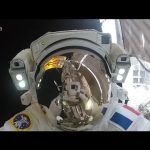
Out of this world: Thomas Pesquet’s unedited spacewalk in high definition
This unedited video without sound lasts over five hours and shows almost all of ESA astronaut Thomas Pesquet’s spacewalk outside the International Space Station.
NASA astronaut Shane Kimbrough and Thomas left the International Space Station airlock 24 March 2017 on their second spacewalk together. Thomas and Shane worked separately throughout their sortie.
Thomas was tasked to inspected the Station’s cooling system for leaks. He took photos and videos as he patted and prodded the cooling pipes to see if any coolant leaked out. This video starts when he turns on the camera used to record cooling system inspection for analysis by ground control.
Thomas’ second task was to maintain the multipurpose robotic hand Dextre – he had the laborious job of applying lubricant. After setting up a foot restraint to allow him to work with both hands, NASA astronaut Peggy Whitson moved Dextre into position using the controls inside the Station.
The video ends with Thomas returning to the Quest airlock – the spacewalk lasted six hours and 34 minutes in total with time spent in the airlock included.
An eight-minute highlight of this spacewalk is available here: https://www.youtube.com/watch?v=-g0pRlDrEd4
Thomas is spending six months on the International Space Station as part of his Proxima mission. During Proxima, Thomas will perform around 50 scientific experiments for ESA and France’s space agency CNES as well as take part in many research activities for the other Station partners.The mission is part of ESA’s vision to use Earth-orbiting spacecraft as a place to live and work for the benefit of European society while using the experience to prepare for future voyages of exploration further into the Solar System.
More about the Proxima mission: http://www.esa.int/proxima
Connect with Thomas Pesquet: http://thomaspesquet.esa.int -
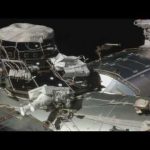
Space Station Upgrades Continue on This Week @NASA – March 31, 2017
Work continues aboard the International Space Station on upgrades to prepare it for future operational activities. Ground controllers, using the station’s robotic arm, moved the Pressurized Mating Adapter-3 (PMA-3) from the Tranquility module to the station’s Harmony module March 26. PMA-3 will be outfitted with one of two International Docking Adapters to accommodate U.S. commercial spacecraft carrying astronauts on future missions. Four days after the PMA-3 move, NASA’s Shane Kimbrough and Peggy Whitson conducted the second in a series of three planned spacewalks to complete work related to the upgrades. The third spacewalk is planned in April. Also, James Webb Space Telescope Completes Acoustic and Vibration Tests, MAVEN Data Helps Measure Loss of Mars’ Atmosphere, Getting Excited About STEM, and New NASA App for Amazon Fire TV!
-
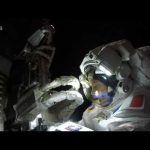
Station spacewalk (GoPro footage hyperlapse)
GoPro footage of ESA astronaut Thomas Pesquet working outside the International Space Station during a spacewalk on 24 March 2017.
Thomas is seen performing his spacewalk tasks. Firstly he inspected the Station’s cooling system for leaks. He took photos and recorded video images as he patted and prodded the cooling pipes to see if any coolant leaked out. No leak was found, but ground control can now analyse the images in detail.
Thomas’ second task was to maintain the multipurpose robotic hand Dextre – he had the laborious job of applying lubricant. The footage concludes when he has set up a foot restraint and is preparing to start work on Dextre – backdropped by a spectactular view of our planet.
For this spacewalk, Thomas and NASA astronaut Shane Kimbrough spent six hours and 34 minutes outside the Station.
Thomas is spending six months on the International Space Station as part of his Proxima mission. During Proxima, Thomas will perform around 50 scientific experiments for ESA and France’s space agency CNES as well as take part in many research activities for the other Station partners.
The mission is part of ESA’s vision to use Earth-orbiting spacecraft as a place to live and work for the benefit of European society while using the experience to prepare for future voyages of exploration further into the Solar System.
More about the Proxima mission: http://www.esa.int/proxima
Connect with Thomas Pesquet: http://thomaspesquet.esa.intCredit: ESA/NASA
Music: ’Oaxaca’
Written by M. Cherry, C. Dennis, G. Fuchs, C. McNeal, S. Moore
Performed by Maserati
Published by Rough Trade Publishing
Courtesy of Temporary Residence Ltd.
By Arrangement with Bank Robber Music -
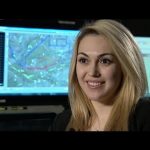
NASA 2017 Women’s History Month Profile – Steffi Valkov, AFRC
Steffi Valkov is a Flight Operations Engineer at NASA Armstrong Flight Research Center. Steffi’s current project, UAS Integration in the NAS, has her fulfilling multiple roles which include leading flight operations working groups, developing flight test scenarios, and control room duties.
-

NASA Highlighted in President’s Weekly Address
President Trump, who signed into law the NASA Transition Authorization Act of 2017 on March 21, highlighted America’s space agency during his weekly address on March 25.
-
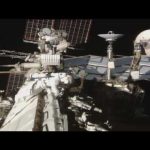
Space Station Crew Members Walk in Space with an Eye to the Future
Expedition 50 Commander Shane Kimbrough of NASA and Flight Engineer Thomas Pesquet of the European Space Agency conducted a spacewalk outside the International Space Station March 24 to disconnect cables and electrical connections on Pressurized Mating Adapter-3 (PMA-3), lubricate the latching end effector on the Canadarm2 robotic arm and replace a computer relay box on the station’s truss. PMA-3 will be robotically relocated March 30 by ground controllers from the port side of the Tranquility module to the space-facing side of the Harmony module for the future installation of a second International Docking Adapter that will accommodate the arrivals of commercial crew vehicles. The spacewalk is the first of three planned in a two-week period for station crewmembers that will see PMA-3 reconnected to its new location on Harmony and an avionics box replaced that routes electricity and data to station experiments.
-

NASA’s Stennis Space Center Conducts RS-25 Engine Test
On March 23, NASA conducted a test of an RS-25 engine at the agency’s Stennis Space Center in Bay St. Louis, Mississippi. Four RS-25’s will help power NASA’s Space Launch System (SLS) rocket to space. During this test, engineers evaluated the engine’s new controller or “brain”, which communicates with the SLS vehicle. Once test data is certified, the engine controller will be removed and installed on one of the four flight engines that will help power the first integrated flight of SLS and the Orion spacecraft.
-
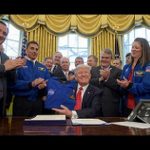
NASA Acting Administrator Statement on the NASA Authorization Act of 2017
The following is a statement from NASA acting Administrator Robert Lightfoot on President Trump signing Tuesday the National Aeronautics and Space Administration Transition Authorization Act of 2017.
“We would like to thank President Trump for his support of the agency in signing the National Aeronautics and Space Administration Transition Authorization Act of 2017.
“We also want to express our gratitude to a bipartisan Congress for its thoughtful consideration of the agency’s path forward. We are grateful for the longstanding support and trust of the American people, which enables our nation’s space, aeronautics, science, and technology development programs to thrive.
“Our workforce has proven time and again that it can meet any challenge, and the continuing support for NASA ensures our nation’s space program will remain the world’s leader in pioneering new frontiers in exploration, innovation, and scientific achievement.”
-

Lithospheric magnetic field
After three years of collecting data, the highest resolution map of Earth’s lithospheric magnetic field from space to date has been released. The dataset combines measurements from ESA’s Swarm satellites with historical data from the German CHAMP satellite using a new modelling technique that allowed scientists to extract tiny magnetic signals from Earth’s outer layer. Red represents areas where the lithospheric magnetic field is positive, while blues show areas where it is negative.
Read full article: http://www.esa.int/Our_Activities/Observing_the_Earth/Swarm/Unravelling_Earth_s_magnetic_field
Credits: ESA/DTU Space/DLR
-

JWST 2016 – Welcome: ESA Space Science Programme (M. Kessler)
The first workshop in this series took place at ESA’s European Space Astronomy Center (ESAC) near Madrid on September 26-28, 2016. The main goal of this first workshop was to present to help prospective JWST users to select the best observing modes to achieve their science goals.
-
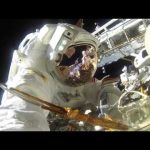
Study Confirms Biofuels Reduce Jet Engine Pollution on This Week @NASA – March 17, 2017
Findings published March 15 in the journal Nature from a series of flight tests in 2013 and 2014 near NASA’s Armstrong Flight Research Center in California indicate that using biofuels helps jet engines reduce particle emissions in exhaust by as much as 50 to 70 percent. That’s both an economic and an environmental benefit. The findings were based on data from the Alternative Fuel Effects on Contrails and Cruise Emissions Study, or ACCESS. The international research program led by NASA and involving agencies from Germany and Canada, studied the effects of alternative fuels on aircraft-generated contrails, engine performance and emissions. Also, NASA @SXSW Interactive Festival, Satellites See Winter Storm from Space, CST-100 Starliner Parachute Testing, and NASA’s Pi Day Challenge!
-

ESA Euronews: Universidade de Bremen é pioneira no mapeamento da poluição atmosférica
Certamente já usou uma aplicação no telemóvel para consultar a previsão meteorológica. Hoje, graças a uma rede de satélites e estações terrestres, é possível obter informações sobre poluição em várias cidades no seu telemóvel.
O jornalista Claudio Rosmino reporta-nos como a Universidade de Bremen, está a recolher esta variedade de dados para chegar a uma visão global da poluição atmosférica.
A atmosfera terrestre é um sistema complicado que depende de vários factores. Os satélites de observação que orbitam à volta do planeta monitorizam constantemente o estado do ar que inalamos e o modo como é afectado pela poluição natural e pela de origem humana.
Uma missão essencial uma vez que, segundo dados recentes da Organização Mundial de Saúde, uma em cada oito mortes a nível mundial se deve à poluição do ar.
Os investigadores da Universidade de Bremen são pioneiros na medição da poluição atmosférica cruzando os dados obtidos no espaço e os valores colhidos em estações terrestres.
-

Earth from Space: Calgary
Earth from Space is presented by Kelsea Brennan-Wessels from the ESA Web-TV virtual studios. In the 221st edition, Sentinel-2 takes us over the Rocky Mountains and Prairies of Canada’s Alberta province.
See also http://www.esa.int/spaceinimages/ESA_Multimedia/Images/2017/03/Calgary to download the image.
-
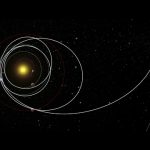
Juice’s journey to Jupiter
This animation shows the proposed trajectory of ESA’s Jupiter Icy Moons Explore (Juice) mission to Jupiter.
Based on a launch in June 2022, the spacecraft will make a series of gravity-assist flybys at Earth (May 2023, September 2024 and November 2026), Venus (October 2023) and Mars (February 2025) before arriving in the Jupiter system in October 2029.
The animation ends at the Jupiter orbit insertion point, but the planned 3.5 year mission will see Juice not only orbit Jupiter, but also make dedicated flybys of the moons Europa, Callisto and Ganymede, before orbiting the largest moon, Ganymede.
More about Juice:
http://sci.esa.int/juice/ -
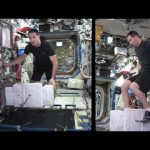
Space Station fitness
ESA astronaut Thomas Pesquet gives a guided tour of the International Space Station’s exercise machines. Staying fit is important on Earth but even more so in space as bones and muscle are used less in microgravity and tend to waste away. Astronauts spend around two hours every day doing fitness routines.
The Space Station has three types of exercise machines: a treadmill (T2), an exercise bicycle (CEVIS) and a weight-lifting machine (ARED).
Thomas is spending six months on the International Space Station as part of his Proxima mission. During Proxima, Thomas will perform around 50 scientific experiments for ESA and France’s space agency CNES as well as take part in many research activities for the other Station partners.
The mission is part of ESA’s vision to use Earth-orbiting spacecraft as a place to live and work for the benefit of European society while using the experience to prepare for future voyages of exploration further into the Solar System.
Connect with Thomas Pesquet: http://thomaspesquet.esa.int
-

Orion Spacecraft Parachute Test on This Week @NASA – March 10, 2017
NASA conducted the latest successful test of the Orion spacecraft’s parachute system on March 8 in the skies above the U.S. Army’s Yuma Proving Ground in Arizona. The test was designed to evaluate the parachutes’ performance in an emergency abort situation that would require Orion to be jettisoned from the agency’s Space Launch System rocket during a launch. Even at this relatively low altitude, the parachutes are designed to fully deploy and safely return Orion and its crew to Earth. Also, Shin Honored by Aviation Week, Space Station Resupply Mission Targeted for March 19, Small Business Innovation Proposals Selected, Deep Space Atomic Clock, Modern Figures Virtual Tour, and NASA Aero “Night of Flight”!
-
Pangaea 2016: Taking astronauts to other planets – on Earth
ESA is now training astronauts in identifying planetary geological features for future missions to the Moon, Mars and asteroids. This Pangaea course – named after the ancient supercontinent – will help astronauts to find interesting rock samples as well as to assess the most likely places to find traces of life on other planets.
This video was made during the second part of the Pangaea course held in Lanzarote, one of the Spanish Canary Islands in 2016 with ESA astronauts Luca Parmitano, Pedro Duque and Matthias Maurer and features interviews with the instructors and astronauts.
The students were tasked with interpreting geological features to understand the history of how the island formed. The goal is to help astronauts choose the best places to explore and collect rock samples.
This session put into practice a week’s training in Bressanone, Italy, where they learned about Earth and planetary geological processes as well as how to recognise rocks and meteorites.
The trio went on progressively difficult day trips, ending with a free exploration of the countryside searching for interesting samples while keeping in contact via radio with scientists at ‘mission control’.
Lanzarote was chosen for this course because of its geological similarity with Mars, such as a volcanic origin, mild sedimentary processes owing to a dry climate, hardly any vegetation and a well-preserved landscape.
More about the Pangeae course:
http://blogs.esa.int/caves/ -

NASA Advancing Aviation Technology on This Week @NASA – March 3, 2017
On March 2, NASA’s acting Administrator, Robert Lightfoot spoke at the U.S. Chamber of Commerce’s Aviation Summit in Washington, about how the agency’s technology advancements have helped transform the aviation industry. Lightfoot was then joined by Canadian Minister of Transport Marc Garneau, who is a former astronaut and Canadian Space Agency president, and Carol Hallett, counselor to the chamber, for a discussion with NASA’s Shane Kimbrough and Peggy Whitson, via satellite from the International Space Station. The two talked about the vast array of research and technology development conducted aboard the station. Also, Anniversary of One-Year Crew’s Return, IceCube SmallSat Ready for Launch, Orion Propulsion Qualification Module Installed, Small Business Industry Awards, and African American Pioneers in Aviation and Space!
-

Sentinel services for agriculture
Sentinel-2B will be launched by a Vega rocket from Europe’s Spaceport, French Guiana.
Lift off is scheduled at 01:49 GMT (02.49 CET) on 7 March, 22:49 on 6 March in Kourou.
It will join its sister satellite Sentinel-2A and the other Sentinels part of the Copernicus programme, the most ambitious Earth observation programme to date.
Sentinel-2A and 2B will be supplying ‘colour vision’ for Copernicus and together they can cover all land surfaces once every five days thus optimising global coverage and the data delivery for numerous applications.
The data provided by these Sentinel-2 satellites is particularly suited for agricultural purposes, such as managing administration and precision farming.
ESA is currently working with the European Commission and National stakeholders to understand the full range of opportunities Earth Observation can contribute in particular to modernise and simplify the Common Agricultural Policy. This video shows how agriculture benefits from the use of the Sentinel data in the Czech Republic.
More about Sentinel-2:
http://www.esa.int/Our_Activities/Observing_the_Earth/Copernicus/Sentinel-2 -
Gaia: Science-driven introduction to the archive
Alcione Mora – ESA
Presentation recorded during the first Gaia data workshop at ESA’s European Space Astronomy Centre (ESAC) 2-4 November 2016.
The slides to this presentation are available here:
http://www.cosmos.esa.int/documents/915837/915858/2016_11_02_dr1Workshop_AlcioneMora.pdf -
Gaia: The Visualisation of Gaia Data
André Moitinho – Lisbon University
Presentation recorded during the first Gaia data workshop at ESA’s European Space Astronomy Centre (ESAC) 2-4 November 2016.
The slides to this presentation are available here: http://www.cosmos.esa.int/documents/915837/915858/Moitinho_visualisation_v2.pdf
-
Gaia: Mission Overview
Timo Prusti – ESA
Presentation recorded during the first Gaia data workshop at ESA’s European Space Astronomy Centre (ESAC) 2-4 November 2016.
The slides to this presentation are available here:
http://www.cosmos.esa.int/documents/915837/915858/20161102_Gaia_TPrusti_web.pdf -
Capturing a dragon
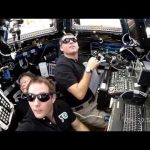
ESA astronaut Thomas Pesquet with NASA astronauts Shane Kimbrough and Peggy Whitson in the Cupola observatory using the International Space Station’s 16-m robotic arm to grapple the SpaceX Dragon cargo spaceship.
The video is sped up 20 times with this recording lasting 45 minutes 30 seconds at normal speed. It shows Shane and Thomas monitoring the spacecraft’s approach scanning the monitors, ready to step in if necessary. Thomas took manual control of the robotic arm and extended it to grapple the vehicle when 11 m from the Station. The Dragon CRS-10 flight was launched on 19 February 2017 and berthed with the Space Station four days later.
The spacecraft carried over 1500 kg of supplies including NASA’s Stratospheric Aerosol and Gas Experiment, or SAGE III, to monitor aerosols, ozone and other gases in Earth’s high atmosphere by looking at the sunlight and moonlight as they pass through. SAGE III is mounted on ESA’s Hexapod – a six-legged tracker that points the facility in the right direction.
Inside the spacecraft was also France’s CNES space agency Fluidics experiment to probe how fluids behave in weightlessness.
Thomas is spending six months on the International Space Station as part of his Proxima mission. During Proxima, Thomas will perform around 50 scientific experiments for ESA and France’s space agency CNES as well as take part in many research activities for the other Station partners.The mission is part of ESA’s vision to use Earth-orbiting spacecraft as a place to live and work for the benefit of European society while using the experience to prepare for future voyages of exploration further into the Solar System.
Connect with Thomas Pesquet: http://thomaspesquet.esa.int
-
NASA’s Spitzer Reveals Largest Batch of Earth-Size, Habitable-Zone Planets Around a Single Star
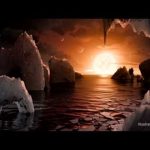
NASA held a news conference Feb. 22 at the agency’s headquarters to discuss the finding by the Spitzer Space Telescope of seven Earth-sized planets around a tiny, nearby, ultra-cool dwarf star. Three of these planets are in the habitable zone, the region around the star in which liquid water is most likely to thrive on a rocky planet. This is the first time so many planets have been found in a single star’s habitable zone, and the first time so many Earth-sized planets have been found around the same star. The finding of this planetary system, called TRAPPIST-1, is the best target yet for studying the atmospheres of potentially habitable, Earth-sized worlds
-
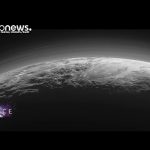
ESA Euronews: Τα «παγωμένα» μυστικά του Πλούτωνα
Αυτόν τον μήνα η εκπομπή το Space σας μεταφέρει στα απώτερα όρια του ηλιακού μας συστήματος, στον Πλούτωνα.
Αποδεικνύεται πολύ πιο εξωτικός από ότι θα περίμενε κανείς, με πολλά είδη ανεξήγητων φαινομένων στην επιφάνειά του.
Η εκπομπή Space συνάντησε μερικούς από τους κορυφαίους εμπειρογνώμονες της Ευρώπης στον πάγο για να μάθει περισσότερα για τα μυστικά του.
Ο Πλούτωνας αποτελούσε μυστήριο για την ανθρωπότητα από τότε που ανακαλύφθηκε, το 1930.
Αρχικά είναι χαρακτηριστεί ως πλανήτης. Το 2006 αναθεωρήθηκε η άποψη αυτή και ονομάστηκε πλανήτης- νάνος του ηλιακού μας συστήματος.
-
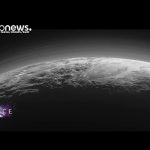
ESA Euronews: Plútó – a rejtélyes törpebolygó
A Plútóról 2015-ben készített részletes felvételeket a New Horizons űrszonda, ezek a felvételek felbolygatták a tudományos közösséget. A törpebolygó több a furcsaságot tartogat, mint arra bárki számított, felszínén olyan jelenségek zajlanak, amire egyelőre nincs magyarázatunk. A fenti videóban a téma legjobb európai szakértői beszélnek arról, mit tudunk a Plútóról, és miértérdekes ez a probléma tudományos szempontból.
A Plutó 1930-as felfedezése óta rejtély volt az emberiség számára. Először bolygónak nevezték, 2006-ban átsorolták a törpe-bolygók közé. Minél többet tudunk meg róla, annál jobban megragadja tudósok fantáziáját.