Category: Astronomie

  • Asteroid Impact Mission (Spanish)

    Asteroid Impact Mission (Spanish)

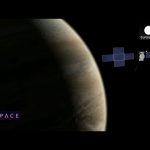
    La misión AIM (Asteroid Impact Mission), candidata a ser desarrollada, actualmente en fase de diseño preliminar.

    AIM se lanzaría en octubre de 2020 y su objetivo es viajar al sistema binario de asteroides Dídimos para estudiar la luna Didymoon. El sistema Didimos cuenta con un cuerpo principal de unos 800 metros de diámetro y una luna que orbita alrededor de este cuerpo principal, de unos 170 metros de diámetro aproximadamente, está luna se la conoce con el nombre de Didymoon. El sistema Didimos se aproximará a 11 millones de kilómetros de la tierra en 2022.

    AIM escaneará la pequeña Didymoon en detalle con su cámara VIS, con imágenes térmicas y un radar de alta resolución para construir mapas detallados de su superficie y estructura interior.

    La nave principal de AIM llevará al menos tres sondas más pequeñas – el módulo de aterrizaje, Mascot-2, desarrollado por el Centro Aeroespacial Alemán (Mascot-1 ya está volando en la misión Hayabusa-2 de JAXA), así como dos o más CubeSats. Así, AIM pondría a prueba las comunicaciones ópticas y los enlaces inter-satelitales en el espacio profundo, una tecnología que será esencial para la exploración futura del espacio.

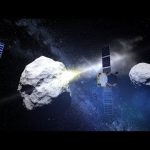
    Si se aprueba, AIM también será la contribución europea a la misión AIDA, Asteroid Impact and Deflection Assessment. En 2022, la sonda DART (Double-Asteroid Redirection Test), parte dirigida por la NASA, llegará al sistema binario y se estrellará contra Didymoon a una velocidad de unos 6 km/s.

    El impacto será observado por AIM y por sus CubeSats. A través de las imágenes de alta resolución de AIM se evaluará el tamaño y la profundidad del cráter tras el impacto. AIM realizará una segunda fase de mediciones para comparar detalladamente la estructura del objeto, así como su órbita al rededor del asteroide mayor, antes y después del impacto.

    This video is also available in the following languages:
    English: https://youtu.be/h4lpu8HbpFY
    French: https://youtu.be/8GjVhBQsISc
    German: https://youtu.be/Sht_Kmaf5sU

    Credit: ESA/ScienceOffice.org
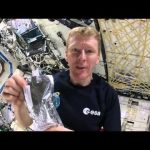
  • Let’s brew a cup of coffee

    Let’s brew a cup of coffee

    ESA astronaut Tim Peake shows how to brew a “cup” of coffee on the International Space Station.

    Tim is spending six months in space as part of his Principia mission.
    More about Principia: www.esa.int/Principia
    Follow Tim Peake via timpeake.esa.int

  • NASA Administrator Charles Bolden on Commercial Space

    NASA Administrator Charles Bolden on Commercial Space

    NASA is on a Journey to Mars and commercial space is a key component of our strategy to send American astronauts to the Red Planet in the 2030s.
    In 2010 when President Obama laid out his vision for space exploration, it may have been hard to believe that six years later we’d be regularly transporting cargo to the International Space Station on commercial spacecraft, or that we’d be on the verge of returning launches of American astronauts to the Station from U.S. soil on the spacecraft built by American companies.
    Today, that’s our reality.
    SpaceX and Orbital ATK are the first commercial space companies to deliver cargo to the ISS.
    We’ve also ordered the first missions from SpaceX and The Boeing Company — the first American companies that will carry American astronauts to space. The first astronauts are now training for test flights aboard commercial spacecraft in preparation for those missions.
    We are closer than ever before to sending American astronauts to Mars. We’re “insourcing” American jobs and empowering American entrepreneurs and innovators to expand the new commercial market in low-earth orbit.
    Today, we’re marking another significant milestone. We are announcing the companies that will continue our successful commercial cargo program until at least 2024. This phase of the program will allow us to continue using the Space Station as our springboard to the rest of the solar system and a test bed for human health in space.
    Our investment in commercial space is creating jobs and it’s bringing us closer to sending American astronauts to Mars. With the commercial cargo successes to date and our announcement today – I am very confident that commercial space will continue to propel our nation into the future – we’ll continue to Launch America.

  • NASA astronomical findings highlighted on This Week @NASA – January 8, 2016

    NASA astronomical findings highlighted on This Week @NASA – January 8, 2016

    New NASA astrophysics findings were highlighted at the 227th American Astronomical Society meeting, Jan. 4-8 in Kissimmee, Florida. The findings, which ranged from runaway stars to a burping galaxy, were made with the help of several NASA observation instruments, including the Spitzer Space Telescope, the Wide-field Infrared Survey Explorer, the Chandra X-ray Observatory, the Nuclear Spectroscopic Telescope Array and others. Also, Next space station crew preparing for mission, Economical new era of aviation, A new level of coral reef studies and more!

  • Tim Peake’s message to Her Majesty The Queen

    Tim Peake’s message to Her Majesty The Queen

    Message from British ESA astronaut Tim Peake aboard the International Space Station to Her Majesty Queen Elizabeth II of the United Kingdom of Great Britain and Northern Ireland, 31 December 2015.

    Tim Peake is spending six months in space to run experiments for scientists on Earth and maintain humanity’s research station 400 km above our planet.

    Follow his Principia mission via http://timpeake.esa.int

  • Happy New Year 2016 from NASA

    Happy New Year 2016 from NASA

    2015 was an incredible year for aeronautics research, human exploration, earth science, space science, and technology. We can’t wait to show you what we have in store for 2016.

    From all of us here at NASA… Happy New Year.

  • Happy new year from space

    Happy new year from space

    ESA astronaut Tim Peake wishes Earth a happy new year from the International Space Station.
    Tim is spending six months in space to maintain the Space Station and run experiments for scientists on Earth. His Principia mission will see him perform over 30 experiments for European scientists alone.
    Follow Tim and his mission via timpeake.esa.int.

  • Season’s Greetings from NASA

    Season’s Greetings from NASA

    Mars is not the only place to explore during holidays. Follow our little Robot as he surveys his new surroundings. This holiday house is full of NASA treats… see if you can spot them all.

    From our family to yours… Season’s Greetings, from NASA.

  • NASA 2016 Look Ahead

    NASA 2016 Look Ahead

    The work NASA does, and will continue in 2016, helps the United States maintain its world leadership in space exploration and scientific discovery. The agency will continue investing in its journey to Mars, returning human spaceflight launches from American soil, fostering groundbreaking technology development, breakthroughs in aeronautics and bringing to every American the awe-inspiring discoveries and images captured by NASA’s missions in our solar system and beyond.

    For more about NASA’s missions, research and discoveries, visit:

    http://www.nasa.gov

  • NASA Reaches New Heights in 2015

    NASA Reaches New Heights in 2015

    As 2015 comes to a close we look back at an exciting year of reaching new heights and revealing the unknown for the benefit of humankind.

  • What Happened This Year @NASA December 21, 2015

    What Happened This Year @NASA December 21, 2015

    In 2015, NASA explored the expanse of our solar system and beyond, and the complex processes of our home planet, while also advancing the technologies for our journey to Mars, and new aviation systems as the agency reached new milestones aboard the International Space Station. Here’s a look at some of the top NASA stories of the year!

  • ESA Moon Challenge 2015

    ESA Moon Challenge 2015

    The ESA Moon Challenge is an International Student Contest for Lunar Exploration, and this video contains parts of 22 different simulations that teams have submitted.

    Universities from across the world participated in this challenge as part of the Symposium Moon 2020-2030: A new Era of Human and Robotic Exploration.

    More information:
    http://esamoonchallenge.spaceflight.esa.int/

  • Principia launch highlights

    Principia launch highlights

    ESA astronaut Tim Peake, NASA astronaut Tim Kopra and commander Yuri Malenchenko were launched into space 15 Decemeber 11:03 GMT from Baikonur cosmodrome, Kazakhstan.

    The launch marks the start of Tim Peake’s six-month Principia mission on the International Space Station running over 30 scientific experiments for ESA.

    Follow Tim Peake via http://timpeake.esa.int and follow the whole mission on ESA’s Principia blog: http://blogs.esa.int/principia.

    Full launch replay here:
    http://www.esa.int/spaceinvideos/Videos/2015/12/Principia_launch

  • Principia liftoff

    Principia liftoff

    ESA astronaut Tim Peake, NASA astronaut Tim Kopra and commander Yuri Malenchenko were launched into space 15 Decemeber 11:03 GMT from Baikonur cosmodrome, Kazakhstan.The launch marks the start of Tim Peake’s six-month Principia mission on the International Space Station running over 30 scientific experiments for ESA.Follow Tim Peake viatimpeake.esa.int and follow the whole mission on ESA’sPrincipia blog.

    Full launch replay here:
    http://www.esa.int/spaceinvideos/Videos/2015/12/Principia_launch

  • Space Station Astronauts Return Safely to Earth on This Week @NASA – December 11, 2015

    Space Station Astronauts Return Safely to Earth on This Week @NASA – December 11, 2015

    On Dec. 11 aboard the International Space Station, NASA’s Kjell Lindgren, Russian cosmonaut Oleg Kononenko and Kimiya Yui of the Japan Aerospace Exploration Agency, bid farewell to crew members remaining on the station — including Commander Scott Kelly, NASA’s one-year mission astronaut. The returning members of Expedition 45 then climbed aboard their Soyuz spacecraft for the trip back to Earth. They safely touched down hours later in Kazakhstan – closing out a 141-day stay in space. Also, Next space station crew prepares for launch, Supply mission arrives at space station, Quantum computing lab and more!

  • NASA Launches Go Ultra-High Definition

    NASA Launches Go Ultra-High Definition

    NASA Television’s newest offering, NASA TV UHD, brings ultra-high definition video to a new level with the kind of imagery only the world’s leader in space exploration could provide.

    Using an array of six 4K+ cameras, Harmonic documented the Dec. 6 launch of Orbital ATK’s commercial resupply mission to the International Space Station from Cape Canaveral Air Force Station in Florida. Capturing footage at Ultra High Definition with high frame rate and in high dynamic range (HDR) options.

    The company then post-produced the footage into a program showcasing the entire launch process for airing on NASA TV UHD.

    For more info: http://go.nasa.gov/1lyUGlY

  • A chat with Congress, from space on This Week @NASA – December 4, 2015

    A chat with Congress, from space on This Week @NASA – December 4, 2015

    A Dec. 2 event with the House of Representatives Committee on Science, Space and Technology, featured a live chat with NASA’s Scott Kelly and Kjell Lindgren from onboard the International Space Station. Kelly and Lindgren answered questions from Texas Representative and Chairperson Lamar Smith and other committee members, about life on the station and the research on the orbital laboratory. Kelly is in the ninth month of his year-long mission with Russian cosmonaut Mikhail Kornienko to gather biomedical data that will help formulate a human mission to Mars, while Lindgren is preparing to return to Earth Dec. 11 to complete a 141-day mission. Also, Next space station crew preparing for launch, Orion powerhouse ready for testing, Anniversary of Orion’s first flight test, Your planet is changing. We’re on it, and Preparing Earth observation tool for space station!

  • Moving ahead with Sentinel-2

    Moving ahead with Sentinel-2

    The green light has been given for all users to have open access to all of the data from ESA’s Sentinel-2A satellite, launched in June for the Copernicus programme.

    This video celebrates Sentinel-2A’s life, from its birth to what it has become today, and what it can give us tomorrow.

    Access Sentinel-2 data:
    https://sentinel.esa.int/web/sentinel/sentinel-data-access

  • Inside LISA Pathfinder, with narration

    Inside LISA Pathfinder, with narration

    ESA’s LISA Pathfinder mission is a technology demonstrator that will pave the way for future spaceborne gravitational-wave observatories. It will operate about 1.5 million km from Earth towards the Sun, orbiting the first Sun–Earth ‘Lagrangian point’, L1.

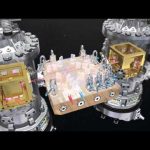
    The animation of the spacecraft build-up begins with two freely falling test masses. Between them lies the central component of LISA Pathfinder’s payload: the 20 x 20 cm optical bench interferometer. A set of 22 mirrors and beam-splitters directs laser beams across the bench. There are two beams: one reflects off the two free-falling test masses while the other is confined to the bench. By comparing the length of the different paths covered by the beams, it is possible to monitor changes accurately in distance and orientation between the two test masses.

    A box surrounds the two masses without touching them, shielding them from outside influence and constantly applying tiny adjustments to its position. This internal payload is housed in a central cylinder, isolating the test masses from the other components of the science payload and spacecraft.

    The solar array provides power to the instrumentation and acts as a thermal shield. Microthrusters control the spacecraft to keep the master test mass centred in its housing, opposing the force of the solar radiation pressure – the main source of ‘noise’ – impinging on the solar array.

    Although LISA Pathfinder is not aimed at the detection of gravitational waves themselves, it will prove the innovative technologies needed to do so. It will demonstrate that the two independent masses can be monitored as they free-fall through space, reducing external and internal disturbances to the point where the relative test mass positions would be more stable than the expected change caused by a passing gravitational wave, equal to much less than the size of an atom.

    Animated sequence without narration: Inside LISA Pathfinder: https://www.youtube.com/watch?v=YyZJ1JC_URc

    More about LISA Pathfinder: http://sci.esa.int/lisa-pathfinder/

  • LISA Pathfinder – Window on the gravitational universe

    LISA Pathfinder – Window on the gravitational universe

    LISA Pathfinder’s name, Laser Interferometer Space Antenna, clearly indicates the role of precursor that this mission plays. Its goal is to validate the technology required to detect gravitational waves from space. Gravitational waves will open a new door in our understanding of the Universe, and at the same time help to verify Einstein’s General Theory of Relativity. LISA Pathfinder will be launched early December 2015 on a Vega rocket from Kourou in French Guiana.

  • NASA Mathematician, Recipient of Nations Highest Civilian Honor

    NASA Mathematician, Recipient of Nations Highest Civilian Honor

    Katherine Johnson spent more than three decades as a mathematician at NASA and the NACA.

  • Aspiring Reporter Interviews Bolden about NASA’s Journey to Mars

    Aspiring Reporter Interviews Bolden about NASA’s Journey to Mars

    A dream come true, as a sharp young man from New York City gets to interview former astronaut and NASA Administrator Charles Bolden.

  • Tim Peake bio and training

    Tim Peake bio and training

    Tim Peake is the first British astronaut to be selected as a member of ESA’s European Astronaut Corps. With a background in flight dynamics, he served in the British Air Corps as flight commander, helicopter instructor and test pilot.

    Scheduled to fly to the ISS in late 2015, he’ll be staying in orbit for five months. He also has close ties with the UK Space Agency, working on the development of its microgravity research programme.

  • ESA Euronews: Space for Earth

    ESA Euronews: Space for Earth

    We have all heard of climate change, but what’s really happening to our planet now, in November 2015? As the COP21 summit in Paris looms in December, we set out to establish some of the scientific fundamentals, and hear how space technology is being used to get a truly global view of Earth’s vital signs.

    Near Les Deux Alps in the French Alps, some 3,200 metres above sea level, we look at how satellite data and glacier measurements can help us to understand the effects of global warming with remote sensing scientist Jean-Pierre Dedieu.

    This video is also available in the following languages:
    French: https://youtu.be/LD2p60ddZKA
    German: https://youtu.be/g-XE_ob_wwY
    Spanish: https://youtu.be/cXFXbpkQ55c
    Italian: https://youtu.be/C1NS2Ro9yZs
    Greek: https://youtu.be/-K6eRtcJKF4
    Portuguese: https://youtu.be/HpCifL61VBA
    Hungarian: https://youtu.be/Qo-j3XJYS6A

  • ESA for students and young graduates

    ESA for students and young graduates

    Discover how you can participate in ESA programmes as a student, and learn about your entry options once you’ve got your Masters degree. ESA recruitment and education colleagues share some valuable info with you.

  • Tim Peake mission overview

    Tim Peake mission overview

    Named after Isaac Newton’s text Naturalis Principia Mathematica, ESA’s Principia mission will be the eighth long-duration mission to the International Space Station. British astronaut Tim Peake will be launched from Baikonur in Kazakhstan onboard a Russian Soyuz vehicle, spending five months in orbit. He’ll carry out an intensive schedule of European and international experiments, in addition to numerous educational activities from space.

  • Andreas Mogensen: MARES sessions

    Andreas Mogensen: MARES sessions

    This timelapse shows ESA astronaut Andreas Mogensen working with Roscosmos cosmonaut Sergei Volkov during the iriss mission to unpack, setup, test and then store the MARES muscle-measurement machine in Europe’s space laboratory Columbus on the International Space Station over three days.

    The Muscle Atrophy Research and Exercise System, or MARES for short, is a three-in-one muscle-measurement machine on the International Space Station that monitors astronauts’ muscles as they work out.

    Muscle strength decreases during spaceflight and researchers need to know why this happens in order to prepare for long-duration missions and safe space tourism. MARES is an exercise bench that offers detailed information about how muscles behave during spaceflight.

    MARES was a large part of Andreas’s ten-day iriss mission to the International Space Station that started 2 September 2015.

    Follow Andreas via http://andreasmogensen.esa.int/
    Read more about the MARES experiment on the iriss blog.

    Find out more about Juice in ESA’s launch kit: https://esamultimedia.esa.int/docs/science/Juice-LaunchKit.pdf

    ★ Subscribe: http://bit.ly/ESAsubscribe and click twice on the bell button to receive our notifications.

    Check out our full video catalog: http://bit.ly/SpaceInVideos
    Follow us on Twitter: http://bit.ly/ESAonTwitter
    On Facebook: http://bit.ly/ESAonFacebook
    On Instagram: http://bit.ly/ESAonInstagram
    On LinkedIn: https://bit.ly/ESAonLinkedIn
    On Pinterest: https://bit.ly/ESAonPinterest
    On Flickr: http://bit.ly/ESAonFlickr

    We are Europe’s gateway to space. Our mission is to shape the development of Europe’s space capability and ensure that investment in space continues to deliver benefits to the citizens of Europe and the world. Check out https://www.esa.int/ to get up to speed on everything space related.

    Copyright information about our videos is available here: https://www.esa.int/ESA_Multimedia/Terms_and_Conditions

    #ESA
    #ISS
    #AndreasMogensen

  • Lisa Pathfinder mission overview

    Lisa Pathfinder mission overview

    LISA Pathfinder will pave the way for future missions by testing in flight the very concept of gravitational wave detection: it will put two test masses in a near-perfect gravitational free-fall and control and measure their motion with unprecedented accuracy. LISA Pathfinder will use the latest technology to minimise the extra forces on the test masses, and to take measurements.

    The inertial sensors, the laser metrology system, the drag-free control system and an ultra-precise micro-propulsion system make this a highly unusual mission.

    LISA Pathfinder is an ESA mission, which will also carry a NASA payload.

  • Reconstructing Philae’s flight

    Reconstructing Philae’s flight

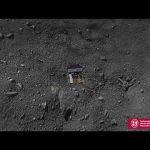
    Data from both the Philae lander and Rosetta orbiter experiments, as well as simulation results based on Philae’s mechanical design have been used to reconstruct the lander’s attitude and motion during its descent and touchdowns on Comet 67P/Churyumov-Gerasimenko on 12 November 2014.

    The new animation presented today, one year after Philae touched down on the comet, focuses on Philae’s dramatic two-hour flight from Agilkia to Abydos.

    More details in the Rosetta blog: http://blogs.esa.int/rosetta/2015/11/12/reconstructing-philaes-flight-across-the-comet/

    Credits: The video was prepared with inputs from the ROMAP, RPC-MAG, OSIRIS, ROLIS, CIVA CONSERT, SESAME and MUPUS instrument teams as well as from the Lander Control Centre at DLR and Science Operation and Navigation Center at CNES.

  • Rosetta Philae landing: one year

    Rosetta Philae landing: one year

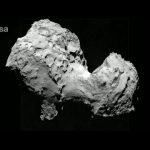
    It’s been an extraordinary year for the Rosetta comet mission since Philae landed on the surface of Comet 67P/Churyumov-Gerasimenko on 12 November 2014.

    Continual data from the orbiter, together with information collected over several days from the lander, is providing a comprehensive picture of a remnant from our Solar System.

    This film covers the most recent science news from the Rosetta mission, as well as selected scientific highlights from the last year. It includes the comet’s unusual surface terrace structure, its formation from two colliding objects producing the unusual rubber duck shape, how water is transported from inside the comet towards the surface, and the surprising detection of molecular oxygen – familiar on Earth but not on a comet.

    Find out more about the Rosetta mission: http://rosetta.esa.int/

  • Sentinel-3 mission overview

    Sentinel-3 mission overview

    Sentinel-3A’s preparation is finished and the satellite will soon be shipped to the Russian Cosmodrome of Plesetsk, in Northern Russia for its launch on top of a Rockot planned end of this year. Carrying a suite of state-of-the-art instruments, Sentinel-3 is set to play a key role in Copernicus, the world’s largest environmental monitoring programme operated by the European Commission. It will provide highly accurate measurements on Earth’s oceans, land, ice and atmosphere.

  • Astronaut Recruitment

    Astronaut Recruitment

    NASA is on a Journey to Mars and we are on the lookout for a new generation of space pioneers. Do you think you have what it takes to join NASA’s next astronaut class? Visit: http://www.nasa.gov/astronauts

  • Advancing the Journey to Mars on This Week @NASA – October 30, 2015

    Advancing the Journey to Mars on This Week @NASA – October 30, 2015

    During an Oct. 28 keynote speech at the Center for American Progress, in Washington, NASA Administrator Charlie Bolden spoke about the advancement made on the journey to Mars and what lies ahead for future administrations and policy makers. NASA’s recently released report “Journey to Mars: Pioneering Next Steps in Space Exploration,” outlines its plan to reach Mars in phases – with technology demonstrations and research aboard the International Space Station, followed by hardware and procedure development in the proving ground around the moon, before sending humans to the Red Planet. Also, Space station spacewalk, Another record in space for Kelly, Mars Landing Sites/ Exploration Zones Workshop, Cassini’s “deep dive” flyby and more!

  • Third Rock Radio – Radio Powered with NASA

    Third Rock Radio – Radio Powered with NASA

    Explore and discover new worlds of music with NASA’s Third Rock Radio. RFC Media matches “new rock discovery” with tales of NASA’s exciting, on-going mission to create one of the most talked about digital radio channels on, or off the planet. Third Rock fans worldwide share their discoveries from Music Explorers who present ”the best new rock out there – really out there!” Third Rock’s disarmingly hip, street-smart context connects and engages young adults and helps NASA deepen relationships with its next generation of avid supporters. Third Rock Radio is a recognized New Media phenomenon attracting the brightest and best, tech-savvy young adults. Third Rock’s audience is a blend of scientists, engineers, researchers, innovators and astronauts, together with students and music lovers everywhere, all of whom share a love for the new and undiscovered.

    Listen Live: ThirdRockRadio.net

  • Space Rocks

    Space Rocks

    There are lots of names associated with space rocks, so what is the difference? Join the Royal Observatory Greenwich astronomers to find out. They will also explore what space rocks can tell us about our very own planet Earth. http://bit.ly/rogvideo #rogspacerocks

    Credits:
    ROG – Creator
    Beakus – Producer
    Amaël Isnard – Director

  • The Rosetta Mission

    The Rosetta Mission

    The Rosetta Mission has captured the interest and imagination of a generation and it is not over yet! Take a look at this Royal Observatory Greenwich video which explains what Rosetta and Philae have achieved as well as the impact the mission has had on our knowledge of our very own solar system. http://bit.ly/rogvideo #rogrosetta

    Credits:
    ROG – Creator
    Beakus – Producer
    Amaël Isnard – Director

  • Safe at sea with satellites

    Safe at sea with satellites

    At sea, space technology is used to help save lives every day: managing traffic between ships, picking up migrants and refugees in distress or spotting oil spills. The European Space Agency is once again at the forefront developing new technologies and satellites: to keep us safe at sea and to monitor the environment. Space makes a difference here on Earth and certainly at sea where there is no infrastructure.

  • ESA Euronews: Unlocking the secrets of the Jupiter’s Icy Moons

    ESA Euronews: Unlocking the secrets of the Jupiter’s Icy Moons

    In this edition of Space we set a course for Jupiter, destination of the next European Space Agency mission.

    The aim of JUICE (JUpiter ICy moon Explorer) is to provide the most comprehensive exploration of the giant planet and, in particular, of its moons; supposedly hiding habitable zones under their icy crusts.

    Jupiter is more than eleven times larger than Earth but is mainly made of gas. During its three and a half year mission, which blasts off in 2022, JUICE will travel around the giant planet, studying its atmosphere and three of its planet-sized satellites: Ganymede, Europa, and Callisto.

    This video is also available in the following languages:
    French: https://www.youtube.com/watch?v=NNRq08gzJik
    German: https://www.youtube.com/watch?v=_Ckhlff_3Fs
    Spanish: https://www.youtube.com/watch?v=Rj2q4naBi40
    Italian: https://www.youtube.com/watch?v=G_H3UfanowA
    Portuguese: https://www.youtube.com/watch?v=rkWwwUEtiCY
    Greek: https://www.youtube.com/watch?v=WCz6jL0Cm4M
    Hungary: https://www.youtube.com/watch?v=AelLZAp8DR0