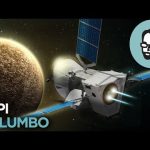
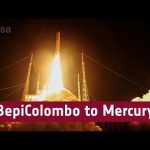
This year saw ESA’s science exploration mission BepiColombo begin its seven year cruise to the innermost planet of our Solar System: Mercury. This timelapse recalls some of the preparations that went into readying the mission at Europe’s Spaceport in Kourou, French Guiana.
The mission, a joint endeavour between ESA and JAXA, comprises three spacecraft modules: ESA’s Mercury Planetary Orbiter and JAXA’s Mercury Magnetospheric Orbiter that will study all aspects of Mercury from their complementary orbits around the planet, and ESA’s Mercury Transfer Module that will bring them to the planet using a combination of solar electric propulsion and nine planetary flybys.
The video includes testing of the individual spacecraft units, stacking of the three modules and a protective sunshield into their launch configuration, integration of the spacecraft inside the launcher fairing, roll out to the launch pad, and finally launch itself. The mission lifted off at 01:45:28 GMT on 20 October 2018.
ESA is Europe’s gateway to space. Our mission is to shape the development of Europe’s space capability and ensure that investment in space continues to deliver benefits to the citizens of Europe and the world. Check out http://www.esa.int/ESA to get up to speed on everything space related.
On December 24, 1968, Apollo 8 arrived at the Moon and began orbital insertion. The Apollo spacecraft flew most of the way to the Moon sideways,pointed toward celestial “north” for guidance purposes.
NASA astronauts Frank Borman, James Lovell, William Anders became the first humans to travel beyond low Earth orbit and orbit another celestial body.
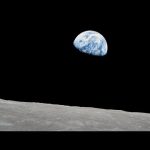
They were also the first humans to see the far side of the Moon, and Earth as a whole planet, taking the famous Earthrise photo.
On this 50th anniversary of the historic flight of Apollo 8, NASA wishes Season’s Greetings to everyone on the good Earth.
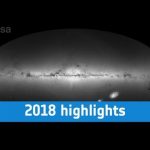
ESA can look back at a fulfilling year. It has been a year marked by new Earth Observation missions to analyse and protect our planet, in particular the completion of the first wave of Copernicus Sentinel satellites and the launch of Aeolus. Galileo also reached an important milestone – there are now 26 satellites in orbit. Other achievements include the October launch of BepiColombo, the ESA-JAXA mission to study Mercury, and the almost continuous presence of ESA astronauts on the International Space Station.
What was your favourite moment? Tell us in the comment section.
★ Subscribe: http://bit.ly/ESAsubscribe and click twice on the bell button to receive our notifications.
ESA is Europe’s gateway to space. Our mission is to shape the development of Europe’s space capability and ensure that investment in space continues to deliver benefits to the citizens of Europe and the world. Check out http://www.esa.int/ESA to get up to speed on everything space related.
50 years ago, three NASA astronauts embarked on a journey that would take them “Round the moon and back”. The Apollo 8 mission proved the performance of the command and service module. This historic mission launched on December 21, 1968 to demonstrate a lunar trajectory and was the first crewed launch of the Saturn V rocket. On Christmas Eve, Frank Borman, Jim Lovell, and Bill Anders were the first humans to orbit the Moon and the first to see an Earthrise above its surface.
Over the last two decades, space agencies have created more comfortable conditions on the International Space Station, but we need to explore the concept of ‘living in space’ much further if humans are to ever live and work on another world, such as the Moon or Mars.
ESA’s Discovery and Preparation Programme works to prepare ESA for the future of space exploration. As part of this programme, ESA has worked with academic and industrial partners on a huge number of studies that lay the groundwork for living in space.
The technology that exists today could easily take us to the Moon and beyond, but it is studies like those carried out under the Discovery and Preparation Programme that will make a trip resourceful, sustainable and productive.
★ Subscribe: http://bit.ly/ESAsubscribe and click twice on the bell button to receive our notifications.
ESA is Europe’s gateway to space. Our mission is to shape the development of Europe’s space capability and ensure that investment in space continues to deliver benefits to the citizens of Europe and the world. Check out http://www.esa.int/ESA to get up to speed on everything space related.
Nur wenige Stunden nach dem ESA-Astronaut Alexander Gerst von seiner Horizons-Mission auf der Internationalen Raumstation ISS zurückgekehrt ist, gibt er ein kurzes Interview in der Forschungseinrichtung :envihab auf dem Campus des Deutschen Zentrums für Luft- und Raumfahrt in Köln.
Alexander Gerst kehrte am 20. Dezember 2018 zusammen mit den Besatzungsmitgliedern Serena Auñón- Chancellor und Sergei Prokopyev in der Sojus MS-09 auf die Erde zurück – demselben Raumschiff, dass sie am 6. Juni 2018 zur Station brachte.
Die Landung des Trios in der kasachischen Steppe markierte nach über sechs Monaten im Weltraum den erfolgreichen Abschluss der so genannten ISS Expedition 56/57. In dieser Zeit führte Alexander Gerst über 60 europäische Experimente durch, wurde der zweite europäische Kommandant der Internationalen Raumstation, nahm sechs Raumtransporter in Empfang, installierte die erste kommerzielle Forschungsanlage im Columbus-Labor der ESA, sendete eine wichtige Botschaft zum Klimawandel für Delegierte der COP24-Klimakonferenz, machte Echtzeitaufnahmen von einem Sojus-Startabbruch und vieles mehr.
Horizons war Alexander Gersts zweite Mission auf der Internationalen Raumstation – die erste im Jahr 2014 trug den Namen Blue Dot. Er hat nun 363 volle, allerdings nicht aufeinanderfolgende Tage im Weltraum verbracht (an seinem 364. Tag kehrte er nach Hause zurück).
In Köln angekommen, wird Alexander Gerst eine Vielzahl an Bord der ISS durchgeführter wissenschaftlich-technischer Experimente auf der Erde mit dem Ziel der vergleichenden Betrachtung und Bewertung der Daten wiederholen. Hinzu kommen medizinische Untersuchungen sowie viel Sport und körperliches Training zum Zwecke der Regenerierung und Rehabilitation.
★ Subscribe: http://bit.ly/ESAsubscribe and click twice on the bell button to receive our notifications.
ESA is Europe’s gateway to space. Our mission is to shape the development of Europe’s space capability and ensure that investment in space continues to deliver benefits to the citizens of Europe and the world. Check out http://www.esa.int/ESA to get up to speed on everything space related.
Just hours after returning from his Horizons mission on the International Space Station, ESA astronaut Alexander Gerst gives a short interview at the German Aerospace Centre’s ‘:envihab’ facility in Cologne, Germany.
Alexander returned to Earth alongside crew mates Serena Auñón-Chancellor and Sergei Prokopyev on 20 December 2018 in the same Soyuz MS-09 spacecraft that flew them to the Station on 6 June 2018.
The trio’s landing in the Kazakh steppe marked the successful conclusion of over six months in space during which Alexander conducted over 60 European experiments, became the second ever European commander of the International Space Station, welcomed six resupply vehicles, installed the first commercial facility for research in the Columbus laboratory, delivered an important message on climate change for leaders at the COP24 climate change conference, captured real-time footage of a Soyuz launch abort and much, much more.
#Horizons was Alexander’s second mission to the International Space Station – the first was Blue Dot in 2014.
Now back in Cologne, Alexander will take his time to readapt to Earth’s gravity supported by ESA’s team of space medicine experts. He will also continue to provide ground-based data for researchers to support experiments performed in space.
ESA is Europe’s gateway to space. Our mission is to shape the development of Europe’s space capability and ensure that investment in space continues to deliver benefits to the citizens of Europe and the world. Check out http://www.esa.int/ESA to get up to speed on everything space related.
In the pre-dawn hours of a late October day, a satellite and an airplane joined forces over the frigid Weddell Sea, taking simultaneous measurements of drifting sea ice. It was the culmination of more than a decade of planning, designing and building the best way to measure Earth’s changing ice.
#NASAExplorers are constantly pushing the limit to learn more about our world and those far beyond. Join in as they celebrate a milestone in the quest to better understand the planet we call home.
In this episode of “Watch this Space,” NASA Administrator Jim Bridenstine discusses NASA’s recent selection of U.S. companies to potentially deliver science payloads to the lunar surface. He also visits the Jet Propulsion Laboratory in California, where he discusses the Mars InSight landing and plans for Mars 2020.
ESA astronaut Alexander Gerst recorded a message in German to his future grandchildren from the International Space Station’s Cupola observatory during his Horizons mission in 2018. Although this message is addressed to his descendants, it applies to all of us. Everyone should contribute to the protection and improvement of this planet we call home.
Alexander’s message is as follows:
Dear grandchildren,
You have not been born yet, and I do not know if I will ever meet you, so I’ve decided to record this message for you.
I’m on the International Space Station in the Cupola Observation Module gazing down at your beautiful planet. And although I’ve now almost spent a year of my life in space and looked at Earth every single day, I just can’t get enough of this view.
I know it probably sounds strange to you, but at the time the Space Station was built and was up here in orbit, not everyone was able to travel into space and see the Earth from a distance. Before me, only around 500 people had the chance. At this very moment, there are 7 billion people living down there on Earth and only three of them live in space. And when I look down at the planet, I think I need to apologise to you.
Right now, it looks like we – my generation – are not going to leave this planet in its best condition for you. Of course, in retrospect many people will say they weren’t aware of what we were doing. But in reality, we humans know that right now we’re polluting the planet with carbon dioxide, we’re making the climate reach tipping point, we’re clearing forests, we’re polluting the oceans with garbage, we’re consuming the limited resources far too quickly, and we’re waging mostly pointless wars.
And every one of us has to take a good look at themselves and think about where this is leading. I very much hope for our own sake that we can still get our act together and improve a few things. And I hope that we won’t be remembered by you as the generation who selfishly and ruthlessly destroyed your livelihood.
I’m sure you understand these things much better than my generation. And who knows, maybe we’ll learn something new, such as: taking a step always helps; this fragile spaceship called Earth is much smaller than most people can imagine; how fragile the Earth’s biosphere is and how limited its resources are; that it’s worth getting along with your neighbours; that dreams are more valuable than money and you have to give them a chance; that boys and girls can do things equally well, but that every one of you has one thing that he or she can do much better than all the others; that the simple explanations are often wrong and that one’s own point of view is always incomplete; that the future is more important than the past; that one should never fully grow up; and that opportunities only come along once. You have to take a risk for things that are worth it, and any day during which you discovered something new – one where you gazed beyond your horizon – is a good day.
I wish I could look into the future through your eyes, into your world and how you see it. Unfortunately, that is not possible and therefore the only thing that remains for me is to try to make your future the best one I can possibly imagine.
International Space Station – Commander of Expedition 57 – Alexander Gerst – 25 November 2018 – 400 km above the Earth’s surface
——————————
Follow Alexander and review his #Horizons mission on social media via http://bit.ly/AlexanderGerstESA and on http://bit.ly/HorizonsBlogESA
——————————
★ Subscribe: http://bit.ly/ESAsubscribe and click twice on the bell button to receive our notifications.
ESA is Europe’s gateway to space. Our mission is to shape the development of Europe’s space capability and ensure that investment in space continues to deliver benefits to the citizens of Europe and the world. Check out http://www.esa.int/ESA to get up to speed on everything space related.
The ride home from the International Space Station sees the astronauts brake from 28 800 km/h to a standstill at touchdown in barely three hours. How does the Soyuz spacecraft reenter the atmosphere? And how does the capsule land?
Watch in just two minutes the sequence of events from farewell to landing. This video is based on a training lesson for ESA astronauts, and it features dramatic footage of actual landings.
ESA is Europe’s gateway to space. Our mission is to shape the development of Europe’s space capability and ensure that investment in space continues to deliver benefits to the citizens of Europe and the world. Check out http://www.esa.int/ESA to get up to speed on everything space related.
With our Moon to Mars effort underway, a new administrator takes over to lead the charge, and – oh yeah – we stuck another nearly flawless landing on Mars! All that and more as we look back at what happened This Year @ NASA!
This video is available for download from NASA’s Image and Video Library: https://images.nasa.gov/details-NHQ_2018_1217_NASA%20Begins%20America%E2%80%99s%20New%20Moon%20to%20Mars%20Exploration%20Approach%20in%202018%20-%20The%20Year%20@NASA.html
Experience magical moments from ESA astronaut Alexander Gerst’s Horizons mission in this time-lapse of highlights from space.
Combining thousands of images taken by Alexander over more than six months, this Ultra High Definition video provides a glimpse into spacecraft operations and the beauty of Earth as seen from the International Space Station.
Marvel at orbital sunrises, dancing auroras, city lights, oceans, clouds, the Milky Way, the release of cargo vehicles, a Soyuz launch and more against the thin band of atmosphere that surrounds our planet.
ESA is Europe’s gateway to space. Our mission is to shape the development of Europe’s space capability and ensure that investment in space continues to deliver benefits to the citizens of Europe and the world. Check out http://www.esa.int/ESA to get up to speed on everything space related.
The most recent trends in sea level rise mean the low-lying Camargue region of southern France could be submerged by the sea by the end of the century.
The sea walls built along the coast in the 1980s have already been broken by the waves, as a combination of rising waters, slowly sinking landmass, and reduced amounts of sediment from the Rhone river spell trouble for this environment.
Anis Guelmami uses Copernicus Sentinel satellites to study wetlands like the Camargue, and he tells us the latest news from space.
ESA is Europe’s gateway to space. Our mission is to shape the development of Europe’s space capability and ensure that investment in space continues to deliver benefits to the citizens of Europe and the world. Check out http://www.esa.int/ESA to get up to speed on everything space related.
Camargue, no sul de França, é uma região famosa pelas paisagens e vida selvagem, mas também um lugar seriamente ameaçado pelas alterações climáticas, por causa da subida do nível do mar.
Os muros de rochas ao longo da costa foram construídos nos anos 80, num esforço fracassado para travar o mar Mediterrâneo. Naquela época, o nível do mar subia apenas alguns milímetros por ano. Agora, os satélites descobriram que as águas estão a subir muito mais rápido do que antes, alimentadas pelo degelo das calotas glaciares e pelo aumento das temperaturas.
Os cientistas estão a usar satélites para compreender melhor o que está a acontecer em regiões como esta e em todo o planeta.
★ Subscribe: http://bit.ly/ESAsubscribe and click twice on the bell button to receive our notifications.
ESA is Europe’s gateway to space. Our mission is to shape the development of Europe’s space capability and ensure that investment in space continues to deliver benefits to the citizens of Europe and the world. Check out http://www.esa.int/ESA to get up to speed on everything space related.
A klímaváltozás hatásainak felmérésében és megértésében egyre nagyobb szerepet játszanak a műholdak. A Space stábja ebben a hónapban az Európai Űrügynökség Róma melletti megfigyelőközpontjába, valamint Dél-Franciaországba utazott, hogy bemutassa a klímaváltozás hatásait, és a témával foglalkozó kutatókat.
ESA, Európai Űrügynökség, Űr, Euronews, Univerzum, Kozmosz, Űrtudomány, Tudomány, Űrkutatás, Technika, Föld a térből, Föld megfigyelése, Föld megfigyelése, Earth Explorer, műholdas kép, Copernicus, Sentinel, klímaváltozás, klímaváltozás, tengerszint emelkedés, Camargue, Franciaország, Európa
★ Subscribe: http://bit.ly/ESAsubscribe and click twice on the bell button to receive our notifications.
ESA is Europe’s gateway to space. Our mission is to shape the development of Europe’s space capability and ensure that investment in space continues to deliver benefits to the citizens of Europe and the world. Check out http://www.esa.int/ESA to get up to speed on everything space related.
ESA is Europe’s gateway to space. Our mission is to shape the development of Europe’s space capability and ensure that investment in space continues to deliver benefits to the citizens of Europe and the world. Check out http://www.esa.int/ESA to get up to speed on everything space related.
It’s 5 a.m. on a normal September day and #NASAExplorers have gathered in a California field to watch a rocket launch light up the pre-dawn sky. On board the rocket is a satellite more than 10 years in the making, with one single instrument that will revolutionize the study of ice on Earth. Join the team in the excitement and stress of watching ICESat-2 launch into space and begin its work measuring our home planet.
Launched in December 2013, ESA’s Gaia satellite has been scanning the sky to perform the most precise stellar census of our Milky Way galaxy, observing more than one billion stars and measuring their positions, distances and motions to unprecedented accuracy.
The second Gaia data release, published in April, has provided scientists with extraordinary data to investigate the formation and evolution of stars in the Galaxy and beyond, giving rise to hundreds of scientific studies that are revolutionising our view of the cosmos.
Credits: ESA / CNES / Arianespace; ESA / Gaia / DPAC; Gaia Sky / S. Jordan / T. Sagristà; Koppelman, Villalobos and Helmi; Marchetti et al. 2018; NASA / ESA / Hubble; ESO, M. Kornmesser, L. Calçada
★ Subscribe: http://bit.ly/ESAsubscribe and click twice on the bell button to receive our notifications.
ESA is Europe’s gateway to space. Our mission is to shape the development of Europe’s space capability and ensure that investment in space continues to deliver benefits to the citizens of Europe and the world. Check out http://www.esa.int/ESA to get up to speed on everything space related.
Meet Mari, who shares her experience as a Young Graduate Trainee in the Legal Services Department and Executive Secretary for the European Centre for Space Law.
★ Subscribe: http://bit.ly/ESAsubscribe and click twice on the bell button to receive our notifications.
ESA is Europe’s gateway to space. Our mission is to shape the development of Europe’s space capability and ensure that investment in space continues to deliver benefits to the citizens of Europe and the world. Check out http://www.esa.int/ESA to get up to speed on everything space related.
50 years ago, three NASA astronauts embarked on a journey that would take them “Round the moon and back”. The Apollo 8 mission proved the performance of the command and service module. This historic mission launched on December 21, 1968 to demonstrate a lunar trajectory and was the first manned launch of the Saturn V rocket. On Christmas Eve, Frank Borman, Jim Lovell, and Bill Anders were the first humans to orbit the Moon and the first to see an Earthrise above its surface. NASA Administrator Jim Bridenstine remembers the bravery and dedication of the Apollo 8 mission.
BepiColombo, Europe’s first mission to Mercury, launched on 20 October 2018. The spacecraft began its seven year journey by unfurling antennas and solar arrays, taking a few selfies and deploying a three metre magnetometer boom. The spacecraft, a joint mission between ESA and the Japanese space agency JAXA, will soon engage its solar propulsion engine but meanwhile scientists are busy preparing for BepiColombo’s arrival in 2025.
ESA is Europe’s gateway to space. Our mission is to shape the development of Europe’s space capability and ensure that investment in space continues to deliver benefits to the citizens of Europe and the world. Check out http://www.esa.int/ESA to get up to speed on everything space related.
Meet Mircea! He’s 27 years old and comes from Romania.
He works at ESA as a Young Graduate Trainee (YGT) in the Materials’ Physics and Chemistry section, where he analyses how materials used could contaminate the sensitive surfaces of a spacecraft.
★ Subscribe: http://bit.ly/ESAsubscribe and click twice on the bell button to receive our notifications.
ESA is Europe’s gateway to space. Our mission is to shape the development of Europe’s space capability and ensure that investment in space continues to deliver benefits to the citizens of Europe and the world. Check out http://www.esa.int/ESA to get up to speed on everything space related.
This video recorded during the Rosetta Science Operations Scheduling Legacy Workshop in October 2017, show university students learning how science operations scheduling is done at ESA and what tools are used. Exercises were performed with the support of the experts who did the scheduling for the real mission using the actual science operations scheduling software (MAPPS) that produced the final experiment commanding for the spacecraft.
ESA Academy’s training courses are part of the Training and Learning Programme that aims at complementing the standard academic formation in space-related disciplines offered in the ESA Member and Associate States’ universities. The goal is to better prepare the future workforce for the space community, and to show students the many opportunities offered by space research, facilities, and applications for science and engineering in fields unrelated to space.
ESA is Europe’s gateway to space. Our mission is to shape the development of Europe’s space capability and ensure that investment in space continues to deliver benefits to the citizens of Europe and the world. Check out http://www.esa.int/ESA to get up to speed on everything space related.
Følg paxi når han besøger Jorden og lærer om vandets kredsløb. I denne video, som er henvendt til børn mellem 6 og 12 år, forklarer Paxi hvordan vandets kredsløb fungerer.
★ Subscribe: http://bit.ly/ESAsubscribe and click twice on the bell button to receive our notifications.
ESA is Europe’s gateway to space. Our mission is to shape the development of Europe’s space capability and ensure that investment in space continues to deliver benefits to the citizens of Europe and the world. Check out http://www.esa.int/ESA to get up to speed on everything space related.
This week, #NASAExplorers head back in time…by going underground. In the Arctic, a frozen layer of soil – permafrost – trapped dead plants and animals for thousands of years. As the climate warms, that soil is beginning to thaw, releasing carbon dioxide and methane.
The space station’s newest crew members are safely onboard, our first asteroid sample return mission arrives at its destination, and the first sounds from Mars … a few of the stories to tell you about – This Week at NASA!
This video is available for download from NASA’s Image and Video Library: https://images.nasa.gov/details-NHQ_2018_1207_New%20Crewmembers%20Onboard%20the%20Space%20Station%20on%20This%20Week%20@NASA%20%E2%80%93%20December%207,%202018.html
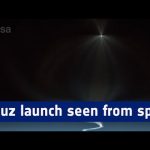
This is what three astronauts being launched into space looks like – seen from space. ESA astronaut Alexander Gerst took this time-lapse sequence from the International Space Station’s Cupola observatory on 3 December 2018.
Inside the Soyuz MS-11 spacecraft were NASA astronaut Anne McClain, Canadian Space Agency astronaut David Saint-Jacques and Roscosmos astronaut and Soyuz commander Oleg Konenenko. The trio blasted into orbit at 11:31 GMT from the Baikonur cosmodrome in Kazakhstan and docked with the International Space Station just six hours later.
Spacecraft are launched after the Space Station flies overhead. This allowed Alexander to set up a camera to take regular pictures at intervals that are played back to create this video.
The rocket leaves behind a trail of exhaust as it gains altitude and passes through the layers of Earth’s atmosphere.
ESA is Europe’s gateway to space. Our mission is to shape the development of Europe’s space capability and ensure that investment in space continues to deliver benefits to the citizens of Europe and the world. Check out http://www.esa.int/ESA to get up to speed on everything space related.
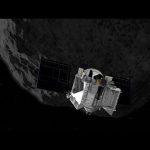
On Dec. 3, 2018, the OSIRIS-REx spacecraft arrives at its target, near-Earth asteroid Bennu. Here, the team explains mission goals and the process of approach and rendezvous. OSIRIS-REx will study Bennu for two years before collecting a sample to return to Earth.
The European Space Agency – or ESA – has been a major player in the commercial launch space for decades with their Ariane series of rockets. But they also have been racking up some impressive interplanetary missions, their latest one being the BepiColumbo mission to Mercury.
Here we break down the ESA, talk about some of their biggest victories, and where they want to go in the future.
They’re rivers of ice, slowly flowing down the sides of mountains, and they currently have an outsized role in sea level rise. This week, #NASAExplorers are taking us high into the mountains of Alaska, Patagonia, Asia and elsewhere for a closer look at mountain glaciers.
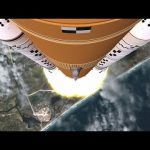
At the Vehicle Assembly Building at Kennedy Space Center, technicians practice and prepare to stack NASA’s Space Launch System rocket. The SLS fueled-up core stage weighs around 2.3 million pounds and measures 212 feet long.
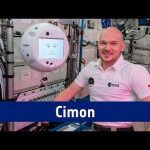
ESA astronaut Alexander Gerst welcomed a new face to the Columbus laboratory, thanks to the successful commissioning of technology demonstration Cimon. Short for Crew Interactive Mobile CompanioN, Cimon is a 3D-printed plastic sphere designed to test human-machine interaction in space.
Developed and built by Airbus in Friedrichshafen and Bremen, Germany, on behalf of German Space Agency DLR, Cimon uses artificial intelligence software by IBM Watson. Its scientific aspects are overseen by researchers at Ludwig Maximilians University Clinic in Munich.
This video shows Alexander’s first interactions with Cimon on board the International Space Station. After introducing himself, where he comes from and what he can do, Cimon tests his free-flying abilities, helps Alexander with a procedure and even plays Alexander’s favourite song ‘Man Machine’ by Kraftwerk. In fact, Cimon likes the music so much, he does not want to stop.
Happy with his initial outing, both Cimon’s developers and Alexander hope to see Cimon back in action again soon. While no further sessions are planned during the Horizons mission at this stage, it could mark the beginning of exciting collaboration between astronauts, robotic assistants and possible future artificial intelligence in space.
ESA is Europe’s gateway to space. Our mission is to shape the development of Europe’s space capability and ensure that investment in space continues to deliver benefits to the citizens of Europe and the world. Check out http://www.esa.int/ESA to get up to speed on everything space related.
The Autism Glass Project from Stanford Medicine’s Wall Lab has developed a system using machine learning and artificial intelligence to automate facial expression recognition.
The new form of behavioral therapy uses a Stanford-designed app paired with Google Glass to help children with autism distinguish between eight classical facial expressions indicating happiness, sadness, anger, disgust, surprise, fear, contempt or neutral.
Campaign name: Artificial Intelligence For Kids AI4KIDS and CODING4KIDS
FIRST TIME IN INDIA, AI IN VILLAGE GOVERNMENT RUN SCHOOLS, Why we are doing this?
To inspire the VILLAGE Kids to Learn Coding
These kids when they grow up will be at the epicenter of AI Revolution in the next decades so as a social entrepreneur we feel it’s our Responsibility to prepare our kids for AI tomorrow.
Women Entrepreneur Suriya Prabha Doing what Apple and Amazon Doing In USA, Teaching Kids coding. We started with Village Govt schools (These students are the Future India)
Unemployment is not the Problem in India, Skill is the problem in India, so we feel the kids should be inspired very early to Technology.
India has the Largest Kids population in the World, so it’s necessary to inspire them and teach them about technology and Skill them at a very early age
Apple plans to invest in future, launches free coding education program for students in USA
Read more at:
//economictimes.indiatimes.com/articleshow/66828833.cms?utm_source=contentofinterest&utm_medium=text&utm_campaign=cppst
China looks to school kids to win the global AI race https://www.scmp.com/tech/china-tech/article/2144396/china-looks-school-kids-win-global-ai-race
Campaign name: Artificial Intelligence For Kids AI4KIDS and CODING4KIDS
FIRST TIME IN INDIA, AI IN VILLAGE GOVERNMENT RUN SCHOOLS, Why we are doing this?
To inspire the VILLAGE Kids to Learn Coding
These kids when they grow up will be at the epicenter of AI Revolution in the next decades so as a social entrepreneur we feel it’s our Responsibility to prepare our kids for AI tomorrow.
Women Entrepreneur Suriya Prabha Doing what Apple and Amazon Doing In USA, Teaching Kids coding. We started with Village Govt schools (These students are the Future India)
Unemployment is not the Problem in India, Skill is the problem in India, so we feel the kids should be inspired very early to Technology.
India has the Largest Kids population in the World, so it’s necessary to inspire them and teach them about technology and Skill them at a very early age
Apple plans to invest in future, launches free coding education program for students in USA
Read more at:
//economictimes.indiatimes.com/articleshow/66828833.cms?utm_source=contentofinterest&utm_medium=text&utm_campaign=cppst
China looks to school kids to win the global AI race https://www.scmp.com/tech/china-tech/article/2144396/china-looks-school-kids-win-global-ai-race
After a 24-hour journey from Bremen, Germany with stops in Hamburg and Portsmouth, USA, the European Service Module landed on 6 November 2018 at Kennedy Space Center in Florida.
The shipment from Bremen to Florida is just the beginning – the first leg of an exciting journey that will boost the spacecraft to lunar orbit and back.
The first service module is a key component that will see #Orion around the Moon for Exploration Mission-1. It will make the powerful burns required to enter and exit lunar orbit as well as softer burns to allow for space manoeuvring and course correction.
After years of designing, building, and testing in Europe, the powerhouse that will propel NASA’s Orion spacecraft to the Moon will be mated with the rest of the spacecraft to undergo final testing before flight.
ESA’s partnership with NASA takes the European effort to the global stage. For the first time, NASA will use a European-built system as a critical element to power an American spacecraft, extending the international cooperation of the International Space Station into deep space.
ESA is Europe’s gateway to space. Our mission is to shape the development of Europe’s space capability and ensure that investment in space continues to deliver benefits to the citizens of Europe and the world. Check out http://www.esa.int/ESA to get up to speed on everything space related.




![Nachricht an meine Enkelkinder [with Closed Captions]](https://video.kidibot.ro/wp-content/uploads/2020/03/6507/nachricht-an-meine-enkelkinder-with-closed-captions-150x150.jpg)
![How do astronauts return to Earth? [with Closed Captions]](https://video.kidibot.ro/wp-content/uploads/2021/07/10518-how-do-astronauts-return-to-earth-with-closed-captions-150x150.jpg)