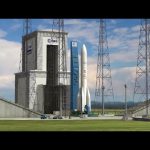
At the European spaceport in Kourou, French Guiana, the new launch facilities for ESA’s Ariane 6 launcher are being built. With the Ariane 6 launcher and the upgrade of the Vega to Vega C, Europe expands its launching capacities by creating versatile launchers that meet market demands. At the same time ESA supports both institutional missions and European industry as both Ariane 6 and Vega C will be fully European. With Ariane 6 and Vega C, Europe secures its independent access to space for years to come.
Blog
-
Science Max | CATAPULT & BOAT PART 2 | Kids Science | Experiments
Science Max brings you a special compilation including some of our favourite episodes from season 1. Tune in and prepare for a heap of science madness!
Have you ever done a science experiment and wondered “What would this be like if it were HUGE?” Welcome to Science Max, the exciting new series that turbocharges all the science experiments you’ve done at home.
In season 1, join Phil as he builds rocket cars, uses elastic energy to hurl pumpkins on a giant catapult, builds a bridge out of pasta that can hold a human, find magnets powerful enough to float Phil off the ground, and many more experiments taken to the MAX!
-

Lisa Pathfinder end of Mission
The LISA Pathfinder mission ends on 18 July 2017 after a successful demonstration of the technology needed to detect gravitational waves in space. These vibrations in spacetime, first predicted by Einstein over a hundred years ago, are produced by huge astronomical events – such as two black holes colliding – and will allow scientists to open new windows into our universe.
The success of the LISA Pathfinder mission has paved the way for the newly selected LISA mission which, when built and launched, will detect gravitational waves from objects up to a million times larger than our Sun.
The film features interview soundbites from Dr Paul McNamara, LISA Pathfinder Project Scientist, at the European Space Agency’s European Technology and Science facility (ESTEC) in The Netherlands.
More about LISA Pathfinder:
http://sci.esa.int/lisa-pathfinder/ -
Celebrating 100 Years of NASA Langley: A Storied Legacy, A Soaring Future
NASA Langley – 100 Years: Something happened 100 years ago that changed forever the way we fly, the way we explore space and how we study our home planet. That something was the establishment of what is now NASA’s Langley Research Center in Hampton, Virginia, which commemorates its 100th anniversary on July 17, 2017.
Astronaut Neil Armstrong, the first human to step foot on the moon and who learned how to do so by training at Langley said, “If a competition were held to determine the organization that had accomplished the largest number of advancements to aeronautic and aerospace progress, my nomination would be this place.”
This 45-minute documentary looks back across the 100 years, updates us on work being done at Langley today, and takes a peek into the future.
Find out more about NASA Langley’s centennial at: https://www.nasa.gov/langley/100 -
ESA Euronews: The space veteran
It’s an age when many of us would be considering winding down, and cutting back on physical exertion. Not so for Paolo Nespoli, who is about to embark on his third space mission at the age of 60, which makes him Europe’s oldest astronaut. At the end of July he will voyage to the International Space Station (ISS), where he will remain for some months.
This video is also available in the following languages:
French: https://www.youtube.com/watch?v=IgsbYsudY9c
German: https://www.youtube.com/watch?v=ucqrT7VYSkc
Spanish: https://www.youtube.com/watch?v=91b_CcXqvAA
Italian: https://www.youtube.com/watch?v=a87NU2XMPUE
Portuguese: https://www.youtube.com/watch?v=A0uSAfZEYNY
Hungarian: https://www.youtube.com/watch?v=AMtHuhq13ek
Greek: https://www.youtube.com/watch?v=doCcnvm2R3E -
Google’s DeepMind AI Just Taught Itself To Walk
Google’s artificial intelligence company, DeepMind, has developed an AI that has managed to learn how to walk, run, jump, and climb without any prior guidance. The result is as impressive as it is goofy.
Read more: http://www.businessinsider.com/sai
FACEBOOK: https://www.facebook.com/techinsider
TWITTER: https://twitter.com/techinsider
INSTAGRAM: https://www.instagram.com/businessinsider/
TUMBLR: http://businessinsider.tumblr.com/ -
Science Max | CATAPULT & BOAT PART 1 | Kids Science | Experiments
Science Max brings you a special compilation including some of our favourite episodes from season 1. Tune in and prepare for a heap of science madness!
Have you ever done a science experiment and wondered “What would this be like if it were HUGE?” Welcome to Science Max, the exciting new series that turbocharges all the science experiments you’ve done at home.
In season 1, join Phil as he builds rocket cars, uses elastic energy to hurl pumpkins on a giant catapult, builds a bridge out of pasta that can hold a human, find magnets powerful enough to float Phil off the ground, and many more experiments taken to the MAX!
-

Vice President Pence Visits Kennedy on This Week @NASA – July 7, 2017
Vice President Mike Pence spoke to employees on July 6 at our Kennedy Space Center in Florida, highlighting the public/private partnerships transforming the center into a multi-user spaceport, and changing the way we do business in low-Earth orbit. Acting Administrator Robert Lightfoot and Kennedy Director Bob Cabana accompanied the Vice President on tours of several facilities currently being leased by private space companies. The tour showcased hardware, systems and infrastructure, that will soon facilitate U.S. based astronaut launches and eventual missions to deep space. Also, SpaceX Dragon Released from Space Station, Happy July 4th from Space, and 3D-Printed Habitat Challenge!
-
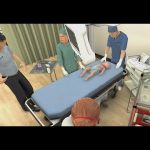
VR’s Healthcare Revolution: Transforming Medical Training at CHLA
Recently, we partnered with Children’s Hospital Los Angeles (CHLA) to build a VR simulation that places medical students and staff in rare yet high-risk pediatric trauma situations where split-second decisions determine whether a patient lives or dies. Thanks to the immersive power of VR, we can replicate these training scenarios in true-to-life fashion, complete with paramedics rattling off symptoms, nurses and techs urging you to make a decision, and distraught parents praying for their child’s survival.
These visceral, interactive exercises up the stakes compared to traditional educational tools like non-VR simulations and mannequins. Powered by AiSolve and brought to life by the Hollywood VFX magic of BioflightVR, these virtual scenarios based on actual CHLA case studies let doctors and students practice and learn in realistic workplace conditions. Not only does this new innovation stand to significantly reduce the time and cost associated with mannequin-based training, it also better prepares people to respond in the real world.
Official Oculus Channels:
Oculus: http://ocul.us/Oculus
Facebook: http://ocul.us/Facebook
Twitter: http://ocul.us/Twitter
Instagram: http://ocul.us/Instagram -
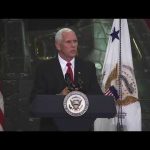
Vice President Pence Visits NASA’s Kennedy Space Center
Vice President Mike Pence visited NASA’s Kennedy Space Center in Florida today and addressed employees at the iconic Vehicle Assembly Building. The vice president also toured Kennedy to learn more about the center’s work as a multi-user spaceport for commercial and government clients, and he saw the agency’s progress toward launching from U.S. soil on spacecraft built by American companies. He visited the Neil Armstrong Operation’s and Checkout Building to see NASA’s Orion spacecraft that will travel past the moon, and eventually on to Mars atop the Space Launch System rocket.
-
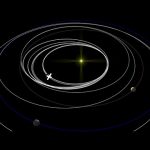
BepiColombo’s journey to Mercury
Animation visualising BepiColombo’s 7.2 year journey to Mercury.
This animation is based on a launch date of 5 October, marking the start of the launch window in October 2018. It illustrates the gravity assist flybys that the spacecraft will make at Earth, Venus and Mercury before arriving at Mercury in December 2025.
More about the journey:
http://www.esa.int/Our_Activities/Space_Science/BepiColombo/Journey_to_Mercury -
Science Max | PASTA & ROCKET | Full episodes | Kids science
🚀NEW VIDEOS EVERY THURSDAY! 🚀
Science Max brings you a special compilation including some of our favourite episodes from season 1. Tune in and prepare for a heap of science madness!
Have you ever done a science experiment and wondered “What would this be like if it were HUGE?” Welcome to Science Max, the exciting new series that turbocharges all the science experiments you’ve done at home.
In season 1, join Phil as he builds rocket cars, uses elastic energy to hurl pumpkins on a giant catapult, builds a bridge out of pasta that can hold a human, find magnets powerful enough to float Phil off the ground, and many more experiments taken to the MAX!
-
President Trump Reestablishes the National Space Council on This Week @NASA – June 30, 2017
President Donald Trump signed an Executive Order on June 30 to reestablish the National Space Council. To mark International Asteroid Day on June 30, we aired a special television program with information about the work our Planetary Defense Coordination Office and other NASA-funded programs do to find, track and characterize Near Earth Objects. These are asteroids and comets in the vicinity of Earth’s orbit that could pose an impact threat to our planet. The Planetary Defense Coordination Office also issues alerts and helps coordinate any U.S. government response to an impact threat. The broadcast was part of a 24-hour Asteroid Day program from Broadcasting Center Europe. Also, NASA Testifies at Congressional Hearings, and Colorful Clouds in Space!
-
Happy 4th of July, from NASA
From NASA to you, we wish you a safe and happy Independence Day. In this video, we simulated rocket and engine sounds to reflect the cannon booms in the music.
Here is a chronological list of the engines and rocket launches we highlighted:
RS-25 Engine Test, SLS Booster Nozzle Test, Delta ll Rocket Launch, Rocket Sled Test, SpaceX Dragon Capsule Abort Test, SLS Booster Test, Orion Abort Tower Separation Animation, Orbital ATK Cygnus Launch, Atlas V Rocket Launch
-
ESA’s ESTEC Open Day 2017
The date is fixed: you are invited to visit ESA’s technical heart in the Netherlands for its annual Open Day on Sunday, 8 October.
The theme this year is Bringing Space to Earth. Visit us to meet astronauts and mission experts, see how we simulate space on the ground, and discover the knowledge and technologies brought back to Earth from space.
For now, please save the date. You can register to attend #OpenESTEC from 3 July.
In place for more than half a century, the ESTEC European Space Research and Technology Centre in Noordwijk on the North Sea coast is ESA’s largest establishment, focused on developing technology, planning missions and testing satellites.The hub of our continent’s space effort, this is where the majority of European space projects are born, developed and tested in advance of their flights into orbit.
Find out more: http://www.esa.int/estec
-
Visions of human spaceflight and robotic exploration
Visions and clips from ESA’s future for human spaceflight and robotic exploration. Exploring is about visiting new places and coming back with new experiences and knowledge to help us on Earth.
Our strategy includes three destinations where humans will work with robots to gather new knowledge: low-Earth orbit on the International Space Station, the Moon – our closest neighbour, and our third destination Mars.
The exploration programme includes Europe’s service module for NASA’s Orion spacecraft around the Moon, a landing on the Moon with Roscomos’ Luna lander and ESA’s Exomars rover on Mars.
A deep-space gateway farther afield than the International Space Station is considered as a springboard for exploration beyond the Moon.
Watch a longer version of ESA’s future for human spaceflight and robotic exploration:
https://www.youtube.com/watch?v=irQYp6GFMfs -
Human spaceflight and robotic exploration future
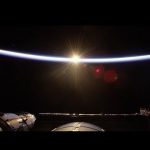
ESA’s vision for human spaceflight and robotic exploration is part of humanity’s road to the stars. Exploring is about visiting new places and coming back with new experiences and knowledge to help us on Earth.
Our strategy includes three destinations where humans will work with robots to gather new knowledge: low-Earth orbit on the International Space Station, the Moon – our closest neighbour, and our third destination Mars.
The exploration programme includes Europe’s service module for NASA’s Orion spacecraft around the Moon, a landing on the Moon with Roscomos’ Luna lander and ESA’s Exomars rover on Mars.
A deep-space gateway farther afield than the International Space Station is considered as a springboard for exploration beyond the Moon.
-

Alexander Gerst training for his second ISS mission
In 2018, ESA astronaut Alexander Gerst from Germany will be travelling to the International Space Station for the second time. During this long-duration spaceflight – which is called the Horizons mission – he will have the role of Space Station commander. Alexander is currently in training at NASA’s Johnson Space Centre in Houston, Texas.
Connect with Alexander: http://alexandergerst.esa.int
-
Science Max | ATTRACTION & FORCES | Full episodes | Kids science
🚀NEW VIDEOS EVERY THURSDAY! 🚀
Science Max brings you a special compilation including some of our favourite episodes from season 1. Tune in and prepare for a heap of science madness!
Have you ever done a science experiment and wondered “What would this be like if it were HUGE?” Welcome to Science Max, the exciting new series that turbocharges all the science experiments you’ve done at home.
In season 1, join Phil as he builds rocket cars, uses elastic energy to hurl pumpkins on a giant catapult, builds a bridge out of pasta that can hold a human, find magnets powerful enough to float Phil off the ground, and many more experiments taken to the MAX!
-
Infrared webcam hack – using an infrared webcam to observe the world in a new way
This video, part of a series of ESA teaching resources called ‘Teach with space’, demonstrates an experiment that can be performed by students to observe everyday objects in infrared light. This is achieved by modifying a cheap webcam to allow it to block visible light and receive infrared light.
-
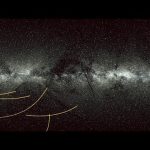
Catching speeding stars
This video reveals the evolution of stars in our Galaxy over the past million of years.
It starts from the positions of stars in the sky 1 035 000 years ago, which were calculated using data from the Tycho-Gaia Astrometric Solution, or TGAS, one of the products of the first Gaia data release. The video follows the evolution of stellar positions until the present day, ending with a view of the sky as measured by Gaia between 2014 and 2015.
Highlighted in yellow are the trajectories of six special stars: these are hypervelocity stars, moving through the Galaxy at several hundred of km/s. While it might not be apparent from the video, which shows the motions of stars as projected on the sky, they are moving through space much faster than the galactic average.
Scientists spotted these speeding stars from the TGAS data set of two million stars with the help of an artificial neural network – software that mimics a human brain – and they are looking forward to finding many more in future Gaia data releases.
These stars owe their high speeds to past interactions with the supermassive black hole that sits at the centre of the Milky Way and, with a mass of four million Suns, governs the orbits of stars in its vicinity. Having travelled great distances through the Galaxy, they provide crucial information about the gravitational field of the Milky Way from the centre to its outskirts.
One of the six stars (labelled 1 at the end of the video) seems to be speeding so fast, at over 500 km/s, that it is no longer bound by the gravity of the Galaxy and will eventually leave. The other five stars are somewhat slower (over 400 km/s for the stars labelled 2, 3, 4 and 6, and 360 km/s for the star labelled 5) and are still bound to the Galaxy.
These slightly slower stars are perhaps even more fascinating, as scientists are eager to learn what slowed them down – the invisible dark matter that is thought to pervade the Milky Way might also have played a role.
The stars are plotted in Galactic coordinates and using a rectangular projection: in this, the plane of the Milky Way stands out as the horizontal band with greater density of stars. The stripes visible in the final frames reflect the way Gaia scans the sky and the preliminary nature of the first data release; these artefacts are gradually washed out in the video as stars move across the sky.
Read more on our website:
Artificial brain helps Gaia catch speeding stars –
http://www.esa.int/Our_Activities/Space_Science/Gaia/Artificial_brain_helps_Gaia_catch_speeding_starsMore about Gaia:
http://sci.esa.int/gaia/Credit: ESA/Gaia/DPAC CC BY-SA 3.0 IGO: https://creativecommons.org/licenses/by-sa/3.0/igo/
-
NASA Spacecraft Fire and Combustion
In this episode, NASA experts discuss Spacecraft Fire and Combustion Research.
-
Thomas Pesquet au salon du Bourget (in French)
L’astronaute de l’ESA Thomas Pesquet, de retour sur terre, répond depuis le salon du Bourget aux questions à propos de la mission Proxima durant laquelle il a passé six mois à bord de la station spatiale internationale. Au cours de la mission, il a travaillé sur plus de 60 expériences scientifiques pour l’ESA, pour le CNES et pour les partenaires de l’ISS.
– – – – – – – – – – – – – – – – – – –
ESA astronaut Thomas Pesquet, who recently returned from the International Space Station, answers questions from the public at the Paris Air and Space Show 2017 about his six-month Proxima mission in which he took part in over 60 scientific experiments for ESA and France’s space agency CNES and the ISS partners.
More about the Proxima mission:
http://www.esa.int/proximaConnect with Thomas:
http://thomaspesquet.esa.intMore about ESA at Le Bourget 2017:
http://www.esa.int/About_Us/Exhibitions/Le_Bourget_2017 -

ESA Euronews: Salon du Bourget 2017
Dans ce numéro de Space, nous profitons du Salon international du Bourget, évènement incontournable de l’aéronautique et de l’aérospatial, pour rencontrer ceux qui mènent les grandes missions d’aujourd’hui et de demain : les responsables de l’ESA et de la NASA, mais aussi l’astronaute français Thomas Pesquet qui vient de rentrer sur Terre après avoir passé six mois en orbite.
-

ESA Euronews: Le Bourget 2017
Il Salone dell’aeronautica di Parigi-Le Bourget dal 1909 è uno dei più grandi eventi al mondo dedicati al settore aerospaziale. Degli oltre 2.200 espositori internazionali e 285 delegazioni ufficiali provenienti da tutto il mondo, 137 sono italiani. Qui il nostro inviato Jeremy Wilks ha incontrato il Capo della NASA per parlare della missione su Marte, il capo dell’ESA per discutere dei viaggi su Mercurio e sul Sole, e per scambiare quattro chiacchiere con l’astronauta francese dell’ESA Thomas Pesquet, che è appena tornato a terra dopo mesi nello spazio.
-
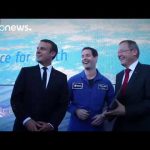
ESA Euronews: Le Bourget 2017
O Salão de Aeronáutica de Paris é um ponto de encontro incontornável para o setor aeroespacial. Falámos com os responsáveis da ESA e da NASA, mas primeiro conversámos com Thomas Pesquet, o astronauta da ESA que acabou de regressar à Terra após 6 meses no espaço.
O momento é de recuperar, depois da massa óssea e muscular que perdeu durante a sua missão. Mas Thomas Pesquet é como um herói para os franceses. Portanto, nada mais natural do que ter o presidente Emmanuel Macron a saudá-lo num evento de dimensão mundial.
-
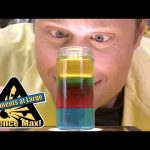
Science Max | LIQUIDS AND ELASTICITY | Full Episodes | Kids Science
🚀NEW VIDEOS EVERY THURSDAY! 🚀
Science Max brings you a special compilation including some of our favourite episodes from season 1. Tune in and prepare for a heap of science madness!
Have you ever done a science experiment and wondered “What would this be like if it were HUGE?” Welcome to Science Max, the exciting new series that turbocharges all the science experiments you’ve done at home.
In season 1, join Phil as he builds rocket cars, uses elastic energy to hurl pumpkins on a giant catapult, builds a bridge out of pasta that can hold a human, find magnets powerful enough to float Phil off the ground, and many more experiments taken to the MAX!
-

Humanoid Robot Tells Jokes on GMB! | Good Morning Britain
Subscribe now for more! http://bit.ly/1NbomQa
Piers, Susanna, and Kate talk to Sophia, a sophisticated humanoid robot.Broadcast on 21/06/17
Like, follow and subscribe to Good Morning Britain!
The Good Morning Britain YouTube channel delivers you the news that you’re waking up to in the morning. From exclusive interviews with some of the biggest names in politics and showbiz to heartwarming human interest stories and unmissable watch again moments.
Join Susanna Reid, Piers Morgan, Ben Shephard, Kate Garraway, Charlotte Hawkins and Sean Fletcher every weekday on ITV from 6am.
Website: http://bit.ly/1GsZuha
YouTube: http://bit.ly/1Ecy0g1
Facebook: http://on.fb.me/1HEDRMb
Twitter: http://bit.ly/1xdLqU3 -

Artificial intelligence
Artificial intelligence is rapidly moving into health care, led by some of the biggest technology companies and emerging startups using it to diagnose and respond to a raft of conditions.VIDEOGRAPHIC
-

What’s Happened So Far – Mid Year @NASA – June 16, 2017
2017 is shaping up to be another year of unprecedented exploration, amazing discoveries, technological advances and progress in development of future missions – and we’re just six months into the year. Here are some of our top stories of 2017, so far – Mid-Year at NASA!
-

Thomas Pesquet at Le Bourget
Interview with ESA astronaut Thomas Pesquet at the Paris Air and Space Show, on the science of his Proxima mission and some career advice for his younger followers, 19 June 2017.
More about ESA at Le Bourget:
http://www.esa.int/About_Us/Exhibitions/Le_Bourget_2017 -
2017 Administrator’s Agency Honor Awards Celebrate NASA’s Best of the Best
During the 2017 Administrator’s Agency Honor Awards Ceremony on June 15 at Langley Research Center, NASA’s Acting Administrator, Robert Lightfoot, presented Distinguished Service and Distinguished Public Service Medals to individuals who have made extraordinary and indelible contributions to the agency’s mission success. These awards are NASA’s most prestigious and distinguished honors.
-
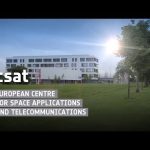
ECSAT: Space for daily life
ECSAT (European Centre for Space Applications and Telecommunications) is the European Space Agency’s centre in the UK. With a commercially driven ethos, it supports European and Canadian industry in developing commercial satcom products and services, downstream applications and the ‘spin-out’ of space into non-space sectors.
ECSAT also the home of ESA’s Climate Office and has units dedicated to space exploration and technology development, one of which oversees the ESA–Rutherford Appleton Laboratory Advanced Manufacturing Laboratory.
More about ECSAT:
http://www.esa.int/About_Us/Welcome_to_ESA/ECSAT -
Science Max | Testing the Facts Compilation | Science Max Season1 | Kids Science
Science Max brings you a special compilation including some of our favourite episodes from season 1. Tune in and prepare for a heap of science madness!
Have you ever done a science experiment and wondered “What would this be like if it were HUGE?” Welcome to Science Max, the exciting new series that turbocharges all the science experiments you’ve done at home.
In season 1, join Phil as he builds rocket cars, uses elastic energy to hurl pumpkins on a giant catapult, builds a bridge out of pasta that can hold a human, find magnets powerful enough to float Phil off the ground, and many more experiments taken to the MAX!
-
ESA astronauts spacewalk training
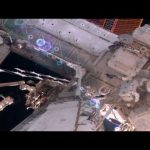
Matthias Maurer, ESA’s newest astronaut, has been training with Tim Peake at the Johnson Space Centre in Houston, Texas. During practical and theory classes they’ve learned skills necessary to perform a spacewalk, also known as EVA, or Extra Vehicular Activity – much of which is already familiar to Tim, who worked outside the Station in January 2016. They also spent time in the Neutral Buoyancy Lab, a pool housing replica International Space Station modules which allows astronauts to experience near weightless conditions.
Connect with ESA’s Astronaut Corps:
http://www.esa.int/astronauts -
The future of the Orion constellation
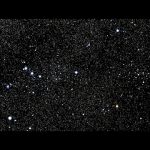
This video reveals how our view of the Orion constellation will evolve over the next 450 000 years.
Amid a myriad of drifting stars, the shape of Orion as defined by its brightest stars is slowly rearranged into a new pattern as time goes by.
The portion of the sky depicted in the video measures 40 x 20º – as a comparison, the diameter of the full Moon in the sky is about half a degree.
The video is based on data from ESA’s Gaia and Hipparcos satellites, as well as additional information from ground-based observations.
A speeded-up version of the video is available here: http://sci.esa.int/gaia/59209
Full story: The future of the Orion constellation http://www.esa.int/Our_Activities/Space_Science/Gaia/The_future_of_the_Orion_constellation
The evolution of two million stellar positions on the entire sky is shown here: https://www.youtube.com/watch?v=87lgSRVUSxM
Copyright: ESA/Gaia/DPAC CC BY-SA 3.0 IGO: https://creativecommons.org/licenses/by-sa/3.0/igo/
-
Un orfelinat de dimensiuni…cosmice!
Cristian Presura la emisiunea Stiinta in Cuvinte potrivite, Radio Romania Cultural, cu Corina Negrea si Dan Manolache. “Pilula de stiinta” se gaseste aici: https://www.facebook.com/stiintaclub/
Cosmosul abundă în planete orfane, numite aşa pentru că nu orbitează în jurul niciunei stele. Numărul lor îl depăşeşte pe cel al stelelor. Unele se formează direct în spaţiul interstelar, iar altele scapă din discul protoplanetar al unor stele. Se detectează în infraroşu sau prin efect de lentilă gravitaţională şi se pot confunda cu piticile cenuşii, stele ce şi-au oprit fuziunea în stadii incipiente. Dacă nucleul planetei orfane este radioactiv, ea poate încălzi atmosfera suficient cât să permită existenţa oceanelor de apă şi a unor izvoare geotermale. Nu este exclus ca acolo să apară chiar viaţă extraterestră.
-

The Rise of the Machines – Why Automation is Different this Time
Automation in the Information Age is different.
Books we used for this video:
The Rise of the Robots: http://amzn.to/2sFQTed
The Second Machine Age: http://amzn.to/2szATee
Support us on Patreon so we can make more videos (and get cool stuff in return): https://www.patreon.com/Kurzgesagt?ty=h
Steady: https://steadyhq.com/de/kurzgesagt
Merchandise: https://shop.kurzgesagt.org
Newsletter: http://eepurl.com/cRUQxz
Facebook: http://bit.ly/1NB6U5O
Twitter: http://bit.ly/2DDeT83
Instagram: http://bit.ly/2DEN7r3
Discord: https://discord.gg/cB7ycdvThe Voice of Kurzgesagt:
Steve Taylor: http://voice-pool.com/en/english/The music of the video here:
Soundcloud: http://bit.ly/2sfwlJf
Bandcamp: http://bit.ly/2r17DNc
Facebook: http://bit.ly/2qW6bY4– Study about job automation in the next two decades:
http://bit.ly/1mj2qSJTHANKS A LOT TO OUR LOVELY PATRONS FOR SUPPORTING US:
Brandon Eversole, Andrew Anglehart, Christian Ahlin, Kathleen Woolum, Estel Anahmias, Adam Schlender, Mike Luque, Encyclo, Stevie Taylor, Brent Yoder, Invisibleman, Jeff Lam, Christopher Hayes, Oliver Walker, gwendolyn bellermann, Matt Logan, Philip Chou, Brandon Young, Arlo Stewart, Thomas Hodnemyr, Viachaslau Hurmanau, Sam Cousins, Robin Hultgren, Jose Schroeder, Ched, Claustrophobya, Charles Wang, Dolan Dark, Casaro, Donglin Li, Sarah Thompson, Pamela Palmer, Fergal Harrington, Jonas Erath, Spencer, Zsuzsi Balai, Tyler Roberts, Allyssa Blalock, Robert Bishop, Carl-Johan Linde, Thomas Nielsen, Heather Pray, Marco Boneberger, Mehsotopes, Joe Johnston, ugo dubois, Keagan Boys, Miles Gard, Frantisek Sumsala, Scott, Tobias Theobald, Solar3ty Games, Nicholas Carr, K41N_of_2358, Daniel RodrÌguez, Pixlpit, Gytis Kirvela, Thomas Flanigan, Dwagon, Costin Graur, Mavis Everett, Kwiatkowski Robert, Huo Benpeng, Dan Gretton, Joshua Davison, Bryce Comp, Andrey Lipattsev, DEFECT DAVIS, Gurleen Saini, Andrew “FastLizard4” Adams, Isak Hietala, Leon Han, Sarah Johnson, Kieran Chakravorty, Hanna Khoury, Kimberly Martin, Jon Glass, Julius Wroblewski, Ben Zautner, Kester Falge, Juan Florez, Tad Moore
Help us caption & translate this video!
http://www.youtube.com/timedtext_cs_panel?c=UCsXVk37bltHxD1rDPwtNM8Q&tab=2
The Rise of the Machines – Why Automation is Different This time
-
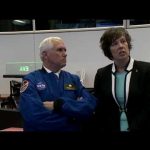
Vice President Pence Tours NASA’s Historic Mission Control in Houston
As part of his visit to NASA’s Johnson Space Center on June 7, to welcome America’s newest astronaut candidates, Vice President Mike Pence took a tour of the Christopher C. Kraft Jr. Mission Control Center and was briefed on current human spaceflight operations.
The Vice President also joined Acting Administrator Robert Lightfoot and Johnson Center Director Ellen Ochoa to announce the 12 men and women who were selected to the 2017 astronaut class from more than 18,300 applicants. The new astronaut candidates could one day be performing research on the International Space Station, launching from American soil aboard spacecraft built by American companies, and traveling to the moon or even Mars with the help of NASA’s new Orion spacecraft and Space Launch System rocket.
Get more information on astronaut selection and information on the candidates after their introduction at: https://www.nasa.gov/2017astronauts.
-
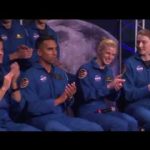
NASA’s New Astronauts to Conduct Research Off the Earth, For the Earth and Deep Space Missions
After receiving a record-breaking number of applications to join an exciting future of space exploration, NASA has selected its largest astronaut class since 2000. Rising to the top of more than 18,300 applicants, NASA chose 12 women and men as the agency’s new astronaut candidates. Vice President Mike Pence joined Acting NASA Administrator Robert Lightfoot, Johnson Space Center Director Ellen Ochoa, and Flight Operations Director Brian Kelly to welcome the new astronaut candidates during an event June 7 at the agency’s Johnson Space Center in Houston. The astronaut candidates will return to Johnson in August to begin two years of training. Then they could be assigned to any of a variety of missions: performing research on the International Space Station, launching from American soil on spacecraft built by commercial companies, and departing for deep space missions on NASA’s new Orion spacecraft and Space Launch System rocket.