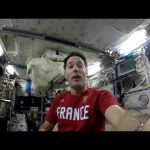
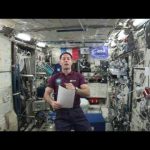
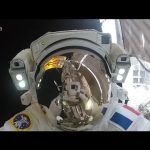
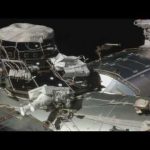
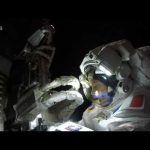
ESA astronaut Thomas Pesquet takes us on a six-minute tour of the International Space Station, recorded 23 March 2017 during his Proxima mission.
During his Proxima mission, Thomas will perform around 50 scientific experiments for ESA and France’s space agency CNES as well as take part in many research activities for the other Station partners.
The mission is part of ESA’s vision to use Earth-orbiting spacecraft as a place to live and work for the benefit of European society while using the experience to prepare for future voyages of exploration further into the Solar System.
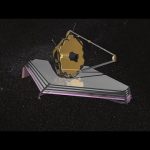
NASA’s James Webb Space Telescope (JWST) has successfully passed the center of curvature test at Goddard Space Flight Center, in Greenbelt, Md. This important optical measurement of Webb’s fully assembled primary mirror was the final test held at Goddard before the telescope is shipped off for end-to-end cryogenic testing at Johnson Space Center in Houston. When that’s complete, the world’s most advanced observatory goes to Northrop Grumman Aerospace Systems in Redondo Beach, California, for final assembly and testing. Webb is targeted for launch in 2018 on a mission to help unravel some of the greatest mysteries of the universe. Also, Cassini Update, NASA Visits Midwest Company Helping Build Orion, Orion’s Launch Abort System Motor Tested, Wind Tunnel Tests Continue with SLS, and Community College Aerospace Scholars!
As a centre of excellence for mission operations since 1967, ESA’s ‘mission control’ delivers expertise and experience in a unique mix that serves the scientific and engineering goals of ESA, and enables economically vital European programmes like Copernicus and Galileo.
ESOC is home to highly specialised teams who control and navigate spacecraft, manage ESA’s worldwide tracking station network, and build the ground systems that enable satellites to conduct their missions. Spacecraft flown from ESOC are studying our planet and helping us understand climate change through realtime Earth data, and are exploring our Sun and Solar System or peering deep into the mysteries of time and space.
The centre is unique and unparalleled in its ability to control sophisticated probes, and to design, develop and build everything needed on ground to successfully fly satellites in space.
Our world is about systems, communication and exploration; our passion is for humanity’s voyages into the Universe.
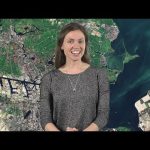
Earth from Space is presented by Kelsea Brennan-Wessels from the ESA Web-TV virtual studios. Learn about land reclamation around Amsterdam in the 228th edition.
Artificial intelligence or AI is intelligence displayed by machines such as computers, in a way similar to us, humans.
It’s able to observe its environment, learn and solve problems.
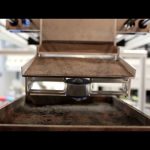
Bricks have been 3D printed out of simulated moondust using concentrated sunlight. This ESA project took place at the DLR German Aerospace Center facility in Cologne, with a 3D printer table attached to a solar furnace, baking successive 0.1 mm layers of moondust at a temperature of 1000°C. A 20 x 10 x 3 cm brick for building can be completed in around five hours. DLR Cologne’s solar furnace has two working setups: as a baseline, it uses 147 curved mirror facets to focus either actual sunlight into a high temperature beam, employed to melt together the grains of regolith. But this mode is weather dependent, so a solar simulator was subsequently employed as well – based on an array of xenon lamps more typically found in cinema projectors.
Science Max brings you a special compilation including some of our favourite episodes from season 1. Tune in and prepare for a heap of science madness!
Have you ever done a science experiment and wondered “What would this be like if it were HUGE?” Welcome to Science Max, the exciting new series that turbocharges all the science experiments you’ve done at home.
In season 1, join Phil as he builds rocket cars, uses elastic energy to hurl pumpkins on a giant catapult, builds a bridge out of pasta that can hold a human, find magnets powerful enough to float Phil off the ground, and many more experiments taken to the MAX!
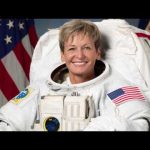
On April 24 aboard the International Space Station, NASA astronaut Peggy Whitson set a new record for cumulative time spent in space by a U.S. astronaut. President Donald Trump marked the milestone with a call from the Oval Office, with First Daughter Ivanka Trump, and NASA astronaut Kate Rubins – to the station, where Whitson was joined by NASA’s Jack Fischer. Whitson, who in 2008 became the first woman to command the space station, also holds the record for most spacewalks by a female astronaut. NASA worked with the Department of Education, on behalf of the White House, to make the president’s call to the station available to schools across America. Whitson encouraged students to think about how the steps they take in the classroom today could someday help NASA make the next giant leap in space exploration. Also, First Live 4K Broadcast from Space, Kate Rubins Visits National Institutes of Health, Cassini Begins its Grand Finale, and 2017 Astrobiology Science Conference!
Acting NASA Administrator Robert Lightfoot recognizes the 2017 National Small Business Week; a time to celebrate the critical contributions of America’s entrepreneurs and small business owners. NASA honors its 2016 Agency Small Business Advocate Award winners and acknowledges the contributions made by NASA civil servant personnel throughout the Agency. The Agency 2016 Small Industry Award winners are also highlighted and they recognize the outstanding Small Business Prime Contractor, Small Business Subcontractor, Large Business Prime Contractor, and Mentor-Protégé Agreement that support NASA in achieving its mission.
The Tonight Show Starring Jimmy Fallon features hilarious highlights from the show including: comedy sketches, music parodies, celebrity interviews, ridiculous games, and, of course, Jimmy’s Thank You Notes and hashtags! You’ll also find behind the scenes videos and other great web exclusives.
Science Max brings you a special compilation including some of our favourite episodes from season 1. Tune in and prepare for a heap of science madness!
Have you ever done a science experiment and wondered “What would this be like if it were HUGE?” Welcome to Science Max, the exciting new series that turbocharges all the science experiments you’ve done at home.
In season 1, join Phil as he builds rocket cars, uses elastic energy to hurl pumpkins on a giant catapult, builds a bridge out of pasta that can hold a human, find magnets powerful enough to float Phil off the ground, and many more experiments taken to the MAX!
From the Oval Office at the White House, President Trump called Expedition 51 Commander Peggy Whitson and Flight Engineer Jack Fischer of NASA April 24 to offer congratulations to Whitson on the day she broke the record for most cumulative days on orbit by a U.S. astronaut. Whitson’s 534-day total surpassed the record held by NASA’s Jeff Williams. Trump’s daughter Ivanka and NASA astronaut Kate Rubins joined the president to discuss Whitson’s presence as a role model for young women and students as she continues her more than nine-month mission on station.
Earth is the largest rocky planet in our Solar System, and the only body we know of capable of supporting life. With so much news about exoplanets dominating the headlines, in this episode of Space we take a step back to take a look at Earth as a planet.
Four and a half billion years old and 149.6 million kilometres from the Sun, it’s not like anything else in the Solar System: “Planet Earth is quite a particular planet,” says Josef Aschbacher, Director of Earth Observation at ESA. “We have 70% of water, we have land masses which are actually moving over time. We have an atmosphere which is rich in oxygen, nitrogen, in water vapour. All of these are necessities in order to have life on a planet like this.”
Rome is a perfect spot to look at the defining characteristics of planet Earth, in particular the presence of liquid water. Our home planet has the right temperature and correct atmospheric pressure for water to flow on its surface, making it so hospitable to life.
A 149.6 millones de kilómetros del sol, con unos cuatro mil millones y medio de años de antigüedad, la Tierra es el único planeta capaz de albergar vida.
“El planeta Tierra es muy particular, como puede observar detrás de mi, es un planeta fascinante. La superficie está compuesta en un 70% de agua, las placas tectónicas están en continuo movimiento. La atmósfera es muy rica en oxígeno, nitrógeno y vapor de agua. Todos esos elementos son necesarios para la vida en un planeta como este”, explica Josef Aschbacher, director del Observatorio de la Tierra, ESA.
La historia de Roma está impregnada de ejemplos que nos recuerdan la importancia del agua para nuestro planeta que, a diferencia de Marte o Venus, posee la temperatura y la presión atmosférica idóneas para que el agua fluya en la superficie. También, fluye en las profundidades, lo vemos aquí, en Villa Medici, donde sigue activo un acueducto construido en la época romana.
A Terra é, segundo sabemos, o único planeta capaz de suportar vida. Está a cerca de 150 milhões de quilómetros do Sol e tem cerca de quatro mil e quinhentos milhões de anos de idade.
Não existe nada semelhante no sistema solar, como confirma o diretor do Observatório da Terra da “Agência Espacial Europeia”:http://www.esa.int/por/ESA_in_your_country/Portugal (AEE), Josef Aschbacher: “A Terra é um planeta bastante específico. Como podem ver aqui, é fascinante. Temos 70% de água, temos massas que se movem, ao longo do tempo. Temos uma atmosfera rica em oxigénio, nitrogénio, vapor de água… Tudo necessário para haver vida num planeta como este”.
Na superfície da Terra, em Roma, Itália, somos constantemente lembrados de como a água é importante para nosso planeta.
Ao contrário de Marte ou Vénus, a Terra tem a temperatura e a pressão atmosférica corretas para que a água flua na sua superfície.
A legnagyobb sziklás bolygó a Naprendszerben, egy igazán különleges hely: lássuk, milyen planéta tulajdonképpen a Föld.
Egy négy és fél milliárd éves szikla, nagyjából százötven millió kilométerre a Naptól. Az egyetlen általunk ismert bolygó, amelyen élet lehetséges. A Naprendszeren belül pedig egészen biztosan egyedülálló.
– A Föld egy különleges bolygó – szögezte le Josef Aschbacher, az Európai Űrügynökség (ESA) Föld-megfigyelési Központjának igazgatója. – A felszín 70 százalékát víz fedi, vannak nagy földtömegek, amelyek lassan mozognak. Van oxigénben, nitrogénben vízgőzben gazdag atmoszféra. Ezek mindegyikéhez szükség van ahhoz, hogy az élet fennmaradhasson egy ilyen bolygón.
A Föld felületén minden emlékeztet arra, hogy a folyékony víz mennyire fontos. A Marssal vagy a Vénusszal ellentétben a Földön a hőmérséklet és a légköri nyomás is megfelelő ahhoz, hogy folyékony víz legyen a felszínen.
Space schaut diesmal nicht ins All, sondern auf unseren eigenen Planeten, die Erde. Der größte Gesteinsplanet in unserem Sonnensystem und ein wahrlich außergewöhnlicher Ort. 149,6 Millionen Kilometer von der Sonne entfernt, rund viereinhalb Milliarden Jahre alt. Mit einem Durchmesser von 12.700 Kilometern – ein bisschen größer als die Venus, etwa doppelt so groß wie der Mars. Und der einzige Planet, den wir bislang kennen, auf dem Leben möglich ist.
Die Erde ist einzigartig im Sonnensystem, bekräftigt Josef Aschbacher, Leiter der Erdbeobachtung bei der Europäischen Weltraumorganisation ESA: “Der Planet Erde ist ein ganz besonderer, ein faszinierender Planet. Wir haben 70 Prozent Wasser, wir haben Landmassen, die sich über die Zeit verschieben, wir haben eine Atmosphäre, die reich an Sauerstoff, Stickstoff und Wasserdampf ist. Und all das sind die notwendigen Gegebenheiten, um Leben auf einem Planeten wie diesem haben zu können.”
Auf der Oberfläche der Erde wird einem ständig in Erinnerung gerufen, wie wichtig Wasser für unseren Planeten ist. Anders als Mars oder Venus hat sie die richtige Temperatur und den passenden atmosphärischen Druck, dass Wasser auf ihr fließen kann.
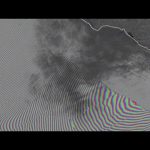
The Copernicus Sentinel-1 satellite mission is monitoring the growing crack in Antarctica’s Larsen-C ice shelf. When the ice shelf breaks off or ‘calves’, it will create one of the largest icebergs ever recorded – but exactly how long this will take is difficult to predict.
On April 18, Orbital ATK’s Cygnus cargo space craft launched from Cape Canaveral Air Force Station in Florida aboard a United Launch Alliance rocket, on Orbital ATK’s seventh resupply mission to the International Space Station. Cygnus is packed with 7,600 pounds of supplies and research for the crew aboard the orbiting laboratory.
Science Max brings you a special compilation including some of our favourite episodes from season 1. Tune in and prepare for a heap of science madness!
Have you ever done a science experiment and wondered “What would this be like if it were HUGE?” Welcome to Science Max, the exciting new series that turbocharges all the science experiments you’ve done at home.
In season 1, join Phil as he builds rocket cars, uses elastic energy to hurl pumpkins on a giant catapult, builds a bridge out of pasta that can hold a human, find magnets powerful enough to float Phil off the ground, and many more experiments taken to the MAX!
Do you ever wonder what cities will be like in the next few decades?
With over two thirds of our population living in urban areas by 2050 the demands on cities’ services will increase significantly.
Technological improvements to our infrastructure will change the way citizens interact; artificial intelligence and the Internet of Things will allow the city to become smart; perhaps even allowing cities to think like a human brain.
What changes can we expect?
• Cities will become greener and have more cycle and walking space along with less pollution
• Buildings will generate their own energy from renewable sources and their design will be continually optimised thanks to smart data
• The high street will offer richer, interactive shopping experiences with augmented reality changing rooms
Smart buildings and sustainable cities
Be it a workplace, a hospital, school or library – public buildings will become smart and aware, constantly improving based on information they gather from themselves and the other buildings around them.
Buildings will also gather their energy source themselves through developments like solar windows; and surplus energy traded between nearby buildings and vehicles so that those in need never run dry. Through the data they have access to, they’ll run at optimum efficiency – aware of each of its occupants, keeping them at the right temperature and making sure they stay healthy and safe.
Shopping will also evolve – with augmented reality, AI and connected data all playing their parts. Imagine walking into a clothes shop and being presented with an interactive changing room. The shop would instantly know your size and use AI to present you a selection of clothing it thinks you would like based on your previous purchases and upcoming social calendar. Customisation of your choice will become available – tweak a design in an interactive mirror, and if it’s not in stock it can be delivered to your house by drone later that day.
More time for you
All of this will create more time for you, both socially and at work. AI and connected devices will play its part in the workplace too – automating things like waste collection pods to when demand in the city is high, and bringing care to people who need it.
Will this automation take over from people’s employment? The hope is that no, but instead will see a shift so that people can focus on where they are needed most and provide a higher quality, more personal service along with more insight towards where they are needed most.
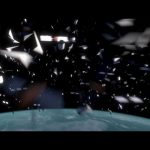
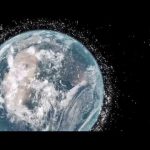
Space debris – a journey to Earth (3D stereoscopic version) takes the audience on a journey from the outer solar system back to our home planet. The objects encountered along the way are manmade. Originally designed to explore the universe, these are now a challenge for modern space flight. An estimated number of 700,000 objects larger than 1 cm and 170 million objects larger than 1mm are expected to reside in Earth orbits.
The video gives a closer look at the different regions used for space flight and explains how mitigation and removal measures could preserve future usage of these orbits.
Space debris – a journey to Earth takes the audience on a journey from the outer solar system back to our home planet. The objects encountered along the way are manmade. Originally designed to explore the universe, these are now a challenge for modern space flight. An estimated number of 700,000 objects larger than 1 cm and 170 million objects larger than 1mm are expected to reside in Earth orbits.
The video gives a closer look at the different regions used for space flight and explains how mitigation and removal measures could preserve future usage of these orbits.
Produced for the 7th European Conference on Space Debris, 18-21 April 2017.
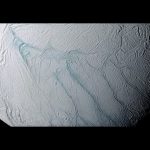
Two long-running NASA missions are providing new details about ocean bearing moons of Jupiter and Saturn – further heightening scientific interest in these and other “ocean worlds” in our solar system and beyond. The details – discussed during an April 13 NASA science briefing – include the announcement by the Cassini mission that a key ingredient for life has been found in the ocean on Saturn’s moon Enceladus. Meanwhile, researchers using the Hubble Space Telescope observed a probable plume erupting from the surface of Jupiter’s moon Europa, at the same location where Hubble saw evidence of a plume in 2014. Researchers say this could be circumstantial evidence of water erupting from the moon’s interior. Hubble’s monitoring of plume activity on Europa and Cassini’s long-term investigation of Enceladus are laying the groundwork for NASA’s Europa Clipper mission, which is being planned for launch in the 2020s. Also, Expedition 50 Returns Home Safely, Next Space Station Crew at Launch Site, Student Launch Event, Groundbreaking for New Lab, and Yuri’s Night, First Space Shuttle Mission Celebrated!
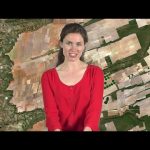
Earth from Space is presented by Kelsea Brennan-Wessels from the ESA Web-TV virtual studios. In the 225th edition, Sentinel-2 takes us over vast agricultural fields in Brazil.
During a NASA science briefing on April 13, representatives from the agency discussed new results about ocean worlds in our solar system based on data gathered by NASA’s Cassini spacecraft and the Hubble Space Telescope.
The two veteran missions are providing tantalizing new details about icy, ocean-bearing moons of Jupiter and Saturn, further enhancing the scientific interest of these and other “ocean worlds” in our solar system and beyond.
New research from Cassini indicates that hydrogen gas, which could potentially provide a chemical energy source for life, is pouring into the ocean of Saturn’s icy moon Enceladus from hydrothermal vents in the seafloor. The Cassini spacecraft detected the hydrogen in the plume of gas and icy material spraying from Enceladus during its deepest dive through the plume on Oct. 28, 2015.This means that ocean microbes — if any exist there — could use the hydrogen to produce energy
NASA’s Hubble Space Telescope saw a probable plume of material erupting from the moon’s surface on 2016, at the same location where Hubble saw evidence of a plume in 2014. These images bolster evidence that the Europa plumes could be a real phenomenon, flaring up intermittently in the same region on the moon’s surface.
Both Cassini and Hubble investigations are laying the groundwork for NASA’s Europa Clipper mission, which is being planned for launch in the 2020s.
Trois mois après le coup d’envoi depuis la Station spatiale internationale du concours d’écriture “Faites voyager vos histoires dans l’Espace”, 8400 participants issus des quatre coins du monde ont imaginé une suite aux voyages du Petit Prince de Saint-Exupéry. Thomas Pesquet a choisi ses deux coups de cœur parmi les textes lauréats.
This video reveals the changing face of our Galaxy, tracing the motion of two million stars five million years into the future using data from the Tycho-Gaia Astrometric Solution, one of the products of the first Gaia data release. This provides a preview of the stellar motions that will be revealed in Gaia’s future data releases, which will enable scientists to investigate the formation history of our Galaxy.
The stars are plotted in Galactic coordinates and using a rectangular projection: in this, the plane of the Milky Way stands out as the horizontal band with greater density of stars.
The video starts from the positions of stars as measured by Gaia between 2014 and 2015, and shows how these positions are expected to evolve. The frames in the video are separated by 750 years, and the overall sequence covers five million years. The stripes visible in the early frames reflect the way Gaia scans the sky and the preliminary nature of the first data release; these artefacts are gradually washed out in the video as stars move across the sky.
The shape of the Orion constellation can be spotted towards the right edge of the frame, just below the Galactic Plane, at the beginning of the video. As the sequence proceeds, the familiar shape of this constellation (and others) evolves into a new pattern. Two stellar clusters – groups of stars that were born together and consequently move together – can be seen towards the left edge of the frame: these are the alpha Persei (Per OB3) and Pleiades open clusters.
Science Max brings you a special compilation featuring some of our favourite science experiments for kids. Tune into all the scientific fun!
Have you ever done a science experiment and wondered “What would this be like if it were HUGE?” Welcome to Science Max, the exciting new series that turbocharges all the science experiments you’ve done at home.
In season 1, join Phil as he builds rocket cars, uses elastic energy to hurl pumpkins on a giant catapult, builds a bridge out of pasta that can hold a human, find magnets powerful enough to float Phil off the ground, and many more experiments taken to the MAX!
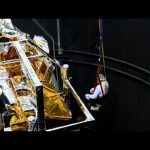
It’s known colloquially as a ‘flying Dutchman’ operation: lowering an engineer down into ESA’s Large Space Simulator to make adjustments on the test item within; in this case the payload module of the newest in the MetOp series of weather satellites. The LSS is the largest vacuum chamber in Europe, based at ESA’s Test Centre in Noordwijk, the Netherlands.
MetOp is a set of three polar-orbiting satellites whose temperature and humidity observations from a relatively close 800 km-altitude orbit have sharpened the accuracy of weather forecasting. Procured by ESA for Eumetsat, the European Organisation for the Exploitation of Meteorological Satellites, MetOp-A was launched in 2006 and MetOp-B in 2012, with MetOp-C due to follow next year.
The 2.1 tonne module carries a suite of meteorology and climatology instruments, variously procured by ESA or sourced from Eumetsat, France’s CNES space agency and the US National Oceanic and Atmospheric Administration. Once testing is complete, MetOp-C’s payload module will travel to the Airbus Defence and Space facility in Toulouse, France, to be integrated with its service module – the segment of the satellite providing attitude and orbit control, electrical power and communications, and hosting the main computer. The launch of MetOp-C by Soyuz from Europe’s Spaceport in French Guiana is scheduled for October 2018.
Earth is surrounded by a cloud of space debris. This material ranges from dead satellites and rocket stages to fragments of material and even flecks of paint… and all this junk could do enormous damage to working satellites.
During 18–21 April, experts from around the world will meet at ESA’s European Space Operations Centre, Darmstadt, Germany for the 7th European Conference on Space Debris.
Delegates will discuss the extent of the debris problem and what can be done to ensure that satellites we rely on – providing us with services such as navigation, TV and weather forecasting – can operate safely in the future.
Talks will address acute issues like current practices in debris avoidance, novel concepts for removing debris, and the deployment of large constellations of several thousand satellites for telecommunications.
The conference will be opened by ESA Director General Jan Woerner and NASA’s former orbital debris chief scientist, Donald Kessler.
On 18 April and 21 April, live webcasts will cover the keynote address and press briefing, respectively. Details via esa.int/debris.
NASA held a news conference April 4 at the Jet Propulsion Laboratory, with participation from NASA headquarters, to preview the final phase of the Cassini spacecraft’s mission to Saturn. On April 26, Cassini will begin its “Grand Finale” – a series of deep dives between the planet and its rings. No other mission has ever explored this unique region that is so close to the planet. Cassini will make 22 orbits that swoop between the rings and the planet before ending its 20-year mission on Sept. 15, with a final plunge into Saturn. The mission team hopes to gain powerful insights into the planet’s internal structure and the origins of the rings, obtain the first-ever sampling of Saturn’s atmosphere and particles coming from the main rings, and capture the closest-ever views of Saturn’s clouds and inner rings. Also, Next Space Station Crew Travels to Launch Site, New Target Launch Date for Orbital ATK Mission to ISS, Lightfoot Visits Industry Partners, Human Exploration Rover Challenge, and John Glenn Interred at Arlington National Cemetery.
Earth from Space is presented by Kelsea Brennan-Wessels from the ESA Web-TV virtual studios. In the 224th edition, Sentinel-2 takes us over northern Serbia to the region of Vojvodina.
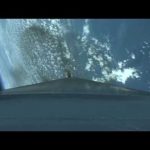
NASA’s Orion spacecraft will take astronauts to destinations at or beyond low Earth orbit. In January 2013, it was announced that ESA would provide the European Service Module (ESM) for Orion’s first uncrewed mission. Derived from ESA’s Automated Transfer Vehicle cargo spacecraft, the ESM will provide life support, propulsion and structural functions for Orion. In February 2017, a contract was signed for a second ESM to be used on Orion’s first crewed flight, which will carry astronauts beyond the Moon and back.
NASA held a news conference April 4, at the agency’s Jet Propulsion Laboratory (JPL) in Pasadena, California, to preview the beginning of Cassini’s final mission segment, known as the Grand Finale, which begins in late April. The briefing was shown live on NASA Television and on the agency’s website.
Cassini has been orbiting Saturn since June 2004, studying the planet, its rings and its moons. A final close flyby of Saturn’s moon Titan on April 22 will reshape the Cassini spacecraft’s orbit so that it begins its final series of 22 weekly dives through the unexplored gap between the planet and its rings. The first of these dives is planned for April 26. Following these closer-than-ever encounters with the giant planet, Cassini will make a mission-ending plunge into Saturn’s upper atmosphere on Sept. 15.
Phil builds a balloon powered car in the lab. Then he tries to make one big enough to ride. Can the Science Max build team find a big enough balloon? Or are balloons the way to go? Plus, Newton’s Cradle out of bowling balls, how Guinea Pigs got their name and Newton’s 3rd Law.
Have you ever done a science experiment and wondered “What would this be like if it were HUGE?” Welcome to Science Max, the exciting new series that turbocharges all the science experiments you’ve done at home.
In season 1, join Phil as he builds rocket cars, uses elastic energy to hurl pumpkins on a giant catapult, builds a bridge out of pasta that can hold a human, find magnets powerful enough to float Phil off the ground, and many more experiments taken to the MAX!
This unedited video without sound lasts over five hours and shows almost all of ESA astronaut Thomas Pesquet’s spacewalk outside the International Space Station.
NASA astronaut Shane Kimbrough and Thomas left the International Space Station airlock 24 March 2017 on their second spacewalk together. Thomas and Shane worked separately throughout their sortie.
Thomas was tasked to inspected the Station’s cooling system for leaks. He took photos and videos as he patted and prodded the cooling pipes to see if any coolant leaked out. This video starts when he turns on the camera used to record cooling system inspection for analysis by ground control.
Thomas’ second task was to maintain the multipurpose robotic hand Dextre – he had the laborious job of applying lubricant. After setting up a foot restraint to allow him to work with both hands, NASA astronaut Peggy Whitson moved Dextre into position using the controls inside the Station.
The video ends with Thomas returning to the Quest airlock – the spacewalk lasted six hours and 34 minutes in total with time spent in the airlock included.
The mission is part of ESA’s vision to use Earth-orbiting spacecraft as a place to live and work for the benefit of European society while using the experience to prepare for future voyages of exploration further into the Solar System.
Work continues aboard the International Space Station on upgrades to prepare it for future operational activities. Ground controllers, using the station’s robotic arm, moved the Pressurized Mating Adapter-3 (PMA-3) from the Tranquility module to the station’s Harmony module March 26. PMA-3 will be outfitted with one of two International Docking Adapters to accommodate U.S. commercial spacecraft carrying astronauts on future missions. Four days after the PMA-3 move, NASA’s Shane Kimbrough and Peggy Whitson conducted the second in a series of three planned spacewalks to complete work related to the upgrades. The third spacewalk is planned in April. Also, James Webb Space Telescope Completes Acoustic and Vibration Tests, MAVEN Data Helps Measure Loss of Mars’ Atmosphere, Getting Excited About STEM, and New NASA App for Amazon Fire TV!
GoPro footage of ESA astronaut Thomas Pesquet working outside the International Space Station during a spacewalk on 24 March 2017.
Thomas is seen performing his spacewalk tasks. Firstly he inspected the Station’s cooling system for leaks. He took photos and recorded video images as he patted and prodded the cooling pipes to see if any coolant leaked out. No leak was found, but ground control can now analyse the images in detail.
Thomas’ second task was to maintain the multipurpose robotic hand Dextre – he had the laborious job of applying lubricant. The footage concludes when he has set up a foot restraint and is preparing to start work on Dextre – backdropped by a spectactular view of our planet.
For this spacewalk, Thomas and NASA astronaut Shane Kimbrough spent six hours and 34 minutes outside the Station.
Thomas is spending six months on the International Space Station as part of his Proxima mission. During Proxima, Thomas will perform around 50 scientific experiments for ESA and France’s space agency CNES as well as take part in many research activities for the other Station partners.
The mission is part of ESA’s vision to use Earth-orbiting spacecraft as a place to live and work for the benefit of European society while using the experience to prepare for future voyages of exploration further into the Solar System.
Music: ’Oaxaca’ Written by M. Cherry, C. Dennis, G. Fuchs, C. McNeal, S. Moore Performed by Maserati Published by Rough Trade Publishing Courtesy of Temporary Residence Ltd. By Arrangement with Bank Robber Music