
Science guy Steve Spangler is back with a brand new experiment. You never know what he’ll have up his sleeve!
Blog
-
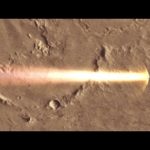
Schiaparelli’s descent to Mars in real time
Visualisation of the ExoMars Schiaparelli module entering and descending through the atmosphere to land on Mars. The animation follows a simulated timeline of the module, starting when it enters the atmosphere at an altitude of 121 km at 14:42 GMT. In six minutes it will use a heatshield, parachute and thrusters to brake from 21 000 km/h to a near standstill 2 m above the surface, where a crushable structure on its underside will absorb the final shock.
The key operational milestones are highlighted in the animation at the predicted times at which they have been calculated to occur. However, the actual times may vary depending on the atmospheric conditions on the day, the final path through the atmosphere and the speed at which the module descends.
The times indicated in the animation are onboard spacecraft times at Mars. The one-way signal travel time on 19 October is just under 10 minutes, meaning that signals relayed by spacecraft at Mars are received on Earth about 10 minutes after the event itself has happened on the Red Planet.
Both Schiaparelli and the Mars scenery in this animation are computer-generated.
-

Making Human Settlement of Space a Reality on This Week @NASA – October 14, 2016
An Oct. 11 opinion article written by President Barack Obama and published by CNN, outlined a vision for the future of space exploration. In it, the president echoed the words in his 2015 State of the Union address about the importance of sending humans on a roundtrip mission to Mars by the 2030s, and developing technology to help us stay on the Red Planet for an extended time. That same day in a blog post, NASA Administrator Charlie Bolden and John Holdren, assistant to the President for Science and Technology, discussed two NASA initiatives that build on the president’s vision and use public-private partnerships to enable humans to live and work in space in a sustainable way. The first was the selection of six companies to develop habitation systems as part of the agency’s Next Space Technologies for Exploration Partnerships or “NextSTEP” program, designed to lay the groundwork for deep space missions. And this fall as part of the second initiative, NASA will start the process of providing companies with a potential opportunity to add their own modules and other capabilities to the International Space Station. The move is in-line with NASA’s plan to support and foster the growing community of scientists and entrepreneurs conducting research and growing businesses in space. Also, White House Frontiers Conference, Kennedy Reopens After Hurricane Matthew, Orion Service Module Vibration Tests, SLS Liquid Hydrogen Fuel Tank Completed, and Aviation Safety Reporting System Turns 40!
-
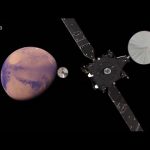
ExoMars: From separation to landing
On 16 October, seven months and 500 million km after launching from Baikonur in Kazakhstan, the joint European and Russian ExoMars 2016 mission reaches a crucial phase.
The Trace Gas Orbiter will release its Schiaparelli lander for a three day coast and a six minute descent to the Martian surface.The lander, which was designed to demonstrate technologies for entry, descent and landing on Mars, is heading for the Meridiani Planum. This is an area that is currently being studied by NASA’s Opportunity rover and Europe’s Mars Express orbiter.
On 19 October, the Schiaparelli lander will be activated a few hours before reaching the Martian atmosphere, when it will be travelling at some 21 000 km/h. The front heatshield – covered with 90 insulating tiles – will be subjected to temperatures of up to 1500 degrees Celsius.
This video covers the separation, descent and landing procedures, as well as the orbiter’s critical burn to avoid crashing on the surface of Mars.
-

ESTEC Open Day 2016
In place for more than half a century, the complex ESTEC in Noordwijk is ESA’s single largest establishment, focused on developing technology, planning missions and testing satellites. More than 8700 visitors at the Open Day on 2 October 2016 were able to wander around the sprawling facility at their own pace, meeting astronauts, scientists and mission designers while seeing special exhibits and actual space hardware.
The theme of this year’s Open Day was “Breath of Life” – the ExoMars orbiter, currently nearing Mars, will be searching out methane and associated rare gases in the thin alien atmosphere as evidence of either surviving Mars microbes or a different kind of ‘life’ – subsurface volcanic activity, which would mean the planet remains geologically active.
-
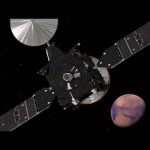
ExoMars at Mars
Three days before arriving at Mars on 19 October 2016, the ExoMars Trace Gas Orbiter (TGO) will release its entry, descent and landing demonstrator, Schiaparelli, towards the Red Planet. ExoMars is several missions in one. Its orbiter is a science and relay mission. The TGO will search for evidence of gases, such as methane, that may be associated with geological or biological processes. The Schiaparelli lander is a technology demonstrator to test key technologies for future missions to Mars.
The landing site is an elliptical region close to the equator about 100 km long and 15 km wide in the planet’s Meridiani Planum area. It is relatively flat, smooth and well studied as NASA’s Opportunity rover is on the ground and ESA’s Mars Express spacecraft, which will also act as one of the data relay orbiters, has been overhead since 2003.
This video covers the landing and orbital manoeuvres, including the use of aerobraking – which ESA is using for the first time at Mars.
-
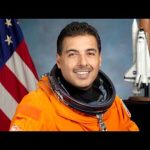
Aspira con NASA/Aspire with NASA
In recognition of Hispanic Heritage Month NASA hosted an event at the agency’s headquarters in Washington Tuesday, Oct. 4, called Aspira con NASA (Aspire with NASA). The event featured a video message from NASA Administrator Charles Bolden as well as presentations from guest speakers Diana Trujillo, mission lead for Mars Curiosity Rover, and former NASA astronaut José Hernández. Each shared stories of aspiration, inspiration and exploration.
-

Earth from Space: Shanghai
Earth from Space is presented by Kelsea Brennan-Wessels from the ESA Web-TV virtual studios. The Chinese city of Shanghai is featured in the 200th edition.
See also http://www.esa.int/spaceinimages/Images/2016/10/Shanghai to download the image.
-

Schiaparelli’s descent to Mars
Visualisation of the ExoMars Schiaparelli module entering and descending through the martian atmosphere to land on Mars.
Schiaparelli will enter the atmosphere at about 21 000 km/h and in less than six minutes it will use a heatshield, a parachute and thrusters to slow its descent before touching down in the Meridiani Planum region close to the equator, absorbing the final contact with a crushable structure.
The entire process will take less than six minutes: the animation has been sped up.
Schiaparelli is set to separate from the Trace Gas Orbiter on 16 October, after a seven-month cruise together through space, and will enter the atmosphere on 19 October at 14:42 GMT.
For an overview of the key timings and altitudes corresponding to the events portrayed in this animation see the Schiaparelli descent sequence graphic: http://www.esa.int/spaceinimages/Images/2016/02/ExoMars_2016_Schiaparelli_descent_sequence_16_9
Both Schiaparelli and the Mars scenery in this animation were computer generated.
More about ExoMars:
http://www.esa.int/exomarsExoMars FAQ:
http://www.esa.int/Our_Activities/Space_Science/ExoMars/ExoMars_frequently_asked_questions -
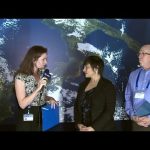
Earth from Space: Special edition
Discover more about our planet with the Earth from Space video programme. During the Global Platform for Sustainable Cities working group meeting at ESA’s ESRIN establishment in Italy, four experts join the show to discuss how satellite data can be used to promote sustainable cities.
The four guests are Xiaomei Tan: Senior Climate Change Specialist, Global Environment Facility; Xueman Wang: Global Platform for Sustainable Cities Coordinator, World Bank; Gayatri Singh: Urban Development Specialist, World Bank City Planning Labs Initiative; Herman Pienaar: Director of City Transformation and Spatial Planning, City of Johannesburg.
-
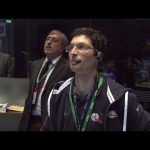
Rosetta end of mission
Inside the main control room at ESA’s operation centre as the Rosetta spacecraft sends its last signal from Comet 67P/Churyumov–Gerasimenko, confirming the end of the spacecraft’s 12.5 year journey in space.
-
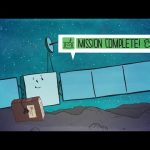
Once upon a time… mission complete
On the last day of her incredible mission, Rosetta slowly descends to the surface of Comet 67P/Churyumov-Gerasimenko. After having sent her extraordinary data back home, she is ready to join Philae for a well deserved rest on the comet. But is there one last surprise in store?
This video is available in the following languages:
English https://www.youtube.com/watch?v=vcYo-qQ5HbA
German https://www.youtube.com/watch?v=4ngPV02ie4g
Spanish https://www.youtube.com/watch?v=1PI103Je-cE
French https://www.youtube.com/watch?v=MwML3kdmbPk
Italian https://www.youtube.com/watch?v=X_vaJmUt37sMore about Rosetta:
http://rosetta.esa.int
http://blogs.esa.int/rosettaCredit: ESA
-

(German) Once upon a time… mission complete
On the last day of her incredible mission, Rosetta slowly descends to the surface of Comet 67P/Churyumov-Gerasimenko. After having sent her extraordinary data back home, she is ready to join Philae for a well deserved rest on the comet. But is there one last surprise in store?
More about Rosetta:
http://rosetta.esa.int
http://blogs.esa.int/rosettaCredit: ESA
-
(French) Once upon a time… mission complete
On the last day of her incredible mission, Rosetta slowly descends to the surface of Comet 67P/Churyumov-Gerasimenko. After having sent her extraordinary data back home, she is ready to join Philae for a well deserved rest on the comet. But is there one last surprise in store?
More about Rosetta:
http://rosetta.esa.int
http://blogs.esa.int/rosettaCredit: ESA
-

(Italian) Once upon a time… mission complete
On the last day of her incredible mission, Rosetta slowly descends to the surface of Comet 67P/Churyumov-Gerasimenko. After having sent her extraordinary data back home, she is ready to join Philae for a well deserved rest on the comet. But is there one last surprise in store?
More about Rosetta:
http://rosetta.esa.int
http://blogs.esa.int/rosettaCredit: ESA
-
The Rosetta Legacy
Besides its scientific and operational successes, the Rosetta mission has captured the imagination of many people worldwide, stimulating them to produce art and music, and undertake other creative activities with friends and families. Many even made further education or career choices inspired by the mission.This video features a selection of contributions that were shared on the Rosetta Legacy tumblr in September 2016.
Music by Andrew Manson
https://soundcloud.com/andrewmanson/rosetta-and-the-comet -

Ambition – Epilogue
After her long, arduous training, our young Apprentice is now a fully fledged Master of cosmic origins, exploring an alien planet rich with water and life. But something familiar crosses her mind. Memories from her training, and Rosetta’s historic journey to catch a comet. She returns to the archives.
Once again, ESA and Fish Ladder / Platige Image blur the lines between science fiction and science fact in this epilogue to their award-winning 2014 short film, Ambition, which portrayed the scientific questions and technical challenges, and above all, the human determination that make exploration of the Universe such a compelling theme.
The epilogue is directed by Maciej Jackiewicz and stars Aisling Franciosi (The Fall, Game of Thrones).
Credits:
A Fish Ladder/Platige Image & European Space Agency Production
Concept/creative strategy: Fish Ladder
Director/edit: Maciej Jackiewicz
Director of photography: Mateusz Skalski
Cast: Aisling Franciosi
Story:
Maciej Jackiewicz
Jan Pomierny
Tobiasz PiątkowskiCreative producer: Jan Pomierny
Producer: Marta Staniszewska
Executive producer: Mark McCaughrean (ESA)Set production: Beata Pych
First assistant director/set manager: Jakub Kędzierski
First assistant camera: Piotr Twardowski
Focus puller: Seweryn Kukliński
Steadicam operator: Jarosław Wierzbicki
Steadicam assistant: Sławomir Wierzbicki
Camera equipment: MX35Gaffer: Rafał Okyne
Lighting crew: Heliograf
Lighting equipment: HeliografSet decoration:
Rafał RusinCostume designer:
Paula DudziakHair & make-up:
Agnieszka WilkSet duty:
Daniel & Licho (Yellowóz)Catering on set/generator/wardrobe:
Robert PiszczatowskiDrivers:
Bogdan Manowski
Andrzej KornowskiVFX supervisor:
Maciej JackiewiczLayout artist:
Dominik WawrzyniakVFX artists:
Seweryn Czarnecki
Andrzej Przydatek
Tomasz Przydatek
Waldemar Woźniak
Sylwester Lipiński
Benjamin McallisterMusic:
Porcelain written & performed by snowbird, from the album moon (Bella Union P&C 2013)Sound producer:
Sylwia Szczepankiewicz (Juice)Sound design & mix:
Kuba Pietrzak (Juice)Digital intermediate:
Piotr DutkiewiczSpecial thanks:
Kampinos National Park, Poland
The Royal Łazienki Museum in Warsaw, PolandMattias Malmer
Simon Raymonde
Grzegorz Nizio
Łukasz Alwast
Pedro RussoCopyright:
European Space Agency (2016) -
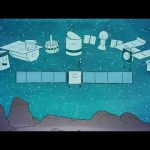
Once upon a time… Rosetta’s grand finale
Rosetta revisits the exciting scientific discoveries she made during her time at Comet 67P/Churyumov-Gerasimenko, including the successful search to find Philae. Finally, she starts preparing to descend to the comet for the end of her extraordinary mission.
This video is available in the following languages:
English https://www.youtube.com/watch?v=lVKFyFbfpOI
German https://www.youtube.com/watch?v=hoDMZRAyDFs
Spanish https://www.youtube.com/watch?v=OzAzBHmH8y8
French https://www.youtube.com/watch?v=EoJ1bE80pK8
Italian https://www.youtube.com/watch?v=k5fAIKzJRBsMore about Rosetta:
http://rosetta.esa.int
http://blogs.esa.int/rosettaCredit: ESA
-

Visualising Rosetta’s descent
Animation visualising Rosetta’s descent to Comet 67P/Churyumov–Gerasimenko on 30 September 2016. The sequence is speeded up to show the relative motion of Rosetta and the rotating comet below.
Rosetta will target a smooth region close to several large pits measuring more than 100 m across and 60 m deep, on the small lobe of the comet.
The impact time is predicted as 11:20 GMT +/- 20 minutes on 30 September.
More information about Rosetta’s descent towards region of active pits, see
http://www.esa.int/Our_Activities/Space_Science/Rosetta/Rosetta_s_descent_towards_region_of_active_pitsFor the latest updates, see http://rosetta.esa.int
Credit: ESA/ATG medialab, Music: Pawel Blaszczak
-
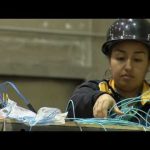
NASA Hispanic Heritage Month Employee Profile – Claudia Herrera – Armstrong Flight Research Center
Claudia Herrera has been with NASA Armstrong Flight Research Center since January of 2005, and works as a Structural Dynamics engineer. Claudia is involved in the life cycle phase of flight‑test projects that take finite element models to flight‑test validation, participating in both the analytical and ground and flight test aspects of model correlation and verification.
-
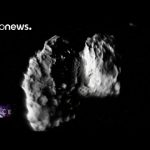
ESA Euronews: Rosetta heads for glorious crash-landing
In just a few days’ time ESA’s Rosetta mission is going to come to a close in a most extraordinary fashion, because the spacecraft is going to slowly, and deliberately crash-land into the comet that it has been orbiting for the past two years.
Euronews is with the team as they prepare for this dramatic finale.
This video is available in the following languages:
English https://www.youtube.com/watch?v=K_7u71Lu3S4
German https://www.youtube.com/watch?v=MX7SYFWzUp8
French https://www.youtube.com/watch?v=WXTn3mDWH-Y
Spanish https://www.youtube.com/watch?v=SjenXVAFTTw
Italian https://www.youtube.com/watch?v=32nyF3IkzU8
Portuguese https://www.youtube.com/watch?v=4_CTvNZfXxc
Greek https://www.youtube.com/watch?v=CdUgVQibZWo
Hungarian https://www.youtube.com/watch?v=i3OTRPHckSM -

ESA Euronews: El final programado de Rosetta
En pocos días, la misión Rosetta de la Agencia Espacial Europea (ESA) tocará a su fin. Y lo hará de la forma más extraordinaria, porque la nave espacial irá a chocar, lenta y deliberadamente, contra el cometa alrededor del cual ha estado orbitando durante los últimos dos años. Nos reunimos con el equipo mientras preparan este dramático final.
-

ESA Euronews: Rosetta se prépare au choc fatal sur la comète Tchouri
Le 30 septembre prochain, la sonde Rosetta s’écrasera lentement et délibérément sur la comète autour de laquelle elle orbite depuis deux ans. Or elle n’a pas été conçue pour cela. L’issue sera fatale. Mais avant cette dernière manoeuvre, les scientifiques ont prévu d’effectuer des relevés inédits à l’approche de “Tchouri”.
-
Earth from Space: Alakol Lake
Earth from Space is presented by Kelsea Brennan-Wessels from the ESA Web-TV virtual studios. In the one hundred ninety-ninth edition, explore Kazakhstan’s Alakol Lake.
See also http://www.esa.int/spaceinimages/Images/2016/09/Alakol_Lake to download the image.
-
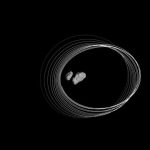
Rosetta’s last orbits around the comet
Animation of Rosetta’s trajectory over the last two months of its mission at Comet 67P/Churyumov–Gerasimenko.
The animation begins in early August, when the spacecraft started flying elliptical orbits that brought it progressively closer to the comet at its closest approach.
On 24 September 2016, Rosetta will leave its current close, flyover orbits and transfer into the start of a 16 x 23 km orbit that will be used to prepare and line up for the final descent.
On the evening of 29 September (20:50 GMT) Rosetta will manoeuvre onto a collision course with the comet, beginning the descent from an altitude of 19 km. The spacecraft will fall freely, without further manoeuvres, collecting scientific data during the descent.
The trajectory shown here was created from real data provided over the last month, but may not necessarily follow the exact comet distance because of natural deviations from the comet’s gravity and outgassing.
Find out more about Rosetta at:
http://blogs.esa.int/rosetta
and
http://www.esa.int/rosetta -
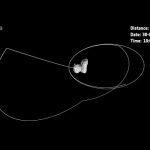
Rosetta’s final path
Animation of Rosetta’s final trajectory in the last 10 days of its mission at Comet 67P/Churyumov–Gerasimenko.
On 24 September 2016, Rosetta will leave a close flyover orbit and transfer into the start of a 16 x 23 km orbit that will be used to prepare and line up for the final descent. In the evening of 29 September (20:50 GMT) Rosetta will manoeuvre onto a collision course with the comet, beginning the descent from an altitude of 19 km. The spacecraft will fall freely, without further manoeuvres, collecting scientific data during the descent.
The trajectory shown in this animation is created from real data provided in the last month, but may not necessarily follow the exact distance/time details because of natural deviations in the trajectory associated with the comet’s gravity and outgassing.
Find out more about Rosetta at:
http://blogs.esa.int/rosetta
and
http://www.esa.int/rosetta -
Journey To The Edge Of Space (360 Video)
Experience what it’s like to leave Earth, traveling to over 90,000 feet into the stratosphere. Never before has a 360 video been recorded at these heights – so buckle up and enjoy the view as Seeker takes you on a journey to the Edge of Space.
Subscribe to Seeker VR ►►► http://bit.ly/2cPGh2u
Download the Discovery VR app!
iTunes: https://itunes.apple.com/us/app/id1030815031
Google Play: http://bit.ly/2cFGia8 -
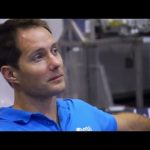
ESA astronauts training for ISS mission
Thomas Pesquet from France will shortly become the last member of ESA’s 2009 astronaut class to fly to the International Space Station.
He is scheduled to fly next November for a six-month stay in orbit, during which time he’ll carry out maintenance activities and a packed schedule of experiments.
He has been training at NASA’s Johnson Space Centre in Houston, Texas, alongside veteran ESA astronaut Paolo Nespoli from Italy, who will be going to the ISS for the third time after Thomas’s return to Earth.
This video shows new images of Thomas and Paolo training at Johnson Space Center in Houston, USA.
-
Asteroid Redirect Mission Briefing on This Week @NASA – September 19, 2016
On Sept. 14, officials from the White House and NASA discussed the space agency’s Asteroid Redirect Mission (ARM) during a televised event at NASA’s Goddard Space Flight Center. On the mission, which is targeted for launch in Dec. 2021, NASA plans to send a robotic spacecraft to an asteroid tens of millions of miles from Earth, capture a multi-ton boulder, and bring it to an orbit near the moon for future exploration by astronauts on a following mission aboard NASA’s Orion spacecraft. During the live discussion, John Holdren, assistant to President Obama for Science and Technology, NASA Administrator Charles Bolden and ARM Program Director Michele Gates highlighted the mission’s scientific and technological benefits, how the mission will support NASA’s goal of sending humans to Mars in the 2030s, and how it will demonstrate technology relevant to defending Earth from potentially hazardous asteroids. Also, Astronaut Tim Kopra Visits DC Area, The Warmest August in 136 Years, and 2016 Arctic Sea Ice Minimum Ties 2nd Lowest on Record!
-
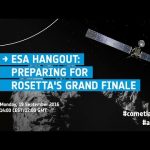
ESAHangout: Preparing for Rosetta’s grand finale
ESA’s Rosetta spacecraft is set to complete its incredible mission in a controlled descent to the surface of Comet 67P/C-G on 30 September. Mission experts joined an ESA Hangout on 19 September to discuss Rosetta’s final days and hours of operation, including expectations for the images and other scientific data that will be collected as the spacecraft gets closer and closer to the surface. They also discuss the exciting discovery of Philae that was made earlier this month.
Hangout guests:
Andrea Accomazzo, Flight operations director
Sylvain Lodiot, Rosetta spacecraft operations manager
Claire Vallat or Richard Moissl (TBC), Rosetta science ground segment liaison scientist
Laurence O’Rourke, Rosetta downlink science operations manager (lander search coordinator)Moderated by Emily Baldwin, Space Science Editor.
-

NASA Astronaut Talks with Cancer Patients about Cancer Research on the International Space Station
Aboard the International Space Station, Expedition 49 Flight Engineer Kate Rubins of NASA discussed research aboard the orbital laboratory with patients from the MD Anderson Cancer Center in Houston and center officials visiting mission control during an in-flight event Sept. 16. Rubins wore a suit flown to the station that she helped to fabricate pre-flight, illustrating the need for a heightened awareness of cancer research.
-

NASA Hispanic Heritage Month Employee Profile – Scarlin Hernandez – JWST Spacecraft Engineer (STScI)
Scarlin Hernandez is a Spacecraft Engineer for the James Webb Space Telescope at the Space Telescope Science Institute in Baltimore, MD. She tests and verifies the ground systems that will be used to command and control the telescope once it’s in space. The telescope will be used to discover new planets and the first stars after the dark ages. The National Science Foundation awarded her a full college scholarship to the Capitol Technology University (CTU) in Laurel, MD. Scarlin completed a internship at NASA’s Goddard Space Flight Center, and by the age of 20, she was part of the ground control system team for the Tropical Rainfall Measuring Mission (TRMM) satellite. In 2013, she earned a Bachelor’s degree in Computer Engineering, but she found her real niche in Astronautical Engineering. After graduation, Scarlin was the mission planning lead for the TRMM mission before transferring to work on the James Webb Space Telescope mission.
-
Film, Television and Video History of NASA
In 1958 NASA’s top management T. Keith Glennan and Hugh L. Dryden used a film presentation to introduce the new agency to former employees of NACA (National Advisory Committee for Aeronautics). Since that day visual communication has been a key element in telling the NASA story to the world.
-
Press Conference: First Data Release from ESA’s Gaia Mission
Launched in December 2013, Gaia is destined to create the most accurate map yet of the Milky Way. By making accurate measurements of the positions and motions of stars in the Milky Way, it will answer questions about the origin and evolution of our home galaxy.
The first intermediate data release, containing among other things three-dimensional positions and two-dimensional motions of a subset of two million stars, demonstrates that Gaia’s measurements are as precise as planned, paving the way to create the full map of one billion stars to be released towards the end of 2017.
-
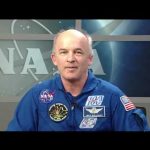
Record Breaking NASA Astronaut Discusses His Recent Mission
During a live satellite interview Sept. 14 on NASA TV, astronaut and Expedition 48 Commander Jeff Williams spoke about his recent record-breaking mission aboard the International Space Station.
Williams and Russian crewmates Alexey Ovchinin and Oleg Skripochka, of the Russian space agency Roscosmos, returned to Earth Sept. 6 in Kazakhstan (7:13 a.m. Sept. 7, Kazakhstan time) to wrap up a 172 day mission aboard the station. Williams now has spent 534 days in space, making him first on the all-time NASA astronaut list. During the mission, Williams was instrumental in preparing the station for the future arrival of U.S. commercial crew spacecraft. The first International Docking Adapter was installed during a spacewalk by Williams and fellow NASA astronaut Kate Rubins Aug. 19. Outfitted with a host of sensors and systems, the adapter’s main purpose is to connect spacecraft bringing astronauts to the station in the future. Its first users are expected to be Boeing’s CST-100 Starliner and SpaceX’s Crew Dragon spacecraft, now in development in partnership with NASA.
-
First data from ESA’s Gaia mission
Launched in December 2013, Gaia is destined to create the most accurate map yet of the Milky Way.
By making accurate measurements of the positions and motions of roughly 1% of the total population of stars in the Milky Way, it will answer questions about the origin and evolution of our home galaxy.
The first intermediate data release, containing, among other things, three-dimensional positions and two dimensional motions of a subset of two million stars, demonstrates that Gaia’s measurements are as precise as planned, paving the way to create the full map of one billion stars to be released towards the end of 2017.
Find out more about Gaia:
http://www.esa.int/gaia -
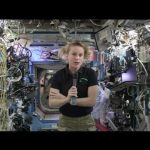
NASA Astronaut Talks to Students about Life Aboard the Space Station
Aboard the International Space Station, Expedition 49 Flight Engineer Kate Rubins of NASA discussed life and research aboard the orbital laboratory with students at the Vintage High School in Napa, California during an in-flight educational event Sept. 14. Rubins, who is in the third month of a four-month mission on the station, is a 1996 graduate of Vintage High School. She recently conducted two spacewalks outside the outpost to install the first International Docking Adapter that U.S. commercial crew spacecraft will link up to in the future, as well as new high definition cameras on the station’s truss.
-
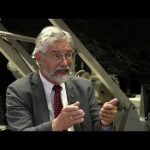
White House, NASA Discuss Asteroid Redirect Mission
Officials from the White House Office of Science and Technology Policy (OSTP) and NASA held a live Asteroid Redirect Mission (ARM) discussion at the space agency’s Goddard Space Flight Center in Greenbelt, Maryland. During the event on Wednesday, Sept. 14, OSTP’s Dr. John P. Holdren, NASA’s Administrator Charles Bolden and ARM Program Director Dr. Michele Gates, highlighted the mission’s scientific and technological benefits, how the mission will support NASA’s goal of sending humans to Mars in the 2030s, and how ARM will demonstrate technology relevant to defending Earth from potentially hazardous asteroids.
-
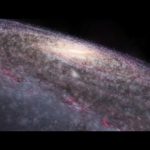
From the Solar System to the Hyades cluster
A virtual journey, from our Solar System through the Milky Way, based on data from the first release of ESA’s Gaia satellite.
The journey starts by looking back at the Sun, surrounded by its eight planets. We then move away from the Sun and travel towards and around the Hyades star cluster, the closest open cluster to the Solar System, some 150 light-years away.
The 3D positions of the stars shown in the animation are drawn from the Tycho-Gaia Astrometric Solution (TGAS), which combines information from Gaia’s first year of observations with the earlier Hipparcos and Tycho-2 Catalogues, both based on data from ESA’s Hipparcos mission.
This new dataset contains positions on the sky, distances and proper motions of over two million stars. It is twice as precise and contains almost 20 times as many stars as the previous reference for astrometry, the Hipparcos Catalogue.
The journey continues showing the full extent size of the stars contained in the Tycho-Gaia Astrometric Solution, all relatively near to the Sun, in the overall context of our Milky Way galaxy.
The final Gaia catalogue will contain the most detailed 3D map ever made of the Galaxy, charting a billion stars – about 1% of the Milky Way’s stellar content – to unprecedented accuracy.
For more information about Gaia, visit: http://www.esa.int/gaia
Credit: ESA/Gaia/DPAC; Acknowledgement: S. Jordan & T. Sagristà Sellés (Zentrum für Astronomie der Universität Heidelberg)
