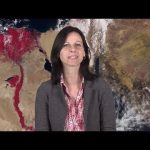
Earth from Space is presented by Kelsea Brennan-Wessels from the ESA Web-TV virtual studios. The one hundred eighty-fifth edition features a Sentinel-2A image of the Rub’ al Khali desert.
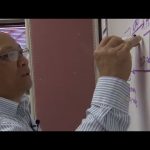
Richard Hang, an electronic engineer, has served as the Chief of Sensors and Systems Development Branch at NASA’s Armstrong Flight Research Center (AFRC) since 2014. He previously served as the Chief of Instrumentation Branch at AFRC from 2012 to 2014. Prior to being selected as Branch Chief, he was a senior instrumentation engineer for design and development of real-time embedded data systems for flight research. He has been a NASA employee since September, 1996.
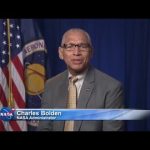
NASA Administrator Charles Bolden recorded a congratulatory video message to students at St. Thomas More Cathedral School in Arlington, Virginia on becoming the first elementary school to build a small satellite and have it launched into space. On May 16, the school’s St. Thomas More (STM Sat-1), was deployed from the International Space Station. STMSat-1 was launched to the ISS on Dec. 6, 2015 aboard an Orbital ATK Cygnus cargo resupply spacecraft as part of NASA’s Educational Launch of Nanosatellites (ELaNa) IX mission. The STMSat-1 mission is an educational mission to provide hands-on, inquiry-based learning activities with an on-orbit mission to photograph the Earth and transmit images to our primary ground station and to remote ground stations throughout the country.
NASA Administrator Charles Bolden welcomed this year’s Beating the Odds Foundation/Student Success and Leadership Program participants to NASA HQ. They heard from Human Research Program Director for the Twin Study, Dr. John Charles and planetary scientist, Dr. Shawn Domagal-Goldman, who discussed NASA’s search for life in the Universe. Student teams presented results of research they conducted on the Twin Study using the Foundation’s Stepping Stones to Success model. This informal partnership between NASA Headquarters and the Beating the Odds Foundation, now in its third year, demonstrates the effectiveness of integrating formal education and NASA missions.
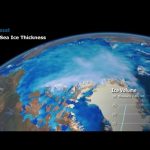
This animation shows changes in ice volume in Antarctica, Greenland and the Arctic ocean measured by the CryoSat satellite, 2010–15. CryoSat’s readings also contribute to our knowledge of global ocean depth.
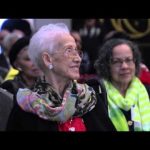
NASA commemorated the many contributions of retired mathematician Katherine Johnson to America’s space program during a building dedication ceremony on May 5, at the agency’s Langley Research Center in Hampton, Virginia. Langley’s new Katherine G. Johnson Computational Research Facility was formally dedicated to the venerated mathematician and Presidential Medal of Freedom recipient.
Johnson worked at Langley from 1953 until her retirement in 1986, beginning as a research mathematician — part of a pool of women hired to perform mathematical equations and calculations by hand for engineers. She quickly distinguished herself and was permanently assigned to the branch that would later calculate the launch windows for NASA’s first Project Mercury flights.
Notable accomplishments include her computation, by hand, of the launch window and trajectory for Alan Shepard’s maiden space voyage aboard Freedom 7 in 1961, and verification, also by hand, of calculations made by the first computers for John Glenn’s history-making orbit around the Earth in 1962. She also calculated the trajectory for the historic Apollo 11 first moon landing flight in 1969.
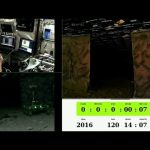
On 29 April 2016, ESA astronaut Tim Peake on the International Space Station took control of a rover, nicknamed ‘Bridget’, in the UK and over two hours drove it into a simulated cave and found and identified targets despite the dark and limited feedback information.
Before and after Tim came online from the orbiting Station, control of the rover was passed several times between engineers at the Airbus D&S ‘Mars Yard’ in Stevenage, UK, Belgium’s ISS User Support Centre in Brussels and ESA’s ESOC operations centre in Darmstadt, Germany. This complex real-time choreography was possible thanks to the ‘Internet in space’ – a network that tolerates disruptions – put in place by teams at ESOC. This network enables remote control of rovers or other devices in the difficult environment of space, with its long distances and frequent connection blackouts inevitable with orbital motion.
During the experiment, a representative mission scenario was set up in which the rover was commanded to go from a lit environment into a challenging dark location (simulating a cave or a shaded crater) and identified a number of science targets. The Mars yard (30 x 13 m) was split into two areas, one lit and one in the dark. From one end of the yard, Bridget was commanded from ESOC until it reached the edge of the shaded area. Then at the edge of the ‘cave’, control was passed to astronaut Tim Peake, on board the Station, who controlled Bridget to drive across the yard, avoiding obstacles and identifying potential science targets, which were marked with a distinctive ultraviolet fluorescent marker. Once the targets were identified and mapped, Tim drove the rover out of the shaded area and handed control back to ESOC, who drove the rover back to its starting point.
This video is a compressed extract that includes highlights of the experiment and includes scenes of the network control centre at ESOC, the Mars Yard at Stevenage and Tim Peake on the ISS. On audio, the voices of astronaut Time Peake, Lionel Ferra, the Eurocom ‘capcom’ controller at ESA’s Astronaut Centre in Cologne, Germany, and Kim Nergaard, the ground segment manager at ESOC, can be heard periodically.
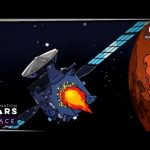
After a successful launch from Kazakhstan’s Baikonur Cosmodrome in March, the ExoMars spacecraft is making good progress on its 500 million km trip to Mars.
The joint European and Russian mission will perform science, test lander and descent technology, and may help solve the mystery of why there is methane on Mars. The gas could indicate a geological origin or past or present life – most likely from microbes. The mission carries four scientific packages with Russia developing one of the three spectrometers on board the orbiter’s Atmospheric Chemistry Suite.
This film provides an update of ExoMars’ journey. It includes the first test image from the Trace Gas Orbiter’s high-resolution camera and looks ahead to a major course correction manoeuvre in July. The spacecraft will then be lined up for arrival at Mars on 19 October 2016.
Includes interviews with Thomas Passvogel, Head of Science Projects, ESA (English); Oleg Korablev, ACS Experiment Principal Investigator (Russian); Nicolas Thomas, CaSSIS Experiment Principal Investigator, University of Bern (English).
‘A Beautiful Planet’ stars Earth as seen from space by astronauts and cosmonauts aboard the orbiting laboratory. Shooting spanned multiple expeditions with NASA astronauts Kjell Lindgren, Terry Virts, and Barry “Butch” Wilmore as well as former NASA astronaut Scott Kelly volunteering as filmmakers during their time on station.
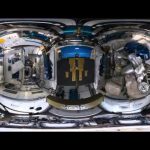
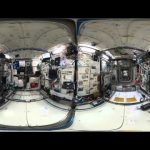
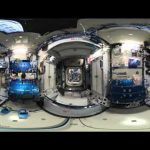
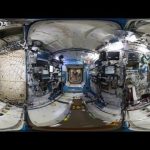
Explore the International Space Station’s Tranquility module from all angles on your mobile phone or headset
Node-3 Tranquility provides life-support for the International Space Station. Part of Tranquility is ESA’s Cupola observation module, a seven-window dome-shaped structure from where the Space Station’s robotic arm, Canadarm 2, is operated as it offers a panoramic view of space and Earth. Launched on Space Shuttle flight STS-130 in February 2010, Node-3 was attached to the port side of Node-1 Unity. Read more on ESA’s Node-3 minisite: http://www.esa.int/Our_Activities/Human_Spaceflight/Node-3_Cupola
Explore Node 3 in Flickr, Facebook or YouTube format with your mobile phone and virtual-reality headset, or take the full tour including all Space Station modules with videos and extra information below. This is the final Space Station module in 360°.
On 24 April 2016, the mission control team was in the Main Control Room at ESOC, ESA’s mission control centre in Darmstadt, Germany, preparing for the liftoff of Soyuz flight VS14. Their job was to assume control of the rocket’s main passenger, the Sentinel-1B radar-sensing satellite.
In this Periscope, video host Thomas Ormston, a spacecraft operations engineer at ESOC, spoke with some of the team working ‘on console’ to find out details on how they get ready to send a satellite into space.
NOTE: About 75 minutes after recording this Periscope, the launch countdown was halted due to an an anomaly with the launcher. The countdown was restarted the next day, with liftoff set for 23:02 CEST, 25 April 2016.
Andrei Dorobanţu este un reputat fizican teoretician, Communication Officer al Proiectului ELI-NP România (Institutul de Fizică şi Inginerie Nucleară “Horia Hulubei”).
Realizator al emisiunii “Paşaport pentru Ştiinţă” (Bucureşti FM).
În anul 2007, Uniunea Ziariştilor Profesionişti i-a acordat “Ordinul Ziariştilor” (clasa I – aur).
At the Danish Air Ambulance base in Billund, satellite navigation is a true lifesaver in the sky.
The air ambulance service, operated by the Norwegian Air Ambulance in Denmark, is among the first to use a new European satellite system, EGNOS, that makes it safer to fly in low visibility.
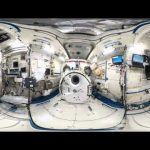
Explore Japan’s Kibo space laboratory with your mobile phone or VR headset in this panorama.
This 360° panorama lets you explore the International Space Station’s seventh module, Kibo. It was launched in three parts in 2008 and 2009 aboard Space Shuttles Atlantis and Endeavour.
The laboratory is renowned for its volume and extra features such as its external robotic arm, an airlock to send experiments outside, and an external facility to expose experiments to space. Nanosats can be launched from Kibo through the airlock, making the Station a base for deploying satellites as well as a weightless research centre for biology, physics and medicine.
Explore Kibo in YouTube, Flickr or Facebook format with your mobile phone and virtual-reality headset, or take the full tour including all Space Station modules with videos and extra information below. We will release a new Space Station module in 360° every week on Thursday.
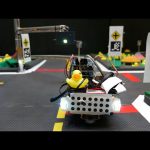
This spring, a hands-on course housed at MIT’s Computer Science and Artificial Intelligence Laboratory (CSAIL) took students on a trip to “Duckietown.” The class’ goal was to create a fleet of 50 duckie-adorned robo-taxis that can navigate roads with just a single on-board camera and no pre-programmed maps.
On April 22nd, Earth Day is an annual world wide celebration in support of environmental protection. NASA undertakes various efforts to protect and understand our home planet. NASA wants to capture what people all around the world are doing to protect, improve and celebrate Earth… So, where on EARTH will you be? http://www.nasa.gov/24Seven #24Seven
ESA’s Asteroid Impact Mission, currently under study for launch in 2020 and arrival in 2022, would be humanity’s first probe to a double asteroid system. Targeting an approximately 180-m diameter asteroid – around the same size as the Great Pyramid of Giza – AIM would spend a busy six months gathering data on its surface and inner structure.
It would then perform before-and-after measurements as the NASA-led Double Asteroid Redirection Test spacecraft impacts straight into it, in an attempt to change the asteroid’s orbital period – marking the very first time that humanity shifts a Solar System object in a measurable way. Success would make it possible to consider carrying out such an operation again if an incoming asteroid ever threatened our planet. The two missions combined are called the Asteroid Impact & Deflection Assessment, or ‘AIDA’ for short.
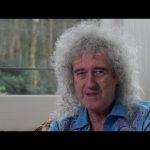
But why do we need to plan such a ground-breaking experiment? Astrophysicist and Queen guitarist Brian May, ESA astronaut Luca Parmitano, the UK’s Astronomer Royal Sir Martin Rees and Canadian astronaut Chris Hadfield share their own thoughts.
NASA Television’s newest offering, NASA TV UHD, brings ultra-high definition video to a new level with the kind of imagery only the world’s leader in space exploration could provide.
Harmonic produced this show exclusively for NASA TV UHD, using time-lapses shot from the International Space Station, showing both the Aurora Borealis and Aurora Australis phenomena that occur when electrically charged electrons and protons in the Earth’s magnetic field collide with neutral atoms in the upper atmosphere.
Gonzalo Martín-de-Mercado specialises in optical telecommunications. He speaks about how his academic background helps him to support collaboration between ESA and companies.
Explore Europe’s Columbus space laboratory with your mobile phone or VR headset in this panorama.
This 360° panorama lets you explore the International Space Station’s sixth module, Columbus. It was launched on 7 February 2008 on Space Shuttle Atlantis. The laboratory is ESA’s largest single contribution to the Station, and Europe’s first permanent research facility in space.
The state-of-the-art facility offers 75 cubic metres of workspace and contains a suite of research equipment. External platforms support experiments and applications in space science, Earth observation and technology.
Columbus offers European scientists full access to a weightless environment that cannot be duplicated on Earth.
Explore Columbus in Flickr, Facebook or YouTube format with your mobile phone and virtual-reality headset, or take the full tour including all Space Station modules with videos and extra information below. We will release a new Space Station module in 360° every week on Thursday.
The objective of this course is to give you a holistic understanding of machine learning, covering theory, application, and inner workings of supervised, unsupervised, and deep learning algorithms.
In this series, we’ll be covering linear regression, K Nearest Neighbors, Support Vector Machines (SVM), flat clustering, hierarchical clustering, and neural networks.
For each major algorithm that we cover, we will discuss the high level intuitions of the algorithms and how they are logically meant to work. Next, we’ll apply the algorithms in code using real world data sets along with a module, such as with Scikit-Learn. Finally, we’ll be diving into the inner workings of each of the algorithms by recreating them in code, from scratch, ourselves, including all of the math involved. This should give you a complete understanding of exactly how the algorithms work, how they can be tweaked, what advantages are, and what their disadvantages are.
In order to follow along with the series, I suggest you have at the very least a basic understanding of Python. If you do not, I suggest you at least follow the Python 3 Basics tutorial until the module installation with pip tutorial. If you have a basic understanding of Python, and the willingness to learn/ask questions, you will be able to follow along here with no issues. Most of the machine learning algorithms are actually quite simple, since they need to be in order to scale to large datasets. Math involved is typically linear algebra, but I will do my best to still explain all of the math. If you are confused/lost/curious about anything, ask in the comments section on YouTube, the community here, or by emailing me. You will also need Scikit-Learn and Pandas installed, along with others that we’ll grab along the way.
Machine learning was defined in 1959 by Arthur Samuel as the “field of study that gives computers the ability to learn without being explicitly programmed.” This means imbuing knowledge to machines without hard-coding it.
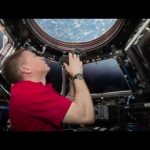
ESA astronaut Tim Peake shares his views of Earth and his six-month Principia mission while on the International Space Station. Narrated by Tim himself taken from interviews while in space, this video shows the best views, experiments and shares the experience of Tim’s life in space.
Advanced scientific note about Doppler: If there is a light moving away from you at constant velocity in static flat (Minkowski) space-time, no matter how red it is, you will never conclude it is going faster than light. But, here I am discussing the conclusions one might come to if you mistakenly use Doppler in the context of the curved space-time of the universe (where there is expansion). Interpreting the huge redshift as a result of the doppler effect, could make one think that galaxies we see are moving away at speeds approaching light speed. And since what we are actually seeing is light from those galaxies from billions of years ago, and given that the universe is expanding, you might be tempted to say that they have since “accelerated” to faster than the speed of light. You might go further and say that there are more distant galaxies that we can’t see which are moving away even faster. So you might conclude there are galaxies moving faster than light in the universe. But the redshift isn’t from doppler and this “acceleration” of the expanding universe isn’t actually causing a true increase in velocity.
Sometimes astronomers do say there is a faster than light “recession speed” by pretending the expansion of the universe is causing distant galaxies to move away from each other at a corresponding velocity, but that’s misleading. In general relativity, you can actually have an increase in space between objects without causing a corresponding increase in the relatives velocities of those objects.
Special thanks:
Marissa Giustina
Nick Hutzler
Julie Elksy
Byron Drury
Jacob Barandes
Tyler Howe
Lissy Herman
Ari Daniel
Lauren Aguirre
Kristine Allington
Allison Eck
Anna Rotschild
MEDIA CREDITS:
Music provided by APM:
Deep_Science_No-perc
Mysteries_of_Science_B
Dreaming_of_the_Stars_a
Curiosity_Kills_the_Cat_2
Conundrum_a
Images:
Stars – Rene Barrios
Earth – Eirika
galaxy spiral (by coornio – diviantart)
Squirrel with scissors – 60811670 – Dollarphotoclub
Equations – 91613623 – Dollarphotoclub
Maxresdefault – Sean Stewart
Marissa Giustina – Lammerhuber
Tangled cat – David Swayze
Cat doll – Vicky Somma
Stock footage:
train-exits-tunnel – Pond5
Bin_pulsar_442 – Courtesy of Nasa
Expanding in space (40294) – Courtesy of Nasa
WMAP_archive – Courtesy of Nasa
Aboard the International Space Station, Expedition 47 Commander Tim Kopra and Flight Engineer Jeff Williams of NASA discussed the pace of research on the orbital lab and recent cargo vehicle deliveries in an in-flight interview April 7 with NBC News’ website Today.com. Kopra is in the second half of a six-month mission on the station while Williams, who is in his third long duration flight on the complex, is nearing the completion of the first month of his half-year stay on the outpost.
Explore the International Space Station’s Harmony module in this full panorama with your mobile phone or VR headset.
This 360° panorama lets you explore the International Space Station’s fifth module, Harmony. It was launched on 23 October 2007 aboard Space Shuttle Discovery to link the Columbus, Kibo and Destiny laboratories.
Harmony was developed for NASA under an ESA contract with European industry. Its structure is based on that of the Multi-Purpose Logistics Modules and the Europe’s Columbus.
Explore Harmony in YouTube, Flickr or Facebook format with your mobile phone and virtual-reality headset, or take the full tour including all Space Station modules with videos and extra information below. We will release a new Space Station module in 360° every week on Thursday.
At age 42, Hong Kong designer Ricky Ma spent a little more than a year and $50,000 working on his childhood dream of building a life-sized humanoid robot.
» Subscribe to CNBC: http://cnb.cx/SubscribeCNBC
About CNBC: From ‘Wall Street’ to ‘Main Street’ to award winning original documentaries and Reality TV series, CNBC has you covered. Experience special sneak peeks of your favorite shows, exclusive video and more.
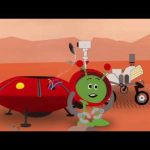
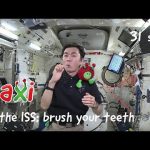
Our alien friend Paxi, ESA Education’s mascot, went to visitJapanese astronaut Kimiya Yui on board the International Space Station. Kimiya shows Paxi whatit’s like to brush your teeth in weightlessness, an important part of the daywhen living on the ISS.
In this episode Grace shows us an example of simple artificial intelligence coing in Scratch. Here she shows us how to create a platformer game that learns how to jump over a movable obstacle.
Engineers at Johnson Space Center in Houston are using a mockup of NASA’s Orion spacecraft to evaluate how well astronauts are able to operate Orion’s rotational hand controller and cursor control device, while dressed in spacesuits. The controllers operate the displays and control system used to maneuver and interact with the spacecraft. The testing aims to provide data that can be used to make adjustments needed to ensure future Orion crews can interact appropriately with the spacecraft’s control system during deep space missions. Also, Milestone for Spaceport of the Future, Russian Supply Ship Launches to ISS, Team Selected to Build Planet-Hunting Instrument, First Heat Map of Super Earth and Milestone for Green Propellant Mission!
Like innumerable children with imaginations fired by animated films, Hong Kong product and graphic designer Ricky Ma grew up watching cartoons featuring the adventures of robots, and dreamed of building his own one day.
Unlike most, however, Ma has realised his childhood dream at the age of 42, by successfully constructing a life-sized robot from scratch on the balcony of his home.
The fruit of his labours of a year-and-a-half, and a budget of more than $50,000, is a female robot prototype he calls the Mark 1, modelled after a Hollywood star whose name he wants to keep under wraps. It responds to a set of programmed verbal commands spoken into a microphone.
Earth from Space is presented by Malì Cecere from the ESA Web-TV virtual studios. The one hundred eightieth edition features a Sentinel-3A image of the River Nile and surroundings.
Explore NASA’s space laboratory for the International Space Station from every angle in this panorama.
This 360° panorama lets you explore the International Space Station’s fourth module, Destiny. Launched on 7 February 2001 on Space Shuttle Atlantis, the American module is the heart of the non-Russian part of the Station according to ESA astronaut Samantha Cristoforetti (who took the pictures to create this view). The module allows experiments to be performed in many disciplines, from biology to physics, including a rack for burning liquids in weightlessness and the European Microgravity Science Glovebox.
Explore Destiny in Flickr, Facebook or YouTube format with your mobile phone and virtual-reality headset, or take the full tour including all Space Station modules with videos and extra information below. We will release a new Space Station module in 360° every week on Thursday.
Six lines of Python is all it takes to write your first machine learning program! In this episode, we’ll briefly introduce what machine learning is and why it’s important. Then, we’ll follow a recipe for supervised learning (a technique to create a classifier from examples) and code it up.
Timelapse movie following the preparations of the ExoMars 2016 spacecraft in the lead up to launch on 14 March 2016. The movie includes the integration of the entry, descent and landing demonstrator module, Schiaparelli, with the Trace Gas Orbiter, and the journey of the spacecraft inside the Proton rocket as it is moved to the launch pad and raised to a vertical position.
ExoMars launched from Baikonur, Kazakhstan at 09:31 GMT on 14 March. It will arrive at the Red Planet on 19 October. Its mission is to address unsolved mysteries of the planet’s atmosphere that could indicate present-day geological – or even biological – activity, and to demonstrate the landing technologies needed for future missions to Mars.
¿Existe la vida en Marte? La misión ExoMars intenta responder a esta pregunta. Aquí, en el Cosmódromo de Baikonur, en Kazajistán, nos reunimos con los científicos que trabajan en este proyecto. El cohete de la misión ExoMars se dirige hacia el planeta rojo para buscar buscar potenciales pruebas de actividad biológica.
Al cosmodromo di Bajkonur, in Kazakhstan, euronews ha seguito l’avvio di ExoMars,missione sviluppata dall’ESA, l’Agenzia Spaziale Europea ESA e da Roscosmos, Agenzia Spaziale Russa.
L’obiettivo di ExoMars è lo studio dell’ambiente biologico della superficie del pianeta ma anche la ricerca di eventuali tracce di vita, passata o presente.