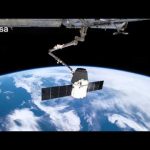
NASA Television’s newest offering, NASA TV UHD, brings ultra-high definition video to a new level with the kind of imagery only the world’s leader in space exploration could provide.
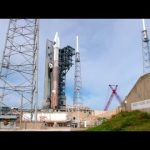
Using an array of six 4K+ cameras, Harmonic documented the Dec. 6 launch of Orbital ATK’s commercial resupply mission to the International Space Station from Cape Canaveral Air Force Station in Florida. Capturing footage at Ultra High Definition with high frame rate and in high dynamic range (HDR) options.
The company then post-produced the footage into a program showcasing the entire launch process for airing on NASA TV UHD.
A Dec. 2 event with the House of Representatives Committee on Science, Space and Technology, featured a live chat with NASA’s Scott Kelly and Kjell Lindgren from onboard the International Space Station. Kelly and Lindgren answered questions from Texas Representative and Chairperson Lamar Smith and other committee members, about life on the station and the research on the orbital laboratory. Kelly is in the ninth month of his year-long mission with Russian cosmonaut Mikhail Kornienko to gather biomedical data that will help formulate a human mission to Mars, while Lindgren is preparing to return to Earth Dec. 11 to complete a 141-day mission. Also, Next space station crew preparing for launch, Orion powerhouse ready for testing, Anniversary of Orion’s first flight test, Your planet is changing. We’re on it, and Preparing Earth observation tool for space station!
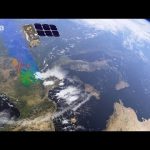
The green light has been given for all users to have open access to all of the data from ESA’s Sentinel-2A satellite, launched in June for the Copernicus programme.
This video celebrates Sentinel-2A’s life, from its birth to what it has become today, and what it can give us tomorrow.
ESA’s LISA Pathfinder mission is a technology demonstrator that will pave the way for future spaceborne gravitational-wave observatories. It will operate about 1.5 million km from Earth towards the Sun, orbiting the first Sun–Earth ‘Lagrangian point’, L1.
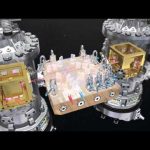
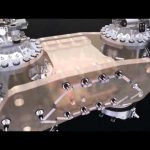
The animation of the spacecraft build-up begins with two freely falling test masses. Between them lies the central component of LISA Pathfinder’s payload: the 20 x 20 cm optical bench interferometer. A set of 22 mirrors and beam-splitters directs laser beams across the bench. There are two beams: one reflects off the two free-falling test masses while the other is confined to the bench. By comparing the length of the different paths covered by the beams, it is possible to monitor changes accurately in distance and orientation between the two test masses.
A box surrounds the two masses without touching them, shielding them from outside influence and constantly applying tiny adjustments to its position. This internal payload is housed in a central cylinder, isolating the test masses from the other components of the science payload and spacecraft.
The solar array provides power to the instrumentation and acts as a thermal shield. Microthrusters control the spacecraft to keep the master test mass centred in its housing, opposing the force of the solar radiation pressure – the main source of ‘noise’ – impinging on the solar array.
Although LISA Pathfinder is not aimed at the detection of gravitational waves themselves, it will prove the innovative technologies needed to do so. It will demonstrate that the two independent masses can be monitored as they free-fall through space, reducing external and internal disturbances to the point where the relative test mass positions would be more stable than the expected change caused by a passing gravitational wave, equal to much less than the size of an atom.
LISA Pathfinder’s name, Laser Interferometer Space Antenna, clearly indicates the role of precursor that this mission plays. Its goal is to validate the technology required to detect gravitational waves from space. Gravitational waves will open a new door in our understanding of the Universe, and at the same time help to verify Einstein’s General Theory of Relativity. LISA Pathfinder will be launched early December 2015 on a Vega rocket from Kourou in French Guiana.
Tim Peake is the first British astronaut to be selected as a member of ESA’s European Astronaut Corps. With a background in flight dynamics, he served in the British Air Corps as flight commander, helicopter instructor and test pilot.
Scheduled to fly to the ISS in late 2015, he’ll be staying in orbit for five months. He also has close ties with the UK Space Agency, working on the development of its microgravity research programme.
We have all heard of climate change, but what’s really happening to our planet now, in November 2015? As the COP21 summit in Paris looms in December, we set out to establish some of the scientific fundamentals, and hear how space technology is being used to get a truly global view of Earth’s vital signs.
Near Les Deux Alps in the French Alps, some 3,200 metres above sea level, we look at how satellite data and glacier measurements can help us to understand the effects of global warming with remote sensing scientist Jean-Pierre Dedieu.
Discover how you can participate in ESA programmes as a student, and learn about your entry options once you’ve got your Masters degree. ESA recruitment and education colleagues share some valuable info with you.
Named after Isaac Newton’s text Naturalis Principia Mathematica, ESA’s Principia mission will be the eighth long-duration mission to the International Space Station. British astronaut Tim Peake will be launched from Baikonur in Kazakhstan onboard a Russian Soyuz vehicle, spending five months in orbit. He’ll carry out an intensive schedule of European and international experiments, in addition to numerous educational activities from space.
This timelapse shows ESA astronaut Andreas Mogensen working with Roscosmos cosmonaut Sergei Volkov during the iriss mission to unpack, setup, test and then store the MARES muscle-measurement machine in Europe’s space laboratory Columbus on the International Space Station over three days.
The Muscle Atrophy Research and Exercise System, or MARES for short, is a three-in-one muscle-measurement machine on the International Space Station that monitors astronauts’ muscles as they work out.
Muscle strength decreases during spaceflight and researchers need to know why this happens in order to prepare for long-duration missions and safe space tourism. MARES is an exercise bench that offers detailed information about how muscles behave during spaceflight.
MARES was a large part of Andreas’s ten-day iriss mission to the International Space Station that started 2 September 2015.
We are Europe’s gateway to space. Our mission is to shape the development of Europe’s space capability and ensure that investment in space continues to deliver benefits to the citizens of Europe and the world. Check out https://www.esa.int/ to get up to speed on everything space related.
LISA Pathfinder will pave the way for future missions by testing in flight the very concept of gravitational wave detection: it will put two test masses in a near-perfect gravitational free-fall and control and measure their motion with unprecedented accuracy. LISA Pathfinder will use the latest technology to minimise the extra forces on the test masses, and to take measurements.
The inertial sensors, the laser metrology system, the drag-free control system and an ultra-precise micro-propulsion system make this a highly unusual mission.
LISA Pathfinder is an ESA mission, which will also carry a NASA payload.
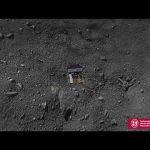
Data from both the Philae lander and Rosetta orbiter experiments, as well as simulation results based on Philae’s mechanical design have been used to reconstruct the lander’s attitude and motion during its descent and touchdowns on Comet 67P/Churyumov-Gerasimenko on 12 November 2014.
The new animation presented today, one year after Philae touched down on the comet, focuses on Philae’s dramatic two-hour flight from Agilkia to Abydos.
Credits: The video was prepared with inputs from the ROMAP, RPC-MAG, OSIRIS, ROLIS, CIVA CONSERT, SESAME and MUPUS instrument teams as well as from the Lander Control Centre at DLR and Science Operation and Navigation Center at CNES.
It’s been an extraordinary year for the Rosetta comet mission since Philae landed on the surface of Comet 67P/Churyumov-Gerasimenko on 12 November 2014.
Continual data from the orbiter, together with information collected over several days from the lander, is providing a comprehensive picture of a remnant from our Solar System.
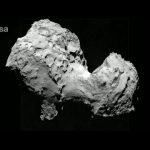
This film covers the most recent science news from the Rosetta mission, as well as selected scientific highlights from the last year. It includes the comet’s unusual surface terrace structure, its formation from two colliding objects producing the unusual rubber duck shape, how water is transported from inside the comet towards the surface, and the surprising detection of molecular oxygen – familiar on Earth but not on a comet.
Sentinel-3A’s preparation is finished and the satellite will soon be shipped to the Russian Cosmodrome of Plesetsk, in Northern Russia for its launch on top of a Rockot planned end of this year. Carrying a suite of state-of-the-art instruments, Sentinel-3 is set to play a key role in Copernicus, the world’s largest environmental monitoring programme operated by the European Commission. It will provide highly accurate measurements on Earth’s oceans, land, ice and atmosphere.
NASA is on a Journey to Mars and we are on the lookout for a new generation of space pioneers. Do you think you have what it takes to join NASA’s next astronaut class? Visit: http://www.nasa.gov/astronauts
During an Oct. 28 keynote speech at the Center for American Progress, in Washington, NASA Administrator Charlie Bolden spoke about the advancement made on the journey to Mars and what lies ahead for future administrations and policy makers. NASA’s recently released report “Journey to Mars: Pioneering Next Steps in Space Exploration,” outlines its plan to reach Mars in phases – with technology demonstrations and research aboard the International Space Station, followed by hardware and procedure development in the proving ground around the moon, before sending humans to the Red Planet. Also, Space station spacewalk, Another record in space for Kelly, Mars Landing Sites/ Exploration Zones Workshop, Cassini’s “deep dive” flyby and more!
Explore and discover new worlds of music with NASA’s Third Rock Radio. RFC Media matches “new rock discovery” with tales of NASA’s exciting, on-going mission to create one of the most talked about digital radio channels on, or off the planet. Third Rock fans worldwide share their discoveries from Music Explorers who present ”the best new rock out there – really out there!” Third Rock’s disarmingly hip, street-smart context connects and engages young adults and helps NASA deepen relationships with its next generation of avid supporters. Third Rock Radio is a recognized New Media phenomenon attracting the brightest and best, tech-savvy young adults. Third Rock’s audience is a blend of scientists, engineers, researchers, innovators and astronauts, together with students and music lovers everywhere, all of whom share a love for the new and undiscovered.
There are lots of names associated with space rocks, so what is the difference? Join the Royal Observatory Greenwich astronomers to find out. They will also explore what space rocks can tell us about our very own planet Earth. http://bit.ly/rogvideo #rogspacerocks
The Rosetta Mission has captured the interest and imagination of a generation and it is not over yet! Take a look at this Royal Observatory Greenwich video which explains what Rosetta and Philae have achieved as well as the impact the mission has had on our knowledge of our very own solar system. http://bit.ly/rogvideo #rogrosetta
At sea, space technology is used to help save lives every day: managing traffic between ships, picking up migrants and refugees in distress or spotting oil spills. The European Space Agency is once again at the forefront developing new technologies and satellites: to keep us safe at sea and to monitor the environment. Space makes a difference here on Earth and certainly at sea where there is no infrastructure.
Meet some real-life robots, and find out what robots really are, and what they do for us every day!
———-
Like SciShow? Want to help support us, and also get things to put on your walls, cover your torso and hold your liquids? Check out our awesome products over at DFTBA Records: http://dftba.com/SciShow
In this edition of Space we set a course for Jupiter, destination of the next European Space Agency mission.
The aim of JUICE (JUpiter ICy moon Explorer) is to provide the most comprehensive exploration of the giant planet and, in particular, of its moons; supposedly hiding habitable zones under their icy crusts.
Jupiter is more than eleven times larger than Earth but is mainly made of gas. During its three and a half year mission, which blasts off in 2022, JUICE will travel around the giant planet, studying its atmosphere and three of its planet-sized satellites: Ganymede, Europa, and Callisto.
Καλώς ήλθατε στο νέο επεισόδιο του Space. Προσπαθήστε να φανταστείτε ένα ηλιακό μοντέλο στο οποίο κάποιοι πλανήτες θα έχουν κάτω από την επιφάνεια περισσότερο νερό από ότι υπάρχει στη γη.
Αυτός είναι ο επόμενος στόχος της Ευρωπαϊκής Υπηρεσίας Διαστήματος. Θα επανέλθουμε στο θέμα, αφού πρώτα μάθουμε κάποια διαστημικά νέα.
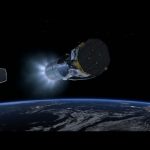
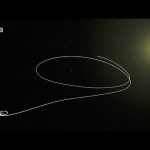
The journey and final orbit of LISA Pathfinder, ESA’s technology demonstration mission that will pave the way for future gravitational-wave observatories in space.
LISA Pathfinder is scheduled for launch on 2 December 2015 on a Vega rocket from Europe’s Spaceport in French Guiana. Vega will place the spacecraft into an elliptical orbit, with a perigee (closest approach to Earth) of 200 km, apogee (furthest point) of 1540 km, with the path angled at 6.5º to the equator.
Then, once Vega’s final stage is jettisoned, LISA Pathfinder will continue under its own power, beginning a series of six apogee-raising manoeuvres over the next two weeks.
The last burn will set LISA Pathfinder on its way towards its final orbiting location. The cruise will last about six weeks, and the propulsion module will be discarded along the way four weeks in.
Eventually, the spacecraft will circle the L1 Sun–Earth Lagrangian point. There, LISA Pathfinder will begin its six months of demonstrating key technologies for space-based observation of gravitational waves.
The iconic group Inspiral Carpets from Oldham, Greater Manchester, have dedicated their classic song Saturn V to ESA astronaut Tim Peake. Formed by musicians Graham Lambert and Stephen Holt in 1983, Inspiral Carpets were one of the bands associated with the ‘Madchester’ scene that came to prominence in the late 1980s and early 1990s. The band send this message: “From Inspiral Carpets, with respect and love, to our friend Tim Peake!”
Tim Peake is set for launch to the International Space Station on his five-month Principia mission on 15 December 2015.
This is hands down the BEST and easiest fake blood recipe out there. Our secret is the unique combination of Imperial powdered sugar and cocoa powder. The combination with red food coloring makes this the sickest BLENDER BLOOD you can make.
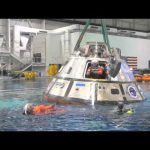
On Monday, October 5th, NASA Deputy Administrator Dava Newman and U.S. Department of Agriculture (USDA) Deputy Secretary Krysta Harden planted “Outredgeous” Red Romaine Lettuce seeds in USDA’s People’s Garden, sister seeds of those grown and harvested on the International Space Station. During the event in Washington, D.C., they also signed an a new interagency agreement expanding USDA and NASA’s commitment to promoting careers in science, technology, engineering, agriculture and math to young people. Also, CubeSats launched to test new technology, New Orion crew egress test, NASA living of Land in Space? NASA lends a helping hand for Start Ups, Meet the New Inductees to the Glenn Hall of Fame, and it’s National Cybersecurity Awareness Month, so Stop, Think & Connect.
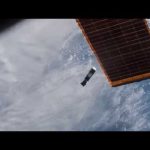
On 5 October at 15:55 CEST two ESA CubeSats, the student-built AAUSAT5 and the professional technology demonstrator GomX-3, were deployed from the International Space Station (ISS). The two satellites have just started their mission in space.
This timelapse video shows the Soyuz TMA-18M spacecraft moving from its integration facility to it launch pad in Baikonur Cosmodrome and the launch on 2 September 2015 with commander Sergei Volkov, ESA astronaut Andreas Mogensen and Aidyn Aimbetov to the International Space Station.
Andreas became Denmark’s first astronaut when he left our planet on his 10-day ‘iriss’ mission. ESA used the mission to test new technologies and conduct a series of scientific experiments.
Andreas returned to Earth with Soyuz spacecraft commander Gennady Padalka and Kazakh cosmonaut Aidyn Aimbetov on 12 September.
Teresa Antoja holds a PhD in Physics and works as Research Fellow on the Gaia Mission. She gets everything ready so that the data coming down from the spacecraft can be used quickly and efficiently, contributing to its scientific exploitation by scientists all over the world that will revolutionise our view of our galaxy.
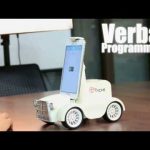
TYCHE is an AI robot companion for children. It creates an atmosphere that promotes learning, socializing, and playing as it enhances the imagination and creativity of young minds. The robot talks, listens, thinks and reasons to plan activities and solve problems.
When you mix red and green, what do you get? White light is all of the colors, right? So, how do computer screens show you every wavelength of light? Or do they?
The pioneering and highly influential British synthpop band Orchestral Manoeuvres in the Dark (OMD) have dedicated their classic song ‘Electricity’ to ESA astronaut Tim Peake.
The band have always been fascinated by science, technology and transport, with songs inspired in particular by aircraft and space, so they have been following Tim’s preparations for his upcoming Principia mission with great interest. OMD are Andy McCluskey and Paul Humphreys, backed by Malcolm Holmes and Martin Cooper.
Connect with Tim Peake at timpeake.esa.int, follow Tim on Twitter at @astro_timpeake.