Blog

  • The Concurrent Design Facility (CDF) – An Innovative Teamworking Method

    The Concurrent Design Facility (CDF) – An Innovative Teamworking Method

    Traditionally, engineers faced with the task of designing a new, complex system or structure – a car, an aircraft or a satellite – work sequentially, one step at a time, passing the design from engineer to engineer. This is inefficient and consumes time and resources.

    For more than a decade, many of ESA’s sophisticated spacecraft have been designed with the help of the CDF, making use of very advanced iterative techniques – hence its title ‘concurrent’.

    Concurrent engineering puts all related engineers, with all their brain power and required tools together with the final user representative – or customer – in the same location at the same time. This allows for iterative design at a fast pace, with customer and designers agreeing requirements and taking decisions in real time to ensure the best design for the right cost and an acceptable risk.

    This process has been developed and honed so it is now common to produce a risk assessed conceptual space mission design complete with various options and including scheduling, testing and operations in a matter of weeks.
  • Backstage at ESA with the Travel Office, HR Outreach, ‘Heavy Gang’ and more!

    Backstage at ESA with the Travel Office, HR Outreach, ‘Heavy Gang’ and more!

    This short video looks at some of the behind the scene roles that contribute to making the ESA working environment a success.
  • NASA-TV’s Curiosity Landing Coverage Begins Aug. 5
    NASA-TV’s Curiosity Landing Coverage Begins Aug. 5

    The Mars Science Laboratory, the hardest mission ever attempted in planetary robotic exploration is about to prove its mettle with the landing of its Curiosity rover on the Red Planet. Live coverage begins at 11:30 p.m. Eastern on NASA TV.

  • Lunar Lander mission

    Lunar Lander mission

    Lunar Lander mission, from launch to landing and exploring the Moon.
    Lunar Lander is a robotic explorer that will demonstrate key European technologies and conduct science experiments.
    The mission is a forerunner to future human and robotic exploration of the Moon and Mars. It will establish European expertise to allow strong international partnerships in exploration.

  • Moss Graffiti – Sick Science! #100

    Moss Graffiti – Sick Science! #100

    Graffiti is an oft discussed topic of debate in the modern world. While some consider graffiti a nuisance, others consider it street art. With that debate still raging, we suggest performing the Moss Graffiti experiment on a wall or piece of particle board that you have permission to use. Once you’ve received that permission, you’ll create a beautiful growing, green work of art.

    To learn how to extract water gel from a baby diaper check out this link http://www.stevespanglerscience.com/experiment/diaper-secret

    Read the full experiment at http://www.stevespanglerscience.com/experiment/growing-artwork

    Want more experiments like this? Check out http://www.stevespanglerscience.com/product/fire-bubbles-exploding-toothpaste-book

    Sick Science™ is a trademark of Steve Spangler, inc.

    © 2012 Steve Spangler Science all rights reserved

    About Steve Spangler…

    Steve Spangler is a celebrity teacher, science toy designer, speaker, author and an Emmy award-winning television personality. Spangler is probably best known for his Mentos and Diet Coke geyser experiment that went viral in. Spangler is the founder of www.SteveSpanglerScience.com, a Denver-based company specializing in the creation of science toys, classroom science demonstrations, teacher resources and home for Spangler’s popular science experiment archive and video collection. Spangler is a frequent guest on the Ellen DeGeneres Show and Denver 9 News where he takes classroom science experiments to the extreme. For teachers, parents or DIY Science ideas – check out other sources of learning:

    Join the Science Club and check out other cool science experiments at – http://www.SteveSpanglerScience.com

    Sign up to receive a FREE Experiment of the Week- http://www.stevespanglerscience.com/experiment-of-the-week

    Attend a Spangler Hands-on Science Workshop for Teachers – http://www.stevespanglerscience.com/training

    Watch Steve on Local and National Media Appearances on YouTube at: https://www.youtube.com/user/SpanglerScienceTV

  • NASA Rover on Course for Mars Landing

    NASA Rover on Course for Mars Landing

    With less than three weeks to the scheduled landing of the Curiosity rover on the Red Planet, leaders of Mars Science Laboratory team field questions form media about the mission, the most difficult ever undertaken in the history of interplanetary robotic exploration.

  • ESA at Farnborough 2012 – Fernando Doblas, Head of the ESA Communication Department

    ESA at Farnborough 2012 – Fernando Doblas, Head of the ESA Communication Department

    An interview with Fernando Doblas, Head of the ESA Communication Department, in the Space Zone at Farnborough air show 2012. Fernando answers questions on ESA’s presence in the Space Zone, and how such events foster international cooperation and the role of ESA.

  • ESA at Farnborough 2012 – A Tour of the ESA Stand

    ESA at Farnborough 2012 – A Tour of the ESA Stand

    Tour of the Space Zone at Farnborough International Air show 2012 in the UK. ESA’s exhibition, alongside other space agencies and industries, is in the Space Zone between 9 — 15 July.

  • Bouncing Bubble – Sick Science! #096

    Bouncing Bubble – Sick Science! #096

    There’s something magical about a bubble. It’s just a little puff of air trapped in a thin film of soap and water, but its precise spherical shape and beautiful swirling colors make it a true wonder of science. A bubble’s life expectancy is usually measured in seconds unless you know how to make a SUPER BUBBLE!

    http://www.stevespanglerscience.com/experiment/bouncing-bubbles

    Want more experiments like this? Check out http://www.stevespanglerscience.com/product/naked-eggs-and-flying-potatoes

    Sick Science™ is a trademark of Steve Spangler, inc.

    © 2012 Steve Spangler Science all rights reserved

    About Steve Spangler…

    Steve Spangler is a celebrity teacher, science toy designer, speaker, author and an Emmy award-winning television personality. Spangler is probably best known for his Mentos and Diet Coke geyser experiment that went viral in. Spangler is the founder of www.SteveSpanglerScience.com, a Denver-based company specializing in the creation of science toys, classroom science demonstrations, teacher resources and home for Spangler’s popular science experiment archive and video collection. Spangler is a frequent guest on the Ellen DeGeneres Show and Denver 9 News where he takes classroom science experiments to the extreme. For teachers, parents or DIY Science ideas – check out other sources of learning:

    Join the Science Club and check out other cool science experiments at – http://www.SteveSpanglerScience.com

    Sign up to receive a FREE Experiment of the Week- http://www.stevespanglerscience.com/experiment-of-the-week

    Attend a Spangler Hands-on Science Workshop for Teachers – http://www.stevespanglerscience.com/training

    Watch Steve on Local and National Media Appearances on YouTube at: https://www.youtube.com/user/SpanglerScienceTV

  • CO2 Sandwich – Sick Science! #095

    CO2 Sandwich – Sick Science! #095

    Read the full experiment at http://www.stevespanglerscience.com/experiment/puff-pop-how-to-make-a-co2-sandwich Mom always warned us never to play with our food… but no one said that the wrappers were off limits. Here’s a fun activity that uses some common items you’ll find around the house and a little creativity to explore the “pop” factor of vinegar and baking soda.

    Want more experiments like this? Check out http://www.stevespanglerscience.com/product/fire-bubbles-exploding-toothpaste-book

    Sick Science™ is a trademark of Steve Spangler, inc.

    © 2012 Steve Spangler Science all rights reserved

  • ESA Euronews: Private Space

    ESA Euronews: Private Space

    Boldly going where no private company has gone before.

    On 25 May 2012 the first commercial spacecraft berthed with the International Space Station. A private company achieved something only national agencies have ever done before: flying and recovering an orbital craft. With private companies launching their own spaceships and designing their own orbital stations, it’s the dawn of commercial spacefaring.
    We talk to people involved in that development and we explore the world’s first commercial spaceport.

  • Kuipers landing highlights

    Kuipers landing highlights

    On 1 July 2012, ESA astronaut André Kuipers, NASA astronaut Don Pettit and Russian Cosmonaut Oleg Kononenko returned to Earth in their Soyuz capsule. It marks the end of PromISSe, the fourth ESA long-duration mission aboard the International Space Station.

  • ESTEC: ESA’s Space Research and Technology Centre

    ESTEC: ESA’s Space Research and Technology Centre

    ESTEC: ESA’s Space Research and Technology Centre

  • Within Temptation dedicate ‘Faster’ to André

    Within Temptation dedicate ‘Faster’ to André

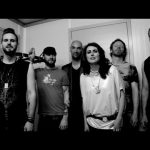
    Within Temptation is the internationally known symphonic rock band, founded in the Netherlands in 1996 by vocalist Sharon den Adel and guitarist Robert Westerholt. The band members are interested in all things science-fiction and space-related, and have been following the PromISSe mission of ESA astronaut André Kuipers. When they heard that three of their songs (“Faster”, “Mother Earth” and “The Promise”) had been included in André’s playlist to be played in space, the band were very excited to support his mission. They helped us to produce this video, recording a special message and dedicating their song “Faster” to André, wishing him a high-speed but safe return later this week.
    Within Temptation are Sharon den Adel, Robert Westerholt, Stefan Helleblad, Jeroen van Veen, Ruud Jolie, Martijn Spierenburg and Mike Coolen.

    More information at: www.within-temptation.com

    Thanks to the ORTS for the live band footage.
    Video copyright ESA/Within Temptation.
    Faster written by S. den Adel, R. Westerholt & D. Gibson.
    Video produced by ESA/J. Makinen.

  • Solar Oven S’more – Sick Science! #094

    Solar Oven S’more – Sick Science! #094

    Read the full experiment at http://www.stevespanglerscience.com/experiment/solar-oven-s-mores There are just some things that are synonymous with “summertime snacks,” and we can’t think of a summer snack we enjoy quite as much as s’mores. But what would you do if you weren’t allowed to have a fire or just didn’t have the tools necessary for a fire? We came up with a pretty neat way to harness the heat and energy of the sun to create a solar powered cooker that makes a delicious batch of s’mores without a fire!

    Want more experiments like this? Check out http://www.stevespanglerscience.com/product/naked-eggs-and-flying-potatoes

    Sick Science™ is a trademark of Steve Spangler, inc.

    © 2012 Steve Spangler Science all rights reserved

  • Bettina Boehm, explains why it’s great to work at ESA

    Bettina Boehm, explains why it’s great to work at ESA

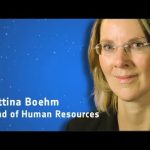
    Bettina Boehm, Head of Human Resources, talks about the different entry options available at ESA and why this is a great organisation to work at.

  • Challenges of Getting to Mars: Curiosity’s Seven Minutes of Terror

    Challenges of Getting to Mars: Curiosity’s Seven Minutes of Terror

    Team members share the challenges of Curiosity’s final minutes to landing on the surface of Mars.

  • The Prototype Official Teaser Trailer #1 (2013) – Andrew Will Sci-Fi Movie HD

    The Prototype Official Teaser Trailer #1 (2013) – Andrew Will Sci-Fi Movie HD

    Subscribe to TRAILERS: http://bit.ly/sxaw6h
    Subscribe to COMING SOON: http://bit.ly/H2vZUn
    The Prototype Official Teaser Trailer #1 (2012) – Andrew Will Sci-Fi Movie HD

    After the hit Act of Valor, The Bandito Brothers and writer/director Andrew Will will spearhead The Prototype, a Sci-Fi thriller.

  • Volcano in a Cup – Sick Science #093

    Volcano in a Cup – Sick Science #093

    Read the full experiment at http://www.stevespanglerscience.com/experiment/storm-in-a-cup-erupting-wax When you hear about a volcano erupting, what do you think is going on? If you’re like us, you think of red hot chunks of rock being hurled thousands of feet in the air, flows of liquid magma, and plumes of smoke. That’s not always the case. Some volcanoes erupt underwater and their smoking hot by-products are immediately cooled. With the Storm in a Cup, you can see what happens underwater on a smaller, safer scale.

    Want more experiments like this? Check out http://www.stevespanglerscience.com/product/fire-bubbles-exploding-toothpaste-book

    Sick Science™ is a trademark of Steve Spangler, inc.

    © 2012 Steve Spangler Science all rights reserved

  • Blubber Glove – Sick Science! #092

    Blubber Glove – Sick Science! #092

    Read the full experiment at http://www.stevespanglerscience.com/experiment/blubber-gloves The animals of the Arctic and Antarctic circles spend their lives surviving subfreezing air temperatures and frigid water. Their secret is blubber, a thick layer of body fat that comprises up to 50% of some marine mammals. Is there any way for humans to replicate this cold-weather adaptation? With the Blubber Glove experiment, you’ll test a blubber substitute on a small scale and see what it’s like to take a dip in cold water without turning into a human popsicle.

    Want more experiments like this? Check out http://www.stevespanglerscience.com/product/naked-eggs-and-flying-potatoes

    Sick Science™ is a trademark of Steve Spangler, inc.

    © 2012 Steve Spangler Science all rights reserved

  • ESA – Space to Relax / Stellar Works of Art

    ESA – Space to Relax / Stellar Works of Art

    Journey through galaxies, past star-forming clouds, around mammoth stars, and inside gas and dust nebulas. A relaxation programme of astronomical wonders by the European Space Agency.

    Originally produced for Lufthansa inflight entertainment (released June 2011).

    Credit images: XMM-Newton, Herschel, Planck, Cluster, Integral, Joint ESA/NASA Hubble Space Telescope and ESA amateur ground-based cameras.
    Credit music: “Dream Elements” by Green Sun, licensed by AmbientMusicGarden.com

  • Rosetta’s view of Lutetia, July 2010

    Rosetta’s view of Lutetia, July 2010

    This movie shows a sequence of images taken as ESA’s Rosetta spacecraft flew past the main-belt asteroid (21) Lutetia, during the spacecraft’s 10-year journey towards comet 67P/Churyumov-Gerasimenko.

    The flyby took place on 10 July 2010, when Rosetta flew past the asteroid at a distance of 3168.2 km and at a relative speed of 15 km/s. The first image shown in the sequence was taken nine and a half hours before closest approach, from a distance of 500 000 km to Lutetia; the last image was taken six minutes after closest approach, at 6300 km from the asteroid.

    The OSIRIS camera on board Rosetta has surveyed the part of Lutetia that was visible during the flyby – about half of its entire surface, mostly coinciding with the asteroid’s northern hemisphere. These unique, close-up images have allowed scientists to study the asteroid’s surface morphology, composition and other properties in unprecedented detail.

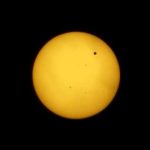
  • Transiting the midnight sun

    Transiting the midnight sun

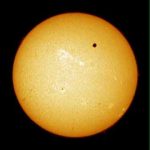
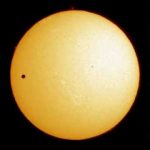
    Time lapse movie of the transit of Venus, as seen from the land of the midnight sun in Svalbard. Interference from cloud gives an eerie feel to the scene.

    Credits: ESA – Andy Oates

  • Venus Express and transit of Venus

    Venus Express and transit of Venus

    This movie was compiled from images taken by the Venus Monitoring Camera on Venus Express as it approached the planet on its elliptical orbit on 1 June 2012. Initially, the spacecraft is looking at the south side of the planet from a distance of 63 000 km and clouds can be seen moving below. As the spacecraft draws closer, Venus starts filling the field of view and the equatorial regions can be seen. The sequence finishes with observations of cloud features at high latitudes.

    Copyright: ESA/MPS/DLR/IDA

  • A Last in our Lifetime event on This Week @NASA

    A Last in our Lifetime event on This Week @NASA

    NASA Television helped observe the last transit of Venus we’ll see here on Earth until 2117 by showcasing live-streaming Websites the world over, including observations made by scientists in central Australia, by the NASA Edge team, stationed atop the Mauna Kea Observatory in Hawaii, by scientists at NASA Headquarters and other NASA Centers around the country. Also, development of technologies to enable exploration of extreme environments such as those found on Venus, The Voyage of Space Shuttle Enterprise concludes in New York, Girl Scouts Rock at NASA Headquarters, Development of inflatable spacecraft and the NASA family mourns the passing of Ray Bradbury, one of our era’s greatest and most noted science fiction/fantasy writers.

  • Girl Scouts Rock @NASA to celebrate the big 100!

    Girl Scouts Rock @NASA to celebrate the big 100!

    NASA helped mark the 100th anniversary of the Girl Scouts of America by hosting a Girl Scouts Rock@NASA event on June 8 at NASA Headquarters in Washington, D.C. NASA Deputy Administrator Lori Garver, former astronauts Heidemarie Stefanyshyn-Piper and Pam Melroy and other scientists and invited guests spoke with attendees about NASA’s missions, discoveries and careers.

    NASA and the Girl Scouts share a common goal to encourage and educate young girls about science, technology, engineering and mathematics (STEM) in exciting and innovative ways. The Girl Scouts began in 1912 with only 18 girls. Today, there are 3.2 million girls and adults who are members. In 100 years, the organization has graduated more than 59 million women in the United States.

    The event is part of the Women@NASA project, which is a continuing joint effort by NASA and the White House Council on Women and Girls to relate science, technology, engineering and math fields to young females.

  • Venus Transit seen from Longyearbyen, Spitsbergen

    Venus Transit seen from Longyearbyen, Spitsbergen

    Cloudy weather did impact on the Venus transit observations at Longyearbyen, Spitsbergen. Still most of the Venus transit could be captured.
    Credit: ESA – M. Breitfellner, M. Perez

  • Venus Transit seen from Canberra, Australia (part 2)

    Venus Transit seen from Canberra, Australia (part 2)

    Almost the whole Venus transit could be captured despite of some clouds did get into the way of those observing the Venus Transit in Canberra, Australia.
    Credit: ESA – Manuel Castillo-Fraile and Miguel Sanchez-Portal

  • Venus Transit seen from Canberra, Australia (part 1)

    Venus Transit seen from Canberra, Australia (part 1)

    Almost the whole Venus transit could be captured despite of some clouds did get into the way of those observing the Venus Transit in Canberra, Australia.
    Credit: ESA – Manuel Castillo-Fraile and Miguel Sanchez-Portal

  • Venus solar transit 2012 – Proba-2’s journey across the Sun

    Venus solar transit 2012 – Proba-2’s journey across the Sun

    This movie shows the transit of Venus on 5-6 June 2012 as seen from SWAP, a Belgian solar imager onboard ESA’s PROBA2 microsatellite. SWAP, watching the Sun in EUV light, observes Venus as a small, black circle, obscuring the EUV light emitted from the solar outer atmosphere – the corona – from 19:45UT onwards. At 22:16UT – Venus started its transit of the solar disk

    The bright dots all over the image (‘snow storm’) are energetic particles hitting the SWAP detector when PROBA2 crosses the South Atlantic Anomaly, a region where the protection of the Earth magnetic field against space radiation is known to be weaker.

    Note also the small flaring activity in the bright active region in the northern solar hemisphere as Venus passes over. Towards the end, you can see a big dim inverted-U-shape moving away from the Sun towards the bottom-right corner. This is a coronal mass ejection taking off.

    Credit: ESA/ROB

  • NASA TV Hosts 2012 Venus Transit

    NASA TV Hosts 2012 Venus Transit

    Pre-ingress coverage from NASA Headquarters in Washington, DC, of the last-in-a-lifetime event.

  • Talking Cups – Sick Science! #091

    Talking Cups – Sick Science! #091

    Read the full experiment at http://www.stevespanglerscience.com/experiment/talking-cups From the soulful crooning of an R&B singer to the deep roar of thunder, sounds are created by vibrations. So, if you’re looking to make a cup speak, you have to find a way to make it vibrate. Combining the plastic cups with a toothpick and a length of string is the first step… but how do we make it talk?

    Want more experiments like this? Check out http://www.stevespanglerscience.com/product/naked-eggs-and-flying-potatoes

    Sick Science™ is a trademark of Steve Spangler, inc.

    © 2012 Steve Spangler Science all rights reserved

  • Rocket Powered Skateboard – Sick Science! #090

    Rocket Powered Skateboard – Sick Science! #090

    Read the full experiment at http://www.stevespanglerscience.com/experiment/rocket-powered-skateboard Anyone who has tried the Mentos and Diet Coke Geyser will tell you that it is totally awesome! But how awesome would it be if you turned that geyser horizontal, strapped it to a skateboard, and made the whole thing an eruption-powered rocket car? You might not believe the amazing results.

    Want more experiments like this? Check out http://www.stevespanglerscience.com/product/naked-eggs-and-flying-potatoes

    Sick Science™ is a trademark of Steve Spangler, inc.

    © 2012 Steve Spangler Science all rights reserved

  • Earth from Space: Mississippi River Delta

    Earth from Space: Mississippi River Delta

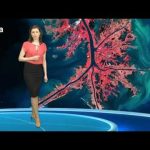
    Earth from Space is presented by Kelsea Brennan-Wessels from the ESA Web-TV virtual studios.
    In the twenty-fourth edition we look at the Mississippi River Delta, where the largest river in the United States empties into the Gulf of Mexico.

  • ESA Euronews: Desvelando los secretos de Venus

    ESA Euronews: Desvelando los secretos de Venus

    Es conocido como el lucero del alba o la estrella de la mañana, pero no es una estrella: es un planeta. Venus es, junto con Marte, nuestro vecino más cercano, y al mismo tiempo, un gran desconocido. Levantamos el velo que esconde los misterios del planeta ardiente.

  • ESA Euronews: Quand Vénus se dévoile

    ESA Euronews: Quand Vénus se dévoile

    On l’appelle l’étoile du berger ou encore l’étoile du matin, mais c’est tout sauf une étoile. C’est même une planète de notre voisinage immédiat. Vénus est, avec Mars, la plus proche planète de la Terre. Proche peut-être mais au combien différente. On commence tout juste à lever quelques pans du voile qui entoure le mystère de la planète brûlante.

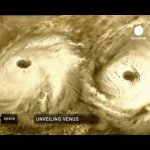
  • ESA Euronews: Unveiling Venus

    ESA Euronews: Unveiling Venus

    It can be called the morning or evening star, depending on where you are or what time it is, but it is anything but a star. In fact, it is one of our nearest planetary neighbours. Venus and Mars may be Earth’s close cousins, but they are oh-so different. Only now are we starting to peer through Venus’ clouds to reveal the burning planet’s secrets.

  • Balloon Powered Car – Sick Science! #089

    Balloon Powered Car – Sick Science! #089

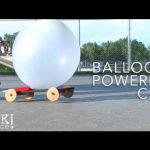
    Read the full experiment at http://www.stevespanglerscience.com/experiment/balloon-powered-race-car When it comes to powering a race car, there are a ton of different options. Some cars are powered by gasoline, diesel, or other combustible fuels, or you can even power miniature race cars using a mousetrap! In the Balloon Powered Car, we’ll show you how to build a racer that uses the power of air pressure to roll across a room.

    Want more experiments like this? Check out http://www.stevespanglerscience.com/product/fire-bubbles-exploding-toothpaste-book

    Sick Science™ is a trademark of Steve Spangler, inc.

    © 2012 Steve Spangler Science all rights reserved

  • SPACEX/NASA DISCUSS LAUNCH OF FALCON 9 ROCKET AND DRAGON CAPSULE

    SPACEX/NASA DISCUSS LAUNCH OF FALCON 9 ROCKET AND DRAGON CAPSULE

    During a press briefing at The Kennedy Space Center on May 22, SpaceX and NASA officials discussed the launch of the SpaceX Falcon 9 rocket and Dragon capsule on a demonstration flight to the International Space Station. Falcon 9 and Dragon lifted off Tuesday from Cape Canaveral Air Force Station in Florida at 3:44 a.m. EDT. On Thursday, May 24, Dragon will perform a flyby of the space station at a distance of approximately 1.5 miles to validate the operation of sensors and flight systems necessary for a safe rendezvous and approach. Following analysis of the flyby by NASA and SpaceX managers, the Dragon capsule will be cleared to rendezvous and berth with the space station on Friday, May 25, marking the first time a commercial company has attempted this feat.

  • Proba-2 catches solar eclipse

    Proba-2 catches solar eclipse

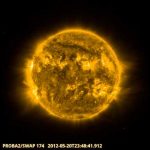
    ESA’s space weather microsatellite Proba-2 observed the solar eclipse on the evening of 20 May 2012. It passed through the Moon’s shadow a total of four times, imaging a sequence of partial solar eclipses in the process. The first contact was made on Sunday May 20 at 21:09 GMT. The last contact finished at 03:04 GMT.

    Credits: ESA/ROB