Europe’s new launcher, Ariane 6 uses liquid oxygen and hydrogen as fuel to lift it off the ground and into space. This fuel is chilled to -150°C which allows more propellant to be loaded into the rocket with more fuel from the engine.
But Ariane would not get far without the boosters that provide the most thrust by far.
In order to control the direction of Ariane 6 after launch, the nozzles on the boosters and main stage can swivel to keep it on course. This is no easy feat as Ariane 6 is 56 m tall and controlled at the bottom, so it is a careful balancing act.
Steve Spangler is a bestselling author, STEM educator and Emmy award-winning television personality with more than 2,100 television appearances to his credit. Steve appeared as a regular guest on the Ellen DeGeneres Show from 2007-2022. Learn more about Steve at https://stevespangler.com/about-steve-spangler/
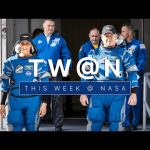
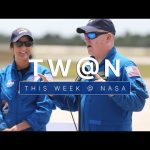
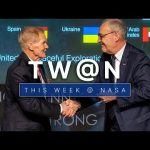
A dress rehearsal for the next commercial crew flight test, making room for another visitor at the space station, and a mission to test a next-generation solar sail … a few of the stories to tell you about – This Week at NASA!
Video Producer: Andre Valentine Video Editor: Andre Valentine Narrator: Emanuel Cooper Music: Universal Production Music Credit: NASA
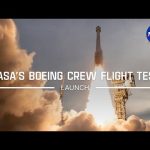
Watch live as two NASA astronauts launch from Boeing’s Starliner spacecraft as one of the final steps on the road to certification. Launch of the ULA (United Launch Alliance) Atlas V rocket and Starliner spacecraft is targeted for 10:34 p.m. EDT Monday, May 6 (0234 UTC Tuesday, May 7) from Space Launch Complex-41 at Cape Canaveral Space Force Station in Florida.
The two NASA astronauts aboard, flight commander Butch Wilmore and pilot Suni Williams, will test the end-to-end capabilities of the Starliner system, including launch, docking, and return to Earth. After a one-week stay docked to the International Space Station, the Starliner and crew will land under parachutes in the western United States.
Launch coverage on NASA+ (https://plus.nasa.gov) will end shortly after Starliner orbital insertion. NASA Television (https://nasa.gov/nasatv) will provide continuous coverage leading up to docking and through hatch opening and welcome remarks.
Steve Spangler is a bestselling author, STEM educator and Emmy award-winning television personality with more than 2,100 television appearances to his credit. Steve appeared as a regular guest on the Ellen DeGeneres Show from 2007-2022. Learn more about Steve at https://stevespangler.com/about-steve-spangler/
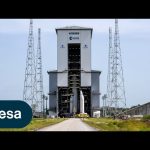
Last week, Ariane 6’s central core – the main body of the rocket – was stood tall at the launch zone and connected to its two solid-fuel boosters. This exciting moment means only one thing: it’s the start of the first launch campaign.
The main stage and upper stage make up the core stage, and they were autonomously driven at 3 km/h from the rocket assembly building to the launch pad, 800 m away. Then lifted by a crane, the Ariane 6 core was stood upright on the launch table.
The two boosters were transported to the launch pad on a specially designed truck and then configured with the rocket body, now holding it upright.
Ariane 6 is due to launch in summer 2024. The heavy-lift rocket will inaugurate a new era of autonomous European space transportation, powering Europe into space to realise its ambitions on the world stage. It will lift off from a modern launch complex at Europe’s Spaceport in French Guiana, carrying with it not just a variety of spacecraft, but also European goals for prosperity and autonomy.
Credits: ESA – European Space Agency
★ Subscribe: http://bit.ly/ESAsubscribe and click twice on the bell button to receive our notifications.
We are Europe’s gateway to space. Our mission is to shape the development of Europe’s space capability and ensure that investment in space continues to deliver benefits to the citizens of Europe and the world. Check out https://www.esa.int/ to get up to speed on everything space related.
Hold onto your hats, because Phil from Science Max is taking you for a spin! Today, we’re diving into the science of rotation – the force that makes everything from planets to playgrounds go round and round. We’ll explore centripetal force, gyroscopic wonders, and maybe even create a spinning vortex (don’t get dizzy!). Get ready for a whirlwind of science that’ll have you seeing the world in a whole new light (or maybe a little blurry)!
Steve Spangler is a bestselling author, STEM educator and Emmy award-winning television personality with more than 2,100 television appearances to his credit. Steve appeared as a regular guest on the Ellen DeGeneres Show from 2007-2022. Learn more about Steve at https://stevespangler.com/about-steve-spangler/
Astronaut training consists of three main phases: basic training, pre-assignment training and increment training.
On the 22nd April, our astronaut candidates will have completed their basic training.
They will receive their certification at our European Astronaut Centre in Cologne, Germany, officially becoming fully fledged astronauts eligible for spaceflight.
After their graduation, the astronauts will proceed to the next phases of pre-assignment and mission-specific training, where they’ll learn specific skills for their future missions to the International Space Station and beyond!
📸 ESA – European Space Agency 📹 ESA – European Space Agency
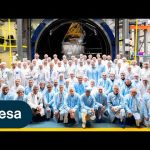
As we approach the launch of ESA’s EarthCARE mission, we caught up with some of the scientists, engineers and experts behind the mission.
With the climate crisis increasingly tightening its grip, ESA’s Earth Cloud Aerosol and Radiation Explorer mission (EarthCARE) will shed new light on the complex interactions between clouds, aerosols and radiation in Earth’s atmosphere.
EarthCARE is the largest and most complex Earth Explorer mission. It comes at a critical time in the development of kilometre-scale resolution, global climate models and will provide an important contribution to an improved understanding of cloud convection and its role in Earth’s radiation budget.
EarthCARE is an ESA mission, but it has been developed as a cooperation between ESA and JAXA, the Japanese Space Agency.
This video features interviews with: Pavlos Kollias from Stony Brook University – McGill University, Thorsten Fehr, EarthCARE Mission Scientist at ESA, Robin Hogan, Senior Scientist at ECMWF, Dirk Bernaerts, EarthCARE Project Manager at ESA, Kotska Wallace, Mission and Optical Payload Manager at ESA, Tomomi Nio, EarthCARE Mission Manager at JAXA, Eiichi Tomita, EarthCARE/CPR Project Manager at JAXA, Ulla Wandinger, Senior Scientist at Leibniz Institute for Tropospheric Research and Bjoern Frommknecht, EarthCARE Mission Manager at ESA.
Follow the EarthCARE launch campaign blog for more updates.
Credits: ESA – European Space Agency
★ Subscribe: http://bit.ly/ESAsubscribe and click twice on the bell button to receive our notifications.
We are Europe’s gateway to space. Our mission is to shape the development of Europe’s space capability and ensure that investment in space continues to deliver benefits to the citizens of Europe and the world. Check out https://www.esa.int/ to get up to speed on everything space related.
🚩 Download World of Warships today https://wo.ws/49tx5Ln and join the naval battle! Register now using code WISCONSIN and receive a huge starter pack including 500 Doubloons, 2,000,000 Credits, 10 days Premium Account time, and a free ship!
🎼 Music: Instinct – Bensound Impact Allegretto – Kevin MacLeod Crypto – Kevin MacLeod Epidemic Sound Filmstro
📚 Sources: The Seleukid Empire of Antiochus III, 223–187 BC – John D. Grainger (2015) The Rise of the Seleukid Empire, 323–223 BC: Seleukos I to Seleukos III -John D. Grainger (2014) Polybius, Histories book 5 Antiochus the Great – Michael Taylor (2013)
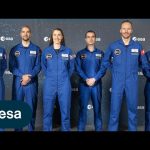
ESA’s newly graduated astronauts reach the end of one year of rigorous basic astronaut training. Discover the journey of Sophie Adenot, Rosemary Coogan, Pablo Álvarez Fernández, Raphaël Liégeois, Marco Sieber, and Australian Space Agency astronaut candidate Katherine Bennell-Pegg. Selected in November 2022, the group began their training in April 2023.
Basic astronaut training provides the candidates with an overall familiarisation and training in various areas, such as spacecraft systems, spacewalks, flight engineering, robotics and life support systems as well as survival and medical training. They received astronaut certification at ESA’s European Astronaut Centre on 22 April 2024.
Following certification, the new astronauts will move on to the next phases of pre-assignment and mission-specific training – paving the way for future missions to the International Space Station and beyond.
Credits: Video: ESA – European Space Agency ISS and EVA footage: ESA/NASA
Music: Scorekeepers
★ Subscribe: http://bit.ly/ESAsubscribe and click twice on the bell button to receive our notifications.
We are Europe’s gateway to space. Our mission is to shape the development of Europe’s space capability and ensure that investment in space continues to deliver benefits to the citizens of Europe and the world. Check out https://www.esa.int/ to get up to speed on everything space related.
Europe has a new rocket, and it’s set to launch soon 🚀
Europe’s next launch vehicle is the powerful Ariane 6. The rocket will be bigger, better, and more versatile than its predecessor.
Our daily life is becoming increasingly reliant on space to keep people and things connected for communication, banking, transport, weather forecasting and more!
Ariane 6 is ensuring Europe has continued independent and autonomous access to space.
Steve Spangler is a bestselling author, STEM educator and Emmy award-winning television personality with more than 2,100 television appearances to his credit. Steve appeared as a regular guest on the Ellen DeGeneres Show from 2007-2022. Learn more about Steve at https://stevespangler.com/about-steve-spangler/
This video takes the viewer on a journey through space to reveal a new image from the NASA/ESA/CSA James Webb Space Telescope, the Horsehead Nebula.
This zoom video features three unique views of the Horsehead Nebula, including images from as ESA’s Euclid telescope, the NASA/ESA Hubble Space Telescope’s infrared view of the object, and finally revealing the new image from Webb’s NIRCam (Near-InfraRed Camera) instrument. It is the sharpest infrared image of the object to date, showing a part of the iconic nebula in a whole new light, and capturing its complexity with unprecedented spatial resolution. You can learn more about this new image here.
Credit: ESA/Webb, NASA, CSA, K. Misselt (University of Arizona) and A. Abergel (IAS/University Paris-Saclay, CNRS) Music: Stellardrone – The Night Sky in Motion
Steve Spangler is a bestselling author, STEM educator and Emmy award-winning television personality with more than 2,100 television appearances to his credit. Steve appeared as a regular guest on the Ellen DeGeneres Show from 2007-2022. Learn more about Steve at https://stevespangler.com/about-steve-spangler/
Steve Spangler is a bestselling author, STEM educator and Emmy award-winning television personality with more than 2,100 television appearances to his credit. Steve appeared as a regular guest on the Ellen DeGeneres Show from 2007-2022. Learn more about Steve at https://stevespangler.com/about-steve-spangler/
Prelaunch Activities for Our Next Commercial Crew Flight Test, celebrating our home planet for Earth Day, and conducting high-flying science during the recent solar eclipse … a few of the stories to tell you about – This Week at NASA!
Link to download this video: https://images.nasa.gov/details/Prelaunch%20Activities%20for%20Our%20Next%20Commercial%20Crew%20Flight%20Test%20on%20This%20Week%20@NASA%20%E2%80%93%20April%2026,%202024
Video Producer: Andre Valentine Video Editor: Andre Valentine Narrator: Emanuel Cooper Music: Universal Production Music Credit: NASA
Olympus Mons has an average elevation of 22 kilometres and the caldera, or summit crater, has a depth of about 3 kilometres. The data was retrieved during orbit 143 of Mars Express on 24 February 2004. The view is looking north.
Rockets are pretty cool. Not only do they concentrate energy for MAXIMUM output, but they also help us explore space! Join Phil as he take a close look at the power of rockets!
Have you ever done a science experiment and wondered “What would this be like if it were HUGE?” Welcome to Science Max, the exciting series that turbocharges all the science experiments you’ve done at home.
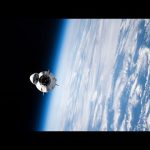
Watch as the four members of NASA’s SpaceX Crew-8 mission move their Dragon Endeavour spacecraft between docking ports on the International Space Station. Aboard are:
• NASA astronauts Matt Dominick, Mike Barratt, and Jeanette Epps • Roscosmos cosmonaut Alexander Grebenkin
The crew will undock from the forward-facing port of the station’s Harmony module at 7:45 a.m EDT (1145 AM UTC), then dock at the station’s space-facing Harmony port at 8:28 a.m. EDT (1228 UTC). The spacecraft is relocating to make room for Boeing’s Starliner spacecraft, currently scheduled to arrive in May.
Steve Spangler is a bestselling author, STEM educator and Emmy award-winning television personality with more than 2,100 television appearances to his credit. Steve appeared as a regular guest on the Ellen DeGeneres Show from 2007-2022. Learn more about Steve at https://stevespangler.com/about-steve-spangler/
At 1:47 a.m. EST (6:47 UTC) on Nov. 16, 2022, NASA’s Orion spacecraft launched atop the Space Launch System (SLS) rocket from historic Launch Pad 39B at NASA’s Kennedy Space Center on a path to the Moon, officially beginning the Artemis I mission.
Over the course of 25.5 days, Orion performed two lunar flybys, coming within 80 miles (129 kilometers) of the lunar surface. At its farthest distance during the mission, Orion traveled nearly 270,000 miles (435,000 kilometers) from our home planet. NASA’s Orion spacecraft successfully completed a parachute-assisted splashdown in the Pacific Ocean at 9:40 a.m. PST (12:40 p.m. EST) as the final major milestone of the Artemis I mission.
Artemis I set new records of performance, exceeded efficiency expectations, and established new safety baselines for humans in deep space. This is a prelude to what comes next—following the success of Artemis I, human beings will fly around the Moon on Artemis II.
This video takes the viewer on a journey to the 34th anniversary image of the launch of the legendary NASA/ESA Hubble Space Telescope: the Little Dumbbell Nebula (also known as Messier 76, M76, or NGC 650/651). The object is located 3400 light-years away in the northern circumpolar constellation Perseus. The photogenic nebula is a favourite target of amateur astronomers.
Credit: NASA, ESA, STScI, A. Pagan (STScI) Acknowledgment: D. Crowson, A. Fujii, Digitized Sky Survey.
ESA’s newly graduated astronauts reach the end of one year of rigorous basic astronaut training. Watch the key moments during the journey of Sophie Adenot, Rosemary Coogan, Pablo Álvarez Fernández, Raphaël Liégeois, Marco Sieber, and Australian Space Agency astronaut candidate Katherine Bennell-Pegg. Selected in November 2022, the group began their training in April 2023.
Basic astronaut training provides the candidates with an overall familiarisation and training in various areas, such as spacecraft systems, spacewalks, flight engineering, robotics and life support systems as well as survival and medical training. They received astronaut certification at ESA’s European Astronaut Centre on 22 April 2024.
Following certification, the new astronauts will move on to the next phases of pre-assignment and mission-specific training – paving the way for future missions to the International Space Station and beyond.
Credits: ESA – European Space Agency ESA/NASA NASA ESA/Royal Netherlands Air Force
★ Subscribe: http://bit.ly/ESAsubscribe and click twice on the bell button to receive our notifications.
We are Europe’s gateway to space. Our mission is to shape the development of Europe’s space capability and ensure that investment in space continues to deliver benefits to the citizens of Europe and the world. Check out https://www.esa.int/ to get up to speed on everything space related.
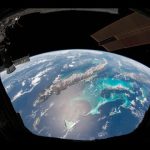
Each year on 22 April, people across the planet join forces to raise awareness about the depleting quality of the environment, the unequivocal effects of climate change and the importance of protecting our planet for future generations. We celebrate Earth Day every day at ESA. This week, this spectacular image of Earth is brought to you by the Meteosat Second Generation series of missions.
Music: First Survivors 4 by Los Angeles-based British composer, Luke Richards. Sourced from Audio Network Limited.
Steve Spangler is a bestselling author, STEM educator and Emmy award-winning television personality with more than 2,100 television appearances to his credit. Steve appeared as a regular guest on the Ellen DeGeneres Show from 2007-2022. Learn more about Steve at https://stevespangler.com/about-steve-spangler/
Watch the replay as ESA astronaut candidates Sophie Adenot, Rosemary Coogan, Pablo Álvarez Fernández, Raphaël Liégeois, Marco Sieber and Australian Space Agency astronaut candidate Katherine Bennell-Pegg receive astronaut certification at ESA’s European Astronaut Centre. This officially marks their transition into fully-fledged astronauts, ready and eligible for spaceflight.
The group was selected in November 2022 and began their year-long basic astronaut training in April 2023.
Basic astronaut training provides the candidates with an overall familiarisation and training in various areas, such as spacecraft systems, spacewalking, flight engineering, robotics and life support systems, as well as survival and medical training.
Following certification, the new astronauts will move on to the next phases of pre-assignment and mission-specific training, paving the way for future missions to the International Space Station and beyond.
Chapters: 00:00 – 05:14 – Stay tuned 05:15 – 07:05 – Event 07:06 – 16:46 – Statement from Josef Aschbacher, ESA Director General 16:47 – 21:35 – Statement from Daniel Neuenschwander, Director of Human and Robotic Exploration 21:36 – 24:40 – Statement from Frank De Winne, Head of ESA’s European Astronaut Centre 24:41 – 31:35 – Event 31:36 – 36:35 – ESA astronaut class of 2022 graduation ceremony 36:36 – 40:10 – Statement from Enrico Palermo, Head of the Australian Space Agency 40:11 – 41:03 – Katherine Bennell-Pegg graduation ceremony 41:04 – 44:40 – Statement from Thomas Dermine, State Secretary for Economic Recovery and Strategic Investments 44:41 – 56:20 – Live Q&A 56:21 – 57:15 End of event
Credits: ESA – European Space Agency
★ Subscribe: http://bit.ly/ESAsubscribe and click twice on the bell button to receive our notifications.
We are Europe’s gateway to space. Our mission is to shape the development of Europe’s space capability and ensure that investment in space continues to deliver benefits to the citizens of Europe and the world. Check out https://www.esa.int/ to get up to speed on everything space related.
🚩 Sebastian, the king of the ever expanding Portuguese empire, wished to impose Christian rule over Muslim Morocco. He landed in Tangier with 23,000 troops and modern artillery. But the Moroccan forces, though not as well equipped, numbered over 50,000 men. Led by the determined Sultan Abd al-Malik, defeating the the Muslims would present the greatest challenge yet to the Portuguese overseas expansion… 🚩 Upon your requests I merged all parts of this mini-series for more convenient viewing. I hope you’ll enjoy the show!
Phil blasts off with Science Max on a fizzy rocket ride! We’re using an antacid to launch a homemade rocket, and the science behind it won’t fizzle out. Get ready for a chemical reaction that’ll propel you to new heights (well, maybe your desk) and learn about acids, bases, and the power of gas! Buckle up, because this experiment is sure to erupt with excitement!
More partners in space exploration, new data measuring ocean health, air quality and our climate, and an upgrade to testing facilities for Artemis II … a few of the stories to tell you about – This Week at NASA!
Steve Spangler is a bestselling author, STEM educator and Emmy award-winning television personality with more than 2,100 television appearances to his credit. Steve appeared as a regular guest on the Ellen DeGeneres Show from 2007-2022. Learn more about Steve at https://stevespangler.com/about-steve-spangler/
Asigură-ți confidețialitatea cu Surfshark! Introdu codul “presura” pentru 3 luni extra gratuite, de la Surfshark:👇 https://surfshark.deals/presura
00:00:00 – Ce spun cei care cred că Pământul este plat? 00:01:40 – Cum se contrazic cei ce susțin că pământul este plat? 00:03:57 – De ce nu e pământul plat? 00:04:44 – Cum poți vedea TU că Pământul este sferic și nu plat? 00:05:51 – reclama sponsor SurfShark 00:07:26 – Pământul nu e plat!
#ad #stiinta #fizica #science #tehnologie #technology #cristianpresura algoritm:”Susținătorii teoriei Pământului plat prezintă o viziune radical diferită asupra formei planetei noastre, afirmând că Pământul este plat, asemănându-se cu o pășune cu Polul Nord în centrul său, iar marginile exterioare sunt înconjurare de un zid de gheață arctică. Această afirmație contrastează puternic cu înțelegerea științifică larg acceptată că Pământul este un corp sferic. Această neînțelegere se extinde la credința lor că dincolo de zidul de gheață se află teritorii necunoscute, deși expediții istorice precum cea transatlantică din 1955 au traversat Antarctica, trecând prin Polul Sud și demonstrând accesibilitatea acestui continent.
Susținătorii teoriei Pământului plat cred și că Luna și Soarele se mișcă deasupra Pământului plat, la câteva mii de kilometri deasupra, în contradicție cu distanța recunoscută științific de 150 de milioane de kilometri până la Soare. Ei susțin că mișcarea Soarelui determină ziua și noaptea, ignorând faptul că rotația Pământului sferic în jurul axei sale este responsabilă pentru alternanța dintre zi și noapte.
Un alt element al teoriei lor este că Pământul plat este acoperit de un dom înalt de câteva sute de kilometri, un dom pe care nimeni nu l-a atins, în ciuda faptului că sateliții sunt lansați regulat la altitudini mult mai mari, fără să întâmpine niciun obstacol fizic. Ei mai cred că aproape de partea superioară a domului există o masă gelatinoasă, similară piftiei, în timp ce în realitate, atmosfera se rarefiază pe măsură ce altitudinea crește, fără a exista vreo substanță de această natură.
Despre stele, susținătorii teoriei afirmă că sunt simple lumini pe cer și că gravitația nu există, în timp ce știința modernă demonstrează că stelele sunt sori îndepărtați și că gravitația este forța care guvernează mișcările orbitale ale planetelor. Ei contestă autenticitatea fotografiilor spațiale furnizate de NASA, susținând că sunt falsificate și înlocuindu-le cu ilustrații generate pe calculator.
În plus, susținătorii teoriei Pământului plat nu pot explica fenomene observabile cum ar fi durata diferită a zilei între emisfere, vizibilitatea diferită a constelațiilor sau comportamentul corpurilor ceresti la răsărit și la apus, care sunt consistente cu un Pământ sferic.
Astfel, teoria Pământului plat rămâne profund în contradicție cu dovezi științifice bine stabilite și observații repetate, care confirmă fără îndoială sfericitatea Pământului. Această teorie este mai mult un exercițiu de gândire critică și scepticism decât o ipoteză susținută de dovezi empirice. În concluzie, Pământul nu este plat; el este demonstrabil și vizibil o sferă.”
Live from our Headquarters in Washington, we’re hosting a media briefing ahead of Earth Day 2024 to share information about NASA’s climate research.
We’ll discuss new airborne science flights, our latest Earth science strategy, and to share data from our newest Earth-observing satellite, PACE, which stands for Plankton, Aerosol, Cloud, and Ocean Ecosystem.
Steve Spangler is a bestselling author, STEM educator and Emmy award-winning television personality with more than 2,100 television appearances to his credit. Steve appeared as a regular guest on the Ellen DeGeneres Show from 2007-2022. Learn more about Steve at https://stevespangler.com/about-steve-spangler/
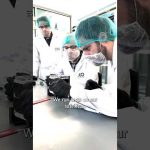
There’s a key milestone in the development of a satellite: integration. 🛰✅
🎓 Join ISTSat-1 and ³Cat-4 #student teams as they integrate their satellites with the deployer in preparation for launch this summer!
🚀 This exciting experience is part of our Fly Your Satellite! programme, which gives tertiary education students the chance to design, build, test and launch a #satellite.