Have you ever done a science experiment and wondered “What would this be like if it were HUGE?” Welcome to Science Max, the exciting new series that turbocharges all the science experiments you’ve done at home.
What we found in some historic asteroid samples, discussing a record-breaking spaceflight, and our Psyche spacecraft sets sail to study a unique asteroid … a few of the stories to tell you about – This Week at NASA!
Link to download this video: https://images.nasa.gov/details/What%20We%20Found%20in%20Some%20Historic%20Asteroid%20Samples%20on%20This%20Week%20@NASA%20%E2%80%93%20October%2013,%202023
Video Producer: Andre Valentine Video Editor: Andre Valentine Narrator: Andre Valentine Music: Universal Production Music Credit: NASA
Steve Spangler is a bestselling author, STEM educator and Emmy award-winning television personality with more than 2,100 television appearances to his credit. Steve appeared as a regular guest on the Ellen DeGeneres Show from 2007-2022. Learn more about Steve at https://stevespangler.com/about-steve-spangler/
2409 new objects were launched into space in 2022, that’s more than ever before.
Last year though, also saw a record number of satellites reenter Earth’s atmosphere.
The rising number of reentries is not necessarily a bad thing. Disposing of satellites efficiently is one of the most important things for keeping low-Earth orbits safe.
However, most objects reenter in an uncontrolled manner: they are switched off at the end of their mission and left to fall and burn up in Earth’s atmosphere.
There is good news though. Advancing technology has seen a recent increase in “controlled reentries” for rocket bodies. A controlled reentry allows operators to remove their hardware from protected regions more quickly and with greater control over where, when and how it reenters – and even lands – at the cost of allocating some fuel to do so.
By the way, just because an older satellite wasn’t designed to be controlled during its descent doesn’t mean it’s impossible to do so. In July 2023, our teams guided the Aeolus satellite to burn up over uninhabited regions in the Atlantic and Antarctica, even though the satellite was designed in the late 1990s with no intention to control it in this way.
Celebrating 65 years, NASA is a symbol of human creativity and exploration. NASA has consistently pushed boundaries, from the historic Apollo missions that landed the first humans on the Moon to the Space Shuttle program that built the International Space Station. Missions like Landsat and Cassini have deepened our understanding of Earth and our solar system. With NASA launching the James Webb Space Telescope, the future holds even more exciting discoveries. Throughout all these adventures, NASA’s commitment to exploration and science continues to lead the way.
Today, the Artemis missions herald a new chapter, aiming to return humanity to the Moon and laying robust foundations for expeditions to Mars and beyond. As we honor NASA’s storied past, we anticipate a future filled with discoveries, technologies, and deep-space exploration encouraged by a new generation of dedicated explorers. Here’s to NASA, commemorating 65 years of cosmic exploration, innovation, and the undying quest to expand our universal frontier.
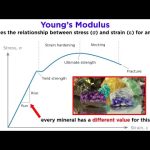
Now that we’ve briefly gone over the history of the Earth, it’s time to look at some different geologic structures that span all those eons. This will require gaining an understanding of rock deformation. We need to discuss the terms stress and strain, as well as Young’s modulus, which describes their relationship. From there we can describe the different types of rock deformation. Let’s go!
Ever wondered if there was a more environmentally friendly plastic; why not make it yourself? Follow along and learn how to make biodegradable plastic at home. What will you make; the possibilities are endless! #ScienceMax #Science #ScienceExperiments #sciencefacts #AtHomeCrafts #diy #AtHomeExperiment #funexperimentforkids #easyexperimentforkids #easyexperiments #plastic #biodegradable_plastic
(🔔) Subscribe to Science Max for New Videos ▶▶ https://www.youtube.com/@ScienceMax?sub_confirmation=1
Have you ever done a science experiment and wondered “What would this be like if it were HUGE?” Welcome to Science Max, the exciting new series that turbocharges all the science experiments you’ve done at home.
Horațiu Năstase este un fizician și profesor în cadrul grupului de Teoria corzilor de la Institul de Fizica Teoretica al Universității de Stat Sao Paulo, Brazilia. A intrat in atenția presei în 2005, susținând că teoria corzilor ar putea fi testată experimental, folosind corespondența AdS/CFT.
Steve Spangler is a bestselling author, STEM educator and Emmy award-winning television personality with more than 2,100 television appearances to his credit. Steve appeared as a regular guest on the Ellen DeGeneres Show from 2007-2022. Learn more about Steve at https://stevespangler.com/about-steve-spangler/
The first asteroid sample collected in space by a U.S. spacecraft and brought to Earth is unveiled to the world at NASA’s Johnson Space Center in Houston on Wednesday, Oct. 11.
The science team from NASA’s OSIRIS-REx (Origins, Spectral Interpretation, Resource Identification and Security – Regolith Explorer) mission will provide results from an initial analysis of the sample, which landed on Sunday, Sept. 24, in the Utah desert. News conference participants include:
• NASA Administrator Bill Nelson • Lori Glaze, NASA Planetary Directorate Science Division Director • Dante Lauretta, OSIRIS-REx principal investigator, University of Arizona, Tucson • Francis McCubbin, OSIRIS-REx Head Astromaterials curator, NASA Johnson • Daniel Glavin, OSIRIS-REx sample analysis lead, NASA Goddard Space Flight Center, Greenbelt
Scientists worldwide will study the bits of asteroid to gather clues about the origin of the solar system and how life may have begun on Earth.
🚩 Skip the waitlist and invest in blue-chip art for the very first time by signing up for Masterworks: https://www.masterworks.art/historymarche Purchase shares in great masterpieces from artists like Pablo Picasso, Banksy, Andy Warhol, and more. 🚩 See important Masterworks disclosures: https://www.masterworks.com/cd
🚩 In the early 10th century, Britain was divided. Several Kings and Earls vied for land and power. King Athelstan brought together the Anglo-Saxons against a newly formed Celtic/Norse army. A defeat for Athelstan would cause the fledgling Kingdom of England to disintegrate. A victory, would ensure its survival.
Nestled between the colossal martian ‘Grand Canyon’ (Valles Marineris) and the tallest volcanoes in the Solar System (the Tharsis region) lies Noctis Labyrinthus – a vast system of deep and steep valleys that stretches out for around 1190 km (roughly the length of Italy here on Earth).
This video visualises a flight over the eastern part of Noctis Labyrinthus as seen by Mars Express’s High Resolution Stereo Camera (HRSC). It presents a perspective view down and across this fascinating landscape, showing distinctive ‘graben’ – parts of the crust that have subsided in relation to their surroundings. The intense volcanism in the nearby Tharsis region is to blame for the formation of these features; this volcanism caused large areas of martian crust to arch upwards and become stretched and tectonically stressed, leading to it thinning out, faulting and subsiding.
The highest plateaus seen here represent the original surface level before chunks of surface fell away. The intersecting canyons and valleys are up to 30 km wide and six km deep. In many places, gigantic landslides can be seen covering the valley slopes and floors, while other valley slopes show large dune fields created by sands blown both down and upslope by martian winds.
ESA has highlighted Mars Express images of Noctis Labyrinthus before, in 2006 and 2015. Mars Express has orbited the Red Planet since 2003, imaging Mars’s surface, mapping its minerals, studying its tenuous atmosphere, probing beneath its crust, and exploring how various phenomena interact in the martian environment. For more from the mission and HRSC, see ESA’s Mars Express releases.
Processing notes: The video was created using an image mosaic built over eight orbits (0442, 1085, 1944, 1977, 1988, 10497, 14632 and 16684) by ESA’s Mars Express and its HRSC. This mosaic is combined with topographic information from a digital terrain model to generate a three-dimensional landscape, with every second of the video comprising 50 separate frames rendered according to a pre-defined camera path. The opening credits (Mars globe, first 24 seconds) were created using the recent 20-year Mars global colour mosaic; this opening sequence has a three-fold vertical exaggeration, while the subsequent flight animation has a 1.5-fold exaggeration. Haze has been added to conceal the limits of the terrain model, and starts building up at distance of between 150 and 200 km. The video is centred at the martian coordinates of 7°S, 265°E.
Alt-text: The video begins on a rotating full-globe of Mars, with white polar caps and mottled tan surface visible. It then zooms in on the westernmost part of the large Valles Marineris canyon system, a region highlighted by a white box, and swaps to a new Mars Express visualisation of Noctis Labyrinthus. The camera then flies slowly across a landscape that is broken apart by deep intersecting valleys and canyons.
Credit: ESA/DLR/FU Berlin & NASA/JPL-Caltech/MSSS, CC BY-SA 3.0 IGO
★ Subscribe: http://bit.ly/ESAsubscribe and click twice on the bell button to receive our notifications.
We are Europe’s gateway to space. Our mission is to shape the development of Europe’s space capability and ensure that investment in space continues to deliver benefits to the citizens of Europe and the world. Check out https://www.esa.int/ to get up to speed on everything space related.
Steve Spangler is a bestselling author, STEM educator and Emmy award-winning television personality with more than 2,100 television appearances to his credit. Steve appeared as a regular guest on the Ellen DeGeneres Show from 2007-2022. Learn more about Steve at https://stevespangler.com/about-steve-spangler/
Today, our Gaia mission releases a goldmine of knowledge about our galaxy and beyond. Among other findings, the star surveyor surpasses its planned potential to reveal half a million new and faint stars in a massive cluster, identify over 380 possible cosmic lenses, and pinpoint the positions of more than 150 000 asteroids within the Solar System.
Multumim Surfshark pentru sponsorizarea acestui videoclip. Introdu codul “Presura” pentru pentru o oferta exclusiva si inca 3 luni gratuite.👇 https://surfshark.deals/presura
00:00 Universul 01:29 Stele din materie intunecata 03:51 Antimateria cade pe suprafata Pamantului 07:00 Cum s-au format inelele lui Saturn? 08:10 Ti-am dat un inel! 09:11 Cerul rosu
Steve Spangler is a bestselling author, STEM educator and Emmy award-winning television personality with more than 2,100 television appearances to his credit. Steve appeared as a regular guest on the Ellen DeGeneres Show from 2007-2022. Learn more about Steve at https://stevespangler.com/about-steve-spangler/
– Moon and Venus Conjunction (10 October): Don’t miss the stunning alignment of the Moon and Venus, only 3.2º apart.
– New Moon & Annular Solar Eclipse (14 October): It’s a double treat! The New Moon at 17:56 UTC sets the stage for an annular solar eclipse visible in several countries.
– Orionids Meteor Shower (21-22 October): Prepare for a meteor shower extravaganza with the peak on October 22.
– Venus at Greatest Western Elongation (23 October): Venus shines its brightest, 46.4º west of the Sun, and becomes the third brightest object in the sky.
– Partial Lunar Eclipse & Full Moon (28-29 October): Experience the beauty of a partial lunar eclipse while capturing the Full Moon’s magic.
– Moon and Jupiter Conjunction (29 October): End the month with a celestial embrace as Jupiter passes 3.1º south of the Moon.🌠
Want to learn how to magically pour the perfect glass of water? It’s not wizardly just awesome science! #ScienceMax #Science #ScienceExperiments #Shorts #sciencefacts #sciencefacts
Have you ever done a science experiment and wondered “What would this be like if it were HUGE?” Welcome to Science Max, the exciting new series that turbocharges all the science experiments you’ve done at home.
Steve Spangler is a bestselling author, STEM educator and Emmy award-winning television personality with more than 2,100 television appearances to his credit. Steve appeared as a regular guest on the Ellen DeGeneres Show from 2007-2022. Learn more about Steve at https://stevespangler.com/about-steve-spangler/
On Saturday, Oct. 14, 2023, the Moon will pass between the Earth and Sun, giving people across the United States an opportunity to see an annular solar eclipse, also known as a “ring of fire” eclipse. Lance Bass has some safety tips to share so that you don’t say “Bye, Bye, Bye” to your vision.
WARNING: During an annular eclipse, it is never safe to look directly at the Sun without specialized eye protection designed for solar viewing. Don’t be a space cowboy – learn how to safely view an eclipse: https://go.nasa.gov/EclipseEyeSafety
Not in the path of the eclipse? Watch with us from anywhere in the world. We will provide live broadcast coverage on Oct. 14 from 11:30 a.m. to 1:15 p.m. EDT (1530-1715 UTC) on NASA TV, NASA.gov, the NASA app, and right here on YouTube: https://youtube.com/live/LlY79zjud-Q
This “ring of fire” eclipse will be visible along a narrow path stretching from Oregon to Texas in the U.S. Outside this path, people across the contiguous U.S. – as well as Puerto Rico and parts of Alaska and Hawaii – will be able to see a partial solar eclipse, when part of the Sun is covered by the Moon without creating the ring of fire effect.
Steve Spangler is a bestselling author, STEM educator and Emmy award-winning television personality with more than 2,100 television appearances to his credit. Steve appeared as a regular guest on the Ellen DeGeneres Show from 2007-2022. Learn more about Steve at https://stevespangler.com/about-steve-spangler/
🚩 Basil had successfully stabilized the empire after the civil war, exacerbated by the conflict with the Fatimids in Syria. Samuel of Bulgaria took advantage of the situation to invade the Byzantine Empire in the west. Meanwhile, the Fatimids were preparing to push Romans out of Syria. Emperor Basil now faced a fight on two fronts against two formidable opponents. In this episode we will show the Battle of Spercheios (997 AD) and the Battle of Apamea (998 AD), as Basil tries to organize his army to stave off multiple incursions into Byzantine territory.
Need a study break? Science Max’s got your back with an awesome compilation of the best at home experiments from season 3. Grab your safety goggles, ready and science! #ScienceMax #Science #ScienceExperiments #backtoschool #sciencefacts #AtHomeCrafts #diy #AtHomeExperiment #funexperimentforkids
(🔔) Subscribe to Science Max for New Videos ▶▶ https://www.youtube.com/@ScienceMax?sub_confirmation=1
Have you ever done a science experiment and wondered “What would this be like if it were HUGE?” Welcome to Science Max, the exciting new series that turbocharges all the science experiments you’ve done at home.
Steve Spangler is a bestselling author, STEM educator and Emmy award-winning television personality with more than 2,100 television appearances to his credit. Steve appeared as a regular guest on the Ellen DeGeneres Show from 2007-2022. Learn more about Steve at https://stevespangler.com/about-steve-spangler/
Astronauts on the International Space Station do a full circle of Earth every 90 minutes and experience 16 sunsets and sunrises every day.
With this unearthly routine, astronauts can struggle to find a natural daily rhythm in space.
The Space Station follows Greenwich Mean Time (GMT), which helps keep a consistent schedule, along with regular wake-up and bedtime routines.
During his Huginn mission, our astronaut Andreas Mogensen will run two experiments focusing on sleeping in space with real world applications: Circadian Light and Sleep in Orbit.
📹 ESA – European Space Agency 📸 SAGA Space Architects
Steve Spangler is a bestselling author, STEM educator and Emmy award-winning television personality with more than 2,100 television appearances to his credit. Steve appeared as a regular guest on the Ellen DeGeneres Show from 2007-2022. Learn more about Steve at https://stevespangler.com/about-steve-spangler/
Steve Spangler is a bestselling author, STEM educator and Emmy award-winning television personality with more than 2,100 television appearances to his credit. Steve appeared as a regular guest on the Ellen DeGeneres Show from 2007-2022. Learn more about Steve at https://stevespangler.com/about-steve-spangler/
Have you ever done a science experiment and wondered “What would this be like if it were HUGE?” Welcome to Science Max, the exciting new series that turbocharges all the science experiments you’ve done at home.
Our first asteroid sample return mission is back on Earth, a record ride in space for a NASA astronaut, and our Artemis II mission is making prelaunch progress … a few of the stories to tell you about – This Week at NASA!
Link to download this video: https://images.nasa.gov/details/Our%20First%20Asteroid%20Sample%20Return%20Mission%20is%20Back%20on%20Earth%20on%20This%20Week%20@NASA%20%E2%80%93%20September%2029,%202023
Video Producer: Andre Valentine Video Editor: Andre Valentine Narrator: Andre Valentine Music: Universal Production Music Credit: NASA
Steve Spangler is a bestselling author, STEM educator and Emmy award-winning television personality with more than 2,100 television appearances to his credit. Steve appeared as a regular guest on the Ellen DeGeneres Show from 2007-2022. Learn more about Steve at https://stevespangler.com/about-steve-spangler/
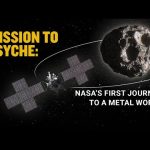
There are millions of asteroids in our solar system, so why is NASA going to the asteroid Psyche? Scientists think this particular asteroid, which orbits the Sun between Mars and Jupiter, could be part of the metal-rich interior of a planetesimal, a building block of the rocky planets in our solar system. Visiting Psyche and studying it up close could help us understand how planets like Mercury, Venus, Earth, and Mars came to be.
Join us on the journey to the first metal-rich asteroid humankind has ever visited. The Psyche mission is set to launch as early as Oct. 12, 2023. Watch live launch commentary at https://www.youtube.com/nasa.
1. Mars has two moons, Phobos and Deimos. They are both too light for gravity to make them spherical.
2. It has the highest volcano in the Solar System, the Olympus Mons. It rises 25 kilometres above the surrounding plain: Mount Everest is only one third as high.
3. The air is 100 times thinner than on Earth, and mostly made up of carbon dioxide. Human explorers will have to wear oxygen masks and special suits every time they step outside their sealed homes.
4. Like Earth, the Red Planet has two large ice caps at its north and south poles.
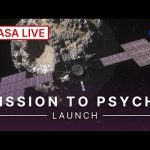
Watch the Psyche spacecraft launch from NASA’s Kennedy Space Center in Florida on a SpaceX Falcon Heavy rocket. Targeted to launch on Oct. 12, 2023, at 10:16 a.m. EDT. The mission to Psyche will take us on a journey to a metal-rich asteroid.
During this mission we will be researching the largest metallic object in the solar system, how planets form and testing high-speed laser communications with Deep Space Optical Communications (DSOC) technology.