Media and interested members of the public joined Rosetta mission experts online on Friday, 7 November for a briefing ahead of the historic comet landing on 12 November.
Programme:
Introduction: Emily Baldwin, ESA space science editor
Overview of media events: Jocelyne Landeau-Constantin, Head of ESOC communication office
Science from Rosetta so far: Matt Taylor, ESA Rosetta project scientist
Spacecraft status and operations timeline: Andrea Accomazzo, ESA Rosetta flight director
Key messages: Fred Jansen, ESA Rosetta mission manager
Q&A: all
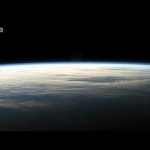
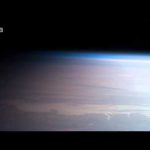
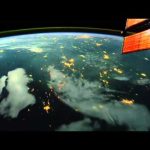
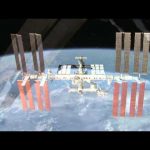
This timelapse video from space has it all: an orbit of Earth with lightning and aurora, followed by a space sunrise and daytime views of our cloudy planet. The images were taken by ESA astronaut Alexander Gerst as he orbited Earth on the International Space Station at around 400 km altitude. The nighttime video shows a Soyuz spacecraft that ferries the astronauts to the outpost. At the end of the video green aurora can be seen as Earth’s interacts with solar radiation.
The International Space Station travels at 28 800 km/h meaning that it only takes 90 minutes to circle Earth completely. Each orbit the Station moves around 2200 km to the West in relation to 90 minutes before.
Astronauts often use normal consumer digital cameras to take pictures of Earth through Europe’s observatory module Cupola in their spare time. Setting the camera to take an image every few seconds and then playing the images back quickly create this timelapse effect.
Alexander worked as a geophysicist and volcanologist before he was chosen as an ESA astronaut in 2009. His Blue Dot mission includes an extensive scientific programme of experiments in physical science, biology, and human physiology as well as radiation research and technology demonstrations. All experiments chosen make use of the out-of-this-world laboratory to improve life on Earth or prepare for further human exploration of our Solar System.
It takes 90 minutes for an astronaut on the International Space Station to circle Earth completely, passing from daytime to nighttime and back again. This video taken by ESA astronaut Alexander Gerst shows the view from space in under one minute. Each orbit the Station moves around 2200 km to the West in relation to 90 minutes before.
Astronauts often use normal consumer digital cameras to take pictures of Earth through Europe’s observatory module Cupola in their spare time. Setting the camera to take an image every few seconds and then playing the images back quickly create this timelapse effect.
Alexander worked as a geophysicist and volcanologist before he was chosen as an ESA astronaut in 2009. His Blue Dot mission includes an extensive scientific programme of experiments in physical science, biology, and human physiology as well as radiation research and technology demonstrations. All experiments chosen make use of the out-of-this-world laboratory to improve life on Earth or prepare for further human exploration of our Solar System.
The Asteroid Impact and Deflection Assessment (AIDA) study examines ways to potentially deflect asteroids from trajectories that could lead to them impacting Earth. The Johns Hopkins University Applied Physics Laboratory would work with NASA and ESA on the mission, which includes two independent spacecraft: an impactor (to be built by APL for NASA) and an impact monitor (to be built by ESA).
The target of this mission is the binary asteroid system Didymos. The impactor would strike the smaller secondary of Didymos, while the monitor would observe and measure any change in the relative orbit.
Annotated version of the Philae’s mission at comet 67P animation.
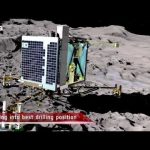
The animation begins with the deployment of Philae from Rosetta at comet 67P/Churyumov–Gerasimenko in November 2014. It will take several hours for it to reach the surface. Because of the comet’s extremely low gravity, landing gear will absorb the small forces of landing while ice screws in the probe’s feet and a harpoon system will lock the probe to the surface. At the same time a thruster on top of the lander will push it down to counteract the impulse of the harpoon imparted in the opposite direction.
Once it is anchored to the comet, the lander will begin its primary science mission, based on its 64-hour initial battery lifetime. The animation shows a number of the science instruments in action on the surface.
Rosetta’s Philae lander is provided by a consortium led by DLR, MPS, CNES and ASI.
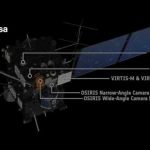
Animation highlighting the imaging and spectroscopy instruments on ESA’s Rosetta spacecraft. The animation focuses on the wavelengths and the fields of view of the Alice, MIRO, OSIRIS and VIRTIS instruments.
During a July 31 briefing at NASA headquarters, agency officials announced seven science instruments, out of fifty-eight proposed, have been selected to be part of the next rover NASA will send to Mars in 2020. The Mars 2020 rover will be a new version of the Curiosity rover currently operating on Mars – with more sophisticated hardware to conduct unprecedented science and exploration technology investigations, including geological assessments, habitability of the environment and searching for signs of past life on the Red Planet.
Long, long ago men and women on Earth gazed in wonder at comets that appeared in the sky. What where these mysterious objects? Rosetta and Philae learn about the history of comets from their grandfather, Giotto.
Topic:- Artificial Intelligence (Malayalam) By Ashish Jose
Seminar Organized By :- Freethinkers Facebook Group (https://www.facebook.com/groups/ftkerala4)
Venue :- C Achutha Menon Hall
Date :- 16-02-2014
We’ve found a method to take our famous Naked Egg experiment to a new level. By dropping your Naked Eggs into Karo corn syrup or water, you’ll witness eggs that have the strange ability to grow and shrink. It’s all an investigation into chemical reactions and permeability that is fun and engaging.
From the Tanegashima Space Center near the southernmost tip of Japan, NASA and the Japanese Aerospace Exploration Agency (JAXA) launched a joint mission to study global measurements of rainfall and snowfall abroad JAXA’s H-IIA rocket. The Global Precipitation Measurement (GPM) Core Observatory is a new NASA built science satellite that will link data from a constellation of current and planned satellites and produce the most precise observations of rain and snow every three hours from anywhere on the globe. The GPM Core Observatory will fly 253 miles (407 kilometers) above Earth in an orbit inclined at 65-degrees to the equator and will begin normal operations in about 60 days after launch. Data will be downlinked through NASA’s Tracking and Data Relay Satellite System to the agency’s Goddard Space Flight Center’s Precipitation Processing Center in Greenbelt, Md., where it will be processed and distributed over the Internet.
How real is the threat of an asteroid hitting Earth, and is there anything we can do to prevent it from happening? Asteroid impacts are nothing new. Only last year, one exploded over the city of Chelyabinsk in Russia injuring 1500 people and damaging some 7,000 buildings.
“It was a pretty nasty event, luckily nobody was killed, but it just shows the sort of force that these things have,” says Alan Harris, Senior Scientist, DLR Institute of Planetary Research Berlin.
While there was surprise nobody saw it coming, the asteroid itself wasn’t that big, measuring no more than 20 metres across. It was tricky to spot, arriving into Earth’s atmosphere backlit by the Sun.
In fact, much bigger threats lurk out in space. Just a few days ago another asteroid 270 metres wide passed near Earth. That kind of object could cause much more damage.
“Something with the size of a hundred metres for instance, which still isn’t very big, you’re talking about something that would fit into a football field, and that could actually completely destroy an urban area in the worst case. So those are the things that we’re really looking out for, and that we’re trying to find ways to tackle,” says Harris.
Action to address the asteroid threat is already underway. Earlier in February, space scientists and policy experts from all the major space-faring nations held talks to create a framework for action.
There’s something very important about oil that you need to know: oil doesn’t mix with water! That’s why oil spills in the ocean float on the surface and why throwing water on a grease fire is just going to make the fire worse. Now that you recognize that oil and water just don’t mix, let’s have some fun with them.
How does an astronaut return to Earth from the International Space Station? What does it feel like to re-enter the atmosphere? How does the Soyuz capsule function? Watch and find out. This video is based on an actual lesson delivered to the ESA astronaut class of 2009 (also known as the #Shenanigans09) during their ESA Basic Training. It features interviews with astronauts who have flown on the Soyuz and dramatic footage of actual landings.
Produced by the ESA Human Spaceflight and Operations (HSO) Astronaut Training Division, Cologne, Germany, in collaboration with the HSO Strategic Planning and Outreach Office, Noordwijk, The Netherlands, with special support from Roskosmos.
Content Design: Stephane Ghiste, Dmitriy Churkin, Raffaele Castellano, Matthew Day (HSO-UT)
Animation & Video Editing: Raffaele Castellano (HSO-UT), HSO-K
Project Coordination: Matthew Day, Stephane Ghiste, Dmitriy Churkin (HSO-UT)
Special thanks to:
Martin Schweiger (Orbiter software: http://orbit/medphys.ucl.ac.uk/)
Nikita Vtyurin, Andrew Thielmann (Orbiter Soyuz model)
Lionel Ferra (HSO-UT)
Oleg Polovnikov (HSO-UT)
Frank De Winne (HSO-A)
Paolo Nespoli (HSO-A)
Antonio Rodenas Bosque (HSO-UT)
NASA
ROSCOSMOS
S.P. Korolev Rocket and Space Corporation Energia
Aerospace Search and Rescue Service of the Russian Federation
Parachute footage: Cambridge University Spaceflight
Surfer footage: copyright Red Bull Media House
Footage from inside Soyuz capsule courtesy of RSC Energia has limited rights:
a) These data are submitted with Limited Rights under Agreement among the Government of Canada, Governments of Member States of the European Space Agency, the Government of Japan, the Government of the Russian Federation and the Government of the United States of America concerning co-operation on the civil International Space Station.
These data may be used by the receiving co-operating agency and its contractors and subcontractors, provided that such data shall be used, duplicated or disclosed only for the following purposes, which are related to the Cooperating Agency Space Station Program for ISS:
1) Use for ESA astronaut training
2) Use for educational purposes
These data shall not be used by persons or entities other than the receiving Cooperating Agency, its contractors or subcontractors, or for any other purposes, without the prior written permission of the furnishing partner state, acting through its cooperating agency.
b) This notice shall be marked on any reproduction of these data in whole or part.
Captions available in English, French, German, Italian, Russian, Romanian (with thanks to Alexa Mirel) and Spanish. Click on the CC button to switch between languages.
When it comes to the origins of the Universe, there’s one idea that really captures our imagination: everything, even time itself, started with the Big Bang.
The concept of the Big Bang is difficult to describe and problematic to measure, however that’s exactly what two major projects have set out to do: one on Earth, the Large Hadron Collider at CERN, the other in space, ESA’s Planck mission.
In this edition of Space, Euronews gets to the heart of the matter and attempts to discover how matter and everything in the Universe came into being.
We speak with experts from the CERN, Institut d’Astrophysique de Paris, Sorbonne University and ESA, all studying how the Universe works.
At the Baikonur Cosmodrome in Kazakhstan, Expedition 37/38 Soyuz Commander Oleg Kotov and Flight Engineer Sergey Ryazanskiy of the Russian Federal Space Agency (Roscosmos) and NASA Flight Engineer Michael Hopkins conducted their final fit check “dress rehearsal” in their Soyuz TMA-10M spacecraft and conducted other ceremonial activities Sept. 20. The Soyuz spacecraft was mated to its booster rocket on Sept. 22, and moved to the launch pad on a railcar Sept. 23 for final preparations before launch to the International Space Station on Sept. 26, Kazakh time. The trio will spend five and a half months onboard ISS, joining station Commander Fyodor Yurchikhin of Roscosmos, Flight Engineer Karen Nyberg of NASA and Flight Engineer Luca Parmitano of the European Space Agency. The footage also includes interviews at the launch pad Sept. 23 with Joel Montalbano, Deputy ISS Program Manager, and Ellen Ochoa, Director of the Johnson Space Center.
Italian astronaut Luca Parmitano and NASA astronaut Chris Cassidy were hard at work outside the International Space Station (ISS) for the second time, when water started to leak into Luca Parmitano’s space suit helmet, immediately resulting in the duo heading back to the Quest Airlock to terminate the EVA. Luca and Chris explain the events that happened during EVA # 23.
Putting an item into an empty soda bottle is a piece of cake. Just drop the object through the mouth of the bottle, right? Well, we have a challenge for you. Place a small item in the mouth of a bottle and attempt to blow the object into the bottle using a straw. Not so easy, now is it?
Micha Schmidt is a Spacecraft Operations Manager at ESA. In this video he talks about his involvement in the Herschel project and the many phases of development that exist in all ESA projects. Micha also talks about his fascination for space as a boy and what a great experience it has been to live in various European countries whilst working for ESA.
Elsa Montagnon is a Spacecraft Operations Manager for the BepiColombo project. Still in the development phase, BepiColombo should be launched in 2015 and hopes to provide more information about Mercury than ever before. In this video Elsa discusses her involvement in the mission, her studies and hobbies, as well as the passion people have at ESA for their projects.
A vacuum packer is an amazing device that vacuum packs food to seal in the freshness. At least that’s what those late night infomercials tell us. We’re more excited about using this fascinating device to explore amazing scientific properties. Fill the special storage container with marshmallows (we prefer those adorable yellow Peeps) and watch the incredible growing marshmallow trick!
An early look at artificial Intelligence. Guests includes Edward Feigenbaum of Stanford University, Nils Nilsson of the AI Center at SRI International, Tom Kehler of Intellegenetics, Herb Lechner of SRI, and John McCarthy of Stanford. Featured demonstrations include Inferential Knowledge Engineering and the programming language LISP. Originally broadcast in 1984.
Q. What is artificial intelligence?
A. It is the science and engineering of making intelligent machines, especially intelligent computer programs. It is related to the similar task of using computers to understand human intelligence, but AI does not have to confine itself to methods that are biologically observable.
Q. Yes, but what is intelligence?
A. Intelligence is the computational part of the ability to achieve goals in the world. Varying kinds and degrees of intelligence occur in people, many animals and some machines.
Q. Isn’t there a solid definition of intelligence that doesn’t depend on relating it to human intelligence?
A. Not yet. The problem is that we cannot yet characterize in general what kinds of computational procedures we want to call intelligent. We understand some of the mechanisms of intelligence and not others.
Q. Is intelligence a single thing so that one can ask a yes or no question “Is this machine intelligent or not?”?
A. No. Intelligence involves mechanisms, and AI research has discovered how to make computers carry out some of them and not others. If doing a task requires only mechanisms that are well understood today, computer programs can give very impressive performances on these tasks. Such programs should be considered “somewhat intelligent”.
Q. Isn’t AI about simulating human intelligence?
A. Sometimes but not always or even usually. On the one hand, we can learn something about how to make machines solve problems by observing other people or just by observing our own methods. On the other hand, most work in AI involves studying the problems the world presents to intelligence rather than studying people or animals. AI researchers are free to use methods that are not observed in people or that involve much more computing than people can do.
Q. What about IQ? Do computer programs have IQs?
A. No. IQ is based on the rates at which intelligence develops in children. It is the ratio of the age at which a child normally makes a certain score to the child’s age. The scale is extended to adults in a suitable way. IQ correlates well with various measures of success or failure in life, but making computers that can score high on IQ tests would be weakly correlated with their usefulness. For example, the ability of a child to repeat back a long sequence of digits correlates well with other intellectual abilities, perhaps because it measures how much information the child can compute with at once. However, “digit span” is trivial for even extremely limited computers.
Hosted by Stewart Cheifet, Computer Chronicles was the world’s most popular television program on personal technology during the height of the personal computer revolution. It was broadcast for twenty years from 1983 – 2002. The program was seen on more than 300 television stations in the United States and in over 100 countries worldwide, with translations into French, Spanish, Chinese, and Arabic. The series had a weekly television broadcast audience of over two million viewers.
Many of the series programs are distributed on video to corporations and educational institutions for use in computer training. Computer Chronicles program segments have also been bundled with various computer text books by major publishers.
Special Thanks to Anne Ketola for all the awesome NASA gear, and David Zimmerman for video equipment!
Lyrics:
When I EDL, time for seven minutes of flamin’ hell
Rover’s touchin’ down
everybody passin’ peanuts around, yeah
We’re at mission control, getting full use outta ev-er-y Sol (wa!)
Just 25 feet left to go
It’s Curiosity, look out below (yo)
Crane lower that rover (ah)
Crane lower that rover (ah)
Crane lower that rover (ah)
N-N-N-Now bug out!
Crane lower that rover
Crane lower that rove
Crane lower that rover
Now bug out!
Kickin’ it at my con(sole), this is what I see (okay)
Data streaming back from curiosity
I got stars on my ‘hawk
and I ain’t afraid to show it (show it, show it, show it)
We’re NASA and we know it
We’re NASA and we know it
(Yo)
When I look for ice, gotta calibrate, gotta be precise
And when I raise the mast, panoramic views are unsurpassed (wha?)
This is how I rove, baking red rocks in my nuclear stove
We headed to the peak, with my laser eye
No one to bury me when it’s time to die (ow!)
Crane lower that rover
Crane lower that rover
Crane lower that rover
Now bug out!
Crane lower that rover
Crane lower that rover
Crane lower that rover
Now bug out!
Shoutout to Carl the Sage (and) Neil Degrasse T (B.A.!)
Shoutout to JPL and the Rocker-Bogie
We’re better than SpaceX
And we ain’t afraid to show it (show it, show it, show it)
We’re NASA and we know it
We’re NASA and we know it
This movie was compiled from images taken by the Venus Monitoring Camera on Venus Express as it approached the planet on its elliptical orbit on 1 June 2012. Initially, the spacecraft is looking at the south side of the planet from a distance of 63 000 km and clouds can be seen moving below. As the spacecraft draws closer, Venus starts filling the field of view and the equatorial regions can be seen. The sequence finishes with observations of cloud features at high latitudes.
ESA astronaut André Kuipers’ stay on the International Space Station (ISS) started on 23 December 2011 and continues until 1 July 2012. Apart from his demanding tasks as Flight Engineer for Expeditions 30/31, André is providing us with amazing imagery of Earth and of life and work on the ISS. For the first time, digital 3D still photos have been taken of cosmonauts carrying out extravehicular activities in their spacesuits. This short clip collects a selection of 3D images footage taken with the Erasmus Recording Binocular (ERB-2) and some 3D stills from a Fuji W3 camera. Stereoscopic images are a unique tool for providing viewers with a sense of presence in the constrained and dense habitat in which the astronauts live.
Stereoscopic 3D glasses are required to properly enjoy the full 3D effect of this footage.
From understanding our Earth, to new clues about possible life elsewhere. From fostering life-changing research in space, to sharing our vision of the future with those destined to journey there. From the end of one monumental mission, to the beginning of a new era in the human exploration of our solar system. “This Year @NASA” looks back at the stories that made 2011 — and help frame our path ahead.
New pictures and data about the growth of supermassive black holes in galaxies of the early universe join new findings about the planet Mercury are highlighted, along with a look ahead to the final shuttle flight and other NASA events, programs and projects of interest.
Steve Spangler along with his Demo Team and 9News Meteorologist Kathy Sabine, put on the 2nd annual Weather and Science Day at Coors Field in Colorado on May 17th, 2011. Thanks to Colle McVoy, Steve was able to borrow the worlds largest smoke ring launcher to fire 9′ smoke rings into the crowd. 10,000 people showed up for the pre-game event and using Boom Whackers, created the biggest drum circle ever seen… or heard!
Expedition 26 NASA Flight Engineer Cady Coleman discusses what daily life is like aboard an orbiting space laboratory on CBS’ news program “The Talk” on January 18, 2011.
At Mission Control at the Johnson Space Center in Houston and aboard the International Space Station, flight controllers and the Expedition 26 crew paused to observe a National Moment of Silence Jan. 10, 2011. The event was held for the victims of the shootings in Tucson, Ariz., Jan. 8 that left six people dead and more than a dozen wounded, including Rep. Gabrielle Giffords (D-AZ). Station Commander Scott Kelly, Giffords’ brother-in-law, led the station crew in its observance from 220 miles above the Earth.
It’s not just a book, it’s an experience. Naked Eggs and Flying Potatoes is a hands-on science book using household materials. The Scientifically Enhanced eBook is available on Apple’s iBookstore for iPad and iPhone 4. It includes 37 instructional videos and over 200 stunning photographs.
Space exploration is a major global issue and Europe wants to be in the driving seat. It therefore needs to develop a global vision and a strategic action plan.
Space exploration is a major global issue and Europe wants to be in the driving seat. It therefore needs to develop a global vision and a strategic action plan.
Space exploration is a major global issue and Europe wants to be in the driving seat. It therefore needs to develop a global vision and a strategic action plan.
Space exploration is a major global issue and Europe wants to be in the driving seat. It therefore needs to develop a global vision and a strategic action plan.
Space exploration is a major global issue and Europe wants to be in the driving seat. It therefore needs to develop a global vision and a strategic action plan.