Tag: Ariane 6 launch

  • ESA 2024 Highlights: flight of the Ariane 6

    ESA 2024 Highlights: flight of the Ariane 6

    In 2024, ESA continued to drive Europe’s innovation and excellence in space, equipping the continent with advanced tools and knowledge to address global and local challenges. The year saw pioneering missions, cutting-edge satellites and the pivotal restoration of Europe’s independent access to space.

    The first Ariane 6 launch was perhaps ‘the’ highlight of the year but it was only one of many achievements. We saw the last Vega launch and then the return to flight of Vega-C, the more powerful, upgraded version carrying Sentinel-1C.

    Far away in our Solar System, the ESA/JAXA BepiColombo spacecraft performed two Mercury flybys in 2024, needed so that it can enter orbit around Mercury in 2026. Juice also performed a crucial gravity assist, this time becoming the first spacecraft to conduct a Moon-Earth double flyby on its way to Jupiter.

    Twenty years after ESA’s Rosetta was launched and 10 years since its historic arrival at the comet 67P/Churyumov-Gerasimenko, we launched another spacecraft to a small body, the Hera planetary defence mission to investigate asteroid Dimorphos.

    2024 was an important year for Europe’s Galileo constellation which continued to expand with the launch of four new satellites and an updated Galileo ground system. The year also saw the launch of ESA’s Proba-3 mission: two precision formation-flying satellites forming a solar coronagraph to study the Sun’s faint corona.

    In human spaceflight, Europe continues to contribute to science from the ISS as Andreas Mogensen’s Huginn mission continued into 2024. Andreas even met up in space with ESA project astronaut Marcus Wandt who was launched on his Muninn mission, making it the first time two Scandinavians were in space together.

    Meanwhile the latest class of ESA astronauts completed basic training and graduated in April. Two of them, Sophie and Raphaël, were then assigned to long-duration missions to the ISS in 2026.

    We made crucial steps for Europe in gaining access to the Moon: the inauguration of our LUNA facility with DLR, and the delivery of a third European Service Module for NASA’s Orion spacecraft as part of the Artemis programme.

    Europe is also contributing to the international Lunar Gateway and developing and ESA lunar lander called Argonaut. These landers will rely on ESA Moonlight, the programme to establish Europe’s first dedicated satellite constellation for lunar communication and navigation.

    As 2024 draws to a close, ESA’s achievements this year have reinforced Europe’s role in space. ESA’s journey continues to explore new frontiers, shaping the space landscape for generations to come.

    Credits: ESA – European Space Agency

    ★ Subscribe: http://bit.ly/ESAsubscribe and click twice on the bell button to receive our notifications.

    Check out our full video catalog: http://bit.ly/SpaceInVideos
    Follow us on Twitter: http://bit.ly/ESAonTwitter
    On Facebook: http://bit.ly/ESAonFacebook
    On Instagram: http://bit.ly/ESAonInstagram
    On LinkedIn: https://bit.ly/ESAonLinkedIn
    On Pinterest: https://bit.ly/ESAonPinterest
    On Flickr: http://bit.ly/ESAonFlickr

    We are Europe’s gateway to space. Our mission is to shape the development of Europe’s space capability and ensure that investment in space continues to deliver benefits to the citizens of Europe and the world. Check out https://www.esa.int/ to get up to speed on everything space related.

    Copyright information about our videos is available here: https://www.esa.int/ESA_Multimedia/Terms_and_Conditions

    #ESA #2024Highlights #Space
  • How Europe’s biggest rocket came to be: Ariane 6 montage

    How Europe’s biggest rocket came to be: Ariane 6 montage

    The first half of 2024 saw hundreds of people across Europe building, cajoling, shipping, lowering, integrating, securing and protecting the precious pieces and parts that came together to create Ariane 6 – Europe’s new heavy-lift rocket.

    Huge engines, boosters and outer shells met tiny screws, electrical boards and masses of supercooled fuel. All this came together at Europe’s Spaceport in French Guiana, for the spectacular first launch of Ariane 6 on 9 July 2024, restoring Europe’s access to space.

    Get a glimpse at the teamwork, skill and care that went into this moment over many months, in this montage of Ariane 6 images, videos and timelapse photography spanning 30 January to 9 July 2024.

    ★ Subscribe: http://bit.ly/ESAsubscribe and click twice on the bell button to receive our notifications.

    Check out our full video catalog: http://bit.ly/SpaceInVideos
    Follow us on Twitter: http://bit.ly/ESAonTwitter
    On Facebook: http://bit.ly/ESAonFacebook
    On Instagram: http://bit.ly/ESAonInstagram
    On LinkedIn: https://bit.ly/ESAonLinkedIn
    On Pinterest: https://bit.ly/ESAonPinterest
    On Flickr: http://bit.ly/ESAonFlickr

    We are Europe’s gateway to space. Our mission is to shape the development of Europe’s space capability and ensure that investment in space continues to deliver benefits to the citizens of Europe and the world. Check out https://www.esa.int/ to get up to speed on everything space related.

    Copyright information about our videos is available here: https://www.esa.int/ESA_Multimedia/Terms_and_Conditions

    #ESA #Ariane6 #Rocket

  • Ariane 6 first flight highlights

    Ariane 6 first flight highlights

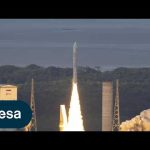
    Europe’s new rocket Ariane 6 powered into space on 9 July 2024 from a newly built dedicated launch pad in French Guiana. Liftoff occurred at 16:00 local time (20:00 BST, 21:00 CEST).

    Europe’s new rocket Ariane 6 powered Europe into space taking with it a varied selection of experiments, satellites, payload deployers and reentry demonstrations that represent thousands across Europe, from students to industry and experienced space actors.

    This inaugural flight, designated VA262, is a demonstration flight to show the capabilities and prowess of Ariane 6 in escaping Earth’s gravity and operating in space. Nevertheless, it had several passengers on board.

    Ariane 6 was built by prime contractor and design authority ArianeGroup. In addition to the rocket, the liftoff demonstrated the functioning of the launch pad and operations on ground at Europe’s Spaceport. The new custom-built dedicated launch zone was built by France’s space agency CNES and allows for a faster turnover of Ariane launches.

    Ariane 6 is Europe’s newest heavy-lift rocket, designed to provide great power and flexibility at a lower cost than its predecessors. The launcher’s configuration – with an upgraded main stage, a choice of either two or four powerful boosters and a new restartable upper stage – will provide Europe with greater efficiency and possibility as it can launch multiple missions into different orbits on a single flight, while its upper stage will deorbit itself at the end of mission.

    ESA’s main roles in the Ariane 6 programme is as contracting authority – managing the budget from Member States participating in the Ariane 6 development programme; and as launch system architect – ensuring that the rocket and launch pad infrastructure work together.

    Ariane 6 is the latest in Europe’s Ariane rocket series, taking over from Ariane 5 featuring a modular and versatile design that can launch missions from low-Earth orbit and farther out to deep space.

    Credits: ESA – European Space Agency

    ★ Subscribe: http://bit.ly/ESAsubscribe and click twice on the bell button to receive our notifications.

    Check out our full video catalog: http://bit.ly/SpaceInVideos
    Follow us on Twitter: http://bit.ly/ESAonTwitter
    On Facebook: http://bit.ly/ESAonFacebook
    On Instagram: http://bit.ly/ESAonInstagram
    On LinkedIn: https://bit.ly/ESAonLinkedIn
    On Pinterest: https://bit.ly/ESAonPinterest
    On Flickr: http://bit.ly/ESAonFlickr

    We are Europe’s gateway to space. Our mission is to shape the development of Europe’s space capability and ensure that investment in space continues to deliver benefits to the citizens of Europe and the world. Check out https://www.esa.int/ to get up to speed on everything space related.

    Copyright information about our videos is available here: https://www.esa.int/ESA_Multimedia/Terms_and_Conditions

    #ESA #Ariane6 #Rocket

  • Erstflug der Ariane 6 (Offizielle Übertragung)

    Erstflug der Ariane 6 (Offizielle Übertragung)

    Liftoff is now scheduled no earlier than 16:00 local time (21:00 CEST), with the live stream starting at 15:30 local time (20:30 CEST).

    This is a big moment for Europe, as the rocket will ensure our guaranteed, autonomous access to space – and all of the science, Earth observation, technology development and commercial possibilities that it entails. With many features brand new to Ariane 6, we’ll be able to carry more and take it further, while sustainably disposing of the launcher’s upper stage to prevent it becoming space debris.

    Phase 1: From ground to orbit

    The first phase of Ariane 6’s flight will launch the rocket off Earth and into space with the thrust from the main stage powered by the Vulcain engine together with the force from the two powerful P120C boosters. Phase 1 includes the separation of the main stage from the upper stage and the first boost of the upper stage’s Vinci engine, which inserts it and its passengers into an elliptical orbit 300 by 700 km above Earth.
    The first flight of Ariane 6 will have three phases, each of which will demonstrate various abilities for Europe’s newest heavy-lift rocket.

    Phase 2: Upper stage reignition and satellite deployment

    The next phase is when Ariane 6’s newest feature is put to the test: reignition of the upper stage. In phase 2, the Vinci engine will re-fire, changing Ariane 6’s orbit from elliptical to circular. This will be followed by the deployment of the rocket’s eight satellites and the activation of its five onboard experiments.

    Phase 3 : Tech demos, deorbiting and capsule separation

    The final phase in Ariane 6’s inaugural flight will be to push the cryogenic upper stage to its limits and validate its ability to perform under microgravity conditions. The final phase will initiate the controlled deorbit of the upper stage back through Earth’s atmosphere over the South Pacific ‘NEMO point’, to prevent it from becoming space debris. Moments later, the two reentry capsules onboard will separate from the upper stage, and all three will make their safe descent back home.

    The launch will be covered in several languages which can be followed at the links below:
    English: https://youtube.com/live/B0oFpOJaIYc?feature=share />French: https://youtube.com/live/AfNPzSOalEU?feature=share />German: https://youtube.com/live/a_87OnvB_fQ?feature=share />A clean feed without commentary is available too: https://youtube.com/live/ogXamYYJpQk?feature=share />
    —————————————————

    Chapters:
    00:00 Stay tuned
    25:13 Beginning of the launch coverage programme
    57:50 Liftoff
    1:00:20 Booster separation
    1:01:40 Fairing separation
    1:05:35 Upper / lower stage separation
    1:05:55 Upper stage ignition
    1:18:25 Stay tuned
    1:53:50 Second boost
    2:02:50 Payload separation
    2:07:50 Success statements
    2:16:25 Stay tuned
    3:32:50 Trajectory in 3rd phase
    3:59:20 Stay tuned
    4:28:15 Press conference
    4:58:20 End of the launch coverage programme

    ★ Subscribe: http://bit.ly/ESAsubscribe and click twice on the bell button to receive our notifications.

    Check out our full video catalog: http://bit.ly/SpaceInVideos
    Follow us on Twitter: http://bit.ly/ESAonTwitter
    On Facebook: http://bit.ly/ESAonFacebook
    On Instagram: http://bit.ly/ESAonInstagram
    On LinkedIn: https://bit.ly/ESAonLinkedIn
    On Pinterest: https://bit.ly/ESAonPinterest
    On Flickr: http://bit.ly/ESAonFlickr

    We are Europe’s gateway to space. Our mission is to shape the development of Europe’s space capability and ensure that investment in space continues to deliver benefits to the citizens of Europe and the world. Check out https://www.esa.int/ to get up to speed on everything space related.

    Copyright information about our videos is available here: https://www.esa.int/ESA_Multimedia/Terms_and_Conditions

    #ESA #Ariane6 #Launch

  • Ariane 6 first flight (Official broadcast)

    Ariane 6 first flight (Official broadcast)

    Liftoff is now scheduled no earlier than 16:00 local time (21:00 CEST), with the live stream starting at 15:30 local time (20:30 CEST).

    This is a big moment for Europe, as the rocket will ensure our guaranteed, autonomous access to space – and all of the science, Earth observation, technology development and commercial possibilities that it entails. With many features brand new to Ariane 6, we’ll be able to carry more and take it further, while sustainably disposing of the launcher’s upper stage to prevent it becoming space debris.

    Phase 1: From ground to orbit

    The first phase of Ariane 6’s flight will launch the rocket off Earth and into space with the thrust from the main stage powered by the Vulcain engine together with the force from the two powerful P120C boosters. Phase 1 includes the separation of the main stage from the upper stage and the first boost of the upper stage’s Vinci engine, which inserts it and its passengers into an elliptical orbit 300 by 700 km above Earth.
    The first flight of Ariane 6 will have three phases, each of which will demonstrate various abilities for Europe’s newest heavy-lift rocket.

    Phase 2: Upper stage reignition and satellite deployment

    The next phase is when Ariane 6’s newest feature is put to the test: reignition of the upper stage. In phase 2, the Vinci engine will re-fire, changing Ariane 6’s orbit from elliptical to circular. This will be followed by the deployment of the rocket’s eight satellites and the activation of its five onboard experiments.

    Phase 3 : Tech demos, deorbiting and capsule separation

    The final phase in Ariane 6’s inaugural flight will be to push the cryogenic upper stage to its limits and validate its ability to perform under microgravity conditions. The final phase will initiate the controlled deorbit of the upper stage back through Earth’s atmosphere over the South Pacific ‘NEMO point’, to prevent it from becoming space debris. Moments later, the two reentry capsules onboard will separate from the upper stage, and all three will make their safe descent back home.

    The launch will be covered in several languages which can be followed at the links below:
    English: https://youtube.com/live/B0oFpOJaIYc?feature=share />French: https://youtube.com/live/AfNPzSOalEU?feature=share />German: https://youtube.com/live/a_87OnvB_fQ?feature=share />A clean feed without commentary is available too: https://youtube.com/live/ogXamYYJpQk?feature=share />
    —————————————————

    Chapters:
    00:00 Stay tuned
    29:18 Beginning of the launch coverage programme
    59:00 Liftoff
    1:01:30 Booster separation
    1:02:50 Fairing separation
    1:06:45 Upper / lower stage separation
    1:07:15 Upper stage ignition
    1:20:25 Stay tuned
    1:55:00 Second boost
    2:05:00 Payload separation
    2:09:00 Success statements
    2:17:35 Stay tuned
    3:34:00 Trajectory in 3rd phase
    4:00:30 Stay tuned
    4:29:15 Press conference
    4:59:30 End of the launch coverage programme

    ★ Subscribe: http://bit.ly/ESAsubscribe and click twice on the bell button to receive our notifications.

    Check out our full video catalog: http://bit.ly/SpaceInVideos
    Follow us on Twitter: http://bit.ly/ESAonTwitter
    On Facebook: http://bit.ly/ESAonFacebook
    On Instagram: http://bit.ly/ESAonInstagram
    On LinkedIn: https://bit.ly/ESAonLinkedIn
    On Pinterest: https://bit.ly/ESAonPinterest
    On Flickr: http://bit.ly/ESAonFlickr

    We are Europe’s gateway to space. Our mission is to shape the development of Europe’s space capability and ensure that investment in space continues to deliver benefits to the citizens of Europe and the world. Check out https://www.esa.int/ to get up to speed on everything space related.

    Copyright information about our videos is available here: https://www.esa.int/ESA_Multimedia/Terms_and_Conditions

    #ESA #Ariane6 #Launch

  • Ariane 6 first flight – clean feed (Official broadcast)

    Ariane 6 first flight – clean feed (Official broadcast)

    Liftoff is now scheduled no earlier than 16:00 local time (21:00 CEST), with the live stream starting at 15:30 local time (20:30 CEST).

    This is a big moment for Europe, as the rocket will ensure our guaranteed, autonomous access to space – and all of the science, Earth observation, technology development and commercial possibilities that it entails. With many features brand new to Ariane 6, we’ll be able to carry more and take it further, while sustainably disposing of the launcher’s upper stage to prevent it becoming space debris.

    Phase 1: From ground to orbit

    The first phase of Ariane 6’s flight will launch the rocket off Earth and into space with the thrust from the main stage powered by the Vulcain engine together with the force from the two powerful P120C boosters. Phase 1 includes the separation of the main stage from the upper stage and the first boost of the upper stage’s Vinci engine, which inserts it and its passengers into an elliptical orbit 300 by 700 km above Earth.
    The first flight of Ariane 6 will have three phases, each of which will demonstrate various abilities for Europe’s newest heavy-lift rocket.

    Phase 2: Upper stage reignition and satellite deployment

    The next phase is when Ariane 6’s newest feature is put to the test: reignition of the upper stage. In phase 2, the Vinci engine will re-fire, changing Ariane 6’s orbit from elliptical to circular. This will be followed by the deployment of the rocket’s eight satellites and the activation of its five onboard experiments.

    Phase 3 : Tech demos, deorbiting and capsule separation

    The final phase in Ariane 6’s inaugural flight will be to push the cryogenic upper stage to its limits and validate its ability to perform under microgravity conditions. The final phase will initiate the controlled deorbit of the upper stage back through Earth’s atmosphere over the South Pacific ‘NEMO point’, to prevent it from becoming space debris. Moments later, the two reentry capsules onboard will separate from the upper stage, and all three will make their safe descent back home.

    The launch will be covered in several languages which can be followed at the links below:
    English: https://youtube.com/live/B0oFpOJaIYc?feature=share />French: https://youtube.com/live/AfNPzSOalEU?feature=share />German: https://youtube.com/live/a_87OnvB_fQ?feature=share />A clean feed without commentary is available too: https://youtube.com/live/ogXamYYJpQk?feature=share />
    —————————————————

    Chapters:
    00:00 Stay tuned
    59:00 Liftoff
    1:01:30 Booster separation
    1:02:50 Fairing separation
    1:06:45 Upper / lower stage separation
    1:07:15 Upper stage ignition
    1:55:00 Second boost
    2:05:00 Payload separation
    2:09:00 Success statements
    3:34:00 Trajectory in 3rd phase
    4:29:15 Press conference

    ★ Subscribe: http://bit.ly/ESAsubscribe and click twice on the bell button to receive our notifications.

    Check out our full video catalog: http://bit.ly/SpaceInVideos
    Follow us on Twitter: http://bit.ly/ESAonTwitter
    On Facebook: http://bit.ly/ESAonFacebook
    On Instagram: http://bit.ly/ESAonInstagram
    On LinkedIn: https://bit.ly/ESAonLinkedIn
    On Pinterest: https://bit.ly/ESAonPinterest
    On Flickr: http://bit.ly/ESAonFlickr

    We are Europe’s gateway to space. Our mission is to shape the development of Europe’s space capability and ensure that investment in space continues to deliver benefits to the citizens of Europe and the world. Check out https://www.esa.int/ to get up to speed on everything space related.

    Copyright information about our videos is available here: https://www.esa.int/ESA_Multimedia/Terms_and_Conditions

    #ESA #Ariane6 #Launch

  • Europe’s new rocket powers into space 🚀 #shorts

    Europe’s new rocket powers into space 🚀 #shorts

    Europe’s new rocket Ariane 6 powered Europe into space taking with it a varied selection of experiments, satellites, payload deployers and reentry demonstrations that represent thousands across Europe, from students to industry and experienced space actors.

    This inaugural flight, designated VA262, is a demonstration flight to show the capabilities and prowess of Ariane 6 in escaping Earth’s gravity and operating in space. Nevertheless, it had several passengers on board.

    Ariane 6 was built by prime contractor and design authority ArianeGroup. In addition to the rocket, the liftoff demonstrated the functioning of the launch pad and operations on ground at Europe’s Spaceport. The new custom-built dedicated launch zone was built by France’s space agency CNES and allows for a faster turnover of Ariane launches.

    Ariane 6 is Europe’s newest heavy-lift rocket, designed to provide great power and flexibility at a lower cost than its predecessors. The launcher’s configuration – with an upgraded main stage, a choice of either two or four powerful boosters and a new restartable upper stage – will provide Europe with greater efficiency and possibility as it can launch multiple missions into different orbits on a single flight, while its upper stage will deorbit itself at the end of mission.

    ESA’s main roles in the Ariane 6 programme is as contracting authority – managing the budget from Member States participating in the Ariane 6 development programme; and as launch system architect – ensuring that the rocket and launch pad infrastructure work together.

    Ariane 6 is the latest in Europe’s Ariane rocket series, taking over from Ariane 5 featuring a modular and versatile design that can launch missions from low-Earth orbit and farther out to deep space.

    ★ Subscribe: http://bit.ly/ESAsubscribe and click twice on the bell button to receive our notifications.

    Check out our full video catalog: http://bit.ly/SpaceInVideos
    Follow us on Twitter: http://bit.ly/ESAonTwitter
    On Facebook: http://bit.ly/ESAonFacebook
    On Instagram: http://bit.ly/ESAonInstagram
    On LinkedIn: https://bit.ly/ESAonLinkedIn
    On Pinterest: https://bit.ly/ESAonPinterest
    On Flickr: http://bit.ly/ESAonFlickr

    We are Europe’s gateway to space. Our mission is to shape the development of Europe’s space capability and ensure that investment in space continues to deliver benefits to the citizens of Europe and the world. Check out https://www.esa.int/ to get up to speed on everything space related.

    Copyright information about our videos is available here: https://www.esa.int/ESA_Multimedia/Terms_and_Conditions

    #ESA #Ariane6 #Rocket

  • Ariane 6 first liftoff

    Ariane 6 first liftoff

    Europe’s new rocket Ariane 6 powered Europe into space taking with it a varied selection of experiments, satellites, payload deployers and reentry demonstrations that represent thousands across Europe, from students to industry and experienced space actors.

    This inaugural flight, designated VA262, is a demonstration flight to show the capabilities and prowess of Ariane 6 in escaping Earth’s gravity and operating in space. Nevertheless, it had several passengers on board.

    Ariane 6 was built by prime contractor and design authority ArianeGroup. In addition to the rocket, the liftoff demonstrated the functioning of the launch pad and operations on ground at Europe’s Spaceport. The new custom-built dedicated launch zone was built by France’s space agency CNES and allows for a faster turnover of Ariane launches.

    Ariane 6 is Europe’s newest heavy-lift rocket, designed to provide great power and flexibility at a lower cost than its predecessors. The launcher’s configuration – with an upgraded main stage, a choice of either two or four powerful boosters and a new restartable upper stage – will provide Europe with greater efficiency and possibility as it can launch multiple missions into different orbits on a single flight, while its upper stage will deorbit itself at the end of mission.

    ESA’s main roles in the Ariane 6 programme is as contracting authority – managing the budget from Member States participating in the Ariane 6 development programme; and as launch system architect – ensuring that the rocket and launch pad infrastructure work together.

    Ariane 6 is the latest in Europe’s Ariane rocket series, taking over from Ariane 5 featuring a modular and versatile design that can launch missions from low-Earth orbit and farther out to deep space.

    ★ Subscribe: http://bit.ly/ESAsubscribe and click twice on the bell button to receive our notifications.

    Check out our full video catalog: http://bit.ly/SpaceInVideos
    Follow us on Twitter: http://bit.ly/ESAonTwitter
    On Facebook: http://bit.ly/ESAonFacebook
    On Instagram: http://bit.ly/ESAonInstagram
    On LinkedIn: https://bit.ly/ESAonLinkedIn
    On Pinterest: https://bit.ly/ESAonPinterest
    On Flickr: http://bit.ly/ESAonFlickr

    We are Europe’s gateway to space. Our mission is to shape the development of Europe’s space capability and ensure that investment in space continues to deliver benefits to the citizens of Europe and the world. Check out https://www.esa.int/ to get up to speed on everything space related.

    Copyright information about our videos is available here: https://www.esa.int/ESA_Multimedia/Terms_and_Conditions

    #ESA #Ariane6 #Rocket

  • This is what Ariane 6 first flight will look like 🚀 #shorts

    This is what Ariane 6 first flight will look like 🚀 #shorts

    Europe’s next launch vehicle is the powerful Ariane 6. The rocket will be bigger, better, and more versatile than its predecessor.

    Ariane 6 is ensuring Europe has continued independent and autonomous access to space.

    You can watch the live broadcast of the first flight from our channel.

    English: https://youtube.com/live/B0oFpOJaIYc?feature=share />French: https://youtube.com/live/AfNPzSOalEU?feature=share />German: https://youtube.com/live/a_87OnvB_fQ?feature=share />Clean feed: https://youtube.com/live/ogXamYYJpQk?feature=share />
    📹 ESA – European Space Agency

    #ESA #Ariane6 #Rocket

  • Europe’s next big rocket in a nutshell

    Europe’s next big rocket in a nutshell

    Ariane 6 is the newest rocket in a series that has, for five decades, been launching Europe towards the stars. Building on all the knowledge, expertise and technology developed over the years, Ariane 6 will be versatile, modular, and European.

    Guaranteeing Europe’s access to space for the next years, Ariane 6 in two versions, with either two or four boosters attached depending on the ‘oomph’ the mission requires. Versatile, its upper stage can reignite multiple times during a single flight, placing any spacecraft into any orbit – including constellations – saving a final boost to return and burn up in Earth’s atmosphere. Modular, it will be continuously adapted to the needs of the future space sector.

    Four organisations take care of the Ariane 6 programme: ESA at the head, ArianeGroup as the main contractor, CNES who designed and built the launchpad and ArianeSpace who sell the launches.

    13 countries contribute, thousands of Europeans have worked on it, and every one of us will benefit from the Earth observation, science, technologies and services it will make possible.

    Credits: ESA – European Space Agency

    ★ Subscribe: http://bit.ly/ESAsubscribe and click twice on the bell button to receive our notifications.

    Check out our full video catalog: http://bit.ly/SpaceInVideos
    Follow us on Twitter: http://bit.ly/ESAonTwitter
    On Facebook: http://bit.ly/ESAonFacebook
    On Instagram: http://bit.ly/ESAonInstagram
    On LinkedIn: https://bit.ly/ESAonLinkedIn
    On Pinterest: https://bit.ly/ESAonPinterest
    On Flickr: http://bit.ly/ESAonFlickr

    We are Europe’s gateway to space. Our mission is to shape the development of Europe’s space capability and ensure that investment in space continues to deliver benefits to the citizens of Europe and the world. Check out https://www.esa.int/ to get up to speed on everything space related.

    Copyright information about our videos is available here: https://www.esa.int/ESA_Multimedia/Terms_and_Conditions

    #ESA #Ariane6 #Launch

  • Why do we launch rockets from the equator? 🚀 #shorts

    Why do we launch rockets from the equator? 🚀 #shorts

    Europe’s new rocket Ariane 6 will take off from Europe’s Spaceport in French Guiana, near the equator, and far from populated areas.

    Why did Europe choose a spaceport on the other side of the world? The main reason is the lack of space. There are hardly any places in Europe where rockets can be launched and fly over unpopulated areas during its initial launch phase. We also need a large area to build the launch pad and operations.

    Europe’s Spaceport is also very close to the equator. As our Earth spins itself, you can get an extra boost if you launch where Earth is widest… at the equator.

    📹 ESA – European Space Agency
    📸 ESA – European Space Agency

    #ESA #Ariane6 #Rocket

  • Premier vol d’Ariane 6 (Diffusion officielle)

    Premier vol d’Ariane 6 (Diffusion officielle)

    Ariane 6 is scheduled to launch on 9 July 2024, with a launch window from 15:00-19:00 local time at Europe’s Spaceport in French Guiana (19:00–23:00 BST, 9 July 20:00–10 July 00:00 CEST).

    This is a big moment for Europe, as the rocket will ensure our guaranteed, autonomous access to space – and all of the science, Earth observation, technology development and commercial possibilities that it entails. With many features brand new to Ariane 6, we’ll be able to carry more and take it further, while sustainably disposing of the launcher’s upper stage to prevent it becoming space debris.

    The launch will be covered in several languages which can be followed at the links below:

    English: https://youtube.com/live/B0oFpOJaIYc?feature=share />
    French:
    https://youtube.com/live/AfNPzSOalEU?feature=share />
    German:
    https://youtube.com/live/a_87OnvB_fQ?feature=share />
    A clean feed without commentary is availble too:
    https://youtube.com/live/ogXamYYJpQk?feature=share />
    ★ Subscribe:
    http://bit.ly/ESAsubscribe and click twice on the bell button to receive our notifications.

    Check out our full video catalog: http://bit.ly/SpaceInVideos
    Follow us on Twitter: http://bit.ly/ESAonTwitter
    On Facebook: http://bit.ly/ESAonFacebook
    On Instagram: http://bit.ly/ESAonInstagram
    On LinkedIn: https://bit.ly/ESAonLinkedIn
    On Pinterest: https://bit.ly/ESAonPinterest
    On Flickr: http://bit.ly/ESAonFlickr

    We are Europe’s gateway to space. Our mission is to shape the development of Europe’s space capability and ensure that investment in space continues to deliver benefits to the citizens of Europe and the world. Check out https://www.esa.int/ to get up to speed on everything space related.

    Copyright information about our videos is available here: https://www.esa.int/ESA_Multimedia/Terms_and_Conditions

    #ESA #Ariane6 #Launch

  • Learn more about Ariane 6 launch pad 🚀 #shorts

    Learn more about Ariane 6 launch pad 🚀 #shorts

    While the Ariane 6 rocket might take much of the focus, the launch pad and infrastructure truely are marvels of human engineering.

    Built and operated by France’s space agency @CNES, the launch zone – called ELA4 – was built from the ground up at Europe’s Spaceport in French Guiana.

    Building on the success and lessons learnt from the previous launch zones, the new infrastructure allows for quick processing and the launch of one Ariane 6 a month.

    The site for the launch zone was chosen for its deep rocky subsoil capable of supporting the heaviest 900 tonne variant of Ariane 6 and its liftoff and the mobile gantry that surrounds Ariane 6 for final assembly.

    The launch pad was also built to lessen the site’s carbon footprint and preserve local natural resources.

    📹 ESA – European Space Agency
    📸 ESA – European Space Agency

    #ESA #Ariane6 #Rocket

  • How do you restart a rocket that is already in space? 🚀 #shorts

    How do you restart a rocket that is already in space? 🚀 #shorts

    Europe’s newest rocket Ariane 6 has an upper stage engine, Vinci, that can restart up to four more times once in space!

    This allows Ariane 6 to reach a larger range of orbits and deliver multiple payloads on a single launch.

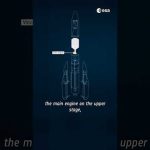
    Vinci does this using an auxiliary propulsion unit that heats up the same liquid oxygen and hydrogen fuel used by the main engine. It then turns it into gas that is expelled from the upper stage to provide a small amount of thrust. The effect is barely noticeable, but the forces are just enough to keep the liquid fuel at the bottom of the tank and ready for reignition.

    📹 ESA – European Space Agency
    📸 ESA – European Space Agency

    #ESA #Ariane6 #Rocket

  • This is how Ariane 6’s boosters work 🚀 #shorts

    This is how Ariane 6’s boosters work 🚀 #shorts

    Europe’s new rocket Ariane 6 has three main stages each with their own engines.

    Ariane 6 uses one of the world’s most powerful single-piece boosters, the P120C boosters, to get off the ground.

    These motors run on 142 000 kg of solid fuel, which is completely consumed in just two minutes, reaching 53 km altitude when they are eventually discarded.

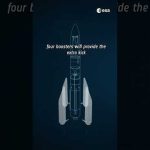
    We can choose to either have two or four boosters per Ariane 6 launch. For many missions two boosters is more than enough to get into space, but if you need to launch heavier satellites or want to reach destinations farther away from Earth four boosters provide the extra kick to do the trick.

    We now have a target launch date! We are currently aiming to get Ariane 6 off the ground on 9th July, be sure to set your reminders and follow along for more updates.

    📹 ESA – European Space Agency

    #ESA #Ariane6 #Rocket

  • 5,4,3,2,1 allumage Vulcain! 🚀 #shorts

    5,4,3,2,1 allumage Vulcain! 🚀 #shorts

    Europe’s new rocket Ariane 6 will soon be launched from Europe’s Spaceport in French Guiana. But how does it get off the launch pad?

    Ignited first at liftoff is the Vulcain 2.1, the rocket motor for the cryogenic main stage. The engine sits at the bottom end of Ariane 6 and fires for up to 8 minutes to help the rocket reach space! The boosters ignite 7 seconds after the Vulcain for liftoff thrust.

    📹 ESA – European Space Agency

    #ESA #Ariane6 #CubeSat

  • This is how we transport rockets 🚀 #shorts

    This is how we transport rockets 🚀 #shorts

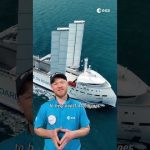
    🛳️ Now that’s a space ship.

    🚀 Have you ever wondered how we transport rockets?

    All the elements that make up Ariane 6 are manufactured in mainland Europe and then transported by this ship, named Canopée.

    It is the first custom-built transporter to use sails, reducing emissions and saving on fuel by up to 30%, and on this trip, it travels for 10 days covering over 7000 km to reach Europe’s Spaceport in French Giuana.

    The hybrid-propulsion vessel is 121 m long and has 37 m tall sails. Canopée rotates continuously between stop-offs to load each Ariane 6 stage and other parts and ship them across the Atlantic Ocean to Europe’s spaceport.

    📹 ESA/Arianegroup

    #ESA #Ariane6 #Rocket

  • How does Europe’s new rocket work 🚀 #shorts

    How does Europe’s new rocket work 🚀 #shorts

    Do you know how rockets are launched? 🚀

    Europe’s new launcher, Ariane 6 uses liquid oxygen and hydrogen as fuel to lift it off the ground and into space. This fuel is chilled to -150°C which allows more propellant to be loaded into the rocket with more fuel from the engine.

    But Ariane would not get far without the boosters that provide the most thrust by far.

    In order to control the direction of Ariane 6 after launch, the nozzles on the boosters and main stage can swivel to keep it on course. This is no easy feat as Ariane 6 is 56 m tall and controlled at the bottom, so it is a careful balancing act.

    📹 ESA – European Space Agency

    #ESA #Ariane6 #Rocket

  • The basics about Europe’s new rocket 🚀 #shorts

    The basics about Europe’s new rocket 🚀 #shorts

    Europe has a new rocket, and it’s set to launch soon 🚀

    Europe’s next launch vehicle is the powerful Ariane 6. The rocket will be bigger, better, and more versatile than its predecessor.

    Our daily life is becoming increasingly reliant on space to keep people and things connected for communication, banking, transport, weather forecasting and more!

    Ariane 6 is ensuring Europe has continued independent and autonomous access to space.

    Will you be watching the launch this summer?

    📹 ESA – European Space Agency

    #ESA #Ariane6 #Rocket