Targeted to launch on Tuesday, Feb. 6, NASA’s Plankton, Aerosol, Cloud, ocean Ecosystem (PACE) satellite mission will study how our oceans and atmosphere interact in a changing climate. Prelaunch activities include a briefing on the mission science on Sunday, Feb. 4 at 11 a.m. EST (1600 UTC) with the following NASA participants:
Kate Calvin, chief scientist and senior climate advisor Karen St. Germain, director, Earth Science Division Jeremy Werdell, PACE project scientist Andy Sayer, PACE atmospheric scientist Natasha Sadoff, Satellite Needs Program Manager
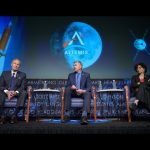
Mission briefing for NASA’s Artemis I mission around the Moon, launching no earlier than Aug. 29, 2022. An uncrewed Orion spacecraft will be tested on Artemis I and travel 40,000 miles past the Moon, farther than any spacecraft built for humans has gone before. Briefing participants are:
• NASA Administrator Bill Nelson • Bhavya Lal, associate administrator for technology, policy, and strategy, NASA Headquarters • Mike Sarafin, Artemis I mission manager, NASA Headquarters • Charlie Blackwell-Thompson, Artemis I launch director, NASA’s Kennedy Space Center in Florida • John Honeycutt, Space Launch System program manager, NASA’s Marshall Space Flight Center in Huntsville, Alabama • Howard Hu, Orion program manager, NASA’s Johnson Space Center in Houston
Watch the replay of the virtual press event in which ESA astronaut Thomas Pesquet talks about his upcoming ‘Alpha’ mission to the International Space Station.
Set to launch on 22 April, Thomas will be the first ESA astronaut to fly on a @SpaceX Crew Dragon being launched on a Falcon 9 rocket from Florida, USA. In this event we will also hear from ESA ISS Utilisation Planning Team Leader Kirsten MacDonell, and Head of the ESA Human and Robotic Exploration Strategy & Coordination Group Didier Schmitt.
We are Europe’s gateway to space. Our mission is to shape the development of Europe’s space capability and ensure that investment in space continues to deliver benefits to the citizens of Europe and the world. Check out https://www.esa.int/ to get up to speed on everything space related.
Live from Kennedy Space Center, we’re counting down to #LaunchAmerica. Join Administrator Jim Bridenstine and officials from NASA and JAXA (Japan Aerospace Exploration Agency) for a preview of NASA’s SpaceX Crew-1 mission, set for liftoff on Sat., Nov. 14 at 7:29 p.m. EST. Astronauts Michael Hopkins, Victor Glover, and Shannon Walker of NASA and Soichi Noguchi of JAXA will launch aboard the Crew Dragon ‘Resilience’ spacecraft to the International Space Station.
Recording of the ESA Director General’s start-of-the-year press briefing, held at ESA headquarters in Paris, France, on 15 January 2020.
This briefing, with DG Jan Wörner and ESA Directors, lays out plans for the new budget committed to by Member States at Space19+ and looks ahead to activities in 2020.
★ Subscribe: http://bit.ly/ESAsubscribe and click twice on the bell button to receive our notifications.
We are Europe’s gateway to space. Our mission is to shape the development of Europe’s space capability and ensure that investment in space continues to deliver benefits to the citizens of Europe and the world. Check out http://www.esa.int/ESA to get up to speed on everything space related.
On Oct. 2, NASA held a briefing at the Johnson Space Center in Houston, to preview a trio of spacewalks in October to perform maintenance outside the International Space Station. Expedition 53 Commander Randy Bresnik of NASA will lead all three spacewalks, joined on Oct. 5 and 10 by Flight Engineer Mark Vande Hei, also of NASA. Flight Engineer Joe Acaba of NASA will join Bresnik on Oct. 18 for the third spacewalk. NASA TV coverage of the spacewalks will begin at 6:30 a.m. on Oct. 5, 10 and 18. Each spacewalk is scheduled to start at approximately 8:05 a.m., however, the spacewalks may begin earlier if the crew is running ahead of schedule.
On August 17, NASA hosted a briefing at the agency’s headquarters in Washington, DC to preview the launch of the Origins, Spectral Interpretation, Resource Identification, Security-Regolith Explorer (OSIRIS-REx) spacecraft – the first U.S. spacecraft destined to rendezvous with, study and return a sample of an asteroid. OSIRIS-REx will launch September 8 from Cape Canaveral Air Force Station in Florida on its mission to study, in detail, an asteroid called Bennu. The mission represents a valuable opportunity to learn more about the origins of our solar system, the sources of water and organic molecules on Earth, and the hazards and resources in near-Earth space.
NASA TV aired a briefing from the agency’s Johnson Space Center in Houston on Monday, August 15, to preview the August 19 spacewalk to install a new gateway for American commercial crew spacecraft at the International Space Station — a significant milestone in NASA’s work to return crew launches to U.S. soil. Experts from the ISS and commercial crew programs discussed the process and significance of installing and connecting the first of the two international docking adapters (IDAs), which was launched on a SpaceX Dragon cargo spacecraft and arrived at the station July 20. Expedition 48 Commander Jeff Williams and Flight Engineer Kate Rubins of NASA will conduct the spacewalk to install the equipment. Coverage of the spacewalk will begin at 6:30 a.m. EDT Aug. 19, on NASA TV and the agency’s website, with the spacewalk scheduled to begin at 8:05 a.m.
NASA and commercial partner SpaceX discussed its plans for a launch of its seventh cargo delivery to the International Space Station under the agency’s Commercial Resupply Services contract. The company’s Falcon 9 will carry its Dragon cargo spacecraft to the station from Space Launch Complex 40 at Cape Canaveral Air Force Station in Florida and be filled with more than 4,000 pounds of supplies and payloads, including critical materials for the science and research investigations that will occur during Expeditions 44 and 45.
The science payloads aboard will offer new insight to combustion in microgravity, perform the first space-based observations of meteors entering Earth’s atmosphere, continue solving potential crew health risks and make new strides toward being able to grow food in space. Research continues to support the twins study and one-year mission investigations with NASA Astronaut Scott Kelly. This mission also is launching more than 30 student experiments, all of which are flying under the U.S. National Laboratory managed by the Center for the Advancement of Science in Space (CASIS).
The first of two International Docking Adapters for the station will be delivered in Dragon’s unpressurized trunk. The adapters will enable space station docking of commercial crew spacecraft, including the Boeing CST-100 and SpaceX Crew Dragon. Expedition 44 Flight Engineer Scott Kelly of NASA will use the station’s Canadarm2 robotic arm to reach out and capture Dragon with Station commander Gennady Padalka of the Russian Federal Space Agency (Roscosmos) supporting Kelly as they operate from the station’s cupola. After more than five weeks at the space station, the spacecraft will return with more than 1,400 pounds of cargo, including science experiments, crew supplies, hardware and computer resources, space station hardware, and trash.
During a televised news briefing from NASA Headquarters on Thursday, Aug. 22, panelists discussed the agency’s next mission to the moon, and the first lunar mission launching from the Virginia coast. NASA’s Lunar Atmosphere and Dust Environment Explorer (LADEE) mission is scheduled to launch at 11:27 p.m. Friday, Sept. 6, from NASA’s Wallops Flight Facility on Wallops Island, Va. Data from the mission will provide unprecedented information about the environment around the moon and give scientists a better understanding of other planetary bodies in our solar system and beyond.
NASA hosts a news update about the June 26 launch of the Interface Region Imaging Spectrograph (IRIS) mission from Vandenberg Air Force Base in California.
IRIS is a NASA Small Explorer Mission to observe how solar material moves in a dynamic million-degree atmosphere that drives the solar wind around the Sun’s atmosphere. The region is the origin of most of the ultraviolet solar emission that impacts the near-Earth space environment and Earth’s climate.
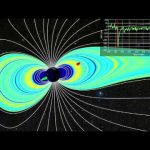
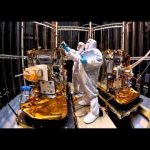
With 14 days until its launch, the Radiation Belt Storm Probes mission is previewed by scientists at NASA Headquarters in Washington. RBSP will study the role of the Earth’s radiation belts in producing space weather that can adversely affect communications and electronic systems.
During a press briefing at The Kennedy Space Center on May 22, SpaceX and NASA officials discussed the launch of the SpaceX Falcon 9 rocket and Dragon capsule on a demonstration flight to the International Space Station. Falcon 9 and Dragon lifted off Tuesday from Cape Canaveral Air Force Station in Florida at 3:44 a.m. EDT. On Thursday, May 24, Dragon will perform a flyby of the space station at a distance of approximately 1.5 miles to validate the operation of sensors and flight systems necessary for a safe rendezvous and approach. Following analysis of the flyby by NASA and SpaceX managers, the Dragon capsule will be cleared to rendezvous and berth with the space station on Friday, May 25, marking the first time a commercial company has attempted this feat.
During a press briefing at The Kennedy Space Center on May 19, SpaceX President Gwynne Shotwell and NASA Commercial Crew and Cargo Program Manager Alan Lindenmoyer discussed the launch abort of the SpaceX Falcon 9 rocket and Dragon capsule on a demonstration flight to the International Space Station. Early data shows that high chamber pressure in Engine #5 caused a cutoff of all nine engines at T- 0.5 seconds. SpaceX will continue to look at the data and inspect the engine before setting a new launch date. The next possible opportunity is May 22 from Cape Canaveral Air Force Station in Florida.
NASA reveals new images and science findings from the first spacecraft to orbit Mercury. The MErcury Surface, Space ENvironment, GEochemistry, and Ranging, or MESSENGER spacecraft conducted more than a dozen laps through the inner solar system for six years prior to achieving the historic orbit insertion on March 17.
News conference held Feb. 15 following the flyby of comet Tempel 1 by the Stardust-NExT spacecraft on Valentine’s Day, Feb. 14. The spacecraft’s closest approach was a distance of 112 miles. Participants are: Ed Weiler, NASA’s associate administrator, Science Mission Directorate, Washington; Joe Veverka, Stardust-NExT principal investigator, Cornell University; Tim Larson, Stardust-NExT project manager, NASA’s Jet Propulsion Laboratory, Pasadena, Calif.; Don Brownlee, Stardust-NExT co-investigator, University of Washington, Seattle; and Pete Schultz, Stardust-NExT co-investigator, Brown University.