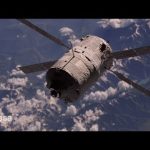
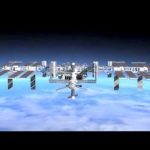
After lifting off from Baikonur Cosmodrome in Kazakhstan on Thursday, Sept. 11, a Roscosmos cargo spacecraft, delivering approximately three tons of food, fuel, and supplies, is scheduled to arrive at the International Space Station on Saturday, Sept. 13.
The unpiloted spacecraft will dock autonomously to the aft port of the orbiting laboratory’s Zvezda module at 1:27 p.m. EDT (1727 UTC) on Saturday, Sept. 13.
The Progress 93 spacecraft will remain docked to the space station for approximately six months. Then, it will depart for re-entry into Earth’s atmosphere, disposing of trash loaded by the crew.
After lifting off from Baikonur Cosmodrome in Kazakhstan on Thursday, July 3, a Roscosmos cargo spacecraft, delivering approximately three tons of food, fuel, and supplies, is scheduled to arrive at the International Space Station on Saturday, June 5.
The unpiloted spacecraft will dock autonomously to the space-facing port of the orbiting laboratory’s Poisk module at 5:27 p.m. EDT (2127 UTC) on Saturday, July 5.
The Progress 92 spacecraft will remain docked to the space station for approximately six months before departing for re-entry into Earth’s atmosphere to dispose of trash loaded by the crew.
A Roscosmos cargo spacecraft, delivering approximately three tons of food, fuel, and supplies to the Expedition 73 crew aboard the International Space Station, is launching on a Soyuz rocket from the Baikonur Cosmodrome in Kazakhstan on Thursday, July 3. Liftoff is scheduled for 3:32 p.m. EDT (1932 UTC).
After a two-day journey to the station, the unpiloted spacecraft will dock autonomously to the space-facing port of the orbiting laboratory’s Poisk module at 5:27 p.m. EDT (2127 UTC) on Saturday, July 5.
The Progress 92 spacecraft will remain docked to the space station for approximately six months before departing for re-entry into Earth’s atmosphere to dispose of trash loaded by the crew.
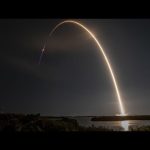
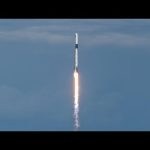
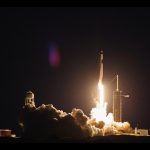
The 31st SpaceX commercial resupply mission to the International Space Station lifted off on a Falcon 9 rocket from our Kennedy Space Center in Florida at 9:29 p.m. EST, Monday, Nov. 4 (0229 UTC, Tuesday, Nov. 5), delivering science investigations, supplies, and holiday food to the orbiting lab.
SpaceX’s Dragon spacecraft carried several new experiments to the station, including the Coronal Diagnostic Experiment, to examine solar wind and how it forms. Dragon also delivered Antarctic moss to observe the combined effects of cosmic radiation and microgravity on plants. Other investigations include a device to test cold welding of metals in microgravity and an investigation that studies how space impacts different materials.
SpaceX’s 29th cargo resupply mission to the International Space Station is scheduled to lift off at 8:28 p.m. EST on Thursday, Nov. 9 (0128 UTC Nov. 10), from Launch Complex 39A at NASA’s Kennedy Space Center in Florida.
This uncrewed launch of SpaceX’s Dragon spacecraft will carry a new laser data communication investigation device, a study on the effects of spaceflight on ovulation, research on the respiratory system, an infrared instrument to measure atmospheric gravity waves, and essential supplies for our astronauts living and working aboard the orbiting laboratory.
SpaceX’s 28th cargo resupply mission to the International Space Station is now scheduled to lift off at 11:47 a.m. EDT on Monday, June 5 (1547 UTC), from Launch Complex 39A at NASA’s Kennedy Space Center in Florida.
This uncrewed launch of SpaceX’s Dragon spacecraft will carry a new set of roll-out solar panels to boost the station’s power capacity, along with medical research, student-developed technology demonstrations, and essential supplies for our astronauts living and working aboard the orbiting laboratory.
SpaceX’s 27th cargo resupply mission (CRS-27) to the International Space Station is scheduled to lift off at 8:30 p.m. EDT on Tuesday, March 14 (0030 UTC March 15), from Launch Complex 39A at NASA’s Kennedy Space Center in Florida.
CRS-27 will carry supplies, equipment for our international crew, and science, including Space Station hardware designed by high school students, and research that could help fight heart disease.
Additionally, a pair of small satellites, called CubeSats, will hitch a ride to space on the mission. The two university-built satellites, named ARKSAT-1, created by students at the University of Arkansas, and LightCube, by Arizona State University with Vega Space Systems and Mexico’s CETYS Universidad. ARKSAT-1 will illuminate an LED from orbit and use a ground spectrometer to track and perform atmospheric measurements. LightCube features a flash bulb that can be controlled remotely by amateur radio operators on Earth who will be able to activate the satellite to produce a brief flash visible from the ground.
A commercial cargo spacecraft safely arrives at the space station, space station crewmembers conduct a spacewalk, and an update on plans to launch our Artemis I mission … a few of the stories to tell you about – This Week at NASA!
The world’s next generation cosmic observatory, the James Webb Space Telescope, is due for launch on an Ariane 5 from Europe’s Spaceport in French Guiana in late December.
Developed and constructed over more than 30 years, Webb is a remarkable feat of engineering and technology – with the largest astronomical mirror ever flown in space, sophisticated new scientific instruments, and a sunshield the size of a tennis court.
Webb is an international partnership between @NASA, ESA and the @Canadian Space Agency and will reveal the Universe in a whole new light. Optimised for infrared wavelengths, its detectors will be able to look back to shortly after the very dawn of time, revealing the formation of the first galaxies, as well as study stars and planets in our own Milky Way.
We are Europe’s gateway to space. Our mission is to shape the development of Europe’s space capability and ensure that investment in space continues to deliver benefits to the citizens of Europe and the world. Check out https://www.esa.int/ to get up to speed on everything space related.
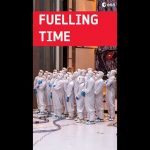
The James Webb Space Telescope, configured for flight, was moved from the cleanroom to the payload preparation facility for fuelling at Europe’s Spaceport in French Guiana on 11–12 November 2021.
Webb will be loaded with propellants before being mounted on top of the rocket and then encapsulated by the Ariane 5 fairing.
Webb will be the largest, most powerful telescope ever launched into space. As part of an international collaboration agreement, ESA is providing the telescope’s launch service using the Ariane 5 launch vehicle. Working with partners, ESA was responsible for the development and qualification of Ariane 5 adaptations for the Webb mission and for the procurement of the launch service by Arianespace.
Webb is an international partnership between @NASA , ESA and the @Canadian Space Agency.
We are Europe’s gateway to space. Our mission is to shape the development of Europe’s space capability and ensure that investment in space continues to deliver benefits to the citizens of Europe and the world. Check out https://www.esa.int/ to get up to speed on everything space related.
The James Webb Space Telescope, a once in a generation space mission, arrived safely at Pariacabo harbour in French Guiana on 12 October 2021, ahead of its launch on an Ariane 5 rocket from Europe’s Spaceport.
Webb was packed in a 30 m long container with additional equipment. It arrived from California on board the MN Colibri which sailed the Panama Canal to French Guiana on a 16-day voyage. The shallow Kourou river was specially dredged to ensure a clear passage and the vessel followed high tide to safely reach port.
The MN Colibri, like its sister vessel the MN Toucan, were built to ship Ariane 5 rocket parts from Europe to French Guiana. They were specifically designed to carry a complete set of Ariane 5 parts across the Atlantic, while having a low enough draft to enable them to follow a route along the shallow Kourou river to the Pariacabo harbour.
Webb will be the largest, most powerful telescope ever launched into space. As part of an international collaboration agreement, ESA is providing the telescope’s launch service using the Ariane 5 launch vehicle. Working with partners, ESA was responsible for the development and qualification of Ariane 5 adaptations for the Webb mission and for the procurement of the launch service by @arianespace.
Webb is an international partnership between @NASA, ESA and the @Canadian Space Agency.
We are Europe’s gateway to space. Our mission is to shape the development of Europe’s space capability and ensure that investment in space continues to deliver benefits to the citizens of Europe and the world. Check out https://www.esa.int/ to get up to speed on everything space related.
A commercial cargo spacecraft leaves the space station, watching an Atlantic storm from space, and the Artemis I rocket moves closer to launch … a few of the stories to tell you about – This Week at NASA!
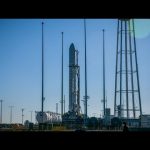
Watch live as Northrop Grumman launches its Antares rocket and Cygnus spacecraft on a resupply mission to the International Space Station. Liftoff is targeted for 12:36 p.m. EST from NASA’s Wallops Flight Facility in Virginia.
The “S.S. Katherine Johnson” Cygnus spacecraft is named after Katherine Johnson, a NASA mathematician whose love of numbers helped send astronauts into Earth’s orbit and then to the Moon! This mission will bring with it 8,000 pounds of cargo including several technology development demonstrations, crew supplies, and vehicle hardware to the orbiting laboratory.
Critical cargo on the next space station resupply mission, NASA is at a virtual Earth and space science meeting, and a key piece of hardware installed on the Orion spacecraft … a few of the stories to tell you about – This Week at NASA!
Tune in to watch live as Northrop Grumman launches its Antares rocket and Cygnus spacecraft on a resupply mission to the International Space Station. Liftoff is now targeted for 9:16 p.m. EDT from NASA’s Wallops Flight Facility in Virginia. A previous launch attempt on Oct. 1 was scrubbed. Payloads on board Cygnus include research to help identify targeted cancer therapies, a new space toilet, a crop of radishes that will grow in the station’s advanced plant habitat, a virtual reality camera that will capture a future spacewalk, and more.
Tune in to watch live as Northrop Grumman launches its Antares rocket and Cygnus spacecraft on a resupply mission to the International Space Station. Liftoff is now targeted for 9:38 p.m. EDT from NASA’s Wallops Flight Facility in Virginia. Payloads on board Cygnus include research to help identify targeted cancer therapies, a new space toilet, a crop of radishes that will grow in the station’s advanced plant habitat, a virtual reality camera that will capture a future spacewalk, and more.
Important cargo headed to the space station, installing the thrust behind our return to the Moon, and a devastating wildfire seen from space … a few of the stories to tell you about – This Week at NASA!
This video is available for download from NASA’s Image and Video Library: https://images.nasa.gov/details-NHQ_2019_1102_Important%20Cargo%20Headed%20to%20the%20Space%20Station%20on%20This%20Week%20@NASA%20%E2%80%93%20November%202,%202019
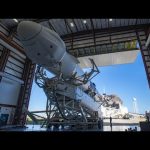
SpaceX’s 18th Commercial Resupply Services mission to the International Space Station lifted off on Thursday, July 25, at 6:01 p.m. EDT from Space Launch Complex 40 at Cape Canaveral Air Force Station, next to NASA’s Kennedy Space Center in Florida. The Dragon spacecraft will deliver more than 5,000 pounds of research and supplies to the orbiting laboratory. Replay the countdown and liftoff!
On April 18, Orbital ATK’s Cygnus cargo space craft launched from Cape Canaveral Air Force Station in Florida aboard a United Launch Alliance rocket, on Orbital ATK’s seventh resupply mission to the International Space Station. Cygnus is packed with 7,600 pounds of supplies and research for the crew aboard the orbiting laboratory.
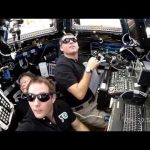
ESA astronaut Thomas Pesquet with NASA astronauts Shane Kimbrough and Peggy Whitson in the Cupola observatory using the International Space Station’s 16-m robotic arm to grapple the SpaceX Dragon cargo spaceship.
The video is sped up 20 times with this recording lasting 45 minutes 30 seconds at normal speed. It shows Shane and Thomas monitoring the spacecraft’s approach scanning the monitors, ready to step in if necessary. Thomas took manual control of the robotic arm and extended it to grapple the vehicle when 11 m from the Station. The Dragon CRS-10 flight was launched on 19 February 2017 and berthed with the Space Station four days later.
The spacecraft carried over 1500 kg of supplies including NASA’s Stratospheric Aerosol and Gas Experiment, or SAGE III, to monitor aerosols, ozone and other gases in Earth’s high atmosphere by looking at the sunlight and moonlight as they pass through. SAGE III is mounted on ESA’s Hexapod – a six-legged tracker that points the facility in the right direction.
Inside the spacecraft was also France’s CNES space agency Fluidics experiment to probe how fluids behave in weightlessness. Thomas is spending six months on the International Space Station as part of his Proxima mission. During Proxima, Thomas will perform around 50 scientific experiments for ESA and France’s space agency CNES as well as take part in many research activities for the other Station partners.
The mission is part of ESA’s vision to use Earth-orbiting spacecraft as a place to live and work for the benefit of European society while using the experience to prepare for future voyages of exploration further into the Solar System.
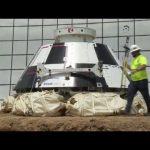
The SpaceX Dragon cargo spacecraft left the International Space Station on August 26. The Dragon departed the station five weeks after delivering almost 5,000 pounds of supplies, experiments and equipment to the orbital complex – including an international docking adapter for use by future American commercial crew spacecraft transporting astronauts to the station. The station’s Canadarm2 robotic arm was used to grapple the Dragon, move it away from the ISS, and release it for its return trip to Earth. The capsule is returning with about 3,000 pounds of cargo and experiments for researchers and investigators. Also, New U.S. Endurance Record in Space, Next U.S. Spacewalk Previewed, Boeing CST-100 Starliner Land Drop Test, SLS Liquid Hydrogen Test Tank Moved, and Celebrating National Parks, from Space!
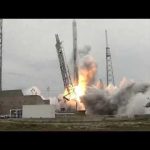
Approximately 2.4 tons of NASA science investigations and cargo were launched to the International Space Station aboard SpaceX’s Dragon spacecraft. The launch aboard the company’s Falcon 9 rocket took place from Space Launch Complex 40 at Cape Canaveral Air Force Station in Florida on Monday, April 18 at 3:25 p.m. EDT. Dragon’s cargo will support more than 150 experiments that will be conducted during space station Expeditions 39 and 40. The spacecraft will be grappled at 7:11 a.m. on Wednesday, April 16 by Expedition 39 Commander Koichi Wakata of the Japan Aerospace Exploration Agency. Dragon is scheduled to depart the space station May 18 for a splashdown in the Pacific Ocean west of Baja California, bringing with it about 3,500 pounds of science and research, hardware, crew supplies and spacewalk tools from the space station.
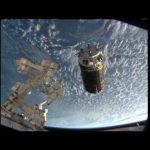
Six days after launching from the Tanegashima Space Center in southern Japan, the unpiloted Japanese Kounotori4 H-II Transfer Vehicle, or HTV-4, met up with The International Space Station and was captured by the Expedition 36 crew aboard the ISS, using the station’s Canadarm2 robotic arm. The HTV-4 was launched with more than 3 1/2 tons of cargo and experiments for delivery to the ISS.
ATV Albert Einstein ESA’s automated support and supply ferry for the International Space Station was launched by an Ariane 5 launcher on 6 June 2013. After travelling over 6 million kms over the course of ten days it caught up with the International Space Station on 15 June and docked with the orbital outpost only 11 mm of absolute centre. ESA astronaut Luca Parmitano oversaw docking and unloading of Albert Einstein’s cargo as part of his six-month Volare mission on the International Space Station.
In recent weeks several space freighters, the Russian Progress and Japanese HTV, have arrived at the International Space Station. But the most important logistics spacecraft for the ISS is Europe’s Automated Transfer Vehicle. The ATV-2 called Johannes Kepler is to be launched from Kourou in just over a week and will be docking at the orbital complex on February 23rd with over 7 tonnes of cargo.