Tag: debris

  • Dodging debris to keep satellites safe

    Dodging debris to keep satellites safe

    Our planet is surrounded by spacecraft helping us study our changing climate, save lives following disasters, deliver global communication and navigation services and help us answer important scientific questions.

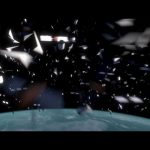
    But these satellites are at risk. Accidental collisions between objects in space can produce huge clouds of fast-moving debris that can spread and damage additional satellites with cascading effect.

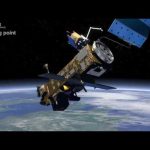
    In this animation, find out how teams at ESA’s European Space Operations Centre in Darmstadt, Germany, take action to keep satellites safe after receiving an alert warning of a possible collision between an active satellite and a piece of space debris.

    When the alert is raised, ESA experts determine the risk of a collision and plan a collision avoidance manoeuvre that can be used to get the satellite out of harm’s way if necessary.

    Additional observations of the piece of space debris help the team better understand its path and the risk of collision. If that risk remains too high (typically 1 in 10 000), the planned manoeuvre is carried out to temporarily change the orbit of the satellite until the threat has passed.

    Each manoeuvre comes at a price. They take skill and time to plan, cost precious fuel – shortening the lifetime of the mission – and often require instruments to be temporarily shut off, preventing them from collecting important data.

    While most alerts do not end up requiring evasive action, the number of alerts is rapidly increasing. Hundreds are already issued every week. Several companies have begun to launch large constellations into low-Earth orbit to provide global internet access. They have great benefits, but could be a source of huge disruption if we do not change our behaviour.

    In just a few years, our current methods for avoiding collisions in space will no longer be enough. To safeguard humankind’s continued access to space for future generations, ESA is developing technologies for an automated collision avoidance system.

    Find out more: https://space-debris-conference.sdo.esoc.esa.int/

    ★ Subscribe: http://bit.ly/ESAsubscribe and click twice on the bell button to receive our notifications.

    Check out our full video catalog: http://bit.ly/SpaceInVideos
    Follow us on Twitter: http://bit.ly/ESAonTwitter
    On Facebook: http://bit.ly/ESAonFacebook
    On Instagram: http://bit.ly/ESAonInstagram
    On Flickr: http://bit.ly/ESAonFlickr

    We are Europe’s gateway to space. Our mission is to shape the development of Europe’s space capability and ensure that investment in space continues to deliver benefits to the citizens of Europe and the world. Check out https://www.esa.int/ to get up to speed on everything space related.

    Copyright information about our videos is available here: https://www.esa.int/ESA_Multimedia/Terms_and_Conditions

    #ESA
    #TimeToAct
    #SpaceDebris
  • Space Debris

    Space Debris

    On 20 April 2021, ESA will host the 8th European Conference on Space Debris from Darmstadt, in Germany. Scientists, engineers, industry experts and policy makers will spend the virtual four day conference discussing the latest issues surrounding space debris. They will exchange the latest research, try to come up with solutions for potential problems and define the future direction of any necessary action.

    There are currently over 129 million objects larger than a millimetre in orbits around Earth. These range from inactive satellites to flakes of paint. But no matter how small the item of debris, anything travelling up to 56 000 km/h in an orbit is dangerous if it comes into contact with the many satellites that connect us around the world, be it for GPS, mobile phone data or internet connectivity. The solution is to take action before it’s too late. This is why ESA has commissioned ClearSpace-1 – the world’s first mission to remove space debris – for launch in 2025.

    Learn more: https://bit.ly/SpaceDebrisESA

    ★ Subscribe: http://bit.ly/ESAsubscribe and click twice on the bell button to receive our notifications.

    Check out our full video catalog: http://bit.ly/SpaceInVideos
    Follow us on Twitter: http://bit.ly/ESAonTwitter
    On Facebook: http://bit.ly/ESAonFacebook
    On Instagram: http://bit.ly/ESAonInstagram
    On Flickr: http://bit.ly/ESAonFlickr

    We are Europe’s gateway to space. Our mission is to shape the development of Europe’s space capability and ensure that investment in space continues to deliver benefits to the citizens of Europe and the world. Check out https://www.esa.int/ to get up to speed on everything space related.

    Copyright information about our videos is available here: https://www.esa.int/ESA_Multimedia/Terms_and_Conditions

    #ESA
    #SpaceDebris
    #CleanSpace

  • Earth’s first space debris removal mission

    Earth’s first space debris removal mission

    ESA has signed an €86 million contract with an industrial team led by Swiss start-up ClearSpace SA to purchase a unique service: the first-ever removal of an item of space debris from orbit.

    As a result, in 2025, ClearSpace will launch the first active debris removal mission, ClearSpace-1, which will rendezvous, capture and take down for reentry the upper part of a Vespa (Vega Secondary Payload Adapter) used with Europe’s Vega launcher. This object was left in an approximately 801 km by 664 km-altitude gradual disposal orbit, complying with space debris mitigation regulations, following the second flight of Vega back in 2013.

    ★ Subscribe: http://bit.ly/ESAsubscribe and click twice on the bell button to receive our notifications.

    Check out our full video catalog: http://bit.ly/SpaceInVideos
    Follow us on Twitter: http://bit.ly/ESAonTwitter
    On Facebook: http://bit.ly/ESAonFacebook
    On Instagram: http://bit.ly/ESAonInstagram
    On Flickr: http://bit.ly/ESAonFlickr

    We are Europe’s gateway to space. Our mission is to shape the development of Europe’s space capability and ensure that investment in space continues to deliver benefits to the citizens of Europe and the world. Check out https://www.esa.int/ to get up to speed on everything space related.

    Copyright information about our videos is available here: https://www.esa.int/ESA_Multimedia/Terms_and_Conditions

    #ESA
    #SpaceDebris
    #CleanSpace1

  • Space debris – efforts to clean up space

    Space debris – efforts to clean up space

    The European Space Agency (ESA) is part of an international effort to monitor and – ultimately – tackle space debris. This junk – accumulated in orbit since the dawn of the space age sixty years ago – poses an increasing risk to operational spacecraft.

    ESA is developing missions to tackle the problem to help prevent a serious collision in space. The Agency is also monitoring possible dangers caused by fragments of redundant spacecraft falling to Earth, such as China’s space station Tiangong-1 – due to enter the atmosphere in the coming months.

    Visit our Clean Space site to learn more: http://www.esa.int/Our_Activities/Space_Engineering_Technology/Clean_Space

  • ESA Euronews: Space debris

    ESA Euronews: Space debris

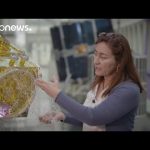
    Space debris has become a pressing issue, with objects in orbit flying out of control, posing a risk to satellites and to astronauts. We attended a meeting of space debris experts at ESA’s ESTEC technology base in the Netherlands to find out more about what can be done to deal with the problem.

    This video is also available in the following languages:
    German: https://www.youtube.com/watch?v=cQAje74nQuI
    French: https://www.youtube.com/watch?v=fXcrMQ5WjFI
    Italian: https://www.youtube.com/watch?v=Jp26l0PnMzo
    Spanish: https://www.youtube.com/watch?v=j7XXKHKlBPo
    Portuguese: https://www.youtube.com/watch?v=K_NIAMWBofk
    Greek: https://www.youtube.com/watch?v=F4cl5p2kpKA
    Hungarian: https://www.youtube.com/watch?v=4N4bfQSHTbM

  • Space debris – a journey to Earth (3D stereoscopic)

    Space debris – a journey to Earth (3D stereoscopic)

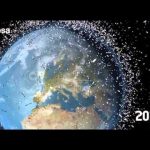
    Space debris – a journey to Earth (3D stereoscopic version) takes the audience on a journey from the outer solar system back to our home planet. The objects encountered along the way are manmade. Originally designed to explore the universe, these are now a challenge for modern space flight. An estimated number of 700,000 objects larger than 1 cm and 170 million objects larger than 1mm are expected to reside in Earth orbits.

    The video gives a closer look at the different regions used for space flight and explains how mitigation and removal measures could preserve future usage of these orbits.

    A 2D version of this video is available at: https://www.youtube.com/watch?v=zT7typHkpVg

    Produced for the 7th European Conference on Space Debris, 18-21 April 2017.

    Follow the conference live via: https://livestream.com/esa/spacedebris2017

    Credit: ESA/ID&Sense/ONiRiXEL, CC BY-SA 3.0 IGO (https://creativecommons.org/licenses/by-sa/3.0/igo/)

  • Space debris – a journey to Earth

    Space debris – a journey to Earth

    Space debris – a journey to Earth takes the audience on a journey from the outer solar system back to our home planet. The objects encountered along the way are manmade. Originally designed to explore the universe, these are now a challenge for modern space flight. An estimated number of 700,000 objects larger than 1 cm and 170 million objects larger than 1mm are expected to reside in Earth orbits.

    The video gives a closer look at the different regions used for space flight and explains how mitigation and removal measures could preserve future usage of these orbits.

    Produced for the 7th European Conference on Space Debris, 18-21 April 2017.

    A 3D stereoscopic version of this video is available here: https://www.youtube.com/watch?v=EzrMHWjQCtc

    Follow the conference live via: https://livestream.com/esa/spacedebris2017

    Credit: ESA/ID&Sense/ONiRiXEL, CC BY-SA 3.0 IGO (https://creativecommons.org/licenses/by-sa/3.0/igo/)

  • ESA’s active debris removal mission: e.Deorbit (with annotations)

    ESA’s active debris removal mission: e.Deorbit (with annotations)

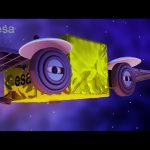
    ESA’s Clean Space initiative is studying an active debris removal mission called e.Deorbit, which will target an ESA-owned derelict satellite in low orbit, capture it, then safely burn it up in a controlled atmospheric reentry. e.Deorbit will be the world’s first active debris removal mission, and will provide an opportunity for European industries to showcase their technological capabilities to a global audience.

    Read more about e.Deorbit:
    http://www.esa.int/Our_Activities/Space_Engineering_Technology/Clean_Space/e.Deorbit

    A version of this video without annotations was previously published here:
    https://www.youtube.com/watch?v=R6yZLbUCU2c

  • ESA’s active debris removal mission: e.Deorbit

    ESA’s active debris removal mission: e.Deorbit

    ESA’s Clean Space initiative is studying an active debris removal mission called e.Deorbit, which will target an ESA-owned derelict satellite in low orbit, capture it, then safely burn it up in a controlled atmospheric reentry. e.Deorbit will be the world’s first active debris removal mission, and will provide an opportunity for European industries to showcase their technological capabilities to a global audience.

  • Space debris story (2013)

    Space debris story (2013)

    The story of space debris highlighting how the unintended consequences of intense spaceflight activity during the past 60 years has resulted in a growing population of debris objects that pose hazards to safe space navigation. In 2013, experts estimate that 29 000 objects larger than 10 cm were orbiting Earth.

    The video also highlights the current state of debris mitigation measures and presents several concepts for removing defunct satellites from economically vital orbits now being studied by space agencies and industry across Europe.

    This video was produced for the 6th European Conference on Space Debris, 22-25 April 2013.

  • ESA presents… Clean Space

    ESA presents… Clean Space

    Clean Space is the European Space Agency’s initiative to safeguard the terrestrial and orbital environments, while boosting the innovation and competitiveness of Europe’s space sector. This animated guide follows a newly-launched satellite as it first enters orbit, in the process explaining the various branches of the Clean Space effort and the different future Clean Space aims to build.

    Now with English, French, German, Dutch, Italian, Greek, Romanian and Swedish subtitles. More languages will be added as they become available.

  • ORBITAL DEBRIS SAFELY PASSES INTERNATIONAL SPACE STATION

    ORBITAL DEBRIS SAFELY PASSES INTERNATIONAL SPACE STATION

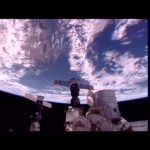
    A small piece of Cosmos 2251 satellite debris safely passed by the International Space Station at 2:38a.m. EDT, Saturday March 24 allowing the six Expedition 30 crew members onboard the orbiting complex to exit their Soyuz spacecraft and resume normal activities.

    The crew sheltered in the two Soyuz spacecraft as a precaution, the third time in station history that a crew has had to shelter in place due to the possibility of a conjunction with orbital debris and the first since June 2011. NASA’s Expedition 30 Commander Dan Burbank and Russian cosmonauts Anton Shkaplerov and Anatoly Ivanishin were in their Soyuz TMA-22 spacecraft attached to the Poisk module on the space-facing side of the Zvezda service module, while cosmonaut Oleg Kononenko, NASA’s Don Pettit and Andre Kuipers of the European Space Agency were in their Soyuz TMA-03M spacecraft on the Earth-facing side of the Zarya module.

    The piece of debris was a remnant of a Feb. 10, 2009 collision between the dormant Cosmos 2251 satellite and an operational Iridium 33 communications satellite. The collision added about 2,000 trackable items to the orbital debris catalog. At the time of closest approach, the debris was moving from left to right in front of the station at an estimated overall miss distance of between 11 and 14 kilometers and a radial miss distance of 120 meters.

  • ESA’s space ferry: The Automated Transfer Vehicle

    ESA’s space ferry: The Automated Transfer Vehicle

    The International Space Station (ISS) depends on regular deliveries of equipment, food, air and water for its crews. Since the arrival of the first Automated Transfer Vehicle in April 2008, it has become one of the Stations indispensable supply ships.