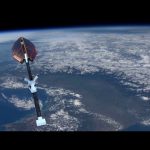
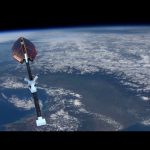
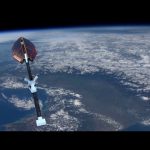
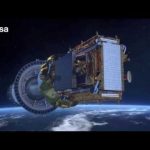
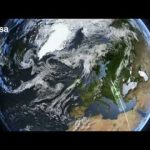
Discover more about our planet with the Earth from Space video programme. This special edition celebrates three years of successful operations of the Copernicus Sentinel-1 constellation.
Earth from Space is presented by Kelsea Brennan-Wessels from the ESA Web-TV virtual studios. Explore the US capital with Sentinel-2 in the 245th edition.
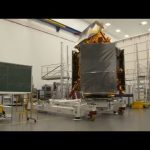
The preparations of ESA’s latest Earth observation satellite Sentinel-5P, also known as Sentinel-5 Precursor, are finished, and the satellite has been shipped to the Plesetsk Cosmodrome in Russia for launch in October 2017.
Sentinel-5P will ensure continued data is gathering on Earth’s atmosphere and is the intermediary satellite to fill the gap between the past generation of atmospheric monitoring satellites and the future generation of Sentinel-4 and 5, which will be launched early in the next decade. Sentinel-5P is part of Copernicus,the world’s largest environmental monitoring programme which is operated bythe European Commission.
This video contains interviews with: Josef Aschbacher, ESA Director of Earth observation programmes, Kevin McMullan, ESA Sentinel-5P Project Manager and Claus Zehner, ESA Sentinel-5P Mission Manager
Discover more about our planet with the Earth from Space video programme. In this special edition, Jean-Yves Le Gall, President of the CNES French Space Agency, and Josef Aschbacher, Director of ESA’s Earth Observation Programmes, join the show to discuss how cooperation will further benefit Earth observation and the Copernicus environmental monitoring programme.
Earth from Space is presented by Kelsea Brennan-Wessels from the ESA Web-TV virtual studios. In the 229th edition, Sentinel-2 takes us over the border of the US states Utah and Colorado.
Earth from Space is presented by Kelsea Brennan-Wessels from the ESA Web-TV virtual studios. Learn about land reclamation around Amsterdam in the 228th edition.
Earth is the largest rocky planet in our Solar System, and the only body we know of capable of supporting life. With so much news about exoplanets dominating the headlines, in this episode of Space we take a step back to take a look at Earth as a planet.
Four and a half billion years old and 149.6 million kilometres from the Sun, it’s not like anything else in the Solar System: “Planet Earth is quite a particular planet,” says Josef Aschbacher, Director of Earth Observation at ESA. “We have 70% of water, we have land masses which are actually moving over time. We have an atmosphere which is rich in oxygen, nitrogen, in water vapour. All of these are necessities in order to have life on a planet like this.”
Rome is a perfect spot to look at the defining characteristics of planet Earth, in particular the presence of liquid water. Our home planet has the right temperature and correct atmospheric pressure for water to flow on its surface, making it so hospitable to life.
A Terra é, segundo sabemos, o único planeta capaz de suportar vida. Está a cerca de 150 milhões de quilómetros do Sol e tem cerca de quatro mil e quinhentos milhões de anos de idade.
Não existe nada semelhante no sistema solar, como confirma o diretor do Observatório da Terra da “Agência Espacial Europeia”:http://www.esa.int/por/ESA_in_your_country/Portugal (AEE), Josef Aschbacher: “A Terra é um planeta bastante específico. Como podem ver aqui, é fascinante. Temos 70% de água, temos massas que se movem, ao longo do tempo. Temos uma atmosfera rica em oxigénio, nitrogénio, vapor de água… Tudo necessário para haver vida num planeta como este”.
Na superfície da Terra, em Roma, Itália, somos constantemente lembrados de como a água é importante para nosso planeta.
Ao contrário de Marte ou Vénus, a Terra tem a temperatura e a pressão atmosférica corretas para que a água flua na sua superfície.
A legnagyobb sziklás bolygó a Naprendszerben, egy igazán különleges hely: lássuk, milyen planéta tulajdonképpen a Föld.
Egy négy és fél milliárd éves szikla, nagyjából százötven millió kilométerre a Naptól. Az egyetlen általunk ismert bolygó, amelyen élet lehetséges. A Naprendszeren belül pedig egészen biztosan egyedülálló.
– A Föld egy különleges bolygó – szögezte le Josef Aschbacher, az Európai Űrügynökség (ESA) Föld-megfigyelési Központjának igazgatója. – A felszín 70 százalékát víz fedi, vannak nagy földtömegek, amelyek lassan mozognak. Van oxigénben, nitrogénben vízgőzben gazdag atmoszféra. Ezek mindegyikéhez szükség van ahhoz, hogy az élet fennmaradhasson egy ilyen bolygón.
A Föld felületén minden emlékeztet arra, hogy a folyékony víz mennyire fontos. A Marssal vagy a Vénusszal ellentétben a Földön a hőmérséklet és a légköri nyomás is megfelelő ahhoz, hogy folyékony víz legyen a felszínen.
Earth from Space is presented by Kelsea Brennan-Wessels from the ESA Web-TV virtual studios. In the 225th edition, Sentinel-2 takes us over vast agricultural fields in Brazil.
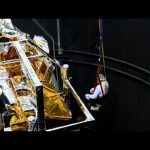
It’s known colloquially as a ‘flying Dutchman’ operation: lowering an engineer down into ESA’s Large Space Simulator to make adjustments on the test item within; in this case the payload module of the newest in the MetOp series of weather satellites. The LSS is the largest vacuum chamber in Europe, based at ESA’s Test Centre in Noordwijk, the Netherlands.
MetOp is a set of three polar-orbiting satellites whose temperature and humidity observations from a relatively close 800 km-altitude orbit have sharpened the accuracy of weather forecasting. Procured by ESA for Eumetsat, the European Organisation for the Exploitation of Meteorological Satellites, MetOp-A was launched in 2006 and MetOp-B in 2012, with MetOp-C due to follow next year.
The 2.1 tonne module carries a suite of meteorology and climatology instruments, variously procured by ESA or sourced from Eumetsat, France’s CNES space agency and the US National Oceanic and Atmospheric Administration. Once testing is complete, MetOp-C’s payload module will travel to the Airbus Defence and Space facility in Toulouse, France, to be integrated with its service module – the segment of the satellite providing attitude and orbit control, electrical power and communications, and hosting the main computer. The launch of MetOp-C by Soyuz from Europe’s Spaceport in French Guiana is scheduled for October 2018.
Earth from Space is presented by Kelsea Brennan-Wessels from the ESA Web-TV virtual studios. In the 224th edition, Sentinel-2 takes us over northern Serbia to the region of Vojvodina.
After three years of collecting data, the highest resolution map of Earth’s lithospheric magnetic field from space to date has been released. The dataset combines measurements from ESA’s Swarm satellites with historical data from the German CHAMP satellite using a new modelling technique that allowed scientists to extract tiny magnetic signals from Earth’s outer layer. Red represents areas where the lithospheric magnetic field is positive, while blues show areas where it is negative.
Earth from Space is presented by Kelsea Brennan-Wessels from the ESA Web-TV virtual studios. In the 221st edition, Sentinel-2 takes us over the Rocky Mountains and Prairies of Canada’s Alberta province.
Sentinel-2B will be launched by a Vega rocket from Europe’s Spaceport, French Guiana.
Lift off is scheduled at 01:49 GMT (02.49 CET) on 7 March, 22:49 on 6 March in Kourou.
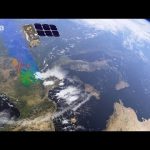
It will join its sister satellite Sentinel-2A and the other Sentinels part of the Copernicus programme, the most ambitious Earth observation programme to date.
Sentinel-2A and 2B will be supplying ‘colour vision’ for Copernicus and together they can cover all land surfaces once every five days thus optimising global coverage and the data delivery for numerous applications.
The data provided by these Sentinel-2 satellites is particularly suited for agricultural purposes, such as managing administration and precision farming.
ESA is currently working with the European Commission and National stakeholders to understand the full range of opportunities Earth Observation can contribute in particular to modernise and simplify the Common Agricultural Policy. This video shows how agriculture benefits from the use of the Sentinel data in the Czech Republic.
Earth from Space is presented by Kelsea Brennan-Wessels from the ESA Web-TVvirtual studios. Take a tour with Sentinel-2 to the Tian Shan mountains inChina in the 211th edition.
Earth from Space is presented by Kelsea Brennan-Wessels from the ESA Web-TV virtual studios. Part of Nepal including its capital city, Kathmandu, and the Himalayan foothills are featured in the 202nd edition.
Earth from Space is presented by Kelsea Brennan-Wessels from the ESA Web-TV virtual studios. The Chinese city of Shanghai is featured in the 200th edition.
Earth from Space is presented by Kelsea Brennan-Wessels from the ESA Web-TV virtual studios. In the one hundred ninety-ninth edition, explore Kazakhstan’s Alakol Lake.
Earth from Space is presented by Malì Cecere from the ESA Web-TV virtual studios. The one hundred ninety-third edition features a Sentinel-2 image of Sundarbans in Bangladesh.
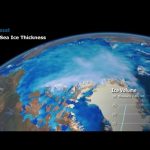
This animation shows changes in ice volume in Antarctica, Greenland and the Arctic ocean measured by the CryoSat satellite, 2010–15. CryoSat’s readings also contribute to our knowledge of global ocean depth.
Earth from Space is presented by Malì Cecere from the ESA Web-TV virtual studios. The one hundred eightieth edition features a Sentinel-3A image of the River Nile and surroundings.
Discover more about our planet with the Earth from Space video programme. In this special edition, ESA’s Josef Aschbacher joins the show to discuss the past, present and future of the Copernicus environment monitoring programme and its Sentinel satellites.
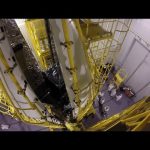
This timelapse video shows Sentinel-3A, from final preparations to liftoff on a Rockot launcher from the Plesetsk Cosmodrome in northern Russia, at 17:57 GMT (18:57 CET) on 16 February 2016.
Sentinel-3A is the third satellite to be launched for Europe’s Copernicus environment monitoring programme.
Designed as a two-satellite constellation – Sentinel-3A and -3B – the Sentinel-3 mission carries a series of cutting-edge instruments for systematic measurements of Earth’s oceans, land, ice and atmosphere. Over oceans, Sentinel-3 measures the temperature, colour and height of the sea surface as well as the thickness of sea ice. These measurements will be used, for example, to monitor changes in sea level, marine pollution and biological productivity. Over land, this innovative mission will monitor wildfires, map the way land is used, provide indices of vegetation state and measure the height of rivers and lakes.
On 16 February 2016 at 18:57 CET (17:57 GMT), Sentinel-3A will be launched on top of a Rockot from the Russian Plesetsk Cosmodrome.
This satellite will be the third Sentinel for the Copernicus Programme. Copernicus is the most ambitious Earth Observation programme to date. It will provide accurate, timely and easily accessible information to improve the management of the environment, understand and mitigate the effects of climate change and ensure civil security. This initiative is headed by the European Commission (EC) in partnership with the European Space Agency.
ESA coordinates the delivery of data and is developing a new family of satellites, the Sentinels, specifically for the operational needs of Copernicus. The EC, acting on behalf of the European Union, is responsible for the overall initiative, setting requirements and managing the services. These services fall into six main categories: land management, the marine environment, atmosphere, emergency response, security and climate change.
This video explains what the Sentinels represent within Copernicus.
Earth from Space is presented by Malì Cecere from the ESA Web-TV virtual studios. The one hundred seventieth edition features a Sentinel-2 satellite image of Bahrain and surroundings
The green light has been given for all users to have open access to all of the data from ESA’s Sentinel-2A satellite, launched in June for the Copernicus programme.
This video celebrates Sentinel-2A’s life, from its birth to what it has become today, and what it can give us tomorrow.
Held at the Temple of Hadrian in Rome, Italy, on 27–29 May 2015, the International Symposium on Climate Change reviewed the links between climate change and world development. Experts on a variety of climate- and development-related topics presented over the three-day period, including a talk by ESA’s Mark Doherty on observing climate from space.
The launch of the first Sentinel-1 satellite marks a new paradigm in Earth observation focusing on operational missions to support users for decades to come. This first satellite for Europe’s environmental monitoring Copernicus programme carries an advanced radar to image Earth’s surface no matter what the weather or if it is day or night. Olaf Trieschmann from the European Maritime Safety Agency talks about the need for radar satellites and how data from Sentinel-1 will be used to monitor oil spills and for maritime surveillance. ESA’s Josef Aschbacher talks about how the wide range of services offered through Copernicus will make a step change in the way we manage the environment.
In early April, Sentinel-1A will be launched from Europe’s Spaceport in French Guiana on a Soyuz launcher. The radar mission is the first of the Copernicus programme, providing an all-weather, day-and-night supply of imagery for Copernicus user services.
Accurate information about the environmental is crucial. It helps to understand how our planet and climate are changing, the role human activity play in these changes and how this affects our daily lives. Responding to these challenges, the EU and ESA have developed an Earth observation programme called Copernicus, formerly known as Global Monitoring for Environment and Security, – a programme that becomes operational with the launch of Sentinel-1A.
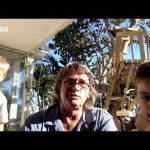
World-renowned musician Mike Oldfield, composer of the music used in ESA’s Sentinel-1 video, is a big space fan. From his home, Mike and his two sons (the future generation of space scientists and explorers) sent this message to ESA and the Sentinel-1 team with best wishes for the upcoming launch.
Sentinel-1 is an important mission, its launch will mark a new shift in Earth observation, focusing on operational missions to support users for decades to come. This first mission carries an advanced radar sensor to image Earth’s surface through cloud and rain and regardless of whether it is day or night.
Located in Frascati, Italy, ESRIN — known as the ESA Centre for Earth Observation — is one of the five ESA specialised centres situated in Europe.
The mission and payload operations of ESA’s Earth observation satellites are managed here and ESRIN is the primary source for the acquisition, distribution and exploitation of data from these and other non-ESA satellites.
Within ESRIN, a key role in Europe’s space effort has been undertaken with the development of the new small launcher, Vega, which took its maiden voyage in February 2012.
ESRIN designs and develops all ESA-wide software for corporate applications and is responsible for developing security measures for classified space programmes.
The European Centre for Space Records (ECSR) is also based at ESRIN. The ECSR appraises and preserves the valuable technical records of completed ESA projects together with their management archives to safeguard this valuable knowledge for generations to come.
Finally, ESRIN is home to ESA’s Near-Earth Object Coordination Centre. The centre serves as the central access point to a network of European near-Earth object data sources and information providers being established under ESA’s Space Situational Awareness (SSA) Programme.
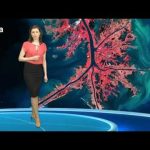
Earth from Space is presented by Kelsea Brennan-Wessels from the ESA Web-TV virtual studios.
In the twenty-fourth edition we look at the Mississippi River Delta, where the largest river in the United States empties into the Gulf of Mexico.
Earth from Space is presented by Kelsea Brennan-Wessels from the ESA Web-TV virtual studios.
In the nineteenth edition we look at an example of what a high-resolution image could look like from the future Sentinel-2 mission — envisaged for launch next year. The mockup was constructed using 82 images from the German RapidEye satellites.
Tutto ha una fine. Per gli uomini ma anche per i satelliti. Dopo sedici anni di fedele servizio, il satellite d’osservazione ERS 2 è condannato a trasformarsi in luce e calore. È l’argomento di questa puntata di Space.