We are Europe’s gateway to space. Our mission is to shape the development of Europe’s space capability and ensure that investment in space continues to deliver benefits to the citizens of Europe and the world. Check out https://www.esa.int/ to get up to speed on everything space related.
These are termed “tidal disruption events.” But the wording belies the complex, raw violence of a black hole encounter. There is a balance between the black hole’s gravity pulling in star stuff, and radiation blowing material out. In other words, black holes are messy eaters. Astronomers are using Hubble to find out the details of what happens when a wayward star plunges into the gravitational abyss.
We are Europe’s gateway to space. Our mission is to shape the development of Europe’s space capability and ensure that investment in space continues to deliver benefits to the citizens of Europe and the world. Check out https://www.esa.int/ to get up to speed on everything space related.
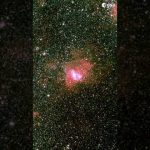
This video takes the viewer on a journey to NGC 346, one of the most dynamic star-forming regions in nearby galaxies, as seen by the NASA/ESA/CSA James Webb Space Telescope.
NCG 346 is located in the Small Magellanic Cloud (SMC), a dwarf galaxy close to our Milky Way.
Credit: ESA/Webb, NASA, CSA, ESO, ESA/Hubble, Digitized Sky Survey 2, A. Nota, N. Bartmann, M. Zamani Music: Music for the Zoom: Tonelabs – The Red North
★ Subscribe: http://bit.ly/ESAsubscribe and click twice on the bell button to receive our notifications.
We are Europe’s gateway to space. Our mission is to shape the development of Europe’s space capability and ensure that investment in space continues to deliver benefits to the citizens of Europe and the world. Check out https://www.esa.int/ to get up to speed on everything space related.
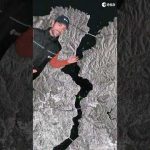
Separating the Black Sea and the Sea of Marmara, the Bosphorus strait is one of the busiest maritime passages in the world, with around 48 000 ships passing through every year. Daily traffic includes international commercial shipping vessels and oil tankers, as well as local fishing and ferries.
The two identical Copernicus Sentinel-1 satellites carry radar instruments, which can see through clouds and rain, and in the dark, to image Earth’s surface below. The multi-temporal remote sensing technique combines two or more radar images over the same area to detect changes occurring between acquisitions.
We are Europe’s gateway to space. Our mission is to shape the development of Europe’s space capability and ensure that investment in space continues to deliver benefits to the citizens of Europe and the world. Check out https://www.esa.int/ to get up to speed on everything space related.
Researchers have confirmed the presence of an exoplanet, a planet that orbits another star, using James Webb Space Telescope for the first time. Formally classified as LHS 475 b, the planet is almost exactly the same size as our own, clocking in at 99% of Earth’s diameter.
Among all operating telescopes, only Webb is capable of characterising the atmospheres of Earth-sized exoplanets. The team attempted to assess what is in the planet’s atmosphere by analysing its transmission spectrum. Although the data show that this is an Earth-sized terrestrial planet, they do not yet know if it has an atmosphere.
Webb also revealed that the planet is a few hundred degrees warmer than Earth, so if clouds are detected it may lead the researchers to conclude that the planet is more like Venus, which has a carbon dioxide atmosphere and is perpetually shrouded in thick cloud.
📹 @EuropeanSpaceAgency 🖥️ @NASA , ESA, @canadianspaceagency , L. Hustak
★ Subscribe: http://bit.ly/ESAsubscribe and click twice on the bell button to receive our notifications.
We are Europe’s gateway to space. Our mission is to shape the development of Europe’s space capability and ensure that investment in space continues to deliver benefits to the citizens of Europe and the world. Check out https://www.esa.int/ to get up to speed on everything space related.
At the start of 2023 the European Space Agency ESA is happily looking forward to another year filled with a host of thrilling new missions, cutting edge science and the continued effort to guarantee independent access to space for Europe. We will see the first images of the first Meteosat Third Generation satellite, the launch of the Jupiter Icy Moons Explorer, and of Euclid and another Sentinel-1 satellite launch. It will also be the year of Ariane 6 which will make its inaugural flight and the first Dane in space, Andreas Mogensen will return to the ISS as the new astronaut-candidates commence their training. Near the end of the year the second Space Summit will further cement ESA’s ambitions for Space in Europe.
★ Subscribe: http://bit.ly/ESAsubscribe and click twice on the bell button to receive our notifications.
We are Europe’s gateway to space. Our mission is to shape the development of Europe’s space capability and ensure that investment in space continues to deliver benefits to the citizens of Europe and the world. Check out https://www.esa.int/ to get up to speed on everything space related.
Just think about the amount of food and water that a crew of astronauts would need to go all the way to Mars, as well as all the mental, physiological, and, most importantly, radiation risk challenges. How about we avoid all of those issues by putting the astronauts to sleep?
The main problem is that humans don’t hibernate. Astronauts would have to take a drug to induce hibernation and enter sleeping pods, quiet environments with low lights, high humidity, kept at temperatures below 10°C.
Hibernation not only promises to benefit astronauts in space, but it may also offer new potential applications for patient care on Earth.
★ Subscribe: http://bit.ly/ESAsubscribe and click twice on the bell button to receive our notifications.
We are Europe’s gateway to space. Our mission is to shape the development of Europe’s space capability and ensure that investment in space continues to deliver benefits to the citizens of Europe and the world. Check out https://www.esa.int/ to get up to speed on everything space related.
Nicaragua is the largest republic in Central America and is often referred to as ‘the country of lakes and volcanoes’ because of its many lakes, lagoons and a string of some 40 volcanoes stretching northwest to southeast along the Pacific coast.
We are Europe’s gateway to space. Our mission is to shape the development of Europe’s space capability and ensure that investment in space continues to deliver benefits to the citizens of Europe and the world. Check out https://www.esa.int/ to get up to speed on everything space related.
Two of the most distant galaxies seen to date have been captured by Webb in the outer regions of the giant galaxy cluster Abell 2744. The galaxies are not inside the cluster, but many billions of light-years behind it.
One of the galaxies existed only 450 million years after the Big Bang while the other one existed 350 million years after the Big Bang.
Both galaxies are seen really close in time to the Big Bang which occurred 13.8 billion years ago.
We are Europe’s gateway to space. Our mission is to shape the development of Europe’s space capability and ensure that investment in space continues to deliver benefits to the citizens of Europe and the world. Check out https://www.esa.int/ to get up to speed on everything space related.
Recently, Andreas Mogensen, now getting ready for his ‘Huginn’ mission to the ISS in 2023, stopped by ESA’s ESOC mission control centre in Darmstadt, Germany, to meet with some of the experts who keep our satellites flying.
Andreas usually works at NASA’s Johnson Space Center in Houston as an ISS ‘capcom’, and we don’t often see him in Europe. A few months back, while returning to Germany for some training at ESA’s Astronaut Centre in Cologne, we seized the opportunity to ask him if he’d like to stop over in Darmstadt for a look behind the scenes at mission control, and he immediately answered, ‘yes’!
Andreas’ studied aeronautical engineering with a focus on ‘guidance, navigation and control of spacecraft’ and we thought he’d be delighted to meet with the teams at mission control doing precisely that sort of work for our robotic missions.
We figured he’d also enjoy meeting colleagues from our Space Safety programme, especially the ones working on space debris and space weather, as these are crucial areas that influence the daily life of astronauts on the ISS.
Andreas met with Bruno Sousa and Julia Schwartz, who help keep Solar Orbiter healthy and on track on its mission to gather the closest-ever images of the Sun, observe the solar wind and our Star’s polar regions, helping unravel the mysteries of the solar cycle.
He also met with Stijn Lemmens, one of the analysts keeping tabs on the space debris situation in orbit, and Melanie Heil, a scientist helping ESA understand how space weather and our active Sun can affect missions in orbit and crucial infrastructure – like power grids – on ground.
We hope you enjoy this lively and informative day at mission control as much as Andreas and the teams at ESOC did!
★ Subscribe: http://bit.ly/ESAsubscribe and click twice on the bell button to receive our notifications.
We are Europe’s gateway to space. Our mission is to shape the development of Europe’s space capability and ensure that investment in space continues to deliver benefits to the citizens of Europe and the world. Check out https://www.esa.int/ to get up to speed on everything space related.
With this Timelapse captured from the ISS by our astronaut Samantha Cristoforetti, the entire ESA family wants to wish you a peaceful, safe and exciting year 2023!
May the new year be full of grand adventures and opportunities!
We’ll keep bringing the wonders of the universe and Earth to the palm of your hands 😉
📹 @EuropeanSpaceAgency / @NASA – S. Cristoforetti
★ Subscribe: http://bit.ly/ESAsubscribe and click twice on the bell button to receive our notifications.
We are Europe’s gateway to space. Our mission is to shape the development of Europe’s space capability and ensure that investment in space continues to deliver benefits to the citizens of Europe and the world. Check out https://www.esa.int/ to get up to speed on everything space related.
It’s New Year’s Eve day and our Earth from Space hosts, Chiara and Jorge, share some traditions of their home countries.
In Italy, people eat lentils on the last dinner of the year to bring good fortune and in Spain people eat one grape with each chime of the clock at midnight making a wish.
We are Europe’s gateway to space. Our mission is to shape the development of Europe’s space capability and ensure that investment in space continues to deliver benefits to the citizens of Europe and the world. Check out https://www.esa.int/ to get up to speed on everything space related.
2022 was a year of many ‘firsts’ for space in Europe, seeing the first European female International Space Station commander, the launch of the first Vega-C rocket, the launch of the first Artemis mission working to bring humans back to the Moon, and first images from the James Webb Space Telescope among many other success stories and lessons learned.
★ Subscribe: http://bit.ly/ESAsubscribe and click twice on the bell button to receive our notifications.
We are Europe’s gateway to space. Our mission is to shape the development of Europe’s space capability and ensure that investment in space continues to deliver benefits to the citizens of Europe and the world. Check out https://www.esa.int/ to get up to speed on everything space related.
Three different moments in a far-off supernova explosion were captured in a single snapshot by the NASA/ESA Hubble Space Telescope. The progenitor star exploded more than 11 billion years ago, when the Universe was less than a fifth of its current age of 13.8 billion years.
📹 @EuropeanSpaceAgency
📸 @NASA, ESA, STScI, Wenlei Chen (UMN), Patrick Kelly (UMN), Hubble Frontier Fields
★ Subscribe: http://bit.ly/ESAsubscribe and click twice on the bell button to receive our notifications.
We are Europe’s gateway to space. Our mission is to shape the development of Europe’s space capability and ensure that investment in space continues to deliver benefits to the citizens of Europe and the world. Check out https://www.esa.int/ to get up to speed on everything space related.
As Mars orbits around our Sun, time on the Red Planet is measured in years. However, there are some significant differences between a year on Mars and a year on Earth. Let’s look at some similarities and differences between a year on the two planets.
We are Europe’s gateway to space. Our mission is to shape the development of Europe’s space capability and ensure that investment in space continues to deliver benefits to the citizens of Europe and the world. Check out https://www.esa.int/ to get up to speed on everything space related.
The hopes of a new generation of astronomers were riding in the nosecone of the ESA-provided Ariane 5 rocket that had just disappeared into the clouds above Europe’s Spaceport in Kourou, French Guiana.
One year after this historic launch, Webb has already delivered groundbreaking data and breathtaking images. Here are the top 5 images for our Instagram community.
We are Europe’s gateway to space. Our mission is to shape the development of Europe’s space capability and ensure that investment in space continues to deliver benefits to the citizens of Europe and the world. Check out https://www.esa.int/ to get up to speed on everything space related.
In Rovaniemi, the Arctic Circle runs through Santa Claus Village, located eight kilometres north of the city centre. The Arctic Circle marks the southernmost latitude where the sun can stay continuously below or above the horizon for 24 hours – these phenomena are known as the Midnight Sun in the summer and the Polar Night in the winter.
We are Europe’s gateway to space. Our mission is to shape the development of Europe’s space capability and ensure that investment in space continues to deliver benefits to the citizens of Europe and the world. Check out https://www.esa.int/ to get up to speed on everything space related.
While Webb and other space telescopes, including the NASA/ESA Hubble Space Telescope, have previously revealed isolated ingredients of this heated planet’s atmosphere, the new readings provide a full menu of atoms, molecules, and even signs of active chemistry and clouds. The latest data also give a hint of how these clouds might look up close: broken up rather than as a single, uniform blanket over the planet.
📹 @EuropeanSpaceAgency
📸 @NASA, ESA, @canadianspaceagency , J. Olmsted (STS)
★ Subscribe: http://bit.ly/ESAsubscribe and click twice on the bell button to receive our notifications.
We are Europe’s gateway to space. Our mission is to shape the development of Europe’s space capability and ensure that investment in space continues to deliver benefits to the citizens of Europe and the world. Check out https://www.esa.int/ to get up to speed on everything space related.
Our alien friend Paxi went to visit ESA astronaut Thomas Pesquet on board the International Space Station during his Alpha mission. Thomas explains the difference between natural satellites – moons orbiting planets – and artificial satellites – human-made machines orbiting a space object.
We are Europe’s gateway to space. Our mission is to shape the development of Europe’s space capability and ensure that investment in space continues to deliver benefits to the citizens of Europe and the world. Check out https://www.esa.int/ to get up to speed on everything space related.
2022 was a year of many ‘firsts’ for space in Europe, seeing the first European female ISS commander, the launch of the first Vega-C rocket, Solar Orbiter’s first close encounter with our home star, the launch of the first Artemis mission working to bring humans back to the Moon, and first images from the James Webb Space Telescope.
Let’s take a look at the highlights and accomplishments of the European Space Agency during 2022.
★ Subscribe: http://bit.ly/ESAsubscribe and click twice on the bell button to receive our notifications.
We are Europe’s gateway to space. Our mission is to shape the development of Europe’s space capability and ensure that investment in space continues to deliver benefits to the citizens of Europe and the world. Check out https://www.esa.int/ to get up to speed on everything space related.
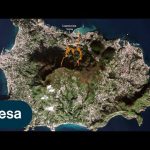
Italy has declared a state of emergency after a devastating landslide ripped through the island of Ischia on 26 November. More than 10 people have lost their lives after the landslide destroyed houses and swept cars into the sea. Satellite data shows the extent of the damage and the Copernicus Emergency Management Service has been activated to provide flood maps from space to help responders deal with the crisis.
★ Subscribe: http://bit.ly/ESAsubscribe and click twice on the bell button to receive our notifications.
We are Europe’s gateway to space. Our mission is to shape the development of Europe’s space capability and ensure that investment in space continues to deliver benefits to the citizens of Europe and the world. Check out https://www.esa.int/ to get up to speed on everything space related.
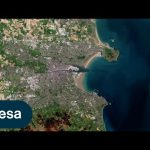
In this week’s edition of the Earth from Space video programme, the Copernicus Sentinel-2 mission takes us over Dublin, the capital and largest city of Ireland.
We are Europe’s gateway to space. Our mission is to shape the development of Europe’s space capability and ensure that investment in space continues to deliver benefits to the citizens of Europe and the world. Check out https://www.esa.int/ to get up to speed on everything space related.
Our alien friend Paxi went to visit ESA astronaut Thomas Pesquet on board the International Space Station during his Alpha mission. Thomas explains microorganisms on Earth and in space.
We are Europe’s gateway to space. Our mission is to shape the development of Europe’s space capability and ensure that investment in space continues to deliver benefits to the citizens of Europe and the world. Check out https://www.esa.int/ to get up to speed on everything space related.
The first Meteosat Third Generation Imager (MTG-I1) satellite lifted off on an Ariane 5 rocket from Europe’s Spaceport in French Guiana on 13 December at 21:30 CET.
From geostationary orbit, 36,000 km above the equator, this all-new weather satellite will provide state-of-the art observations of Earth’s atmosphere and realtime monitoring of lightning events, taking weather forecasting to the next level. The satellite carries two completely new instruments: Europe’s first Lightning Imager and a Flexible Combined Imager.
MTG-I1 is the first of six satellites that form the full MTG system, which will provide critical data for weather forecasting over the next 20 years. In full operations, the mission will comprise two MTG-I satellites and one MTG Sounding (MTG-S) satellites working in tandem.
★ Subscribe: http://bit.ly/ESAsubscribe and click twice on the bell button to receive our notifications.
We are Europe’s gateway to space. Our mission is to shape the development of Europe’s space capability and ensure that investment in space continues to deliver benefits to the citizens of Europe and the world. Check out https://www.esa.int/ to get up to speed on everything space related.
The uncrewed Artemis I test flight saw Orion travel around the Moon and farther than any spacecraft designed to carry humans and return them to Earth. Artemis is the international lunar exploration programme that is taking humankind to the Moon. This first mission provided a first test of both NASA’s Space Launch System (SLS) and the Orion moonship that was propelled by the European Service Module’s 33 engines beyond the Moon and into deep space. Future European Service Modules will provide electricity, propulsion and cabin thermal control for astronauts on lunar missions as well as breathable atmosphere and drinking water.
Launched by the first SLS on 16 November at 06:47 GMT/07:47 CET (01:47 local time) from NASA’s Kennedy Space Center, Florida, Orion flew a 25-day mission that saw it fly by the Moon twice. Passing as close as 130 km from the lunar surface, the spacecraft used the Moon’s gravity to sling it into lunar orbit and then later return it on course to Earth.
The first lunar flyby occurred on 21 November at 12:44 GMT/13:44 CET, with the ESM firing its main engine to send Orion behind and around the Moon. Ten days after liftoff, Orion entered the Moon’s orbit at 12:44 GMT/13:44 CET on 25 November when the ESM fired its main engine.
NASA’s Orion spacecraft splashed down in the Pacific Ocean at 17:40 GMT/18:40 CET on 11 December, after travelling around the Moon and farther than any spacecraft designed to carry humans and return them to Earth. Just 40 minutes before splashdown, and having delivered Orion safely back to Earth, ESA’s European Service Module (ESM) with its Crew Module Adapter detached from the capsule. As planned, the ESM burned up harmlessly in the atmosphere as the Orion Crew Module guided itself through re-entry, orienting the capsule with its own thrusters, releasing its three parachutes and gracefully splashing down off the coast of San Diego, USA.
★ Subscribe: http://bit.ly/ESAsubscribe and click twice on the bell button to receive our notifications.
We are Europe’s gateway to space. Our mission is to shape the development of Europe’s space capability and ensure that investment in space continues to deliver benefits to the citizens of Europe and the world. Check out https://www.esa.int/ to get up to speed on everything space related.
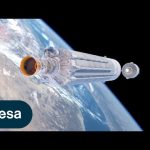
The animation shows the full launch sequence and timeline for the first Meteosat Third Generation Imager (MTG-I1) satellite. MTG-I1 launches on an Ariane 5 rocket from Europe’s Spaceport in Kourou, French Guiana.
MTG-I is the first of six satellites that form the full MTG system, which will provide critical data for weather forecasting over the next 20 years. In full operations, the mission will comprise two MTG-I satellites and one MTG Sounding (MTG-S) satellites working in tandem.
The MTG-I satellites carry two completely new instruments, a Flexible Combined Imager and Europe’s first Lightning Imager, to deliver high-quality data for better weather forecasting.
Credits: ESA/Mlabspace
★ Subscribe: http://bit.ly/ESAsubscribe and click twice on the bell button to receive our notifications.
We are Europe’s gateway to space. Our mission is to shape the development of Europe’s space capability and ensure that investment in space continues to deliver benefits to the citizens of Europe and the world. Check out https://www.esa.int/ to get up to speed on everything space related.
Why does mid-infrared light evoke such a sombre, chilling mood in Webb’s Mid-Infrared Instrument (MIRI) image? Interstellar dust cloaks the scene. And while mid-infrared light specialises in detailing where dust is, the stars aren’t bright enough at these wavelengths to appear. Instead, these looming, leaden-hued pillars of gas and dust gleam at their edges, hinting at the activity within.
We are Europe’s gateway to space. Our mission is to shape the development of Europe’s space capability and ensure that investment in space continues to deliver benefits to the citizens of Europe and the world. Check out https://www.esa.int/ to get up to speed on everything space related.
This week’s edition of the Earth from Space programme features a Copernicus Sentinel-2 image over the Fucino area, in central Italy. Here lies the Fucino Space Centre, where Telespazio will manage the early orbit activities of the Meteosat Third Generation (ESA – meteosat third generation) Imager satellite, scheduled for launch next week.
We are Europe’s gateway to space. Our mission is to shape the development of Europe’s space capability and ensure that investment in space continues to deliver benefits to the citizens of Europe and the world. Check out https://www.esa.int/ to get up to speed on everything space related.
These two mannequins occupy the passenger seats on Artemis I. Their their female-shaped, plastic bodies are filled with over 5600 sensors each to measure the radiation load during their trip around the Moon and back to Earth.
★ Subscribe: http://bit.ly/ESAsubscribe and click twice on the bell button to receive our notifications.
We are Europe’s gateway to space. Our mission is to shape the development of Europe’s space capability and ensure that investment in space continues to deliver benefits to the citizens of Europe and the world. Check out https://www.esa.int/ to get up to speed on everything space related.
After the uncrewed Artemis I test flight, the Artemis II mission will have astronauts demonstrate what the Orion spacecraft – powered by a European Service Module – can do on its voyage around the Moon.
Two astronauts will fly on the second Artemis mission and take over controls to show how Orion handles at close-quarter flying. While in Earth orbit the spacecraft will detach from its second stage, fly away, turn around, approach the second stage and then fly away again – all using the European Service Module’s 33 thrusters.
Whereas in the first Artemis mission the second stage fired Orion into its lunar orbit, for the second mission it will be the European Service Module that will give the spacecraft its final push to its voyage around the Moon.
The crew will fly Orion to 8889 km beyond the Moon before completing a lunar flyby and returning to Earth. The mission will take a minimum of eight days and will collect valuable flight test data.
The European Service Module is one of ESA’s many contributions to NASA’s Orion spacecraft and the Artemis programme that will send astronauts to the Moon and beyond. It provides electricity, water, oxygen and nitrogen as well as keeping the spacecraft at the right temperature and on course.
The European Service Module has 33 thrusters, 11 km of electrical wiring, four propellant and two pressure tanks that all work together to supply propulsion and everything needed to keep astronauts alive far from Earth – there is no room for error.
★ Subscribe: http://bit.ly/ESAsubscribe and click twice on the bell button to receive our notifications.
We are Europe’s gateway to space. Our mission is to shape the development of Europe’s space capability and ensure that investment in space continues to deliver benefits to the citizens of Europe and the world. Check out https://www.esa.int/ to get up to speed on everything space related.
Warsaw straddles the Vistula (Wisla) River, the largest river in Poland. With a length of around 1000 km and a drainage basin of some 195 000 sq km, the Vistula is an important waterway to the nations of Eastern Europe.
We are Europe’s gateway to space. Our mission is to shape the development of Europe’s space capability and ensure that investment in space continues to deliver benefits to the citizens of Europe and the world. Check out https://www.esa.int/ to get up to speed on everything space related.
In this week’s edition of the Earth from Space programme, we take a look at the remarkable moraine patterns of Malaspina Glacier – the largest piedmont glacier in the world – through the eyes of Copernicus Sentinel-2.
We are Europe’s gateway to space. Our mission is to shape the development of Europe’s space capability and ensure that investment in space continues to deliver benefits to the citizens of Europe and the world. Check out https://www.esa.int/ to get up to speed on everything space related.
Joining @NASA’s Orion spacecraft on the powerful Space Launch System rocket are ten CubeSats that will help prepare for the return of astronauts to our lunar companion. Our deep space antennas, along with the Goonhilly Earth Station in the UK, are tracking six of the small satellites, ensuring they arrive where they need to be, and their data gets back home.
We are Europe’s gateway to space. Our mission is to shape the development of Europe’s space capability and ensure that investment in space continues to deliver benefits to the citizens of Europe and the world. Check out https://www.esa.int/ to get up to speed on everything space related.
Clever space detectives, we need your help! We’ve got a case on our hands, of two mysterious exoplanets, and we need your help to profile them. Find out how you can use real satellite data to investigate an alien planet and become an exoplanet detective in the first ever ESA Education student hackathon.
Join us for this exciting new event featuring experts such as Didier Queloz, the 2019 Nobel Laureate in Physics and Kate Isaak, ESA project scientist for the Cheops mission.
We are Europe’s gateway to space. Our mission is to shape the development of Europe’s space capability and ensure that investment in space continues to deliver benefits to the citizens of Europe and the world. Check out https://www.esa.int/ to get up to speed on everything space related.
We are Europe’s gateway to space. Our mission is to shape the development of Europe’s space capability and ensure that investment in space continues to deliver benefits to the citizens of Europe and the world. Check out https://www.esa.int/ to get up to speed on everything space related.
Space for Education 2030 is the evolution of the ESA education programme. Take a look at what the Education office has in store for students and young people of all ages at the dawn of a new space era, for them to acquire the right skills needed to achieve a sustainable and secure future, and sustain Europe’s great ambitions in space.
★ Subscribe: http://bit.ly/ESAsubscribe and click twice on the bell button to receive our notifications.
We are Europe’s gateway to space. Our mission is to shape the development of Europe’s space capability and ensure that investment in space continues to deliver benefits to the citizens of Europe and the world. Check out https://www.esa.int/ to get up to speed on everything space related.
On Dec. 11, our Orion spacecraft returns home to Earth. This live stream from Orion will end prior to splashdown, approximately at the time of crew module separation from the service module. Watch live splashdown coverage: https://youtu.be/xzZPzmMtQA8
This is a live, low-resolution video feed from cameras on NASA’s Orion spacecraft as it accomplishes the Artemis I mission around the Moon and back to Earth. Splashdown is expected on Dec. 11, 2022.
Viewers will see the Artemis logo, or the last frame of good video data, if there is a loss of signal, or if the bandwidth is needed for mission activities. Viewers may see what appears to be a black screen when the vehicle is in darkness. There is no audio.
The primary goals for Artemis I are to demonstrate Orion’s systems in a spaceflight environment and ensure a safe re-entry, descent, splashdown, and recovery.
Cosmic radiation is considered to be the main health hazard for humans on exploration missions. Far away from the protection of Earth’s magnetic field, the radiation doses could be up to 700 times higher than on our planet.
For long-term human activity at the Moon, we need to monitor the lunar radiation environment directly.
Two sources of radiation are of concern: galactic cosmic radiation from outside the galaxy and the unpredictable but virulent charged particles coming from our own Sun.
Cosmic radiation is always there, and it is also the main source of radiation for increasing the crew’s risk of cancer in missions to the Moon and Mars. The solar events deliver a high amount of radiation in a short period of time, leading to radiation sickness, with symptoms such as nausea and fatigue.
★ Subscribe: http://bit.ly/ESAsubscribe and click twice on the bell button to receive our notifications.
We are Europe’s gateway to space. Our mission is to shape the development of Europe’s space capability and ensure that investment in space continues to deliver benefits to the citizens of Europe and the world. Check out https://www.esa.int/ to get up to speed on everything space related.
Barranquilla lies strategically next to the delta of the Magdalena River, one of the main rivers in Colombia, flowing northwards for around 1500 km through the west half of the country before emptying into the Caribbean Sea.
Owing to large quantities of sediment, as seen by the extensive sediment plume at its mouth and the brownish colour of its waters, the Magdalena requires frequent dredging of its main channel to allow access to Barranquilla’s port for oceangoing vessels.
We are Europe’s gateway to space. Our mission is to shape the development of Europe’s space capability and ensure that investment in space continues to deliver benefits to the citizens of Europe and the world. Check out https://www.esa.int/ to get up to speed on everything space related.
In this week’s edition of the Earth from Space programme, we explore the province of Zaragoza, in northeast Spain, thanks to the Copernicus Sentinel-2 mission.
We are Europe’s gateway to space. Our mission is to shape the development of Europe’s space capability and ensure that investment in space continues to deliver benefits to the citizens of Europe and the world. Check out https://www.esa.int/ to get up to speed on everything space related.