When people think about the big players of the space industry, they don’t tend to think about Europe. But believe it or not the European Space Agency or ESA has the second highest budget out of any space agency. So what are they doing with all that money?
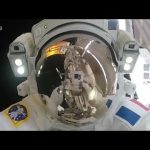
Our alien friend Paxi, ESA Education’s mascot, went to visit American astronaut Scott Tingle on board the International Space Station. Tingle tells Paxi about how astronauts sleep in weightlessness, an important aspect of living on the ISS.
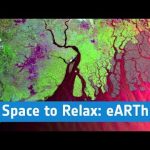
Having a stressful day? We got you covered! Sit back, turn the volume up and enjoy a relaxing moment brought to you by ESA and Lufthansa exploring the countries which make up the European Space Agency with images taken by the Copernicus Sentinel-1A, Sentinel-2A and Sentinel-3A, Proba-V and Envisat satellites.
Don’t forget to favourite this video. You will always have a space to relax with us.
Every week, on average, a substantial, inert satellite drops into our atmosphere and burns up. Monitoring these reentries and warning European civil authorities has become routine work for ESA’s space debris experts.
Each year, about 100 tonnes of defunct satellites, uncontrolled spacecraft, spent upper stages and discarded items like instrument covers are dragged down by Earth’s upper atmosphere, ending their lives in flaming arcs across the sky.
Some of these objects are big and chunky, and pieces of them survive the fiery reentry to reach the surface. Our planet, however, is a big place, mostly covered by water, and much of what falls down is never seen by anyone, sinking to the bottom of some ocean, or landing far from human habitation.
While still in orbit, these and many other objects are tracked by a US military radar network, which shares the data with ESA, since Europe has no such capability of its own.It’s the task of ESA’s Space Debris team to look at these data and issue updates to ESA Member States and partner civil authorities around the globe.
The video features footage taken of the parachute deployment as seen from the ground, as well as from onboard GoPros fixed to the drop test vehicle and looking up at the parachute. The test focused on the deployment and inflation of the second main stage 35m-wide parachute, which will be the largest to fly on Mars.
Discussing the test are Stephane Langlois, ESA ExoMars engineer, and John Underwood, principal engineer at Vorticity.
The test was carried out by Vorticity Ltd under supervision of Thales Alenia Space France, Thales Alenia Space Italy and ESA, in Kiruna, Sweden, on 2 March 2018.
Az űrorvostudomány eredményei segíthetnek a földi betegségekben szenvedőknek is. Ami jó a Nemzetközi Űrállomáson, az segíthet a Newcastle-i nyugdíjasokon is.
Az űrhajósoknak földöntúli munkájuk van. A hajnalt és a naplementét naponta 16-szor látják, és az űrben töltött hetek és hónapok alatt a testük kívül-belül átalakul. Izmaik és csontjaik tömegükből veszítenek, és egészségi állapotuk is megváltozik. Így az asztronauták testüket is a tudomány szolgálatába állítják.
A nemzetközi űrállomáson zajló kutatások nem csak abban segítenek, hogy jobban megismerjük az emberi testet, hanem abban is, hogy olyan hétköznapi problémákra találjunk új megoldást, mint például a hátfájás. A Space márciusi adásában az űrmedicináról lesz szó.
Πειράματα σε αστροναύτες προσφέρουν χρήσιμα συμπεράσματα σε επιστήμονες για απλά ιατρικά θέματα που αντιμετωπίζουμε όλοι μας στη Γη
Οι αστροναύτες έχουν μια απαιτητική δουλειά. Βλέπουν την ανατολή και τη δύση του ήλιου 16 φορές την ημέρα. Επειδή αυτό συμβαίνει για εβδομάδες, το σώμα τους αλλάζει εσωτερικά, αλλά και εξωτερικά. Χάνουν μυική και οστική μάζα και η υγεία τους επηρεάζεται πολλαπλά.
Having a stressful day? We got you covered!Sit back, turn the volume up and enjoy a relaxing moment brought to you by ESA and Lufthansa getting lost in the beauty of our planet with images captured by Envisat, JAXA ALOS, KARI Kompsat-2, GeoEye Ikonos-2 and NASA Landsat-5 and Landsat-7 satellites.
Don’t forget to favourite this video. You will always have a space to relax with us.
Earth from Space is presented by Kelsea Brennan-Wessels from the ESA Web TV virtual studios. In this edition, Sentinel-2A satellite takes us over Japan’s capital, the world’s largest megacity.
Having a stressful day? We got you covered! Sit back, turn the volume up and enjoy a relaxing moment brought to you by ESA and Lufthansa exploring the coldest parts of our planet with a collection of ice images captured by the Envisat satellite.
Don’t forget to favourite this video. You will always have a space to relax with us.
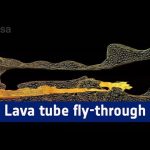
The “Cueva de los Verdes” lava tube in Lanzarote, Spain, is one of the world’s largest volcanic cave complexes with a total length of about 8 km.
Geology experts from ESA’s Pangaea-X campaign mapped most of the lava tube system as part of a project supported by local authorities Cabildo of Lanzarote and the University of Padova, Italy. The data was acquired in November 2017 by Leica Geosystems.
The map comes alive in great detail in 3D, helping institutions to protect the subterranean environment. The map also provides scientific data to study the origins of the tube and its peculiar formations.
Pangaea-X is a test campaign that brings together geology, high-tech survey equipment and space exploration. Learn more about the science and technology behind this campaign visiting http://blogs.esa.int/pangaea
Earth from Space is presented by Kelsea Brennan-Wessels from the ESA Web TV virtual studios. In this edition, Sentinel-3A treats us to a view stretching from Sardinia to Romania.
Following its launch in February 2016 and subsequent commissioning phase, the Copernicus Sentinel-3A satellite has been systematically measuring our oceans, land, ice and atmosphere. The information feeds a range of practical applications and is used for monitoring and understanding large-scale global dynamics. Sentinel-3A will soon be joined in orbit by its identical twin, Sentinel-3B. Both satellites carry a suite of cutting-edge instruments to supply a new generation of data products, which are particularly useful for marine applications. For example, they monitor ocean-surface temperatures for ocean and weather forecasting services, aquatic biological productivity, ocean pollution and sea-level change. The mission also delivers unique and timely information about changing land cover, vegetation, urban heat islands, and for tracking wildfires. With the two satellites in orbit, global coverage and data delivery will be optimised.
The sixth Space App Camp was held at ESA’s establishment in Frascati, Italy, in September 2017. The camp offers access to the latest space data – particularly from the European Copernicus programme – to app developers, who work to make the information accessible to a broad audience. Twenty-four developers from 14 countries attended the 2017 camp. In this short video, participants talk about why they attended and what they hoped to achieve.
These observations of Phobos and Saturn were taken by the Super Resolution Channel of the High Resolution Stereo Camera on Mars Express. The video comprises 30 separate images acquired during Mars Express orbit 16 346 on 26 November 2016. The slight up and down movement of Saturn and Phobos in these images is caused by the oscillation of the spacecraft’s orientation after completing the turn towards the moon. Phobos can be seen in the foreground, partially illuminated, with Saturn visible as a small ringed dot in the distance. For more information go tohttp://www.esa.int/Our_Activities/Space_Science/Mars_Express/Mars_Express_views_moons_set_against_Saturn_s_rings
From ESA astronaut Luca Parmitano’s hometown in Catania, Italy, Luca talks about the science he ran on the International Space Station.
The European laboratory Columbus was launched in 2008 and offers scientists a permanent place in space to conduct research that is out of this world.
Luca’s first spaceflight was in 2013 with Russian cosmonaut Fyodor Yurchikhin and NASA astronaut Karen Nyberg. He conducted over 20 experiments during the Volare mission as flight engineer for Expeditions 36 and 37 and he was the first of ESA’s new generation of astronauts to fly into space.
Luca talks about space research, being a human guinea pig, dieting to avoid bone disease osteoporosis, human physiology, using ultrasound remotely to diagnose back problems, measuring eye pressure and how his body and mind reacted to living in weightlessness.
Luca is set for a second mission to the International Space Station in 2019.
A Euronews esteve em Huelva, onde conheceu o Rio Tinto, cujas margens e sedimentos se parecem em todos os aspetos aos do Planeta Vermelho. Um grupo de cientistas procura sinais de vida noutros planetas do nosso sistema solar. E fazem-no com a recolha de amostras dos lugares mais inesperados.
The Rio Tinto river snakes through the Spanish countryside for 100 kilometres, a dark, blood-red stain of acid water and rusty-looking rocks that scientists love to study. Both ESA and NASA experts regularly spend weeks in the Rio Tinto, examining the life underground, and using it as a test bed to look for life on Mars.
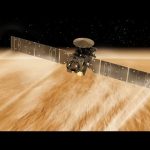
Since arriving at Mars in October 2016, the ExoMars Trace Gas Orbiter has been aerobraking its way into a close orbit of the Red Planet by using the top of the atmosphere to create drag and slow down. It is almost in the right orbit to begin observations – only a few hundred kilometres to go! With aerobraking complete, additional manoeuvres will bring the craft into a near-circular two-hour orbit, about 400 km above the planet, by the end of April. The mission’s main goal is to take a detailed inventory of the atmosphere, sniffing out gases like methane, which may be an indicator of active geological or biological activity. The camera will help to identify surface features that may be related to gas emissions. The spacecraft will also look for water-ice hidden below the surface, which could influence the choice of landing sites for future exploration. It will also relay large volumes of science data from NASA’s rovers on the surface back to Earth and from the ESA–Roscosmos ExoMars rover, which is planned for launch in 2020.
ESA’s Earth Explorer Aeolus satellite will be launched later this year to measure the world’s winds from space. The satellite carries one of the most sophisticated instruments ever to be put into orbit: Aladin, which includes two powerful lasers, a large telescope and very sensitive receivers. The laser generates ultraviolet light that is beamed down into the atmosphere to profile the world’s winds – a completely new approach to measuring the wind from space. These vertical slices through the atmosphere, along with information it gathers on aerosols and clouds, will improve our understanding of atmospheric dynamics and contribute to climate research. As well as advancing science, Aeolus will play an important role in improving weather forecasts. The mission will also complement information about the atmosphere being provided by the Copernicus Sentinel missions.
The European Space Agency (ESA) is part of an international effort to monitor and – ultimately – tackle space debris. This junk – accumulated in orbit since the dawn of the space age sixty years ago – poses an increasing risk to operational spacecraft.
ESA is developing missions to tackle the problem to help prevent a serious collision in space. The Agency is also monitoring possible dangers caused by fragments of redundant spacecraft falling to Earth, such as China’s space station Tiangong-1 – due to enter the atmosphere in the coming months.
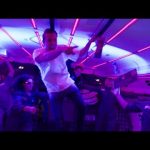
On 7 February 2018, 10 years to the day that Europe’s Columbus space laboratory was launched to the International Space Station, 20 lucky clubbers got a taste of weightlessness – not to conduct gravity-free science but to party with superstar DJs Steve Aoki, W&W and Le Shuuk.
Taking off from Frankfurt airport and organised by BigCityBeats, the WORLD CLUB DOME project served as a teaser party for a bigger event on Earth in June. The aircraft flew up and down angled at 45º – at the top of the curve the passengers and experiments experience around 20 seconds of microgravity. Before and after the weightless period, increased gravity of up to 2 g is part of the ride.
ESA astronauts Pedro Duque and Jean-Francois Clervoy joined the weightless flight and provided background and safety tips to the DJs and party-goers.
The aircraft was on loan from its usual airport in Bordeaux, France, where it is used for scientific research and testing equipment for spaceflight. These flights are the only way to test microgravity with humans without going through lengthy astronaut-training and flights to the International Space Station. For this reason, parabolic flights are often used to validate space instruments and train astronauts before spaceflight.
ESA’s parabolic flight campaigns for science and technology investigations are generally performed twice a year, in spring and autumn.
ESA, Fraport Frankfurt and the City of Frankfurt and BigCityBeats combined a fascination of science with the joy and fun of dancing in this world’s-first flight.
This event was the official pre-party to the BigCityBeats WORLD CLUB DOME “The Hollywood Edition” taking place 1/2/3 June 2018 in Frankfurt. More info via http://www.worldclubdome.com
Space vous emmène à Cologne découvrir la réplique terrestre de Columbus. Entretien avec des chercheurs et des astronautes.
Ce mois-ci, Space vous emmène au Centre Européen des Astronautes à Cologne, en Allemagne à la découverte de Columbus, le module européen de la Station spatiale internationale. Pendant ces dix dernières années il a été utilisé par les astronautes pour réaliser des expériences sur eux-mêmes, faire pousser des plantes et même développer de nouveaux métaux. Il y a dix ans, Columbus a pris une navette pour l’espace. Le premier laboratoire européen vola en orbite et fut soigneusement amarré à la Station Spatiale Internationale.
O módulo Columbus na Estação Espacial Internacional é a contribuição da Europa para o laboratório de investigação em órbita. Nos últimos dez anos, foi utilizado por astronautas para cultivar plantas, desenvolver novos metais e até para realizar experiências em si mesmos.
Bem-vindos a Space aqui no Centro Europeu de Astronautas em Colónia.
Este mês, debruçamo-nos sobre o módulo Columbus na Estação Espacial Internacional, o centro científico da Europa no espaço.
Nos últimos 10 anos tem sido utilizado por astronautas para realizar experiências em si mesmos, cultivar plantas e até mesmo desenvolver novos metais. Vamos descobrir mais.
Há dez anos, o Columbus apanhou uma boleia de foguetão para o espaço.
O primeiro laboratório em órbita da Europa foi cuidadosamente agregado à Estação Espacial Internacional.
Está situado en la Estación Espacial Internacional (ISS) y los astronautas lo emplean para cultivar plantas, desarrollar nuevos materiales e influso para experimentar sobre sí mismos.
El módulo Columbus de la Estación Espacial Internacional que se encuentra en el Centro Europeo de Astronautas en Colonia es una réplica del laboratorio espacial europeo en órbita. El de Colonia se emplea como módulo de entrenamiento.
Columbus lleva 10 años en el espacio y los astronautas lo usan para llevar a cabo todo tipo de experimentos: cultivar plantas, desarrollar nuevos metales e incluso experimentar diferentes variables sobre ellos mismos.
Fue puesto en órbita el 7 de febrero de 2008 y fue acoplado cuidadosamente a la Estación Espacial Internacional.
The Moon is a destination, a laboratory for science, a place to learn the skills of planetary exploration, and a source of materials and energy for use on the Moon and in space to create new spacefaring capability.
Advocate of a human return on the Moon, Paul D. Spudis, Senior Staff Scientist at the Lunar and Planetary Institute in Houston (Texas, USA), takes us on a journey to rediscover the value of lunar exploration, a topic on which he has spent more than 40 years of study, thought and publications.
Space Bites hosts the best talks on space exploration from the most inspiring and knowledgeable speakers from the field. Held at the technical heart of the European Space Agency in the Netherlands, the lectures are now also available on YouTube. If you want to know about the present and future challenges of ESA, stay tuned for more.
We are Europe’s gateway to space. Our mission is to shape the development of Europe’s space capability and ensure that investment in space continues to deliver benefits to the citizens of Europe and the world. Check out https://www.esa.int/ to get up to speed on everything space related.
With 2018 approaching rapidly and 2017 coming to a close, ESA can look back on a fruitful year. It has been a year dominated by the ESA astronaut missions to the International Space Station, the launch of more Sentinel satellites and the first launch of a small Geo satellite.
This video looks back at the highlights of 2017 for ESA.
Europe’s first Space Exploration Masters competition, based around space exploration activities, welcomed new players to boost business and innovation in the space industry. The event was held at the NewSpace Europe conference on 16 November 2017 in Luxembourg.
Prizes worth more than €500 000 were awarded to winners with disruptive ideas to connect space and non-space areas with new approaches, solutions and services.
The race is on to build the new launch pad for the Ariane 6 rocket, due to make its maiden voyage in July 2020. Construction is in full swing in French Guiana as Europe builds not only a new rocket but also a new way of launching rockets, in a bid to face down competition from the likes of Space X.
When Euronews visited, around 500 people were active on the site from six in the morning until ten at night, with attention focused on two key elements of the pad – firstly the huge flame trench which will take the hot gases away from the rocket on launch, and the new building in which the Ariane 6 will be built.
El Puerto Espacial Europeo en la Guyana francesa, está en plena efervescencia. Estamos en medio de una gigantesca obra. Aquí se sitúa la nueva plataforma de lanzamiento de Ariane 6, cuyo despegue está previsto en julio de 2020. Intentamos averigurar qué se necesita para mantenerse a la vanguardia en el negocio del espacio.
Amanece en Guyana y los ingenieros europeos se afanan en la construcción del terminal de lanzamiento de Ariane 6. Esta gigantesca obra tiene un único objetivo: lanzar cohetes al espacio por un coste, dos veces inferior al de Ariane 5. Para lograrlo se necesita un montón de hormigón, de acero y de mano de obra.
Dans cette édition de Space, nous entrons dans les coulisses d’un chantier colossal au Centre spatial européen de Kourou en Guyane française. Un pas de tir est en train de sortir de terre en vue du vol inaugural d’Ariane 6 programmé en juillet 2020. Grâce à ce projet, l’Europe se relance dans la compétition mondiale qui oppose les acteurs du secteur spatial.
Sur la côte nord-est de l’Amérique du Sud, à Kourou en Guyane, des ingénieurs européens s’affairent à la construction du nouveau pas de tir d’Ariane 6. Ce chantier colossal doit répondre à un objectif simple : diviser par deux, les coûts de lancement par rapport à son modèle précédent. Pour y parvenir, il faut d’abord une quantité astronomique de béton, d’acier et de main-d’oeuvre.
Christina, a physicist from Denmark, shares her experience as a Young Graduate Trainee. In ESA she is working in the Education Office, and in this video she talks about a project she is part of there, the AstroPi challenge, and what motivates her to work on educational material in the European Space Agency.
Stella, an astrophysicist from Estonia, shares her experience as a YGT at ESA working with data provided by the Gaia mission’s team to model the movements of stars.
Chris from the UK shares his experience as an ESA YGT. He has a background in Materials Engineering and in this video, he shows the set-up that he has been using in the lab at ESTEC to test stress corrosion cracking in spacecraft propellant tanks.
Space debris has become a pressing issue, with objects in orbit flying out of control, posing a risk to satellites and to astronauts. We attended a meeting of space debris experts at ESA’s ESTEC technology base in the Netherlands to find out more about what can be done to deal with the problem.
O lixo espacial é um problema premente na órbita da Terra. Existem milhões de objetos a voar pelo espaço, descontrolados, colocando em perigo satélites e astronautas.
Em busca de uma solução para evitar uma colisão trágica para lá da última fronteira ou, quem sabe, o infortúnio de um qualquer detrito cair e atingir alguém na Terra, cerca de 200 cientistas reúnem-se todos os anos na Holanda, na base da Agência Espacial Europeia (ESA, na sigla original), para debater a limpeza do espaço e confrontar ideias sobre o desenvolvimento, por exemplo, de satélites mais seguros no fim de vida.
Existem quase 8000 toneladas de lixo espacial em órbita, incluindo cerca 29.000 objetos com mais de dez centímetros e mais de um milhão pequenos demais para poderem ser seguidos.
As colisões acontecem e todos os pedaços, mesmo os mais pequenos de apenas um milímetro, revelam-se perigosos, sublinha a diretora do gabinete da ESA para a limpeza do espaço.