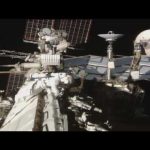
I detriti spaziali sono un problema sempre più urgente. In orbita ci sono circa 8mila tonnellate di detriti spaziali: 29mila oggetti di oltre 10 centimetri e più di un milione di frammenti troppo piccoli per essere tracciati. Sono un pericolo per i satelliti e per gli astronauti. Le collisioni sono possibili, perciò ogni detrito rappresenta un pericolo.
Ogni anno 200 esperti in materia di spazzatura spaziale si riuniscono nella sede dell’Esa per affrontare la questione. Tra loro ci sono i rappresentanti delle agenzie spaziali e delle aziende che producono satelliti e razzi.
Körülbelül 8 000 tonna törmelék kering az űrben. 29 000 10 cm méretű, és több mint egymillió darab ennél is kisebb tárgy.
Az ütközések megtörténnek, és minden törmelék veszélyt jelent. Ezen a ponton még egy nagyon kicsi törmelék is jelentős, mert a sebessége, amivel utazik, ha egy másik testet vagy műholdat elér, felrobbanthatja azt, így még a legapróbb törmelékeknek is fontos a szerepük.
Minden évben 200 európai űrkutatási szakember találkozik az Európai Űrügynökség, az ESA hollandiai technológiai központjában, hogy megvitassák a fontos kérdéseket.
Ők képviselik a fontosabb szereplőket, és mindannyian egyetértenek abban, hogy mit kell tenniük.
Καλωσήλθατε στην εκπομπή Space. Ας ρίξουμε μια προσεκτική ματιά στο πιεστικό πρόβλημα των «διαστημικών σκουπιδιών». Υπάρχουν εκατομμύρια τέτοια αντικείμενα στο διάστημα εκτός ελέγχου. Ενέχουν κινδύνους για τους δορυφόρους και τους αστροναύτες. Τι μπορεί να γίνει; Βρισκόμαστε στη βάση του Ευρωπαϊκού Οργανισμού Διαστήματος στην Ολλανδία.
Υπάρχουν περίπου 8.000 τόνοι διαστημικών σκουπιδιών σε τροχιά — 29.000 αντικείμενα εντοπισμένα μεγέθους πάνω από 10 εκατοστά και πάνω από ένα εκατομμύριο μικρά «διαστημικά σκουπίδια .
Dans ce numéro de Space, Jeremy Wilks s’est penché sur l’épineuse question des débris spatiaux, avec les experts du centre européen de technologie spatiale de l’Agence Spatiale Européenne, aux Pays-Bas.
Este mes estamos observando de cerca el apremiante problema de los desechos espaciales. Literalmente hay millones de objetos en órbita volando fuera de control. ¿Qué se puede hacer?.
Estamos en el Centro Europeo de Investigación y Tecnología Espacial de los Países Bajos para averiguarlo.
Se estima que hay 8.000 toneladas de desechos espaciales orbitando: 29.000 objetos rastreados de más de 10 centímetros de tamaño y más de un millón de fragmentos demasiado pequeños para poder seguir.
Haz colisiones y cada pedazo de escombro es un peligro.
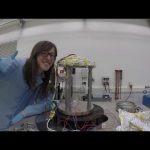
Aleksandra, 24, from Latvia, shares her experience as an ESA YGT. In this video, the Aerospace Engineer speaks about her work in the thermal analysis and verification section, working with measurements at cryogenic temperatures. Aleks also shows her experiment set up in the Mechanical Systems Laboratory (MSL).
If you’re looking for the perfect gift for a space enthusiast, the ESAshop is for you. From clothing and accessories to phone cases and backpacks, you’ll find a wide range of products to suit all ages.
The store offers three different product lines: classic, design and United Space in Europe.
Children are soon set to have their own product line featuring ESA mascot Paxi. Ordering is easy: simply click on the items you want, choose the colour and size, then head to the checkout.
All items are printed on demand and delivered to your door, wherever you are in the world.
ESA’s Global Space Economic Workshop on 13 October 2017 in Paris broughts together leaders of major space and non-space European stakeholders from institutions and commercial sectors, to interactively discuss space-led innovation opportunities and challenges offered by the on-going transformations that are driven by the digital economy and the current and future trends in the global market.
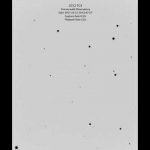
This remarkable footage shows the flyby of asteroid 2012 TC4 during the night of 11/12 October 2017. At the time this was recorded, the estimated 10-20 m-diameter asteroid was approaching Earth. It made its closest approach at 07:41 CEST on 12 October, just 43 782 km away – much closer than the Moon and inside the orbit of some satellites.
This was captured by astronomers Peter Schlatter and Dominik Bodenmann working at the ZIMLAT telescope at the Swiss Optical Ground Station and Geodynamics Observatory operated by the Astronomical Institute of the University of Bern (AIUB).
At the 68th International Astronautical Congress, in Adelaide, Australia, IAC TV gets the chance to sit down with Johann-Dietrich Woerner, the Director General of the European Space Agency to talk about the focus of the ESA for the future of space exploration and why he thinks meetings like the IAC are crucial for the industry.
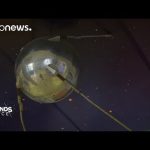
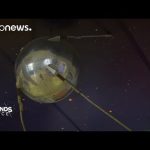
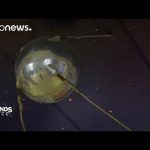
Sixty years ago, Sputnik became the first satellite in space and changed the world forever.
Launched by the Soviet Union on 4 October 1957, this shiny orb kick-started the space race, and opened up the heavens for mankind to explore.
To mark the occasion ESA Euronews arranged access to the private museum of RSC Energia, the Russian state company that actually built the world’s first satellite, officially called Sputnik-1. Hanging in this Moscow treasure trove of pioneering space probes is one of the original Sputnik flight spares, built in 1957. Compact, at just over 80 kilogrammes, its polished surfaces and distinctive antennae are now unmistakable – look at this satellite, and the first word in your mind is ‘Sputnik’.
Il y a soixante ans, le premier satellite artificiel Spoutnik était mis en orbite devançant la chienne Laïka, Youri Gagarine et Alexeï Leonov dans la longue liste des légendes soviétiques de l’espace. Aujourd’hui, ce minuscule engin est encore dans toutes les mémoires comme notre reporter Jeremy Wilks a pu le constater à Moscou auprès de vétérans de l’époque comme Alexeï Leonov et de représentants du secteur spatial russe.
Nous avons eu l’autorisation exceptionnelle de visiter un lieu unique : le musée privé de RSC Energia, la société d’Etat russe à l’origine du premier satellite artificiel. Son nom officiel Spoutnik-1. L’un de ses exemplaires originaux construit en 1957 trône parmi les trésors de l’espace exposés sur place.
Hatvan évvel ezelőtt állt Föld körüli pályára a Szputnyik, az első ember készítette űrjármű. Szovjet űrlegendák sora követte: Lajka kutya, Jurij Gagarin, Alekszej Leonov – akiknek az öröksége ma is él.
Minisorozatunkban, az űrkutatás legendáiban rendszeresen megemlékeztünk erről, és most a Space teljes adását ennek az apró szerkezetnek szenteltük, ami megváltoztatta a világot.
Az RSC Energija múzeumában vagyunk, ez az állami vállalat építette a világ első műholdját, a Szputnyik1-et. Ebben az űrkutatási relikviákkal teli kincsesraktárban van egy 1957-ben készült tartalék Szputnyik is.
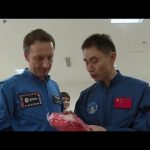
ESA astronauts Samantha Cristoforetti and Matthias Maurer joined Chinese astronauts last month for nine days of sea survival training off China’s coastal city of Yantai.
This is the first time ESA astronauts have trained in China and stems from the 2015 agreement to boost collaboration between ESA and China Manned Space Agency, with the goal of flying European astronauts on the Chinese space station from 2022.
This video, filmed by the Astronaut Center of China, shows the first joint training, with interviews of ESA participants in English, French, German, Italian and Spanish.
Acting Administrator Robert Lightfoot was in Kazakhstan on July 28 to observe the launch to the International Space Station of our astronaut Randy Bresnik with his crewmates – Sergey Ryazanskiy of Roscosmos, and Paolo Nespoli of the European Space Agency. The trio is scheduled to spend more than four months on the station working on hundreds of science and technology experiments. Also, New 4K Footage of Spacewalk, NASA Technologies Showcased at AirVenture Event, Preparing to Chase the Total Solar Eclipse from the Sky, and Another Successful RS-25 Engine Test!
It’s an age when many of us would be considering winding down, and cutting back on physical exertion. Not so for Paolo Nespoli, who is about to embark on his third space mission at the age of 60, which makes him Europe’s oldest astronaut. At the end of July he will voyage to the International Space Station (ISS), where he will remain for some months.
Dans ce numéro de Space, nous profitons du Salon international du Bourget, évènement incontournable de l’aéronautique et de l’aérospatial, pour rencontrer ceux qui mènent les grandes missions d’aujourd’hui et de demain : les responsables de l’ESA et de la NASA, mais aussi l’astronaute français Thomas Pesquet qui vient de rentrer sur Terre après avoir passé six mois en orbite.
Il Salone dell’aeronautica di Parigi-Le Bourget dal 1909 è uno dei più grandi eventi al mondo dedicati al settore aerospaziale. Degli oltre 2.200 espositori internazionali e 285 delegazioni ufficiali provenienti da tutto il mondo, 137 sono italiani. Qui il nostro inviato Jeremy Wilks ha incontrato il Capo della NASA per parlare della missione su Marte, il capo dell’ESA per discutere dei viaggi su Mercurio e sul Sole, e per scambiare quattro chiacchiere con l’astronauta francese dell’ESA Thomas Pesquet, che è appena tornato a terra dopo mesi nello spazio.
O Salão de Aeronáutica de Paris é um ponto de encontro incontornável para o setor aeroespacial. Falámos com os responsáveis da ESA e da NASA, mas primeiro conversámos com Thomas Pesquet, o astronauta da ESA que acabou de regressar à Terra após 6 meses no espaço.
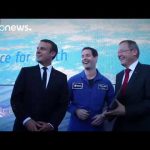
O momento é de recuperar, depois da massa óssea e muscular que perdeu durante a sua missão. Mas Thomas Pesquet é como um herói para os franceses. Portanto, nada mais natural do que ter o presidente Emmanuel Macron a saudá-lo num evento de dimensão mundial.
Matthias Maurer, ESA’s newest astronaut, has been training with Tim Peake at the Johnson Space Centre in Houston, Texas. During practical and theory classes they’ve learned skills necessary to perform a spacewalk, also known as EVA, or Extra Vehicular Activity – much of which is already familiar to Tim, who worked outside the Station in January 2016. They also spent time in the Neutral Buoyancy Lab, a pool housing replica International Space Station modules which allows astronauts to experience near weightless conditions.
Four ESA astronauts have recently been training at NASA’s Johnson Space Centre (JSC) in Houston, Texas. For ESA’s newest astronaut Matthias Maurer, it was a chance to inspect a mock-up of NASA’s future space vehicle Orion alongside Tim Peake and Luca Parmitano, both experienced astronauts. Tim and Matthias have undergone spacewalk training in the neutral buoyancy pool. Alexander Gerst is also at JSC, training for his 2018 long-duration mission to the ISS.
Right now the Cassini spacecraft is flying between the rings of Saturn and the planet itself, a daring trajectory chosen to conclude a unique exploration mission.
To find out what that orbit means, and to look back at some of Cassini-Huygens finest moments, we met up with key members of the science team in the UK for this edition of Space.
Die Cassini-Huygens-Mission am Saturn startete vor zwanzig Jahren, 2004 schwenkte die Doppel-Sonde in ihre Umlaufbahn um den Saturn ein. Im Dezember 2004 koppelte der Lander Huygens von der Cassini-Sonde ab und setzte im Januar 2005 auf dem Titan auf. Die Mission entdeckte unter anderem ein Eismeer auf dem Saturn-Mond Enceladus und fliegt jetzt zwischen den Ringen des Saturn und dem Planeten selbst. Im September soll Cassini mangels Treibstoffvorräten in der Saturn-Atmosphäre verglühen.
Die Saturn-Spezialisten des Mullard Space Science Laboratory (MSSL) in Südengland verfolgen die Mission und erforschen das Sonnensystem des pittoresken Planeten. Die Cassini-Sonde wird gerade auf ihre finale Umlaufbahn gebracht, um nächstmögliche Eindrücke vom Saturn zu gewinnen.
Earth is the largest rocky planet in our Solar System, and the only body we know of capable of supporting life. With so much news about exoplanets dominating the headlines, in this episode of Space we take a step back to take a look at Earth as a planet.
Four and a half billion years old and 149.6 million kilometres from the Sun, it’s not like anything else in the Solar System: “Planet Earth is quite a particular planet,” says Josef Aschbacher, Director of Earth Observation at ESA. “We have 70% of water, we have land masses which are actually moving over time. We have an atmosphere which is rich in oxygen, nitrogen, in water vapour. All of these are necessities in order to have life on a planet like this.”
Rome is a perfect spot to look at the defining characteristics of planet Earth, in particular the presence of liquid water. Our home planet has the right temperature and correct atmospheric pressure for water to flow on its surface, making it so hospitable to life.
A 149.6 millones de kilómetros del sol, con unos cuatro mil millones y medio de años de antigüedad, la Tierra es el único planeta capaz de albergar vida.
“El planeta Tierra es muy particular, como puede observar detrás de mi, es un planeta fascinante. La superficie está compuesta en un 70% de agua, las placas tectónicas están en continuo movimiento. La atmósfera es muy rica en oxígeno, nitrógeno y vapor de agua. Todos esos elementos son necesarios para la vida en un planeta como este”, explica Josef Aschbacher, director del Observatorio de la Tierra, ESA.
La historia de Roma está impregnada de ejemplos que nos recuerdan la importancia del agua para nuestro planeta que, a diferencia de Marte o Venus, posee la temperatura y la presión atmosférica idóneas para que el agua fluya en la superficie. También, fluye en las profundidades, lo vemos aquí, en Villa Medici, donde sigue activo un acueducto construido en la época romana.
A Terra é, segundo sabemos, o único planeta capaz de suportar vida. Está a cerca de 150 milhões de quilómetros do Sol e tem cerca de quatro mil e quinhentos milhões de anos de idade.
Não existe nada semelhante no sistema solar, como confirma o diretor do Observatório da Terra da “Agência Espacial Europeia”:http://www.esa.int/por/ESA_in_your_country/Portugal (AEE), Josef Aschbacher: “A Terra é um planeta bastante específico. Como podem ver aqui, é fascinante. Temos 70% de água, temos massas que se movem, ao longo do tempo. Temos uma atmosfera rica em oxigénio, nitrogénio, vapor de água… Tudo necessário para haver vida num planeta como este”.
Na superfície da Terra, em Roma, Itália, somos constantemente lembrados de como a água é importante para nosso planeta.
Ao contrário de Marte ou Vénus, a Terra tem a temperatura e a pressão atmosférica corretas para que a água flua na sua superfície.
A legnagyobb sziklás bolygó a Naprendszerben, egy igazán különleges hely: lássuk, milyen planéta tulajdonképpen a Föld.
Egy négy és fél milliárd éves szikla, nagyjából százötven millió kilométerre a Naptól. Az egyetlen általunk ismert bolygó, amelyen élet lehetséges. A Naprendszeren belül pedig egészen biztosan egyedülálló.
– A Föld egy különleges bolygó – szögezte le Josef Aschbacher, az Európai Űrügynökség (ESA) Föld-megfigyelési Központjának igazgatója. – A felszín 70 százalékát víz fedi, vannak nagy földtömegek, amelyek lassan mozognak. Van oxigénben, nitrogénben vízgőzben gazdag atmoszféra. Ezek mindegyikéhez szükség van ahhoz, hogy az élet fennmaradhasson egy ilyen bolygón.
A Föld felületén minden emlékeztet arra, hogy a folyékony víz mennyire fontos. A Marssal vagy a Vénusszal ellentétben a Földön a hőmérséklet és a légköri nyomás is megfelelő ahhoz, hogy folyékony víz legyen a felszínen.
Space schaut diesmal nicht ins All, sondern auf unseren eigenen Planeten, die Erde. Der größte Gesteinsplanet in unserem Sonnensystem und ein wahrlich außergewöhnlicher Ort. 149,6 Millionen Kilometer von der Sonne entfernt, rund viereinhalb Milliarden Jahre alt. Mit einem Durchmesser von 12.700 Kilometern – ein bisschen größer als die Venus, etwa doppelt so groß wie der Mars. Und der einzige Planet, den wir bislang kennen, auf dem Leben möglich ist.
Die Erde ist einzigartig im Sonnensystem, bekräftigt Josef Aschbacher, Leiter der Erdbeobachtung bei der Europäischen Weltraumorganisation ESA: “Der Planet Erde ist ein ganz besonderer, ein faszinierender Planet. Wir haben 70 Prozent Wasser, wir haben Landmassen, die sich über die Zeit verschieben, wir haben eine Atmosphäre, die reich an Sauerstoff, Stickstoff und Wasserdampf ist. Und all das sind die notwendigen Gegebenheiten, um Leben auf einem Planeten wie diesem haben zu können.”
Auf der Oberfläche der Erde wird einem ständig in Erinnerung gerufen, wie wichtig Wasser für unseren Planeten ist. Anders als Mars oder Venus hat sie die richtige Temperatur und den passenden atmosphärischen Druck, dass Wasser auf ihr fließen kann.
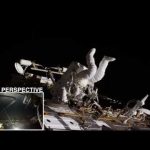
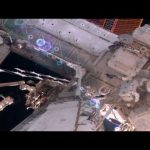
Expedition 50 Commander Shane Kimbrough of NASA and Flight Engineer Thomas Pesquet of the European Space Agency conducted a spacewalk outside the International Space Station March 24 to disconnect cables and electrical connections on Pressurized Mating Adapter-3 (PMA-3), lubricate the latching end effector on the Canadarm2 robotic arm and replace a computer relay box on the station’s truss. PMA-3 will be robotically relocated March 30 by ground controllers from the port side of the Tranquility module to the space-facing side of the Harmony module for the future installation of a second International Docking Adapter that will accommodate the arrivals of commercial crew vehicles. The spacewalk is the first of three planned in a two-week period for station crewmembers that will see PMA-3 reconnected to its new location on Harmony and an avionics box replaced that routes electricity and data to station experiments.
The first workshop in this series took place at ESA’s European Space Astronomy Center (ESAC) near Madrid on September 26-28, 2016. The main goal of this first workshop was to present to help prospective JWST users to select the best observing modes to achieve their science goals.
Certamente já usou uma aplicação no telemóvel para consultar a previsão meteorológica. Hoje, graças a uma rede de satélites e estações terrestres, é possível obter informações sobre poluição em várias cidades no seu telemóvel.
O jornalista Claudio Rosmino reporta-nos como a Universidade de Bremen, está a recolher esta variedade de dados para chegar a uma visão global da poluição atmosférica.
A atmosfera terrestre é um sistema complicado que depende de vários factores. Os satélites de observação que orbitam à volta do planeta monitorizam constantemente o estado do ar que inalamos e o modo como é afectado pela poluição natural e pela de origem humana.
Uma missão essencial uma vez que, segundo dados recentes da Organização Mundial de Saúde, uma em cada oito mortes a nível mundial se deve à poluição do ar.
Os investigadores da Universidade de Bremen são pioneiros na medição da poluição atmosférica cruzando os dados obtidos no espaço e os valores colhidos em estações terrestres.
ESA astronaut Thomas Pesquet with NASA astronauts Shane Kimbrough and Peggy Whitson in the Cupola observatory using the International Space Station’s 16-m robotic arm to grapple the SpaceX Dragon cargo spaceship.
The video is sped up 20 times with this recording lasting 45 minutes 30 seconds at normal speed. It shows Shane and Thomas monitoring the spacecraft’s approach scanning the monitors, ready to step in if necessary. Thomas took manual control of the robotic arm and extended it to grapple the vehicle when 11 m from the Station. The Dragon CRS-10 flight was launched on 19 February 2017 and berthed with the Space Station four days later.
The spacecraft carried over 1500 kg of supplies including NASA’s Stratospheric Aerosol and Gas Experiment, or SAGE III, to monitor aerosols, ozone and other gases in Earth’s high atmosphere by looking at the sunlight and moonlight as they pass through. SAGE III is mounted on ESA’s Hexapod – a six-legged tracker that points the facility in the right direction.
Inside the spacecraft was also France’s CNES space agency Fluidics experiment to probe how fluids behave in weightlessness. Thomas is spending six months on the International Space Station as part of his Proxima mission. During Proxima, Thomas will perform around 50 scientific experiments for ESA and France’s space agency CNES as well as take part in many research activities for the other Station partners.
The mission is part of ESA’s vision to use Earth-orbiting spacecraft as a place to live and work for the benefit of European society while using the experience to prepare for future voyages of exploration further into the Solar System.
A Plútóról 2015-ben készített részletes felvételeket a New Horizons űrszonda, ezek a felvételek felbolygatták a tudományos közösséget. A törpebolygó több a furcsaságot tartogat, mint arra bárki számított, felszínén olyan jelenségek zajlanak, amire egyelőre nincs magyarázatunk. A fenti videóban a téma legjobb európai szakértői beszélnek arról, mit tudunk a Plútóról, és miértérdekes ez a probléma tudományos szempontból.
A Plutó 1930-as felfedezése óta rejtély volt az emberiség számára. Először bolygónak nevezték, 2006-ban átsorolták a törpe-bolygók közé. Minél többet tudunk meg róla, annál jobban megragadja tudósok fantáziáját.
‘The Moon – ESA’s interactive guide’ is a web documentary with over 40 videos narrated by scientists involved in lunar research. The platform allows you to explore your own path and discover the science, technology and the missions around our moon. An engaging space to satisfy your curiosity, learn and be inspired.
In this edition of Space, Euronews correspondent Jeremy Wilks reports from the Observatory of Geneva – home to experts in exoplanets, the name given to planets outside our solar system.
So far they have managed to find more than 3500, but they believe there could be literally billions of them across the Milky Way.
The first exoplanet to be discovered was what’s known as a hot Jupiter, a giant gas planet orbiting close to its star. That discovery, made by University of Geneva professor Michel Mayor in 1995, kick-started a revolution in astronomy, one which at the time of our interview put the number of exoplanets at 3559 and counting.
Dans Space, Jérémy Wilks vous emmène ce mois-ci à l’observatoire de Genève, la “maison” des experts en exoplanètes, ces planètes qui sont en dehors de notre système solaire. A ce jour, 3.559 d’entre elles ont été découvertes, mais les scientifiques pensent qu’il en existe des millions dans la Voie Lactée.
La première exoplanète qui a été découverte est une planète géante gazeuse similaire à Jupiter, en orbite autour de son étoile. Cette découverte, faite en 1995 par le professeur Michel Mayor de l’Université de Genève, a donné le coup d’envoi d’une révolution en astronomie. Une révolution qui part de l’existence prouvée d’une exoplanète, à la découverte de 3.559 exoplanètes aujourd’hui.
Az exobolygók, vagyis a Naprendszeren kívüli bolygók keresése azon az emberi álmon alapszik, hogy a homo sapiens valaha elhagyhatja a Földet, és új hazát fog keresni. A bolygókat megtalálni azonban rendkívül nehéz, hiszen nem bocsátanak ki fényt, és olyan messze vannak, hogy a legerősebb távcsővel sem láthatók. Ezért sokáig a létezésükre sem volt bizonyíték.
Az első felfedezett exobolygó egy hatalmas gázbolygó volt, a genfi egyetemi professzor, Michel Mayor és csapatának 1995-ös felfedezése forradalmat hozott a csillagászatban. Húsz év alatt egyetlen exobolygótól eljutottunk 3599-ig.
NASA astronaut Randy Bresnik, Paolo Nespoli of ESA (European Space Agency), and Sergey Ryazanskiy of the Russian space agency Roscosmos, who are scheduled to launch to the International Space Station in late spring, participated in a news conference Jan. 25, at the agency’s Johnson Space Center in Houston.
This will be Bresnik’s second trip to the space station, the second expedition for Ryazanskiy, and Nespoli’s third trip to the space station. They will be part of Expeditions 52 and 53.