Tag: esa

  • GOCE: Geoid

    GOCE: Geoid

    Launched on 17 March 2009, ESA’s Gravity field and steady-state Ocean Circulation Explorer (GOCE) is bringing about a whole new level of understanding of one of Earth’s most fundamental forces of nature: the gravity field. Dubbed the ‘Formula 1’ of satellites, GOCE is mapping Earth’s gravity field in unprecedented detail.

    This has given rise to a unique model of the ‘geoid’, which is the surface of an hypothetical global ocean in the absence of tides and currents, shaped only by gravity. It is a crucial reference for measuring ocean circulation and sea-level change, which are affected by climate change.

    The colours in the image represent deviations in height ( -100 m to + 100 m) from an ideal geoid. The blue colours represent low values and the reds/yellows represent high values.

    See also: Earth’s gravity revealed in unprecedented detail at: http://www.esa.int/esaCP/SEM1AK6UPLG_index_0.html
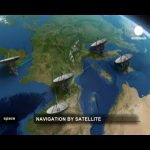
  • ESA Euronews: la Navegación por Satélite

    ESA Euronews: la Navegación por Satélite

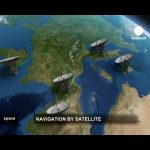
    En nuestros días el GPS es una herramienta muy útil. Los europeos han querido afinar su pecisión desarrollando el sistema EGNOS, precursor de la Constelación Galileo. En esta edición de “Space” podrá descubrir cómo funciona la navegación por satélite y sus aplicaciones.

  • ESA Euronews: La navigazione satellitare

    ESA Euronews: La navigazione satellitare

    Ai giorni nostri il GPS è uno strumento familiare e molto utile. Gli europei hanno voluto perfezionare la sua precisione sviluppando il sistema EGNOS, precursore della costellazione Galileo. La navigazione satellitare e le sue applicazioni in questa edizione di Space.

  • ESA Euronews: Satelliten-Navigation

    ESA Euronews: Satelliten-Navigation

    Heutzutage ist das GPS ein sehr nützliches Werkzeug, das aus dem Alltag nicht mehr wegzudenken ist. Mit dem System Egnos, Vorreiter der Satelliten-Konstellation Galileo, wollen die Europäer seine Treffsicherheit erhöhen. Die Satelliten-Navigation und ihre Anwendungen in dieser Ausgabe von “Space”.

  • ESA Euronews: Navigation by satellite

    ESA Euronews: Navigation by satellite

    Today GPS is a common and extremely useful tool. Europeans wanted to refine its accuracy by developing EGNOS, the precursor of the Galileo constellation.
    We look at satellite navigation and its applications.

  • ESA Euronews: Yuri Gagarin: o primeiro Homem no espaço

    ESA Euronews: Yuri Gagarin: o primeiro Homem no espaço

    Esta semana, há 50 anos, pela primeira vez na história da humanidade, um homem deixou a Terra e viajou para o Espaço. Quem foi Yuri Gagarin? Como é que aquele voo mudou a sua vida e a da humanidade?

  • ESA Euronews: Gagarin, pionero en órbita

    ESA Euronews: Gagarin, pionero en órbita

    Hace 50 años, por primera vez en la historia, un hombre viajó al espacio.
    ¿Quién era Yuri Gagarin? ¿Cómo fue el vuelo que cambió su vida y el devenir de la humanidad?

  • ESA Euronews: First Man in Space

    ESA Euronews: First Man in Space

    50 years ago, for the first time in history, a human travelled into space.
    Who was Yuri Gagarin ? How did this flight change his life and the future of humankind?

  • ESA Euronews: 2011, año de los lanzadores espaciales europeos

    ESA Euronews: 2011, año de los lanzadores espaciales europeos

    Ariane 5, la punta de lanza de la industria europea de cohetes espaciales, lidera el mercado de lanzadores comerciales.
    En breve, otros cohetes se le unirán para completar la oferta europea, haciendo de 2011 el año de los lanzadores espaciales europeos

  • ESA Euronews: The year of the Launchers

    ESA Euronews: The year of the Launchers

    Ariane 5, the European space industry’s workhorse, continues to successfully carry payloads into orbit. Two new launchers will soon complement Ariane 5, offering a full range of competitive services to Europe.
    2011 will be the year of the launchers.

  • ESA Euronews: Alla ricerca delle origini

    ESA Euronews: Alla ricerca delle origini

    Tredici miliardi e settecento milioni di anni fa nasceva l’Universo. Si tratta del Big Bang. Cos’è? Esisteva qualcosa prima? A quest’interrogativo si comincia a dare delle risposte grazie alla missione spaziale Planck.

  • ESA Euronews: Searching for the origins

    ESA Euronews: Searching for the origins

    The universe was born 13.7 billion years ago with the Big Bang. But what is the Big Bang and what was there before?
    Scientists are starting to get an answer thanks to the time-travelling Planck mission.

  • ATV-2 – A key ESA contribution to the ISS

    ATV-2 – A key ESA contribution to the ISS

    In recent weeks several space freighters, the Russian Progress and Japanese HTV, have arrived at the International Space Station. But the most important logistics spacecraft for the ISS is Europe’s Automated Transfer Vehicle. The ATV-2 called Johannes Kepler is to be launched from Kourou in just over a week and will be docking at the orbital complex on February 23rd with over 7 tonnes of cargo.

  • ESA Euronews: A caccia di esopianeti!

    ESA Euronews: A caccia di esopianeti!

    Pegaso 51 B è il nome che è stato dato al primo pianeta extra sistema solare scoperto nel 1995. Da allora ne sono stati scoperti altri 500. Space è andato a perlustare i recessi della ricerca su queste porzioni di universo.

  • ESA Euronews: Segredos de Saturno

    ESA Euronews: Segredos de Saturno

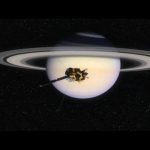
    Há algumas décadas, para observar Saturno, os cientistas recorriam a
    telescópios. Hoje em dia, os segredos de Saturno e da sua misteriosa lua Titã são revelados graças aos dados e imagens enviados pela missão Cassini-Huygens. Saturno nunca antes visto, é o tema de Space esta semana.

  • ESA Euronews: Los secretos de Saturno

    ESA Euronews: Los secretos de Saturno

    Hasta hace algunas décadas para ver Saturno la ciencia tenía que mirar a
    través de telescópios. Hoy Saturno y su misteriosa luna Titán son nuevos
    conocidos gracias a la misión Cassini-Huygens que desde 2004 envía imágenes y datos. Una aventura que está cambiando la percepción que hasta ahora teníamos de nuestro Sistema Solar.

  • ESA Euronews: Der Saturn gibt seine Geheimnisse preis

    ESA Euronews: Der Saturn gibt seine Geheimnisse preis

    Noch vor einigen Jahrzehnten konnte man den Saturn nur mit dem Teleskop
    beobachten. Heute lüftet die Cassini-Huygens-Mission mit ihren Bildern die
    Geheimnisse des Saturnsystems und liefert Antworten auf entscheidende
    wissenschaftliche Fragen.

  • ESA Euronews: Il satellite al servizio di internet

    ESA Euronews: Il satellite al servizio di internet

    L’internet ad alta velocità è una necessità. Non importa dove siete, lontano
    dalle città o in treno. Potete essere sempre connessi se l’autostrada
    dell’informazione attraversa lo spazio. In questa puntata Space si occupa dell’internet satellitare, un modo universale e efficiente per avere accesso al World Wide Web.

  • ESA Euronews: Internet de alta velocidad cuando sea y donde sea

    ESA Euronews: Internet de alta velocidad cuando sea y donde sea

    Disponer de internet a alta velocidad se ha convertido en una necesidad en cualquier lugar del planeta, ya sea en un pueblo aislado o en un tren. La mejor solución llega desde el espacio: La conexión a internet vía satélite.

  • ESA Euronews: Europe and space exploration (Português)

    ESA Euronews: Europe and space exploration (Português)

    Space exploration is a major global issue and Europe wants to be in the driving seat. It therefore needs to develop a global vision and a strategic action plan.

  • ESA Euronews: Europe and space exploration (Italiano)

    ESA Euronews: Europe and space exploration (Italiano)

    Space exploration is a major global issue and Europe wants to be in the driving seat. It therefore needs to develop a global vision and a strategic action plan.

  • ESA Euronews: Europe and space exploration (Français)

    ESA Euronews: Europe and space exploration (Français)

    Space exploration is a major global issue and Europe wants to be in the driving seat. It therefore needs to develop a global vision and a strategic action plan.

  • ESA Euronews: Europe and space exploration (Deutsch)

    ESA Euronews: Europe and space exploration (Deutsch)

    Space exploration is a major global issue and Europe wants to be in the driving seat. It therefore needs to develop a global vision and a strategic action plan.

  • ESA Euronews: Europe and space exploration

    ESA Euronews: Europe and space exploration

    Space exploration is a major global issue and Europe wants to be in the driving seat. It therefore needs to develop a global vision and a strategic action plan.

  • Counting down for ESA’s MagISStra mission

    Counting down for ESA’s MagISStra mission

    ESA’s Director of Human Spaceflight Simonetta Di Pippo together with ESA’s astronaut Paolo Nespoli introduce the MagISStra mission which is going to be launched in December 2010 from Baikonur Cosmodrome, Kazakhstan. This is the third six-month duration mission a European astronaut takes part to.

  • ESA Euronews: Ciência e ficção científica

    ESA Euronews: Ciência e ficção científica

    Júlio Verne, Arthur C. Clark e muitos outros imaginaram mundos, máquinas e viagens fantásticas. Contudo muito do que então era ficção científica, tornou-se realidade. “Ciência e ficção científica” é o tema desta
    edição de Space

  • ESA Euronews: A can-size challenge for European students (Español)

    ESA Euronews: A can-size challenge for European students (Español)

    Flying your very own rocket with its model satellite – this was the challenge facing high-school students from all over Europe this summer for the first ever European CanSat competition in Norway.

  • ESA Euronews: A can-size challenge for European students (Português)

    ESA Euronews: A can-size challenge for European students (Português)

    Flying your very own rocket with its model satellite – this was the challenge facing high-school students from all over Europe this summer for the first ever European CanSat competition in Norway.

  • ESA Euronews: A can-size challenge for European students

    ESA Euronews: A can-size challenge for European students

    Flying your very own rocket with its model satellite – this was the challenge facing high-school students from all over Europe this summer for the first ever European CanSat competition in Norway.

  • Using LEGO®  to simulate ESA’s touchdown on a comet

    Using LEGO® to simulate ESA’s touchdown on a comet

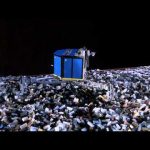
    Comets are primeval leftovers from the origins of the Solar System. To fully understand these ancient objects and perhaps the origins of life on Earth, ESA’s Rosetta mission will rendezvous with comet Churyumov-Gerasimenko in 2014. In November of that year, Rosetta’s Philae lander will touchdown on the comet and thoroughly investigate its composition.

    Copyright © Lightcurve Films/Maarten Roos, ESA, DLR, Europlanet, LEGO

  • ESA Space Scientist Detlef Koschny explains why he originally built Rosetta in LEGO®

    ESA Space Scientist Detlef Koschny explains why he originally built Rosetta in LEGO®

    Space missions are complicated pieces of orbital choreography. When planning a mission, spacecraft engineers must calculate how to point the solar panels towards the Sun, the main antenna towards Earth and the instruments towards the target. ESA Space Scientist Detlef Koschny build a LEGO model of Rosetta mission in order to visualise these precise orientations.

    Copyright © Lightcurve Films/Maarten Roos, ESA, DLR, Europlanet, LEGO

  • ESA Space Scientist Detlef Koschny demonstrates the prototype LEGO®  Philae lander

    ESA Space Scientist Detlef Koschny demonstrates the prototype LEGO® Philae lander

    Built using LEGO Mindstorms, the Philae lander model can be controlled using a home computer. It can rotate and move the drill up and down to simulate the behaviour of the real lander. As part of ESA’s Rosetta space mission, Philae will land on comet Churyumov-Gerasimenko in November 2014 to study its composition.

    Copyright © Lightcurve Films/Maarten Roos, ESA, DLR, Europlanet, LEGO

  • NASA and, ESA Unite for Mars Missions

    NASA and, ESA Unite for Mars Missions

    NASA and the European Space Agency (ESA) have joined to share resources and expertise on three future science missions to Mars. In three separate robotic missions (the first in 2016), both agencies will study the possibility of past life on the Red Planet, as well as test communications relays and other geochemical and biological mysteries. The third mission, in the 2020’s, will return to Earth a sample taken from the Martian surface.

  • Mars500 video diary 1 – Diego’s guided tour

    Mars500 video diary 1 – Diego’s guided tour

    Diego Urbina (@diegou) takes us on tour inside the Mars500 facilities – see how the crew are living and working for the next 17 months in isolation.

  • Interview with Romain Charles (ESA Mars500 participant)

    Interview with Romain Charles (ESA Mars500 participant)

    Romain Charles of the Mars500 crew talks about his motivation for taking part in this adventure and how he’ll cope with his 520-day ‘mission to Mars’ .

  • How do you feel after the first few months in orbit?

    How do you feel after the first few months in orbit?

    Frank De Winne is answering a few questions on the ISS submitted by the pupils of Class 7M from the Christian Morgenstern School in Hersching (Germany):

    Question:
    – Jerome (13): How do you feel in orbit after 2 months?
    – Karina (13): How much time do you spend working outside the ISS?
    – Tamara: Do you have any real free time in the ISS, and how can you spend this time? How often do you contact your family?
    – Antoine (13): Have you ever felt scared in orbit? Has there ever been a moment that you wished to be back on Earth?
    – Regina (14): Has anything strange happened on the ISS that none of your colleagues have been able to explain?
    – Flavu: Which kind of education and qualification do you need for this kind of work?

  • ESA highlights online games as key future technology

    ESA highlights online games as key future technology

    Video gaming has become one of the globes most popular pastimes. Fans say games are often educational, their detractors answer they are anything but. Might ESA have something to learn from gaming? A new Agency study says the answer is yes.
    http://www.esa.int/esaCP/SEMHGBFKZ6G_index_0.html
  • Airbus Zero G

    Airbus Zero G

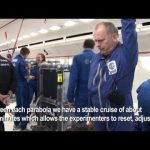
    Operated for ESA by the French company Novespace, the Zero-G aircraft flies parabolic arcs so that its passengers and cargo experience periods of freefalling weightlessness.

  • Ariane 30th birthday

    Ariane 30th birthday

    On 24 December 1979, Ariane made its first flight from French Guiana, marking the beginning of 30 years of success and giving Europe a guaranteed independent access to space. With Ariane, ESA could develop its own programmes in many different domains: telecommunications, Earth observation, science and exploration. Europe was the pioneer in the civil launch space market, with the creation of Arianespace, the world-leading space transportation company.
  • What does a typical working day on the ISS look like?

    What does a typical working day on the ISS look like?

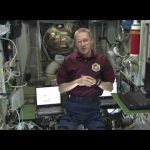
    Frank De Winne is answering a question on the ISS submitted by Thomas Kern from Germany:
    What does a typical working day on the ISS look like?