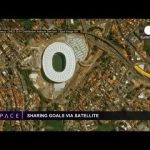
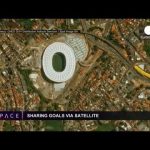
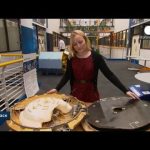
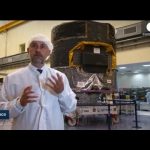
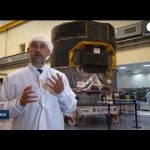
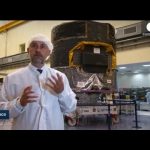
I Mondiali di calcio sono in corso e milioni le immagini dal Brasile arriveranno in tutto il mondo grazie alla tecnologia spaziale. Migliaia di fan vi assisteranno personalmente, ma si stima che più di 3,2 miliardi di persone (ovvero quasi la metà della popolazione del pianeta) ne seguiranno almeno una parte in tv. La Coppa del Mondo viene diffusa con quella che gli operatori satellitari come SES, qui in Lussemburgo, chiamano trasmissione per ‘uso occasionale’. Si tratta della banda supplementare adibita alla copertura di eventi speciali in diretta. Ed è uno spazio molto affollato. “Indipendentemente da quale sia la tecnologia usata nelle case per ricevere la tv” afferma Xavier Lobao, dell’ESA “si utilizzano i satelliti.”
Com a chegada do Mundial o planeta irá recorrer à tecnologia espacial para reproduzir os acontecimentos em direto, a partir do Brasil. Milhares de adeptos testemunharão o evento ao vivo, mas são muitos mais os que irão assistir a tudo através da televisão. Estima-se que mais de 3,2 mil milhões de pessoas acompanhem a cobertura televisiva – quase metade da população do planeta terra. O Campeonato do Mundo é transmitido através do que os operadores de satélite chamam de transmissão de “uso ocasional.” É esse o nome para largura de banda alocada juntamente com transmissões regulares para cobrir eventos especiais em direto. O período de duração do Mundial será atarefado. “Independentemente da tecnologia usada nas casas para receber sinal de televisão, os satélites serão utilizados”, sublinha Xavier Lobao, chefe de Projetos de Telecomunicações Futuras na Agência Espacial Europeia.
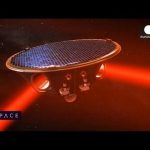
Scientists are getting closer than ever to understanding the origins of the Universe. For the first time, they have glimpsed behind the veil that covers the ‘Big Bang’ with the announcement that the Background Imaging of Cosmic Extragalactic Polarisation — BICEP2 — experiment at the South Pole had spotted the footprints of something called primordial gravitational waves. These waves may be a sign that a theory known as cosmic inflation can be confirmed. For those studying the Big Bang — the beginning of the Universe — this is big news.
Segíthetnek-e a gravitációs hullámok megérteni az univerzum kezdetét? Ez még mindig nagy kérdés, ezért izgatják annyira az elsődleges gravitációs hullámok a tudósokat.
Πλησιάζουμε περισσότερο από ποτέ στην κατανόηση της προέλευσης του σύμπαντος. Για πρώτη φορά αφαιρούμε το πέπλο που καλύπτει το Big Bang. Τι καταλαβαίνουμε λοιπόν για τη γέννηση του κόσμου.
In this edition of Space we look back at the past 50 years of space in Europe; five decades of discovery, drama and innovation that have had a profound impact on how we see ourselves and our planet. Historian John Krige gives his insight on how Europe’s space sector has evolved, while veteran space scientists recount their experiences in major missions and launches.
Idén ötven éve indult el a közös európai űrprogram. A nehezen összekovácsolt tudományos együttműködés az egyik remek példa arra, amikor Európa működik.
Ötven évvel ezelőtt a világ már az űrverseny lázában égett. A Szputnyik elküldte az első jeleket, Jurij Gagarin már járt az űrben, az Egyesült Államok és a Szovjetunió vetélkedése hajtotta a tudományt előre.
*Azt hittük, vége a világnak*
– A világ elképesztően törékeny, veszélyes hely volt – jellemezte az időszakot John Krige, a Georgia Institute of Technology történésze. – A szuperhatalmak vetélkedése talán akkor volt a csúcson, a kubai rakétaválság idején. Én fiatalember voltam, és egész biztosan azt gondoltam, hogy az lesz a világ vége. Szerintem nem voltam ezzel egyedül.
Ebben a feszült helyzetben lépett fel két európai fizikus, az olasz Eduardo Arnaldi és a francia Pierre Auger, akik szentül hittek abban, hogy a rakétáknak és a műholdaknak a tudományt kell szolgálniuk, nem a kardcsörtetést.
– Azok az országok, amelyek a közös európai űrprogramba belevágtak, húsz évvel korábban gyilkos háborút vívtak egymással – magyarázta Roger-Maurice Bonnet, az Európai Űrügynökség (ESA) volt tudományos igazgatója. – Ezek az országok összegyűltek, és úgy döntöttek, olyan közös nyelvet fognak használni, amelyen nem lehet őket egymásra uszítani – a tudomány nyelvét.
The recent floods in the UK saw a lot of the management of that disaster made possible by using information from satellites. But how? In this edition of Space we find out.
Flooding affects thousands of people every year across Europe, and this year one of them just happened to be a flood scientist – Spanish Research Fellow at Reading University in England, Javier García-Pintado.
His back garden looks onto the Thames, he explains: “This is the bank of the Thames, and this areas was severely affected by the recent flooding. Specifically in this little bit of land we are a tiny bit higher, and we didn’t have any problems, but our neighbours around here certainly did.”
García-Pintado knew his young family was safe at home, because he could count on his expert knowledge; his day job is using satellite data to improve flood models.
“As hydrologists we were pretty confident that this property wouldn’t have a problem, and we told our neighbours,” he told euronews.
Not everyone has a neighbour as knowledgeable as Javier, nor were they as lucky.
The whole area west of London was affected as England and Wales lived through their wettest winter in almost 250 years.
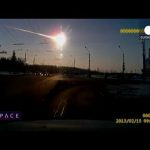
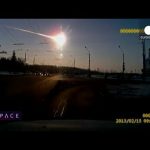
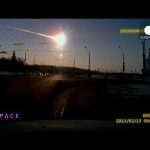
How real is the threat of an asteroid hitting Earth, and is there anything we can do to prevent it from happening? Asteroid impacts are nothing new. Only last year, one exploded over the city of Chelyabinsk in Russia injuring 1500 people and damaging some 7,000 buildings.
“It was a pretty nasty event, luckily nobody was killed, but it just shows the sort of force that these things have,” says Alan Harris, Senior Scientist, DLR Institute of Planetary Research Berlin.
While there was surprise nobody saw it coming, the asteroid itself wasn’t that big, measuring no more than 20 metres across. It was tricky to spot, arriving into Earth’s atmosphere backlit by the Sun.
In fact, much bigger threats lurk out in space. Just a few days ago another asteroid 270 metres wide passed near Earth. That kind of object could cause much more damage.
“Something with the size of a hundred metres for instance, which still isn’t very big, you’re talking about something that would fit into a football field, and that could actually completely destroy an urban area in the worst case. So those are the things that we’re really looking out for, and that we’re trying to find ways to tackle,” says Harris.
Action to address the asteroid threat is already underway. Earlier in February, space scientists and policy experts from all the major space-faring nations held talks to create a framework for action.
Qual é o perigo real das colisões de asteroides e satélites? A cidade de Chelyabinsk, na Rússia, viveu momentos dramáticos há um ano, com a explosão de um asteróide. O fenómeno deixou 15 pessoas feridas e mais de sete mil edifícios danificados. Foi surpreendente e ninguém estava à espera.
Não era um grande asteroide, com cerca de 20 metros de diâmetro, e entrou na atmosfera ofuscado pelo Sol. Há poucos dias, um asteroide com 270 metros de diâmetro passou perto da Terra.
O impacto de um objeto como este pode significar uma verdadeira catástrofe: “Algo com cerca de cem metros, por exemplo, que não é muito grande, estamos a falar de algo que cabe num campo de futebol, pode destruir por completo uma área urbana, no pior dos casos.
São esses asteróides que procuramos e estamos a estudar meios de os neutralizar”, explica Alan Harris, do Instituto de Estudos Planetários de Berlim. O trabalho já está em marcha.
No início de fevereiro, este encontro reuniu cientistas espaciais e especialistas políticos da maioria das potências espaciais do planeta, com o objetivo de criar um quadro de ação. “No ano passado, estávamos ainda numa situação em que, se um asteróide estivesse a ameaçar a terra, não teríamos um processo de reação.
Valós-e veszélye annak, hogy aszteroidák és műholdak ütköznek össze az űrben? Drámai pillanat volt, amikor egy aszteroida fölrobbant az oroszországi Cseljabinszk fölött, egy évvel ezelőtt. A robbanásban 1500 ember megsérült, és több mint 7000 épület megrongálódott.
Meglepő módon senki nem látta, hogy az aszteroida közelít. Nem volt nagy, csak húsz méter széles, és úgy érkezett a légkörbe, hogy a Nap hátulról megvilágította. A világűrben sokkal nagyobb veszélyek is leselkednek ránk. Néhány nappal ezelőtt egy 270 méter széles aszteroida haladt el nem messze a Földtől. Egy ilyen tárgy sokkal nagyobb károkat okozhat.
– Egy néhány száz méter nagyságú tárgy, amely még mindig nem számít igazán nagynak, hiszen olyasmiről beszélünk, ami egy futballpályán elfér, legrosszabb esetben teljesen elpusztíthat egy lakóövezetet. Ezekre az esetekre próbálunk fölkészülni, és kitalálni, hogyan előzzük meg őket – mondja Alan Harris brit kutató.
Már tettek is lépéseket azért, hogy elhárítsák az aszteroidaveszélyt. Február elején a nagy űrkutató nemzetek tudósai és szakértői tanácskoztak, hogy akciótervet dolgozzanak ki. A csoportot az ENSZ támogatja. Miközben a tudósok azon dolgoznak, hogy fölfedezzék a Föld közelében lévő aszteroidákat, ez a csoport dönt arról, mi a teendőnk, ha komoly veszély alakul ki.
Es wird passieren, ob wir wollen oder nicht: Eines Tages wird ein Asteroid die Erde treffen, die Zerstörung könnte enorm sein. Was lässt sich dagegen tun? Im vergangenen Jahr erhielten wir einen kleinen Vorgeschmack, welch zerstörerische Wucht ein Asteroidentreffer auf der Erde haben kann. Über der russischen Stadt Tscheljabinsk explodierte ein solches Himmelsgeschoss. 1500 Menschen wurden verletzt, 7000 Gebäude beschädigt.
Alan Harris arbeitet am Deutschen Zentrum für Luft- und Raumfahrt in Berlin. Er erinnert sich an Tscheljabinsk: “Das war ein ziemlich heftiges Ereignis, bei dem zum Glück niemand umkam. Doch es zeigte, welche Kraft diese Dinger haben.”
Vor allem aber hat niemand den Einschlag kommen seien. Mit seinen rund 19 Metern Durchmesser war der Asteroid nicht sonderlich groß, es war praktisch unmöglich, ihn gegen die Sonne zu entdecken. Dabei gibt es tausende deutlich größere Asteroiden in Umlaufbahnen rund um die Erde, und nicht wenige von ihnen könnten zu einer Gefahr für uns werden.
Harris: “Ein Hundert-Meter-Asteroid wäre noch nicht ein mal sonderlich groß, er würde auf ein Fußballfeld passen, und doch könnte er im schlimmsten Fall eine ganze Großstadt vernichten. Das sind die Dinger, nach denen wir Ausschau halten, und wir müssen Wege finden, mit ihnen umzugehen.”
*Mensch gegen Meteor*
Um diese Wege zu finden, wurde am Raumfahrtzentrum der ESA in Darmstadt eine Expertengruppe zur Asteroidenabwehr ins Leben gerufen. An ihr sind Forscher aus den wichtigsten Raumfahrtnationen beteiligt.
The exploits of comet-hunting spacecraft Rosetta are generating intense interest as it speeds towards a dramatic climax this autumn.
The craft will catch up with comet 67p/Churyumov–Gerasimenko, fly alongside, and put a lander on its surface. Throughout this fantastic voyage, Euronews will have special access to the engineers and scientists who are making it happen.
On 20th January Rosetta woke up from two and a half years of hibernation. It was a moment of extreme tension for everyone at ESA’s European Space Operations Centre in Darmstadt, Germany. Strained, nervous faces searched for a signal from a probe in deep space.
After some 45 minutes of anxiety the all-important first signal came through. The scientists burst into energetic applause.
Hace unos días, la sonda Rosetta se reactivó tras casi dos años y medio de hibernación. La comunidad científica del mundo entero estaba pendiente de la sala de control en el momento en el que Rosetta, tras reactivarse, enviaba su señal de confirmación.
A ocho cientos millones de kilómetros, en algún lugar del espacio, Rosetta se despertaba.
Este proceso tardó varias horas, a las 18:18 de la tarde, hora central europea, el equipo del Centro de Operaciones de la Agencia Espacial Europea, en Darmstadt, Alemania, estallaba de alegría.
Pár nappal ezelőtt az Európai Űrügynökség sikeresen felébresztette a hibernációból a Rosetta nevű műholdat, amely hamarosan egyedülálló küldetésre indul: leszállóegységet próbál ereszteni egy üstökös felszínére.
2014. január huszadikán a világ szeme az Európai Űrügynökség csapatára szegeződött, amint arra vártak, hogy az űreszköz válaszoljon.
Az üstökösök évszázadok óta felcsigázták az emberek fantáziáját. Az Európai Űrügynökség Rosetta nevű missziója megkísérel műszereket eljuttatni egy üstökös felszínére.
Szénből, porból és vízjégből álló égitestek, amelyek a Naphoz közelítve annak fénye miatt csóvát fejlesztenek a maguk mögött húzott törmelékből. Több okból is érdekesek a tudomány számára, de a legizgalmasabb kérdés, hogy van-e közük a földi élet eredetéhez.
A Space üstökösvadász stábjának első útja Jénába, a türingiai tartományi csillagvizsgálóba vezet. A tudósok itt azon dolgoznak, hogy megállapítsák, mi maradt a darabjaira hullott ISON üstökösből. A gyanú az volt, hogy az égitest megsemmisült, de kérdéses volt, hogy a magnak maradtak-e látható darabkái. Azonban napfelkeltéig a tudósoknak nem sikerült megpillantaniuk az ISON maradványait.
Mindeközben Svájcban a berni egyetem kutatói vízjégből, folyékony nitrogénből és szénből mesterséges üstököst állítanak elő. Az így elkészült mintával vákuumkamrában kísérleteznek: arra kíváncsiak, milyen folyamatok mennek végbe egy üstökös felszínén.
Mindezek a kísérletek és megfigyelések csak előkészületek az igazi nagy dobásra: az Európai Űrközpont Rosetta fedőnevű missziója megkísérel műszereket eljuttatni egy üstökös felszínére, és onnan mintákat szállítani.
Ez azért tölti el lelkesedéssel a tudósokat, mert az utolsó hasonló akció, a NASA Csillagpor (Stardust) nevű küldetése meglepő eredményeket hozott. Akkor egy szondát reptettek át a Halley üstökös csóváján, és az így megszerzett minta glicint, egy fontos, DNS-alkotó aminosavat is tartalmazott. Tehát nem életet, de az élet egyik fontos alkotóelemét – ez pedig felveti az üstökösök szerepét a földi élet kialakulásában.
– A földi élethez meghatározott típusú, úgynevezett balkezes aminosavak szükségesek. A kémia elő tud állítani bal és jobbekezes aminosavakat is, de az élet ezek közül csak a balkezeseket használja és szeretnénk érteni, hogy miért – magyarázta az Euronews riporterének Hermann Böhnhardt, a Max Planck Intézet kutatója – Nem tudjuk, de szeretnénk tudni, hogy az üstökösökben található aminosavak jobb vagy balkezesek, mert ha balkezesek, akkor ez újabb arra utaló jel, hogy talán az élet, vagy legalábbis annak alkotóelemei az űrből kerültek a Földre.
A tudományos közösség abban reménykedik, hogy az üstökösöket érintő kérdések sokaságára kapnak választ 2014-ben, ha a Rosetta misszója sikerrel zárul.
Íme az űrkadétok: három fiatal mérnök, akiknek a munkája a szó szoros értelmében földönkívüli élményt jelent. A szakértők olyan új generációjáról van szó, akiknek az űrutazásról szóló álmaikat sikerült kézzelfogható karrierre váltaniuk.
Meet the space cadets, three young engineers with enviable jobs that are quite literally out of this world. This edition of Space focuses on three professionals who’ve turned their dreams of working in space into real down-to- Earth careers.
In the UK, 26-year-old Abbie Hutty, a spacecraft structures engineer at Astrium, is a proud member of the ExoMars team. She is developing the structure of the mission’s rover, ensuring that the actual body of the vehicle and other components are all structurally strong enough to withstand the launch from Earth, and landing on Mars.
Twenty-seven-year-old Marc Costa Sitjà, Science Operations Engineer at the European Space Agency, uses the huge antenna at Cebreros, west of Madrid, to ‘drive’ ESA’s Venus Express spacecraft around the planet. Every day he sends commands and receives data to and from the spacecraft from the agency’s ESAC facility near the Spanish capital.
Maria Komu, a 27-year-old researcher at the Finnish Meteorological Institute, works on Finnish mini satellite Aalto-1, and has a hands-on role developing a weather instrument for ESA’s ExoMars EDM mission.
Space is a childhood dream turned reality for all three. For Abbie the realisation that space wasn’t just science fiction came when she was still at school and she heard of the Beagle 2 mission to Mars, a lander that was developed in the UK by British engineers. Maria tells the story of a book about a school visit around the solar system that enchanted her as a young girl. Meanwhile Marc cites a vivid blue image of Venus as an inspiration to his career.
Abbie, Marc and Maria are all educated to masters level, while Maria continues studying towards a doctorate. They’re on the first steps of the career ladder, and that means plenty of learning ‘on-the-job’. Maria had to master soldering, programming, and testing, Marc developed his skills by creating software that helped a mission to better fulfill its purpose, while Abbie had to understand better the behaviour of particular materials in the cold vacuum of space.
The excitement of working in space is summed up by Abbie: “I think the space industry is quite a privileged industry to work in, because whilst you are still managing projects and meeting schedules and deadlines, and creating a product, at the end of the day that requires a certain amount of processes down on it, you can also come down to the clean rooms and look through the window and see your part of a spaceship, and think ‘that’s going to Mars, and I did that bit’, and you don’t get that anywhere else.”
Η Μαρία, ο Μαρκ και η Άμπι είναι τρεις νέοι μηχανικοί κι έχουν τρεις διαφορετικές ιστορίες, αλλά με ένα κοινό γνώρισμα. Η δουλειά τους είναι στη Γη, αλλά φεύγει από τα όριά της. Και οι τρεις πραγματοποίησαν το όνειρό τους: δουλεύουν στη διαστημική βιομηχανία. Και δηλώνουν ευτυχισμένοι γι’αυτό.
Λίγο μετά τα είκοσί τους χρόνια, ήδη έχουν σημαντικές ευθύνες.
Η Μαρία εργάζεται σε έναν φινλανδικό μίνι δορυφόρο και σε εργαλεία πρόγνωσης καιρού για την αποστολή ExoMars της ESA. Η Άμπι αναπτύσσει τη δομή του οχήματος της αποστολής. Ο Μαρκ σχεδιάζει τις επιχειρήσεις του δορυφόρου Venus Express της ESA.
Η Άμπι και ο Μαρκ έχουν μεταπτυχιακές σπουδές, ενώ η Μαρία είναι υποψήφια διδάκτωρ. Και οι τρεις λένε πως εμπνεύστηκαν από την ιδέα της εξερεύνησης του ηλιακού μας συστήματος.
Πλοήγηση δορυφόρων, κατασκευή διαστημικών οχημάτων και μετεωρολογικών σταθμών για τον Άρη. Όλα αυτά απαιτούν δεξιότητες, γνώση και αφοσίωση.
Δυσκολίες υπάρχουν σίγουρα. Όμως κανείς εκ των τριών δεν χάνει από το βλέμμα του τη μοναδική φύση μιας καριέρας στο διάστημα.
L’espace fascine bon nombre d’entre nous, mais bien peu ont la chance de travailler dans le domaine de la recherche spatiale. Nous avons rencontré trois jeunes ingénieurs qui ont entamé une carrière, la tête dans les étoiles et les pieds sur Terre.
A Helsinki, Maria Komu nous fait découvrir son lieu de travail : l’Institut météorologique finlandais qui dispose d’un laboratoire spatial. “Il y a à peine cinq ans, mon plus grand rêve, c’était simplement de pouvoir toucher quelque chose qui allait dans l’espace,” nous confie la jeune femme. “Aujourd’hui, je conçois des instruments qui vont dans l’espace, c’est incroyable !” s’enthousiasme-t-elle. Maria travaille sur un mini-satellite et des instruments météo pour le démonstrateur EDM de la mission ExoMars de l’Agence spatiale européenne (ESA).
Au nord de Londres, découvrons à présent, l’univers d’Abbie Hutty, ingénieur spatial structures chez Astrium. Son travail qui d’ailleurs, la passionne : s’assurer que “le corps du rover ExoMars est assez solide pour pouvoir supporter notamment le lancement, l’arrivée au sol et l’entrée dans l’atmosphère,” nous explique-t-elle.
En Espagne, à Cebreros, près de Madrid, Marc Costa Sitjà nous présente l’antenne à gain élevé qui permet à son équipe de communiquer avec le satellite Venus Express (ESA) pour gérer son pilotage. La parabole permet aux scientifiques d’envoyer des ordres de commande à l’engin et de recevoir des données en sa provenance comme une image de Vénus unique qu’ils ont réussi à constituer à partir de toute une série d’observations.
Nos trois jeunes ingénieurs ont choisi ces métiers pour explorer notre système solaire et peut-être éclaircir ses mystères. Une motivation qui les anime parfois depuis l’enfance. Chacun reconnaît avoir de la chance de mener une vie professionnelle dans un secteur qui les fascine. La Finlandaise Maria Komu aimerait poursuivre son rêve éveillé en visitant “d’immenses chambres à vide et peut-être des simulateurs solaires :c’est ce que je préfèrerais,” nous lance-t-elle avant de conclure : “et bien sûr, si je pouvais assister en vrai au lancement d’une fusée, ce serait vraiment cool !”
It has spawned a host of songs from crooners to alternative rock bands. One of the best loved chocolate bars in the United Kingdom is named after it. Yet how much to we really know about the Milky Way and just how important is it?
We could be close to many answers about the galaxy thanks to a new satellite named Gaia, being launched by the European Space Agency.
“One fundamental step to understand our universe is to understand our closer universe, which is the galaxy,” explained Guiseppe Sarri who is the project manager of ESA’s Gaia project.
Gaia will scan the sky with powerful new eyes, mapping the Milky Way in unprecedented detail. It will help produce a detailed 3D image of the galaxy, something which has never been done before.
Olhando para o céu durante a noite é possível ver milhares de estrelas. Mas muito para além das visíveis existem milhões de outras escondidas na escuridão. Mais fracas, mais distantes, e profundamente misteriosas.
Podemos estar perto de as descobrir graças a um novo satélite denominado Gaia, que está a ser lançado pela Agência Espacial Europeia.
“Um passo fundamental para compreender o universo é entender o nosso universo mais próximo, a galáxia”, explicou Guiseppe Sarri, gestor do projeto Gaia da Agência Espacial Europeia.
O Gaia vai conseguir ver o céu com uns poderosos novos olhos e criar um mapa detalhado da galáxia em 3D. Algo nunca antes visto na astronomia.
Os astrónomos estão entusiasmados já que o satélite promete uma revolução. Vai observar, mapear e medir mil milhões de estrelas no total.
Para isso o satélite vai transportar a maior câmera digital que alguma vez voou para o espaço. Como Guiseppe Sarri salientou: “Estamos a falar de estrelas que são 400 mil vezes mais fracas do que as que podemos ver a olho nu.”
O grande número de dados recolhidos na missão deve ajudar os astrónomos a resolver alguns dos maiores quebra-cabeças no universo. Tais como a forma exata da nossa galáxia e os mistérios da matéria negra – a força oculta que molda o universo. O mapa da Via Láctea do satélite Gaia vai deixar o universo um pouco menos misterioso, mas nem por isso menos belo.
Les milliards d’étoiles de notre Voie lactée forment un labyrinthe dont nous avons du mal à appréhender l’étendue. Pour faire progresser les connaissances sur notre galaxie, l’Agence spatiale européenne mène la mission Gaia, du nom d’un satellite capable de scanner le ciel avec une précision extraordinaire, au moins mille fois supérieure à celle des observations depuis le sol.
L’engin construit par Astrium à Toulouse et lancé depuis Kourou en Guyane française va réaliser une première en astronomie en établissant une carte 3D détaillée de la Voie lactée : il calculera la position relative, la trajectoire et la vitesse d’un milliard d’étoiles. Ce qui correspond à 1% de l’ensemble des étoiles peuplant notre galaxie.
Pour l’aider dans ses observations, Gaia dispose de la plus grande caméra numérique jamais conçue pour une mission spatiale et comme point de référence, du plus grand téléscope de l’observatoire du Pic du Midi dans les Pyrénées.
Grâce à cette mission, les astronomes espèrent résoudre de grandes énigmes, notamment établir avec exactitude, la structure en spirale de la Voie lactée et trouver la trace de la matière noire, cette force invisible qui façonne notre univers.
When it comes to the origins of the Universe, there’s one idea that really captures our imagination: everything, even time itself, started with the Big Bang.
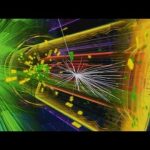
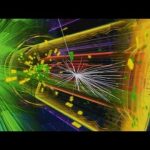
The concept of the Big Bang is difficult to describe and problematic to measure, however that’s exactly what two major projects have set out to do: one on Earth, the Large Hadron Collider at CERN, the other in space, ESA’s Planck mission.
In this edition of Space, Euronews gets to the heart of the matter and attempts to discover how matter and everything in the Universe came into being.
We speak with experts from the CERN, Institut d’Astrophysique de Paris, Sorbonne University and ESA, all studying how the Universe works.
Quando se trata da origem do universo, há uma ideia que realmente capta a nossa atenção. Que é a seguinte: tudo, até mesmo o próprio tempo, começou com o Big Bang. Se o conceito de Big Bang é difícil de descrever é ainda mais difícil de medir e testar através de uma experiência científica. Mas é exatamente isso que dois dos principais projetos do nosso tempo pretendem fazer. Um deles está na terra, o outro no espaço. Na Terra, essa experiência está no CERN, perto de Genebra.
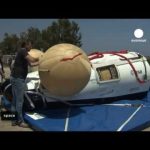
Nel mare di Sardegna, poco distante da Muravera in Costa Rei, è stato testato l’IXV, un nuovo veicolo spaziale europeo. La navicella è stata progettata per rientrare nell’atmosfera terrestre in modo più preciso rispetto alla Soyuz.
Durante il test l’Intermediate eXperimental Vehicle è stato sollevato da un elicottero e, a tremila metri di altitudine, è stato sganciato.
Dopo una prima parte di tragitto in caduta libera, la corsa della navetta verso il Mar Mediterraneo è stata frenata, come previsto, da un paracadute.
Ma qualcosa non ha funzionato. Nell’impatto con l’acqua non si sono aperti i dispositivi di galleggiamento che garantiscono stabilità all’IXV.
Secondo Giorgio Tumino e Roberto Angelini, i due manager che seguono il progetto, rispettivamente per ESA e per Thales Alenia Space, l’ammaraggio è stato talmente ‘morbido’ che i quattro palloni praticamente non se ne sono ‘accorti’. Per questo non si sono gonfiati.
Il primo lancio nello spazio dell’IXV, con conseguente rientro nell’orbita terrestre, è previsto per il 2014. Per quella data, garantiscono gli ingegneri, tutto sarà perfetto.