Tag: European Service Module

  • ESA 2024 Highlights: flight of the Ariane 6

    ESA 2024 Highlights: flight of the Ariane 6

    In 2024, ESA continued to drive Europe’s innovation and excellence in space, equipping the continent with advanced tools and knowledge to address global and local challenges. The year saw pioneering missions, cutting-edge satellites and the pivotal restoration of Europe’s independent access to space.

    The first Ariane 6 launch was perhaps ‘the’ highlight of the year but it was only one of many achievements. We saw the last Vega launch and then the return to flight of Vega-C, the more powerful, upgraded version carrying Sentinel-1C.

    Far away in our Solar System, the ESA/JAXA BepiColombo spacecraft performed two Mercury flybys in 2024, needed so that it can enter orbit around Mercury in 2026. Juice also performed a crucial gravity assist, this time becoming the first spacecraft to conduct a Moon-Earth double flyby on its way to Jupiter.

    Twenty years after ESA’s Rosetta was launched and 10 years since its historic arrival at the comet 67P/Churyumov-Gerasimenko, we launched another spacecraft to a small body, the Hera planetary defence mission to investigate asteroid Dimorphos.

    2024 was an important year for Europe’s Galileo constellation which continued to expand with the launch of four new satellites and an updated Galileo ground system. The year also saw the launch of ESA’s Proba-3 mission: two precision formation-flying satellites forming a solar coronagraph to study the Sun’s faint corona.

    In human spaceflight, Europe continues to contribute to science from the ISS as Andreas Mogensen’s Huginn mission continued into 2024. Andreas even met up in space with ESA project astronaut Marcus Wandt who was launched on his Muninn mission, making it the first time two Scandinavians were in space together.

    Meanwhile the latest class of ESA astronauts completed basic training and graduated in April. Two of them, Sophie and Raphaël, were then assigned to long-duration missions to the ISS in 2026.

    We made crucial steps for Europe in gaining access to the Moon: the inauguration of our LUNA facility with DLR, and the delivery of a third European Service Module for NASA’s Orion spacecraft as part of the Artemis programme.

    Europe is also contributing to the international Lunar Gateway and developing and ESA lunar lander called Argonaut. These landers will rely on ESA Moonlight, the programme to establish Europe’s first dedicated satellite constellation for lunar communication and navigation.

    As 2024 draws to a close, ESA’s achievements this year have reinforced Europe’s role in space. ESA’s journey continues to explore new frontiers, shaping the space landscape for generations to come.

    Credits: ESA – European Space Agency

    ★ Subscribe: http://bit.ly/ESAsubscribe and click twice on the bell button to receive our notifications.

    Check out our full video catalog: http://bit.ly/SpaceInVideos
    Follow us on Twitter: http://bit.ly/ESAonTwitter
    On Facebook: http://bit.ly/ESAonFacebook
    On Instagram: http://bit.ly/ESAonInstagram
    On LinkedIn: https://bit.ly/ESAonLinkedIn
    On Pinterest: https://bit.ly/ESAonPinterest
    On Flickr: http://bit.ly/ESAonFlickr

    We are Europe’s gateway to space. Our mission is to shape the development of Europe’s space capability and ensure that investment in space continues to deliver benefits to the citizens of Europe and the world. Check out https://www.esa.int/ to get up to speed on everything space related.

    Copyright information about our videos is available here: https://www.esa.int/ESA_Multimedia/Terms_and_Conditions

    #ESA #2024Highlights #Space
  • European Service Modules – made in Turin

    European Service Modules – made in Turin

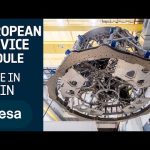
    Artemis in Europe: the structure and radiators for the European Service Modules that fly NASA’s Orion spacecraft to the Moon are built in Turin, Italy.

    Thales Alenia Space produces the structure that acts like a chassis on a car providing the solid foundations for all other elements to be attached to and also absorbs the forces that the Artemis spacecraft will endure during launch into Earth orbit and onto the Moon.

    Technicians assemble the primary structure that is made from a core of Composite Fibre Reinforced Polymer sandwich panels and aluminium alloy elements for the secondary structures. This technology keeps the European Service Module light enough to fly farther and longer but strong enough to keep its shape.

    Thales Alenia Space also supplies the radiators for the European Service Modules that consist of six elements forming two independent systems. Like a car’s radiator system the European Service Module radiators are designed to expel excess heat and keep the computers and other components inside from overheating.

    The structures are trucked from Turin to Bremen, Germany, where the rest of the hardware that makes a spacecraft can be installed. The first step in their voyage to the Moon.

    Credits: ESA – European Space Agency

    ★ Subscribe: http://bit.ly/ESAsubscribe and click twice on the bell button to receive our notifications.

    Check out our full video catalog: http://bit.ly/SpaceInVideos
    Follow us on Twitter: http://bit.ly/ESAonTwitter
    On Facebook: http://bit.ly/ESAonFacebook
    On Instagram: http://bit.ly/ESAonInstagram
    On LinkedIn: https://bit.ly/ESAonLinkedIn
    On Pinterest: https://bit.ly/ESAonPinterest
    On Flickr: http://bit.ly/ESAonFlickr

    We are Europe’s gateway to space. Our mission is to shape the development of Europe’s space capability and ensure that investment in space continues to deliver benefits to the citizens of Europe and the world. Check out https://www.esa.int/ to get up to speed on everything space related.

    Copyright information about our videos is available here: https://www.esa.int/ESA_Multimedia/Terms_and_Conditions

    #ESA
    #Artemis
    #EuropeanServiceModule

  • Artemis II astronauts visit European Service Module-2

    Artemis II astronauts visit European Service Module-2

    During Artemis I the European Service Module (ESM) surpassed expectations. Now, as we set our sights on Artemis II, the European Service Module is ready to once again serve as Orion’s primary power and propulsion component and keep the spacecraft at the right temperature and on course. And this time, with real astronauts on board.

    ESM-2 stands as a testament to ESA’s contributions to NASA’s Orion spacecraft and the Artemis programme, ensuring the crew will have the essentials – from electricity to temperature control – in the vastness of space.

    Next up, ESM-2 will be connected with the crew module to create the Artemis II vehicle. It will then be thoroughly tested before launch scheduled for next year.

    ESA is committed to send astronauts beyond low-Earth orbit and ultimately to the surface of the Moon and beyond. ESM is a key contribution to this joint international endeavour.

    This video features interviews with:
    – Philippe Berthe, ESA’s European Service Module Project Coordination manager
    – Kai Bergemann, Airbus deputy programme manager for Orion and the European Service Module
    – Jeremy Hansen, Canadian Space Agency Artemis II astronaut
    – Debbie Korth, NASA deputy programme manager for Orion

    Credits: ESA – European Space Agency
    📸 NASA/Kim Shiflett

    ★ Subscribe: http://bit.ly/ESAsubscribe and click twice on the bell button to receive our notifications.

    Check out our full video catalog: http://bit.ly/SpaceInVideos
    Follow us on Twitter: http://bit.ly/ESAonTwitter
    On Facebook: http://bit.ly/ESAonFacebook
    On Instagram: http://bit.ly/ESAonInstagram
    On LinkedIn: https://bit.ly/ESAonLinkedIn
    On Pinterest: https://bit.ly/ESAonPinterest
    On Flickr: http://bit.ly/ESAonFlickr

    We are Europe’s gateway to space. Our mission is to shape the development of Europe’s space capability and ensure that investment in space continues to deliver benefits to the citizens of Europe and the world. Check out https://www.esa.int/ to get up to speed on everything space related.

    Copyright information about our videos is available here: https://www.esa.int/ESA_Multimedia/Terms_and_Conditions

    #ESA
    #Orion
    #Artemis

  • Terrae Novae | Earth orbit, Moon and Mars

    Terrae Novae | Earth orbit, Moon and Mars

    Terrae Novae is ESA’s exploration programme.

    Terrae Novae is not only literally about exploring new worlds, but by describing the limitless opportunities for discovery, economic growth and inspiration it also expresses our ambitions for Europe’s future innovators, scientists and explorers.

    This video shows the many exploration activities ESA is conducting or has planned in our Solar System, from the International Space Station to the Moon with the European Service Module and lunar Gateway modules for Artemis, and on to Mars with the Mars Sample Return campaign.

    For more on ESA’s human and robotic exploration strategy see: https://www.esa.int/terraenovae

    ★ Subscribe: http://bit.ly/ESAsubscribe and click twice on the bell button to receive our notifications.

    Check out our full video catalog: http://bit.ly/SpaceInVideos
    Follow us on Twitter: http://bit.ly/ESAonTwitter
    On Facebook: http://bit.ly/ESAonFacebook
    On Instagram: http://bit.ly/ESAonInstagram
    On LinkedIn: https://bit.ly/ESAonLinkedIn
    On Pinterest: https://bit.ly/ESAonPinterest
    On Flickr: http://bit.ly/ESAonFlickr

    We are Europe’s gateway to space. Our mission is to shape the development of Europe’s space capability and ensure that investment in space continues to deliver benefits to the citizens of Europe and the world. Check out https://www.esa.int/ to get up to speed on everything space related.

    Copyright information about our videos is available here: https://www.esa.int/ESA_Multimedia/Terms_and_Conditions

    #ESA
    #TerraeNovae
    #SpaceExploration

  • ESA Preview 2023

    ESA Preview 2023

    At the start of 2023 the European Space Agency ESA is happily looking forward to another year filled with a host of thrilling new missions, cutting edge science and the continued effort to guarantee independent access to space for Europe. We will see the first images of the first Meteosat Third Generation satellite, the launch of the Jupiter Icy Moons Explorer, and of Euclid and another Sentinel-1 satellite launch. It will also be the year of Ariane 6 which will make its inaugural flight and the first Dane in space, Andreas Mogensen will return to the ISS as the new astronaut-candidates commence their training. Near the end of the year the second Space Summit will further cement ESA’s ambitions for Space in Europe.

    ★ Subscribe: http://bit.ly/ESAsubscribe and click twice on the bell button to receive our notifications.

    Check out our full video catalog: http://bit.ly/SpaceInVideos
    Follow us on Twitter: http://bit.ly/ESAonTwitter
    On Facebook: http://bit.ly/ESAonFacebook
    On Instagram: http://bit.ly/ESAonInstagram
    On LinkedIn: https://bit.ly/ESAonLinkedIn
    On Pinterest: https://bit.ly/ESAonPinterest
    On Flickr: http://bit.ly/ESAonFlickr

    We are Europe’s gateway to space. Our mission is to shape the development of Europe’s space capability and ensure that investment in space continues to deliver benefits to the citizens of Europe and the world. Check out https://www.esa.int/ to get up to speed on everything space related.

    Copyright information about our videos is available here: https://www.esa.int/ESA_Multimedia/Terms_and_Conditions

    #ESA
    #2023
    #Space

  • Artemis I | Liftoff to splashdown

    Artemis I | Liftoff to splashdown

    The uncrewed Artemis I test flight saw Orion travel around the Moon and farther than any spacecraft designed to carry humans and return them to Earth. Artemis is the international lunar exploration programme that is taking humankind to the Moon. This first mission provided a first test of both NASA’s Space Launch System (SLS) and the Orion moonship that was propelled by the European Service Module’s 33 engines beyond the Moon and into deep space. Future European Service Modules will provide electricity, propulsion and cabin thermal control for astronauts on lunar missions as well as breathable atmosphere and drinking water.

    Launched by the first SLS on 16 November at 06:47 GMT/07:47 CET (01:47 local time) from NASA’s Kennedy Space Center, Florida, Orion flew a 25-day mission that saw it fly by the Moon twice. Passing as close as 130 km from the lunar surface, the spacecraft used the Moon’s gravity to sling it into lunar orbit and then later return it on course to Earth.

    The first lunar flyby occurred on 21 November at 12:44 GMT/13:44 CET, with the ESM firing its main engine to send Orion behind and around the Moon. Ten days after liftoff, Orion entered the Moon’s orbit at 12:44 GMT/13:44 CET on 25 November when the ESM fired its main engine.

    NASA’s Orion spacecraft splashed down in the Pacific Ocean at 17:40 GMT/18:40 CET on 11 December, after travelling around the Moon and farther than any spacecraft designed to carry humans and return them to Earth. Just 40 minutes before splashdown, and having delivered Orion safely back to Earth, ESA’s European Service Module (ESM) with its Crew Module Adapter detached from the capsule. As planned, the ESM burned up harmlessly in the atmosphere as the Orion Crew Module guided itself through re-entry, orienting the capsule with its own thrusters, releasing its three parachutes and gracefully splashing down off the coast of San Diego, USA.

    ★ Subscribe: http://bit.ly/ESAsubscribe and click twice on the bell button to receive our notifications.

    Check out our full video catalog: http://bit.ly/SpaceInVideos
    Follow us on Twitter: http://bit.ly/ESAonTwitter
    On Facebook: http://bit.ly/ESAonFacebook
    On Instagram: http://bit.ly/ESAonInstagram
    On LinkedIn: https://bit.ly/ESAonLinkedIn
    On Pinterest: https://bit.ly/ESAonPinterest
    On Flickr: http://bit.ly/ESAonFlickr

    We are Europe’s gateway to space. Our mission is to shape the development of Europe’s space capability and ensure that investment in space continues to deliver benefits to the citizens of Europe and the world. Check out https://www.esa.int/ to get up to speed on everything space related.

    Copyright information about our videos is available here: https://www.esa.int/ESA_Multimedia/Terms_and_Conditions

    #ESA
    #NASA
    #Artemis

  • Meet Helga and Zohar 👥 ☢️ #shorts

    Meet Helga and Zohar 👥 ☢️ #shorts

    These two mannequins occupy the passenger seats on Artemis I. Their their female-shaped, plastic bodies are filled with over 5600 sensors each to measure the radiation load during their trip around the Moon and back to Earth.

    ★ Subscribe: http://bit.ly/ESAsubscribe and click twice on the bell button to receive our notifications.

    Check out our full video catalog: http://bit.ly/SpaceInVideos
    Follow us on Twitter: http://bit.ly/ESAonTwitter
    On Facebook: http://bit.ly/ESAonFacebook
    On Instagram: http://bit.ly/ESAonInstagram
    On LinkedIn: https://bit.ly/ESAonLinkedIn
    On Pinterest: https://bit.ly/ESAonPinterest
    On Flickr: http://bit.ly/ESAonFlickr

    We are Europe’s gateway to space. Our mission is to shape the development of Europe’s space capability and ensure that investment in space continues to deliver benefits to the citizens of Europe and the world. Check out https://www.esa.int/ to get up to speed on everything space related.

    Copyright information about our videos is available here: https://www.esa.int/ESA_Multimedia/Terms_and_Conditions

    #ESA
    #Orion
    #Artemis

  • Artemis II | European Service Module perspective

    Artemis II | European Service Module perspective

    After the uncrewed Artemis I test flight, the Artemis II mission will have astronauts demonstrate what the Orion spacecraft – powered by a European Service Module – can do on its voyage around the Moon.

    Two astronauts will fly on the second Artemis mission and take over controls to show how Orion handles at close-quarter flying. While in Earth orbit the spacecraft will detach from its second stage, fly away, turn around, approach the second stage and then fly away again – all using the European Service Module’s 33 thrusters.

    Whereas in the first Artemis mission the second stage fired Orion into its lunar orbit, for the second mission it will be the European Service Module that will give the spacecraft its final push to its voyage around the Moon.

    The crew will fly Orion to 8889 km beyond the Moon before completing a lunar flyby and returning to Earth. The mission will take a minimum of eight days and will collect valuable flight test data.

    The European Service Module is one of ESA’s many contributions to NASA’s Orion spacecraft and the Artemis programme that will send astronauts to the Moon and beyond. It provides electricity, water, oxygen and nitrogen as well as keeping the spacecraft at the right temperature and on course.

    The European Service Module has 33 thrusters, 11 km of electrical wiring, four propellant and two pressure tanks that all work together to supply propulsion and everything needed to keep astronauts alive far from Earth – there is no room for error.

    ★ Subscribe: http://bit.ly/ESAsubscribe and click twice on the bell button to receive our notifications.

    Check out our full video catalog: http://bit.ly/SpaceInVideos
    Follow us on Twitter: http://bit.ly/ESAonTwitter
    On Facebook: http://bit.ly/ESAonFacebook
    On Instagram: http://bit.ly/ESAonInstagram
    On Flickr: http://bit.ly/ESAonFlickr

    We are Europe’s gateway to space. Our mission is to shape the development of Europe’s space capability and ensure that investment in space continues to deliver benefits to the citizens of Europe and the world. Check out https://www.esa.int/ to get up to speed on everything space related.

    Copyright information about our videos is available here: https://www.esa.int/ESA_Multimedia/Terms_and_Conditions

    #ESA
    #Orion
    #Artemis

  • Shoebox-size satellites for Artemis I #shorts

    Shoebox-size satellites for Artemis I #shorts

    Joining @NASA’s Orion spacecraft on the powerful Space Launch System rocket are ten CubeSats that will help prepare for the return of astronauts to our lunar companion. Our deep space antennas, along with the Goonhilly Earth Station in the UK, are tracking six of the small satellites, ensuring they arrive where they need to be, and their data gets back home.

    Learn more: https://www.esa.int/Enabling_Support/Operations/ESA_Ground_Stations/Europe_to_support_Artemis_CubeSats_in_return_to_Moon

    ★ Subscribe: http://bit.ly/ESAsubscribe and click twice on the bell button to receive our notifications.

    Check out our full video catalog: http://bit.ly/SpaceInVideos
    Follow us on Twitter: http://bit.ly/ESAonTwitter
    On Facebook: http://bit.ly/ESAonFacebook
    On Instagram: http://bit.ly/ESAonInstagram
    On LinkedIn: https://bit.ly/ESAonLinkedIn
    On Pinterest: https://bit.ly/ESAonPinterest
    On Flickr: http://bit.ly/ESAonFlickr

    We are Europe’s gateway to space. Our mission is to shape the development of Europe’s space capability and ensure that investment in space continues to deliver benefits to the citizens of Europe and the world. Check out https://www.esa.int/ to get up to speed on everything space related.

    Copyright information about our videos is available here: https://www.esa.int/ESA_Multimedia/Terms_and_Conditions

    #ESA
    #CubeSats
    #ForwardToTheMoon

  • Artemis I launch

    Artemis I launch

    The Space Launch System (SLS) rocket with the Orion spacecraft aboard lifted off at 07:47 CET from @NASA’s Kennedy Space Center in Florida, USA on 16 November 2022.

    The most powerful rocket ever built sent NASA’s Orion spacecraft and ESA’s European Service Module (ESM) to a journey beyond the Moon and back. No crew will be on board Orion this time, and the spacecraft will be controlled by teams on Earth.

    ESM provides for all astronauts’ basic needs, such as water, oxygen, nitrogen, temperature control, power and propulsion.

    Much like a train engine pulls passenger carriages and supplies power, the European Service Module will take the Orion capsule to its destination and back.

    Learn more about Artemis I: https://www.esa.int/Science_Exploration/Human_and_Robotic_Exploration/Orion/Artemis_I

    ★ Subscribe: http://bit.ly/ESAsubscribe and click twice on the bell button to receive our notifications.

    Check out our full video catalog: http://bit.ly/SpaceInVideos
    Follow us on Twitter: http://bit.ly/ESAonTwitter
    On Facebook: http://bit.ly/ESAonFacebook
    On Instagram: http://bit.ly/ESAonInstagram
    On LinkedIn: https://bit.ly/ESAonLinkedIn
    On Pinterest: https://bit.ly/ESAonPinterest
    On Flickr: http://bit.ly/ESAonFlickr

    We are Europe’s gateway to space. Our mission is to shape the development of Europe’s space capability and ensure that investment in space continues to deliver benefits to the citizens of Europe and the world. Check out https://www.esa.int/ to get up to speed on everything space related.

    Copyright information about our videos is available here: https://www.esa.int/ESA_Multimedia/Terms_and_Conditions

    #ESA
    #Orion
    #Artemis

  • 10 facts about the European Service Module | Artemis #shorts

    10 facts about the European Service Module | Artemis #shorts

    The European Service Module is ESA’s contribution to @NASA’s Orion spacecraft that will send astronauts to the Moon and beyond. It provides electricity, water, oxygen and nitrogen as well as keeping the spacecraft at the right temperature and on course.

    Learn more about the European Service Module: https://www.esa.int/Science_Exploration/Human_and_Robotic_Exploration/Orion/Orion_European_Service_Module_media_kit

    ★ Subscribe: http://bit.ly/ESAsubscribe and click twice on the bell button to receive our notifications.

    Check out our full video catalog: http://bit.ly/SpaceInVideos
    Follow us on Twitter: http://bit.ly/ESAonTwitter
    On Facebook: http://bit.ly/ESAonFacebook
    On Instagram: http://bit.ly/ESAonInstagram
    On LinkedIn: https://bit.ly/ESAonLinkedIn
    On Pinterest: https://bit.ly/ESAonPinterest
    On Flickr: http://bit.ly/ESAonFlickr

    We are Europe’s gateway to space. Our mission is to shape the development of Europe’s space capability and ensure that investment in space continues to deliver benefits to the citizens of Europe and the world. Check out https://www.esa.int/ to get up to speed on everything space related.

    Copyright information about our videos is available here: https://www.esa.int/ESA_Multimedia/Terms_and_Conditions

    #ESA
    #ESM
    #Artemis

  • Media briefing: Artemis I getting ready for launch

    Media briefing: Artemis I getting ready for launch

    The Artemis I mission is almost ready for launch: it will send an uncrewed spacecraft beyond the Moon and back. Join this virtual Q&A to learn more about Europe’s contribution to the mission: ESA is overseeing the development of the European Service Module, that provides air, electricity and propulsion to the spacecraft. Participants to this media briefing include Josef Aschbacher, ESA Director General ; David Parker, ESA Director for Human and Robotic Exploration ; Jean-Marc Nasr, @Airbus EVP Space Systems and Marc Steckling, Airbus Head of Space Exploration.

    Learn more about Artemis I: https://www.esa.int/Science_Exploration/Human_and_Robotic_Exploration/Orion/Artemis_I

    ★ Subscribe: http://bit.ly/ESAsubscribe and click twice on the bell button to receive our notifications.

    Check out our full video catalog: http://bit.ly/SpaceInVideos
    Follow us on Twitter: http://bit.ly/ESAonTwitter
    On Facebook: http://bit.ly/ESAonFacebook
    On Instagram: http://bit.ly/ESAonInstagram
    On LinkedIn: https://bit.ly/ESAonLinkedIn
    On Pinterest: https://bit.ly/ESAonPinterest
    On Flickr: http://bit.ly/ESAonFlickr

    We are Europe’s gateway to space. Our mission is to shape the development of Europe’s space capability and ensure that investment in space continues to deliver benefits to the citizens of Europe and the world. Check out https://www.esa.int/ to get up to speed on everything space related.

    Copyright information about our videos is available here: https://www.esa.int/ESA_Multimedia/Terms_and_Conditions

    #ESA
    #Orion
    #Artemis

  • Artemis I – European Service Module perspective

    Artemis I – European Service Module perspective

    The Orion spacecraft with European Service Module will fly farther from Earth than any human-rated vehicle has ever flown before. This video gives an overview of the first mission – without astronauts – for Artemis, focussing on ESA’s European Service Module that powers the spacecraft.

    The spacecraft will perform a flyby of the Moon, using lunar gravity to gain speed and propel itself 70 000 km beyond the Moon, almost half a million km from Earth – further than any human has ever travelled, where it will inject itself in a Distant Retrograde Orbit around the Moon.

    On its return journey, Orion will do another flyby of the Moon before heading back to Earth.

    The total trip will take around 20 days, ending with a splashdown in the Pacific Ocean without the European Service Module – it separates and burns up harmlessly in the atmosphere.

    The second Artemis mission will have a simplified flight plan with only a flyby of the Moon but with four astronauts. The third Artemis mission will see astronauts taken to the lunar surface.

    The European Service Module is ESA’s contribution to @NASA’s Orion spacecraft that will send astronauts to the Moon and beyond. It provides electricity, water, oxygen and nitrogen as well as keeping the spacecraft at the right temperature and on course.

    The European Service Module has 33 thrusters, 11 km of electrical wiring, four propellant and two pressure tanks that all work together to supply propulsion and everything needed to keep astronauts alive far from Earth – there is no room for error.

    ★ Subscribe: http://bit.ly/ESAsubscribe and click twice on the bell button to receive our notifications.

    Check out our full video catalog: http://bit.ly/SpaceInVideos
    Follow us on Twitter: http://bit.ly/ESAonTwitter
    On Facebook: http://bit.ly/ESAonFacebook
    On Instagram: http://bit.ly/ESAonInstagram
    On Flickr: http://bit.ly/ESAonFlickr

    We are Europe’s gateway to space. Our mission is to shape the development of Europe’s space capability and ensure that investment in space continues to deliver benefits to the citizens of Europe and the world. Check out https://www.esa.int/ to get up to speed on everything space related.

    Copyright information about our videos is available here: https://www.esa.int/ESA_Multimedia/Terms_and_Conditions

    #ESA
    #Orion
    #Artemis

  • Europe ready for Artemis

    Europe ready for Artemis

    ESA and NASA are working hand in hand before the first Artemis mission to the Moon through a series of joint mission simulations. Teams based at the Erasmus Support Facility (ESF) at ESA’s ESTEC facility in The Netherlands, the German Space Operations Centre at ESA’s Columbus Control Centre in Oberphfaffenhofen and NASA’s Johnson Space Center in Houston are combining their expertise in a series of exercises to ensure a successful launch.

    When it comes to simulations, it’s important that not everything goes perfectly right as it recreates – in real time – different stages of the mission to monitor the spacecraft’s position, propulsion, power, avionics and thermal properties. The European team, consisting of 40 people from ESA and industry, apply their considerable expertise from working on the European Service Module (ESM) to any unexpected problems. The ESM will provide power for the Orion spacecraft and propel it along its orbit to the Moon.

    Learn more about Artemis: https://bit.ly/Artemis1ESA

    ★ Subscribe: http://bit.ly/ESAsubscribe and click twice on the bell button to receive our notifications.

    Check out our full video catalog: http://bit.ly/SpaceInVideos
    Follow us on Twitter: http://bit.ly/ESAonTwitter
    On Facebook: http://bit.ly/ESAonFacebook
    On Instagram: http://bit.ly/ESAonInstagram
    On Flickr: http://bit.ly/ESAonFlickr

    We are Europe’s gateway to space. Our mission is to shape the development of Europe’s space capability and ensure that investment in space continues to deliver benefits to the citizens of Europe and the world. Check out https://www.esa.int/ to get up to speed on everything space related.

    Copyright information about our videos is available here: https://www.esa.int/ESA_Multimedia/Terms_and_Conditions

    #ESA
    #Orion
    #Artemis

  • Artemis: crawling towards launch

    Artemis: crawling towards launch

    One of the many milestones in the leadup to the launch of Artemis is its rollout: this is when a crawler will carry the SLS rocket with Orion and ESM from the Vehicle Assembly Building to launchpad 39B. @NASA’s John Giles gives us a tour of the crawler and explains the adaptations made to this “wonderful piece of machinery” since it was first built for the Apollo programme in the 1960s. ESA is playing a key role in NASA’s Artemis programme, which will bring astronauts back to the Moon. The European Service Module – or ESM – will provide propulsion, power and thermal control for the Orion spacecraft.

    Learn more: https://bit.ly/Artemis1ESA

    Video credits: European Space Agency
    Thumbnail image credits: NASA/Leif Heimbold

    ★ Subscribe: http://bit.ly/ESAsubscribe and click twice on the bell button to receive our notifications.

    Check out our full video catalog: http://bit.ly/SpaceInVideos
    Follow us on Twitter: http://bit.ly/ESAonTwitter
    On Facebook: http://bit.ly/ESAonFacebook
    On Instagram: http://bit.ly/ESAonInstagram
    On Flickr: http://bit.ly/ESAonFlickr

    We are Europe’s gateway to space. Our mission is to shape the development of Europe’s space capability and ensure that investment in space continues to deliver benefits to the citizens of Europe and the world. Check out https://www.esa.int/ to get up to speed on everything space related.

    Copyright information about our videos is available here: https://www.esa.int/ESA_Multimedia/Terms_and_Conditions

    #ESA
    #Orion
    #Artemis

  • Artemis I stacked

    Artemis I stacked

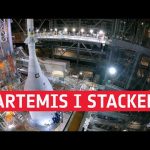
    Time lapse of the stacking of the Orion spacecraft on top of the fully assembled Space Launch System (SLS) rocket at NASA’s Kennedy Space Center in Florida, on 21 October 2021, in preparation for the uncrewed Artemis I launch.

    For Artemis I, the European Service Module will take the spacecraft more than 64 000 km beyond the Moon in a test flight to demonstrate its capabilities.

    The European Service Module is ESA’s contribution to NASA’s Orion spacecraft that will send astronauts to the Moon and beyond. It provides electricity, water, oxygen and nitrogen as well as keeping the spacecraft at the right temperature and on course.

    Learn more about Orion: http://bit.ly/ESAOrion

    ★ Subscribe: http://bit.ly/ESAsubscribe and click twice on the bell button to receive our notifications.

    Check out our full video catalog: http://bit.ly/SpaceInVideos
    Follow us on Twitter: http://bit.ly/ESAonTwitter
    On Facebook: http://bit.ly/ESAonFacebook
    On Instagram: http://bit.ly/ESAonInstagram
    On LinkedIn: https://bit.ly/ESAonLinkedIn
    On Pinterest: https://bit.ly/ESAonPinterest
    On Flickr: http://bit.ly/ESAonFlickr

    We are Europe’s gateway to space. Our mission is to shape the development of Europe’s space capability and ensure that investment in space continues to deliver benefits to the citizens of Europe and the world. Check out https://www.esa.int/ to get up to speed on everything space related.

    Copyright information about our videos is available here: https://www.esa.int/ESA_Multimedia/Terms_and_Conditions

    #ESA
    #Orion
    #ForwardToTheMoon

  • European push to the Moon

    European push to the Moon

    The European Space Agency is playing a vital role in humankind’s return to the Moon. In a few months @NASA will launch Artemis I from the Kennedy Space Center. The uncrewed mission will carry NASA’s Orion spacecraft incorporating ESA’s European Service Module (ESM-1), built and tested by Airbus Bremen, in Germany, with the help of 10 European nations. ESM-1’s main engine and 32 thrusters will propel Orion into orbit around the Moon and return it to Earth.

    As Artemis I prepares for launch, the second European Service Module (ESM-2) is about to ship to the US with ESM-3 also currently under construction. The second Artemis mission, however, has a crucial difference: it will carry four astronauts for a lunar flyby. ESM-2 will provide propulsion, power, oxygen, water and life support as well as controlling the temperature in the orbiting crew module. ESM-3 will go one step further and put the first person on the Moon for 50 years.

    Learn more about Orion: https://bit.ly/ESAsOrion

    ★ Subscribe: http://bit.ly/ESAsubscribe and click twice on the bell button to receive our notifications.

    Check out our full video catalog: http://bit.ly/SpaceInVideos
    Follow us on Twitter: http://bit.ly/ESAonTwitter
    On Facebook: http://bit.ly/ESAonFacebook
    On Instagram: http://bit.ly/ESAonInstagram
    On Pinterest: https://bit.ly/ESAonPinterest
    On Flickr: http://bit.ly/ESAonFlickr

    We are Europe’s gateway to space. Our mission is to shape the development of Europe’s space capability and ensure that investment in space continues to deliver benefits to the citizens of Europe and the world. Check out https://www.esa.int/ to get up to speed on everything space related.

    Copyright information about our videos is available here: https://www.esa.int/ESA_Multimedia/Terms_and_Conditions

    #ESA
    #Orion
    #Artemis

  • See the European Service Modules taking humankind forward to the Moon

    See the European Service Modules taking humankind forward to the Moon

    From the @Airbus integration halls in Bremen, Germany, this replay of a live event shows a sneak peek of the two European Service Modules that will power astronauts to the Moon and back as part of @NASA’s Orion spacecraft.

    Orion is NASA’s next exploration spacecraft to send astronauts farther into space than ever before, beyond the Moon to asteroids and even Mars.

    ESA has contracted and is overseeing the development of the European Service Module, the part of the Orion spacecraft that provides air, electricity and propulsion. Much like a train engine pulls passenger carriages and supplies power, the European Service Module will power the Orion crew module to its destination and back to Earth.

    The programme includes Andreas Hammer, Head of @Airbus Defence and Space Exploration showing the European Service Modules in production, ESA Director General Jan Wörner announcing future developments, a statement by ESA’s head of European Service Module programme Philippe Deloo, a statement by Airbus head of European Service Module programme Didier Radola, a Moon missions overview with ESA astronaut Alexander Gerst and ESA’s head of Space Transportation Nico Dettmann on how ESA is building Orion with industry.

    ★ Subscribe: http://bit.ly/ESAsubscribe and click twice on the bell button to receive our notifications.

    Check out our full video catalog: http://bit.ly/SpaceInVideos
    Follow us on Twitter: http://bit.ly/ESAonTwitter
    On Facebook: http://bit.ly/ESAonFacebook
    On Instagram: http://bit.ly/ESAonInstagram
    On Flickr: http://bit.ly/ESAonFlickr

    We are Europe’s gateway to space. Our mission is to shape the development of Europe’s space capability and ensure that investment in space continues to deliver benefits to the citizens of Europe and the world. Check out https://www.esa.int/ to get up to speed on everything space related.

    Copyright information about our videos is available here: https://www.esa.int/ESA_Multimedia/Terms_and_Conditions

    #ESA
    #Artemis
    #Orion

  • ESA highlights 2020

    ESA highlights 2020

    2020 has been another year of progress for ESA. The launch and commissioning of Solar Orbiter heralded a new era of space science, whilst Eutelsat Konnect revolutionised telecommunications. The new Vega SSMS began a cost-effective new launch system for small satellites, deploying exciting new technologies such as PhiSat and ESAIL. ESA’s Earth Observation activities were also showcased, with the launch of Sentinel-6 and an international effort to monitor the environmental and economic impact of COVID-19. Gaia and Cheops yielded new findings about our universe; ESA astronaut Luca Parmitano returned successfully from orbit. With a lunar programme agreement signed and new steps being taken to control debris, ESA is set to begin 2021 at the forefront of space exploration.

    ★ Subscribe: http://bit.ly/ESAsubscribe and click twice on the bell button to receive our notifications.

    Check out our full video catalog: http://bit.ly/SpaceInVideos
    Follow us on Twitter: http://bit.ly/ESAonTwitter
    On Facebook: http://bit.ly/ESAonFacebook
    On Instagram: http://bit.ly/ESAonInstagram
    On Flickr: http://bit.ly/ESAonFlickr

    We are Europe’s gateway to space. Our mission is to shape the development of Europe’s space capability and ensure that investment in space continues to deliver benefits to the citizens of Europe and the world. Check out https://www.esa.int/ to get up to speed on everything space related.

    Copyright information about our videos is available here: https://www.esa.int/ESA_Multimedia/Terms_and_Conditions

    #ESA
    #Space
    #2020Highlights

  • Artemis I – European Service Module perspective

    Artemis I – European Service Module perspective

    The Orion spacecraft with European Service Module will fly farther from Earth than any human-rated vehicle has ever flown before. This video gives an overview of the first mission – without astronauts – for Artemis, focussing on ESA’s European Service Module that powers the spacecraft.

    The spacecraft will perform a flyby of the Moon, using lunar gravity to gain speed and propel itself 70 000 km beyond the Moon, almost half a million km from Earth – further than any human has ever travelled.

    On its return journey, Orion will do another flyby of the Moon before heading back to Earth.
    The total trip will take around 20 days, ending with a splashdown in the Pacific Ocean without the European Service Module – it separates and burns up harmlessly in the atmosphere.

    The second Artemis mission will have a similar flight plan but with astronauts. The third Artemis mission will see astronauts taken to the lunar surface.

    The European Service Module is ESA’s contribution to NASA’s Orion spacecraft that will send astronauts to the Moon and beyond. It provides electricity, water, oxygen and nitrogen as well as keeping the spacecraft at the right temperature and on course.

    The European Service Module has 33 thrusters, 11 km of electrical wiring, four propellant and two pressure tanks that all work together to supply propulsion and everything needed to keep astronauts alive far from Earth – there is no room for error.

    ★ Subscribe: http://bit.ly/ESAsubscribe and click twice on the bell button to receive our notifications.

    Check out our full video catalog: http://bit.ly/SpaceInVideos
    Follow us on Twitter: http://bit.ly/ESAonTwitter
    On Facebook: http://bit.ly/ESAonFacebook
    On Instagram: http://bit.ly/ESAonInstagram
    On Flickr: http://bit.ly/ESAonFlickr

    We are Europe’s gateway to space. Our mission is to shape the development of Europe’s space capability and ensure that investment in space continues to deliver benefits to the citizens of Europe and the world. Check out https://www.esa.int/ to get up to speed on everything space related.

    Copyright information about our videos is available here: https://www.esa.int/ESA_Multimedia/Terms_and_Conditions

    #ESA
    #Artemis
    #Orion

  • ESA & NASA | Forward to the Moon

    ESA & NASA | Forward to the Moon

    The European Space Agency and NASA signed a Memorandum of Understanding (MoU) to take Europe to the Moon.

    This historic agreement will see ESA Member States contribute a number of essential elements to the first human outpost in lunar orbit, known as the Gateway.
    It confirms ESA’s commitment to delivering at least two European Service Modules that provide electricity, water, oxygen and nitrogen to NASA’s Orion spacecraft – with more to come. ESA will also receive three flight opportunities for European astronauts to travel to and work on the Gateway.

    ESA’s head of the Legal Services, Marco Ferrazzani, explains how these agreements will take us forward to the Moon.

    Learn more: https://bit.ly/GatewayMoUandArtemisAccords

    ★ Subscribe: http://bit.ly/ESAsubscribe and click twice on the bell button to receive our notifications.

    Check out our full video catalog: http://bit.ly/SpaceInVideos
    Follow us on Twitter: http://bit.ly/ESAonTwitter
    On Facebook: http://bit.ly/ESAonFacebook
    On Instagram: http://bit.ly/ESAonInstagram
    On Flickr: http://bit.ly/ESAonFlickr

    We are Europe’s gateway to space. Our mission is to shape the development of Europe’s space capability and ensure that investment in space continues to deliver benefits to the citizens of Europe and the world. Check out https://www.esa.int/ to get up to speed on everything space related.

    Copyright information about our videos is available here: https://www.esa.int/ESA_Multimedia/Terms_and_Conditions

  • European Service Module 3

    European Service Module 3

    The Artemis programme is bringing humans back to the Moon. It depends heavily on NASA’s Orion spacecraft that consists of a crew module and the European Service Module, which will provide propulsion, life support, environmental control and electrical power. Main contractor Airbus has just been green-lighted by ESA to develop a third European Service Module.

    Learn more: http://bit.ly/ESAOrion

    ★ Subscribe: http://bit.ly/ESAsubscribe and click twice on the bell button to receive our notifications.

    Check out our full video catalog: http://bit.ly/SpaceInVideos
    Follow us on Twitter: http://bit.ly/ESAonTwitter
    On Facebook: http://bit.ly/ESAonFacebook
    On Instagram: http://bit.ly/ESAonInstagram
    On Flickr: http://bit.ly/ESAonFlickr

    We are Europe’s gateway to space. Our mission is to shape the development of Europe’s space capability and ensure that investment in space continues to deliver benefits to the citizens of Europe and the world. Check out http://www.esa.int/ESA to get up to speed on everything space related.

    Copyright information about our videos is available here: http://www.esa.int/spaceinvideos/Terms_and_Conditions

    #ESA
    #Artemis
    #Orion

  • Orion’s service and crew modules – Finally together

    Orion’s service and crew modules – Finally together

    After a 24-hour journey from Bremen, Germany with stops in Hamburg and Portsmouth, USA, the European Service Module landed on 6 November 2018 at Kennedy Space Center in Florida.

    The shipment from Bremen to Florida is just the beginning – the first leg of an exciting journey that will boost the spacecraft to lunar orbit and back.

    The first service module is a key component that will see #Orion around the Moon for Exploration Mission-1. It will make the powerful burns required to enter and exit lunar orbit as well as softer burns to allow for space manoeuvring and course correction.
    After years of designing, building, and testing in Europe, the powerhouse that will propel NASA’s Orion spacecraft to the Moon will be mated with the rest of the spacecraft to undergo final testing before flight.

    ESA’s partnership with NASA takes the European effort to the global stage. For the first time, NASA will use a European-built system as a critical element to power an American spacecraft, extending the international cooperation of the International Space Station into deep space.

    Find out more about Orion and ESM: http://www.esa.int/orion

    ★ Subscribe: http://bit.ly/ESAsubscribe

    Check out our full video catalog: http://bit.ly/SpaceInVideos
    Follow ESA on Twitter: http://bit.ly/ESAonTwitter
    On Facebook: http://bit.ly/ESAonFacebook
    On Instagram: http://bit.ly/ESAonInstagram
    On Flickr: http://bit.ly/ESAonFlickr

    ESA is Europe’s gateway to space. Our mission is to shape the development of Europe’s space capability and ensure that investment in space continues to deliver benefits to the citizens of Europe and the world. Check out http://www.esa.int/ESA to get up to speed on everything space related.

    Copyright information about our videos is available here: http://www.esa.int/spaceinvideos/Terms_and_Conditions

  • Orion and the European Service Module

    Orion and the European Service Module

    NASA’s Orion spacecraft will take astronauts to destinations at or beyond low Earth orbit. In January 2013, it was announced that ESA would provide the European Service Module (ESM) for Orion’s first uncrewed mission. Derived from ESA’s Automated Transfer Vehicle cargo spacecraft, the ESM will provide life support, propulsion and structural functions for Orion. In February 2017, a contract was signed for a second ESM to be used on Orion’s first crewed flight, which will carry astronauts beyond the Moon and back.

    More about European Service Module:
    http://www.esa.int/Our_Activities/Human_Spaceflight/Orion/European_Service_Module