Tag: European Space Agency

  • Vega for ESA: the story

    Vega for ESA: the story

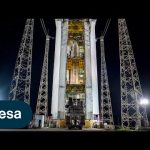
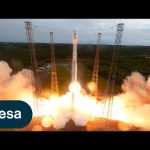
    Vega joined the family of launch vehicles at Europe’s Spaceport in French Guiana in 2012. At 30-m tall the rocket weighs 137 tonnes on the launch pad and reaches orbit with three solid-propellant powered stages before the fourth liquid-propellant stage takes over. By rocket standards Vega is lightweight and powerful, the first three stages burn through their fuel and bringing Vega and its satellites to space in just six minutes.

    Specialising in launches of small satellites to orbits flying the Earth’s poles, Vega has an impressive roster of missions that it has sent to space. Flagship ESA missions that flew Vega include technology demonstrator and Earth vegetation watcher Proba-V and wind-monitoring satellite Aeolus. Vega’s heaviest payload launched was the 1906-kg LISA Pathfinder, a forerunner to LISA that will measure gravitational waves in space..

    In 2015 Vega launched three ESA missions in one year, including reentry demonstrator IXV that showed Europe has the technology to launch a vehicle to space and return it safely to Earth. In less than two hours Vega accelerated IXV to speeds of 27 000 km/h at a height of 412 km before the reentry vehicle splashed down in the Atlantic Ocean. This demonstration mission was a precursor to the reuseable Space Rider spacecraft that will offer regular access to space for research and in orbit validation and demonstration missions and is paired with the Vega family of launchers.

    With its Vespa secondary payload adapter, first launched in 2013 on Vega’s second flight, Vega offered different options for payload ride-sharing where multiple satellites are launched on one rocket. In 2020 a variant of Vespa called the Small Spacecraft Mission Service transported over 50 satellites at once to orbit.

    Sentinel-2C is the last payload that the Vega rocket launches into space – after 12 years of service. Fittingly the Sentinel-2A and Sentinel-2B satellites were launched on Vega marking a logical conclusion to Vega’s stellar roster of satellites launched.

    Credits: ESA – European Space Agency

    ★ Subscribe: http://bit.ly/ESAsubscribe and click twice on the bell button to receive our notifications.

    Check out our full video catalog: http://bit.ly/SpaceInVideos
    Follow us on Twitter: http://bit.ly/ESAonTwitter
    On Facebook: http://bit.ly/ESAonFacebook
    On Instagram: http://bit.ly/ESAonInstagram
    On LinkedIn: https://bit.ly/ESAonLinkedIn
    On Pinterest: https://bit.ly/ESAonPinterest
    On Flickr: http://bit.ly/ESAonFlickr

    We are Europe’s gateway to space. Our mission is to shape the development of Europe’s space capability and ensure that investment in space continues to deliver benefits to the citizens of Europe and the world. Check out https://www.esa.int/ to get up to speed on everything space related.

    Copyright information about our videos is available here: https://www.esa.int/ESA_Multimedia/Terms_and_Conditions

    #ESA #Vega #Rocket
  • Final Vega rocket to carry Sentinel-2C into orbit 🚀 #shorts

    Final Vega rocket to carry Sentinel-2C into orbit 🚀 #shorts

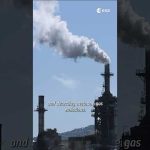
    It’s time to say goodbye to our rocket with its final liftoff.

    On this last flight, it will carry the Copernicus Sentinel-2C, into orbit. Vega already delivered Sentinel-2A and 2B to space in 2015 and 2017 ensuring constant monitoring of our planet for precision farming, water quality monitoring, natural disaster management and detecting methane emissions.

    Since its inaugural flight in 2012, Vega has launched over 20 times, serving Europe with precision and excellence. Now, Vega-C is ready to take the reins, bringing more power and capacity to future missions.

    📹 ESA – European Space Agency

    #ESA #Rocket #Satellite
  • Sentinel-2C: ready for liftoff

    Sentinel-2C: ready for liftoff

    Sentinel-2C is ready for launch! The new satellite will soon join its Copernicus Sentinel-2 family in orbit – where it will continue to provide detailed views of Earth’s land and coastal waters.

    The mission is based on a constellation of two identical satellites: Sentinel-2A and Sentinel-2B. The constellation was originally designed to monitor land surfaces – but its scope has since expanded.

    It now covers a wide range of applications including deforestation, water quality, monitoring natural disasters, methane emissions and much more.
    Sentinel-2C, once in orbit, will replace the Sentinel-2A unit – prolonging the life of the Sentinel-2 mission – ensuring a continuous supply of data for Copernicus, the Earth observation component of the EU Space Programme.

    Tune in to ESA WebTV on 4 September from 03:30 CEST to watch the satellite soar into space on the last Vega rocket to be launched from Europe’s Spaceport in Kourou, French Guiana.

    Credits: ESA – European Space Agency

    ★ Subscribe: http://bit.ly/ESAsubscribe and click twice on the bell button to receive our notifications.

    Check out our full video catalog: http://bit.ly/SpaceInVideos
    Follow us on Twitter: http://bit.ly/ESAonTwitter
    On Facebook: http://bit.ly/ESAonFacebook
    On Instagram: http://bit.ly/ESAonInstagram
    On LinkedIn: https://bit.ly/ESAonLinkedIn
    On Pinterest: https://bit.ly/ESAonPinterest
    On Flickr: http://bit.ly/ESAonFlickr

    We are Europe’s gateway to space. Our mission is to shape the development of Europe’s space capability and ensure that investment in space continues to deliver benefits to the citizens of Europe and the world. Check out https://www.esa.int/ to get up to speed on everything space related.

    Copyright information about our videos is available here: https://www.esa.int/ESA_Multimedia/Terms_and_Conditions

    #ESA #Sentinel-2C #Satellite

  • Mars’ vast system of deep and steep valleys 🔴 #shorts

    Mars’ vast system of deep and steep valleys 🔴 #shorts

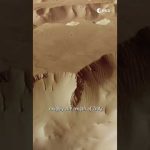
    Noctis Labyrinthus is vast system of deep and steep valleys that stretches out for around 1190 km, roughly the length of Italy here on Earth.

    It is nestled between the colossal martian ‘Grand Canyon’ (Valles Marineris) and the tallest volcanoes in the Solar System (the Tharsis region).

    The intense volcanism in the nearby Tharsis region is to blame for the formation of these features; this volcanism caused large areas of martian crust to arch upwards and become stretched and tectonically stressed, leading to it thinning out, faulting and subsiding.

    📹 ESA – European Space Agency
    🖥️ ESA/DLR/FU Berlin

    #ESA #Mars #Space

  • Timelapse of Juice’s lunar-Earth flyby

    Timelapse of Juice’s lunar-Earth flyby

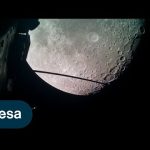
    On 19–20 August 2024, Juice successfully completed a world-first lunar-Earth flyby, with flight controllers guiding the spacecraft first past the Moon, then past Earth. The gravity of the two changed Juice’s speed and direction, sending it on a shortcut to Jupiter via Venus.

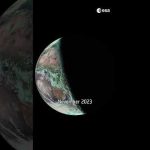
    The closest approach to the Moon was at 23:15 CEST on 19 August, deflecting Juice towards a closest approach to Earth just over 24 hours later at 23:56 CEST on 20 August. In the hours before and after both close approaches, Juice’s two monitoring cameras captured photos, giving us a unique ‘Juice eye view’ of our home planet.

    Juice’s two monitoring cameras provide 1024 x 1024 pixel snapshots that can be processed in colour. Their main purpose is to monitor the spacecraft’s various booms and antennas, especially during the challenging period after launch. The photos they captured of the Moon and Earth during the lunar-Earth flyby are a bonus.

    The piece of music that accompanies the images is called 11,2 km/s. It was composed by Gautier Acher back in 2015, and selected as the official theme music for ESA’s Estrack ground station network to mark its 40th anniversary (more information). The music is available under a CC BY-NC-SA licence.

    Juice rerouted to Venus in world’s first lunar-Earth flyby: https://www.esa.int/Science_Exploration/Space_Science/Juice/Juice_rerouted_to_Venus_in_world_s_first_lunar-Earth_flyby

    Juice’s lunar-Earth flyby: all you need to know: https://www.esa.int/Science_Exploration/Space_Science/Juice/Juice_s_lunar-Earth_flyby_all_you_need_to_know

    Processing notes: The Juice monitoring cameras provide 1024 x 1024 pixel images. Upscaling software was used to convert the images into 2160 x 2160 pixel images, which match the 3480 x2160 pixel resolution of the 4K movie format.

    Credits: ESA – European Space Agency
    Acknowledgements: Simeon Schmauß & Mark McCaughrean

    ★ Subscribe: http://bit.ly/ESAsubscribe and click twice on the bell button to receive our notifications.

    Check out our full video catalog: http://bit.ly/SpaceInVideos
    Follow us on Twitter: http://bit.ly/ESAonTwitter
    On Facebook: http://bit.ly/ESAonFacebook
    On Instagram: http://bit.ly/ESAonInstagram
    On LinkedIn: https://bit.ly/ESAonLinkedIn
    On Pinterest: https://bit.ly/ESAonPinterest
    On Flickr: http://bit.ly/ESAonFlickr

    We are Europe’s gateway to space. Our mission is to shape the development of Europe’s space capability and ensure that investment in space continues to deliver benefits to the citizens of Europe and the world. Check out https://www.esa.int/ to get up to speed on everything space related.

    Copyright information about our videos is available here: https://www.esa.int/ESA_Multimedia/Terms_and_Conditions

    #ESA #Juice #Timelapse

  • How 6G centrifuges prepare astronauts for space travel 🧑‍🚀 #shorts

    How 6G centrifuges prepare astronauts for space travel 🧑‍🚀 #shorts

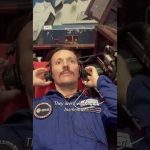
    Human centrifuges simulate the gravitational forces, known as g-forces, experienced by astronauts during launch and return to Earth.

    The g-forces in this centrifuge were directed from the chest to the back, reaching acceleration levels up to 6G (equivalent to 4.5 times Earth’s gravity).

    The astronaut candidates reclined on their backs, reflecting the position astronauts assume in their launch vehicles.

    Equipped with biomonitoring devices, they communicated with medical staff during the spin, describing the effects felt on their bodies.

    📹 ESA – European Space Agency
    🖥️ ESA

    #ESA #Astronauts #Centrifuge

  • Juice rerouted to Venus in world’s first lunar-Earth flyby 🧃 #shorts

    Juice rerouted to Venus in world’s first lunar-Earth flyby 🧃 #shorts

    Our Juice spacecraft returned to Earth to complete the world’s first Lunar-Earth gravity assist.

    Flight controllers guided the spacecraft past the Moon and then the Earth, ‘braking’ the spacecraft.

    This manoeuvre may seem counterintuitive but will allow Juice to take a shortcut via Venus on its way to Jupiter.

    📹 ESA – European Space Agency
    🖥️ ESA

  • Juice: Live from the Moon + Q&A with the team

    Juice: Live from the Moon + Q&A with the team

    Join us for Juice’s flyby of the Moon. We’ll be sharing images as soon as we can after Juice sends them down to Earth. Be among the first people in the world to see these images, and ask your questions about the mission and its lunar-Earth flyby to our panel of Juice team members.

    The images will be captured using Juice’s two ‘monitoring cameras’, designed to watch the unfolding of Juice’s solar panels, antennas and booms in space in the weeks after the spacecraft launched into space in April 2023. The cameras have successfully completed their task. But we thought… what will we see if we point them at the Moon?

    We don’t know how the images will look. It’s the first time the cameras will point at a big bright object in space. And we’re sharing them publicly before we’ve had a chance to process them at all.

    Let’s see what happens!

    Read more: https://www.esa.int/Science_Exploration/Space_Science/Juice/Juice_s_lunar-Earth_flyby_all_you_need_to_know

    ★ Subscribe: http://bit.ly/ESAsubscribe and click twice on the bell button to receive our notifications.

    Check out our full video catalog: http://bit.ly/SpaceInVideos
    Follow us on Twitter: http://bit.ly/ESAonTwitter
    On Facebook: http://bit.ly/ESAonFacebook
    On Instagram: http://bit.ly/ESAonInstagram
    On LinkedIn: https://bit.ly/ESAonLinkedIn
    On Pinterest: https://bit.ly/ESAonPinterest
    On Flickr: http://bit.ly/ESAonFlickr

    We are Europe’s gateway to space. Our mission is to shape the development of Europe’s space capability and ensure that investment in space continues to deliver benefits to the citizens of Europe and the world. Check out https://www.esa.int/ to get up to speed on everything space related.

    Copyright information about our videos is available here: https://www.esa.int/ESA_Multimedia/Terms_and_Conditions

    #ESA #Juice #Moon

  • Why Juice is coming back to Earth

    Why Juice is coming back to Earth

    ESA’s Jupiter Icy Moons Explorer (Juice) returns to Earth on 19–20 August 2024, to complete the world’s first Lunar-Earth gravity assist. Flight controllers will guide the spacecraft past the Moon and then Earth itself, ‘braking’ the spacecraft. This manoeuvre may seem counterintuitive but will allow Juice to take a shortcut via Venus on it’s way to Jupiter.

    Juice has already travelled more than 1000 million km to the giant planet but it still has a long way to go even though Jupiter is on average ‘just’ 800 million km away from Earth. Join us as we explain why Juice’s journey to Jupiter is taking sooo long.

    Read more: https://www.esa.int/Science_Exploration/Space_Science/Juice/Juice_s_lunar-Earth_flyby_all_you_need_to_know

    Read more: https://www.esa.int/Enabling_Support/Operations/Juice_why_s_it_taking_sooo_long

    Credits: ESA – European Space Agency

    —————————————————

    Chapters:
    00:00 Introduction
    00:59 Why is the journey so long?
    05:15 What is a flyby?
    06:10 Lunar-Earth gravity assist
    08:05 Conclusion

    ★ Subscribe: http://bit.ly/ESAsubscribe and click twice on the bell button to receive our notifications.

    Check out our full video catalog: http://bit.ly/SpaceInVideos
    Follow us on Twitter: http://bit.ly/ESAonTwitter
    On Facebook: http://bit.ly/ESAonFacebook
    On Instagram: http://bit.ly/ESAonInstagram
    On LinkedIn: https://bit.ly/ESAonLinkedIn
    On Pinterest: https://bit.ly/ESAonPinterest
    On Flickr: http://bit.ly/ESAonFlickr

    We are Europe’s gateway to space. Our mission is to shape the development of Europe’s space capability and ensure that investment in space continues to deliver benefits to the citizens of Europe and the world. Check out https://www.esa.int/ to get up to speed on everything space related.

    Copyright information about our videos is available here: https://www.esa.int/ESA_Multimedia/Terms_and_Conditions

    #ESA #Juice #Jupiter

  • How do foams behave in space? ⛓️ #shorts

    How do foams behave in space? ⛓️ #shorts

    On Earth, the mixture of gas and liquid that makes up a foam quickly starts to change. Gravity pulls the liquid between the bubbles downwards, and small bubbles shrink while the larger ones tend to grow at the expense of others. As the liquid is drawn downwards due to gravity the bubbles lose their strength and rupture, collapsing back to a liquid state.

    This is annoying for researchers as it limits the time they can study foams and interferes with their experiments. But in space foams are more stable as the liquid does not drain to the bottom in weightlessness.

    📹 @EuropeanSpaceAgency
    📸 ESA – European Space Agency

    #ESA #Foam #Space

  • Advancing weather forecasting in a changing climate

    Advancing weather forecasting in a changing climate

    The effects of the climate crisis are felt more acutely in the Arctic than anywhere else on the planet. The weather in the Arctic is not only severe, but it changes extremely quickly. More frequent data are urgently needed to improve weather forecasts for this susceptible polar region.

    Enter ESA’s Arctic Weather Satellite: a brand new prototype mission to show exactly how this can be achieved. The satellite will provide precise, short-term weather forecasts for the Arctic region. It is equipped with a 19-channel cross-track scanning microwave radiometer which will provide high-resolution humidity and temperature soundings of the atmosphere in all weather conditions.

    The Arctic Weather Satellite is the forerunner of a potential constellation of satellites, called EPS-Sterna, that ESA would build for Eumetsat if this first prototype Arctic Weather Satellite performs well.

    Credits: ESA – European Space Agency

    ★ Subscribe: http://bit.ly/ESAsubscribe and click twice on the bell button to receive our notifications.

    Check out our full video catalog: http://bit.ly/SpaceInVideos
    Follow us on Twitter: http://bit.ly/ESAonTwitter
    On Facebook: http://bit.ly/ESAonFacebook
    On Instagram: http://bit.ly/ESAonInstagram
    On LinkedIn: https://bit.ly/ESAonLinkedIn
    On Pinterest: https://bit.ly/ESAonPinterest
    On Flickr: http://bit.ly/ESAonFlickr

    We are Europe’s gateway to space. Our mission is to shape the development of Europe’s space capability and ensure that investment in space continues to deliver benefits to the citizens of Europe and the world. Check out https://www.esa.int/ to get up to speed on everything space related.

    Copyright information about our videos is available here: https://www.esa.int/ESA_Multimedia/Terms_and_Conditions

    #ESA #Satellite #ArcticWeatherSatellite

  • Zoom into interacting galaxies Arp 142 🔎 #shorts

    Zoom into interacting galaxies Arp 142 🔎 #shorts

    This video takes the viewer on a journey through space to the interacting galaxies known as Arp 142.

    The distorted spiral galaxy at the centre, the Penguin, and the compact elliptical galaxy at the left, the Egg, are locked in an active embrace. A new near- and mid-infrared image from the James Webb Space Telescope, taken to mark its second year of science, shows that their interaction is marked by a faint upside-down U-shaped blue glow.

    The pair, known jointly as Arp 142, made their first pass between 25 and 75 million years ago — causing ‘fireworks’, or new star formation, in the Penguin. In the most extreme cases, mergers can cause galaxies to form thousands of new stars per year for a few million years. For the Penguin, research has shown that about 100 to 200 stars have formed per year. By comparison, our Milky Way galaxy (which is not interacting with a galaxy of the same size) forms roughly six to seven new stars per year.

    Arp 142 lies 326 million light-years from Earth in the constellation Hydra.

    Credit: NASA, ESA, CSA, STScI, N. Bartmann (ESA/Webb)

    #ESA #Webb #Universe

  • Our Mars Express captured this unexpected visitor. 🌚 #shorts

    Our Mars Express captured this unexpected visitor. 🌚 #shorts

    It can be seen as a dark blob passing through to the lower left.

    Phobos sits very close to Mars by Solar System standards, orbiting just 6000 km from Mars’s surface. For context, our own moon lies about 385 000 km away from Earth’s surface.

    📹 ESA/NASA – Andreas Mogensen
    📸 ESA/DLR/FU Berlin

    #ESA #Mars #Phobos

  • Is it easier to catch a cold in space? 🤧 #shorts

    Is it easier to catch a cold in space? 🤧 #shorts

    Stress is a common response when the body finds itself in unfamiliar environments, such as space. Prolonged exposure to stress can weaken the body’s defensive mechanisms, making it more susceptible to illness.

    Our astronaut Andreas Mogensen was in space, was part of a study to explore how space travel affects the human immune system.

    Before, during and after his Huginn mission, Andreas collected both blood and saliva samples to reveal how the body’s defences adjust to space.

    This research is crucial for developing strategies to manage the health challenges faced by astronauts on long missions.

    📹 ESA/NASA – Andreas Mogensen
    📸 CADMOS, Ludwig-Maximilians-Universität

    #ESA #Astronaut #Illness

  • Could the Arctic turn green? 🌿 #shorts

    Could the Arctic turn green? 🌿 #shorts

    The Arctic Ocean has been going through so many changes.

    Sea ice is now seasonal, melting and disappearing from large areas during the summer months.

    This rapid warming is affecting not only the marine ecosystem but it will have widespread consequences that affect all of us.

    Tell this to an Arctic lover!

    🎥 ESA – European Space Agency
    🎞️ UiT / BREATHE, @pexels

    #ESA #Arctic #EarthObservation

  • Do you remember the auroras back in May? 🌞 #shorts

    Do you remember the auroras back in May? 🌞 #shorts

    In the weekend of 10–12 May 2024, the biggest solar storm to hit Earth in over 20 years swept over our planet. This produced an intense geomagnetic storm, creating beautiful auroras.

    The culprit? An active sunspot region called AR3664. As it rotated away from Earth’s view around 14 May, it sent out the strongest flare yet (class X8.79), causing large radio blackouts on Earth. But the fact that we could not see it anymore from Earth did not mean that this monster had gone to sleep.

    Watching the Sun’s far side on 20 May, Solar Orbiter’s X-ray instrument STIX observed a massive flare with an estimated class of X12. This makes it the strongest flare yet of the current solar cycle, and in the top ten flares since 1996.

    📹 ESA – European Space Agency
    📸 ESA & NASA/Solar Orbiter/EUI

    #ESA #Aurora #SpaceWeather

  • How Europe’s biggest rocket came to be: Ariane 6 montage

    How Europe’s biggest rocket came to be: Ariane 6 montage

    The first half of 2024 saw hundreds of people across Europe building, cajoling, shipping, lowering, integrating, securing and protecting the precious pieces and parts that came together to create Ariane 6 – Europe’s new heavy-lift rocket.

    Huge engines, boosters and outer shells met tiny screws, electrical boards and masses of supercooled fuel. All this came together at Europe’s Spaceport in French Guiana, for the spectacular first launch of Ariane 6 on 9 July 2024, restoring Europe’s access to space.

    Get a glimpse at the teamwork, skill and care that went into this moment over many months, in this montage of Ariane 6 images, videos and timelapse photography spanning 30 January to 9 July 2024.

    ★ Subscribe: http://bit.ly/ESAsubscribe and click twice on the bell button to receive our notifications.

    Check out our full video catalog: http://bit.ly/SpaceInVideos
    Follow us on Twitter: http://bit.ly/ESAonTwitter
    On Facebook: http://bit.ly/ESAonFacebook
    On Instagram: http://bit.ly/ESAonInstagram
    On LinkedIn: https://bit.ly/ESAonLinkedIn
    On Pinterest: https://bit.ly/ESAonPinterest
    On Flickr: http://bit.ly/ESAonFlickr

    We are Europe’s gateway to space. Our mission is to shape the development of Europe’s space capability and ensure that investment in space continues to deliver benefits to the citizens of Europe and the world. Check out https://www.esa.int/ to get up to speed on everything space related.

    Copyright information about our videos is available here: https://www.esa.int/ESA_Multimedia/Terms_and_Conditions

    #ESA #Ariane6 #Rocket

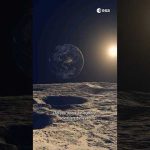
  • Did you know we almost had a second moon? 🌚  #shorts

    Did you know we almost had a second moon? 🌚 #shorts

    In 2016, scientists spotted Kamo’oalewa ,a 40 to 100 metre object, during a planetary defence survey to discover space rocks that could possibly hit our planet.

    At first, the object appeared to orbit Earth in a similar way to our Moon. But astronomers found it was actually orbiting the Sun on a very similar path to Earth. So, Kamo’oalewa was demoted from a potential new moon to a near-Earth asteroid and a quasi-satellite to Earth.

    However, the asteroid’s connection to the Moon could run deeper. The object’s Earth-like orbit and Moon-like composition may indicate that it was created when a chunk of the Moon was thrown into space by an asteroid impact.

    📹 ESA – European Space Agency

    #ESA #Moon #InternationalMoonDay

  • Did you know a comet once bruised Jupiter? ☄️ #Shorts

    Did you know a comet once bruised Jupiter? ☄️ #Shorts

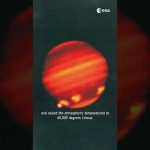
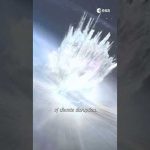
    30 years ago, the comet, Shoemaker-Levy 9, pounded into the southern hemisphere of Jupiter, leaving dark scars in the planet’s atmosphere that persisted for several weeks.

    The remarkable event was the first direct observation of an extraterrestrial collision in the Solar System.

    Huge plumes up to 3 thousand kilometres high were created by the impact and raised the atmospheric temperatures to 40,000 degrees Celsius.

    Almost 10 years after the collision, our Herschel telescope found conclusive evidence that Shoemaker-Levy 9 was the origin of water found in Jupiter’s upper atmosphere. Our Juice mission launched last year will map the distribution of Jupiter’s atmospheric ingredients in even greater detail.

    This kind of collision was more frequent in the early solar system but today, something as large as Shomaker-Levy impacts Earth only once in a million years.

    However, it is important we can protect ourselves from such space hazards which is why we are carrying out several projects dedicated to improving our ability to detect, track and mitigate potentially hazardous asteroids and comets, such as our Hera mission currently planned to launch later this year and our new mission, Ramses, which will to rendezvous with the asteroid Apophis.

    📹 ESA – European Space Agency
    📸 HA. Weaver, T. ESmith (Space Telescope Science Institute), and NASA/ESA
    📸 ESA/Hubble (M. Kornmesser & L. L. Christensen)
    📸 H. Hammel, MIT and NASA/ESA
    📸 Calar Alto Observatory/Max Planck Institute for Astronomy, Heidelberg, Germany

    #ESA #Jupiter #Asteroid

  • Will Apophis hit Earth? ☄️ #shorts

    Will Apophis hit Earth? ☄️ #shorts

    Twenty years ago, astronomers discovered Apophis, an asteroid once feared to collide with Earth in 2029. Thanks to incredible advancements in science, the threat is now ruled out.

    However, Apophis will still pass closer than some satellites currently orbiting Earth and will be visible with the naked eye.

    This rare event is a great opportunity to study Apophis up close and prepare for future asteroid encounters.

    📹 ESA – European Space Agency
    📷 ESA/NASA

    #ESA #Apophis #Asteroid

  • Tracking solar winds to its source 🌞💨 #shorts

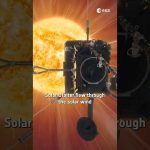
    Tracking solar winds to its source 🌞💨 #shorts

    Hot damn, we found it! ☀️

    The source of the solar wind is no longer a mystery thanks to our trailblazing Solar Orbiter mission. This success opens a new way for solar physicists to study the source regions of the solar wind.

    🎥 ESA – European Space Agency
    📸 ESA & NASA /Solar Orbiter/EUI & SPICE

    #ESA #Sun #SolarWind

  • Ariane 6 first flight highlights

    Ariane 6 first flight highlights

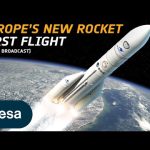
    Europe’s new rocket Ariane 6 powered into space on 9 July 2024 from a newly built dedicated launch pad in French Guiana. Liftoff occurred at 16:00 local time (20:00 BST, 21:00 CEST).

    Europe’s new rocket Ariane 6 powered Europe into space taking with it a varied selection of experiments, satellites, payload deployers and reentry demonstrations that represent thousands across Europe, from students to industry and experienced space actors.

    This inaugural flight, designated VA262, is a demonstration flight to show the capabilities and prowess of Ariane 6 in escaping Earth’s gravity and operating in space. Nevertheless, it had several passengers on board.

    Ariane 6 was built by prime contractor and design authority ArianeGroup. In addition to the rocket, the liftoff demonstrated the functioning of the launch pad and operations on ground at Europe’s Spaceport. The new custom-built dedicated launch zone was built by France’s space agency CNES and allows for a faster turnover of Ariane launches.

    Ariane 6 is Europe’s newest heavy-lift rocket, designed to provide great power and flexibility at a lower cost than its predecessors. The launcher’s configuration – with an upgraded main stage, a choice of either two or four powerful boosters and a new restartable upper stage – will provide Europe with greater efficiency and possibility as it can launch multiple missions into different orbits on a single flight, while its upper stage will deorbit itself at the end of mission.

    ESA’s main roles in the Ariane 6 programme is as contracting authority – managing the budget from Member States participating in the Ariane 6 development programme; and as launch system architect – ensuring that the rocket and launch pad infrastructure work together.

    Ariane 6 is the latest in Europe’s Ariane rocket series, taking over from Ariane 5 featuring a modular and versatile design that can launch missions from low-Earth orbit and farther out to deep space.

    Credits: ESA – European Space Agency

    ★ Subscribe: http://bit.ly/ESAsubscribe and click twice on the bell button to receive our notifications.

    Check out our full video catalog: http://bit.ly/SpaceInVideos
    Follow us on Twitter: http://bit.ly/ESAonTwitter
    On Facebook: http://bit.ly/ESAonFacebook
    On Instagram: http://bit.ly/ESAonInstagram
    On LinkedIn: https://bit.ly/ESAonLinkedIn
    On Pinterest: https://bit.ly/ESAonPinterest
    On Flickr: http://bit.ly/ESAonFlickr

    We are Europe’s gateway to space. Our mission is to shape the development of Europe’s space capability and ensure that investment in space continues to deliver benefits to the citizens of Europe and the world. Check out https://www.esa.int/ to get up to speed on everything space related.

    Copyright information about our videos is available here: https://www.esa.int/ESA_Multimedia/Terms_and_Conditions

    #ESA #Ariane6 #Rocket
  • Erstflug der Ariane 6 (Offizielle Übertragung)

    Erstflug der Ariane 6 (Offizielle Übertragung)

    Liftoff is now scheduled no earlier than 16:00 local time (21:00 CEST), with the live stream starting at 15:30 local time (20:30 CEST).

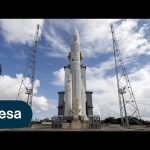
    This is a big moment for Europe, as the rocket will ensure our guaranteed, autonomous access to space – and all of the science, Earth observation, technology development and commercial possibilities that it entails. With many features brand new to Ariane 6, we’ll be able to carry more and take it further, while sustainably disposing of the launcher’s upper stage to prevent it becoming space debris.
    Phase 1: From ground to orbit

    The first phase of Ariane 6’s flight will launch the rocket off Earth and into space with the thrust from the main stage powered by the Vulcain engine together with the force from the two powerful P120C boosters. Phase 1 includes the separation of the main stage from the upper stage and the first boost of the upper stage’s Vinci engine, which inserts it and its passengers into an elliptical orbit 300 by 700 km above Earth.
    The first flight of Ariane 6 will have three phases, each of which will demonstrate various abilities for Europe’s newest heavy-lift rocket.

    Phase 2: Upper stage reignition and satellite deployment

    The next phase is when Ariane 6’s newest feature is put to the test: reignition of the upper stage. In phase 2, the Vinci engine will re-fire, changing Ariane 6’s orbit from elliptical to circular. This will be followed by the deployment of the rocket’s eight satellites and the activation of its five onboard experiments.

    Phase 3 : Tech demos, deorbiting and capsule separation

    The final phase in Ariane 6’s inaugural flight will be to push the cryogenic upper stage to its limits and validate its ability to perform under microgravity conditions. The final phase will initiate the controlled deorbit of the upper stage back through Earth’s atmosphere over the South Pacific ‘NEMO point’, to prevent it from becoming space debris. Moments later, the two reentry capsules onboard will separate from the upper stage, and all three will make their safe descent back home.

    The launch will be covered in several languages which can be followed at the links below:
    English: https://youtube.com/live/B0oFpOJaIYc?feature=share />French: https://youtube.com/live/AfNPzSOalEU?feature=share />German: https://youtube.com/live/a_87OnvB_fQ?feature=share />A clean feed without commentary is available too: https://youtube.com/live/ogXamYYJpQk?feature=share />
    —————————————————

    Chapters:
    00:00 Stay tuned
    25:13 Beginning of the launch coverage programme
    57:50 Liftoff
    1:00:20 Booster separation
    1:01:40 Fairing separation
    1:05:35 Upper / lower stage separation
    1:05:55 Upper stage ignition
    1:18:25 Stay tuned
    1:53:50 Second boost
    2:02:50 Payload separation
    2:07:50 Success statements
    2:16:25 Stay tuned
    3:32:50 Trajectory in 3rd phase
    3:59:20 Stay tuned
    4:28:15 Press conference
    4:58:20 End of the launch coverage programme

    ★ Subscribe: http://bit.ly/ESAsubscribe and click twice on the bell button to receive our notifications.

    Check out our full video catalog: http://bit.ly/SpaceInVideos
    Follow us on Twitter: http://bit.ly/ESAonTwitter
    On Facebook: http://bit.ly/ESAonFacebook
    On Instagram: http://bit.ly/ESAonInstagram
    On LinkedIn: https://bit.ly/ESAonLinkedIn
    On Pinterest: https://bit.ly/ESAonPinterest
    On Flickr: http://bit.ly/ESAonFlickr

    We are Europe’s gateway to space. Our mission is to shape the development of Europe’s space capability and ensure that investment in space continues to deliver benefits to the citizens of Europe and the world. Check out https://www.esa.int/ to get up to speed on everything space related.

    Copyright information about our videos is available here: https://www.esa.int/ESA_Multimedia/Terms_and_Conditions

    #ESA #Ariane6 #Launch

  • Ariane 6 first flight (Official broadcast)

    Ariane 6 first flight (Official broadcast)

    Liftoff is now scheduled no earlier than 16:00 local time (21:00 CEST), with the live stream starting at 15:30 local time (20:30 CEST).

    This is a big moment for Europe, as the rocket will ensure our guaranteed, autonomous access to space – and all of the science, Earth observation, technology development and commercial possibilities that it entails. With many features brand new to Ariane 6, we’ll be able to carry more and take it further, while sustainably disposing of the launcher’s upper stage to prevent it becoming space debris.
    Phase 1: From ground to orbit

    The first phase of Ariane 6’s flight will launch the rocket off Earth and into space with the thrust from the main stage powered by the Vulcain engine together with the force from the two powerful P120C boosters. Phase 1 includes the separation of the main stage from the upper stage and the first boost of the upper stage’s Vinci engine, which inserts it and its passengers into an elliptical orbit 300 by 700 km above Earth.
    The first flight of Ariane 6 will have three phases, each of which will demonstrate various abilities for Europe’s newest heavy-lift rocket.

    Phase 2: Upper stage reignition and satellite deployment

    The next phase is when Ariane 6’s newest feature is put to the test: reignition of the upper stage. In phase 2, the Vinci engine will re-fire, changing Ariane 6’s orbit from elliptical to circular. This will be followed by the deployment of the rocket’s eight satellites and the activation of its five onboard experiments.

    Phase 3 : Tech demos, deorbiting and capsule separation

    The final phase in Ariane 6’s inaugural flight will be to push the cryogenic upper stage to its limits and validate its ability to perform under microgravity conditions. The final phase will initiate the controlled deorbit of the upper stage back through Earth’s atmosphere over the South Pacific ‘NEMO point’, to prevent it from becoming space debris. Moments later, the two reentry capsules onboard will separate from the upper stage, and all three will make their safe descent back home.

    The launch will be covered in several languages which can be followed at the links below:
    English: https://youtube.com/live/B0oFpOJaIYc?feature=share />French: https://youtube.com/live/AfNPzSOalEU?feature=share />German: https://youtube.com/live/a_87OnvB_fQ?feature=share />A clean feed without commentary is available too: https://youtube.com/live/ogXamYYJpQk?feature=share />
    —————————————————

    Chapters:
    00:00 Stay tuned
    29:18 Beginning of the launch coverage programme
    59:00 Liftoff
    1:01:30 Booster separation
    1:02:50 Fairing separation
    1:06:45 Upper / lower stage separation
    1:07:15 Upper stage ignition
    1:20:25 Stay tuned
    1:55:00 Second boost
    2:05:00 Payload separation
    2:09:00 Success statements
    2:17:35 Stay tuned
    3:34:00 Trajectory in 3rd phase
    4:00:30 Stay tuned
    4:29:15 Press conference
    4:59:30 End of the launch coverage programme

    ★ Subscribe: http://bit.ly/ESAsubscribe and click twice on the bell button to receive our notifications.

    Check out our full video catalog: http://bit.ly/SpaceInVideos
    Follow us on Twitter: http://bit.ly/ESAonTwitter
    On Facebook: http://bit.ly/ESAonFacebook
    On Instagram: http://bit.ly/ESAonInstagram
    On LinkedIn: https://bit.ly/ESAonLinkedIn
    On Pinterest: https://bit.ly/ESAonPinterest
    On Flickr: http://bit.ly/ESAonFlickr

    We are Europe’s gateway to space. Our mission is to shape the development of Europe’s space capability and ensure that investment in space continues to deliver benefits to the citizens of Europe and the world. Check out https://www.esa.int/ to get up to speed on everything space related.

    Copyright information about our videos is available here: https://www.esa.int/ESA_Multimedia/Terms_and_Conditions

    #ESA #Ariane6 #Launch

  • Ariane 6 first flight – clean feed (Official broadcast)

    Ariane 6 first flight – clean feed (Official broadcast)

    Liftoff is now scheduled no earlier than 16:00 local time (21:00 CEST), with the live stream starting at 15:30 local time (20:30 CEST).

    This is a big moment for Europe, as the rocket will ensure our guaranteed, autonomous access to space – and all of the science, Earth observation, technology development and commercial possibilities that it entails. With many features brand new to Ariane 6, we’ll be able to carry more and take it further, while sustainably disposing of the launcher’s upper stage to prevent it becoming space debris.

    Phase 1: From ground to orbit

    The first phase of Ariane 6’s flight will launch the rocket off Earth and into space with the thrust from the main stage powered by the Vulcain engine together with the force from the two powerful P120C boosters. Phase 1 includes the separation of the main stage from the upper stage and the first boost of the upper stage’s Vinci engine, which inserts it and its passengers into an elliptical orbit 300 by 700 km above Earth.
    The first flight of Ariane 6 will have three phases, each of which will demonstrate various abilities for Europe’s newest heavy-lift rocket.

    Phase 2: Upper stage reignition and satellite deployment

    The next phase is when Ariane 6’s newest feature is put to the test: reignition of the upper stage. In phase 2, the Vinci engine will re-fire, changing Ariane 6’s orbit from elliptical to circular. This will be followed by the deployment of the rocket’s eight satellites and the activation of its five onboard experiments.

    Phase 3 : Tech demos, deorbiting and capsule separation

    The final phase in Ariane 6’s inaugural flight will be to push the cryogenic upper stage to its limits and validate its ability to perform under microgravity conditions. The final phase will initiate the controlled deorbit of the upper stage back through Earth’s atmosphere over the South Pacific ‘NEMO point’, to prevent it from becoming space debris. Moments later, the two reentry capsules onboard will separate from the upper stage, and all three will make their safe descent back home.

    The launch will be covered in several languages which can be followed at the links below:
    English: https://youtube.com/live/B0oFpOJaIYc?feature=share />French: https://youtube.com/live/AfNPzSOalEU?feature=share />German: https://youtube.com/live/a_87OnvB_fQ?feature=share />A clean feed without commentary is available too: https://youtube.com/live/ogXamYYJpQk?feature=share />
    —————————————————

    Chapters:
    00:00 Stay tuned
    59:00 Liftoff
    1:01:30 Booster separation
    1:02:50 Fairing separation
    1:06:45 Upper / lower stage separation
    1:07:15 Upper stage ignition
    1:55:00 Second boost
    2:05:00 Payload separation
    2:09:00 Success statements
    3:34:00 Trajectory in 3rd phase
    4:29:15 Press conference

    ★ Subscribe: http://bit.ly/ESAsubscribe and click twice on the bell button to receive our notifications.

    Check out our full video catalog: http://bit.ly/SpaceInVideos
    Follow us on Twitter: http://bit.ly/ESAonTwitter
    On Facebook: http://bit.ly/ESAonFacebook
    On Instagram: http://bit.ly/ESAonInstagram
    On LinkedIn: https://bit.ly/ESAonLinkedIn
    On Pinterest: https://bit.ly/ESAonPinterest
    On Flickr: http://bit.ly/ESAonFlickr

    We are Europe’s gateway to space. Our mission is to shape the development of Europe’s space capability and ensure that investment in space continues to deliver benefits to the citizens of Europe and the world. Check out https://www.esa.int/ to get up to speed on everything space related.

    Copyright information about our videos is available here: https://www.esa.int/ESA_Multimedia/Terms_and_Conditions

    #ESA #Ariane6 #Launch

  • Europe’s new rocket powers into space 🚀 #shorts

    Europe’s new rocket powers into space 🚀 #shorts

    Europe’s new rocket Ariane 6 powered Europe into space taking with it a varied selection of experiments, satellites, payload deployers and reentry demonstrations that represent thousands across Europe, from students to industry and experienced space actors.

    This inaugural flight, designated VA262, is a demonstration flight to show the capabilities and prowess of Ariane 6 in escaping Earth’s gravity and operating in space. Nevertheless, it had several passengers on board.

    Ariane 6 was built by prime contractor and design authority ArianeGroup. In addition to the rocket, the liftoff demonstrated the functioning of the launch pad and operations on ground at Europe’s Spaceport. The new custom-built dedicated launch zone was built by France’s space agency CNES and allows for a faster turnover of Ariane launches.

    Ariane 6 is Europe’s newest heavy-lift rocket, designed to provide great power and flexibility at a lower cost than its predecessors. The launcher’s configuration – with an upgraded main stage, a choice of either two or four powerful boosters and a new restartable upper stage – will provide Europe with greater efficiency and possibility as it can launch multiple missions into different orbits on a single flight, while its upper stage will deorbit itself at the end of mission.

    ESA’s main roles in the Ariane 6 programme is as contracting authority – managing the budget from Member States participating in the Ariane 6 development programme; and as launch system architect – ensuring that the rocket and launch pad infrastructure work together.

    Ariane 6 is the latest in Europe’s Ariane rocket series, taking over from Ariane 5 featuring a modular and versatile design that can launch missions from low-Earth orbit and farther out to deep space.

    ★ Subscribe: http://bit.ly/ESAsubscribe and click twice on the bell button to receive our notifications.

    Check out our full video catalog: http://bit.ly/SpaceInVideos
    Follow us on Twitter: http://bit.ly/ESAonTwitter
    On Facebook: http://bit.ly/ESAonFacebook
    On Instagram: http://bit.ly/ESAonInstagram
    On LinkedIn: https://bit.ly/ESAonLinkedIn
    On Pinterest: https://bit.ly/ESAonPinterest
    On Flickr: http://bit.ly/ESAonFlickr

    We are Europe’s gateway to space. Our mission is to shape the development of Europe’s space capability and ensure that investment in space continues to deliver benefits to the citizens of Europe and the world. Check out https://www.esa.int/ to get up to speed on everything space related.

    Copyright information about our videos is available here: https://www.esa.int/ESA_Multimedia/Terms_and_Conditions

    #ESA #Ariane6 #Rocket

  • Ariane 6 first liftoff

    Ariane 6 first liftoff

    Europe’s new rocket Ariane 6 powered Europe into space taking with it a varied selection of experiments, satellites, payload deployers and reentry demonstrations that represent thousands across Europe, from students to industry and experienced space actors.

    This inaugural flight, designated VA262, is a demonstration flight to show the capabilities and prowess of Ariane 6 in escaping Earth’s gravity and operating in space. Nevertheless, it had several passengers on board.

    Ariane 6 was built by prime contractor and design authority ArianeGroup. In addition to the rocket, the liftoff demonstrated the functioning of the launch pad and operations on ground at Europe’s Spaceport. The new custom-built dedicated launch zone was built by France’s space agency CNES and allows for a faster turnover of Ariane launches.

    Ariane 6 is Europe’s newest heavy-lift rocket, designed to provide great power and flexibility at a lower cost than its predecessors. The launcher’s configuration – with an upgraded main stage, a choice of either two or four powerful boosters and a new restartable upper stage – will provide Europe with greater efficiency and possibility as it can launch multiple missions into different orbits on a single flight, while its upper stage will deorbit itself at the end of mission.

    ESA’s main roles in the Ariane 6 programme is as contracting authority – managing the budget from Member States participating in the Ariane 6 development programme; and as launch system architect – ensuring that the rocket and launch pad infrastructure work together.

    Ariane 6 is the latest in Europe’s Ariane rocket series, taking over from Ariane 5 featuring a modular and versatile design that can launch missions from low-Earth orbit and farther out to deep space.

    ★ Subscribe: http://bit.ly/ESAsubscribe and click twice on the bell button to receive our notifications.

    Check out our full video catalog: http://bit.ly/SpaceInVideos
    Follow us on Twitter: http://bit.ly/ESAonTwitter
    On Facebook: http://bit.ly/ESAonFacebook
    On Instagram: http://bit.ly/ESAonInstagram
    On LinkedIn: https://bit.ly/ESAonLinkedIn
    On Pinterest: https://bit.ly/ESAonPinterest
    On Flickr: http://bit.ly/ESAonFlickr

    We are Europe’s gateway to space. Our mission is to shape the development of Europe’s space capability and ensure that investment in space continues to deliver benefits to the citizens of Europe and the world. Check out https://www.esa.int/ to get up to speed on everything space related.

    Copyright information about our videos is available here: https://www.esa.int/ESA_Multimedia/Terms_and_Conditions

    #ESA #Ariane6 #Rocket

  • We have found water on the tallest volcanoes in the Solar System! 🧊 #shorts

    We have found water on the tallest volcanoes in the Solar System! 🧊 #shorts

    Our ExoMars and Mars Express missions have spotted water frost for the first time on top of the Tharsis volcanoes: the tallest volcanoes not only on Mars but in the Solar System.

    It was detected near Mars’s equator, a part of the planet where it was thought impossible for frost to exist.

    The researchers propose that air circulates in a peculiar way above Tharsis; this creates a unique microclimate within the calderas of the volcanoes there that allows patches of frost to form.

    🎥 ESA – European Space Agency
    📸 ESA/TGO/CaSSIS
    📸 ESA/DLR/FU Berlin
    📸 NASA/MGS/MOLA Science Team, FU Berlin

    #ESA #Mars #RedPlanet

  • The Young Professional Satellite – From Theory to Reality (episode 2)

    The Young Professional Satellite – From Theory to Reality (episode 2)

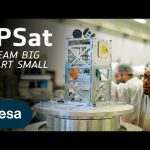
    In the second episode of this docu series, we take a closer look into what it took to build ESA’s Young Professional Satellite (YPSat). YPSat’s mission objectives are to capture the key moments of Ariane 6’s inaugural flight and take in-orbit pictures of Earth and space. To achieve this, the satellite requires the multiple sub-systems to work in harmony and adhere to a pre-defined mission sequence.

    This episode zooms in four of the sub-systems: the Wake-Up System (WUS), Battery, On-Board Computer (OBC) and Telecommunications.

    Running at ultra low power, the WUS circuit board was designed, tested and manufactured specifically for YPSat. Created to meet Arianespace’s requirement to be operational on the launchpad for 45 days, its function is to wake up the satellite during the launch to record the fairing separation.

    Once the WUS detects the launch, it will signal to the battery to turn on the rest of the satellite. The battery has the challenge to maintain enough charge to power the remainder of the components.

    The On-Board Computer (OBC) then takes the lead to orchestrate the rest of the mission. The OBC acts as the brain of the satellites; it sends commands to all the other sub-systems, including sending the commands to record the videos and pictures.

    Once these are captured, the Telecommunications team takes over to coordinate with the ground stations to send the data back on Earth so it can be decoded into clear images. The challenge is to ensure enough communication between the satellite and Earth so the data is properly retrieved before the YPSat disintegrates upon re-entry.

    One day prior launch, YPSat is now sitting in Ariane 6’s capsule. To get there, the satellite was subject to rigorous tests and certifications to meet the stringent standards of the European Space Agency and Arianespace. Will YPSat accomplish its mission objectives? We’ll find out in the next episode.

    —————————————————

    Credits:
    Directed and produced by Chilled Winston: https://chilledwinston.com/ and Emma de Cocker
    Powered by ESA – European Space Agency
    Music from Epidemic Sound

    —————————————————

    Chapters:
    00:00 – Introduction
    01:12 – The Wake-Up System
    04:20 – The Battery
    07:01 – The On-Board Computer
    08:38 – Telecommunications
    13:12 – Outro

    ★ Subscribe: http://bit.ly/ESAsubscribe and click twice on the bell button to receive our notifications.

    Check out the YPSat LinkedIn page: https://www.linkedin.com/company/ypsat/posts/?feedView=all />For more information about YPSat: https://www.esa.int/Enabling_Support/Space_Engineering_Technology/ESA_Young_Professionals_Satellites

    Check out our full video catalog: http://bit.ly/SpaceInVideos
    Follow us on Twitter: http://bit.ly/ESAonTwitter
    On Facebook: http://bit.ly/ESAonFacebook
    On Instagram: http://bit.ly/ESAonInstagram
    On LinkedIn: https://bit.ly/ESAonLinkedIn
    On Pinterest: https://bit.ly/ESAonPinterest
    On Flickr: http://bit.ly/ESAonFlickr

    We are Europe’s gateway to space. Our mission is to shape the development of Europe’s space capability and ensure that investment in space continues to deliver benefits to the citizens of Europe and the world. Check out https://www.esa.int/ to get up to speed on everything space related.

    Copyright information about our videos is available here: https://www.esa.int/ESA_Multimedia/Te

    #ESA #YPSat #Ariane6

  • This is what Ariane 6 first flight will look like 🚀 #shorts

    This is what Ariane 6 first flight will look like 🚀 #shorts

    Europe’s next launch vehicle is the powerful Ariane 6. The rocket will be bigger, better, and more versatile than its predecessor.

    Ariane 6 is ensuring Europe has continued independent and autonomous access to space.

    You can watch the live broadcast of the first flight from our channel.

    English: https://youtube.com/live/B0oFpOJaIYc?feature=share />French: https://youtube.com/live/AfNPzSOalEU?feature=share />German: https://youtube.com/live/a_87OnvB_fQ?feature=share />Clean feed: https://youtube.com/live/ogXamYYJpQk?feature=share />
    📹 ESA – European Space Agency

    #ESA #Ariane6 #Rocket

  • Europe’s next big rocket in a nutshell

    Europe’s next big rocket in a nutshell

    Ariane 6 is the newest rocket in a series that has, for five decades, been launching Europe towards the stars. Building on all the knowledge, expertise and technology developed over the years, Ariane 6 will be versatile, modular, and European.

    Guaranteeing Europe’s access to space for the next years, Ariane 6 in two versions, with either two or four boosters attached depending on the ‘oomph’ the mission requires. Versatile, its upper stage can reignite multiple times during a single flight, placing any spacecraft into any orbit – including constellations – saving a final boost to return and burn up in Earth’s atmosphere. Modular, it will be continuously adapted to the needs of the future space sector.

    Four organisations take care of the Ariane 6 programme: ESA at the head, ArianeGroup as the main contractor, CNES who designed and built the launchpad and ArianeSpace who sell the launches.

    13 countries contribute, thousands of Europeans have worked on it, and every one of us will benefit from the Earth observation, science, technologies and services it will make possible.

    Credits: ESA – European Space Agency

    ★ Subscribe: http://bit.ly/ESAsubscribe and click twice on the bell button to receive our notifications.

    Check out our full video catalog: http://bit.ly/SpaceInVideos
    Follow us on Twitter: http://bit.ly/ESAonTwitter
    On Facebook: http://bit.ly/ESAonFacebook
    On Instagram: http://bit.ly/ESAonInstagram
    On LinkedIn: https://bit.ly/ESAonLinkedIn
    On Pinterest: https://bit.ly/ESAonPinterest
    On Flickr: http://bit.ly/ESAonFlickr

    We are Europe’s gateway to space. Our mission is to shape the development of Europe’s space capability and ensure that investment in space continues to deliver benefits to the citizens of Europe and the world. Check out https://www.esa.int/ to get up to speed on everything space related.

    Copyright information about our videos is available here: https://www.esa.int/ESA_Multimedia/Terms_and_Conditions

    #ESA #Ariane6 #Launch

  • Have you ever seen the inside of a cloud? ☁️ #shorts

    Have you ever seen the inside of a cloud? ☁️ #shorts

    After being launched not even a month ago, EarthCARE has returned its first results.

    This was the first time we were able to see the internal structure and dynamics of clouds from space.

    These are the first results from EarthCARE’s Cloud Profiling Radar instrument, provided by JAXA, which will be followed by the first results from EarthCARE’s three other instruments in the next weeks and months.

    Excited for what’s to come?

    📹 ESA – European Space Agency
    🎞️ JAXA/NICT/ESA

    #ESA #Clouds #EarthCARE

  • 10 impact craters seen from space

    10 impact craters seen from space

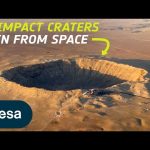
    Have you ever wondered what an impact crater looks like from space? Today, we’re counting down some of our favourite impact craters here on Earth – captured by Earth-observing satellites.

    Craters are inevitably part of being a rocky planet. They occur on every planetary body in our solar system – no matter the size. By studying impact craters and the meteorites that cause them, we can learn more about the processes and geology that shape our entire solar system.

    Credits: ESA – European Space Agency

    Chapters:
    00:00 – 01:03 Intro
    01:04 – 01:37 Nördlinger Ries
    01:38 – 02:12 Ouarkziz Crater
    02:13 – 03:05 Tenoumer Crater
    03:06 – 03:32 Gosses Bluff
    03:33 – 04:00 Siljan Ring
    04:01 – 04:31 Roter Kamm
    04:32 – 4:59 Manicouagan Crater
    05:00 – 5:32 Shoemaker Crater
    05:33 – 06:06 Aorounga Crater
    06:07 – 6:49 Meteor Crater
    06:50 – 07:21 Outro

    ★ Subscribe: http://bit.ly/ESAsubscribe and click twice on the bell button to receive our notifications.

    Check out our full video catalog: http://bit.ly/SpaceInVideos
    Follow us on Twitter: http://bit.ly/ESAonTwitter
    On Facebook: http://bit.ly/ESAonFacebook
    On Instagram: http://bit.ly/ESAonInstagram
    On LinkedIn: https://bit.ly/ESAonLinkedIn
    On Pinterest: https://bit.ly/ESAonPinterest
    On Flickr: http://bit.ly/ESAonFlickr

    We are Europe’s gateway to space. Our mission is to shape the development of Europe’s space capability and ensure that investment in space continues to deliver benefits to the citizens of Europe and the world. Check out https://www.esa.int/ to get up to speed on everything space related.

    Copyright information about our videos is available here: https://www.esa.int/ESA_Multimedia/Terms_and_Conditions

    #ESA #Craters #Space

  • Why do we launch rockets from the equator? 🚀 #shorts

    Why do we launch rockets from the equator? 🚀 #shorts

    Europe’s new rocket Ariane 6 will take off from Europe’s Spaceport in French Guiana, near the equator, and far from populated areas.

    Why did Europe choose a spaceport on the other side of the world? The main reason is the lack of space. There are hardly any places in Europe where rockets can be launched and fly over unpopulated areas during its initial launch phase. We also need a large area to build the launch pad and operations.

    Europe’s Spaceport is also very close to the equator. As our Earth spins itself, you can get an extra boost if you launch where Earth is widest… at the equator.

    📹 ESA – European Space Agency
    📸 ESA – European Space Agency

    #ESA #Ariane6 #Rocket

  • Europe’s new rocket is on the launch pad and ready for liftoff

    Europe’s new rocket is on the launch pad and ready for liftoff

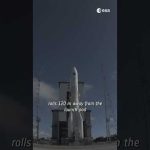
    On 20 June 2024 the first Ariane 6 rocket to launch into space went through its last full ‘wet dress rehearsal’ at Europe’s Spaceport in French Guiana – it provided an exciting sneak peek of what’s to come, stopping just a few seconds before engine ignition and of course, liftoff.

    One of the first steps was to roll back the colossal 90-m tall Ariane 6 mobile gantry building 120 m away from the launch pad – the first moment the complete rocket stood free.

    The first parts of Ariane 6 began arriving in French Guiana from continental Europe in February 2024 via the Canopée ‘spaceship’. In March, the main stage and upper stage were assembled, followed by the transfer of the two powerful P120C boosters in April.

    In May, Ariane 6’s first passengers also arrived in Kourou – a varied selection of experiments, satellites, payload deployers and reentry demonstrations that represent thousands across Europe, from students to industry and experienced space actors NASA and ArianeGroup.

    The payloads were integrated onto the ‘ballast’ at the end of May, and just a few days ago the ballast was fitted onto the top of the rocket and the fairing closed around it – the last time Ariane 6’s cargo would see light.
    From Earth observation to technology demonstrations testing wildlife tracking, 3D printing in open space, open-source software and hardware and science missions looking for the most energetic explosions in the universe, the passengers on Ariane 6’s first flight are a testament to the rocket’s adaptability, complexity, and its role for the future – launching any mission, anywhere.

    Credits: ESA – European Space Agency
    Footage: ESA/ArianeGroup/Arianespace/CNES

    ★ Subscribe: http://bit.ly/ESAsubscribe and click twice on the bell button to receive our notifications.

    Check out our full video catalog: http://bit.ly/SpaceInVideos
    Follow us on Twitter: http://bit.ly/ESAonTwitter
    On Facebook: http://bit.ly/ESAonFacebook
    On Instagram: http://bit.ly/ESAonInstagram
    On LinkedIn: https://bit.ly/ESAonLinkedIn
    On Pinterest: https://bit.ly/ESAonPinterest
    On Flickr: http://bit.ly/ESAonFlickr

    We are Europe’s gateway to space. Our mission is to shape the development of Europe’s space capability and ensure that investment in space continues to deliver benefits to the citizens of Europe and the world. Check out https://www.esa.int/ to get up to speed on everything space related.

    Copyright information about our videos is available here: https://www.esa.int/ESA_Multimedia/Terms_and_Conditions

    #ESA #Ariane6 #Rocket

  • Premier vol d’Ariane 6 (Diffusion officielle)

    Premier vol d’Ariane 6 (Diffusion officielle)

    Ariane 6 is scheduled to launch on 9 July 2024, with a launch window from 15:00-19:00 local time at Europe’s Spaceport in French Guiana (19:00–23:00 BST, 9 July 20:00–10 July 00:00 CEST).

    This is a big moment for Europe, as the rocket will ensure our guaranteed, autonomous access to space – and all of the science, Earth observation, technology development and commercial possibilities that it entails. With many features brand new to Ariane 6, we’ll be able to carry more and take it further, while sustainably disposing of the launcher’s upper stage to prevent it becoming space debris.

    The launch will be covered in several languages which can be followed at the links below:

    English: https://youtube.com/live/B0oFpOJaIYc?feature=share />
    French:
    https://youtube.com/live/AfNPzSOalEU?feature=share />
    German:
    https://youtube.com/live/a_87OnvB_fQ?feature=share />
    A clean feed without commentary is availble too:
    https://youtube.com/live/ogXamYYJpQk?feature=share />
    ★ Subscribe:
    http://bit.ly/ESAsubscribe and click twice on the bell button to receive our notifications.

    Check out our full video catalog: http://bit.ly/SpaceInVideos
    Follow us on Twitter: http://bit.ly/ESAonTwitter
    On Facebook: http://bit.ly/ESAonFacebook
    On Instagram: http://bit.ly/ESAonInstagram
    On LinkedIn: https://bit.ly/ESAonLinkedIn
    On Pinterest: https://bit.ly/ESAonPinterest
    On Flickr: http://bit.ly/ESAonFlickr

    We are Europe’s gateway to space. Our mission is to shape the development of Europe’s space capability and ensure that investment in space continues to deliver benefits to the citizens of Europe and the world. Check out https://www.esa.int/ to get up to speed on everything space related.

    Copyright information about our videos is available here: https://www.esa.int/ESA_Multimedia/Terms_and_Conditions

    #ESA #Ariane6 #Launch

  • This is how we are leading the way towards Zero debris future 🛰️ #shorts

    This is how we are leading the way towards Zero debris future 🛰️ #shorts

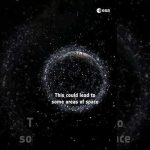
    These are the latest stats:

    – Number of rocket launches since the start of the space age in 1957: About 6500 (excluding failures).

    – Number of satellites these rocket launches have placed into Earth orbit: About 16 990

    – Number of these still in space: About 11 500

    – Number of these still functioning: About 9000

    – Number of debris objects regularly tracked by Space Surveillance Networks and maintained in their catalogue: About 35 150

    – Estimated number of break-ups, explosions, collisions, or anomalous events resulting in fragmentation: More than 640

    – Total mass of all space objects in Earth orbit: More than 11500 tonnes

    – Not all objects are tracked and catalogued. The number of debris objects estimated based on statistical models to be in orbit [MASTER-8, future population 2021]:
    ・36500 space debris objects greater than 10 cm
    ・1 000 000 space debris objects from greater than 1 cm to 10 cm
    ・130 million space debris objects from greater than 1 mm to 1 cm

    🎥 ESA – European Space Agency
    🖥️ Spacejunk3D, LLC

    #ESA #SpaceDebris #SpaceJunk

  • The Young Professional Satellite – Dream Big, Start Small (episode 1)

    The Young Professional Satellite – Dream Big, Start Small (episode 1)

    In this first episode of our docu-series, we embark on the exciting journey of the YPSat (Young Professional Satellite), a satellite flying on-board the inaugural flight of Ariane 6, Europe’s new heavy launcher. Two years ago, a team of Young Professionals at ESA, with diverse backgrounds, nationalities and expertise, have come together around one passion and with one ambition; design, manufacture and send their own satellite to space.

    Starting with some trivial ideas, the team matured their mission objectives and won the approval and support of ESA management to kick start the project. YPSat will be ‘the witness’ of Ariane 6: it will record the fairing separation, document the CubeSats deployment and send back beautiful in-orbit images of Earth and space.

    This scaled-down mission has all the ingredients of a large flagship mission; engineering, verification, testing and production assurance; project management, tight schedule, team coordination and communication; failures, crisis situations and successes.
    YPSat is a blueprint for the future of European space exploration. It has been a life changing opportunity for young professionals at ESA to get hands-on experience and experience the process of developing a space mission. But it has also been an eye-opening occasion for the European Space Agency to get inspired by the young generations, bringing in new ideas and technologies.

    This is just the beginning of the adventure for the YPSat team. The next episode will unravel the creativity, ingenuity and determination that the young professionals brought in to achieve the mission’s objectives. What powers the satellite? Who activates the cameras? How is the data transmitted back on Earth?

    —————————————————

    Credits:
    Directed and produced by Chilled Winston: https://chilledwinston.com/ and Emma de Cocker
    Powered by ESA – European Space Agency
    Music from Epidemic Sound
    Footage from Chilled Winston (Chilled Winston – Where Stories Come to Life)

    ★ Subscribe: http://bit.ly/ESAsubscribe and click twice on the bell button to receive our notifications.

    Check out our full video catalog: http://bit.ly/SpaceInVideos
    Follow us on Twitter: http://bit.ly/ESAonTwitter
    On Facebook: http://bit.ly/ESAonFacebook
    On Instagram: http://bit.ly/ESAonInstagram
    On LinkedIn: https://bit.ly/ESAonLinkedIn
    On Pinterest: https://bit.ly/ESAonPinterest
    On Flickr: http://bit.ly/ESAonFlickr

    We are Europe’s gateway to space. Our mission is to shape the development of Europe’s space capability and ensure that investment in space continues to deliver benefits to the citizens of Europe and the world. Check out https://www.esa.int/ to get up to speed on everything space related.

    Copyright information about our videos is available here: https://www.esa.int/ESA_Multimedia/Terms_and_Conditions

    #ESA #YPSat #Ariane6

  • The Northern Hemisphere welcomes summer ☀️The Southern Hemisphere welcomes winter ❄️ #shorts

    The Northern Hemisphere welcomes summer ☀️The Southern Hemisphere welcomes winter ❄️ #shorts

    The summer solstice, which is when the Sun reaches the most northerly point in the sky, occurred on Friday 21st June at 22:50 CEST.

    This is when the Northern Hemisphere will experience the longest day of the year and the Southern Hemisphere will experience the shortest.

    This is because of Earth’s position in orbit around the Sun and the way the North Pole is tilted towards the Sun during the solstice.

    This animation shows one image per day captured by the Meteosat Second Generation from 20 June 2023 until 19 June 2024 captured at approximately 17:30 CEST. You can see how the terminator line moved in the past year – tonight, that line will be at its greatest angle with respect to the axis of the Earth.

    Do you live in the Northern or Southern Hemisphere?

    🎥 ESA – European Space Agency
    🎞️ ESA/Eumetsat

    #ESA #SummerSolstice #EarthObservation

  • Learn more about Ariane 6 launch pad 🚀 #shorts

    Learn more about Ariane 6 launch pad 🚀 #shorts

    While the Ariane 6 rocket might take much of the focus, the launch pad and infrastructure truely are marvels of human engineering.

    Built and operated by France’s space agency @CNES, the launch zone – called ELA4 – was built from the ground up at Europe’s Spaceport in French Guiana.

    Building on the success and lessons learnt from the previous launch zones, the new infrastructure allows for quick processing and the launch of one Ariane 6 a month.

    The site for the launch zone was chosen for its deep rocky subsoil capable of supporting the heaviest 900 tonne variant of Ariane 6 and its liftoff and the mobile gantry that surrounds Ariane 6 for final assembly.

    The launch pad was also built to lessen the site’s carbon footprint and preserve local natural resources.

    📹 ESA – European Space Agency
    📸 ESA – European Space Agency

    #ESA #Ariane6 #Rocket