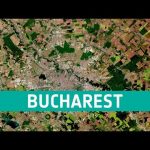
The Copernicus Sentinel-2 mission takes us over Bucharest – the capital and largest city of Romania, in this edition of the Earth from Space programme.
We are Europe’s gateway to space. Our mission is to shape the development of Europe’s space capability and ensure that investment in space continues to deliver benefits to the citizens of Europe and the world. Check out https://www.esa.int/ to get up to speed on everything space related.
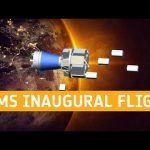
Multiple small satellites will be launched at once on the Vega VV16 mission from Europe’s Spaceport in Kourou, French Guiana. This flight will demonstrate the modular SSMS dispenser resting on its upper stage intended to bring routine affordable launch opportunities for light satellites from 0.2 kg CubeSats up to 400 kg minisatellites.
Until now the smallest classes of satellites – all the way down to tiny CubeSats, built from 10 cm modular boxes – have typically ‘piggybacked’ to orbit. They have to make use of any spare capacity as a single large satellite is launched, meaning their overall launch opportunities are limited.
The new Vega Small Spacecraft Mission Service switches this into a ‘rideshare’ model, with multiple small satellites being flown together, splitting the launch cost.
SAB Aeropsace in the Czech Republic and Bercella in Italy designed and manufactured this modular dispenser for ESA’s Vega prime contractor Avio. The component structures are made of very low-density aluminium ‘sandwich’ panels protected by carbon fibre reinforced polymer skins. This makes it very lightweight and rigid.
The SSMS comprises two main sections, the hexagonal lower section can hold six nanosatellites or up to a dozen CubeSat deployers while the upper section section is used for microsatellites, minisatellites and small satellites. The lower section can also be used independently, coupled with a larger satellite replacing the top section.
The hexagonal module, a central column, towers, a supporting platform and a set of standard satellite interface spacers are assembled to suit each mission and combination of satellites. For this flight, a configuration called Flexi-3 weighing just 330 kg is being used.
This demonstration flight aims to prove the technical and financial viability of the rideshare service. ESA has collaborated with the European Union, which has partly funded this mission within the Horizon 2020 programme. This is part of the Contribution Agreement between ESA and the EU on space technology activities signed on 16 April 2019.
The animation shows the separation of the ESAIL mission which is a joint ESA LuxSpace project to extend the monitoring of maritime traffic beyond existing land-based tracking of Automatic Identification Systems (AIS) through the means of an array of microsatellites: SAT-AIS.
★ Subscribe: http://bit.ly/ESAsubscribe and click twice on the bell button to receive our notifications.
We are Europe’s gateway to space. Our mission is to shape the development of Europe’s space capability and ensure that investment in space continues to deliver benefits to the citizens of Europe and the world. Check out http://www.esa.int/ESA to get up to speed on everything space related.
Sentinel-2B will be launched by a Vega rocket from Europe’s Spaceport, French Guiana.
Lift off is scheduled at 01:49 GMT (02.49 CET) on 7 March, 22:49 on 6 March in Kourou.
It will join its sister satellite Sentinel-2A and the other Sentinels part of the Copernicus programme, the most ambitious Earth observation programme to date.
Sentinel-2A and 2B will be supplying ‘colour vision’ for Copernicus and together they can cover all land surfaces once every five days thus optimising global coverage and the data delivery for numerous applications.
The data provided by these Sentinel-2 satellites is particularly suited for agricultural purposes, such as managing administration and precision farming.
ESA is currently working with the European Commission and National stakeholders to understand the full range of opportunities Earth Observation can contribute in particular to modernise and simplify the Common Agricultural Policy. This video shows how agriculture benefits from the use of the Sentinel data in the Czech Republic.
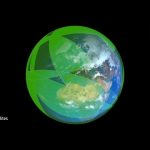
Europe’s Galileo satellite navigation system has entered its initial operational phase, offering positioning, velocity and timing services to suitably equipped users worldwide. It takes a minimum of four Galileo satellites to be visible in the local sky to fix a receiver’s position. This animation shows how service availability increases as the overall number of satellites in the Galileo constellation goes up.
Gonzalo Martín-de-Mercado specialises in optical telecommunications. He speaks about how his academic background helps him to support collaboration between ESA and companies.
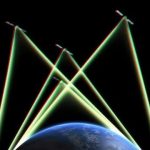
A 3D presentation of the Galileo satellite navigation system, a joint development by the European Union and European Space Agency. This constellation of satellites will allow users to pinpoint their location anywhere on Earth — their launches commencing on 20 October 2011.
Use red/blue 3D glasses to experience the full 3D experience of this clip.