Tag: Exploration

  • Drilling into Mars | ExoMars Rosalind Franklin mission (episode 3)

    Drilling into Mars | ExoMars Rosalind Franklin mission (episode 3)

    The ExoMars Rosalind Franklin rover will drill deeper than any other mission has ever attempted on the Red Planet.

    The third episode in the series shows how the rover will extract, collect and analyse martian samples in a high-fidelity simulation.

    Rosalind Franklin will be the first rover to reach a depth of up to two metres deep below the surface, acquiring samples that have been protected from harsh surface radiation and extreme temperatures.

    The drill system combines multiple precission mechanisms in an intricate automated sequence. It uses three extension rods that connect tor form a two-metre “drill string”.

    As the rover drills, it will simultaneously investigate the borehole using infrared spectroscopy to study mineral composition.

    The ExoMars Rosalind Franklin mission is part of Europe’s ambitious exploration journey to search for past and present signs of life on Mars.

    Credits: ESA – European Space Agency
    Production: Mlabspace for ESA
    3D animation: ESA/Mlabspace
    Music composed by Valentin Joudrier

    ★ Subscribe: http://bit.ly/ESAsubscribe and click twice on the bell button to receive our notifications.

    Check out our full video catalog: http://bit.ly/SpaceInVideos
    Follow us on Twitter: http://bit.ly/ESAonTwitter
    On Facebook: http://bit.ly/ESAonFacebook
    On Instagram: http://bit.ly/ESAonInstagram
    On LinkedIn: https://bit.ly/ESAonLinkedIn
    On Pinterest: https://bit.ly/ESAonPinterest
    On Flickr: http://bit.ly/ESAonFlickr

    We are Europe’s gateway to space. Our mission is to shape the development of Europe’s space capability and ensure that investment in space continues to deliver benefits to the citizens of Europe and the world. Check out https://www.esa.int/ to get up to speed on everything space related.

    Copyright information about our videos is available here: https://www.esa.int/ESA_Multimedia/Terms_and_Conditions

    #ESA #ExoMars #Mars
  • Say hello to ALISSE! 🧑‍⚕️

    Say hello to ALISSE! 🧑‍⚕️

    The AI-powered innovation transforming space medicine. Astronauts can now perform expert-level ultrasounds without Earth-based guidance—keeping them healthy on deep-space missions while paving the way for smarter, more accessible healthcare on Earth.

    The future of exploration starts here!

    📸 ESA/NASA – Alexander Gerst
    📹 ESA – European Space Agency

    #ESA #Astronaut #AI

  • How living on the Moon could affect your brain! 🧠🌕

    How living on the Moon could affect your brain! 🧠🌕

    We know how microgravity impacts the brain thanks to astronauts on the ISS, but what about life on the Moon or Mars? Future explorers will also face hypoxia—low oxygen levels—which could affect their brain function and decision-making.

    A team of students is tackling this challenge by conducting zero-gravity flight experiments to study how the brain responds to both microgravity and hypoxia. Their research could help improve astronaut safety for future lunar and Martian missions, ensuring they can explore safely beyond their spacecraft.

    Could this be a key step in preparing humans for deep space exploration? Let us know your thoughts in the comments!

    📹 ESA – European Space Agency
    📸 ESA – European Space Agency

    #ESA #SpaceExploration #BrainInSpace

  • Below the surface | ExoMars Rosalind Franklin mission

    Below the surface | ExoMars Rosalind Franklin mission

    Watch the second episode of the ExoMars Rosalind Franklin rover mission – Europe’s ambitious exploration journey to search for past and present signs of life on Mars.

    This episode starts with Rosalind searching for traces of life below the martian surface using a ground penetrating radar and a set of cameras.

    The rover will dig, collect, and investigate the chemical composition of material collected by a drill. Rosalind Franklin will be the first rover to reach a depth of up to two metres deep below the surface, acquiring samples that have been protected from surface radiation and extreme temperatures.

    Rosalind Franklin uses the WISDOM radar to help scientists on Earth decide where to drill. Besides identifying the most promising targets for sampling, WISDOM will help the rover avoid potential hazards, such as the presence of buried rocks that could damage the drill.
    The scientific eyes of the rover are set on the Panoramic Camera suite known as PanCam. The Close-UP Imager (CLUPI) sits on the side of the drill box, a camera designed to acquire high-resolution, colour, close-up images of outcrops, rocks and soils. PanCam and CLUPI will help scientists find the most promising spots to drill. These instruments can also investigate very fine outcrop details and image drill samples before they are sent into the rover’s laboratory.
    After the rover retracts its drill, the sample is in a special chamber at the tip. Under the reduced martian gravity (38% of Earth’s), the material drops onto a special “hand” that the rover can extend to the front to collect drill samples.
    The mission will serve to demonstrate key technologies that Europe needs to master for future planetary exploration missions.

    The ExoMars rover series show the rover and martian landscapes as true to reality as possible for a simulation.

    Check ESA’s ExoMars website and our frequently asked questions for the latest updates.

    Credits: ESA – European Space
    Production: Mlabspace for ESA
    3D animation: ESA/Mlabspace
    Video footage: ESA/NASA, Shutterstock
    Music composed by Valentin Joudrier

    ★ Subscribe: http://bit.ly/ESAsubscribe and click twice on the bell button to receive our notifications.

    Check out our full video catalog: http://bit.ly/SpaceInVideos
    Follow us on Twitter: http://bit.ly/ESAonTwitter
    On Facebook: http://bit.ly/ESAonFacebook
    On Instagram: http://bit.ly/ESAonInstagram
    On LinkedIn: https://bit.ly/ESAonLinkedIn
    On Pinterest: https://bit.ly/ESAonPinterest
    On Flickr: http://bit.ly/ESAonFlickr

    We are Europe’s gateway to space. Our mission is to shape the development of Europe’s space capability and ensure that investment in space continues to deliver benefits to the citizens of Europe and the world. Check out https://www.esa.int/ to get up to speed on everything space related.

    Copyright information about our videos is available here: https://www.esa.int/ESA_Multimedia/Terms_and_Conditions

    #ESA #ExoMars #Mars
  • Scouting the Red Planet with ExoMars

    Scouting the Red Planet with ExoMars

    Watch the first episode of the ExoMars Rosalind Franklin rover mission – Europe’s ambitious exploration journey to search for past and present signs of life on Mars.

    This episode starts after a successful descent and landing on the Red Planet in 2030.

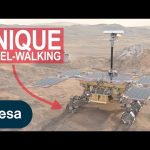
    Rovers on Mars have previously been caught in loose soils, and turning the wheels dug them deeper, just like a car stuck in sand. To avoid this, Rosalind Franklin has a unique wheel-walking locomotion mode to overcome difficult terrains, as well as autonomous navigation software.

    A major goal of the mission is to understand the geological context and identify minerals formed in the presence of water that could be good targets for drilling into and collecting samples for analysis.

    The scientific eyes of the rover are set atop the mast on the Panoramic Camera suite, known as PanCam. From its vantage point about two metres above the ground, PanCam cameras come into play to get a whole picture of the site with high resolution imaging.

    Enfys, meaning rainbow in Welsh, is an infrared spectrometer to study mineral composition. Enfys and PanCam work in synergy. PanCam is used to obtain colour, visual information of what lies around the rover. Enfys’ job is to inform scientists what the minerals are.

    Rosalind Franklin will be the first rover to reach a depth of up to two metres deep below the surface, acquiring samples that have been protected from surface radiation and extreme temperatures.

    The mission will serve to demonstrate key technologies that Europe needs to master for future planetary exploration missions.

    This episode shows the spacecraft, the rover and martian landscapes are as true to reality as possible for a simulation.

    Check ESA’s ExoMars website and our frequently asked questions for the latest updates.

    Credits:
    Production: Mlabspace for ESA

    3D animation: ESA/Mlabspace

    Video footage: ESA/NASA, Shutterstock

    Music composed by Valentin Joudrier

    ★ Subscribe: http://bit.ly/ESAsubscribe and click twice on the bell button to receive our notifications.

    Check out our full video catalog: http://bit.ly/SpaceInVideos
    Follow us on Twitter: http://bit.ly/ESAonTwitter
    On Facebook: http://bit.ly/ESAonFacebook
    On Instagram: http://bit.ly/ESAonInstagram
    On LinkedIn: https://bit.ly/ESAonLinkedIn
    On Pinterest: https://bit.ly/ESAonPinterest
    On Flickr: http://bit.ly/ESAonFlickr

    We are Europe’s gateway to space. Our mission is to shape the development of Europe’s space capability and ensure that investment in space continues to deliver benefits to the citizens of Europe and the world. Check out https://www.esa.int/ to get up to speed on everything space related.

    Copyright information about our videos is available here: https://www.esa.int/ESA_Multimedia/Terms_and_Conditions

    #ESA #ExoMars #Mars
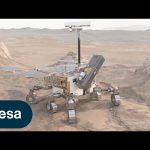
  • A mission for the Rosalind Franklin rover

    A mission for the Rosalind Franklin rover

    Trailer of the ExoMars Rosalind Franklin mission.

    In 2028, ESA will launch its most ambitious exploration mission to search for past and present signs of life on Mars.

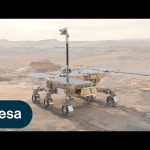
    Enjoy the ExoMars Rosalind Franklin mission in minute detail – everything down to the colour and size of the wires, sticky tape and scratches. The spacecraft, the rover and martian landscapes are as true to reality as possible for a simulation. The visuals show the spacecraft structural engineering with a faithful robotic appearance. The martian landscape has been simulated with meticulous realism.

    The story begins with the rover exploring the surface of the Red Planet. There is science to be done. Join the adventure.

    This trailer provides a first taste for the most accurate animation series made so far of a Mars mission.

    ESA’s Rosalind Franklin rover has unique scientific potential to search for evidence of past life on Mars thanks to its drill and scientific instruments. It will be the first rover to reach a depth of up to two metres deep below the surface, acquiring samples that have been protected from surface radiation and extreme temperatures. The drill will retrieve soils from ancient parts of Mars and analyse them in situ with its onboard laboratory.

    The mission will also serve to demonstrate key technologies that Europe needs to master for future planetary exploration missions. This includes the capability to land safely on a planet, to move autonomously on the surface, and to perform drilling and sample processing and analysis automatically. The rover will use novel driving techniques including wheel-walking to overcome difficult terrains, as well as autonomous navigation software.

    Check ESA’s ExoMars website [https://www.esa.int/Science_Exploration/Human_and_Robotic_Exploration/Exploration/ExoMars] and our frequently asked questions [https://www.esa.int/Science_Exploration/Human_and_Robotic_Exploration/Exploration/ExoMars/FAQ_The_rebirth_of_ESA_s_ExoMars_Rosalind_Franklin_mission] for the latest updates.

    Credits: ESA/Mlabspace

    ★ Subscribe: http://bit.ly/ESAsubscribe and click twice on the bell button to receive our notifications.

    Check out our full video catalog: http://bit.ly/SpaceInVideos
    Follow us on Twitter: http://bit.ly/ESAonTwitter
    On Facebook: http://bit.ly/ESAonFacebook
    On Instagram: http://bit.ly/ESAonInstagram
    On LinkedIn: https://bit.ly/ESAonLinkedIn
    On Pinterest: https://bit.ly/ESAonPinterest
    On Flickr: http://bit.ly/ESAonFlickr

    We are Europe’s gateway to space. Our mission is to shape the development of Europe’s space capability and ensure that investment in space continues to deliver benefits to the citizens of Europe and the world. Check out https://www.esa.int/ to get up to speed on everything space related.

    Copyright information about our videos is available here: https://www.esa.int/ESA_Multimedia/Terms_and_Conditions

    #ESA
    #Mars
    #Rover

  • December sky highlights ✨ #shorts

    December sky highlights ✨ #shorts

    – Mercury’s beauty at greatest eastern elongation (4 December)

    – New Moon (12 December): Great for capturing Star Trails.

    – Geminids Meteor Shower (14-15 December): without any moonlight interference.

    – Moon-Mercury Conjunction (14 November): A cosmic rendezvous.

    – Solstice (22 December at 4:27 CET): Sol Invictus

    – Full Moon (27 December): A glowing spectacle in the heavens.

    Don’t miss these celestial events in this month!

    📹 ESA – European Space Agency
    📸 EUMETSAT

    #ESA
    #NightSky
    #AstroHighlights

  • Bringing Mars rock samples back to Earth 🌍 #shorts

    Bringing Mars rock samples back to Earth 🌍 #shorts

    Missions to Mars have made many exciting discoveries that have transformed our understanding of the planet, but the next step is to bring samples to Earth for detailed analysis in sophisticated laboratories.

    🎥 ESA – European Space Agency

    #ESA
    #Mars
    #MarsRover

  • Astronomy  highlights of August 2023 ✨ #shorts

    Astronomy highlights of August 2023 ✨ #shorts

    August night sky is full of wonders. ✨

    – Mercury retrograde (23 August 2023): Will you have trouble with communication this month? Up to you to decide.

    – Saturn at opposition (27 August 2023): It’s your time to shine.

    – Super blue moon (30 August 2023): Enjoy it with someone special.

    📹 ESA – European Space Agency

    #ESA
    #August2023
    #Skywatching

  • NASA’s Juno Spacecraft Flies Past Io and Jupiter, With Music by Vangelis

    NASA’s Juno Spacecraft Flies Past Io and Jupiter, With Music by Vangelis

    On May 16, 2023, NASA’s Juno spacecraft flew past Jupiter’s volcanic moon Io, and then the gas giant soon after. Io is the most volcanically active body in the solar system. Slightly larger than Earth’s moon, Io is a world in constant torment. Not only is the biggest planet in the solar system forever pulling at it gravitationally, but so are its Galilean siblings – Europa and the biggest moon in the solar system, Ganymede. The result is that Io is continuously stretched and squeezed, actions linked to the creation of the lava seen erupting from its many volcanoes.

    This rendering provides a “starship captain” point of view of the flyby, using images from JunoCam. For both targets, Io and Jupiter, raw JunoCam images were reprojected into views similar to the perspective of a consumer camera. The Io flyby and the Jupiter approach movie were rendered separately and composed into a synchronous split-screen video.

    Launched on Aug. 5, 2011, Juno embarked on a 5-year journey to Jupiter. Its mission: to probe beneath the planet’s dense clouds and answer questions about the origin and evolution of Jupiter, our solar system, and giant planets in general across the cosmos. Juno arrived at the gas giant on July 4, 2016, after a 1.7-billion-mile journey, and settled into a 53-day polar orbit stretching from just above Jupiter’s cloud tops to the outer reaches of the Jovian magnetosphere. Now in its extended mission, NASA’s most distant planetary orbiter continues doing flybys of Jupiter and its moons.

    Visit http://www.nasa.gov/juno & http://missionjuno.swri.edu to learn more.

    Animation: Koji Kuramura and Gerald Eichstädt
    Music: Vangelis
    Producer: Scott J. Bolton
    Credit: NASA/JPL-Caltech/SwRI/MSSS

  • Picking up lightsabres for Mars

    Picking up lightsabres for Mars

    Detect, fetch and collect. A seemingly easy task is being tested to find the best strategy to collect samples on the martian surface, some 290 000 million km away from home.

    Testing technologies for Mars exploration is part of the daily job of Laura Bielenberg, an ESA graduate trainee for the Mars Sample Return campaign.
    The test takes place at the rock-strewn recreation of the Red Planet at ESA’s ESTEC technical centre in Noordwijk, the Netherlands. The nickname of this test site is the ‘Mars Yard’ and is part of the Planetary Robotics Laboratory.

    The tube is a replica of the sample caches that NASA’s Perseverance rover is leaving on Mars hermetically sealed with precious martian samples inside. They are called RSTA, an acronym of Returnable Sample Tube Assembly, and to most people on Earth they look like lightsabers.
    Laura is investigating sample tube collection strategies, from autonomous detection to pose estimation of sample tubes on Mars, with a testbed called the RABBIT (RAS Bread Boarding In-house Testbed).

    The Sample Transfer Arm will need to load the tubes from the martian surface for delivery towards Earth. ESA’s robotic arm will collect them from the Perseverance rover, and possibly others dropped by sample recovery helicopters as a backup.

    Besides cameras and sensors, the team relies on neural networks to detect the tubes and estimate their pose. Inspired by the way the human brain works, neural networks mimic the way biological neurons signal to one another.

    More news about the Mars Sample Return campaign on ESA’s To Mars and Back blog: https://blogs.esa.int/to-mars-and-back/

    Credits: ESA/NASA/JPL-Caltech/GSFC/MSFC

    ★ Subscribe: http://bit.ly/ESAsubscribe and click twice on the bell button to receive our notifications.

    Check out our full video catalog: http://bit.ly/SpaceInVideos
    Follow us on Twitter: http://bit.ly/ESAonTwitter
    On Facebook: http://bit.ly/ESAonFacebook
    On Instagram: http://bit.ly/ESAonInstagram
    On LinkedIn: https://bit.ly/ESAonLinkedIn
    On Pinterest: https://bit.ly/ESAonPinterest
    On Flickr: http://bit.ly/ESAonFlickr

    We are Europe’s gateway to space. Our mission is to shape the development of Europe’s space capability and ensure that investment in space continues to deliver benefits to the citizens of Europe and the world. Check out https://www.esa.int/ to get up to speed on everything space related.

    Copyright information about our videos is available here: https://www.esa.int/ESA_Multimedia/Terms_and_Conditions

    #ESA
    #Mars
    #MarsRover

  • ExoMars | Back on track for the Red Planet

    ExoMars | Back on track for the Red Planet

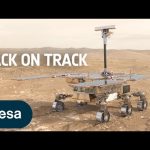
    A year has passed since the launch of the ESA’s Rosalind Franklin rover mission was put on hold, but the work has not stopped for the ExoMars teams in Europe.

    In this programme, the ESA Web TV crew travel back to Turin, Italy to talk to the teams and watch as new tests are being conducted with the rover’s Earth twin Amalia while the real rover remains carefully stored in an ultra-clean room.

    The 15-minute special programme gives an update on what happened since the mission was cancelled in 2022 because of the Russian invasion of Ukraine, the plan ahead, the new challenges, the latest deep drilling test and the stringent planetary protection measures in place.

    ESA’s Rosalind Franklin rover has unique drilling capabilities and an on-board science laboratory unrivalled by any other mission in development. Its twin rover Amalia was back on its wheels and drilled down 1.7 metres into a martian-like ground in Italy – about 25 times deeper than any other rover has ever attempted on Mars. The rover also collected samples for analysis under the watchful eye of European science teams.

    ESA, together with international and industrial partners, is reshaping the ExoMars Rosalind Franklin Mission with new European elements, including a lander, and a target date of 2028 for the trip to Mars.

    The newly shaped Rosalind Franklin Mission will recover one of the original objectives of ExoMars – to create an independent European capability to access the surface of Mars with a sophisticated robotic payload.

    More information: https://www.esa.int/ExoMars

    Credits: ESA

    ★ Subscribe: http://bit.ly/ESAsubscribe and click twice on the bell button to receive our notifications.

    Check out our full video catalog: http://bit.ly/SpaceInVideos
    Follow us on Twitter: http://bit.ly/ESAonTwitter
    On Facebook: http://bit.ly/ESAonFacebook
    On Instagram: http://bit.ly/ESAonInstagram
    On LinkedIn: https://bit.ly/ESAonLinkedIn
    On Pinterest: https://bit.ly/ESAonPinterest
    On Flickr: http://bit.ly/ESAonFlickr

    We are Europe’s gateway to space. Our mission is to shape the development of Europe’s space capability and ensure that investment in space continues to deliver benefits to the citizens of Europe and the world. Check out https://www.esa.int/ to get up to speed on everything space related.

    Copyright information about our videos is available here: https://www.esa.int/ESA_Multimedia/Terms_and_Conditions

    #ESA
    #Mars
    #Space

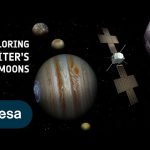
  • Juice’s odyssey of exploration

    Juice’s odyssey of exploration

    A grand odyssey of exploration is about to begin. Humankind’s next bold mission to the outer Solar System, ESA’s Jupiter Icy Moons Explorer, Juice, is poised to explore giant planet Jupiter and its largest moons. These intriguing worlds have piqued our curiosity ever since Galileo first raised his telescope to the planet and discovered its four largest moons: Io, Europa, Ganymede and Callisto, three of which are thought to harbour underground oceans.

    Early space probes visiting the Jovian system have raised more questions than answers. But thanks to Juice, many of those answers are now within reach. ESA is launching the spacecraft in April 2023 on an eight-year journey to the distant planet.

    To uncover the hidden secrets of these mysterious worlds, Juice is equipped with the most powerful science instruments ever sent to the outer Solar System. The spacecraft will face many dangers along the way: radiation, extreme temperatures, and the vast gravitational pull of Jupiter, all while operating hundreds of millions of kilometres from Earth. But in the safe hands of ESA’s operators to guide it safely through these challenges, the dangers will be worth it for the science that Juice is destined to uncover.

    The countdown to this new era of Jupiter system exploration has begun. Stay tuned: www.esa.int/juice

    Credit: Produced by ESA/ATG medialab

    ★ Subscribe: http://bit.ly/ESAsubscribe and click twice on the bell button to receive our notifications.

    Check out our full video catalog: http://bit.ly/SpaceInVideos
    Follow us on Twitter: http://bit.ly/ESAonTwitter
    On Facebook: http://bit.ly/ESAonFacebook
    On Instagram: http://bit.ly/ESAonInstagram
    On LinkedIn: https://bit.ly/ESAonLinkedIn
    On Pinterest: https://bit.ly/ESAonPinterest
    On Flickr: http://bit.ly/ESAonFlickr

    We are Europe’s gateway to space. Our mission is to shape the development of Europe’s space capability and ensure that investment in space continues to deliver benefits to the citizens of Europe and the world. Check out https://www.esa.int/ to get up to speed on everything space related.

    Copyright information about our videos is available here: https://www.esa.int/ESA_Multimedia/Terms_and_Conditions

    #ESA
    #Juice
    #Jupiter

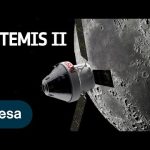
  • Artemis II | European Service Module perspective

    Artemis II | European Service Module perspective

    After the uncrewed Artemis I test flight, the Artemis II mission will have astronauts demonstrate what the Orion spacecraft – powered by a European Service Module – can do on its voyage around the Moon.

    Two astronauts will fly on the second Artemis mission and take over controls to show how Orion handles at close-quarter flying. While in Earth orbit the spacecraft will detach from its second stage, fly away, turn around, approach the second stage and then fly away again – all using the European Service Module’s 33 thrusters.

    Whereas in the first Artemis mission the second stage fired Orion into its lunar orbit, for the second mission it will be the European Service Module that will give the spacecraft its final push to its voyage around the Moon.

    The crew will fly Orion to 8889 km beyond the Moon before completing a lunar flyby and returning to Earth. The mission will take a minimum of eight days and will collect valuable flight test data.

    The European Service Module is one of ESA’s many contributions to NASA’s Orion spacecraft and the Artemis programme that will send astronauts to the Moon and beyond. It provides electricity, water, oxygen and nitrogen as well as keeping the spacecraft at the right temperature and on course.

    The European Service Module has 33 thrusters, 11 km of electrical wiring, four propellant and two pressure tanks that all work together to supply propulsion and everything needed to keep astronauts alive far from Earth – there is no room for error.

    ★ Subscribe: http://bit.ly/ESAsubscribe and click twice on the bell button to receive our notifications.

    Check out our full video catalog: http://bit.ly/SpaceInVideos
    Follow us on Twitter: http://bit.ly/ESAonTwitter
    On Facebook: http://bit.ly/ESAonFacebook
    On Instagram: http://bit.ly/ESAonInstagram
    On Flickr: http://bit.ly/ESAonFlickr

    We are Europe’s gateway to space. Our mission is to shape the development of Europe’s space capability and ensure that investment in space continues to deliver benefits to the citizens of Europe and the world. Check out https://www.esa.int/ to get up to speed on everything space related.

    Copyright information about our videos is available here: https://www.esa.int/ESA_Multimedia/Terms_and_Conditions

    #ESA
    #Orion
    #Artemis

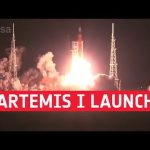
  • Artemis I launch

    Artemis I launch

    The Space Launch System (SLS) rocket with the Orion spacecraft aboard lifted off at 07:47 CET from @NASA’s Kennedy Space Center in Florida, USA on 16 November 2022.

    The most powerful rocket ever built sent NASA’s Orion spacecraft and ESA’s European Service Module (ESM) to a journey beyond the Moon and back. No crew will be on board Orion this time, and the spacecraft will be controlled by teams on Earth.

    ESM provides for all astronauts’ basic needs, such as water, oxygen, nitrogen, temperature control, power and propulsion.

    Much like a train engine pulls passenger carriages and supplies power, the European Service Module will take the Orion capsule to its destination and back.

    Learn more about Artemis I: https://www.esa.int/Science_Exploration/Human_and_Robotic_Exploration/Orion/Artemis_I

    ★ Subscribe: http://bit.ly/ESAsubscribe and click twice on the bell button to receive our notifications.

    Check out our full video catalog: http://bit.ly/SpaceInVideos
    Follow us on Twitter: http://bit.ly/ESAonTwitter
    On Facebook: http://bit.ly/ESAonFacebook
    On Instagram: http://bit.ly/ESAonInstagram
    On LinkedIn: https://bit.ly/ESAonLinkedIn
    On Pinterest: https://bit.ly/ESAonPinterest
    On Flickr: http://bit.ly/ESAonFlickr

    We are Europe’s gateway to space. Our mission is to shape the development of Europe’s space capability and ensure that investment in space continues to deliver benefits to the citizens of Europe and the world. Check out https://www.esa.int/ to get up to speed on everything space related.

    Copyright information about our videos is available here: https://www.esa.int/ESA_Multimedia/Terms_and_Conditions

    #ESA
    #Orion
    #Artemis

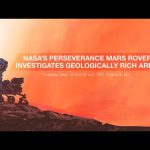
  • News Briefing: NASA’s Perseverance Mars Rover Investigates Geologically Rich Area (Sept. 15, 2022)

    News Briefing: NASA’s Perseverance Mars Rover Investigates Geologically Rich Area (Sept. 15, 2022)

    NASA will host a briefing to provide highlights from the first year-and-a-half of the Perseverance rover’s exploration of Mars.

    The rover landed in Mars’ Jezero Crater in February 2021 and is collecting samples of rock and other materials from the Martian surface. Perseverance is investigating the sediment-rich ancient river delta in the Red Planet’s Jezero Crater.

    Speakers:
    • Lori Glaze, director of NASA’s Planetary Science Division, NASA Headquarters
    • Laurie Leshin, JPL director
    • Rick Welch, Perseverance deputy project manager, JPL
    • Ken Farley, Perseverance project scientist, Caltech
    • Sunanda Sharma, Scanning Habitable Environments with Raman and Luminescence for Organics and Chemicals (SHERLOC) scientist, JPL
    • David Shuster, Perseverance returned sample scientist, University of California, Berkeley

    https://mars.nasa.gov

    #NASA #Space #Exploration #Planets #Perseverance #Mars #MarsRover #PerseveranceRover #SearchForLife #RedPlanet #JetPropulsionLaboratory #JPL #JezeroCrater #Astrobiology #SolarSystem #MarsSampleReturn

  • 10 facts about the European Service Module | Artemis #shorts

    10 facts about the European Service Module | Artemis #shorts

    The European Service Module is ESA’s contribution to @NASA’s Orion spacecraft that will send astronauts to the Moon and beyond. It provides electricity, water, oxygen and nitrogen as well as keeping the spacecraft at the right temperature and on course.

    Learn more about the European Service Module: https://www.esa.int/Science_Exploration/Human_and_Robotic_Exploration/Orion/Orion_European_Service_Module_media_kit

    ★ Subscribe: http://bit.ly/ESAsubscribe and click twice on the bell button to receive our notifications.

    Check out our full video catalog: http://bit.ly/SpaceInVideos
    Follow us on Twitter: http://bit.ly/ESAonTwitter
    On Facebook: http://bit.ly/ESAonFacebook
    On Instagram: http://bit.ly/ESAonInstagram
    On LinkedIn: https://bit.ly/ESAonLinkedIn
    On Pinterest: https://bit.ly/ESAonPinterest
    On Flickr: http://bit.ly/ESAonFlickr

    We are Europe’s gateway to space. Our mission is to shape the development of Europe’s space capability and ensure that investment in space continues to deliver benefits to the citizens of Europe and the world. Check out https://www.esa.int/ to get up to speed on everything space related.

    Copyright information about our videos is available here: https://www.esa.int/ESA_Multimedia/Terms_and_Conditions

    #ESA
    #ESM
    #Artemis

  • Media briefing: Artemis I getting ready for launch

    Media briefing: Artemis I getting ready for launch

    The Artemis I mission is almost ready for launch: it will send an uncrewed spacecraft beyond the Moon and back. Join this virtual Q&A to learn more about Europe’s contribution to the mission: ESA is overseeing the development of the European Service Module, that provides air, electricity and propulsion to the spacecraft. Participants to this media briefing include Josef Aschbacher, ESA Director General ; David Parker, ESA Director for Human and Robotic Exploration ; Jean-Marc Nasr, @Airbus EVP Space Systems and Marc Steckling, Airbus Head of Space Exploration.

    Learn more about Artemis I: https://www.esa.int/Science_Exploration/Human_and_Robotic_Exploration/Orion/Artemis_I

    ★ Subscribe: http://bit.ly/ESAsubscribe and click twice on the bell button to receive our notifications.

    Check out our full video catalog: http://bit.ly/SpaceInVideos
    Follow us on Twitter: http://bit.ly/ESAonTwitter
    On Facebook: http://bit.ly/ESAonFacebook
    On Instagram: http://bit.ly/ESAonInstagram
    On LinkedIn: https://bit.ly/ESAonLinkedIn
    On Pinterest: https://bit.ly/ESAonPinterest
    On Flickr: http://bit.ly/ESAonFlickr

    We are Europe’s gateway to space. Our mission is to shape the development of Europe’s space capability and ensure that investment in space continues to deliver benefits to the citizens of Europe and the world. Check out https://www.esa.int/ to get up to speed on everything space related.

    Copyright information about our videos is available here: https://www.esa.int/ESA_Multimedia/Terms_and_Conditions

    #ESA
    #Orion
    #Artemis

  • Artemis I – European Service Module perspective

    Artemis I – European Service Module perspective

    The Orion spacecraft with European Service Module will fly farther from Earth than any human-rated vehicle has ever flown before. This video gives an overview of the first mission – without astronauts – for Artemis, focussing on ESA’s European Service Module that powers the spacecraft.

    The spacecraft will perform a flyby of the Moon, using lunar gravity to gain speed and propel itself 70 000 km beyond the Moon, almost half a million km from Earth – further than any human has ever travelled, where it will inject itself in a Distant Retrograde Orbit around the Moon.

    On its return journey, Orion will do another flyby of the Moon before heading back to Earth.

    The total trip will take around 20 days, ending with a splashdown in the Pacific Ocean without the European Service Module – it separates and burns up harmlessly in the atmosphere.

    The second Artemis mission will have a simplified flight plan with only a flyby of the Moon but with four astronauts. The third Artemis mission will see astronauts taken to the lunar surface.

    The European Service Module is ESA’s contribution to @NASA’s Orion spacecraft that will send astronauts to the Moon and beyond. It provides electricity, water, oxygen and nitrogen as well as keeping the spacecraft at the right temperature and on course.

    The European Service Module has 33 thrusters, 11 km of electrical wiring, four propellant and two pressure tanks that all work together to supply propulsion and everything needed to keep astronauts alive far from Earth – there is no room for error.

    ★ Subscribe: http://bit.ly/ESAsubscribe and click twice on the bell button to receive our notifications.

    Check out our full video catalog: http://bit.ly/SpaceInVideos
    Follow us on Twitter: http://bit.ly/ESAonTwitter
    On Facebook: http://bit.ly/ESAonFacebook
    On Instagram: http://bit.ly/ESAonInstagram
    On Flickr: http://bit.ly/ESAonFlickr

    We are Europe’s gateway to space. Our mission is to shape the development of Europe’s space capability and ensure that investment in space continues to deliver benefits to the citizens of Europe and the world. Check out https://www.esa.int/ to get up to speed on everything space related.

    Copyright information about our videos is available here: https://www.esa.int/ESA_Multimedia/Terms_and_Conditions

    #ESA
    #Orion
    #Artemis

  • Europe ready for Artemis

    Europe ready for Artemis

    ESA and NASA are working hand in hand before the first Artemis mission to the Moon through a series of joint mission simulations. Teams based at the Erasmus Support Facility (ESF) at ESA’s ESTEC facility in The Netherlands, the German Space Operations Centre at ESA’s Columbus Control Centre in Oberphfaffenhofen and NASA’s Johnson Space Center in Houston are combining their expertise in a series of exercises to ensure a successful launch.

    When it comes to simulations, it’s important that not everything goes perfectly right as it recreates – in real time – different stages of the mission to monitor the spacecraft’s position, propulsion, power, avionics and thermal properties. The European team, consisting of 40 people from ESA and industry, apply their considerable expertise from working on the European Service Module (ESM) to any unexpected problems. The ESM will provide power for the Orion spacecraft and propel it along its orbit to the Moon.

    Learn more about Artemis: https://bit.ly/Artemis1ESA

    ★ Subscribe: http://bit.ly/ESAsubscribe and click twice on the bell button to receive our notifications.

    Check out our full video catalog: http://bit.ly/SpaceInVideos
    Follow us on Twitter: http://bit.ly/ESAonTwitter
    On Facebook: http://bit.ly/ESAonFacebook
    On Instagram: http://bit.ly/ESAonInstagram
    On Flickr: http://bit.ly/ESAonFlickr

    We are Europe’s gateway to space. Our mission is to shape the development of Europe’s space capability and ensure that investment in space continues to deliver benefits to the citizens of Europe and the world. Check out https://www.esa.int/ to get up to speed on everything space related.

    Copyright information about our videos is available here: https://www.esa.int/ESA_Multimedia/Terms_and_Conditions

    #ESA
    #Orion
    #Artemis

  • 5,000 Exoplanets: Listen to the Sounds of Discovery (360 Video)

    5,000 Exoplanets: Listen to the Sounds of Discovery (360 Video)

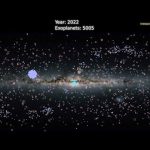
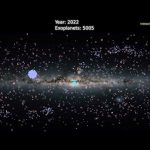
    On March 21, 2022, the number of known exoplanets passed 5,000 according to the NASA Exoplanet Archive. This 360-degree animation and sonification tracks humanity’s discovery of the planets beyond our solar system over time. Turning NASA data into sounds allows users to hear the pace of discovery with additional information conveyed by the notes themselves.

    As each exoplanet is discovered, a circle appears at its position in the sky. The size of the circle indicates the relative size of the planet’s orbit and the color indicates which planet detection method was used to discover it. The music is created by playing a note for each newly discovered world. The pitch of the note indicates the relative orbital period of the planet. Planets that take a longer time to orbit their stars are heard as lower notes, while planets that orbit more quickly are heard as higher notes.

    Exoplanet detection methods: radial velocity (pink); transit (purple); imaging (orange); microlensing (green); timing variations (red); orbital brightness modulation (yellow); astrometry (gray); disk kinematics (blue).

    Please note: Not all browsers support viewing 360 videos. YouTube supports their playback on computers using Chrome, Firefox, MS Edge, and Opera browsers. For the best experience on a mobile device, play this video in the YouTube app.

    Credit: NASA/JPL-Caltech/M. Russo, A. Santaguida (SYSTEM Sounds)

  • 5,000 Exoplanets: Listen to the Sounds of Discovery (NASA Data Sonification)

    5,000 Exoplanets: Listen to the Sounds of Discovery (NASA Data Sonification)

    On March 21, 2022, the number of known exoplanets passed 5,000 according to the NASA Exoplanet Archive. This animation and sonification tracks humanity’s discovery of the planets beyond our solar system over time. Turning NASA data into sounds allows users to hear the pace of discovery, with additional information conveyed by the notes themselves.

    As each exoplanet is discovered, a circle appears at its position in the sky. The size of the circle indicates the relative size of the planet’s orbit and the color indicates which planet detection method was used to discover it. The music is created by playing a note for each newly discovered world. The pitch of the note indicates the relative orbital period of the planet. Planets that take a longer time to orbit their stars are heard as lower notes, while planets that orbit more quickly are heard as higher notes.

    Credit: NASA/JPL-Caltech/M. Russo, A. Santaguida (SYSTEM Sounds)

  • Artemis: crawling towards launch

    Artemis: crawling towards launch

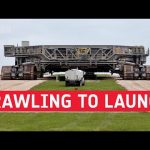
    One of the many milestones in the leadup to the launch of Artemis is its rollout: this is when a crawler will carry the SLS rocket with Orion and ESM from the Vehicle Assembly Building to launchpad 39B. @NASA’s John Giles gives us a tour of the crawler and explains the adaptations made to this “wonderful piece of machinery” since it was first built for the Apollo programme in the 1960s. ESA is playing a key role in NASA’s Artemis programme, which will bring astronauts back to the Moon. The European Service Module – or ESM – will provide propulsion, power and thermal control for the Orion spacecraft.

    Learn more: https://bit.ly/Artemis1ESA

    Video credits: European Space Agency
    Thumbnail image credits: NASA/Leif Heimbold

    ★ Subscribe: http://bit.ly/ESAsubscribe and click twice on the bell button to receive our notifications.

    Check out our full video catalog: http://bit.ly/SpaceInVideos
    Follow us on Twitter: http://bit.ly/ESAonTwitter
    On Facebook: http://bit.ly/ESAonFacebook
    On Instagram: http://bit.ly/ESAonInstagram
    On Flickr: http://bit.ly/ESAonFlickr

    We are Europe’s gateway to space. Our mission is to shape the development of Europe’s space capability and ensure that investment in space continues to deliver benefits to the citizens of Europe and the world. Check out https://www.esa.int/ to get up to speed on everything space related.

    Copyright information about our videos is available here: https://www.esa.int/ESA_Multimedia/Terms_and_Conditions

    #ESA
    #Orion
    #Artemis

  • Exploring new worlds

    Exploring new worlds

    As part of Agenda 2025, ESA will take preparatory steps towards a sample return mission from the moons of giant planets, and will foster innovation by challenging commercial companies to develop a next generation of competitively priced European space transportation systems.

    Space science and planetary exploration have a unique inspirational power for engaging young generations in science, technology, engineering and maths, creating a highly educated workforce for the future.

    Collaborating with the European space industry to foster innovation generates economic growth and new revenues, as well as creating new jobs for European citizens. All the money invested in space is spent on Earth.

    Learn more: https://vision.esa.int/

    ★ Subscribe: http://bit.ly/ESAsubscribe and click twice on the bell button to receive our notifications.

    Check out our full video catalog: http://bit.ly/SpaceInVideos
    Follow us on Twitter: http://bit.ly/ESAonTwitter
    On Facebook: http://bit.ly/ESAonFacebook
    On Instagram: http://bit.ly/ESAonInstagram
    On LinkedIn: https://bit.ly/ESAonLinkedIn
    On Pinterest: https://bit.ly/ESAonPinterest
    On Flickr: http://bit.ly/ESAonFlickr

    We are Europe’s gateway to space. Our mission is to shape the development of Europe’s space capability and ensure that investment in space continues to deliver benefits to the citizens of Europe and the world. Check out https://www.esa.int/ to get up to speed on everything space related.

    Copyright information about our videos is available here: https://www.esa.int/ESA_Multimedia/Terms_and_Conditions

    #ESA
    #Agenda2025
    #SpaceAmbition

  • European push to the Moon

    European push to the Moon

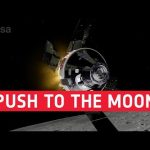
    The European Space Agency is playing a vital role in humankind’s return to the Moon. In a few months @NASA will launch Artemis I from the Kennedy Space Center. The uncrewed mission will carry NASA’s Orion spacecraft incorporating ESA’s European Service Module (ESM-1), built and tested by Airbus Bremen, in Germany, with the help of 10 European nations. ESM-1’s main engine and 32 thrusters will propel Orion into orbit around the Moon and return it to Earth.

    As Artemis I prepares for launch, the second European Service Module (ESM-2) is about to ship to the US with ESM-3 also currently under construction. The second Artemis mission, however, has a crucial difference: it will carry four astronauts for a lunar flyby. ESM-2 will provide propulsion, power, oxygen, water and life support as well as controlling the temperature in the orbiting crew module. ESM-3 will go one step further and put the first person on the Moon for 50 years.

    Learn more about Orion: https://bit.ly/ESAsOrion

    ★ Subscribe: http://bit.ly/ESAsubscribe and click twice on the bell button to receive our notifications.

    Check out our full video catalog: http://bit.ly/SpaceInVideos
    Follow us on Twitter: http://bit.ly/ESAonTwitter
    On Facebook: http://bit.ly/ESAonFacebook
    On Instagram: http://bit.ly/ESAonInstagram
    On Pinterest: https://bit.ly/ESAonPinterest
    On Flickr: http://bit.ly/ESAonFlickr

    We are Europe’s gateway to space. Our mission is to shape the development of Europe’s space capability and ensure that investment in space continues to deliver benefits to the citizens of Europe and the world. Check out https://www.esa.int/ to get up to speed on everything space related.

    Copyright information about our videos is available here: https://www.esa.int/ESA_Multimedia/Terms_and_Conditions

    #ESA
    #Orion
    #Artemis

  • Perseverance Rover’s Descent and Touchdown on Mars (Official NASA Video)

    Perseverance Rover’s Descent and Touchdown on Mars (Official NASA Video)

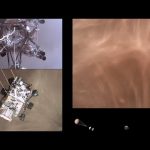
    NASA’s Mars 2020 Perseverance mission captured thrilling footage of its rover landing in Mars’ Jezero Crater on Feb. 18, 2021. The real footage in this video was captured by several cameras that are part of the rover’s entry, descent, and landing suite. The views include a camera looking down from the spacecraft’s descent stage (a kind of rocket-powered jet pack that helps fly the rover to its landing site), a camera on the rover looking up at the descent stage, a camera on the top of the aeroshell (a capsule protecting the rover) looking up at that parachute, and a camera on the bottom of the rover looking down at the Martian surface.

    The audio embedded in the video comes from the mission control call-outs during entry, descent, and landing.

    For more information about Perseverance, visit https://mars.nasa.gov/perseverance

    Credit: NASA/JPL-Caltech

  • 60 Years of Mars Exploration Has Led to This

    60 Years of Mars Exploration Has Led to This

    Watch live on February 18, 2021, as our Perseverance Mars Rover touches down on the Red Planet.

    60 years ago, NASA started sending robotic explorers to Mars, but none have been as sophisticated as Perseverance. It will gather samples from the Martian surface for possible later return to Earth, and fly a drone for the first time on any planetary body. Watch it touch down live and use the hashtag #CountdownToMars for the latest updates and news.

    Producer/Editor: David Anderson
    Music: Universal Production Music

  • See the European Service Modules taking humankind forward to the Moon

    See the European Service Modules taking humankind forward to the Moon

    From the @Airbus integration halls in Bremen, Germany, this replay of a live event shows a sneak peek of the two European Service Modules that will power astronauts to the Moon and back as part of @NASA’s Orion spacecraft.

    Orion is NASA’s next exploration spacecraft to send astronauts farther into space than ever before, beyond the Moon to asteroids and even Mars.

    ESA has contracted and is overseeing the development of the European Service Module, the part of the Orion spacecraft that provides air, electricity and propulsion. Much like a train engine pulls passenger carriages and supplies power, the European Service Module will power the Orion crew module to its destination and back to Earth.

    The programme includes Andreas Hammer, Head of @Airbus Defence and Space Exploration showing the European Service Modules in production, ESA Director General Jan Wörner announcing future developments, a statement by ESA’s head of European Service Module programme Philippe Deloo, a statement by Airbus head of European Service Module programme Didier Radola, a Moon missions overview with ESA astronaut Alexander Gerst and ESA’s head of Space Transportation Nico Dettmann on how ESA is building Orion with industry.

    ★ Subscribe: http://bit.ly/ESAsubscribe and click twice on the bell button to receive our notifications.

    Check out our full video catalog: http://bit.ly/SpaceInVideos
    Follow us on Twitter: http://bit.ly/ESAonTwitter
    On Facebook: http://bit.ly/ESAonFacebook
    On Instagram: http://bit.ly/ESAonInstagram
    On Flickr: http://bit.ly/ESAonFlickr

    We are Europe’s gateway to space. Our mission is to shape the development of Europe’s space capability and ensure that investment in space continues to deliver benefits to the citizens of Europe and the world. Check out https://www.esa.int/ to get up to speed on everything space related.

    Copyright information about our videos is available here: https://www.esa.int/ESA_Multimedia/Terms_and_Conditions

    #ESA
    #Artemis
    #Orion

  • Artemis I – European Service Module perspective

    Artemis I – European Service Module perspective

    The Orion spacecraft with European Service Module will fly farther from Earth than any human-rated vehicle has ever flown before. This video gives an overview of the first mission – without astronauts – for Artemis, focussing on ESA’s European Service Module that powers the spacecraft.

    The spacecraft will perform a flyby of the Moon, using lunar gravity to gain speed and propel itself 70 000 km beyond the Moon, almost half a million km from Earth – further than any human has ever travelled.

    On its return journey, Orion will do another flyby of the Moon before heading back to Earth.
    The total trip will take around 20 days, ending with a splashdown in the Pacific Ocean without the European Service Module – it separates and burns up harmlessly in the atmosphere.

    The second Artemis mission will have a similar flight plan but with astronauts. The third Artemis mission will see astronauts taken to the lunar surface.

    The European Service Module is ESA’s contribution to NASA’s Orion spacecraft that will send astronauts to the Moon and beyond. It provides electricity, water, oxygen and nitrogen as well as keeping the spacecraft at the right temperature and on course.

    The European Service Module has 33 thrusters, 11 km of electrical wiring, four propellant and two pressure tanks that all work together to supply propulsion and everything needed to keep astronauts alive far from Earth – there is no room for error.

    ★ Subscribe: http://bit.ly/ESAsubscribe and click twice on the bell button to receive our notifications.

    Check out our full video catalog: http://bit.ly/SpaceInVideos
    Follow us on Twitter: http://bit.ly/ESAonTwitter
    On Facebook: http://bit.ly/ESAonFacebook
    On Instagram: http://bit.ly/ESAonInstagram
    On Flickr: http://bit.ly/ESAonFlickr

    We are Europe’s gateway to space. Our mission is to shape the development of Europe’s space capability and ensure that investment in space continues to deliver benefits to the citizens of Europe and the world. Check out https://www.esa.int/ to get up to speed on everything space related.

    Copyright information about our videos is available here: https://www.esa.int/ESA_Multimedia/Terms_and_Conditions

    #ESA
    #Artemis
    #Orion

  • An astronaut’s perspective on searching meteorites in Antarctica

    An astronaut’s perspective on searching meteorites in Antarctica

    In late 2019, ESA astronaut and geophysicist Alexander Gerst travelled to one of the harshest environments on Earth to learn more about our solar system, and to gather operational knowledge for missions to planetary surfaces such as the Moon. Travel with him to Antarctica and discover the many secrets held by meteorites in this documentary from the ice.

    Since its inception in 1976, the US-led Antarctic Search for Meteorites (ANSMET) has recovered more than 22,000 specimens. These are rocks that fell from space, originating from several sources in our solar system, including the Moon and Mars. After each field season the newly recovered specimens are shipped (still frozen and sterile) to the Antarctic Meteorite laboratory at NASA’s Johnson Space Center in Houston, Texas. There they are thawed, dried, carefully examined, and shipped to planetary scientists world-wide. These rock fragments enable scientists to look beyond our planet, and Earth’s orbit, into the depths of space.

    As a member of the 2019-2020 crew, Alexander gained and shared knowledge with his team mates and followed in the footsteps of great Antarctic explorers before him, spending weeks in a remote field camp, only a few hundred kilometres from the South Pole. The team recovered 346 meteorites during this season. His mission also shared many similarities with what astronauts will encounter when flying to the Lunar South Pole in the not-so-distant future – making it another valuable step in preparing for what might lie ahead.

    Find out more about ANSMET over on the blog https://caslabs.case.edu/ansmet/category/19-20/

    ★ Subscribe: http://bit.ly/ESAsubscribe and click twice on the bell button to receive our notifications.

    Check out our full video catalog: http://bit.ly/SpaceInVideos
    Follow us on Twitter: http://bit.ly/ESAonTwitter
    On Facebook: http://bit.ly/ESAonFacebook
    On Instagram: http://bit.ly/ESAonInstagram
    On Flickr: http://bit.ly/ESAonFlickr

    We are Europe’s gateway to space. Our mission is to shape the development of Europe’s space capability and ensure that investment in space continues to deliver benefits to the citizens of Europe and the world. Check out https://www.esa.int/ to get up to speed on everything space related.

    Copyright information about our videos is available here: https://www.esa.int/ESA_Multimedia/Terms_and_Conditions

  • Mars confinement tips

    Mars confinement tips

    In these times of confinement, ESA astronaut support engineer Romain Charles shares nine tips on how to live in isolation – he spent 520 days locked in a mockup spacecraft and is a true expert on the subject.

    Mars500 locked six ‘marsonauts’ in a simulated spaceship near Moscow, Russia for 520 days, the time it would take to fly to Mars and back plus 30 days spent exploring its surface. It was the first full-length, high-fidelity simulation of a human mission to our neighbouring planet. The crew went into lockdown on 3 June 2010, and they did not open the hatch until 17 months later on 4 November 2011.

    Mars 500 was a success in that it proved that humans can survive the inevitable isolation that is needed for a mission to Mars and back. Psychologically, we can do it!

    The crew had their ups and downs, but these were to be expected. In fact, scientists anticipated many more problems, but the crew did very well coping with the monotonous mission, with little variation in food and even a communication delay over 12 minutes one-way.

    During their simulated mission, the crew lived in isolation without fresh food, sunlight or fresh air. The participants from Italy, Russia, China and France had no external cues such as the Sun going down at night to remind them when to sleep.

    Their bodies are among the most researched in the world. Years of constant monitoring, prodding and taking blood allowed scientists examined how they reacted to the time in confinement with experiments focussing on their bodies, mental states and performance.

    More on Mars 500: www.esa.int/Mars500

    ★ Subscribe: http://bit.ly/ESAsubscribe and click twice on the bell button to receive our notifications.

    Check out our full video catalog: http://bit.ly/SpaceInVideos
    Follow us on Twitter: http://bit.ly/ESAonTwitter
    On Facebook: http://bit.ly/ESAonFacebook
    On Instagram: http://bit.ly/ESAonInstagram
    On Flickr: http://bit.ly/ESAonFlickr

    We are Europe’s gateway to space. Our mission is to shape the development of Europe’s space capability and ensure that investment in space continues to deliver benefits to the citizens of Europe and the world. Check out http://www.esa.int/ESA to get up to speed on everything space related.

    Copyright information about our videos is available here: http://www.esa.int/spaceinvideos/Terms_and_Conditions

    #ESA
    #Confinement
    #Mars500

  • Forward to the Moon with ESA

    Forward to the Moon with ESA

    The first flight of the Artemis programme, which will see humans return to the Moon, is scheduled to begin soon. The lunar spacecraft consists of NASA’s Orion crew module and the European Service Module, or ESM. Developed by ESA and building on technology from its Automated Transfer Vehicle (ATV), the ESM will provide propulsion, life support, environmental control and electrical power to Orion. The Artemis 1 spacecraft modules are undergoing thermal vacuum and electromagnetic interference tests in the world’s largest space simulation vacuum chamber at the Glenn Research Centre’s Plum Brook Station in Sandusky, Ohio, USA.

    Learn more about Orion: http://bit.ly/ESAOrion

    ★ Subscribe: http://bit.ly/ESAsubscribe and click twice on the bell button to receive our notifications.

    Check out our full video catalog: http://bit.ly/SpaceInVideos
    Follow us on Twitter: http://bit.ly/ESAonTwitter
    On Facebook: http://bit.ly/ESAonFacebook
    On Instagram: http://bit.ly/ESAonInstagram
    On Flickr: http://bit.ly/ESAonFlickr

    We are Europe’s gateway to space. Our mission is to shape the development of Europe’s space capability and ensure that investment in space continues to deliver benefits to the citizens of Europe and the world. Check out http://www.esa.int/ESA to get up to speed on everything space related.

    Copyright information about our videos is available here: http://www.esa.int/spaceinvideos/Terms_and_Conditions

    #ESA
    #Artemis
    #Orion

  • NASA Explorers S3 E4: Chasing Clouds

    NASA Explorers S3 E4: Chasing Clouds

    “Earth science is a subject far too big for one country, one agency, to tackle all by itself.” So #NASAExplorers team up with researchers from around the country and the planet to answer some big questions about fires, clouds and climate from the Western Pacific, where we still have a lot to learn about the interaction between fires and cloud formation. #S3E4

  • This is ESA

    This is ESA

    ESA is the only space agency in the world that covers the whole range of space activities. We’re exploring our Solar System and unlocking the secrets of the Universe. We’re monitoring space and protecting our planetary environment. We’re making space accessible and developing the technologies for the future, and we’re also using space to benefit citizens and meet future challenges on Earth.

    In November 2019, European ministers in charge of space activities will gather at the Space19+ conference in Seville, Spain, to decide on ESA’s vision for the future of Europe in space. Space19+ will be an opportunity to direct Europe’s ‘next generation’ ambitions in space, and address the challenges facing not only the European space sector but also European society as a whole.

    ★ Subscribe: http://bit.ly/ESAsubscribe and click twice on the bell button to receive our notifications.

    Check out our full video catalog: http://bit.ly/SpaceInVideos
    Follow us on Twitter: http://bit.ly/ESAonTwitter
    On Facebook: http://bit.ly/ESAonFacebook
    On Instagram: http://bit.ly/ESAonInstagram
    On Flickr: http://bit.ly/ESAonFlickr

    We are Europe’s gateway to space. Our mission is to shape the development of Europe’s space capability and ensure that investment in space continues to deliver benefits to the citizens of Europe and the world. Check out http://www.esa.int/ESA to get up to speed on everything space related.

    Copyright information about our videos is available here: http://www.esa.int/spaceinvideos/Terms_and_Conditions

    #ESA
    #EuropeanSpaceAgency
    #Space19plus

  • Science & Exploration: Answering the big questions

    Science & Exploration: Answering the big questions

    Where do we come from? Where are we going? Why are things the way they are? Space science and exploration are entering an ambitious new era, spanning the hunt for extraterrestrial planets and detecting the fundamental nature of our Universe to roving on Mars and returning to the Moon. However, we’re not simply acquiring new knowledge – we’re helping bring the benefits of these discoveries to European industry, through commercialisation in Earth orbit, integration with new space actors and cooperation on a global scale.

    ★ Subscribe: http://bit.ly/ESAsubscribe and click twice on the bell button to receive our notifications.

    Check out our full video catalog: http://bit.ly/SpaceInVideos
    Follow us on Twitter: http://bit.ly/ESAonTwitter
    On Facebook: http://bit.ly/ESAonFacebook
    On Instagram: http://bit.ly/ESAonInstagram
    On Flickr: http://bit.ly/ESAonFlickr

    We are Europe’s gateway to space. Our mission is to shape the development of Europe’s space capability and ensure that investment in space continues to deliver benefits to the citizens of Europe and the world. Check out http://www.esa.int/ESA to get up to speed on everything space related.

    Copyright information about our videos is available here: http://www.esa.int/spaceinvideos/Terms_and_Conditions

    #ESA
    #Space19plus
    #Exoplore

  • NASA Explorers: Apollo Story Roundup

    NASA Explorers: Apollo Story Roundup

    Throughout the series, you heard memories of the first Moon landing from people all over the world. In this bonus episode, we share a few more stories: a trip to Rome, a girl with binoculars and a reel-to-reel tape recorder.

    You can find the series, soundtrack, artwork, and more here: https://www.nasa.gov/nasa-explorers-apollo

    Join the NASA Explorers community on Facebook: https://www.facebook.com/NASAExplorersSeries/

    Credit: NASA’s Goddard Space Flight Center

    Elizabeth Tammi (GSFC Interns): Producer
    Katie Atkinson (GSFC Interns): Narrator
    Katie Atkinson (GSFC Interns): Producer
    Haley Reed (ADNET): Producer
    Micheala Sosby (NASA/GSFC): Producer
    Aaron E. Lepsch (ADNET): Technical Support

    Music by Lee Rosevere and Daniel Wytanis

    This video is public domain and along with other supporting visualizations can be downloaded from the Scientific Visualization Studio at: https://svs.gsfc.nasa.gov/13204

  • NASA Explorers: Moon Detective

    NASA Explorers: Moon Detective

    What happened to the lost data from the Apollo era? Get to know the “data detectives” who are tracking it down. The science experiments the Apollo astronauts conducted from the surface of the Moon provide a long-term data record that’s crucial to understanding our Moon as a complete system. Today’s scientists are looking forward to future human exploration of the Moon and the discoveries to follow.

    Ketan from Sugarland, Texas, tells us about his childhood in Mumbai, India, and how his father made sure his children got a firsthand look at the Moon landing.

    You can find the series, soundtrack, artwork, and more here: https://www.nasa.gov/nasa-explorers-apollo

    Join the NASA Explorers community on Facebook: https://www.facebook.com/NASAExplorersSeries/

    Credit: NASA’s Goddard Space Flight Center

    Katie Atkinson (GSFC Interns): Narrator
    Katie Atkinson (GSFC Interns): Producer
    Haley Reed (ADNET): Producer
    Micheala Sosby (NASA/GSFC): Producer
    Aaron E. Lepsch (ADNET): Technical Support

    Music by Lee Rosevere and Daniel Wytanis

    This video is public domain and along with other supporting visualizations can be downloaded from the Scientific Visualization Studio at: https://svs.gsfc.nasa.gov/13204

  • NASA Explorers: Moon Girl

    NASA Explorers: Moon Girl

    Meet the scientists who are making big discoveries by studying some very tiny rocks. The women of NASA’s Mid-Atlantic Noble Gas Research Laboratory (MNGRL) are getting ready to analyze never-before-seen Moon samples. These samples, collected by Apollo astronauts and brought back to Earth, have been carefully preserved for half a century so they could be studied by future generations of scientists.

    Sophie, a 13-year-old from Athens, Greece, shares how lunar exploration inspires her to become an astrophysicist.

    You can find the series, soundtrack, artwork, and more here: https://www.nasa.gov/nasa-explorers-apollo

    Join the NASA Explorers community on Facebook: https://www.facebook.com/NASAExplorersSeries/

    Credit: NASA’s Goddard Space Flight Center

    Katie Atkinson (GSFC Interns): Narrator
    Katie Atkinson (GSFC Interns): Producer
    Haley Reed (ADNET): Producer
    Micheala Sosby (NASA/GSFC): Producer
    Aaron E. Lepsch (ADNET): Technical Support

    Music by Lee Rosevere and Daniel Wytanis

    This video is public domain and along with other supporting visualizations can be downloaded from the Scientific Visualization Studio at: https://svs.gsfc.nasa.gov/13204

  • NASA Explorers: The Family Moon Business

    NASA Explorers: The Family Moon Business

    Lunar exploration runs in the family for the Petros. NASA lunar scientist Noah Petro interviews his father, Denis, about his work as an Apollo program engineer. In a heartfelt conversation, Noah and his dad examine the human impact of the momentous Apollo 11 mission and their shared passion for science and learning.

    Ginny from Danville, Kentucky, tells a story about celebrating the Moon landing with her childhood friends and a secret lemonade stand.

    You can find the series, soundtrack, artwork, and more here: https://www.nasa.gov/nasa-explorers-apollo

    Join the NASA Explorers community on Facebook: https://www.facebook.com/NASAExplorersSeries/

    Credit: NASA’s Goddard Space Flight Center

    Katie Atkinson (GSFC Interns): Narrator
    Katie Atkinson (GSFC Interns): Producer
    Haley Reed (ADNET): Producer
    Micheala Sosby (NASA/GSFC): Producer
    Aaron E. Lepsch (ADNET): Technical Support

    Music by Lee Rosevere and Daniel Wytanis

    This video is public domain and along with other supporting visualizations can be downloaded from the Scientific Visualization Studio at: https://svs.gsfc.nasa.gov/13204

  • Soyuz ride to the Space Station

    Soyuz ride to the Space Station

    The ride to the International Space Station sees astronauts launched on top of a rocket fuelled by 300 tonnes of propellant. Where on Earth do astronauts take off? When do they experience weightlessness for the first time? And how long does the trip take?

    Watch in just over a minute the events from launch to docking. This video is based on a training lesson for ESA astronauts, and it features footage taken from inside the Soyuz spacecraft.

    Watch the extended version: http://bit.ly/JourneyToISS

    Credits: ESA/NASA/Roscosmos/Google Earth

    ★ Subscribe: http://bit.ly/ESAsubscribe and click twice on the bell button to receive our notifications.

    Check out our full video catalog: http://bit.ly/SpaceInVideos
    Follow us on Twitter: http://bit.ly/ESAonTwitter
    On Facebook: http://bit.ly/ESAonFacebook
    On Instagram: http://bit.ly/ESAonInstagram
    On Flickr: http://bit.ly/ESAonFlickr

    We are Europe’s gateway to space. Our mission is to shape the development of Europe’s space capability and ensure that investment in space continues to deliver benefits to the citizens of Europe and the world. Check out http://www.esa.int/ESA to get up to speed on everything space related.

    Copyright information about our videos is available here: http://www.esa.int/spaceinvideos/Terms_and_Conditions

    #ESA
    #Soyuz
    #InternationalSpaceStation