Tag: First Ariane 6 launch

  • The Young Professional Satellite – From Earth to Orbit (episode 3)

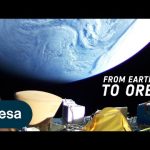
    The Young Professional Satellite – From Earth to Orbit (episode 3)

    In this last episode of the Young Professional Satellite docu series, we follow the team’s last steps to make their dream come true: sending their satellite to space.

    After securing the crucial final assembly and battery connection, we take you inside the thermal vacuum tests (TVAC) to see how YPSat is tested under the extreme temperatures of space; through vibration tests to ensure its structural integrity during launch; and electromagnetic compatibility (EMC) tests to prevent interference with the launcher’s systems.

    As we approach the European Space Agency’s traditional Flight Acceptance Review, the satellite is officially certified for flight. With the integration complete and final battery charge applied, control is handed over to the rocket. The only task left for the teams on the ground is to analyse one last time the rocket’s trajectory and await the critical first signal.

    As tension builds up on launch day, watch as the team retrieves YPSat’s data and decodes breathtaking images and videos from its mission.

    —————————————————

    Credits:
    Directed and produced by Chilled Winston: https://chilledwinston.com/ and Emma de Cocker
    Powered by ESA – European Space Agency
    Soundtracks from Epidemic Sound

    —————————————————

    Chapters:
    00:00 – Introduction
    01:30 – Final Assembly
    02:49 – The Test Campaign
    06:42 – Final Launch Preparations
    10:01 – Ariane 6 Launch
    11:38 – Gathering & Decoding the Footage
    15:15 – Unveiling the Footage
    17:08 – Watch at the End

    ★ Subscribe: http://bit.ly/ESAsubscribe and click twice on the bell button to receive our notifications.

    Check out the YPSat LinkedIn page: https://www.linkedin.com/company/ypsat/posts/?feedView=all />For more information about YPSat: https://www.esa.int/Enabling_Support/Space_Engineering_Technology/ESA_Young_Professionals_Satellites

    Check out our full video catalog: http://bit.ly/SpaceInVideos
    Follow us on Twitter: http://bit.ly/ESAonTwitter
    On Facebook: http://bit.ly/ESAonFacebook
    On Instagram: http://bit.ly/ESAonInstagram
    On LinkedIn: https://bit.ly/ESAonLinkedIn
    On Pinterest: https://bit.ly/ESAonPinterest
    On Flickr: http://bit.ly/ESAonFlickr

    We are Europe’s gateway to space. Our mission is to shape the development of Europe’s space capability and ensure that investment in space continues to deliver benefits to the citizens of Europe and the world. Check out https://www.esa.int/ to get up to speed on everything space related.

    Copyright information about our videos is available here: https://www.esa.int/ESA_Multimedia/Te

    #ESA #YPSat #Ariane6

  • The Young Professional Satellite – From Theory to Reality (episode 2)

    The Young Professional Satellite – From Theory to Reality (episode 2)

    In the second episode of this docu series, we take a closer look into what it took to build ESA’s Young Professional Satellite (YPSat). YPSat’s mission objectives are to capture the key moments of Ariane 6’s inaugural flight and take in-orbit pictures of Earth and space. To achieve this, the satellite requires the multiple sub-systems to work in harmony and adhere to a pre-defined mission sequence.

    This episode zooms in four of the sub-systems: the Wake-Up System (WUS), Battery, On-Board Computer (OBC) and Telecommunications.

    Running at ultra low power, the WUS circuit board was designed, tested and manufactured specifically for YPSat. Created to meet Arianespace’s requirement to be operational on the launchpad for 45 days, its function is to wake up the satellite during the launch to record the fairing separation.

    Once the WUS detects the launch, it will signal to the battery to turn on the rest of the satellite. The battery has the challenge to maintain enough charge to power the remainder of the components.

    The On-Board Computer (OBC) then takes the lead to orchestrate the rest of the mission. The OBC acts as the brain of the satellites; it sends commands to all the other sub-systems, including sending the commands to record the videos and pictures.

    Once these are captured, the Telecommunications team takes over to coordinate with the ground stations to send the data back on Earth so it can be decoded into clear images. The challenge is to ensure enough communication between the satellite and Earth so the data is properly retrieved before the YPSat disintegrates upon re-entry.

    One day prior launch, YPSat is now sitting in Ariane 6’s capsule. To get there, the satellite was subject to rigorous tests and certifications to meet the stringent standards of the European Space Agency and Arianespace. Will YPSat accomplish its mission objectives? We’ll find out in the next episode.

    —————————————————

    Credits:
    Directed and produced by Chilled Winston: https://chilledwinston.com/ and Emma de Cocker
    Powered by ESA – European Space Agency
    Music from Epidemic Sound

    —————————————————

    Chapters:
    00:00 – Introduction
    01:12 – The Wake-Up System
    04:20 – The Battery
    07:01 – The On-Board Computer
    08:38 – Telecommunications
    13:12 – Outro

    ★ Subscribe: http://bit.ly/ESAsubscribe and click twice on the bell button to receive our notifications.

    Check out the YPSat LinkedIn page: https://www.linkedin.com/company/ypsat/posts/?feedView=all />For more information about YPSat: https://www.esa.int/Enabling_Support/Space_Engineering_Technology/ESA_Young_Professionals_Satellites

    Check out our full video catalog: http://bit.ly/SpaceInVideos
    Follow us on Twitter: http://bit.ly/ESAonTwitter
    On Facebook: http://bit.ly/ESAonFacebook
    On Instagram: http://bit.ly/ESAonInstagram
    On LinkedIn: https://bit.ly/ESAonLinkedIn
    On Pinterest: https://bit.ly/ESAonPinterest
    On Flickr: http://bit.ly/ESAonFlickr

    We are Europe’s gateway to space. Our mission is to shape the development of Europe’s space capability and ensure that investment in space continues to deliver benefits to the citizens of Europe and the world. Check out https://www.esa.int/ to get up to speed on everything space related.

    Copyright information about our videos is available here: https://www.esa.int/ESA_Multimedia/Te

    #ESA #YPSat #Ariane6

  • Why do we launch rockets from the equator? 🚀 #shorts

    Why do we launch rockets from the equator? 🚀 #shorts

    Europe’s new rocket Ariane 6 will take off from Europe’s Spaceport in French Guiana, near the equator, and far from populated areas.

    Why did Europe choose a spaceport on the other side of the world? The main reason is the lack of space. There are hardly any places in Europe where rockets can be launched and fly over unpopulated areas during its initial launch phase. We also need a large area to build the launch pad and operations.

    Europe’s Spaceport is also very close to the equator. As our Earth spins itself, you can get an extra boost if you launch where Earth is widest… at the equator.

    📹 ESA – European Space Agency
    📸 ESA – European Space Agency

    #ESA #Ariane6 #Rocket

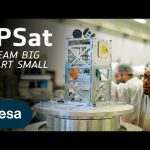
  • The Young Professional Satellite – Dream Big, Start Small (episode 1)

    The Young Professional Satellite – Dream Big, Start Small (episode 1)

    In this first episode of our docu-series, we embark on the exciting journey of the YPSat (Young Professional Satellite), a satellite flying on-board the inaugural flight of Ariane 6, Europe’s new heavy launcher. Two years ago, a team of Young Professionals at ESA, with diverse backgrounds, nationalities and expertise, have come together around one passion and with one ambition; design, manufacture and send their own satellite to space.

    Starting with some trivial ideas, the team matured their mission objectives and won the approval and support of ESA management to kick start the project. YPSat will be ‘the witness’ of Ariane 6: it will record the fairing separation, document the CubeSats deployment and send back beautiful in-orbit images of Earth and space.

    This scaled-down mission has all the ingredients of a large flagship mission; engineering, verification, testing and production assurance; project management, tight schedule, team coordination and communication; failures, crisis situations and successes.
    YPSat is a blueprint for the future of European space exploration. It has been a life changing opportunity for young professionals at ESA to get hands-on experience and experience the process of developing a space mission. But it has also been an eye-opening occasion for the European Space Agency to get inspired by the young generations, bringing in new ideas and technologies.

    This is just the beginning of the adventure for the YPSat team. The next episode will unravel the creativity, ingenuity and determination that the young professionals brought in to achieve the mission’s objectives. What powers the satellite? Who activates the cameras? How is the data transmitted back on Earth?

    —————————————————

    Credits:
    Directed and produced by Chilled Winston: https://chilledwinston.com/ and Emma de Cocker
    Powered by ESA – European Space Agency
    Music from Epidemic Sound
    Footage from Chilled Winston (Chilled Winston – Where Stories Come to Life)

    ★ Subscribe: http://bit.ly/ESAsubscribe and click twice on the bell button to receive our notifications.

    Check out our full video catalog: http://bit.ly/SpaceInVideos
    Follow us on Twitter: http://bit.ly/ESAonTwitter
    On Facebook: http://bit.ly/ESAonFacebook
    On Instagram: http://bit.ly/ESAonInstagram
    On LinkedIn: https://bit.ly/ESAonLinkedIn
    On Pinterest: https://bit.ly/ESAonPinterest
    On Flickr: http://bit.ly/ESAonFlickr

    We are Europe’s gateway to space. Our mission is to shape the development of Europe’s space capability and ensure that investment in space continues to deliver benefits to the citizens of Europe and the world. Check out https://www.esa.int/ to get up to speed on everything space related.

    Copyright information about our videos is available here: https://www.esa.int/ESA_Multimedia/Terms_and_Conditions

    #ESA #YPSat #Ariane6

  • Learn more about Ariane 6 launch pad 🚀 #shorts

    Learn more about Ariane 6 launch pad 🚀 #shorts

    While the Ariane 6 rocket might take much of the focus, the launch pad and infrastructure truely are marvels of human engineering.

    Built and operated by France’s space agency @CNES, the launch zone – called ELA4 – was built from the ground up at Europe’s Spaceport in French Guiana.

    Building on the success and lessons learnt from the previous launch zones, the new infrastructure allows for quick processing and the launch of one Ariane 6 a month.

    The site for the launch zone was chosen for its deep rocky subsoil capable of supporting the heaviest 900 tonne variant of Ariane 6 and its liftoff and the mobile gantry that surrounds Ariane 6 for final assembly.

    The launch pad was also built to lessen the site’s carbon footprint and preserve local natural resources.

    📹 ESA – European Space Agency
    📸 ESA – European Space Agency

    #ESA #Ariane6 #Rocket

  • How do you restart a rocket that is already in space? 🚀 #shorts

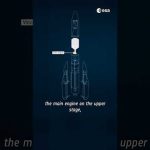
    How do you restart a rocket that is already in space? 🚀 #shorts

    Europe’s newest rocket Ariane 6 has an upper stage engine, Vinci, that can restart up to four more times once in space!

    This allows Ariane 6 to reach a larger range of orbits and deliver multiple payloads on a single launch.

    Vinci does this using an auxiliary propulsion unit that heats up the same liquid oxygen and hydrogen fuel used by the main engine. It then turns it into gas that is expelled from the upper stage to provide a small amount of thrust. The effect is barely noticeable, but the forces are just enough to keep the liquid fuel at the bottom of the tank and ready for reignition.

    📹 ESA – European Space Agency
    📸 ESA – European Space Agency

    #ESA #Ariane6 #Rocket

  • This is how Ariane 6’s boosters work 🚀 #shorts

    This is how Ariane 6’s boosters work 🚀 #shorts

    Europe’s new rocket Ariane 6 has three main stages each with their own engines.

    Ariane 6 uses one of the world’s most powerful single-piece boosters, the P120C boosters, to get off the ground.

    These motors run on 142 000 kg of solid fuel, which is completely consumed in just two minutes, reaching 53 km altitude when they are eventually discarded.

    We can choose to either have two or four boosters per Ariane 6 launch. For many missions two boosters is more than enough to get into space, but if you need to launch heavier satellites or want to reach destinations farther away from Earth four boosters provide the extra kick to do the trick.

    We now have a target launch date! We are currently aiming to get Ariane 6 off the ground on 9th July, be sure to set your reminders and follow along for more updates.

    📹 ESA – European Space Agency

    #ESA #Ariane6 #Rocket

  • 5,4,3,2,1 allumage Vulcain! 🚀 #shorts

    5,4,3,2,1 allumage Vulcain! 🚀 #shorts

    Europe’s new rocket Ariane 6 will soon be launched from Europe’s Spaceport in French Guiana. But how does it get off the launch pad?

    Ignited first at liftoff is the Vulcain 2.1, the rocket motor for the cryogenic main stage. The engine sits at the bottom end of Ariane 6 and fires for up to 8 minutes to help the rocket reach space! The boosters ignite 7 seconds after the Vulcain for liftoff thrust.

    📹 ESA – European Space Agency

    #ESA #Ariane6 #CubeSat

  • Passengers of the first Ariane 6 launch 🚀 #shorts

    Passengers of the first Ariane 6 launch 🚀 #shorts

    Europe’s new rocket Ariane 6 is set to launch soon. 🚀

    On its first flight to space, Ariane 6 is offering a ride to miniature satellites, known as CubeSats.

    ISTSat from Portugal, and ³Cat-4 from Spain, are two of Ariane 6’s passengers.

    Both satellites were developed by students participating in our Fly Your Satellite! programme, one of the several hands-on programmes for university students offered by ESA Education.

    ISTSat is the first Portuguese CubeSat built by students. It will track aircraft from space using a smaller, lower power Automatic Dependent Surveillance Broadcast system, which is the technology that enables websites like Flight Radar.

    ³Cat-4 from the Technical University of Catalonia combines a radiometer, a reflectometer and an Automatic Identification System into one payload that will perform Earth Observation experiments.

    The students visited Exolaunch’s Berlin headquarters to perform the integration of their satellites, where they installed ISTSat-1 and ³Cat-4 into their deployer.

    📹 ESA – European Space Agency

    #ESA #Ariane6 #CubeSat