Tag: flight

  • ESA 2024 Highlights: flight of the Ariane 6

    ESA 2024 Highlights: flight of the Ariane 6

    In 2024, ESA continued to drive Europe’s innovation and excellence in space, equipping the continent with advanced tools and knowledge to address global and local challenges. The year saw pioneering missions, cutting-edge satellites and the pivotal restoration of Europe’s independent access to space.

    The first Ariane 6 launch was perhaps ‘the’ highlight of the year but it was only one of many achievements. We saw the last Vega launch and then the return to flight of Vega-C, the more powerful, upgraded version carrying Sentinel-1C.

    Far away in our Solar System, the ESA/JAXA BepiColombo spacecraft performed two Mercury flybys in 2024, needed so that it can enter orbit around Mercury in 2026. Juice also performed a crucial gravity assist, this time becoming the first spacecraft to conduct a Moon-Earth double flyby on its way to Jupiter.

    Twenty years after ESA’s Rosetta was launched and 10 years since its historic arrival at the comet 67P/Churyumov-Gerasimenko, we launched another spacecraft to a small body, the Hera planetary defence mission to investigate asteroid Dimorphos.

    2024 was an important year for Europe’s Galileo constellation which continued to expand with the launch of four new satellites and an updated Galileo ground system. The year also saw the launch of ESA’s Proba-3 mission: two precision formation-flying satellites forming a solar coronagraph to study the Sun’s faint corona.

    In human spaceflight, Europe continues to contribute to science from the ISS as Andreas Mogensen’s Huginn mission continued into 2024. Andreas even met up in space with ESA project astronaut Marcus Wandt who was launched on his Muninn mission, making it the first time two Scandinavians were in space together.

    Meanwhile the latest class of ESA astronauts completed basic training and graduated in April. Two of them, Sophie and Raphaël, were then assigned to long-duration missions to the ISS in 2026.

    We made crucial steps for Europe in gaining access to the Moon: the inauguration of our LUNA facility with DLR, and the delivery of a third European Service Module for NASA’s Orion spacecraft as part of the Artemis programme.

    Europe is also contributing to the international Lunar Gateway and developing and ESA lunar lander called Argonaut. These landers will rely on ESA Moonlight, the programme to establish Europe’s first dedicated satellite constellation for lunar communication and navigation.

    As 2024 draws to a close, ESA’s achievements this year have reinforced Europe’s role in space. ESA’s journey continues to explore new frontiers, shaping the space landscape for generations to come.

    Credits: ESA – European Space Agency

    ★ Subscribe: http://bit.ly/ESAsubscribe and click twice on the bell button to receive our notifications.

    Check out our full video catalog: http://bit.ly/SpaceInVideos
    Follow us on Twitter: http://bit.ly/ESAonTwitter
    On Facebook: http://bit.ly/ESAonFacebook
    On Instagram: http://bit.ly/ESAonInstagram
    On LinkedIn: https://bit.ly/ESAonLinkedIn
    On Pinterest: https://bit.ly/ESAonPinterest
    On Flickr: http://bit.ly/ESAonFlickr

    We are Europe’s gateway to space. Our mission is to shape the development of Europe’s space capability and ensure that investment in space continues to deliver benefits to the citizens of Europe and the world. Check out https://www.esa.int/ to get up to speed on everything space related.

    Copyright information about our videos is available here: https://www.esa.int/ESA_Multimedia/Terms_and_Conditions

    #ESA #2024Highlights #Space

  • NASA’s Boeing Crew Flight Test Re-entry and Landing

    NASA’s Boeing Crew Flight Test Re-entry and Landing

    Watch live as Boeing’s uncrewed Starliner spacecraft leaves low Earth orbit, reenters Earth’s atmosphere, and touches down at White Sands Space Harbor in New Mexico. Starliner is scheduled to begin its deorbit burn at 11:17 p.m. EDT on Friday, Sept. 6 (0317 UTC Sept. 7), with landing scheduled for 12:01 a.m. EDT (0401 UTC) on Saturday, Sept. 7.

    NASA astronauts Butch Wilmore and Suni Williams launched aboard Starliner on June 5 for its first crewed flight, arriving at the International Space Station on June 6. As Starliner approached the orbiting laboratory, NASA and Boeing identified helium leaks and experienced issues with the spacecraft reaction control thrusters. For the safety of the astronauts, NASA announced on Aug. 24 that Starliner would return to Earth from the station without a crew. Wilmore and Williams will remain aboard the station and return home in February 2025 on the SpaceX Dragon spacecraft as part of NASA’s SpaceX Crew-9 mission.

    Following Starliner’s return to Earth, a post-landing news conference is scheduled for 1:30 a.m. EDT (0530 UTC).

    Check out the full schedule for Starliner’s return: https://go.nasa.gov/3TayjWx
    Learn more about Starliner and what’s going on aboard the ISS: https://nasa.gov/starliner-faq
    Follow the latest Starliner mission updates: https://blogs.nasa.gov/boeing-crew-flight-test/

    Credit: NASA

    #NASA #Starliner #Space

  • NASA’s Boeing Crew Flight Test Undocking

    NASA’s Boeing Crew Flight Test Undocking

    Watch live as Boeing’s Starliner spacecraft departs from the International Space Station for a landing at White Sands Space Harbor in New Mexico. The uncrewed spacecraft is scheduled to autonomously undock from the station at approximately 6:04 p.m. EDT (2204 UTC) Friday, Sept. 6, to begin the journey home, weather conditions permitting.

    NASA astronauts Butch Wilmore and Suni Williams launched aboard Boeing’s Starliner spacecraft on June 5 for its first crewed flight, arriving at the space station on June 6. As Starliner approached the orbiting laboratory, NASA and Boeing identified helium leaks and experienced issues with the spacecraft reaction control thrusters. For the safety of the astronauts, NASA announced on Aug. 24 that Starliner will return to Earth from the station without a crew. Wilmore and Williams will remain aboard the station and return home in February 2025 aboard the SpaceX Dragon spacecraft with two other crew members assigned to NASA’s SpaceX Crew-9 mission.

    Learn more about Starliner’s return to Earth: https://www.nasa.gov/news-release/nasa-sets-coverage-for-starliner-news-conference-return-to-earth/
    Learn more about the Commercial Crew Program: https://www.nasa.gov/humans-in-space/commercial-space/commercial-crew-program/

    Credit: NASA

    #NASA #Starliner #Boeing #SpaceStation #Spacecraft

  • NASA’s Boeing Crew Flight Test Status News Conference

    NASA’s Boeing Crew Flight Test Status News Conference

    NASA hosts a live news conference at 1 p.m. EDT from the agency’s Johnson Space Center in Houston, following the internal Agency Test Flight Readiness Review for NASA’s Boeing Crew Flight Test.

    NASA’s Boeing Crew Flight Test launched on June 5 on a ULA (United Launch Alliance) Atlas V rocket from Space Launch Complex-41 at Cape Canaveral Space Force Station in Florida. It is an end-to-end test of the Starliner system as part of the agency’s Commercial Crew Program.

    More: https://www.nasa.gov/news-release/leadership-to-discuss-nasas-boeing-crew-flight-test/
    For NASA’s blog and additional information about the mission, visit: https://www.nasa.gov/commercialcrew

    Credit: NASA

    #NASA #SpaceStation #Starliner

  • Ariane 6 first flight highlights

    Ariane 6 first flight highlights

    Europe’s new rocket Ariane 6 powered into space on 9 July 2024 from a newly built dedicated launch pad in French Guiana. Liftoff occurred at 16:00 local time (20:00 BST, 21:00 CEST).

    Europe’s new rocket Ariane 6 powered Europe into space taking with it a varied selection of experiments, satellites, payload deployers and reentry demonstrations that represent thousands across Europe, from students to industry and experienced space actors.

    This inaugural flight, designated VA262, is a demonstration flight to show the capabilities and prowess of Ariane 6 in escaping Earth’s gravity and operating in space. Nevertheless, it had several passengers on board.

    Ariane 6 was built by prime contractor and design authority ArianeGroup. In addition to the rocket, the liftoff demonstrated the functioning of the launch pad and operations on ground at Europe’s Spaceport. The new custom-built dedicated launch zone was built by France’s space agency CNES and allows for a faster turnover of Ariane launches.

    Ariane 6 is Europe’s newest heavy-lift rocket, designed to provide great power and flexibility at a lower cost than its predecessors. The launcher’s configuration – with an upgraded main stage, a choice of either two or four powerful boosters and a new restartable upper stage – will provide Europe with greater efficiency and possibility as it can launch multiple missions into different orbits on a single flight, while its upper stage will deorbit itself at the end of mission.

    ESA’s main roles in the Ariane 6 programme is as contracting authority – managing the budget from Member States participating in the Ariane 6 development programme; and as launch system architect – ensuring that the rocket and launch pad infrastructure work together.

    Ariane 6 is the latest in Europe’s Ariane rocket series, taking over from Ariane 5 featuring a modular and versatile design that can launch missions from low-Earth orbit and farther out to deep space.

    Credits: ESA – European Space Agency

    ★ Subscribe: http://bit.ly/ESAsubscribe and click twice on the bell button to receive our notifications.

    Check out our full video catalog: http://bit.ly/SpaceInVideos
    Follow us on Twitter: http://bit.ly/ESAonTwitter
    On Facebook: http://bit.ly/ESAonFacebook
    On Instagram: http://bit.ly/ESAonInstagram
    On LinkedIn: https://bit.ly/ESAonLinkedIn
    On Pinterest: https://bit.ly/ESAonPinterest
    On Flickr: http://bit.ly/ESAonFlickr

    We are Europe’s gateway to space. Our mission is to shape the development of Europe’s space capability and ensure that investment in space continues to deliver benefits to the citizens of Europe and the world. Check out https://www.esa.int/ to get up to speed on everything space related.

    Copyright information about our videos is available here: https://www.esa.int/ESA_Multimedia/Terms_and_Conditions

    #ESA #Ariane6 #Rocket

  • Ariane 6 first flight (Official broadcast)

    Ariane 6 first flight (Official broadcast)

    Liftoff is now scheduled no earlier than 16:00 local time (21:00 CEST), with the live stream starting at 15:30 local time (20:30 CEST).

    This is a big moment for Europe, as the rocket will ensure our guaranteed, autonomous access to space – and all of the science, Earth observation, technology development and commercial possibilities that it entails. With many features brand new to Ariane 6, we’ll be able to carry more and take it further, while sustainably disposing of the launcher’s upper stage to prevent it becoming space debris.

    Phase 1: From ground to orbit

    The first phase of Ariane 6’s flight will launch the rocket off Earth and into space with the thrust from the main stage powered by the Vulcain engine together with the force from the two powerful P120C boosters. Phase 1 includes the separation of the main stage from the upper stage and the first boost of the upper stage’s Vinci engine, which inserts it and its passengers into an elliptical orbit 300 by 700 km above Earth.
    The first flight of Ariane 6 will have three phases, each of which will demonstrate various abilities for Europe’s newest heavy-lift rocket.

    Phase 2: Upper stage reignition and satellite deployment

    The next phase is when Ariane 6’s newest feature is put to the test: reignition of the upper stage. In phase 2, the Vinci engine will re-fire, changing Ariane 6’s orbit from elliptical to circular. This will be followed by the deployment of the rocket’s eight satellites and the activation of its five onboard experiments.

    Phase 3 : Tech demos, deorbiting and capsule separation

    The final phase in Ariane 6’s inaugural flight will be to push the cryogenic upper stage to its limits and validate its ability to perform under microgravity conditions. The final phase will initiate the controlled deorbit of the upper stage back through Earth’s atmosphere over the South Pacific ‘NEMO point’, to prevent it from becoming space debris. Moments later, the two reentry capsules onboard will separate from the upper stage, and all three will make their safe descent back home.

    The launch will be covered in several languages which can be followed at the links below:
    English: https://youtube.com/live/B0oFpOJaIYc?feature=share />French: https://youtube.com/live/AfNPzSOalEU?feature=share />German: https://youtube.com/live/a_87OnvB_fQ?feature=share />A clean feed without commentary is available too: https://youtube.com/live/ogXamYYJpQk?feature=share />
    —————————————————

    Chapters:
    00:00 Stay tuned
    29:18 Beginning of the launch coverage programme
    59:00 Liftoff
    1:01:30 Booster separation
    1:02:50 Fairing separation
    1:06:45 Upper / lower stage separation
    1:07:15 Upper stage ignition
    1:20:25 Stay tuned
    1:55:00 Second boost
    2:05:00 Payload separation
    2:09:00 Success statements
    2:17:35 Stay tuned
    3:34:00 Trajectory in 3rd phase
    4:00:30 Stay tuned
    4:29:15 Press conference
    4:59:30 End of the launch coverage programme

    ★ Subscribe: http://bit.ly/ESAsubscribe and click twice on the bell button to receive our notifications.

    Check out our full video catalog: http://bit.ly/SpaceInVideos
    Follow us on Twitter: http://bit.ly/ESAonTwitter
    On Facebook: http://bit.ly/ESAonFacebook
    On Instagram: http://bit.ly/ESAonInstagram
    On LinkedIn: https://bit.ly/ESAonLinkedIn
    On Pinterest: https://bit.ly/ESAonPinterest
    On Flickr: http://bit.ly/ESAonFlickr

    We are Europe’s gateway to space. Our mission is to shape the development of Europe’s space capability and ensure that investment in space continues to deliver benefits to the citizens of Europe and the world. Check out https://www.esa.int/ to get up to speed on everything space related.

    Copyright information about our videos is available here: https://www.esa.int/ESA_Multimedia/Terms_and_Conditions

    #ESA #Ariane6 #Launch

  • Ariane 6 first flight – clean feed (Official broadcast)

    Ariane 6 first flight – clean feed (Official broadcast)

    Liftoff is now scheduled no earlier than 16:00 local time (21:00 CEST), with the live stream starting at 15:30 local time (20:30 CEST).

    This is a big moment for Europe, as the rocket will ensure our guaranteed, autonomous access to space – and all of the science, Earth observation, technology development and commercial possibilities that it entails. With many features brand new to Ariane 6, we’ll be able to carry more and take it further, while sustainably disposing of the launcher’s upper stage to prevent it becoming space debris.

    Phase 1: From ground to orbit

    The first phase of Ariane 6’s flight will launch the rocket off Earth and into space with the thrust from the main stage powered by the Vulcain engine together with the force from the two powerful P120C boosters. Phase 1 includes the separation of the main stage from the upper stage and the first boost of the upper stage’s Vinci engine, which inserts it and its passengers into an elliptical orbit 300 by 700 km above Earth.
    The first flight of Ariane 6 will have three phases, each of which will demonstrate various abilities for Europe’s newest heavy-lift rocket.

    Phase 2: Upper stage reignition and satellite deployment

    The next phase is when Ariane 6’s newest feature is put to the test: reignition of the upper stage. In phase 2, the Vinci engine will re-fire, changing Ariane 6’s orbit from elliptical to circular. This will be followed by the deployment of the rocket’s eight satellites and the activation of its five onboard experiments.

    Phase 3 : Tech demos, deorbiting and capsule separation

    The final phase in Ariane 6’s inaugural flight will be to push the cryogenic upper stage to its limits and validate its ability to perform under microgravity conditions. The final phase will initiate the controlled deorbit of the upper stage back through Earth’s atmosphere over the South Pacific ‘NEMO point’, to prevent it from becoming space debris. Moments later, the two reentry capsules onboard will separate from the upper stage, and all three will make their safe descent back home.

    The launch will be covered in several languages which can be followed at the links below:
    English: https://youtube.com/live/B0oFpOJaIYc?feature=share />French: https://youtube.com/live/AfNPzSOalEU?feature=share />German: https://youtube.com/live/a_87OnvB_fQ?feature=share />A clean feed without commentary is available too: https://youtube.com/live/ogXamYYJpQk?feature=share />
    —————————————————

    Chapters:
    00:00 Stay tuned
    59:00 Liftoff
    1:01:30 Booster separation
    1:02:50 Fairing separation
    1:06:45 Upper / lower stage separation
    1:07:15 Upper stage ignition
    1:55:00 Second boost
    2:05:00 Payload separation
    2:09:00 Success statements
    3:34:00 Trajectory in 3rd phase
    4:29:15 Press conference

    ★ Subscribe: http://bit.ly/ESAsubscribe and click twice on the bell button to receive our notifications.

    Check out our full video catalog: http://bit.ly/SpaceInVideos
    Follow us on Twitter: http://bit.ly/ESAonTwitter
    On Facebook: http://bit.ly/ESAonFacebook
    On Instagram: http://bit.ly/ESAonInstagram
    On LinkedIn: https://bit.ly/ESAonLinkedIn
    On Pinterest: https://bit.ly/ESAonPinterest
    On Flickr: http://bit.ly/ESAonFlickr

    We are Europe’s gateway to space. Our mission is to shape the development of Europe’s space capability and ensure that investment in space continues to deliver benefits to the citizens of Europe and the world. Check out https://www.esa.int/ to get up to speed on everything space related.

    Copyright information about our videos is available here: https://www.esa.int/ESA_Multimedia/Terms_and_Conditions

    #ESA #Ariane6 #Launch

  • NASA’s Boeing Crew Flight Test Astronauts Talk with the National Space Council Representatives

    NASA’s Boeing Crew Flight Test Astronauts Talk with the National Space Council Representatives

    The astronauts of Boeing’s #Starliner Crew Flight Test, Butch Wilmore and Suni Williams, will participate from the International Space Station in a Q&A moderated by Chirag Parikh, deputy assistant to President Joe Biden and executive secretary for the White House’s National Space Council.

    Wilmore and Williams launched at 10:52 a.m. EDT (1452 UTC) June 5, on a United Launch Alliance Atlas V rocket, from Space Launch Complex-41 at Cape Canaveral Space Force Station in Florida for NASA’s Boeing Crew Flight Test mission. They docked to the orbiting laboratory at 1:34 p.m. EDT (1734 UTC) on June 6, and are currently in the middle of a week-long stay, testing Starliner and its subsystems as the next step in the spacecraft’s certification for rotational missions as part of the agency’s Commercial Crew Program.

    For more information about the mission, visit: https://www.nasa.gov/commercialcrew

    #NASA #SpaceStation #Starliner #ISS #Spacecraft

  • NASA’s Boeing Crew Flight Test Astronauts Talk With NASA Leadership

    NASA’s Boeing Crew Flight Test Astronauts Talk With NASA Leadership

    Following their safe arrival at the International Space Station on Thursday, June 6, NASA astronauts Butch Wilmore and Suni Williams will speak with agency leaders about their historic mission aboard Boeing’s Starliner spacecraft on a space-to-ground call.

    NASA Administrator Bill Nelson, Deputy Administrator Pam Melroy, Associate Administrator Jim Free, and Johnson Space Center Director Vanessa Wyche will participate in the call. Wilmore and Williams will speak with representatives from the White House in a second call scheduled to begin at 2:40 p.m. EDT (1840 UTC) on June 10.

    Learn more about Boeing’s Crew Flight Test mission: https://www.nasa.gov/mission/boeing-crewflighttest/
    Follow the latest mission updates: https://blogs.nasa.gov/boeing-crew-flight-test/

    Credit: NASA

    #NASA #Astronauts #SpaceStation

  • NASA’s Boeing Crew Flight Test Starliner Tour

    NASA’s Boeing Crew Flight Test Starliner Tour

    Live from the International Space Station: Watch a tour of the Boeing Starliner with NASA astronauts Butch Wilmore and Suni Williams, the first crew to fly on the spacecraft.

    Wilmore and Williams arrived at the station aboard Starliner on Thursday, June 6, one day after the spacecraft was launched on a ULA (United Launch Alliance) Atlas V rocket from Space Launch Complex-41 at Cape Canaveral Space Force Station in Florida.

    As part of NASA’s Commercial Crew Program, the Boeing Crew Flight Test will help validate the transportation system, launch pad, rocket, spacecraft, in-orbit operations capabilities, and return to Earth with astronauts aboard as the agency prepares to certify Starliner for rotational missions to the space station.

    Credit: NASA

    #NASA #Starliner #Spaceship

  • NASA’s Boeing Crew Flight Test Rendezvous and Docking

    NASA’s Boeing Crew Flight Test Rendezvous and Docking

    Watch live as a crewed Boeing Starliner spacecraft docks to the International Space Station for the first time. Starliner will autonomously dock to the forward-facing port of the station’s Harmony module at approximately 12:15 p.m. EDT (1615 UTC).

    NASA astronauts Butch Wilmore and Suni Williams are aboard Starliner, which was launched on Wednesday, June 5 at 10:52 a.m. EDT (1452 UTC) on a United Launch Alliance Atlas V rocket. The Starliner and crew will remain at the space station for about a week.

    As part of NASA’s Commercial Crew Program, the flight test will help validate the transportation system, launch pad, rocket, spacecraft, in-orbit operations capabilities, and return to Earth with astronauts aboard as the agency prepares to certify Starliner for rotational missions to the space station.

    Learn more about Boeing Starliner: https://www.nasa.gov/mission/boeing-crewflighttest/
    Learn more about the Commercial Crew Program: https://www.nasa.gov/humans-in-space/commercial-space/commercial-crew-program/

    Credit: NASA

  • Our Artemis I Flight Test is “Go for Launch” on This Week @NASA – August 26, 2022

    Our Artemis I Flight Test is “Go for Launch” on This Week @NASA – August 26, 2022

    Our Artemis I flight test is “go for launch,” the first deep-space long-duration biology test, and the Webb Space Telescope captures new images of Jupiter … a few of the stories to tell you about – This Week at NASA!

    Download Link:
    https://images.nasa.gov/details-Our%20Artemis%20I%20Flight%20Test%20is%20%E2%80%9CGo%20for%20Launch%E2%80%9D%20on%20This%20Week%20@NASA%20%E2%80%93%20August%2026,%202022

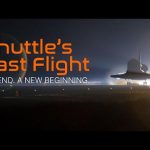
  • The Shuttle’s Last Flight | An End. A New Beginning.

    The Shuttle’s Last Flight | An End. A New Beginning.

    Ten years ago, the last shuttle mission (STS-135) dropped out of the predawn darkness and landed at Kennedy’s Shuttle Landing Facility Runway 15 for the final time.

    Over the course of the more than eight days, Commander Chris Ferguson, Pilot Doug Hurley, and Mission Specialists Sandy Magnus and Rex Walheim had spent much of their time delivering a stockpile of supplies and parts to the space station.

    The end of their mission aboard Atlantis may have been the end of the shuttle era, but it was the beginning a new stage of exploration.

    For more information on STS-135, visit: https://www.nasa.gov/mission_pages/shuttle/shuttlemissions/sts135

    Video Producer: Sonnet Apple
    Music: Universal Production Music

    Download link: https://images.nasa.gov/details-The%20Shuttles%20Last%20Flight.%20An%20end.%20A%20new%20beginning

    ▬ Contents of this video ▬▬▬▬▬▬▬▬▬▬

    0:00 – Intro
    0:24 Preparing to launch
    2:48 Launch delay
    3:34 Launch
    4:01 Arrive at the International Space Station
    5:51 Returning Home
    7:04 Landing
    8:51 New Beginnings

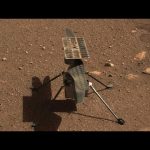
  • First Flight of the Ingenuity Mars Helicopter: Live from Mission Control

    First Flight of the Ingenuity Mars Helicopter: Live from Mission Control

    Up, up, and away! The Ingenuity #MarsHelicopter is set to make history. It will make the first attempt at powered flight on another planet on Monday, April 19. Don’t miss your chance to watch live with helicopter team in mission control beginning at 6:15 a.m. EDT (10:15 a.m. UTC) as they receive the data and find out if they were successful.

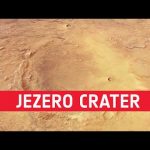
  • Flight over the Mars 2020 Perseverance rover landing site

    Flight over the Mars 2020 Perseverance rover landing site

    This video shows Jezero crater, the landing site of the @NASA Mars 2020 Perseverance rover on the Red Planet, based on images from ESA’s Mars Express mission. The planned landing area is marked with an orange ellipse.

    Scheduled for launch from Cape Canaveral, Florida on 30 July 2020 on board an Atlas V rocket, the Perseverance rover will land on 18 February 2021 in Jezero crater.

    An impact crater with a diameter of about 45 km, Jezero is located at the rim of the giant Isidis impact basin. Morphological evidence suggests that the crater once hosted a lake, some 3.5 billion years ago.

    Jezero possesses an inlet- and an outlet channel. The inlet channel discharges into a fan-delta deposit, containing water-rich minerals such as smectite clays. Scientists believe that the lake was relatively long lived because the delta may have required 1 to 10 million years to reach its thickness and size. Other studies conclude that the lake did not experience periods of important water-level fluctuations and that it was formed by a continuous surface runoff. This makes Jezero crater to a prime target for the search for potential signs of microbial life, because organic molecules are very well preserved in river deltas and lake sediments.

    A recent study of the ancient lakeshores, diverse minerals and violent volcanism of Jezero crater based on data from ESA’s Mars Express mission is available here: https://bit.ly/MarsExpressHelpsUncoverTheSecretsOfPerseveranceLandingSite

    The animation was created using an image mosaic made from four single orbit observations obtained by the High Resolution Stereo Camera (HRSC) on Mars Express between 2004 and 2008. The mosaic combines data from the HRSC nadir and colour channels; the nadir channel is aligned perpendicular to the surface of Mars, as if looking straight down at the surface. The mosaic image was then combined with topography information from the stereo channels of HRSC to generate a three-dimensional landscape, which was then recorded from different perspectives, as with a movie camera, to render the flight shown in the video.

    Copyright:
    Animation: ESA/DLR/FU Berlin, CC BY-SA 3.0 IGO
    Music: Björn Schreiner
    Soundtrack logo: Alicia Neesemann

    ★ Subscribe: http://bit.ly/ESAsubscribe and click twice on the bell button to receive our notifications.

    Check out our full video catalog: http://bit.ly/SpaceInVideos
    Follow us on Twitter: http://bit.ly/ESAonTwitter
    On Facebook: http://bit.ly/ESAonFacebook
    On Instagram: http://bit.ly/ESAonInstagram
    On Flickr: http://bit.ly/ESAonFlickr

    We are Europe’s gateway to space. Our mission is to shape the development of Europe’s space capability and ensure that investment in space continues to deliver benefits to the citizens of Europe and the world. Check out http://www.esa.int/ESA to get up to speed on everything space related.

    Copyright information about our videos is available here: http://www.esa.int/spaceinvideos/Terms_and_Conditions

    #ESA
    #Mars
    #MarsExpress

  • SSMS inaugural flight on Vega

    SSMS inaugural flight on Vega

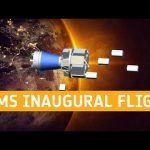
    Multiple small satellites will be launched at once on the Vega VV16 mission from Europe’s Spaceport in Kourou, French Guiana. This flight will demonstrate the modular SSMS dispenser resting on its upper stage intended to bring routine affordable launch opportunities for light satellites from 0.2 kg CubeSats up to 400 kg minisatellites.

    Until now the smallest classes of satellites – all the way down to tiny CubeSats, built from 10 cm modular boxes – have typically ‘piggybacked’ to orbit. They have to make use of any spare capacity as a single large satellite is launched, meaning their overall launch opportunities are limited.

    The new Vega Small Spacecraft Mission Service switches this into a ‘rideshare’ model, with multiple small satellites being flown together, splitting the launch cost.

    SAB Aeropsace in the Czech Republic and Bercella in Italy designed and manufactured this modular dispenser for ESA’s Vega prime contractor Avio. The component structures are made of very low-density aluminium ‘sandwich’ panels protected by carbon fibre reinforced polymer skins. This makes it very lightweight and rigid.

    The SSMS comprises two main sections, the hexagonal lower section can hold six nanosatellites or up to a dozen CubeSat deployers while the upper section section is used for microsatellites, minisatellites and small satellites. The lower section can also be used independently, coupled with a larger satellite replacing the top section.

    The hexagonal module, a central column, towers, a supporting platform and a set of standard satellite interface spacers are assembled to suit each mission and combination of satellites. For this flight, a configuration called Flexi-3 weighing just 330 kg is being used.

    This demonstration flight aims to prove the technical and financial viability of the rideshare service. ESA has collaborated with the European Union, which has partly funded this mission within the Horizon 2020 programme. This is part of the Contribution Agreement between ESA and the EU on space technology activities signed on 16 April 2019.

    The animation shows the separation of the ESAIL mission which is a joint ESA LuxSpace project to extend the monitoring of maritime traffic beyond existing land-based tracking of Automatic Identification Systems (AIS) through the means of an array of microsatellites: SAT-AIS.

    ★ Subscribe: http://bit.ly/ESAsubscribe and click twice on the bell button to receive our notifications.

    Check out our full video catalog: http://bit.ly/SpaceInVideos
    Follow us on Twitter: http://bit.ly/ESAonTwitter
    On Facebook: http://bit.ly/ESAonFacebook
    On Instagram: http://bit.ly/ESAonInstagram
    On Flickr: http://bit.ly/ESAonFlickr

    We are Europe’s gateway to space. Our mission is to shape the development of Europe’s space capability and ensure that investment in space continues to deliver benefits to the citizens of Europe and the world. Check out http://www.esa.int/ESA to get up to speed on everything space related.

    Copyright information about our videos is available here: http://www.esa.int/spaceinvideos/Terms_and_Conditions

    #ESA
    #SSMS
    #VegaVV16

  • ESA’s 71st parabolic flight campaign experiments

    ESA’s 71st parabolic flight campaign experiments

    Engineers, pilots, researchers and scientists convened in Bordeaux, France, for ESA’s 71st parabolic flight campaign. Over the course of three days they flew on a specially-fitted commercial aircraft, testing equipment and running research as the pilots put the plane through repeated parabolas, giving the passengers and their experiments brief bouts of microgravity.

    ESA’s project coordinator Neil Melville introduces the experiments that flew on this campaign, from plasma to granular physics and heat pipes.

    Parabolic flights are one of many platforms ESA offers for European researchers to run experiments for spaceflight. These flights are one of the few that allow the researchers to interact with their own experiments “hands-on” in a weightless environment. Send a proposal through our continuously open research announcements and you could be flying on the next campaign.

    More on ESA’s parabolic flights and research in zero gravity here: http://bit.ly/ESAparabolicFlights

    ★ Subscribe: http://bit.ly/ESAsubscribe and click twice on the bell button to receive our notifications.

    Check out our full video catalog: http://bit.ly/SpaceInVideos
    Follow us on Twitter: http://bit.ly/ESAonTwitter
    On Facebook: http://bit.ly/ESAonFacebook
    On Instagram: http://bit.ly/ESAonInstagram
    On Flickr: http://bit.ly/ESAonFlickr

    We are Europe’s gateway to space. Our mission is to shape the development of Europe’s space capability and ensure that investment in space continues to deliver benefits to the citizens of Europe and the world. Check out http://www.esa.int/ESA to get up to speed on everything space related.

    Copyright information about our videos is available here: http://www.esa.int/spaceinvideos/Terms_and_Conditions

    #ESA
    #ZeroG
    #ParabolicFlight

  • SpaceX #CrewDragon Demonstration Flight Return to Earth

    SpaceX #CrewDragon Demonstration Flight Return to Earth

    Join us starting at 7:30 a.m. EST to see SpaceX’s #CrewDragon on its journey back to Earth, including its deorbit burn and splashdown in the Atlantic Ocean.

  • Flight Over a Rectangular Iceberg in the Antarctic

    Flight Over a Rectangular Iceberg in the Antarctic

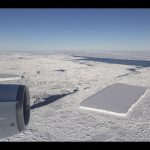
    Can you spot the sharp-angled, rectangular iceberg? This footage (partially sped up) is from an Oct. 16, 2018 flight over the northern Antarctic Peninsula by our Operation IceBridge DC-8 aircraft. Mission Scientist John Sonntag provides commentary. More: https://go.nasa.gov/2JdEy71

    Operation IceBridge is NASA’s longest-running aerial survey of polar ice. During the survey, designed to assess changes in the ice height of several glaciers draining into the Larsen A, B and C embayments, IceBridge senior support scientist Jeremy Harbeck saw a very sharp-angled, tabular iceberg floating among sea ice just off of the Larsen C ice shelf. A photo of the iceberg (seen at right) was widely shared after it was posted on social media.

  • Flight Through Orion Nebula in Visible and Infrared Light

    Flight Through Orion Nebula in Visible and Infrared Light

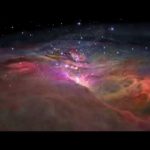
    By combining the visible and infrared capabilities of the Hubble and Spitzer space telescopes, astronomers and visualization specialists from NASA’s Universe of Learning program have created a spectacular, three-dimensional, fly-through movie of the magnificent Orion nebula, a nearby stellar nursery. Using actual scientific data along with Hollywood techniques, a team at the Space Telescope Science Institute in Baltimore, Maryland, and the Caltech/IPAC in Pasadena, California, has produced the best and most detailed multi-wavelength visualization yet of the Orion nebula.
    Credits: Space Telescope Science Institute
    More: https://www.nasa.gov/feature/goddard/2018/hubble-yields-new-discoveries-at-the-winter-aas-meeting
    Download: http://hubblesite.org/news_release/news/2018-04

  • NASA Tests RS-25 Flight Engine for Space Launch System

    NASA Tests RS-25 Flight Engine for Space Launch System

    Engineers at NASA’s Stennis Space Center in Mississippi on Oct. 19 completed a hot-fire test of RS-25 rocket engine E2063, a flight engine for NASA’s new Space Launch System (SLS) rocket. Engine E2063 is scheduled to help power SLS on its Exploration Mission-2 (EM-2), the first flight of the new rocket to carry humans.

    This video is available for download from NASA’s Image and Video Library: https://images.nasa.gov/#/details-NASA%20Tests%20RS-25%20Flight%20Engine%20for%20Space%20Launch%20System.html

  • Reconstructing Philae’s flight

    Reconstructing Philae’s flight

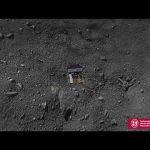
    Data from both the Philae lander and Rosetta orbiter experiments, as well as simulation results based on Philae’s mechanical design have been used to reconstruct the lander’s attitude and motion during its descent and touchdowns on Comet 67P/Churyumov-Gerasimenko on 12 November 2014.

    The new animation presented today, one year after Philae touched down on the comet, focuses on Philae’s dramatic two-hour flight from Agilkia to Abydos.

    More details in the Rosetta blog: http://blogs.esa.int/rosetta/2015/11/12/reconstructing-philaes-flight-across-the-comet/

    Credits: The video was prepared with inputs from the ROMAP, RPC-MAG, OSIRIS, ROLIS, CIVA CONSERT, SESAME and MUPUS instrument teams as well as from the Lander Control Centre at DLR and Science Operation and Navigation Center at CNES.

  • Ariane 5 liftoff on flight VA226

    Ariane 5 liftoff on flight VA226

    On 30 September 2015, Ariane 5 flight VA226 lifted off from Europe’s Spaceport in French Guiana and delivered two telecom satellites, Sky Muster and Arsat-2, into their planned orbits.

  • Ariane 5 flight VA225 liftoff

    Ariane 5 flight VA225 liftoff

    On 20 August 2015, Ariane 5 flight VA225 lifted off from Europe’s Spaceport in French Guiana and delivered two telecom satellites, Eutelsat-8 West B and Intelsat-34, into their planned orbits.

    Credit: Arianespace

  • Flight over Atlantis Chaos

    Flight over Atlantis Chaos

    Explore the Atlantis Chaos region of Mars, in the Red Planet’s southern hemisphere. The video showcases a myriad of features that reflect a rich geological history. The tour takes in rugged cliffs and impact craters, alongside parts of ancient shallow, eroded basins. See smooth plains scarred with wrinkled ridges, scarps and fracture lines that point to influence from tectonic activity. Marvel at ‘chaotic’ terrain – hundreds of small peaks and flat-topped hills that are thought to result from the slow erosion of a once-continuous solid plateau. This entire region may once have played host to vast volumes of water – look out for the evidence in the form of channels carved into steep-sided walls.

    Read more about this region here: http://www.esa.int/spaceinvideos/Images/2015/07/Ancient_Atlantis

    Credits: ESA/DLR/FU Berlin (CC BY-SA 3.0 IGA)

  • Expedition 41 flight Engineer Astronaut Reid Wiseman Gives Presentation at NASA HQ

    Expedition 41 flight Engineer Astronaut Reid Wiseman Gives Presentation at NASA HQ

    NASA Headquarters employees joined Astronaut Reid Wiseman, Expedition 41 flight engineer, for a post-flight presentation on Tuesday, June 23, to learn about his time onboard the space station as part of Expedition 40 and 41. As a member of the ISS Expedition 41 crew, Wiseman began his stay aboard the orbiting laboratory in May 2014 and returned to Earth in November 2014. This mission was his first spaceflight and included almost 13 hours of spacewalking to perform work outside the orbital complex. He and his crewmates also spent hundreds of hours conducting valuable scientific research in areas such as human physiology, medicine, physical science, Earth science and astrophysics.

  • Orion’s first flight on This Week @NASA – December 8, 2014

    Orion’s first flight on This Week @NASA – December 8, 2014

    The successful first flight test of NASA’s Orion spacecraft on Dec. 5 not only was a historic moment for the agency – but also was a critical step on NASA’s Journey to Mars. Orion rode to space from Cape Canaveral Air Force Station on a Delta IV heavy rocket with no crew, but loaded with about 1,200 sensors. The flight test basically was a compilation of the riskiest events that will happen when astronauts fly on Orion on deep space missions. Also, Journey to Mars briefing, 1st SLS flight barrel and Commercial crew milestone.

  • Orion flight test previewed on This Week @NASA – November 7, 2014

    Orion flight test previewed on This Week @NASA – November 7, 2014

    A NASA media briefing on Nov. 6 at Kennedy Space Center highlighted the fully assembled Orion spacecraft and details of its first test flight, scheduled for Dec. 4. The 4 and-a-half hour flight, called Exploration Flight Test-1, will send Orion 3,600 miles from Earth on a two-orbit flight to confirm its critical systems are ready for the challenges of eventually sending astronauts on deep space missions to an asteroid and Mars. Also, Delta IV Heavy wet dress test, Next ISS crew trains, Space agency leaders support ISS, Curiosity confirms orbital data and more!

  • The Flight of Apollo 11

    The Flight of Apollo 11

    The story of the first Moon landing in July 1969. Depicts the principal events of the mission, from the launching through the post recovery activities of astronauts Armstrong, Aldrin, and Collins. Through television, motion pictures, and still photography, the program provides an “eyewitness” perspective of the Apollo 11 mission.

  • NASA Flight Controller talks space with students

    NASA Flight Controller talks space with students

    From NASA’s Mission Control in Houston, TX, International Space Station Flight Controller, Brion Au, answered questions from students at the Museum of Flight in Washington who are in the Washington Aerospace Scholars program, during a NASA Digital Learning Network (DLN) interactive broadcast.

    NASA DLN broadcasts are connecting students around the country with the live mission operations being done by the International Space Station Flight Control Team. ISS flight controllers, astronauts and scientists answer student’s questions about living and working in space, how the Houston mission control center operates, and a wealth of other topics related to Science, Technology, Engineering, and Mathematics.

  • Ariane 5 flight VA217 liftoff replay

    Ariane 5 flight VA217 liftoff replay

    The first Ariane 5 launch of 2014 lifted off from Europe’s Spaceport in French Guiana on its mission to place two telecommunications satellites, ABS-2 & Athena–Fidus, into their planned transfer orbits.

    Credit: ESA / CNES / Arianespace

  • Space Shuttle Endeavour Arrives at NASA’s Dryden Flight Research Center

    Space Shuttle Endeavour Arrives at NASA’s Dryden Flight Research Center

    NASA’s Shuttle Carrier Aircraft (SCA) with space shuttle Endeavour mounted atop arrived Sept. 20 at the agency’s Dryden Flight Research Center on Edwards Air Force Base in California.

    Following an overnight stay, the SCA and Endeavour will salute the Edwards Air Force Base area early Friday, Sept. 21 with a low flyby northbound to Sacramento and the San Francisco Bay area. Next the aircraft will travel south, making a pass over NASA’s Ames Research Center, Vandenberg Air Force Base and NASA’s Jet Propulsion Laboratory before heading into the Los Angeles area.

    Finally, the SCA and Endeavour will land about noon PDT at Los Angeles International Airport, for an arrival ceremony before Endeavour is taken off the SCA and transported to its permanent home at the California Science Center next month.

  • NASA Doctor Discusses Providing Medical Care to Astronauts in Space

    NASA Doctor Discusses Providing Medical Care to Astronauts in Space

    In an interview aired on NASA Television during the International Space Station Update hour, NASA Flight Surgeon Ed Powers discussed how flight doctors work with crew members on board the station to keep the astronauts healthy. Powers also talked about some of the difficulties encountered in diagnosing patients who are not there in person and about the impacts of space medicine to life here on earth.

  • NASA’s Orion: From Factory to Flight

    NASA’s Orion: From Factory to Flight

    NASA is making steady progress on building the Orion spacecraft, which will take astronauts deeper into space than ever before. Take a look at the latest achievements and milestones in “Orion: From Factory to Flight” as Orion gets ready for its first orbital test flight in 2014.

  • NASA Sets Official Launch Date for Shuttle Discovery

    NASA Sets Official Launch Date for Shuttle Discovery

    After a day-long flight readiness review at Kennedy Space Center in Florida, senior NASA and contractor managers voted unanimously to set space