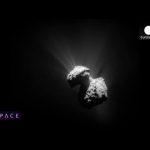
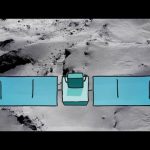
ESA’s Rosetta spacecraft is set to complete its incredible mission in a controlled descent to the surface of Comet 67P/C-G on 30 September. Mission experts joined an ESA Hangout on 19 September to discuss Rosetta’s final days and hours of operation, including expectations for the images and other scientific data that will be collected as the spacecraft gets closer and closer to the surface. They also discuss the exciting discovery of Philae that was made earlier this month.
Hangout guests:
Andrea Accomazzo, Flight operations director
Sylvain Lodiot, Rosetta spacecraft operations manager
Claire Vallat or Richard Moissl (TBC), Rosetta science ground segment liaison scientist
Laurence O’Rourke, Rosetta downlink science operations manager (lander search coordinator)
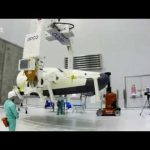
Timelapse movie following the preparations of the ExoMars 2016 spacecraft in the lead up to launch on 14 March 2016. The movie includes the integration of the entry, descent and landing demonstrator module, Schiaparelli, with the Trace Gas Orbiter, and the journey of the spacecraft inside the Proton rocket as it is moved to the launch pad and raised to a vertical position.
ExoMars launched from Baikonur, Kazakhstan at 09:31 GMT on 14 March. It will arrive at the Red Planet on 19 October. Its mission is to address unsolved mysteries of the planet’s atmosphere that could indicate present-day geological – or even biological – activity, and to demonstrate the landing technologies needed for future missions to Mars.
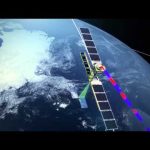
This timelapse video shows Sentinel-3A, from final preparations to liftoff on a Rockot launcher from the Plesetsk Cosmodrome in northern Russia, at 17:57 GMT (18:57 CET) on 16 February 2016.
Sentinel-3A is the third satellite to be launched for Europe’s Copernicus environment monitoring programme.
Designed as a two-satellite constellation – Sentinel-3A and -3B – the Sentinel-3 mission carries a series of cutting-edge instruments for systematic measurements of Earth’s oceans, land, ice and atmosphere. Over oceans, Sentinel-3 measures the temperature, colour and height of the sea surface as well as the thickness of sea ice. These measurements will be used, for example, to monitor changes in sea level, marine pollution and biological productivity. Over land, this innovative mission will monitor wildfires, map the way land is used, provide indices of vegetation state and measure the height of rivers and lakes.
The ExoMars 2016 spacecraft – consisting of the Trace Gas Orbiter (TGO) and the Schiaparelli entry, descent and landing demonstrator – is in Baikonur, Kazakhstan, preparing for its mid-March launch on a Russian Proton rocket.
This joint European and Russian mission will test key exploration technologies and search for evidence of methane and other rare gases in the martian atmosphere. These gases could result from geological processes or they could be signatures of current biological activity on the planet. Three days before reaching Mars in October, Schiaparelli will separate from the orbiter and coast towards the planet in hibernation mode to reduce power consumption.
This video covers the journey, the orbit of the Trace Gas Orbiter, the separation of the Schiaparelli lander and its 20 000 km/hour descent and eventual landing. It also contains filming at ESA’s European Space and Technology Centre (ESTEC) Mars Yard in the Netherlands.
Learning more about Mars’ water and environment will shed further light on this planet – while knowing the origin of its methane could finally answer the exciting question of whether there is life on Mars.
On 16 February 2016 at 18:57 CET (17:57 GMT), Sentinel-3A will be launched on top of a Rockot from the Russian Plesetsk Cosmodrome.
This satellite will be the third Sentinel for the Copernicus Programme. Copernicus is the most ambitious Earth Observation programme to date. It will provide accurate, timely and easily accessible information to improve the management of the environment, understand and mitigate the effects of climate change and ensure civil security. This initiative is headed by the European Commission (EC) in partnership with the European Space Agency.
ESA coordinates the delivery of data and is developing a new family of satellites, the Sentinels, specifically for the operational needs of Copernicus. The EC, acting on behalf of the European Union, is responsible for the overall initiative, setting requirements and managing the services. These services fall into six main categories: land management, the marine environment, atmosphere, emergency response, security and climate change.
This video explains what the Sentinels represent within Copernicus.
We have all heard of climate change, but what’s really happening to our planet now, in November 2015? As the COP21 summit in Paris looms in December, we set out to establish some of the scientific fundamentals, and hear how space technology is being used to get a truly global view of Earth’s vital signs.
Near Les Deux Alps in the French Alps, some 3,200 metres above sea level, we look at how satellite data and glacier measurements can help us to understand the effects of global warming with remote sensing scientist Jean-Pierre Dedieu.
Discover how you can participate in ESA programmes as a student, and learn about your entry options once you’ve got your Masters degree. ESA recruitment and education colleagues share some valuable info with you.
The Rosetta Mission has been writing a new chapter in what we know about the formation of life. The ESA teams involved are now preparing for the last part of this amazing journey.
Comet Churyumov-Gerasimenko has recently reached the perihelion – that’s the closest point to the Sun in its six and a half year orbit. It’s an important scientific step – as increasing solar energy warms the comet’s frozen ices, turning them to gas and dust. To stay safe, Rosetta has been forced to move further from the comet.
The Rosetta mission has been extended by nine months – until September next year. It’s hoped this will further boost the enormous amount of data that’s already been collected.
NASA and its international partners are making changes to the International Space Station’s schedule of arriving and departing spacecraft, following the Russian Federal Space Agency’s preliminary findings on its recent loss of the Progress 59 cargo craft. Exact dates will be announced in the coming weeks, with a Roscosmos update about the Progress 59 investigation expected May 22. The schedule adjustments mean NASA’s Terry Virts and Expedition 43 crewmates, Samantha Cristoforetti of ESA and Russian cosmonaut Anton Shkaplerov – now will return to Earth in June instead of May. NASA’s Kjell Lindgren, who is conducting pre-flight training in Russia with the other members of Expedition 44, now will launch to the station in July. Also, Small satellite launch services, Latest images of Ceres, Europa’s sea salt? Antarctica Ice Shelf Nearing Its Final Act and No major U.S. hurricanes in nine years!
The apparent void of space is actually awash in high-energy particle radiation, which can have just as harmful an effect on delicate satellite components as it does on living tissue. The threat to spacecraft varies greatly based on their orbits.
Ali Zadeh, head of ESA’s Components Space Evaluation and Radiation Effects section explains how electrical, electronic and electro-mechanical (EEE) components – the fundamental building blocks of any space mission – are tested for this harsh environment, assessing their suitability for space.
The Agency’s ESTEC technical centre in Noordwijk, the Netherlands, hosts a Cobalt-60 irradiation facility for highly-penetrating gamma ray testing, supplemented by a network of external European particle accelerator sites for electron, proton and heavy-ion radiation testing.
This time-lapse video shows IXV’s preparation, fairing encapsulation, transfer to the Vega mobile gantry and upper composite integration on the Vega launcher, at Europe’s Spaceport in Kourou, French Guiana, in January 2015. IXV will be launched 340 km into space on top of a Vega rocket, flight VV04, climbing to 412 km before beginning a long glide back through the atmosphere. During the flight, IXV will test the latest technologies and critical systems to help guide the design of future spaceplanes.
Launched in April 2014, Sentinel-1A carries an advanced radar instrument to image Earth’s surface through cloud and rain, regardless of whether it is day or night. Among its many applications Sentinel-1 routinely monitors shipping zones, maps sea ice and provides information on winds and waves for marine traffic, tracks changes in the way land is being use and provides imagery for rapid response to disasters such as floods, and monitors uplift and subsidence. The satellite transmits data to Earth when passing over ground stations in Norway, Italy and Spain. For continual data delivery, the satellite is also equipped with a laser terminal to transmit data to satellites in geostationary orbit carrying the European Data Relay System (EDRS). These satellites then transmit the Sentinel-1 data to the ground. Complementing the Sentinel ground-station network, EDRS will ensure the timely availability of large volumes of data.
Currently, a precursor optical communications terminal and downlink system is carried on the geostationary Alphasat, Europe’s largest telecommunications satellite. The first EDRS element will be carried on the Eutelsat-9B satellite, which will be launched in 2015. In the meantime, Sentinel-1A can use the precursor instrument on Alphasat to further improve the availability of its data. Sentinel-2A, scheduled to be launched in the spring of 2015, also carries the same optical communications payload.
After a ten-year journey, Rosetta and Philae had finally reached their destination, Comet 67P/Churyumov–Gerasimenko. Rosetta spent many weeks studying the comet, sending lots of information back to Earth. But where was Philae going to land? Eventually the scientists on Earth found the best place on the comet for Philae to land. Soon it was time to make the final preparations for Philae’s great adventure. Both spacecraft couldn’t wait any longer. The whole world would be watching as Rosetta and Philae prepared for their biggest challenge yet…
Nach einer 10-jährigen Reise haben Rosetta und Philae endlich ihr Ziel erreicht. Den Kometen 67P/Churyumov-Gerasimenko. Rosetta verbrachte mehrere Wochen damit, die Oberfläche des Kometen zu studieren und schickte viele Informationen zurück zur Erde. Aber wo würde Philae wohl landen können? Die Wissenschaftler überlegten lang und intensiv. Letztendlich fanden sie die beste Landestelle für Philae. Beide Raumsonden konnten es nicht mehr erwarten. Die ganze Welt würde zusehen, wenn sich Rosetta und Philae für ihre bisher größte Herausfordung bereit machen…
ESA astronaut Alexander Gerst recounts his training for his Blue Dot mission to the International Space Station in May 2014. Alexander spent over four years learning science, survival techniques, new languages, robotic operations and Space Station systems to prepare for his mission.
Alexander discusses basic training, overseeing docking of ESA’s Automated Transfer Vehicle space freighter, spacewalk training in swimming pools, the merits of US and Russian spacesuits and the scientific experiments he will conduct.
Alexander will spend six months on the Space Station performing experiments and maintaining the weightless laboratory. He is part of Expedition 40/41 to be launched May 2014 on a Soyuz spacecraft with cosmonaut commander Maxim Surayev and NASA astronaut Reid Wiseman.
Researchers have published the first findings of the Alpha Magnetic Spectrometer (AMS), a particle physics detector on the International Space Station that searches for various types of unusual cosmic matter. Scientists hope that by measuring cosmic rays, AMS will provide new data about the formation of the Universe, antimatter, and evidence of the mysterious dark matter believed to make up most of the Universe. Also, MATERIALS IN SPACE, OBSERVING EARTH, FARTHEST SUPERNOVA YET, BLOWING IN THE WIND, EARTH MONTH 2013 and more!
NASA Flight Engineer Chris Cassidy and his Expedition 35/36 crewmates, Soyuz Commander Pavel Vinogradov, and Russian Flight Engineer Alexander Misurkin, are now safely aboard the International Space Station, where they’ll conduct scientific research through the summer. Also, Dragon’s back; Heatshield Hits Beantown; Stir Welding for SLS; Cassini Hot Spots; Hangout En Espanol; and more!
Rock band Marillion have a long-standing interest in science and exploration. In particular, guitarist Steve Rothery is fascinated by the images of Earth as seen from the International Space Station. He wrote a piece of music called “Space” some time ago and thought it would make a great accompaniment to video footage taken by astronauts on the Station.
Steve said, “I recorded this about ten years ago but it was never used. Today, my thought was to dedicate it to André Kuipers and all the space station crews past, present and future.”
Earlier, Marillion had sent a compilation of their songs up to the Space Station for ESA astronaut André Kuipers and the Expedition 30/31 crew.
Original music: ‘Space’ by S. Rothery/Marillion) Video previously published by M. König (images courtesy NASA/Image Science & Analysis Laboratory)
At NASA, we’ve been a little busy: landing on Mars, developing new human spacecraft, going to the space station, working with commercial partners, observing the Earth and the Sun, exploring our solar system and understanding our universe. And that’s not even everything.
Video of preparations at the Joint Base Anacostia Bolling in Washington, D.C. on Jan. 19 for the two NASA floats scheduled to appear in Monday’s Presidential Inaugural Parade. The floats will feature full-scale models of NASA’s Orion, the multi-purpose capsule that will take our astronauts farther into space than ever, and the Curiosity rover now on Mars.
Wil Wheaton, the actor who played Wesley Crusher on “Star Trek: The Next Generation,” is host of a new public service announcement about how much of the technology we rely on daily was developed by NASA for space exploration and then adapted or enhanced for use here on Earth. Similar PSAs are hosted by William Shatner and June Lockhart, both of whom also portrayed space explorers on TV and the silver screen. Wheaton, who also has a large social media following, explains how many of these technologies have found their way into our schools, homes, cars, computers and American industry.
“Making NASA History” is a 12 minute video introducing kids to the key moments in the history of the American space program. This video combines historical footage, photographs, and audio files with narration by two spacesuit-sporting interns from the NASA History Program Office. The goal of this video is to inspire both kids and adults to appreciate and learn more about NASA’s many accomplishments in space exploration and aeronautics.
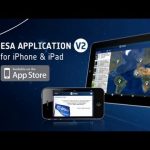
ESA has updated its application for iPhone and iPad.
With the launch of the ESA App V2, users can see ESA’s latest satellite imagery from Envisat in near-real time, complementing the latest news and discoveries in space exploration and Earth observation.
Making full use of the iPhone and iPad touch features, ESA App V2 puts videos, images, facts and figures, ESA’s Twitter feeds, YouTube links and other information in a convenient mobile package.
Download ESA App V2 here: http://itunes.apple.com/us/app/esa-european-space-agency/id441518639?mt=8
The universe was born 13.7 billion years ago with the Big Bang. But what is the Big Bang and what was there before? Scientists are starting to get an answer thanks to the time-travelling Planck mission.
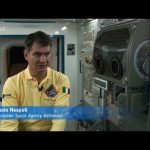
ESA’s Director of Human Spaceflight Simonetta Di Pippo together with ESA’s astronaut Paolo Nespoli introduce the MagISStra mission which is going to be launched in December 2010 from Baikonur Cosmodrome, Kazakhstan. This is the third six-month duration mission a European astronaut takes part to.
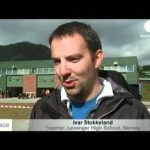
Flying your very own rocket with its model satellite – this was the challenge facing high-school students from all over Europe this summer for the first ever European CanSat competition in Norway.
Flying your very own rocket with its model satellite – this was the challenge facing high-school students from all over Europe this summer for the first ever European CanSat competition in Norway.
Flying your very own rocket with its model satellite – this was the challenge facing high-school students from all over Europe this summer for the first ever European CanSat competition in Norway.
Check out this and other cool science experiments at http://www.stevespanglerscience.com/experiments/ The next time you’re eating a big bowl of breakfast cereal, take a closer look at the ingredients. You’ll find that your cereal contains more than just wheat and corn. Look closely and you might find iron… you know, the metal… the stuff used to make nails. Here’s an experiment to see if there is really metallic iron in your breakfast cereal.
About Steve Spangler Science…
Steve Spangler is a celebrity teacher, science toy designer, speaker, author and an Emmy award-winning television personality. Spangler is probably best known for his Mentos and Diet Coke geyser experiment that went viral in 2005 and prompted more than 1,000 related YouTube videos. Spangler is the founder of www.SteveSpanglerScience.com, a Denver-based company specializing in the creation of science toys, classroom science demonstrations, teacher resources and home for Spangler’s popular science experiment archive and video collection. Spangler is a frequent guest on the Ellen DeGeneres Show where he takes classroom science experiments to the extreme. Check out his pool filled with 2,500 boxes of cornstarch!
On the education side, Spangler started his career as a science teacher in the Cherry Creek School district for 12 years. Today, Steve travels extensively training teachers in ways to make learning more engaging and fun. His hands-on science boot camps and summer institutes for teachers inspire and teach teachers how to prepare a new generation for an ever-changing work force. Over the last 15 years, he has also made more than 500 television appearances as an authority on hands-on science and inquiry-based learning.
On the business side, Spangler is the founder and CEO of Steve Spangler Science, a Denver-based company specializing in the creation of educational toys and kits and hands-on science training services for teachers. The companys unique business strategies and viral creations have been featured in the Wall Street Journal, Inc. Magazine, Wired and TIME Magazine where online readers voted Steve Spangler #18 in the Top 100 Most Influential People of the Year for 2006 (what were they thinking?). You’ll find more than 140 Spangler created products available online at SteveSpanglerScience.com and distributed to toy stores and mass-market retailers worldwide.
Spangler joined NBC affiliate 9News in 2001 as the science education specialist. His weekly experiments and science segments are designed to teach viewers creative ways to make learning fun. His now famous Mentos Geyser experiment, turning 2-liter bottles of soda into erupting fountains, became an Internet sensation in September 2005 when thousands of people started posting their own Mentos explosions on YouTube.com.
As founder of SteveSpanglerScience.com, Spangler and his design team have developed more than 140 educational toys and science-related products featured by mass-market retailers like Target, Wal-Mart, Toys R’ Us, Discovery Channel Stores and over 1,400 independent specialty toy stores. His educational science catalog and on-line business offers more than a thousand science toys and unique learning resources. Recently, Spangler has been featured in the Wall Street Journal, Inc. Magazine, WIRED, the History Channel, Food Network and TIME Magazine where on-line readers voted Steve Spangler #18 in the Top 100 Most Influential People of the Year for 2006.
His recent appearances on the Ellen DeGeneres Show have taught viewers how to blow up their food, shock their friends, create mountains of foam, play on a bed of nails, vanish in a cloud of smoke and how to turn 2,500 boxes of cornstarch and a garden hose into a swimming pool of fun.
“Kepler is a critical component in NASA’s broader efforts to ultimately find and study planets where Earth-like conditions may be present,” said Jon Morse, the Astrophysics Division director at NASA Headquarters in Washington. “The planetary census Kepler takes will be very important for understanding the frequency of Earth-size planets in our galaxy and planning future missions that directly detect and characterize such worlds around nearby stars.”
The mission will spend three and a half years surveying more than 100,000 sun-like stars in the Cygnus-Lyra region of our Milky Way galaxy. It is expected to find hundreds of planets the size of Earth and larger at various distances from their stars. If Earth-size planets are common in the habitable zone, Kepler could find dozens; if those planets are rare, Kepler might find none.
In the end, the mission will be our first step toward answering a question posed by the ancient Greeks: are there other worlds like ours or are we alone?
Space touches us all on Earth – it is used for protecting our environment, for improving our everyday lives, for safety and security, and for stimulating our need for knowledge. Space is a key asset for Europe to face global challenges, for boosting our economic growth, for building our future.
Space touches us all on Earth – it is used for protecting our environment, for improving our everyday lives, for safety and security, and for stimulating our need for knowledge. Space is a key asset for Europe to face global challenges, for boosting our economic growth, for building our future.