ESA is Europe’s gateway to space. Our mission is to shape the development of Europe’s space capability and ensure that investment in space continues to deliver benefits to the citizens of Europe and the world. Check out http://www.esa.int/ESA to get up to speed on everything space related.
The Copernicus Sentinel-2A satellite takes us over part of northeast Kenya – an area east of the East African Rift in this week’s edition of the Earth from Space programme.
ESA is Europe’s gateway to space. Our mission is to shape the development of Europe’s space capability and ensure that investment in space continues to deliver benefits to the citizens of Europe and the world. Check out http://www.esa.int/ESA to get up to speed on everything space related.
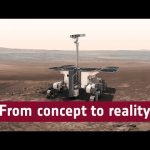
The second part of the ExoMars programme is ongoing.
In Stevenage, UK, a rover is being built that will carry a drill and a suite of instruments dedicated to exobiology and geochemistry research. It will be the first mission to combine the capability to move across the surface and to study Mars at depth.
The primary goal of the ExoMars programme is to address the question of whether life has ever existed on the red planet.
The first part of the programme was launched in March 2016 with the Trace Gas Orbiter. The second part is planned for launch in 2020 and comprises the rover and surface science platform
ExoMars is a joint endeavour between ESA and the Russian space agency, Roscosmos.
★ Subscribe: http://bit.ly/ESAsubscribe and click twice on the bell button to receive our notifications.
ESA is Europe’s gateway to space. Our mission is to shape the development of Europe’s space capability and ensure that investment in space continues to deliver benefits to the citizens of Europe and the world. Check out http://www.esa.int/ESA to get up to speed on everything space related.
ESA is Europe’s gateway to space. Our mission is to shape the development of Europe’s space capability and ensure that investment in space continues to deliver benefits to the citizens of Europe and the world. Check out http://www.esa.int/ESA to get up to speed on everything space related.
On December 24, 1968, Apollo 8 arrived at the Moon and began orbital insertion. The Apollo spacecraft flew most of the way to the Moon sideways,pointed toward celestial “north” for guidance purposes.
NASA astronauts Frank Borman, James Lovell, William Anders became the first humans to travel beyond low Earth orbit and orbit another celestial body.
They were also the first humans to see the far side of the Moon, and Earth as a whole planet, taking the famous Earthrise photo.
On this 50th anniversary of the historic flight of Apollo 8, NASA wishes Season’s Greetings to everyone on the good Earth.
ESA is Europe’s gateway to space. Our mission is to shape the development of Europe’s space capability and ensure that investment in space continues to deliver benefits to the citizens of Europe and the world. Check out http://www.esa.int/ESA to get up to speed on everything space related.
Science gets scaled up with the first 8K ultra high definition (UHD) video from the International Space Station. Get closer to the in-space experience and see how the international partnership-powered human spaceflight is improving lives on Earth, while enabling humanity to explore the universe. More: https://go.nasa.gov/2zgPY5o Special thanks to the European Space Agency, the ISS National Lab, and astronauts Alexander Gerst, Serena Auñón-Chancellor, Ricky Arnold and Drew Feustel.
Featured investigations and facilities:
0:01, 2:36 BEST seeks to advance use of sequencing DNA and RNA in space. https://go.nasa.gov/2tNntKu
0:13 The Minus Eighty-Degree Laboratory Freezer for ISS (MELFI) is a cold storage unit that maintains experiment samples at ultra-cold temperatures throughout a mission. https://go.nasa.gov/2RkJAl5
0:21 The Advanced Plant Habitat (APH), a recent addition to the space station, is the largest growth chamber aboard the orbiting laboratory. https://go.nasa.gov/2JCi8vV
0:33 Canadarm2 is part of Canada’s contribution to the space station. This 17-metre-long robotic arm was extensively involved in the assembly of the orbiting laboratory. https://go.nasa.gov/2ReaU42
0:41 Crew Earth Observations record how the planet is changing over time, from human-caused changes like urban growth and reservoir construction, to natural dynamic events such as hurricanes, floods and volcanic eruptions. https://go.nasa.gov/2KLFAaq
0:49 The Light Microscopy Module (LMM) is a modified commercial, highly flexible, state-of-the-art light imaging microscope facility that provides researchers with powerful diagnostic hardware and software onboard the space station. https://go.nasa.gov/2RfdYwS
0:53 ACE-T-2 looks at the assembly of complex structures from micron-scale colloidal particles interacting via tunable attractive interactions. https://go.nasa.gov/2Re2ppS
0:57 Plant Habitat-1 comprehensively compares differences in genetics, metabolism, photosynthesis, and gravity sensing between plants grown in space and on Earth. https://go.nasa.gov/2MdDBfc
1:05 The Cupola provides an observation and work area for the International Space Station crew that gives visibility to support the control of the station’s robotic arms, and a beautiful view of the Earth, celestial objects and visiting vehicles. https://go.nasa.gov/2CRsxCT
1:14 Atomization observes the disintegration processes of low-speed water jets under various conditions to improve spray combustion processes inside rocket and jet engines. https://go.nasa.gov/2RkKrlN
1:30 BCAT-CS focuses on the study of forces between particles that cluster together by studying sediments of quartz and clay particles. https://go.nasa.gov/2p6WBSV
1:38 Functional Immune analyzes blood and saliva samples to determine the changes taking place in crew members’ immune systems during flight. https://go.nasa.gov/2RfUMz1
2:03 Life Support Rack (LSR) is a technology demonstrator for closed loop air revitalization. https://go.nasa.gov/2Rdfi3C
2:15 The Japanese Experiment Module Airlock is used to deliver science experiments to external platforms, and prepare small satellites for deployment from station. https://go.nasa.gov/2RdcBik
2:23 SPHERES Tether Slosh combines fluid dynamics equipment with robotic capabilities aboard the space station to investigate automated strategies for steering passive cargo that contain fluids. https://go.nasa.gov/2RfQPdQ
ESA is Europe’s gateway to space. Our mission is to shape the development of Europe’s space capability and ensure that investment in space continues to deliver benefits to the citizens of Europe and the world. Check out http://www.esa.int/ESA to get up to speed on everything space related.
You have heard of astronaut ice-cream? Well, these trick-or-treaters are loaded up with “NASA candy.” Watch as these kids marvel at the special Halloween treats in store for them. Also, as the kids will be doing, check out NASA’s InSight landing on Mars on November 26, 2018, at www.nasa.gov/insight.
ESA is Europe’s gateway to space. Our mission is to shape the development of Europe’s space capability and ensure that investment in space continues to deliver benefits to the citizens of Europe and the world. Check out http://www.esa.int/ESA to get up to speed on everything space related.
Cameras outside the International Space Station captured views of Hurricane Michael at 12:13 p.m. and 12:50 p.m. EDT Oct. 9 from an altitude of 255 miles as the storm churned over the Gulf of Mexico moving northwest at 12 miles an hour. More: https://go.nasa.gov/2NxKdp4
Michael is expected to make landfall Wednesday, Oct. 10 as a category 3 hurricane over the Florida panhandle.
NASA Administrator Jim Bridenstine’s message to the NASA workforce on the agency’s accomplishments over six incredible decades, and future plans including missions to the Moon and on to Mars. For more, visit: https://www.nasa.gov/60
Italian ESA astronaut Samantha Cristoforetti, speaking from the European Astronaut Centre near Cologne in Germany, has a message of thanks to all those who’ve entered our Lunar 3D printing competition so far. A new lunar analogue test facility, called Luna for short, is currently being set up at EAC to test the technologies and techniques needed for any future Moon base – with 3D printing high on the list. And a team ESA’s technical centre in Noordwijk, the Netherlands, is overseeing a project to research in detail how 3D printing could be used in such a Moon base. We’re also interested in the human factor: what would you 3D print to make the Moon feel like home? That’s why we’re crowdsourcing your ideas through this competition. The closing date is 23 September 2018.
ESA is Europe’s gateway to space. Our mission is to shape the development of Europe’s space capability and ensure that investment in space continues to deliver benefits to the citizens of Europe and the world. Check out http://www.esa.int/ESA to get up to speed on everything space related.
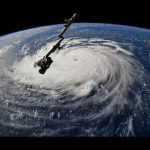
A high definition camera outside the International Space Station captured a stark and sobering view of Hurricane Florence at 7:50 a.m. EDT on Sept. 12. NASA satellites track the storm: https://go.nasa.gov/2CEmDGQ
This video was taken as Florence churned across the Atlantic in a west-northwesterly direction with winds of 130 miles an hour. The National Hurricane Center forecasts additional strengthening for Florence before it reaches the coastline of North Carolina and South Carolina early Friday, Sept. 14.
At 8:10 a.m. Eastern time, Sept. 10, cameras on the International Space Station captured views of Hurricane Florence. NASA satellites track the storm: https://go.nasa.gov/2CEmDGQ | Download video: https://go.nasa.gov/2Ql555y
Florence is moving in a westerly direction across the Atlantic, headed for a likely landfall along the eastern seaboard of the U.S. late Thursday or early Friday. Now a major hurricane with winds of 115 miles an hour and increasing, the National Hurricane Center says Florence’s forecast track will take the system over the southwestern Atlantic Ocean between Bermuda and the Bahamas Tuesday and Wednesday, and Florence will approach the coast of South Carolina or North Carolina on Thursday. The station was flying 255 miles over the storm at the time this video was captured.
ESA is Europe’s gateway to space. Our mission is to shape the development of Europe’s space capability and ensure that investment in space continues to deliver benefits to the citizens of Europe and the world. Check out http://www.esa.int/ESA to get up to speed on everything space related.
Ever wondered what it feels like to fly from Alaska to the Andes in 260 seconds? ESA astronaut Alexander Gerst captured this timelapse footage of Alaska, the USA and South America while orbiting Earth on board the International Space Station.
This timelapse is made up of 6,375 images shown 12.5 times faster than actual speed. Music is Our Oasis by Miriam Speyer, sourced from Audio Network Limited.
Discover more about our planet with the Earth from Space video programme. In this special edition, ESA’s Aeolus mission scientist, Anne Grete Straume, joins us in the cleanroom at Airbus Defence and Space in Toulouse, France. She explains how winds are generated, how they affect our weather, and how Aeolus will measure the wind and how this information will be used to improve weather forecasts and climate models.
Discover more about our planet with the Earth from Space video programme. In this special edition, ESA’s Aeolus Project Manager, Anders Elfving, joins us in the cleanroom at Airbus Defence and Space in Toulouse, France, to talk about the challenges in developing the mission’s pioneering laser technology.
Second surprised text messages from Tayo! IT’s AI (Artificial Intelligence) for kids from Tayo the Little Bus. Did you know that Tayo can text? Tayo texts with Jiwu even about the ways to be the strongest person in the world! Wait for more fun episodes that Tayo texts with Jiwu!
Tayo the Little Bus has more than 100 episodes in English, Spanish, Turkish, Russian, Chinese, German and Korean! Here’s the official channels of them. 🇺🇸 🇪🇦 🇹🇷 🇷🇺 🇨🇳 🇩🇪 🇰🇷
Explore the Philippines’ Mount Mayon, one of the world’s most active volcanoes, in this episode of Earth from Space, presented by Kelsea Brennan-Wessels from the ESA Web TV virtual studios.
Earth from Space is presented by Kelsea Brennan-Wessels from the ESA Web TV virtual studios. A mosaic of cloud-free images from the Copernicus Sentinel-3A satellite spanning Europe is featured in this edition.
In this special edition of Earth from Space, senior project scientist at Gamma Remote Sensing, Dr Maurizio Santoro, joins the show to discuss how his team estimates forest biomass from space.
Earth from Space is presented by Kelsea Brennan-Wessels from the ESA Web TV virtual studios. In this edition, Sentinel-2A satellite takes us over Japan’s capital, the world’s largest megacity.
Earth from Space is presented by Kelsea Brennan-Wessels from the ESA Web TV virtual studios. In this edition, Sentinel-3A treats us to a view stretching from Sardinia to Romania.
Earth from Space is presented by Kelsea Brennan-Wessels from the ESA Web-TV virtual studios. In this edition, Sentinel-2 takes us over Tunisia’s capital Tunis and surrounding wetlands.
The astronauts and cosmonauts on the International Space Station take pictures of Earth out their windows nearly every day, and over a year that adds up to thousands of photos. The people at the Earth Science and Remote Sensing Unit at NASA’s Johnson Space Center in Houston had the enviable job of going through this year’s crop to pick their top 17 photos of Earth for 2017—here’s what they chose!
Earth from Space is presented by Kelsea Brennan-Wessels from the ESA Web-TV virtual studios. In the 250th edition, the Sentinel-2A satellite takes us over northern Brazil where the Amazon River meets the Atlantic Ocean.
Earth from Space is presented by Kelsea Brennan-Wessels from the ESA Web-TV virtual studios. In the 248th edition, discover Chile’s largest salt flat in the Atacama Desert.
A series of night-time photos were taken by ESA astronaut Paolo Nespoli on 5 November around 22:33 GMT, here shown in a time-lapse with a 1-second interval, while the Space Station was flying from the southern Atlantic Ocean over to Kazakhstan.
Paolo was lucky enough to capture a fast fireball falling to Earth over the Atlantic Ocean, off the South Africa west coast — look closely between 00:07 and 00:08 seconds at upper right in this video.
A fireball is basically a very bright meteoroid — a small bit of natural “space rock” — entering Earth’s atmosphere and burning brighter than the background stars. This particular meteoroid was moving much faster than typical, with an estimated speed of around 40 km/s, according to experts working on near-Earth objects (NEOs) in ESA’s Space Situational Awareness Programme.
“This speed is actually quite fast for meteoroids, which typically enter the atmosphere at around 20 km/s,” says Rüdiger Jehn, SSA NEO segment co-manager.
ESA astronaut Paolo Nespoli in currently working and living on board the International Space Station as part of the Italian Space Agency’s long-duration VITA mission.
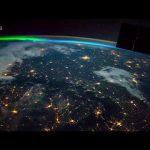
A series of nighttime photos were taken by ESA astronaut Paolo Nespoli to create this time-lapse of the Earth from the Black Sea to Oman as seen from the International Space Station.
ESA astronaut Paolo Nespoli in currently working and living on board the International Space Station as part of the Italian Space Agency’s long-duration VITA mission.
Discover more about our planet with the Earth from Space video programme. This special edition celebrates three years of successful operations of the Copernicus Sentinel-1 constellation.
Earth from Space is presented by Kelsea Brennan-Wessels from the ESA Web-TV virtual studios. Explore the US capital with Sentinel-2 in the 245th edition.
Discover more about our planet with the Earth from Space video programme. In this special edition, senior scientist at France’s Collecte Localisation Satellites, Marie-Hélène Rio, joins the show to discuss how data on ocean surface currents by the Sentinel-3 satellite mission are used by people working at sea.
On 12 September 2017, 710 photos were taken by ESA astronaut Paolo Nespoli to create this time-lapse of the Earth (from Africa to Russia) as seen from the International Space Station.
ESA astronaut Paolo Nespoli in currently working and living aboard the Station as part of his long duration Vita mission.
Discover more about our planet with the Earth from Space video programme. In this special edition, Jean-Yves Le Gall, President of the CNES French Space Agency, and Josef Aschbacher, Director of ESA’s Earth Observation Programmes, join the show to discuss how cooperation will further benefit Earth observation and the Copernicus environmental monitoring programme.
From NASA to you, we wish you a safe and happy Independence Day. In this video, we simulated rocket and engine sounds to reflect the cannon booms in the music.
Here is a chronological list of the engines and rocket launches we highlighted:
Earth from Space is presented by Kelsea Brennan-Wessels from the ESA Web-TV virtual studios. In the 229th edition, Sentinel-2 takes us over the border of the US states Utah and Colorado.