We are Europe’s gateway to space. Our mission is to shape the development of Europe’s space capability and ensure that investment in space continues to deliver benefits to the citizens of Europe and the world. Check out https://www.esa.int/ to get up to speed on everything space related.
ESA astronauts Thomas Pesquet, Luca Parmitano, Alexander Gerst, and Matthias Maurer, together with the ESA Director General, will answer questions from journalists from the IAC in Paris. Andreas Mogensen will join remotely and Samantha Cristoforetti will connect directly from the ISS. A live not to be missed!
We are Europe’s gateway to space. Our mission is to shape the development of Europe’s space capability and ensure that investment in space continues to deliver benefits to the citizens of Europe and the world. Check out https://www.esa.int/ to get up to speed on everything space related.
ESA astronauts Thomas Pesquet, Luca Parmitano, Alexander Gerst, and Matthias Maurer, together with the ESA Director General, will answer questions from journalists from the IAC in Paris. Andreas Mogensen will join remotely and Samantha Cristoforetti will connect directly from the ISS. A live not to be missed!
We are Europe’s gateway to space. Our mission is to shape the development of Europe’s space capability and ensure that investment in space continues to deliver benefits to the citizens of Europe and the world. Check out https://www.esa.int/ to get up to speed on everything space related.
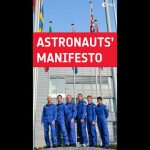
The future of human exploration is a major topic to be discussed at the Space Summit taking place in Toulouse, France. In favour of this, European astronauts have written and will release a manifesto on 16 February 2022.
We are Europe’s gateway to space. Our mission is to shape the development of Europe’s space capability and ensure that investment in space continues to deliver benefits to the citizens of Europe and the world. Check out https://www.esa.int/ to get up to speed on everything space related.
Glaciers across the globe have lost over nine trillion tonnes of ice in half a century. How will glaciers look over the coming decades? “It all depends on what humans are doing now in terms of greenhouse gas emissions:” this is the message one scientist delivered during an ESA-led expedition to the Gorner Glacier in Switzerland – one of the biggest ice masses in the Alps.
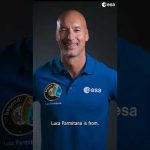
As world leaders gather for the 26th @United Nations Climate Change Conference of Parties, watch the exclusive premiere of the documentary that follows ESA astronaut Luca Parmitano, along with a team of glaciologists and climate experts, on their journey across the Alps to learn how rising global temperatures are taking their toll on glaciers.
The documentary features breathtaking scenery of the Gorner Glacier as well as interviews with climate specialists as they explain how we can monitor glaciers using both satellite data and in situ measurements.
We are Europe’s gateway to space. Our mission is to shape the development of Europe’s space capability and ensure that investment in space continues to deliver benefits to the citizens of Europe and the world. Check out https://www.esa.int/ to get up to speed on everything space related.
On 19 April, 2001, Umberto Guidoni was launched to the International Space Station, becoming the first European astronaut on board. In April 2021, ESA celebrates 20 years of European astronaut missions to this unique orbital outpost.
In this video, ESA astronauts past and present share their experiences of the International Space Station and spaceflight more generally. They identify some of their favourite moments and voice their hopes for the future of space exploration.
Here are the timestamps for each message:
0:00 – Intro 0:39 – Umberto Guidoni 3:31 – Claudie Haigneré 6:31 – Frank De Winnie 7:42 – Pedro Duque 10:36 – André Kuipers 11:38 – Thomas Reiter 14:38 – Christer Fuglesang 16:58 – Hans Schlegel 19:39 – Luca Parmitano 20:29 – Alexander Gerst 22:29 – Samantha Cristoforetti 28:20 –Thomas Pesquet 29:07 – Andreas Mogensen 30:05 – Tim Peake 31:02 – Matthias Maurer 32:57 – Jean François Clervoy 38:49 – Michel Tognini 42:23 – Reinhold Ewald
The International Space Station is humankind’s science laboratory in space. Its unique microgravity environment enables researchers to study phenomena and carry out experiments that would not be possible on Earth. Around 400 ESA investigations have been performed since the first module was launched and thousands more are led by the four other space agencies that work together to keep the Space Station aloft: @NASA, Russia’s @Роскосмос ТВ, Japan’s @JAXA | 宇宙航空研究開発機構, and the @Canadian Space Agency.
Scientific discoveries made on Station are applied widely from health to metallurgy, while the increased knowledge we gain about our solar system helps build a deeper understanding of Earth and life itself.
We are Europe’s gateway to space. Our mission is to shape the development of Europe’s space capability and ensure that investment in space continues to deliver benefits to the citizens of Europe and the world. Check out https://www.esa.int/ to get up to speed on everything space related.
For the fourth time since 1978, ESA is recruiting new astronauts. Applications open 31 March and close 28 May 2021. Four new members of the European astronaut corps will be selected. Around 20 of the best remaining candidates will also be selected to a newly-established astronaut reserve, whose members may be called upon to fulfil specific missions. ESA’s last call for new astronauts was in 2008, when six candidates were appointed. They were joined by a further one candidate in 2015.
We are Europe’s gateway to space. Our mission is to shape the development of Europe’s space capability and ensure that investment in space continues to deliver benefits to the citizens of Europe and the world. Check out https://www.esa.int/ to get up to speed on everything space related.
For the first time in over a decade, the European Space Agency (ESA) is seeking new astronauts. This one-hour-long briefing with ESA experts and astronauts outlines the selection criteria and desirable traits for astronauts. It also provides further detail around the Parastronaut Feasibility Project and astronaut reserve, as well as ESA’s vision for the next 10 years of human and robotic exploration.
Participants: Luca Parmitano, ESA astronaut Ersilia Vaudo-Scarpetta, Chief Diversity Officer Josef Aschbacher, future ESA Director General Sara Pastor, I-Hab Gateway module Team Leader Antonella Costa, Human Resources Business Partner
Moderator: Fabrizio L’Abbate, Communication Department
We are Europe’s gateway to space. Our mission is to shape the development of Europe’s space capability and ensure that investment in space continues to deliver benefits to the citizens of Europe and the world. Check out https://www.esa.int/ to get up to speed on everything space related.
2020 has been another year of progress for ESA. The launch and commissioning of Solar Orbiter heralded a new era of space science, whilst Eutelsat Konnect revolutionised telecommunications. The new Vega SSMS began a cost-effective new launch system for small satellites, deploying exciting new technologies such as PhiSat and ESAIL. ESA’s Earth Observation activities were also showcased, with the launch of Sentinel-6 and an international effort to monitor the environmental and economic impact of COVID-19. Gaia and Cheops yielded new findings about our universe; ESA astronaut Luca Parmitano returned successfully from orbit. With a lunar programme agreement signed and new steps being taken to control debris, ESA is set to begin 2021 at the forefront of space exploration.
★ Subscribe: http://bit.ly/ESAsubscribe and click twice on the bell button to receive our notifications.
We are Europe’s gateway to space. Our mission is to shape the development of Europe’s space capability and ensure that investment in space continues to deliver benefits to the citizens of Europe and the world. Check out https://www.esa.int/ to get up to speed on everything space related.
Monday 2 November, 2020 marks 20 years since the first crew took up residence on the International Space Station. Since then, 240 people including 18 ESA astronauts have lived and worked on the orbital outpost, carrying out essential research to benefit life on Earth.
In this clip, ESA astronauts Luca Parmitano, Alexander Gerst, Thomas Pesquet, Tim Peake, Andreas Mogensen, André Kuipers, Christer Fuglesang, Frank De Winne and Reinhold Ewald pay tribute to the Station. ESA Director General Jan Wörner and NASA Administrator Jim Bridenstine also speak about the Station’s significance for space exploration and international collaboration.
The next ESA mission to the International Space Station is set for 2021, when Thomas Pesquet will become the first European to fly on a SpaceX Crew Dragon spacecraft for his Alpha mission.
★ Subscribe: http://bit.ly/ESAsubscribe and click twice on the bell button to receive our notifications.
We are Europe’s gateway to space. Our mission is to shape the development of Europe’s space capability and ensure that investment in space continues to deliver benefits to the citizens of Europe and the world. Check out https://www.esa.int/ to get up to speed on everything space related.
The latest asteroid news and updates from the European Space Agency hosted by award-winning science and space journalist Richard Hollingham. Richard is the presenter of the Space Boffins podcast, space correspondent for BBC Future and an ESA TV launch commentator.
The programme – hosted from Richard’s home in the East of England – will include features and discussions with leading asteroid experts. Guests include Antarctic meteorite hunter Dr Katie Joy from the University of Manchester, Professor Alan Fitzsimmons – who’s working on ESA’s asteroid intercept mission HERA, Dr Natalie Starkey from the Open University and ESA asteroid tracking expert Dr Detlef Koschny.
We’ll also hear from astronauts, researchers working on ESA’s new asteroid tracking telescopes and Brian May giving us the low-down on the challenges of asteroid rendezvous.
You can also find the a local Asteroid Day Programme in the following languages:
We are Europe’s gateway to space. Our mission is to shape the development of Europe’s space capability and ensure that investment in space continues to deliver benefits to the citizens of Europe and the world. Check out http://www.esa.int/ESA to get up to speed on everything space related.
ESA astronauts Samantha Cristoforetti and Luca Parmitano join the 2019/20 Moon Camp Challenge winning teams for a 1-hour webinar. Connecting from all over the world, the teams have their questions answered live by the ESA astronauts.
★ Subscribe: http://bit.ly/ESAsubscribe and click twice on the bell button to receive our notifications.
We are Europe’s gateway to space. Our mission is to shape the development of Europe’s space capability and ensure that investment in space continues to deliver benefits to the citizens of Europe and the world. Check out http://www.esa.int/ESA to get up to speed on everything space related.
Take a break with ESA astronauts Alexander Gerst, Samantha Cristoforetti, Luca Parmitano and Thomas Pesquet as they discuss living and working in space. In this video, our astronauts talk about their experiences of landing in a Russian Soyuz spacecraft upon returning from the International Space Station.
During a shared coffee break, Luca compares his first landing to his most recent landing – the second of which he found much softer than the first. Thomas finds humour in his experience of landing horizontally, while Alex describes a particularly high gravitational load on his return to Earth.
This clip is part of a series of four filmed in February 2020, following Luca’s return from the ISS mission on 6 February. It was filmed in the crew quarters of the German Aerospace Center DLR’s :envihab facility next to ESA’s European Astronaut Centre in Cologne, Germany.
For more about Luca’s Beyond mission and other ESA astronaut-related content, visit the Exploration blog: https://blogs.esa.int/exploration/
★ Subscribe: http://bit.ly/ESAsubscribe and click twice on the bell button to receive our notifications.
We are Europe’s gateway to space. Our mission is to shape the development of Europe’s space capability and ensure that investment in space continues to deliver benefits to the citizens of Europe and the world. Check out http://www.esa.int/ESA to get up to speed on everything space related.
ESA astronaut Luca Parmitano tested new functionality for the astronaut aid Cimon relating to mood detection and enjoyed a few favourite songs on the first weekend of February 2020, his last weekend in space for the Beyond mission on the International Space Station.
Short for Crew Interactive Mobile CompanioN, Cimon is a 3D-printed plastic sphere designed to test human-machine interaction in space. It was developed and built by Airbus in Friedrichshafen and Bremen, Germany, on behalf of German aerospace centre DLR and uses artificial intelligence software by IBM Watson. Ludwig Maximilians University Clinic in Munich (LMU) is in charge of the project’s scientific aspects. Cimon was first used by ESA astronaut Alexander Gerst during his 2018 Horizons.
Cimon weighs around 5 kg on Earth and has a display screen at its centre. Its main aim is to support and increase astronaut efficiency by displaying and explaining information needed to carry out scientific experiments and repairs.
Other applications include mobile photography and videography and the ability to document experiments, search for objects and maintain an inventory. Cimon can also see, hear and understand what it observes and is equipped with an autonomous navigation system, allowing astronauts to issue voice commands like you would to virtual assistants like Alexa, Siri or Cortana on the ground.
Circling our planet at 28 800 km/h the International Space Station offers space for six astronauts to conduct experiments for researchers all over the world in weightlessness as well as test and demonstrate techniques needed to further explore our Solar System.
Europe’s laboratory Columbus was launched over 10 years ago and more than 200 experiments have been done inside. Columbus houses as many disciplines as possible in a small volume, from astrobiology to solar science through metallurgy and psychology. Countless papers have been published drawing conclusions from experiments performed in Columbus, and Cimon is another example of the research conducted in space.
We are Europe’s gateway to space. Our mission is to shape the development of Europe’s space capability and ensure that investment in space continues to deliver benefits to the citizens of Europe and the world. Check out http://www.esa.int/ESA to get up to speed on everything space related.
During Luca’s Mission Beyond, we sent warm wishes to the astronaut on his birthday (27 September) onboard the ISS by gifting a virtual candle to blow out on an Astro Pi.
Astro Pi computers come with a set of sensors and gadgets that can be used to run great scientific experiments by means of computer coding. This set of sensors is called ‘Sense HAT’ (that stands for ‘Hardware Attached on Top’).
The Sense HAT add-on board was specially created for the Astro Pi competition. The board gives Astro Pi the ability to ‘sense’ and make many kinds of measurements, from temperature to movement, and to output information using a special display – the 8×8 LED matrix. The Astro Pis are also equipped with a joystick and buttons – just like a videogame console!
We are Europe’s gateway to space. Our mission is to shape the development of Europe’s space capability and ensure that investment in space continues to deliver benefits to the citizens of Europe and the world. Check out http://www.esa.int/ESA to get up to speed on everything space related.
ESA astronaut Luca Parmitano spent 201 days in orbit as part of his Beyond mission to the International Space Station. In this clip, he discusses how astronauts manage the risk of colds and flu on the International Space Station.
We are Europe’s gateway to space. Our mission is to shape the development of Europe’s space capability and ensure that investment in space continues to deliver benefits to the citizens of Europe and the world. Check out http://www.esa.int/ESA to get up to speed on everything space related.
Media had their first opportunity to ask questions of ESA astronaut Luca Parmitano in Europe on Saturday 8 February 2020 – just two days after he returned from 201 days in space.
This news conference at ESA’s European Astronaut Centre (EAC) started at 12:30 CET (11:30 GMT) with an introduction from the Head of EAC Frank De Winne, followed by statements from ESA Director General Jan Wörner and Director of Human and Robotic Exploration David Parker.
Luca then answered a range of questions about his recent mission, known as ‘Beyond’. Luca answers questions in Italian and others in English.
The entire conference was broadcast live on ESA Web TV.
Beyond was Luca’s second long-duration mission to the International Space Station. His first was Volare in 2013.
Luca was launched to the Station 20 July 2019 – the 50th anniversary of the first lunar landing – and returned 6 February 2020 in the Russian Soyuz MS-13 spacecraft.
During his Beyond mission he became the third European and first Italian in command of the Space Station, set the record for longest cumulative spacewalking time by a European astronaut, remotely controlled a rock-collecting rover in the Netherlands, supported over 50 European and 200 international experiments and welcomed the first Emirati astronaut Hazzaa Ali Almansoori among other mission highlights.
(Please note: There were some technical issues about 45-50 minutes into the press conference, in the replay there is some loss of audio quality and loss of audio/image sync.)
We are Europe’s gateway to space. Our mission is to shape the development of Europe’s space capability and ensure that investment in space continues to deliver benefits to the citizens of Europe and the world. Check out http://www.esa.int/ESA to get up to speed on everything space related.
ESA astronaut Luca Parmitano returned from his second long-duration mission to the International Space Station, known as ‘Beyond’, on 6 February 2020. In this interview at ESA’s Astronaut Centre in Cologne, Germany, he shares some of his experiences and feelings after 201 days in orbit.
This interview was conducted late on the night Luca landed in Cologne, and is the first full interview with him in Europe since he touched down in Kazakhstan at 09:12 GMT (10:12 CET) Thursday 6 February.
Some of the highlights of Luca’s Beyond mission include becoming the third European and first Italian in command of the Space Station, leading three of four complex spacewalks to maintain the cosmic-ray-detecting Alpha Magnetic Spectrometer AMS-02, gaining the European record for most cumulative spacewalking time, remotely controlling a rock-collecting rover in the Netherlands, supporting over 50 European and 200 international experiments and sharing his experiences with those back on Earth through images and video links.
One of the main things Luca highlighted throughout his mission was the fragility of our planet and the need to act now for generations to come.
We are Europe’s gateway to space. Our mission is to shape the development of Europe’s space capability and ensure that investment in space continues to deliver benefits to the citizens of Europe and the world. Check out http://www.esa.int/ESA to get up to speed on everything space related.
L’astronauta dell’ESA Luca Parmitano è tornato dalla sua seconda missione di lunga durata sulla Stazione Spaziale Internazionale chiamata ‘Beyond’, il 6 febbraio 2020. In questa intervista al Centro astronauti dell’ESA di Colonia in Germania, condivide alcune delle sue esperienze e dei suoi sentimenti dopo 201 giorni in orbita.
Questa intervista è stata condotta nella tarda notte in cui Luca è atterrato a Colonia, ed è la prima intervista completa con lui in Europa da quando è atterrato in Kazakistan alle 09:12 GMT (10:12 CET) giovedì 6 febbraio.
Tra i momenti salienti della missione Beyond di Luca ci sono: diventare il terzo europeo e il primo italiano al comando della Stazione Spaziale, condurre tre delle quattro complesse passeggiate spaziali, ottenere il record europeo per la maggior parte del tempo trascorso durante le passeggiate spaziali, controllare a distanza un rover che raccoglie rocce nei Paesi Bassi, condurre oltre 50 esperimenti europei e 200 internazionali e condividere le sue esperienze attraverso immagini e collegamenti video.
Una delle cose principali che Luca ha evidenziato nel corso della sua missione è stata la fragilità del nostro pianeta e la necessità di agire ora per le generazioni a venire.
We are Europe’s gateway to space. Our mission is to shape the development of Europe’s space capability and ensure that investment in space continues to deliver benefits to the citizens of Europe and the world. Check out http://www.esa.int/ESA to get up to speed on everything space related.
ESA astronaut Luca Parmitano touched down in the Kazakh Steppe at 09:12 GMT (10:12 CET), 6 February 2020 after his second six-month mission on the International Space Station. Luca returned to Earth in the Russian Soyuz MS-13 spacecraft alongside US astronaut Christina Koch and Russian cosmonaut Alexander Skvortsov.
During his second mission, known as ‘Beyond’, Luca served as the third European and first ever Italian in command of the International Space Station. Before leaving the Station, he handed this role over to Russian cosmonaut Oleg Skripocha in a traditional change of command ceremony.
While in orbit, Luca also performed four complex spacewalks to maintain the cosmic-ray-detecting Alpha Magnetic Spectrometer AMS-02, remotely operated a rock-collecting rover in the Netherlands, supported more than 50 European and over 200 international experiments, gained the European record for longest cumulative spacewalking time, and publicly shared countless images as he warned of the challenges facing our planet.
Luca will now return to ESA’s Astronaut Centre in Cologne, Germany where he will continue to work with researchers to gather baseline data and undertake an extensive programme of rehabilitation supported by ESA experts. The findings of this research and Luca’s work in space will help shape the future of space exploration and enhance technological developments on Earth.
We are Europe’s gateway to space. Our mission is to shape the development of Europe’s space capability and ensure that investment in space continues to deliver benefits to the citizens of Europe and the world. Check out http://www.esa.int/ESA to get up to speed on everything space related.
Italian ESA astronaut Luca Parmitano will return to Earth 6 February 2020, following his second long-duration mission on the International Space Station (ISS).
Luca’s mission – known as ‘Beyond’ – began 20 July 2019, exactly 50 years after the first lunar landing. On this date, Luca was launched to the Space Station in a Russian Soyuz spacecraft alongside Roscosmos cosmonaut Alexander Skvortsov and NASA astronaut Andrew Morgan.
During Beyond, Luca supported over 50 European experiments in orbit. These included remotely operating a rover in the Netherlands to collect rock samples as instructed by scientists in Germany, and completing four complex spacewalks to repair the cosmic-ray-detecting Alpha Magnetic Spectrometer AMS-02. He also supported numerous international experiments and became the third European and first ever Italian commander of the International Space Station.
Science and research completed during Luca’s mission will help pave the way for farther exploration as ESA looks beyond the International Space Station to the Moon and Mars.
We are Europe’s gateway to space. Our mission is to shape the development of Europe’s space capability and ensure that investment in space continues to deliver benefits to the citizens of Europe and the world. Check out http://www.esa.int/ESA to get up to speed on everything space related.
ESA astronaut Luca Parmitano and NASA astronaut Drew Morgan take you on a unique tour of the International Space Station shot in one take with two cameras strapped together. Luca and Drew take it in turns to guide you through the modules and spacecraft docked to the orbital outpost.
Starting from the Soyuz MS-15 spacecraft that bought Drew to the Space Station, the duo show each module and spacecraft docked with the International Space Station at the time it was recorded around the New Year 2020. Passing colleagues include NASA astronaut Jessica Meir and Christina Koch exercising and Russian cosmonauts Alexander Skvortsov and Oleg Skripochka.
This is the first tour of the International Space Station with two astronauts presenting and the first done in a single take.
At the time of recording three supply vehicles were docked, the Russian Progress MS-13, Space-X’s Dragon-19 and Northrup Grumman’s Cygnus-12, as well as two astronaut vehicles the Soyuz MS-15 and Soyuz MS-13.
The map overlay graphic erroneously shows the future Nauka module instead of Pirs. The Russian Multipurpose Laboratory Module Nauka is planned for launch in the future and will replace Pirs, but we put it on the map already.
Skip to specific modules or features such as the toilets using the timestamps below:
00:00:06 Soyuz MS-15
00:04:53 Zvezda service module
00:08:01 Pirs
00:09:27 Mini Research Module-2 (MRM-2)
00:10:30 Soyuz MS-13
00:11:44 MRM-2
00:12:27 Progress
00:13:19 Functional Cargo Block (FGB)
00:07:12 Mini Research Module-1 (MRM-1)
00:19:36 Pressurised Mating Adapter
00:20:42 Node-1 Unity
00:22:46 Northrup Grumman Cygnus-12
00:27:32 Quest Airlock
00:29:27 Node-3 Tranquility
00:30:58 T2 Treadmill
00:31:17 Toilet
00:33:38 Cupola at night
00:34:11 Permanent Multipurpose Module Leonardo (PMM)
00:36:42 US laboratory Destiny
00:37:45 Robotics station for Canadarm2
00:38:40 Exercise bike
00:42:21 Node-2 Harmony
00:44:40 Space X Dragon
00:46:35 European laboratory Columbus
00:49:53 Japanese laboratory Kibo
00:56:17 Space Station fly through
01:00:43 Cupola daytime
01:04:27 Goodbye from Cupola
★ Subscribe: http://bit.ly/ESAsubscribe and click twice on the bell button to receive our notifications.
We are Europe’s gateway to space. Our mission is to shape the development of Europe’s space capability and ensure that investment in space continues to deliver benefits to the citizens of Europe and the world. Check out http://www.esa.int/ESA to get up to speed on everything space related.
The year 2020 will see new and exciting European space missions, from journeys to the Sun and back to Mars, and from innovative telecommunications satellites to the continuing operation of Copernicus Earth observation satellites. The second ExoMars mission will see a European rover on the ‘Red Planet’ and the ESA/NASA Solar Orbiter mission will be launched around the Sun. This year marks probably the last time an ESA astronaut flies on a Russian Soyuz spacecraft – future European astronaut flights are likely to be on the new US spacecraft, in particular the NASA Orion vehicles, which feature European-built Service Modules, now being prepared for flights to the Moon and beyond. The year also sees the first flight of ESA’s new Vega-C launcher from Europe’s Spaceport in French Guiana, where Ariane 6 operations are also taking shape for its first flight.
★ Subscribe: http://bit.ly/ESAsubscribe and click twice on the bell button to receive our notifications.
We are Europe’s gateway to space. Our mission is to shape the development of Europe’s space capability and ensure that investment in space continues to deliver benefits to the citizens of Europe and the world. Check out http://www.esa.int/ESA to get up to speed on everything space related.
As the year comes to a close, it is once again time to look back and reflect on some of the achievements and highlights of European spaceflight. The new Gaia star catalogue and the launch of Cheops are keeping ESA at the forefront of space science, as will Solar Orbiter, being prepared for launch next year. The Copernicus programme continues to be the largest Earth observation programme in the world, with ESA preparing even more missions. On the Space Station, Luca Parmitano became the third European to command an ISS expedition. During his second mission, he made some of the space programme’s most complex and demanding spacewalks. At the end of 2019, the ESA Space19+ ministerial conference agreed to give ESA its largest budget ever and expressed continued support for Europe’s independent access to space with Ariane 6 and Vega-C.
★ Subscribe: http://bit.ly/ESAsubscribe and click twice on the bell button to receive our notifications.
We are Europe’s gateway to space. Our mission is to shape the development of Europe’s space capability and ensure that investment in space continues to deliver benefits to the citizens of Europe and the world. Check out http://www.esa.int/ESA to get up to speed on everything space related.
On 20 July 2019, ESA astronaut Luca Parmitano was launched to the International Space Station from the Baikonur Cosmodrome in Kazakhstan. During the Beyond mission he will participate in several spacewalks (EVA) to repair the dark matter hunter Alpha Magnetic Spectrometer, or AMS-02. Attached to the station during the STS-134 shuttle mission in May 2011, the AMS was never designed to be maintained in orbit. Luca has trained extensively for this challenging task, which will involve complicated techniques and the use of specially-designed tools.
We are Europe’s gateway to space. Our mission is to shape the development of Europe’s space capability and ensure that investment in space continues to deliver benefits to the citizens of Europe and the world. Check out http://www.esa.int/ESA to get up to speed on everything space related.
ESA astronaut Luca Parmitano will soon take part in several challenging spacewalks to service the International Space Station’s largest scientific instrument.
The Alpha Magnetic Spectrometer (AMS) is a sub-atomic particle detector that looks for dark matter, antimatter and measures cosmic rays – high energy particles that travel through space at close to the speed of light.
The AMS took 16 countries nearly 20 years to develop. It was assembled at CERN, tested at ESA’s ESTEC facility in The Netherlands and installed on the Space Station in 2011. Since then it has collected over 145 billion cosmic ray events across a range of energy levels and has already provided the first insights into potential antimatter and dark matter.
The maintenance of the AMS’ cooling system will ensure it can continue to provide more data and groundbreaking science. This film contains soundbites from the instrument’s Principal Investigator, Nobel Prize-winning physicist Professor Samuel Ting (MIT/CERN).
We are Europe’s gateway to space. Our mission is to shape the development of Europe’s space capability and ensure that investment in space continues to deliver benefits to the citizens of Europe and the world. Check out http://www.esa.int/ESA to get up to speed on everything space related.
This timelapse video from the International Space Station shows ESA astronaut Luca Parmitano helping NASA astronauts Andrew Morgan and Christina Koch prepare for a spacewalk on 6 October 2019.
Andrew and Christina worked outside in the vacuum of space for seven hours and one minute to begin the latest round of upgrading the station’s large nickel-hydrogen batteries with newer, more powerful lithium-ion batteries.
This spacewalk is one of many scheduled for October and November. The first all-female spacewalk is expected to take place during the week of 14 October and Luca is expected to complete his first spacewalk of the Beyond mission later in November.
During his November spacewalks, Luca will work to repair and enhance the Alpha Magnetic Spectrometer – a particle physics experiment module that was never designed to be maintained in orbit.
The music accompanying this timelapse is I Go Blind 2 sourced from Audio Network.
We are Europe’s gateway to space. Our mission is to shape the development of Europe’s space capability and ensure that investment in space continues to deliver benefits to the citizens of Europe and the world. Check out http://www.esa.int/ESA to get up to speed on everything space related.
Russian Cosmonaut Aleksei Ovtchinin passes the command of the International Space Station to Luca Parmitano in an official ceremony held on 2 October 2019. The ESA astronaut is the third European and the first Italian to have such responsibilities on the Space Station. Luca is Commander for Expedition 61, and for the second part of his second space mission known as Beyond.
We are Europe’s gateway to space. Our mission is to shape the development of Europe’s space capability and ensure that investment in space continues to deliver benefits to the citizens of Europe and the world. Check out http://www.esa.int/ESA to get up to speed on everything space related.
Playmobil figures are enjoyed by millions of children around the world, but now two very special figures, in the likeness of ESA’s Luca Parmitano, are flying around Earth with the astronaut himself.
Luca unpacked the two figures that arrived on the Cygnus NG-11 cargo ship in April 2019. The special edition figurines, limited to 25 000 can only be found with copies of the October 2019 Italian edition of Playmobil magazine.
This issue of the magazine is full of space-themed stories to inspire children and set their imaginations racing, while explaining about space exploration, the science behind the International Space Station and what we know about the Universe and what lies beyond our planet.
Playmobil toys are known for helping children develop their imaginations and concentration skills as they invent worlds for these little figures. The magazine and figure collaboration is a partnership between ESA, the Italian space agency ASI and the Italian publisher to celebrate Luca’s achievements and promote learning and foster curiosity and creativity in children.
The Playmobil Luca sports an astronaut ‘Snoopy’ hat, similar to that worn by the real Luca as he will prepare to don his spacesuit for a series of complex spacewalks later in his mission to repair the AMS-02 ‘antimatter hunter’ instrument outside the Space Station. The Snoopy cap holds the headphone and microphone communication so spacewalkers can talk to mission control and their colleagues inside the Space Station.
We are Europe’s gateway to space. Our mission is to shape the development of Europe’s space capability and ensure that investment in space continues to deliver benefits to the citizens of Europe and the world. Check out http://www.esa.int/ESA to get up to speed on everything space related.
Space was the theme of the 2019 Stockholm Culture Festival, a mass event that took over central Stockholm, Sweden, from 13 to 17 August.
Art, music, films and science activities for all ages took to the streets to satisfy the audience’s curiosity about space.
At the festival’s interactive planet exhibition, the whole family could feel and learn more about our galaxy and how space can improve our lives on Earth. Iconic images of the Moon and some rare shots of the preparations behind the scenes were on display in the exhibition ‘A Swedish camera on the Moon’ at Brunkebergstorg Square in Stockholm.
ESA’s astrophysicist Matt Taylor shared the fascinating space adventure of Rosetta, the first ever mission to land on a comet. ESA astronaut Luca Parmitano talked to thousands of festival-goers on 13 August to share his experiences in orbit, less than a month into his mission Beyond. Fellow astronauts Tim Peake and Thomas Reiter were on stage to host the event and bring the audience closer to space.
A stunning new film, called ‘Space Station Earth’, featuring images from space set to music by composer Ilan Eshkeri, made its world premiere on the opening night of the festival supported by a large orchestra, a choir and electronic instruments.
Combining images taken by ESA astronauts aboard the International Space Station with new footage created with the latest video techniques, the whole multimedia experience allowed the audience to see through astronauts’ eyes.
★ Subscribe: http://bit.ly/ESAsubscribe and click twice on the bell button to receive our notifications.
We are Europe’s gateway to space. Our mission is to shape the development of Europe’s space capability and ensure that investment in space continues to deliver benefits to the citizens of Europe and the world. Check out http://www.esa.int/ESA to get up to speed on everything space related.
ESA astronaut Luca Parmitano is this year’s ambassador of the European Astro Pi Challenge. In this video, he welcomes students to the challenge and gives an overview of the project.
We are Europe’s gateway to space. Our mission is to shape the development of Europe’s space capability and ensure that investment in space continues to deliver benefits to the citizens of Europe and the world. Check out http://www.esa.int/ESA to get up to speed on everything space related.
Before ESA astronaut Luca Parmitano was launched to the International Space Station for his second space mission ‘Beyond’ on 20 July 2019, we asked Twitter followers what they would like to #AskLuca. In this video, he answers a few of those questions:
0:00 – Intro 0:08 – Have you been specifically trained for the visit (yet to be confirmed) of US commercial crew vehicles? 0:41 – Do you have a music playlist to listen to and a list of pieces you would like to practice on the guitar during your mission? 1:25 – What was the biggest sacrifice you made to become an astronaut? 2:04 – Have you missed the space station since your last mission? 2:10 – What is one aspect of preparation you did very differently this time compared to the first time? 2:44 – What is your favourite science-fiction quote? 2:52 – What is the biggest challenge of your Beyond mission? 3:03 – Is it harder or easier to head off to space for the second time? 3:34 – Quali sono le differenze tra preparare una prima missione e una seconda? E cosa cambia nell’addestramento per un Comandante della ISS? 4:25 – Ti capita di annoiarti nel corso del tuo addestramento? E quanto è dura svolgere il lavoro dell’astronauta? 5:15 – Ti stai preparando a puntino per la Luna?
We are Europe’s gateway to space. Our mission is to shape the development of Europe’s space capability and ensure that investment in space continues to deliver benefits to the citizens of Europe and the world. Check out http://www.esa.int/ESA to get up to speed on everything space related.
ESA astronaut Luca Parmitano has arrived on the International Space Station following a six-hour flight in the Russian Soyuz MS-13 spacecraft alongside NASA astronaut Drew Morgan and Roscosmos cosmonaut Alexander Skvortsov.
The trio were launched from the Baikonur Cosmodrome in Kazakhstan at 16:28 GMT (18:28 CEST) on Saturday 20 July and orbited Earth four times before docking to the Station’s Zvezda service module at 22:50 GMT (00:50 CEST).
This mission to the International Space Station is the second for Luca, the third for Alexander and the first for Drew. They were warmly welcomed by NASA astronauts Christina Koch and Nick Hague and current International Space Station commander Alexey Ovchinin of Roscosmos, bringing the number of humans in orbit to six.
This clip shows highlights from preparations prior to launch, liftoff, docking and hatch opening as the crew start to settle into their new home and workplace.
Luca will live and work in orbit for the six-month duration of his Beyond mission. There, he will support over 50 European experiments and more than 200 international experiments in microgravity.
During the latter part of his mission, Expedition 61, he will take up the role of Space Station commander. He is the first Italian and third European astronaut ever appointed to this role, after ESA astronauts Alexander Gerst in 2018 and Frank De Winne in 2009.
We are Europe’s gateway to space. Our mission is to shape the development of Europe’s space capability and ensure that investment in space continues to deliver benefits to the citizens of Europe and the world. Check out http://www.esa.int/ESA to get up to speed on everything space related.
In the first episode of our ‘Fit for space’ training series, ESA astronauts Samantha Cristoforetti and Luca Parmitano share how crewmembers prepare for their journey to the International Space Station in the Russian Soyuz spacecraft.
Training for the critical moments of Soyuz spaceflight – launch, ascent, docking and landing – take place at Roscosmos’ Gagarin Cosmonaut Training Centre (GCTC) in Star City, Russia. Here, astronauts use sophisticated Soyuz simulators to practice procedures and respond to emergency situations.
The Soyuz simulators at GCTC are designed to act and be operated in exactly the same way as the spacecraft itself. Astronauts must demonstrate their proficiency in manually controlling the Soyuz to prepare for the unlikely event that automated and ground-based operations fail.
They also prepare for emergency events that could occur onboard the International Space Station itself.
★ Subscribe: http://bit.ly/ESAsubscribe and click twice on the bell button to receive our notifications.
We are Europe’s gateway to space. Our mission is to shape the development of Europe’s space capability and ensure that investment in space continues to deliver benefits to the citizens of Europe and the world. Check out http://www.esa.int/ESA to get up to speed on everything space related.
ESA astronaut Luca Parmitano is about to be launched to the International Space Station from the Baikonur Cosmodrome in Kazakhstan.
The six-month Beyond mission will be the Italian astronaut’s second flight to the Space Station.
He will be conducting an extensive series of scientific experiments and has multiple spacewalks planned to repair the antimatter hunter Alpha Magnetic Spectrometer-02. During the second half of his expedition, Luca will become the third European commander of the Space Station.
We are Europe’s gateway to space. Our mission is to shape the development of Europe’s space capability and ensure that investment in space continues to deliver benefits to the citizens of Europe and the world. Check out http://www.esa.int/ESA to get up to speed on everything space related.
We are Europe’s gateway to space. Our mission is to shape the development of Europe’s space capability and ensure that investment in space continues to deliver benefits to the citizens of Europe and the world. Check out http://www.esa.int/ESA to get up to speed on everything space related.
On 11 May 2019, our astronaut Luca Parmitano met with members of the press at our establishment in Frascati, Italy, ahead of his second mission to the International Space Station. Speakers at the event included ESA Director General Jan Wörner, Head of ESA/ESRIN Josef Aschbacher, ESA Director of Human and Robotic Exploration, Italian Space Agency President Giorgio Saccoccia and ESA Utilisation Planning Team Leader Kirsten MacDonell.
Please note: the majority of the conference is in Italian, some of the speakers present in English.
We are Europe’s gateway to space. Our mission is to shape the development of Europe’s space capability and ensure that investment in space continues to deliver benefits to the citizens of Europe and the world. Check out http://www.esa.int/ESA to get up to speed on everything space related.
This summer our astronaut Luca Parmitano will fly to the International Space Station from Baikonur Cosmodrome.
The Italian astronaut is currently training at NASA’s Johnson Space Center in Houston, USA, where he is learning Space Station operations in depth.
His second mission is called ‘Beyond’ and includes a spacewalk and running a rich scientific programme as well as seeing Luca take over command of the International Space Station – only the third time a European astronaut holds this role.
We are Europe’s gateway to space. Our mission is to shape the development of Europe’s space capability and ensure that investment in space continues to deliver benefits to the citizens of Europe and the world. Check out http://www.esa.int/ESA to get up to speed on everything space related.
Az űrorvostudomány eredményei segíthetnek a földi betegségekben szenvedőknek is. Ami jó a Nemzetközi Űrállomáson, az segíthet a Newcastle-i nyugdíjasokon is.
Az űrhajósoknak földöntúli munkájuk van. A hajnalt és a naplementét naponta 16-szor látják, és az űrben töltött hetek és hónapok alatt a testük kívül-belül átalakul. Izmaik és csontjaik tömegükből veszítenek, és egészségi állapotuk is megváltozik. Így az asztronauták testüket is a tudomány szolgálatába állítják.
A nemzetközi űrállomáson zajló kutatások nem csak abban segítenek, hogy jobban megismerjük az emberi testet, hanem abban is, hogy olyan hétköznapi problémákra találjunk új megoldást, mint például a hátfájás. A Space márciusi adásában az űrmedicináról lesz szó.
The sixth Space App Camp was held at ESA’s establishment in Frascati, Italy, in September 2017. The camp offers access to the latest space data – particularly from the European Copernicus programme – to app developers, who work to make the information accessible to a broad audience. Twenty-four developers from 14 countries attended the 2017 camp. In this short video, participants talk about why they attended and what they hoped to achieve.