Steve Spangler is a bestselling author, STEM educator and Emmy award-winning television personality with more than 2,100 television appearances to his credit. Steve appeared as a regular guest on the Ellen DeGeneres Show from 2007-2022 (27 appearances).
Steve Spangler is a bestselling author, STEM educator and Emmy award-winning television personality with more than 2,100 television appearances to his credit. Steve appeared as a regular guest on the Ellen DeGeneres Show from 2007-2022 (27 appearances).
Steve Spangler is a bestselling author, STEM educator and Emmy award-winning television personality with more than 2,100 television appearances to his credit. Steve appeared as a regular guest on the Ellen DeGeneres Show from 2007-2022 (27 appearances).
Steve Spangler is a bestselling author, STEM educator and Emmy award-winning television personality with more than 2,100 television appearances to his credit. Steve appeared as a regular guest on the Ellen DeGeneres Show from 2007-2022 (27 appearances).
Steve Spangler is a bestselling author, STEM educator and Emmy award-winning television personality with more than 2,100 television appearances to his credit. Steve appeared as a regular guest on the Ellen DeGeneres Show from 2007-2022 (27 appearances).
Steve Spangler is a bestselling author, STEM educator and Emmy award-winning television personality with more than 2,100 television appearances to his credit. Steve appeared as a regular guest on the Ellen DeGeneres Show from 2007-2022 (27 appearances).
Steve Spangler is a bestselling author, STEM educator and Emmy award-winning television personality with more than 2,100 television appearances to his credit. Steve appeared as a regular guest on the Ellen DeGeneres Show from 2007-2022 (27 appearances).
Steve Spangler is a bestselling author, STEM educator and Emmy award-winning television personality with more than 2,100 television appearances to his credit. Steve appeared as a regular guest on the Ellen DeGeneres Show from 2007-2022 (27 appearances).
Steve Spangler is a bestselling author, STEM educator and Emmy award-winning television personality with more than 2,100 television appearances to his credit. Steve appeared as a regular guest on the Ellen DeGeneres Show from 2007-2022 (27 appearances).
Steve Spangler is a bestselling author, STEM educator and Emmy award-winning television personality with more than 2,100 television appearances to his credit. Steve appeared as a regular guest on the Ellen DeGeneres Show from 2007-2022 (27 appearances).
Steve Spangler is a bestselling author, STEM educator and Emmy award-winning television personality with more than 2,100 television appearances to his credit. Steve appeared as a regular guest on the Ellen DeGeneres Show from 2007-2022. Learn more about Steve at https://stevespangler.com/about-steve-spangler/
Steve Spangler is a bestselling author, STEM educator and Emmy award-winning television personality with more than 2,100 television appearances to his credit. Steve appeared as a regular guest on the Ellen DeGeneres Show from 2007-2022. Learn more about Steve at https://stevespangler.com/about-steve-spangler/
One giant planet. Three icy moons. An eight-year journey. One special spacecraft.
Building a mission to Jupiter took years of planning and thousands of people. Now that Juice is finally en route to its destination, we take a look behind the scenes to discover the story behind the making of Juice. Featuring exclusive interviews with scientists and engineers from across Europe, as well as backstage footage from the planning, testing and launch of this once-in-a-generation mission.
ESA presents ‘The making of Juice’, a documentary by Maarten Roos (Lightcurve Films), starring the Juice spacecraft and the people who made it.
Release date: Thursday 23 November.
Credit: ESA/Lightcurve Films
★ Subscribe: http://bit.ly/ESAsubscribe and click twice on the bell button to receive our notifications.
We are Europe’s gateway to space. Our mission is to shape the development of Europe’s space capability and ensure that investment in space continues to deliver benefits to the citizens of Europe and the world. Check out https://www.esa.int/ to get up to speed on everything space related.
On July 12, 2023, the Artemis II crew rehearsed their recovery for when they return to Earth following their upcoming mission to the Moon. The recovery training took place during the Underwater Recovery Test 10 (URT-10) Navy Diver training at the Neutral Buoyancy Laboratory (NBL) at NASA’s Johnson Space Center in Houston. The recovery training led by teams from Exploration Ground Systems and the Department of Defense demonstrate future recovery of the crew, which includes being extracted from the spacecraft after splashing down in the Pacific Ocean and being lifted via helicopter to the recovery ship where they will undergo routine medical checks before returning to shore.
The Artemis II mission will send NASA Astronauts Reid Wiseman, Victor Glover, Christina Koch, and Canadian Space Agency astronaut Jeremy Hansen on a 10-day flight test around the Moon. Their journey will be the first crewed mission on NASA’s path toward establishing a long-term presence on the Moon.
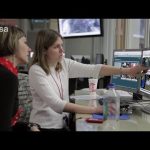
The ESA Jupiter Icy Moons Explorer (Juice) team has been working very hard to prepare the spacecraft for the first test in the one-year long environmental test campaign. This is the so-called Thermal Balance Thermal Vacuum (TBTV) test.
Juice is in the Large Space Simulator (LSS), a unique facility in Europe (run by the European Test Center, at ESA/ESTEC in the Netherlands) that can simulate the vacuum and cold and hot temperature conditions in space, and also the Sun itself!
The TBTV started on 17 June with the closure of the LSS and the “pumping-down”, meaning the removal of air within the chamber to a pressure level of 10nbar (1/100 000 000th of the outside air pressure). This is the closest Juice will come to space conditions while on Earth. It will undergo 24/7 testing, ending on 16 July 2021.
In this episode this process is followed and several team members comment on the different moments.
Produced for ESA by Lightcurve Films. GoPro footage by ESA. Original music by William Zeitler.
★ Subscribe: http://bit.ly/ESAsubscribe and click twice on the bell button to receive our notifications.
We are Europe’s gateway to space. Our mission is to shape the development of Europe’s space capability and ensure that investment in space continues to deliver benefits to the citizens of Europe and the world. Check out https://www.esa.int/ to get up to speed on everything space related.
Making progress on our Artemis Moon rocket, images from a close encounter with a Jovian moon, and a ring of fire for our Moon … a few of the stories to tell you about – This Week at NASA!
Making ready for the first Artemis mission around the Moon and back, the space station is getting a new doorway to space, and how to know when and where you can look up to spot the station … a few of the stories to tell you about – This Week at NASA!
Watch history unfold on Saturday, May 30, as NASA and SpaceX launch astronauts Robert Behnken and Douglas Hurley to the International Space Station. This mission marks the first time since the retirement of the space shuttle in 2011 that humans will fly to the space station from U.S. soil. The mission’s first launch attempt on Wednesday, May 27 was scrubbed due to weather conditions.
Tune in starting at 11 a.m. EDT as NASA and SpaceX provide joint, live coverage from launch to arrival at the space station. Teams are targeting 3:22 p.m. EDT for the launch of the SpaceX Crew Dragon spacecraft atop a Falcon 9 rocket from historic Launch Complex 39A at NASA’s Kennedy Space Center in Florida. The Crew Dragon is scheduled to dock to the space station on Sunday, May 31.
Recorded May 27, 2020: Watch history unfold on Wednesday, May 27, as NASA and SpaceX launch astronauts Robert Behnken and Douglas Hurley to the International Space Station. This mission marks the first time since the retirement of the space shuttle in 2011 that humans will fly to the space station from U.S. soil.
Tune in starting at 12:15 p.m. EDT as NASA and SpaceX provide joint, live coverage from launch to arrival at the space station. Teams are targeting 4:33 p.m. EDT for the launch of the SpaceX Crew Dragon spacecraft atop a Falcon 9 rocket from historic Launch Complex 39A at NASA’s Kennedy Space Center in Florida. The Crew Dragon is scheduled to dock to the space station at 11:29 a.m. Thursday, May 28.
This month, we celebrate Women’s History Month by honoring the thousands of women both in the spotlight and behind the scenes here at NASA. In the past year alone, we’ve done everything from conducting the first all-woman spacewalk to leading missions to places we’ve only dreamed of and so much more.
Things that fizz, pop, explode and inspire the next generation of scientists and engineers. Here’s are just a few highlights of the last 25 years working with the team at Steve Spangler Science. Thanks to everyone from around the world who subscribed to our channels, participated in our live events, purchased our educational science kits, joined our STEM subscription club or followed our journey over the years. We promise more fun, learning and inspiration in the years to come. Thank you! – Steve Spangler
Sick Science® is a trademark of Steve Spangler, inc.
From building to liftoff and installation, these images show the making of European space lab Columbus and its daily use for out-of-this-world research.
Like the transatlantic voyages that Christopher Columbus made half a millennium ago, the Columbus module was meticulously planned, budgeted, scrapped and redesigned before getting the official blessing to build, ship and launch.
The laboratory ascended to orbit aboard Space Shuttle Atlantis from the Kennedy Space Center in Florida, USA on 7 February 2008. Nestling in the spaceplane’s cargo bay, Columbus was accompanied by a seven-man crew.
On 11 February, the crew on the International Space Station captured the new arrival. At that moment, Columbus became Europe’s first permanent human outpost in orbit and Europe became a full partner of the International Space Station.
Columbus houses as many disciplines as possible in a small volume, from astrobiology to solar science through metallurgy and psychology – more than 225 experiments have been carried out during this remarkable decade. Countless papers have been published drawing conclusions from experiments performed in Columbus.
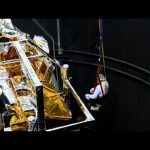
It’s known colloquially as a ‘flying Dutchman’ operation: lowering an engineer down into ESA’s Large Space Simulator to make adjustments on the test item within; in this case the payload module of the newest in the MetOp series of weather satellites. The LSS is the largest vacuum chamber in Europe, based at ESA’s Test Centre in Noordwijk, the Netherlands.
MetOp is a set of three polar-orbiting satellites whose temperature and humidity observations from a relatively close 800 km-altitude orbit have sharpened the accuracy of weather forecasting. Procured by ESA for Eumetsat, the European Organisation for the Exploitation of Meteorological Satellites, MetOp-A was launched in 2006 and MetOp-B in 2012, with MetOp-C due to follow next year.
The 2.1 tonne module carries a suite of meteorology and climatology instruments, variously procured by ESA or sourced from Eumetsat, France’s CNES space agency and the US National Oceanic and Atmospheric Administration. Once testing is complete, MetOp-C’s payload module will travel to the Airbus Defence and Space facility in Toulouse, France, to be integrated with its service module – the segment of the satellite providing attitude and orbit control, electrical power and communications, and hosting the main computer. The launch of MetOp-C by Soyuz from Europe’s Spaceport in French Guiana is scheduled for October 2018.
With all of the exciting A.I. stuff happening, there are lots of people eager to start tinkering with machine learning technology. That’s why we’ve created A.I. Experiments, a site that showcases simple experiments that let anyone play with this technology hands-on, and resources for creating your own experiments.
Various visualizations featured in video made by Gene Kogan. Additional footage by Sarah Riazati.
An Oct. 11 opinion article written by President Barack Obama and published by CNN, outlined a vision for the future of space exploration. In it, the president echoed the words in his 2015 State of the Union address about the importance of sending humans on a roundtrip mission to Mars by the 2030s, and developing technology to help us stay on the Red Planet for an extended time. That same day in a blog post, NASA Administrator Charlie Bolden and John Holdren, assistant to the President for Science and Technology, discussed two NASA initiatives that build on the president’s vision and use public-private partnerships to enable humans to live and work in space in a sustainable way. The first was the selection of six companies to develop habitation systems as part of the agency’s Next Space Technologies for Exploration Partnerships or “NextSTEP” program, designed to lay the groundwork for deep space missions. And this fall as part of the second initiative, NASA will start the process of providing companies with a potential opportunity to add their own modules and other capabilities to the International Space Station. The move is in-line with NASA’s plan to support and foster the growing community of scientists and entrepreneurs conducting research and growing businesses in space. Also, White House Frontiers Conference, Kennedy Reopens After Hurricane Matthew, Orion Service Module Vibration Tests, SLS Liquid Hydrogen Fuel Tank Completed, and Aviation Safety Reporting System Turns 40!
The European Space Agency’s ARTES programme for Advanced Research in Telecommunications Systems, helps to create products, services and infrastructures that benefit millions of people worldwide and make a major contribution to the European economy.
The economic engine of the space industry is satellite communications, generating over $140 billion a year in global revenues. The ARTES programme exists to support innovation, helping to transform research and development into commercial products and services.
ESA’s telecom programmes often take the form of public–private partnerships. ESA joins forces with industry to share the cost and risk, resulting in faster and more innovative technological advances than if either undertook the project alone.
The most recent high-profile telecom programmes are Alphasat, the largest European telecom satellite ever built and the European Data Relay System, a groundbreaking space and ground infrastructure that uses laser links to send data at unprecedented speeds.
ARTES also promotes the use of satellites in new and imaginative ways. Satellite communications can be applied in areas as diverse as healthcare, education, transport and security to deliver services and improve daily life.
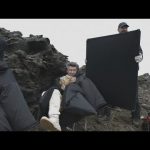
The making of the short film Ambition, a collaboration between Platige Image and ESA. Directed by Tomek Bagiński and starring Aidan Gillen and Aisling Franciosi, Ambition was filmed on location in Iceland, produced in Poland, and screened on 24 October 2014 during the British Film Institute’s celebration of Sci-Fi: Days of Fear and Wonder, at the Southbank, London.
An early look at artificial Intelligence. Guests includes Edward Feigenbaum of Stanford University, Nils Nilsson of the AI Center at SRI International, Tom Kehler of Intellegenetics, Herb Lechner of SRI, and John McCarthy of Stanford. Featured demonstrations include Inferential Knowledge Engineering and the programming language LISP. Originally broadcast in 1984.
Q. What is artificial intelligence?
A. It is the science and engineering of making intelligent machines, especially intelligent computer programs. It is related to the similar task of using computers to understand human intelligence, but AI does not have to confine itself to methods that are biologically observable.
Q. Yes, but what is intelligence?
A. Intelligence is the computational part of the ability to achieve goals in the world. Varying kinds and degrees of intelligence occur in people, many animals and some machines.
Q. Isn’t there a solid definition of intelligence that doesn’t depend on relating it to human intelligence?
A. Not yet. The problem is that we cannot yet characterize in general what kinds of computational procedures we want to call intelligent. We understand some of the mechanisms of intelligence and not others.
Q. Is intelligence a single thing so that one can ask a yes or no question “Is this machine intelligent or not?”?
A. No. Intelligence involves mechanisms, and AI research has discovered how to make computers carry out some of them and not others. If doing a task requires only mechanisms that are well understood today, computer programs can give very impressive performances on these tasks. Such programs should be considered “somewhat intelligent”.
Q. Isn’t AI about simulating human intelligence?
A. Sometimes but not always or even usually. On the one hand, we can learn something about how to make machines solve problems by observing other people or just by observing our own methods. On the other hand, most work in AI involves studying the problems the world presents to intelligence rather than studying people or animals. AI researchers are free to use methods that are not observed in people or that involve much more computing than people can do.
Q. What about IQ? Do computer programs have IQs?
A. No. IQ is based on the rates at which intelligence develops in children. It is the ratio of the age at which a child normally makes a certain score to the child’s age. The scale is extended to adults in a suitable way. IQ correlates well with various measures of success or failure in life, but making computers that can score high on IQ tests would be weakly correlated with their usefulness. For example, the ability of a child to repeat back a long sequence of digits correlates well with other intellectual abilities, perhaps because it measures how much information the child can compute with at once. However, “digit span” is trivial for even extremely limited computers.
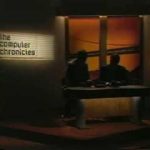
Hosted by Stewart Cheifet, Computer Chronicles was the world’s most popular television program on personal technology during the height of the personal computer revolution. It was broadcast for twenty years from 1983 – 2002. The program was seen on more than 300 television stations in the United States and in over 100 countries worldwide, with translations into French, Spanish, Chinese, and Arabic. The series had a weekly television broadcast audience of over two million viewers.
Many of the series programs are distributed on video to corporations and educational institutions for use in computer training. Computer Chronicles program segments have also been bundled with various computer text books by major publishers.
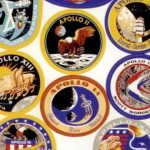
“Making NASA History” is a 12 minute video introducing kids to the key moments in the history of the American space program. This video combines historical footage, photographs, and audio files with narration by two spacesuit-sporting interns from the NASA History Program Office. The goal of this video is to inspire both kids and adults to appreciate and learn more about NASA’s many accomplishments in space exploration and aeronautics.
Steve Spangler is a celebrity teacher, science toy designer, speaker, author and an Emmy award-winning television personality. Spangler is probably best known for his Mentos and Diet Coke geyser experiment that went viral in 2005 and prompted more than 1,000 related YouTube videos. Spangler is the founder of www.SteveSpanglerScience.com, a Denver-based company specializing in the creation of science toys, classroom science demonstrations, teacher resources and home for Spangler’s popular science experiment archive and video collection. Spangler is a frequent guest on the Ellen DeGeneres Show where he takes classroom science experiments to the extreme. Check out his pool filled with 2,500 boxes of cornstarch!
On the education side, Spangler started his career as a science teacher in the Cherry Creek School district for 12 years. Today, Steve travels extensively training teachers in ways to make learning more engaging and fun. His hands-on science boot camps and summer institutes for teachers inspire and teach teachers how to prepare a new generation for an ever-changing work force. Over the last 15 years, he has also made more than 500 television appearances as an authority on hands-on science and inquiry-based learning.
On the business side, Spangler is the founder and CEO of Steve Spangler Science, a Denver-based company specializing in the creation of educational toys and kits and hands-on science training services for teachers. The companys unique business strategies and viral creations have been featured in the Wall Street Journal, Inc. Magazine, Wired and TIME Magazine where online readers voted Steve Spangler #18 in the Top 100 Most Influential People of the Year for 2006 (what were they thinking?). You’ll find more than 140 Spangler created products available online at SteveSpanglerScience.com and distributed to toy stores and mass-market retailers worldwide.
Spangler joined NBC affiliate 9News in 2001 as the science education specialist. His weekly experiments and science segments are designed to teach viewers creative ways to make learning fun. His now famous Mentos Geyser experiment, turning 2-liter bottles of soda into erupting fountains, became an Internet sensation in September 2005 when thousands of people started posting their own Mentos explosions on YouTube.com.
As founder of SteveSpanglerScience.com, Spangler and his design team have developed more than 140 educational toys and science-related products featured by mass-market retailers like Target, Wal-Mart, Toys R’ Us, Discovery Channel Stores and over 1,400 independent specialty toy stores. His educational science catalog and on-line business offers more than a thousand science toys and unique learning resources. Recently, Spangler has been featured in the Wall Street Journal, Inc. Magazine, WIRED, the History Channel, Food Network and TIME Magazine where on-line readers voted Steve Spangler #18 in the Top 100 Most Influential People of the Year for 2006.
His recent appearances on the Ellen DeGeneres Show have taught viewers how to blow up their food, shock their friends, create mountains of foam, play on a bed of nails, vanish in a cloud of smoke and how to turn 2,500 boxes of cornstarch and a garden hose into a swimming pool of fun.
Ever wonder how light switches really work? Using some christmas lights, a couple alligator clips, a battery, and a switch, you can build your own circuit at home.
Read the full experiment at http://www.stevespanglerscience.com/experiment/gold-pennies Theres just something strange about a gold penny. First of all, gold pennies dont exist unless youre a 20th-century alchemist who knows something about the science of alloys. Modern day alchemists, cleverly disguised as chemistry teachers, often share the secret of making gold pennies. Students take home an unforgettable lesson in alloys and a keepsake penny that can never be put back into circulation even though its a gold penny, the US Treasury has a little problem with people buying something with gold pennies.
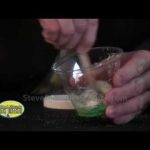
Looking for a fun experiment to do for St. Patrick’s Day? Why not make green snow?! Steve Spangler teaches you how to take your existing Insta-Snow® and turn it green to celebrate the Irish holiday!
Steve and a few friends make ice cream using a Play and Freeze ball which uses ice and rock salt in one end and ice cream mix in the other end. After about 20 min of shaking, passing, and rolling it around, you have some delicious homemade ice cream!
About Steve Spangler Science…
Steve Spangler is a celebrity teacher, science toy designer, speaker, author and an Emmy award-winning television personality. Spangler is probably best known for his Mentos and Diet Coke geyser experiment that went viral in 2005 and prompted more than 1,000 related YouTube videos. Spangler is the founder of www.SteveSpanglerScience.com, a Denver-based company specializing in the creation of science toys, classroom science demonstrations, teacher resources and home for Spangler’s popular science experiment archive and video collection. Spangler is a frequent guest on the Ellen DeGeneres Show where he takes classroom science experiments to the extreme. Check out his pool filled with 2,500 boxes of cornstarch!
On the education side, Spangler started his career as a science teacher in the Cherry Creek School district for 12 years. Today, Steve travels extensively training teachers in ways to make learning more engaging and fun. His hands-on science boot camps and summer institutes for teachers inspire and teach teachers how to prepare a new generation for an ever-changing work force. Over the last 15 years, he has also made more than 500 television appearances as an authority on hands-on science and inquiry-based learning.
On the business side, Spangler is the founder and CEO of Steve Spangler Science, a Denver-based company specializing in the creation of educational toys and kits and hands-on science training services for teachers. The companys unique business strategies and viral creations have been featured in the Wall Street Journal, Inc. Magazine, Wired and TIME Magazine where online readers voted Steve Spangler #18 in the Top 100 Most Influential People of the Year for 2006 (what were they thinking?). You’ll find more than 140 Spangler created products available online at SteveSpanglerScience.com and distributed to toy stores and mass-market retailers worldwide.
Spangler joined NBC affiliate 9News in 2001 as the science education specialist. His weekly experiments and science segments are designed to teach viewers creative ways to make learning fun. His now famous Mentos Geyser experiment, turning 2-liter bottles of soda into erupting fountains, became an Internet sensation in September 2005 when thousands of people started posting their own Mentos explosions on YouTube.com.
As founder of SteveSpanglerScience.com, Spangler and his design team have developed more than 140 educational toys and science-related products featured by mass-market retailers like Target, Wal-Mart, Toys R’ Us, Discovery Channel Stores and over 1,400 independent specialty toy stores. His educational science catalog and on-line business offers more than a thousand science toys and unique learning resources. Recently, Spangler has been featured in the Wall Street Journal, Inc. Magazine, WIRED, the History Channel, Food Network and TIME Magazine where on-line readers voted Steve Spangler #18 in the Top 100 Most Influential People of the Year for 2006.
His recent appearances on the Ellen DeGeneres Show have taught viewers how to blow up their food, shock their friends, create mountains of foam, play on a bed of nails, vanish in a cloud of smoke and how to turn 2,500 boxes of cornstarch and a garden hose into a swimming pool of fun.