
An animation of satellite observations from Oct. 21-30, 2012, shows the birth of Tropical Storm Sandy in the Caribbean Sea, the intensification and movement of Sandy in the Atlantic Ocean along the U.S. East Coast, and the landfall of Hurricane Sandy in New Jersey on Oct. 29. This visualization was created by the NASA GOES Project at NASA Goddard Space Flight Center, Greenbelt, Md., using observations from NOAA’s GOES-13 and GOES-15 satellites.
Tag: NASA
-
NASA’s Mars Curiosity Rover Report #11 — October 19, 2012
A NASA’s Mars Curiosity rover team member gives an update on developments and status of the planetary exploration mission. The Mars Science Laboratory spacecraft delivered Curiosity to its target area on Mars at 1:31:45 a.m. EDT on Aug. 6, which includes the 13.8 minutes needed for confirmation of the touchdown to be radioed to Earth at the speed of light. The rover will conduct a nearly two-year prime mission to investigate whether the Gale Crater region of Mars ever offered conditions favorable for microbial life.
Curiosity carries 10 science instruments with a total mass 15 times as large as the science payloads on NASA’s Mars rovers Spirit and Opportunity. Some of the tools, such as a laser-firing instrument for checking rocks’ elemental composition from a distance, are the first of their kind on Mars. Curiosity will use a drill and scoop, which are located at the end of its robotic arm, to gather soil and powdered samples of rock interiors, then sieve and parcel out these samples into the rover’s analytical laboratory instruments.
-
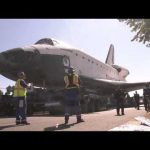
Space Shuttle Endeavour Traveling Through the Streets of Los Angeles
Space Shuttle Endeavour’s two-day trip from Los Angeles International Airport through the streets of Los Angeles to the California Science Center is underway. The planned transport route of NASA’s youngest orbiter takes it past several well-known L.A. landmarks.
-
NASA’s Mars Curiosity Rover Report #8
A NASA’s Mars Curiosity rover team member gives an update on developments and status of the planetary exploration mission. The Mars Science Laboratory spacecraft delivered Curiosity to its target area on Mars at 1:31:45 a.m. EDT on Aug. 6, which includes the 13.8 minutes needed for confirmation of the touchdown to be radioed to Earth at the speed of light. The rover will conduct a nearly two-year prime mission to investigate whether the Gale Crater region of Mars ever offered conditions favorable for microbial life.
Curiosity carries 10 science instruments with a total mass 15 times as large as the science payloads on NASA’s Mars rovers Spirit and Opportunity. Some of the tools, such as a laser-firing instrument for checking rocks’ elemental composition from a distance, are the first of their kind on Mars. Curiosity will use a drill and scoop, which are located at the end of its robotic arm, to gather soil and powdered samples of rock interiors, then sieve and parcel out these samples into the rover’s analytical laboratory instruments.
-
NASA’s Curiosity Rover Finds Old Streambed on Mars
NASA’s newest Mars rover has found evidence that a stream once ran vigorously across the area on the Red Planet where the rover is now driving. The finding is a different type of evidence for water on Mars than ever found before. Scientists are studying Curiosity’s images of rocks containing ancient streambed gravels. The sizes and shapes of stones cemented into a layer of conglomerate rock are clues to the speed and distance of a long-ago stream’s flow.
-
NASA’s Mars Curiosity Rover Report #7
A NASA’s Mars Curiosity rover team member gives an update on developments and status of the planetary exploration mission. The Mars Science Laboratory spacecraft delivered Curiosity to its target area on Mars at 1:31:45 a.m. EDT on Aug. 6, which includes the 13.8 minutes needed for confirmation of the touchdown to be radioed to Earth at the speed of light. The rover will conduct a nearly two-year prime mission to investigate whether the Gale Crater region of Mars ever offered conditions favorable for microbial life.
Curiosity carries 10 science instruments with a total mass 15 times as large as the science payloads on NASA’s Mars rovers Spirit and Opportunity. Some of the tools, such as a laser-firing instrument for checking rocks’ elemental composition from a distance, are the first of their kind on Mars. Curiosity will use a drill and scoop, which are located at the end of its robotic arm, to gather soil and powdered samples of rock interiors, then sieve and parcel out these samples into the rover’s analytical laboratory instruments.
-
Endeavour Goes Cross-Country on This Week @NASA
Atop the Shuttle Carrier Aircraft, Endeavour completes its journey from the Kennedy Space Center in Florida to Los Angeles, where it’ll go on display at the California Science Center next month. Also, Shuttle Social, Curiosity Cruises, Helping Hangout, Ride Remembered, and more.
-
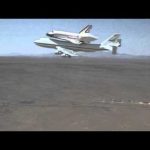
Space Shuttle Endeavour Arrives at NASA’s Dryden Flight Research Center
NASA’s Shuttle Carrier Aircraft (SCA) with space shuttle Endeavour mounted atop arrived Sept. 20 at the agency’s Dryden Flight Research Center on Edwards Air Force Base in California.
Following an overnight stay, the SCA and Endeavour will salute the Edwards Air Force Base area early Friday, Sept. 21 with a low flyby northbound to Sacramento and the San Francisco Bay area. Next the aircraft will travel south, making a pass over NASA’s Ames Research Center, Vandenberg Air Force Base and NASA’s Jet Propulsion Laboratory before heading into the Los Angeles area.
Finally, the SCA and Endeavour will land about noon PDT at Los Angeles International Airport, for an arrival ceremony before Endeavour is taken off the SCA and transported to its permanent home at the California Science Center next month.
-
The Nation says Farewell to Neil Armstrong on This Week @ NASA
NASA Administrator Charles Bolden joined other agency officials and dignitaries at the Washington National Cathedral to honor the life and career of astronaut Neil Armstrong, the first man to walk on the moon, who died Aug. 25. The memorial was broadcast live on NASA Television and streamed on nasa.gov and the National Cathedral’s website.
-
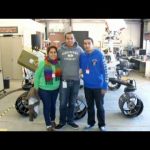
NASA 2012 Hispanic Heritage Month Profile — Luis Dominguez – Jet Propulsion Laboratory
Luis Dominguez is a systems engineer in the Systems Integration and Test Group at NASA’s Jet Propulsion Laboratory, Pasadena, California (JPL). Dominguez is a Test Conductor/Analyst for the Mars Science Laboratory (MSL) Mission System Testbed Team. He started at JPL as an academic part time employee in the fall of 2007 working for the MSL Assembly, Test, and Launch Operations (ATLO) Team and subsequently moved to the Testbed team in 2009. He was born and raised in Los Angeles, California in the Leimert Park/Mid-City area. Luis holds a B.S. in Mechanical Engineering from the California State Polytechnic University, Pomona.
-
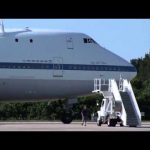
NASA Shuttle Carrier Aircraft Arrives at Kennedy Space Center
NASA’s Shuttle Carrier Aircraft (SCA), a modified 747 jumbo jet, touched down just before 4 p.m. EDT on Tuesday at the Shuttle Landing Facility (SLF) at the agency’s Kennedy Space Center in Florida. The SCA, which is designated NASA 905, was the original shuttle carrier and was used in 1977 for the space shuttle approach and landing tests. This series of eight captive and five free flights with the orbiter prototype Enterprise, in addition to ground taxi tests, validated the aircraft’s performance as an SCA, in addition to verifying the glide and landing characteristics of the orbiter configuration — paving the way for orbital flights and ferry flights. NASA 905 now will fly the final ferry flight in Space Shuttle Program history.
-
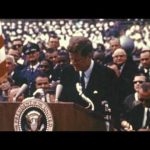
JFK’s Rice Speech on NASA TV Sept. 12
50 years ago, President John F. Kennedy delivered his historic “Space Challenge” speech to students and faculty at Rice University in Houston that included this now-iconic statement, “We choose to go to the moon not because it is easy but because it is hard.” See and hear the speech in its entirety this Wednesday at 10:15 a.m. Central on NASA TV just as it was delivered that morning on September 12, 1962
-
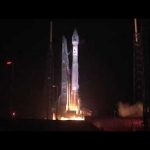
NASA Launches Radiation Belt Storm Probes Mission
NASA’s Radiation Belt Storm Probes (RBSP), the first twin-spacecraft mission designed to explore our planet’s radiation belts, launched into the predawn skies at 4:05a.m. EDT Thursday from Cape Canaveral Air Force Station, Fla.
The two satellites, each weighing just less than 1,500 pounds, comprise the first dual-spacecraft mission specifically created to investigate this hazardous regions of near-Earth space, known as the radiation belts. These two belts, named for their discoverer, James Van Allen, encircle the planet and are filled with highly charged particles. The belts are affected by solar storms and coronal mass ejections and sometimes swell dramatically. When this occurs, they can pose dangers to communications, GPS satellites and human spaceflight.
The hardy RBSP satellites will spend the next 2 years looping through every part of both Van Allen belts. By having two spacecraft in different regions of the belts at the same time, scientists finally will be able to gather data from within the belts themselves, learning how they change over space and time. Designers fortified RBSP with special protective plating and rugged electronics to operate and survive within this punishing region of space that other spacecraft avoid. In addition, a space weather broadcast will transmit selected data from those instruments around the clock, giving researchers a check on current conditions near Earth.
-

Armstrong Remembered by NASA Administrator
In a message to NASA employees, Administrator Charles Bolden celebrates the legacy of Neil Armstrong, who died Saturday, Aug. 25, at age 82.
-

Armstrong Hosts NASA 50th Anniversary Documentary
Neil Armstrong, Apollo 11 Commander and first person to walk on the moon, guides us through the history of the National Aeronautics and Space Administration in the half-century since its establishment in 1958. Produced by NASA TV, 2008.
-

NASA Celebrates Apollo
This live program at the National Air and Space Museum in Washington, DC highlights the success of America’s space program as it met President Kennedy’s challenge of putting a man on the moon by the end of the 1960s. Neil Armstrong, Apollo 11 Commander, who was the first person to set foot on the lunar surface on July 20, 1969, features prominently.
-

50 Years of Exploration: The Golden Anniversary of NASA
Premiered in 2008 at NASA’s Golden Anniversary Gala held at the Smithsonian National Air and Space Museum’s Udvar-Hazy Center in Chantilly, Va., this 13-and-a-half-minute video produced by NASA TV highlights the agency’s historic half-century milestones, including the landing of Apollo 11’s Neil Armstrong and Buzz Aldrin on the moon in 1969.
-
We’re NASA and We Know It (Mars Curiosity) Satire
Performed by David Hudson [http://twitter.com/dubhud]
Executive Producer: Alexander JL Theoharis [http://twitter.com/Satire]
Director: Forest Gibson [http://twitter.com/ForestGibson]
Editors: Cinesaurus [http://cinesaurus.com]
Steven Hudson [http://twitter.com/HudsonFilm] & David Hudson [http://twitter.com/DubHud]
Written by Rob Whitehead [http://twitter.com/RobCWhitehead]
Prop Designer: Christopher Parker [http://twitter.com/chrstphrprkr]
Costumer: Jared Cheshier [http://twitter.com/JaredMonkey]
Camera Operator: Forest Gibson, Steven Hudson, Jon Sim
Cast: Steven Hudson, Tara Theoharis [http://twitter.com/geekyhostess], Zac Cohn [http://twitter.com/zaccohn], Danielle Sparks [http://twitter.com/dannysparky], Kevin Lane [http://twitter.com/_kevin_lane_], Monica Houston, Anne Ketola, Tim Uomoto [http://twitter.com/FRockClothing], Brendan Uomoto, Alexander JL Theoharis
Promotional Support: Zac Cohn and Tara TheoharisSpecial Thanks to Anne Ketola for all the awesome NASA gear, and David Zimmerman for video equipment!
Lyrics:
When I EDL, time for seven minutes of flamin’ hell
Rover’s touchin’ down
everybody passin’ peanuts around, yeah
We’re at mission control, getting full use outta ev-er-y Sol (wa!)
Just 25 feet left to go
It’s Curiosity, look out below (yo)Crane lower that rover (ah)
Crane lower that rover (ah)
Crane lower that rover (ah)N-N-N-Now bug out!
Crane lower that rover
Crane lower that rove
Crane lower that roverNow bug out!
Kickin’ it at my con(sole), this is what I see (okay)
Data streaming back from curiosity
I got stars on my ‘hawk
and I ain’t afraid to show it (show it, show it, show it)
We’re NASA and we know itWe’re NASA and we know it
(Yo)
When I look for ice, gotta calibrate, gotta be precise
And when I raise the mast, panoramic views are unsurpassed (wha?)
This is how I rove, baking red rocks in my nuclear stove
We headed to the peak, with my laser eye
No one to bury me when it’s time to die (ow!)Crane lower that rover
Crane lower that rover
Crane lower that roverNow bug out!
Crane lower that rover
Crane lower that rover
Crane lower that roverNow bug out!
Shoutout to Carl the Sage (and) Neil Degrasse T (B.A.!)
Shoutout to JPL and the Rocker-Bogie
We’re better than SpaceX
And we ain’t afraid to show it (show it, show it, show it)
We’re NASA and we know it
We’re NASA and we know it -
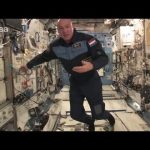
ESA astronaut André Kuipers’ tour of the International Space Station
ESA astronaut Andre Kuipers invites you to follow a guided tour of the complete International Space Station. Andre himself is the tour guide during this unique visit to the Station.
In the space of one hour Andre shows every module of the International Space Station and explains the ins and outs of living in the largest laboratory in space. This video gives a wonderful glimpse of how life is for an astronaut living in the Station. From science and maintenance to operating robotic arms and finding lost equipment, Andre takes you from the Japanese research module via the Station’s cellar and ‘garden’ to the Russian segment, ending his tour with breath-taking views of Earth from the European-built Cupola observation module.
This video was recorded during the end of ESA’s PromISSe mission. Andre spent a total of 193 days in space before returning to Earth on 1 July 2012.
-
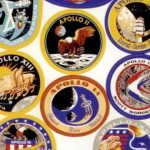
Making NASA History
“Making NASA History” is a 12 minute video introducing kids to the key moments in the history of the American space program. This video combines historical footage, photographs, and audio files with narration by two spacesuit-sporting interns from the NASA History Program Office. The goal of this video is to inspire both kids and adults to appreciate and learn more about NASA’s many accomplishments in space exploration and aeronautics.
-
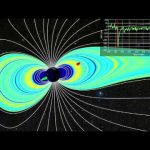
New NASA Mission to Study Space Weather
With 14 days until its launch, the Radiation Belt Storm Probes mission is previewed by scientists at NASA Headquarters in Washington. RBSP will study the role of the Earth’s radiation belts in producing space weather that can adversely affect communications and electronic systems.
-
NASA Lands Car-Size Rover Beside Martian Mountain
NASA’s most advanced Mars rover Curiosity has landed on the Red Planet. The one-ton rover, hanging by ropes from a rocket backpack, touched down onto Mars Sunday to end a 36-week flight and begin a two-year investigation.
The Mars Science Laboratory (MSL) spacecraft that carried Curiosity succeeded in every step of the most complex landing ever attempted on Mars, including the final severing of the bridle cords and flyaway maneuver of the rocket backpack.
-
Shatner Hosts Curiosity’s “Grand Entrance” to Mars
Actor William Shatner narrates this thrilling video about NASA’s Curiosity rover, from its entry and descent through the Martian atmosphere to its landing and exploration of the Red Planet in NASA’s hardest planetary science mission to date.
-
Red Planet Rendezvous on This Week @NASA
The Curiosity rover continues to make its way to Mars and its scheduled landing in Gale Crater on Monday, Aug. 6. Also Mars Yard; New record set; New heat shield test and new mission previewed; Landsat 40 and remembering Sally Ride and more….
-
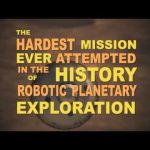
NASA-TV’s Curiosity Landing Coverage Begins Aug. 5
The Mars Science Laboratory, the hardest mission ever attempted in planetary robotic exploration is about to prove its mettle with the landing of its Curiosity rover on the Red Planet. Live coverage begins at 11:30 p.m. Eastern on NASA TV.
-
NASA Rover on Course for Mars Landing
With less than three weeks to the scheduled landing of the Curiosity rover on the Red Planet, leaders of Mars Science Laboratory team field questions form media about the mission, the most difficult ever undertaken in the history of interplanetary robotic exploration.
-

Kuipers landing highlights
On 1 July 2012, ESA astronaut André Kuipers, NASA astronaut Don Pettit and Russian Cosmonaut Oleg Kononenko returned to Earth in their Soyuz capsule. It marks the end of PromISSe, the fourth ESA long-duration mission aboard the International Space Station.
-

Challenges of Getting to Mars: Curiosity’s Seven Minutes of Terror
Team members share the challenges of Curiosity’s final minutes to landing on the surface of Mars.
-
A Last in our Lifetime event on This Week @NASA
NASA Television helped observe the last transit of Venus we’ll see here on Earth until 2117 by showcasing live-streaming Websites the world over, including observations made by scientists in central Australia, by the NASA Edge team, stationed atop the Mauna Kea Observatory in Hawaii, by scientists at NASA Headquarters and other NASA Centers around the country. Also, development of technologies to enable exploration of extreme environments such as those found on Venus, The Voyage of Space Shuttle Enterprise concludes in New York, Girl Scouts Rock at NASA Headquarters, Development of inflatable spacecraft and the NASA family mourns the passing of Ray Bradbury, one of our era’s greatest and most noted science fiction/fantasy writers.
-
Girl Scouts Rock @NASA to celebrate the big 100!
NASA helped mark the 100th anniversary of the Girl Scouts of America by hosting a Girl Scouts Rock@NASA event on June 8 at NASA Headquarters in Washington, D.C. NASA Deputy Administrator Lori Garver, former astronauts Heidemarie Stefanyshyn-Piper and Pam Melroy and other scientists and invited guests spoke with attendees about NASA’s missions, discoveries and careers.
NASA and the Girl Scouts share a common goal to encourage and educate young girls about science, technology, engineering and mathematics (STEM) in exciting and innovative ways. The Girl Scouts began in 1912 with only 18 girls. Today, there are 3.2 million girls and adults who are members. In 100 years, the organization has graduated more than 59 million women in the United States.
The event is part of the Women@NASA project, which is a continuing joint effort by NASA and the White House Council on Women and Girls to relate science, technology, engineering and math fields to young females.
-

NASA TV Hosts 2012 Venus Transit
Pre-ingress coverage from NASA Headquarters in Washington, DC, of the last-in-a-lifetime event.
-
NASA/SpaceX Hold NASA Social for Falcon 9 Launch
NASA and Space Exploration Technologies invited a group of their social media followers to a NASA Social at NASA’s Kennedy Space Center in Florida. The event was in anticipation of the launch of SpaceX’s second Commercial Orbital Transportation Services (COTS) demonstration flight. SpaceX’s Falcon 9 rocket is targeted to lift off at 4:55 a.m. EDT on May 19, in an attempt to become the first commercial company to send a spacecraft to the International Space Station.
-
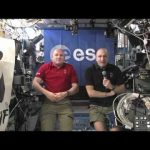
ESA astronaut André Kuipers and astronaut Don Pettit greet WWF
ESA astronaut and World Wildlife Fund (WWF) ambassador André Kuipers and his Expedition 31 crewmate, NASA astronaut Don Pettit, took part in a video call with the WWF annual meeting that took place in Rotterdam, the Netherlands on 8 May 2012.
WWF representatives worldwide heard what André and Don had to say about our planet. Their unique vantage point on the International Space Station and ESA’s Earth observation satellites help us understand how fragile our planet is.
The Dutch branch of the WWF — Wereld Natuur Fonds — is celebrating its 50th anniversary this year.
-

NASA Asian-American History Month Profile — Allen Chen
Allen Chen is a systems engineer in the Entry, Descent, and Landing (EDL) Systems and Advanced Technologies group at NASA’s Jet Propulsion Laboratory, Pasadena, Calif. (JPL). On the Mars Science Laboratory (MSL) team, he is the lead for EDL operations and Flight Dynamics, co-leads the joint science/engineering Mars atmosphere characterization team. Chen has been a member of the MSL EDL Systems Engineering Team and the MSL Flight System Systems Engineering Team since his arrival at JPL in 2002. He also worked on the Mars Exploration Rovers project, performing EDL reconstruction analysis and testing. He holds a bachelor’s and master’s degree in Aeronautics and Astronautics from the Massachusetts Institute of Technology, Cambridge, Mass. and an M.B.A. from the University of California, Los Angeles.
-
NASA’s Dawn Defines Vesta’s Role in Solar System History
During a NASA Television Science briefing, scientists discussed the findings of the first global analysis of the giant asteroid Vesta by NASA’s Dawn spacecraft. The Dawn mission has confirmed Vesta’s status as a special fossil of the early solar system and revealed a more varied, diverse world than originally thought. Dawn has shown Vesta is the only known intact, layered planetary building block with an iron core surviving from the earliest days of the solar system. It therefore more closely resembles a small planet or Earth’s moon, not another asteroid.
-
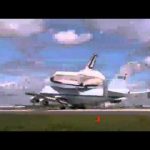
NASA Transports Space Shuttle Enterprise to New York
On Friday, April 27 Enterprise, the first NASA space shuttle was transported atop a 747 Shuttle Carrier Aircraft from Dulles International Airport, near Washington, D.C. to New York’s John F. Kennedy International Airport. Enterprise eventually will be displayed at New York’s Intrepid Sea, Air and Space Museum. Though Enterprise, the first space shuttle orbiter never flew in space, it was crucial to the Space Shuttle Program because its series of approach and landing tests in 1977 proved the orbiter could fly in the atmosphere and land like an airplane, except without power — like a glider. Includes footage of Enterprise on the ground at Dulles and takeoff from Dulles.
-
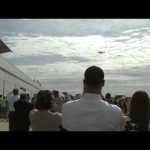
Discovery Flyovers Delight D.C. Area as Seen From NASA Headquarters
Space Shuttle Discovery, atop its Shuttle Carrier Aircraft, NASA 905, is shown from various vantage points around the National Capital region on April 17 on the final leg of its ferry flight from NASA’s Kennedy Space Center in Florida to Dulles International Airport in Virginia.
-

NASA Features FameLab Finalists
The finals of the NASA-sponsored Astrobiology FameLab showcase up-and-coming new scientists who’ve honed their skills in communicating complex scientific concepts. Held at the Georgia Tech Hotel and Conference Center in Atlanta. Nichelle Nichols, known for her portrayal of Lt. Uhura in the original “Star Trek” television series, serves as host.
-

NASA Doctor Discusses Providing Medical Care to Astronauts in Space
In an interview aired on NASA Television during the International Space Station Update hour, NASA Flight Surgeon Ed Powers discussed how flight doctors work with crew members on board the station to keep the astronauts healthy. Powers also talked about some of the difficulties encountered in diagnosing patients who are not there in person and about the impacts of space medicine to life here on earth.
