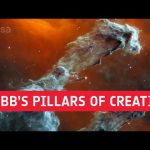
Why does mid-infrared light evoke such a sombre, chilling mood in Webb’s Mid-Infrared Instrument (MIRI) image? Interstellar dust cloaks the scene. And while mid-infrared light specialises in detailing where dust is, the stars aren’t bright enough at these wavelengths to appear. Instead, these looming, leaden-hued pillars of gas and dust gleam at their edges, hinting at the activity within.
We are Europe’s gateway to space. Our mission is to shape the development of Europe’s space capability and ensure that investment in space continues to deliver benefits to the citizens of Europe and the world. Check out https://www.esa.int/ to get up to speed on everything space related.
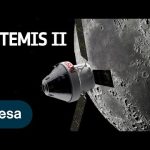
After the uncrewed Artemis I test flight, the Artemis II mission will have astronauts demonstrate what the Orion spacecraft – powered by a European Service Module – can do on its voyage around the Moon.
Two astronauts will fly on the second Artemis mission and take over controls to show how Orion handles at close-quarter flying. While in Earth orbit the spacecraft will detach from its second stage, fly away, turn around, approach the second stage and then fly away again – all using the European Service Module’s 33 thrusters.
Whereas in the first Artemis mission the second stage fired Orion into its lunar orbit, for the second mission it will be the European Service Module that will give the spacecraft its final push to its voyage around the Moon.
The crew will fly Orion to 8889 km beyond the Moon before completing a lunar flyby and returning to Earth. The mission will take a minimum of eight days and will collect valuable flight test data.
The European Service Module is one of ESA’s many contributions to NASA’s Orion spacecraft and the Artemis programme that will send astronauts to the Moon and beyond. It provides electricity, water, oxygen and nitrogen as well as keeping the spacecraft at the right temperature and on course.
The European Service Module has 33 thrusters, 11 km of electrical wiring, four propellant and two pressure tanks that all work together to supply propulsion and everything needed to keep astronauts alive far from Earth – there is no room for error.
★ Subscribe: http://bit.ly/ESAsubscribe and click twice on the bell button to receive our notifications.
We are Europe’s gateway to space. Our mission is to shape the development of Europe’s space capability and ensure that investment in space continues to deliver benefits to the citizens of Europe and the world. Check out https://www.esa.int/ to get up to speed on everything space related.
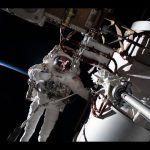
NASA astronauts Josh Cassada and Frank Rubio are conducting a spacewalk on Saturday, Dec. 3, to install an International Space Station Roll-Out Solar Array (iROSA) to augment power generation on the station’s starboard truss structure. This spacewalk is the first of a pair of spacewalks this month set to prepare the future deployment of additional solar arrays for the station. The spacewalk is scheduled to begin at 7:25 a.m. EST (12:25 UTC) and last about seven hours.
Cassada (wearing the suit with red stripes) and Rubio (wearing the unmarked suit) are part of NASA’s SpaceX Crew-5 mission, which arrived at the station on Oct. 6, 2022. This is the second spacewalk for both astronauts.
Joining @NASA’s Orion spacecraft on the powerful Space Launch System rocket are ten CubeSats that will help prepare for the return of astronauts to our lunar companion. Our deep space antennas, along with the Goonhilly Earth Station in the UK, are tracking six of the small satellites, ensuring they arrive where they need to be, and their data gets back home.
We are Europe’s gateway to space. Our mission is to shape the development of Europe’s space capability and ensure that investment in space continues to deliver benefits to the citizens of Europe and the world. Check out https://www.esa.int/ to get up to speed on everything space related.
Cameras on NASA’s Space Launch System (SLS) rocket and Orion spacecraft give us amazing views of our adventure around the Moon. See up close views of the Moon from external cameras as well as the view from inside the capsule.
Orion is the only spacecraft capable of carrying humans from Earth on Artemis missions to deep space and bringing them back to Earth from the vicinity of the Moon. More than just a crew module, Orion has a launch abort system to keep astronauts safe if an emergency happens during launch, and a European-built service module that is the powerhouse that fuels and propels Orion and keeps astronauts alive with water, oxygen, power, and temperature control, as well as a heat shield that can handle high-speed returns from deep space. SLS is the most powerful rocket in the world and the only rocket capable of launching Orion with astronauts and their supplies on Artemis missions to the Moon.
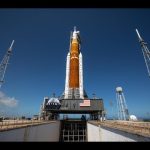
Orion launched on the SLS rocket from Launch Pad 39B at NASA’s Kennedy Space Center in Florida Wednesday, Nov. 16, 2022. Artemis I is an uncrewed flight test of our SLS rocket, Orion spacecraft, and exploration ground systems for future Artemis missions—which will provide the foundation to send humans to the lunar surface, develop a long-term presence on and around the Moon, and pave the way for humanity to set foot on Mars.
On Dec. 11, our Orion spacecraft returns home to Earth. This live stream from Orion will end prior to splashdown, approximately at the time of crew module separation from the service module. Watch live splashdown coverage: https://youtu.be/xzZPzmMtQA8
This is a live, low-resolution video feed from cameras on NASA’s Orion spacecraft as it accomplishes the Artemis I mission around the Moon and back to Earth. Splashdown is expected on Dec. 11, 2022.
Viewers will see the Artemis logo, or the last frame of good video data, if there is a loss of signal, or if the bandwidth is needed for mission activities. Viewers may see what appears to be a black screen when the vehicle is in darkness. There is no audio.
The primary goals for Artemis I are to demonstrate Orion’s systems in a spaceflight environment and ensure a safe re-entry, descent, splashdown, and recovery.
On Saturday, Nov. 26, at 8:42 a.m EST (13:42 UTC) the Orion spacecraft will break the record for farthest distance traveled by a spacecraft designed to carry humans to deep space and safely return them to Earth. This distance is currently held by the Apollo 13 spacecraft. In this video, Apollo astronauts and flight directors give their insights into the Apollo program, the nation’s reaction then, and how the Artemis program will benefit the nation today. As we go back to the Moon, Artemis will prepare us to travel even deeper into space.
NASA’s Artemis I mission lifted off on Nov. 16, 2022, from Kennedy Space Center’s Launch Complex 39B. This video includes highlights from the event.
With 8.8 million pounds of thrust, the Space Launch System (SLS), is NASA’s most powerful rocket. It will send the uncrewed Orion spacecraft beyond the Moon, 280,000 miles from Earth, farther than any human-rated spacecraft has ever flown.
After 26 days and a total distance of over a million miles, Orion will return home faster and hotter than any spacecraft has before.
The primary goals for Artemis I are to demonstrate Orion’s systems in a spaceflight environment and ensure a safe re-entry, descent, splashdown, and recovery prior to the first flight with crew on Artemis II.
The first in a series of increasingly complex missions, Artemis I will demonstrate our commitment and capability to build a long-term human presence at the Moon for decades to come.
The Space Launch System (SLS) rocket with the Orion spacecraft aboard lifted off at 07:47 CET from @NASA’s Kennedy Space Center in Florida, USA on 16 November 2022.
The most powerful rocket ever built sent NASA’s Orion spacecraft and ESA’s European Service Module (ESM) to a journey beyond the Moon and back. No crew will be on board Orion this time, and the spacecraft will be controlled by teams on Earth.
ESM provides for all astronauts’ basic needs, such as water, oxygen, nitrogen, temperature control, power and propulsion.
Much like a train engine pulls passenger carriages and supplies power, the European Service Module will take the Orion capsule to its destination and back.
We are Europe’s gateway to space. Our mission is to shape the development of Europe’s space capability and ensure that investment in space continues to deliver benefits to the citizens of Europe and the world. Check out https://www.esa.int/ to get up to speed on everything space related.
Our journey back to the Moon and onto Mars starts at home, and NASA’s Veterans are a big part of accomplishing that mission. Veterans currently make up 12% of the NASA workforce. Many of the most iconic figures at the agency—our astronauts—have a strong veteran tie. In fact, all NASA astronauts were military pilots until 1965. Of the 385 total NASA Astronauts, 223 are Veterans! Veterans continue to have a sweeping impact on NASA, in every corner of our workforce. Thanks to all the men and women who have served in our armed forces. Have a safe and happy Veterans Day.
The first clue came when the star mysteriously darkened in late 2019. An immense cloud of obscuring dust formed from the ejected surface as it cooled. Astronomers have now pieced together a scenario for the upheaval. And the star is still slowly recovering; the photosphere is rebuilding itself. And the interior is reverberating like a bell that has been hit with a sledgehammer, disrupting the star’s normal cycle. This doesn’t mean the monster star is going to explode any time soon, but the late-life convulsions may continue to amaze astronomers.
We are Europe’s gateway to space. Our mission is to shape the development of Europe’s space capability and ensure that investment in space continues to deliver benefits to the citizens of Europe and the world. Check out https://www.esa.int/ to get up to speed on everything space related.
Our astronaut Samantha Cristoforetti had to test if she could walk in microgravity with Velcro shoes, as it was portrayed in the space-cult movie ‘2001: A Space Odyssey’. As you can see, yes, you can, but very slowly.
Credit: ESA / @NASA
★ Subscribe: http://bit.ly/ESAsubscribe and click twice on the bell button to receive our notifications.
We are Europe’s gateway to space. Our mission is to shape the development of Europe’s space capability and ensure that investment in space continues to deliver benefits to the citizens of Europe and the world. Check out https://www.esa.int/ to get up to speed on everything space related.
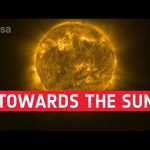
This sequence was taken by Solar Orbiter’s Extreme Ultraviolet Imager using the Full Sun Imager telescope, and shows the Sun at a wavelength of 17 nanometers. This wavelength is emitted by gas in the Sun’s atmosphere with a temperature of around one million degrees. The colour on this image has been artificially added because the original wavelength detected by the instrument is invisible to the human eye.
Credit: ESA & @NASA /Solar Orbiter/EUI Team
★ Subscribe: http://bit.ly/ESAsubscribe and click twice on the bell button to receive our notifications.
We are Europe’s gateway to space. Our mission is to shape the development of Europe’s space capability and ensure that investment in space continues to deliver benefits to the citizens of Europe and the world. Check out https://www.esa.int/ to get up to speed on everything space related.
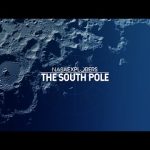
When Artemis astronauts land on the Moon, they’ll travel to sites never before visited by humans. Namely, they’ll explore the South Pole region, home to the Moon’s largest crater, areas of near-constant light and deep shadows, and some of the coldest temperatures in the solar system.
Exploring the South Pole will teach us more about the Moon’s history, as well as the history of our solar system. It’s home to frozen water, which is crucial for living sustainably on the lunar surface and exploring deeper into the solar system.
Artemis astronauts will explore the Moon on behalf of all of us and bring back lunar rocks and soil for analyses by generations of scientists who will help us gain unimaginable insights into our cosmic history.
Series Executive Producers: Katy Mersmann/Lauren Ward Season Producers: Lonnie Shekhtman/Stephanie Sipila/James Tralie/Molly Wasser
Explorers: Jose Aponte/Natalie Curran/Julie Mitchell/Adam Naids/Noah Petro/Kelsey Young/Jessica Watkins
Music:
a. “Daylight Falls” by Jay Price b. “Good Omens” by Count Zero and Rohan Stevenson c. “Lightspeed” by Gresby Race Nash d. “Wonders of Life” by Enrico Cacace and Lorzeno Castellarin e. “Hold Still” by Enrico Cacace f. “We Shall Overcome” by Laurent Couson
Before Jessica Watkins was an astronaut, she was a geologist. Now working on the International Space Station, Jessica and her fellow astronauts are preparing to explore the Moon and beyond.
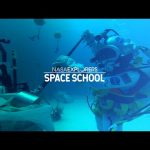
But collecting and investigating rocks on other worlds is very different from digging dirt here on Earth. That’s where tools engineer Adam Naids comes in. Tools designed for Earth geologists may not work in the lower gravity and extreme temperatures of the Moon, and that’s before you bring in the bulky spacesuits! NASA Explorers come together at space school to train astronauts to conduct science on the Moon.
Series Executive Producers: Katy Mersmann/Lauren Ward Season Producers: Lonnie Shekhtman/Stephanie Sipila/James Tralie/Molly Wasser
Explorers: Jessica Watkins/Adam Naids/Kelsey Young
Music: a. “Iced Planet” by Anthony Edwin Phillips and Samuel Karl Bohn b. “The Deep” by Paul Werner c. “Carpe Diem” by Michael James Burns d. “State of Matter” by Markus Gleissner e. “A Grand Enterprise” by Daniel Marantz and Dave Carr f. “Optimistic Attitude 1″ by Joel Goodman and Vicente Julio Ortiz Gimeno g. “Dawn Beauty” Laurent Dury h. “Take it Lightly” by Carl David Harms i. “Imaginary Travel” by Claude Pelouse and Olivier Grim
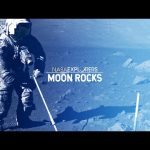
Meet NASA’s rock detectives. Using tiny samples of lunar rock brought back by Apollo astronauts, these NASA Explorers are looking into the origins of our Moon, our planet, and ourselves. They might be among the first scientists to study samples from the Moon’s South Pole that will be delivered to Earth by Artemis astronauts. In episode 2 of “NASA Explorers: Artemis Generation,” we’re joining scientists like Natalie Curran and Jose Aponte, who are looking at clues buried in Moon rocks.
Series Executive Producers: Katy Mersmann/Lauren Ward Season Producers: Lonnie Shekhtman/Stephanie Sipila/James Tralie/Molly Wasser
Explorers: Natalie Curran/Jose Aponte
Music: 1. “Darwin’s Extraordinary Journey” by Laurent Dury 2. “From Small Beginnings” by Jay Price 3. “Life Eternal” by Enrico Cacace and Lorenzo Castellarin 4. “All is Good” by Anders Niska and Klas Johan Wahl 5. “Hyperion” by Gresby Race Nash
These spectacular images feature the spiral galaxy IC 5332, taken by the @NASA/ESA Hubble Space Telescope and the NASA/ESA/ @Canadian Space Agency James Webb Space Telescope. The images display the powerful capabilities that both world-leading space telescopes provide, especially when combining their data.
We are Europe’s gateway to space. Our mission is to shape the development of Europe’s space capability and ensure that investment in space continues to deliver benefits to the citizens of Europe and the world. Check out https://www.esa.int/ to get up to speed on everything space related.
The night of 26 September 2022 will make space history – as the moment when @NASA’s DART spacecraft impacts the Dimorphos asteroid in an attempt to divert its course – humankind’s first planetary defence test. Next, in 2024, ESA launches its Hera spacecraft to investigate the post-impact asteroid. In fact, Hera is not one spacecraft but three: it carries with it ESA’s first deep-space CubeSats to make extra observations of its target.
With the Hera mission, ESA is assuming even greater responsibility for protecting our planet and ensuring that Europe plays a leading role in the common effort to tackle asteroid risks.
In this video, Ian Carnelli, Hera mission manager, and members of the Hera team, reflect on the DART impact and introduce Hera and its Milani and Juventas CubeSats.
★ Subscribe: http://bit.ly/ESAsubscribe and click twice on the bell button to receive our notifications.
We are Europe’s gateway to space. Our mission is to shape the development of Europe’s space capability and ensure that investment in space continues to deliver benefits to the citizens of Europe and the world. Check out https://www.esa.int/ to get up to speed on everything space related.
All eyes are looking up as @NASA intentionally crashes the 550 kg DART spacecraft into an orbiting asteroid at high speed. Our Estrack network of ground stations, Europe’s ‘eyes on the sky’, will be particularly focused on the humanmade impactor, keeping track as it closes in on the 160-metre-wide moving target in the world’s first test of asteroid deflection.
We are Europe’s gateway to space. Our mission is to shape the development of Europe’s space capability and ensure that investment in space continues to deliver benefits to the citizens of Europe and the world. Check out https://www.esa.int/ to get up to speed on everything space related.
These are our explorers. They’re the people who will get us to the Moon, collect Moon rocks, deliver them to Earth safely, and ensure that we can study them for years to come. On episode one of “NASA Explorers: Artemis Generation,” meet astronaut Jessica Watkins, engineer Adam Naids, Moon rock curator Julie Mitchell, and astrobiologist Jose Aponte. They each had a different path to NASA, from conducting hazardous kitchen chemistry experiments in Lima, Peru, to exploring the Louisiana Bayou, to dissecting a cow’s eye in a science program in Colorado. Each person is a vital part of NASA’s goal to conduct science on the Moon’s surface.
Series Executive Producers: Katy Mersmann/Lauren Ward Season Producers: Lonnie Shekhtman/Stephanie Sipila/James Tralie/Molly Wasser
Explorers: Jose Aponte/Natalie Curran/Julie Mitchell/Adam Naids/Noah Petro/Kelsey Young/Jessica Watkins
Music: a. “Blackbird” by Magnum Opus b. “Optimistic Attitude 1” by Joel Goodman and Vicente Julio Ortiz Gimeno c. “By the Moonlit Lake” by Mark Choi d. “Beside You” by Dominic Marsh and Giovanni Tria e. “Playground Intrigue” by Brice Davoli f. “Momentous” by Le Fat Club and Olivier Grim
Most striking about Webb’s new image is the crisp view of the planet’s dynamic rings — some of which haven’t been seen at all, let alone with this clarity, since the Voyager 2 flyby in 1989. In addition to several bright narrow rings, the Webb images clearly show Neptune’s fainter dust bands. Webb’s extremely stable and precise image quality also permits these very faint rings to be detected so close to Neptune.
We are Europe’s gateway to space. Our mission is to shape the development of Europe’s space capability and ensure that investment in space continues to deliver benefits to the citizens of Europe and the world. Check out https://www.esa.int/ to get up to speed on everything space related.
NASA astronaut Frank Rubio, a member of NASA’s 2017 astronaut candidate class, is set to begin his first mission to space this Wednesday, Sept. 21. Rubio will lift off from the Baikonur Cosmodrome in Kazakhstan aboard the Soyuz MS-22 spacecraft, alongside Roscosmos cosmonauts Sergey Prokopyev and Dmitri Petelin.
MS-22 is scheduled to lift off at 9:54 a.m. EDT (13:54 UTC) Wednesday, Sept. 21; NASA TV coverage will begin at 9 a.m. After a two-orbit, three-hour journey, the Soyuz will dock to the International Space Station at 1:11 p.m. Rubio, Prokopyev, and Petelin are scheduled to spend six months aboard the station.
NASA will host a briefing to provide highlights from the first year-and-a-half of the Perseverance rover’s exploration of Mars.
The rover landed in Mars’ Jezero Crater in February 2021 and is collecting samples of rock and other materials from the Martian surface. Perseverance is investigating the sediment-rich ancient river delta in the Red Planet’s Jezero Crater.
Speakers: • Lori Glaze, director of NASA’s Planetary Science Division, NASA Headquarters • Laurie Leshin, JPL director • Rick Welch, Perseverance deputy project manager, JPL • Ken Farley, Perseverance project scientist, Caltech • Sunanda Sharma, Scanning Habitable Environments with Raman and Luminescence for Organics and Chemicals (SHERLOC) scientist, JPL • David Shuster, Perseverance returned sample scientist, University of California, Berkeley
The Small Magellanic Cloud has a simpler chemical composition than the Milky Way, making it similar to the galaxies found in the younger Universe, when heavier elements were more scarce. Because of this, the stars in the Small Magellanic Cloud burn hotter and so run out of their fuel faster than in our Milky Way. Though a proxy for the early universe, at 200 000 light-years away the Small Magellanic Cloud is also one of our closest galactic neighbours.
We are Europe’s gateway to space. Our mission is to shape the development of Europe’s space capability and ensure that investment in space continues to deliver benefits to the citizens of Europe and the world. Check out https://www.esa.int/ to get up to speed on everything space related.
Thousands of never-before-seen young stars are spotted in a stellar nursery called 30 Doradus, captured by the @NASA/ESA/@Canadian Space Agency James Webb Space Telescope. Nicknamed the Tarantula Nebula for the appearance of its dusty filaments in previous telescope images, the nebula has long been a favourite for astronomers studying star formation. In addition to young stars, Webb reveals distant background galaxies, as well as the detailed structure and composition of the nebula’s gas and dust.
We are Europe’s gateway to space. Our mission is to shape the development of Europe’s space capability and ensure that investment in space continues to deliver benefits to the citizens of Europe and the world. Check out https://www.esa.int/ to get up to speed on everything space related.
It’s not rockets and satellites that make NASA soar. It’s people. On season 5 of #NASAExplorers, “Artemis Generation,” meet the scientists and engineers who are studying Moon rocks, building tools, working aboard NASA’s International Space Station, and training astronauts in preparation for landing humans on the surface of the Moon through NASA’s Artemis missions. #S5E0
New images of the spectacular Phantom Galaxy, M74, showcase the power of space observatories working together in multiple wavelengths. In this case, data from the @NASA / ESA / @canadianspaceagency James Webb Space Telescope and the NASA/ESA Hubble Space Telescope compliment each other to provide a comprehensive view of the galaxy.
We are Europe’s gateway to space. Our mission is to shape the development of Europe’s space capability and ensure that investment in space continues to deliver benefits to the citizens of Europe and the world. Check out https://www.esa.int/ to get up to speed on everything space related.
Administrator Bill Nelson speaks about the Artemis I flight test. The launch director halted today’s Artemis I launch attempt at approximately 8:34 a.m. EDT. The Space Launch System rocket and Orion spacecraft remain in a safe and stable configuration.
For the latest updates about Artemis, visit: blogs.nasa.gov/artemis
The European Service Module is ESA’s contribution to @NASA’s Orion spacecraft that will send astronauts to the Moon and beyond. It provides electricity, water, oxygen and nitrogen as well as keeping the spacecraft at the right temperature and on course.
We are Europe’s gateway to space. Our mission is to shape the development of Europe’s space capability and ensure that investment in space continues to deliver benefits to the citizens of Europe and the world. Check out https://www.esa.int/ to get up to speed on everything space related.
“Best day of my whole life. Ever.” Watch the reactions of a group of students, joined by NASA Administrator Bill Nelson and NASA Associate Administrator Bob Cabana, who hopped on a tour bus at Kennedy Space Center for an opportunity of a lifetime to view the Artemis I Space Launch System rocket and Orion spacecraft in the Vehicle Assembly Building’s High Bay 3.
#Artemis I is scheduled to launch no earlier than Aug. 29 at 8:33 a.m. EDT from the center’s Launch Complex 39B on a flight test around the Moon and back to Earth.
Song Credits: Existence from Gothic Storm The Artemis Generation: Exploration, Discovery and the Unknowns, written by Doug Wallace and performed by the Cooper Middle School Band Percussion Section
A transmission spectrum of the hot gas giant exoplanet WASP-39 b, captured by Webb’s Near-Infrared Spectrograph on 10 July 2022, reveals the first definitive evidence for carbon dioxide in the atmosphere of a planet outside the Solar System. This is the first detailed transmission spectrum ever captured that covers wavelengths between 3 and 5.5 microns.
We are Europe’s gateway to space. Our mission is to shape the development of Europe’s space capability and ensure that investment in space continues to deliver benefits to the citizens of Europe and the world. Check out https://www.esa.int/ to get up to speed on everything space related.
Webb’s Jupiter observations will give scientists even more clues to Jupiter’s inner life since with giant storms, powerful winds, aurorae, and extreme temperature and pressure conditions, the planet has a lot going on.
We are Europe’s gateway to space. Our mission is to shape the development of Europe’s space capability and ensure that investment in space continues to deliver benefits to the citizens of Europe and the world. Check out https://www.esa.int/ to get up to speed on everything space related.
The Artemis I mission is almost ready for launch: it will send an uncrewed spacecraft beyond the Moon and back. Join this virtual Q&A to learn more about Europe’s contribution to the mission: ESA is overseeing the development of the European Service Module, that provides air, electricity and propulsion to the spacecraft. Participants to this media briefing include Josef Aschbacher, ESA Director General ; David Parker, ESA Director for Human and Robotic Exploration ; Jean-Marc Nasr, @Airbus EVP Space Systems and Marc Steckling, Airbus Head of Space Exploration.
We are Europe’s gateway to space. Our mission is to shape the development of Europe’s space capability and ensure that investment in space continues to deliver benefits to the citizens of Europe and the world. Check out https://www.esa.int/ to get up to speed on everything space related.
The Orion spacecraft with European Service Module will fly farther from Earth than any human-rated vehicle has ever flown before. This video gives an overview of the first mission – without astronauts – for Artemis, focussing on ESA’s European Service Module that powers the spacecraft.
The spacecraft will perform a flyby of the Moon, using lunar gravity to gain speed and propel itself 70 000 km beyond the Moon, almost half a million km from Earth – further than any human has ever travelled, where it will inject itself in a Distant Retrograde Orbit around the Moon.
On its return journey, Orion will do another flyby of the Moon before heading back to Earth.
The total trip will take around 20 days, ending with a splashdown in the Pacific Ocean without the European Service Module – it separates and burns up harmlessly in the atmosphere.
The second Artemis mission will have a simplified flight plan with only a flyby of the Moon but with four astronauts. The third Artemis mission will see astronauts taken to the lunar surface.
The European Service Module is ESA’s contribution to @NASA’s Orion spacecraft that will send astronauts to the Moon and beyond. It provides electricity, water, oxygen and nitrogen as well as keeping the spacecraft at the right temperature and on course.
The European Service Module has 33 thrusters, 11 km of electrical wiring, four propellant and two pressure tanks that all work together to supply propulsion and everything needed to keep astronauts alive far from Earth – there is no room for error.
★ Subscribe: http://bit.ly/ESAsubscribe and click twice on the bell button to receive our notifications.
We are Europe’s gateway to space. Our mission is to shape the development of Europe’s space capability and ensure that investment in space continues to deliver benefits to the citizens of Europe and the world. Check out https://www.esa.int/ to get up to speed on everything space related.
When #Artemis I launches to the Moon and back there will be *A LOT* of science hitching a ride! From CubeSats designed to hunt for water deposits on the lunar surface to experiments on how life responds to space – and so much more.
The Artemis I mission consists of the Space Launch System rocket that will send the uncrewed Orion spacecraft around the Moon and back to Earth to check out spacecraft systems before crew fly aboard on Artemis II. The Artemis I mission is one more step toward taking the next giant leap: sending the first astronauts to Mars. Get all the info on this historic mission: https://nasa.gov/specials/artemis-i
Producers: Jessica Wilde, Sami Aziz, Scott Bednar Videographer: Frank Michaux Credit: NASA
ESA and NASA are working hand in hand before the first Artemis mission to the Moon through a series of joint mission simulations. Teams based at the Erasmus Support Facility (ESF) at ESA’s ESTEC facility in The Netherlands, the German Space Operations Centre at ESA’s Columbus Control Centre in Oberphfaffenhofen and NASA’s Johnson Space Center in Houston are combining their expertise in a series of exercises to ensure a successful launch.
When it comes to simulations, it’s important that not everything goes perfectly right as it recreates – in real time – different stages of the mission to monitor the spacecraft’s position, propulsion, power, avionics and thermal properties. The European team, consisting of 40 people from ESA and industry, apply their considerable expertise from working on the European Service Module (ESM) to any unexpected problems. The ESM will provide power for the Orion spacecraft and propel it along its orbit to the Moon.
We are Europe’s gateway to space. Our mission is to shape the development of Europe’s space capability and ensure that investment in space continues to deliver benefits to the citizens of Europe and the world. Check out https://www.esa.int/ to get up to speed on everything space related.
Mission experts for NASA’s #Artemis I mission around the Moon go over the details and mission timeline—from pre-launch to splashdown—of the four-to-six-week flight test that will demonstrate the capabilities of the Space Launch System (SLS) Moon rocket and Orion capsule. Briefing participants:
• Debbie Korth, Orion program deputy manager, NASA Johnson • Rick LaBrode, lead Artemis I flight director, NASA Johnson • Judd Frieling, Artemis I ascent/entry flight director, NASA Johnson • Melissa Jones, Artemis I recovery director, NASA Kennedy • Reid Wiseman, chief astronaut, NASA Johnson • Philippe Deloo, Orion European Service Module program manager, ESA (European Space Agency)
Currently targeted to launch no earlier than Monday, Aug. 29, the SLS rocket will send the uncrewed Orion spacecraft around the Moon and back to Earth to check out spacecraft systems before crew fly aboard on Artemis II. The Artemis I mission is one more step toward taking the next giant leap: sending the first astronauts to Mars.
The mission to return martian samples back to Earth will see a European 2.5 metre-long robotic arm pick up tubes filled with precious soil from Mars and transfer them to a rocket for an historic interplanetary delivery.
The sophisticated robot, known as the Sample Transfer Arm or STA, will play a crucial role in the success of the Mars Sample Return campaign. The joint endeavour between @NASA and ESA aims to bring back martian samples to the best labs in our planet by 2033.
The robotic arm will land on Mars to retrieve the sample tubes NASA’s Perseverance rover is currently collecting from the surface. Able to “see”, “feel” and take autonomous decisions, the Sample Transfer Arm will identify, pick up and transfer the tubes into the first rocket fired off another planet – the Mars Launch System.
Only after the robot closes the container’s lid, the martian samples will be launched for rendezvous with ESA’s Earth Return Orbiter (ERO) and bring the material back to Earth.
The Sample Transfer Arm is conceived to be autonomous, highly reliable and robust.
Its architecture mimics a human arm with a shoulder, elbow and wrist, and has its own built-in brain and eyes. The robot can perform a large range of movements with seven degrees of freedom.
We are Europe’s gateway to space. Our mission is to shape the development of Europe’s space capability and ensure that investment in space continues to deliver benefits to the citizens of Europe and the world. Check out http://www.esa.int/ESA to get up to speed on everything space related.
NASA revealed the first five full-color images and spectrographic data from the world’s most powerful space telescope, the James Webb Space Telescope, a partnership with ESA (European Space Agency), and CSA (Canadian Space Agency). The world got its first look at the full capabilities of the mission at a live event streamed from the agency’s Goddard Space Flight Center in Greenbelt, Maryland, on July 12, 2022.
The event showcased these targets: – Carina Nebula: A landscape speckled with glittering stars and cosmic cliffs – Stephan’s Quintet: An enormous mosaic with a visual grouping of five galaxies – Southern Ring Nebula: A nebula with rings of gas and dust for thousands of years in all directions – WASP 96-b: A distinct signature of water in the atmosphere of an exoplanet orbiting a distant Sun-like star – SMACS 0723: The deepest and sharpest infrared image of the distant universe to date
The full set of the telescope’s first full-color images and spectroscopic data are available at: https://nasa.gov/webbfirstimages
Webb’s first observations were selected by a group of representatives from NASA, ESA, CSA, and the Space Telescope Science Institute:
– WASP-96b: Webb’s detailed observation of this hot, puffy planet outside our solar system reveals the clear signature of water, along with evidence of haze and clouds that previous studies of this planet did not detect. With Webb’s first detection of water in the atmosphere of an exoplanet, it will now set out to study hundreds of other systems to understand what other planetary atmospheres are made of.
– Carina Nebula: Webb’s look at the ‘Cosmic Cliffs’ in the Carina Nebula unveils the earliest, rapid phases of star formation that were previously hidden. Looking at this star-forming region in the southern constellation Carina, as well as others like it, Webb can see newly forming stars and study the gas and dust that made them.
– Southern Ring: This planetary nebula, an expanding cloud of gas that surrounds a dying star, is approximately 2,000 light years away. Here, Webb’s powerful infrared eyes bring a second dying star into full view for the first time. From birth to death as a planetary nebula, Webb can explore the expelling shells of dust and gas of aging stars that may one day become a new star or planet.
– Stephan’s Quintet: Webb’s view of this compact group of galaxies, located in the constellation Pegasus, pierced through the shroud of dust surrounding the center of one galaxy, to reveal the velocity and composition of the gas near its supermassive black hole. Now, scientists can get a rare look, in unprecedented detail, at how interacting galaxies are triggering star formation in each other and how the gas in these galaxies is being disturbed.
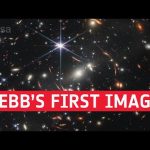
– SMACS 0723: Webb has delivered the deepest and sharpest infrared image of the distant Universe so far – and in only 12.5 hours. This new image, a color composite of multiple exposures each about two hours long, is approximately the size of a grain of sand held at arm’s length. This deep field uses a lensing galaxy cluster to find some of the most distant galaxies ever detected. This image only scratches the surface of Webb’s capabilities in studying deep fields and tracing galaxies back to the beginning of cosmic time.
We are Europe’s gateway to space. Our mission is to shape the development of Europe’s space capability and ensure that investment in space continues to deliver benefits to the citizens of Europe and the world. Check out https://www.esa.int/ to get up to speed on everything space related.