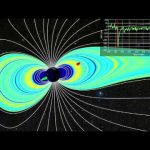
With 14 days until its launch, the Radiation Belt Storm Probes mission is previewed by scientists at NASA Headquarters in Washington. RBSP will study the role of the Earth’s radiation belts in producing space weather that can adversely affect communications and electronic systems.
Tag: new
-

Discovery, Innovation and New Destinations Highlight “This Year @NASA”
From understanding our Earth, to new clues about possible life elsewhere. From fostering life-changing research in space, to sharing our vision of the future with those destined to journey there.
From the end of one monumental mission, to the beginning of a new era in the human exploration of our solar system. “This Year @NASA” looks back at the stories that made 2011 — and help frame our path ahead. -

New Crew Sets Sights on Station on “This Week @NASA”
At the Baikonour Cosmodrome in Kazakhstan, training continues for the next residents of the International Space Station. Expedition 30 Soyuz Commander Oleg Kononenko, NASA Flight Engineer Don Pettit and European Space Agency Flight Engineer Andre Kuipers, are reviewing flight procedures and making other preparations in advance of their upcoming launch to the orbiting laboratory scheduled for on Dec. 21. Also, next-gen tests; Dawn’s new orbit; and, Third Rock rolls out.Plus, Cleveland tech showcase; Explorer moves; “Sully” at the sim; FIRST Lego; “Operation Cookies,” and more.
-

NASA Recruits New Astronauts Via Web
NASA unveils its new, online application process for those wishing to become NASA astronauts. In this video that appears on the application site, Administrator and former astronaut Charles Bolden urges candidates to join NASA’s astronauts Class of 2013 and be part of our nation’s future space exploration effort. To learn more: www.astronauts.nasa.gov
-

NASA’s MESSENGER Delivers New Pix, Data from Mercury
NASA reveals new images and science findings from the first spacecraft to orbit Mercury. The MErcury Surface, Space ENvironment, GEochemistry, and Ranging, or MESSENGER spacecraft conducted more than a dozen laps through the inner solar system for six years prior to achieving the historic orbit insertion on March 17.
-

STS-134 Gets New Launch Date on This Week @NASA
The launch of space shuttle Endeavour on STS-134 has been rescheduled for May 16th. Launch is scheduled for 8:56 a.m. Eastern. Also, NASA’s Gravity Probe B mission confirms two aspects of Albert Einstein’s theory of general relativity. Plus, two Mercury explorers honored; Young innovators recognized; ISS honored; NextGen Day; rotocraft research; FIRST finals; and HQ Cyber Café.
-

New Shuttle Launch Date on This Week @NASA
NASA has re-targeted the liftoff of space shuttle Endeavour for Friday, April 29, at 3:47 p.m. EDT. The move comes to resolve a scheduling conflict with a Russian Progress supply vehicle scheduled to launch April 27 and arrive at the station two days later. Also, Goddard Memorial Symposium; “Wheels” rolls with big Shorty; cost-saving software summit; two honors for Ames; and, marking Odyssey’s beginning.
-
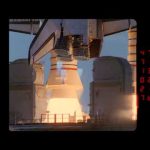
“Best of the Best” Provides New Views, Commentary of Shuttle Launches
This video from the Glenn Research Center highlights in stunning, behind-the-scenes imagery the launches of three space shuttle missions: STS-114, STS-117, and STS-124. NASA engineers provide commentary as footage from the ground and from the orbiters themselves document in detail the first phase of a mission.
-

New Shuttle Launch Date Tops This Week @NASA
A new target launch date has been selected for STS-133, allowing ample time for repairs to space shuttle Discovery. Also, NASA’s chief technologist and planetary science director were among more than 20 speakers featured at the second TEDxNASA conference in Newport News, Virginia. Hosted by the Langley Research Center, TEDx focused on education, innovation, family, technology, art and space travel. Plus, X-15 astronaut Joe Wagner joins Aerospace Hall of Fame; HQ Honor Awards; and Herrington helps celebrate American Indian & Alaska Native Heritage Month.
-

A New Era of Innovation and Discovery – President Obama’s Plan for NASA
President Barack Obama’s new plan for NASA.
-

NASA Science Briefing – A New Moon
Participants discuss new science data from the moon collected during national and international space missions.
-
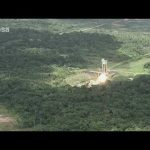
Vega: ESA’s new small launcher
Building Costs are being kept to a minimum by using advanced low-cost technologies and existing production facilities used for Ariane launchers, making access to space easier, quicker and cheaper.
-

New ESA Astronaut: Thomas Pesquet
Thomas is French, an aeronautical engineer and commercial arline pilot, born in 1978
-

New ESA Astronaut: Timothy Peake
37-year-old Tim Peake is a helicopter test pilot in the British army.
-

New ESA Astronaut: Luca Parmitano
33-year-old Luca is an experimental test pilot in the Italian air force.
-

New ESA Astronaut: Andreas Mogensen
33-year-old Andreas is from Denmark, a space navigation & control engineer.
-

New ESA Astronaut: Samantha Cristoforetti
32-year-old Samantha is a fighter pilot in the Italian air force.
-
NASA Mission Update: New Horizon
Three billion miles away from Earth, near the farthest reaches of our solar system, is the heavenly body with an extreme orbit known for 76 years as Pluto. Discovered by astronomers in 1930, Pluto was considered the ninth planet in our solar system until 2006 — when, after much debate, it was reclassified by the International Astronomical Union as a “dwarf planet,” officially dropping its name — for a number.
Denis Bogan, New Horizons Program Scientist: “Well, it certainly doesnt affect Pluto. Pluto is the same thing it was before it was discovered, before it was given a name, and before the name was changed.”
Nor does Pluto’s reclassification change the importance of NASA’s first mission to study it.
Launch Announcer: “We have ignition and lift off of NASAs New Horizon spacecraft on a decade-long”
Launched in January 2006, the thousand-pound New Horizons spacecraft will travel through space for 9-1/2 years before meeting up with Pluto in the summer of 2015.
Denis Bogan: “The last time Pluto was in this position in its orbit was during the French and Indian War. It takes 248 Earth years to travel around its orbit and come back to the same place again. At the speed of light, sending a radio signal back from the spacecraft, from Pluto to Earth, will take 4-1/2 hours.”
Operating on less power than a pair of common 100-watt light bulbs, New Horizons will map the highest-interest areas of Pluto to a resolution of 50 meters, less than the length of a football field — three billion miles away. Itll then move on to survey Pluto’s neighborhood: the atmosphere, ancient materials and small bodies of the Kuiper Belt, a chaotic region astrophysicists believe can tell us how Earth, the planets, even our sun were made.
Denis Bogan: “We have primitive material chunks of rock and ice, millions of objects of objects out there in the Kuiper Belt and we know very little about it. We didnt discover it until 1992.”
Traveling 3 billion miles to frozen, rocky Pluto and its environs, New Horizon is, in a way, going back in time to the chemical building blocks of the solar system, and life.
To learn more about the New Horizons mission visit www.nasa.gov
-
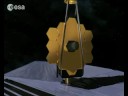
New Generation: The majestic James Webb in space
Seen here in this short movie, the JWST is the successor to the NASA/ESA Hubble Space Telescope and, with a six-metre mirror, it will be almost three times the size of Hubble.