Tag: rocket

  • Space Rider animation

    Space Rider animation

    This animation shows the launch of our reusable lifting body called Space Rider atop Vega-C.

    On reaching low-Earth orbit, Space Rider will serve as an unmanned high-tech space laboratory operating for periods longer than two months. It offers an array of orbit altitudes and inclinations for a large variety of experiments and demonstrations in microgravity.

    After each mission Space Rider will return to Earth to land on ground to return its cargo before minimal refurbishment for its next mission.

    More info about Space Rider: https://bit.ly/ESASpaceRider

    ★ Subscribe: http://bit.ly/ESAsubscribe and click twice on the bell button to receive our notifications.

    Check out our full video catalog: http://bit.ly/SpaceInVideos
    Follow us on Twitter: http://bit.ly/ESAonTwitter
    On Facebook: http://bit.ly/ESAonFacebook
    On Instagram: http://bit.ly/ESAonInstagram
    On Flickr: http://bit.ly/ESAonFlickr

    We are Europe’s gateway to space. Our mission is to shape the development of Europe’s space capability and ensure that investment in space continues to deliver benefits to the citizens of Europe and the world. Check out http://www.esa.int/ESA to get up to speed on everything space related.

    Copyright information about our videos is available here: http://www.esa.int/spaceinvideos/Terms_and_Conditions

    #ESA
    #SpaceRider
    #Rocket
  • We Go Together

    We Go Together

    We are building a coalition of nations that can help us get to the Moon quickly and sustainably. Together.

    We have a bold vision to go back to the Moon by 2024. As we work towards this goal, we welcome a growing list of international and commercial partners.
    It is the partnerships over the last 60 years that have ensured the steady progress. With Mars on the horizon, together we can explore more of our solar system and share in the advances and the knowledge that will come.

    We go, together.

    More about NASA’s Moon to Mars plans: https://www.nasa.gov/specials/moon2mars/
    This video is available for download from NASA’s Image and Video Library:
    https://images.nasa.gov/details-NHQ_2019_0528_We%20Go%20Together.html

  • NASA Administrator Bridenstine Chats with Elon Musk of SpaceX

    NASA Administrator Bridenstine Chats with Elon Musk of SpaceX

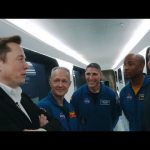
    On the latest Watch this Space, NASA Administrator Jim Bridenstine chats with SpaceX CEO and Chief Designer Elon Musk during a tour of Launch Complex 39A just before the Demo-1 launch at the Kennedy Space Center in Florida. The historic Demo-1 mission launched at 2:49 a.m. EDT on Saturday, March 2 and was the first launch of a commercially built and operated American spacecraft and space system designed for humans as part of NASA’s Commercial Crew Program.

    Learn more about the Commercial Crew program: https://blogs.nasa.gov/commercialcrew/.

  • Ariane 6 Upper Stage Test bench

    Ariane 6 Upper Stage Test bench

    Rocket engines for Ariane 6 are being tested and qualified at the German Aerospace Center in Lampoldshausen, Germany.

    Several of the facilities on site have been modified for Ariane 6 and a new facility will soon test the launcher’s complete upper stage, simulating as far as possible the conditions it will experience in flight. With testing and development at full pace, Ariane 6 is taking shape for its maiden voyage.

    Learn more about Ariane 6: http://bit.ly/Ariane6ESA

    ★ Subscribe: http://bit.ly/ESAsubscribe and click twice on the bell button to receive our notifications.

    Check out our full video catalog: http://bit.ly/SpaceInVideos
    Follow ESA on Twitter: http://bit.ly/ESAonTwitter
    On Facebook: http://bit.ly/ESAonFacebook
    On Instagram: http://bit.ly/ESAonInstagram
    On Flickr: http://bit.ly/ESAonFlickr

    ESA is Europe’s gateway to space. Our mission is to shape the development of Europe’s space capability and ensure that investment in space continues to deliver benefits to the citizens of Europe and the world. Check out http://www.esa.int/ESA to get up to speed on everything space related.

    Copyright information about our videos is available here: http://www.esa.int/spaceinvideos/Terms_and_Conditions

    #Ariane6
    #ESA
    #Rocket
  • Flying under Aeolus

    Flying under Aeolus

    Following the launch of Aeolus on 22 August 2018, scientists have been busy fine-tuning and calibrating this latest Earth Explorer satellite. Aeolus carries a revolutionary instrument, which comprises a powerful laser, a large telescope and a very sensitive receiver. It works by emitting short, powerful pulses – 50 pulses per second – of ultraviolet light from a laser down into the atmosphere. The instrument then measures the backscattered signals from air molecules, dust particles and water droplets to provide vertical profiles that show the speed of the world’s winds in the lowermost 30 km of the atmosphere. These measurements are needed to improve weather forecasts. As part of the working being done to calibrate this novel mission, scientists have been taking similar measurements from an aircraft carrying an airborne version of Aeolus’ instrument. The pilot flies the plane under the satellite as it orbits above so that measurements of wind can be compared.

    Learn more about Aeolus: http://bit.ly/AeolusESA

    ★ Subscribe: http://bit.ly/ESAsubscribe and click twice on the bell button to receive our notifications.

    Check out our full video catalog: http://bit.ly/SpaceInVideos
    Follow ESA on Twitter: http://bit.ly/ESAonTwitter
    On Facebook: http://bit.ly/ESAonFacebook
    On Instagram: http://bit.ly/ESAonInstagram
    On Flickr: http://bit.ly/ESAonFlickr

    ESA is Europe’s gateway to space. Our mission is to shape the development of Europe’s space capability and ensure that investment in space continues to deliver benefits to the citizens of Europe and the world. Check out http://www.esa.int/ESA to get up to speed on everything space related.

    Copyright information about our videos is available here: http://www.esa.int/spaceinvideos/Terms_and_Conditions

    #Aeolus
    #Satellite
    #EarthObservation

  • BepiColombo: preparations & launch (timelapse)

    BepiColombo: preparations & launch (timelapse)

    This year saw ESA’s science exploration mission BepiColombo begin its seven year cruise to the innermost planet of our Solar System: Mercury. This timelapse recalls some of the preparations that went into readying the mission at Europe’s Spaceport in Kourou, French Guiana.

    The mission, a joint endeavour between ESA and JAXA, comprises three spacecraft modules: ESA’s Mercury Planetary Orbiter and JAXA’s Mercury Magnetospheric Orbiter that will study all aspects of Mercury from their complementary orbits around the planet, and ESA’s Mercury Transfer Module that will bring them to the planet using a combination of solar electric propulsion and nine planetary flybys.

    The video includes testing of the individual spacecraft units, stacking of the three modules and a protective sunshield into their launch configuration, integration of the spacecraft inside the launcher fairing, roll out to the launch pad, and finally launch itself. The mission lifted off at 01:45:28 GMT on 20 October 2018.

    ★ Subscribe: http://bit.ly/ESAsubscribe and click twice on the bell to receive our notifications.

    Check out our full video catalog: http://bit.ly/SpaceInVideos
    Follow ESA on Twitter: http://bit.ly/ESAonTwitter
    On Facebook: http://bit.ly/ESAonFacebook
    On Instagram: http://bit.ly/ESAonInstagram
    On Flickr: http://bit.ly/ESAonFlickr

    ESA is Europe’s gateway to space. Our mission is to shape the development of Europe’s space capability and ensure that investment in space continues to deliver benefits to the citizens of Europe and the world. Check out http://www.esa.int/ESA to get up to speed on everything space related.

    Copyright information about our videos is available here: http://www.esa.int/spaceinvideos/Terms_and_Conditions

  • Soyuz spacecraft launch timelapse seen from space

    Soyuz spacecraft launch timelapse seen from space

    This is what three astronauts being launched into space looks like – seen from space. ESA astronaut Alexander Gerst took this time-lapse sequence from the International Space Station’s Cupola observatory on 3 December 2018.

    Inside the Soyuz MS-11 spacecraft were NASA astronaut Anne McClain, Canadian Space Agency astronaut David Saint-Jacques and Roscosmos astronaut and Soyuz commander Oleg Konenenko. The trio blasted into orbit at 11:31 GMT from the Baikonur cosmodrome in Kazakhstan and docked with the International Space Station just six hours later.

    Spacecraft are launched after the Space Station flies overhead. This allowed Alexander to set up a camera to take regular pictures at intervals that are played back to create this video.

    The rocket leaves behind a trail of exhaust as it gains altitude and passes through the layers of Earth’s atmosphere.

    Download the video from ESA’s space in videos: http://www.esa.int/spaceinvideos/Videos/2018/12/Soyuz_spacecraft_launch_timelapse_seen_from_space

    Follow Alexander and the #Horizons mission on social media via http://bit.ly/AlexanderGerstESA and on http://bit.ly/HorizonsBlogESA.

    Credits: ESA/NASA.

    ★ Subscribe: http://bit.ly/ESAsubscribe and click twice on the bell button to receive our notifications.

    Check out our full video catalog: http://bit.ly/SpaceInVideos
    Follow ESA on Twitter: http://bit.ly/ESAonTwitter
    On Facebook: http://bit.ly/ESAonFacebook
    On Instagram: http://bit.ly/ESAonInstagram
    On Flickr: http://bit.ly/ESAonFlickr

    ESA is Europe’s gateway to space. Our mission is to shape the development of Europe’s space capability and ensure that investment in space continues to deliver benefits to the citizens of Europe and the world. Check out http://www.esa.int/ESA to get up to speed on everything space related.

    Copyright information about our videos is available here: http://www.esa.int/spaceinvideos/Terms_and_Conditions

  • Vega: 13 launches 13 successes

    Vega: 13 launches 13 successes

    Europe’s Vega launch vehicle operating from Europe’s Spaceport in Kourou, French Guiana, has a flawless record.

    Vega serves a wide range of missions and payload configurations, responding to different market opportunities. It is the ideal launcher for most scientific and Earth observation missions, benchmarked to loft 1500 kg into a 700 km-altitude circular orbit at 90° inclination.

    Based on this success a more powerful #Vega, Vega-C, now in development is set to launch in mid-2019 offering greater performance at no additional cost.

    Vega-C shares technology with Europe’s other new launcher Ariane 6. The P120C solid fuel motor will be used as the first stage for Vega-C and two or four will be used as strap-on boosters for Ariane 6.

    ★ Subscribe: http://bit.ly/ESAsubscribe

    Check out our full video catalog: http://bit.ly/SpaceInVideos
    Follow ESA on Twitter: http://bit.ly/ESAonTwitter
    On Facebook: http://bit.ly/ESAonFacebook
    On Instagram: http://bit.ly/ESAonInstagram
    On Flickr: http://bit.ly/ESAonFlickr

    ESA is Europe’s gateway to space. Our mission is to shape the development of Europe’s space capability and ensure that investment in space continues to deliver benefits to the citizens of Europe and the world. Check out http://www.esa.int/ESA to get up to speed on everything space related.

    Copyright information about our videos is available here: http://www.esa.int/spaceinvideos/Terms_and_Conditions

  • BepiColombo launch highlights

    BepiColombo launch highlights

    Highlights from the days up to and including the exciting launch of the ESA-JAXA BepiColombo mission to Mercury.

    BepiColombo launched at 01:45 GMT from Europe’s Spaceport in Kourou, French Guiana. It will make a seven year cruise to Mercury, flying by Earth once, Venus twice and Mercury six times before entering orbit.

    It is the first European mission to Mercury, the smallest and least explored planet in the inner Solar System, and the first to send two spacecraft to make complementary measurements of the planet and its dynamic environment at the same time. The mission comprises two science orbiters: ESA’s Mercury Planetary Orbiter (MPO) and JAXA’s Mercury Magnetospheric Orbiter (MMO). The ESA-built Mercury Transfer Module (MTM) will carry the orbiters to Mercury using a combination of solar electric propulsion and gravity assist flybys.

    Learn more about #BepiColombo: http://bit.ly/ESAsBepiColombo

    ★ Subscribe: http://bit.ly/ESAsubscribe

    Check out our full video catalog: http://bit.ly/SpaceInVideos
    Follow ESA on Twitter: http://bit.ly/ESAonTwitter
    On Facebook: http://bit.ly/ESAonFacebook
    On Instagram: http://bit.ly/ESAonInstagram
    On Flickr: http://bit.ly/ESAonFlickr

    ESA is Europe’s gateway to space. Our mission is to shape the development of Europe’s space capability and ensure that investment in space continues to deliver benefits to the citizens of Europe and the world. Check out http://www.esa.int/ESA to get up to speed on everything space related.

    Copyright information about our videos is available here: http://www.esa.int/spaceinvideos/Terms_and_Conditions

  • BepiColombo mission to Mercury

    BepiColombo mission to Mercury

    BepiColombo is scheduled for launch at 01:45 GMT (03:45 CEST) on 20 October on an Ariane 5 from Europe’s Spaceport in Kourou.

    Final assembly of the two orbiters and transfer module has taken place, ready for the spacecraft to be integrated into its Ariane 5 launcher.

    BepiColombo is Europe’s first mission to Mercury, the smallest and least explored planet in the inner Solar System. It is a joint endeavour between ESA and the Japan Aerospace Exploration Agency, JAXA, and consists of two scientific orbiters: ESA’s Mercury Planetary Orbiter (MPO) and JAXA’s Mercury Magnetospheric Orbiter (MMO). The mission will study all aspects of Mercury, from the structure and dynamics of its magnetosphere and how it interacts with the solar wind, to its internal structure with its large iron core, and the origin of the planet’s magnetic field.

    More about #BepiColombo: http://bit.ly/ESAsBepiColombo

    ★ Subscribe: http://bit.ly/ESAsubscribe

    Check out our full video catalog: http://bit.ly/SpaceInVideos
    Follow ESA on Twitter: http://bit.ly/ESAonTwitter
    On Facebook: http://bit.ly/ESAonFacebook
    On Instagram: http://bit.ly/ESAonInstagram
    On Flickr: http://bit.ly/ESAonFlickr

    ESA is Europe’s gateway to space. Our mission is to shape the development of Europe’s space capability and ensure that investment in space continues to deliver benefits to the citizens of Europe and the world. Check out http://www.esa.int/ESA to get up to speed on everything space related.

    Copyright information about our videos is available here: http://www.esa.int/spaceinvideos/Terms_and_Conditions

  • NASA Astronaut Drew Feustel Records Music Video from Space

    NASA Astronaut Drew Feustel Records Music Video from Space

    NASA astronaut Drew Feustel recorded this music video from space. Feustel launched to the International Space Station in March 2018 and is currently serving as Expedition 56 Commander. Drew thanks all who helped bring this to life, including his friend, Gord Sinclair, for giving him permission to use the song, and the crew of Expeditions 55 and 56 for their support and participation in NASA’s human space exploration mission.

    Learn more about the International Space Station by visiting https://www.nasa.gov/mission_pages/station/main/index.html

  • How Do We Prepare a Spacecraft for Launch? Countdown to T-Zero for NASA’s TESS Mission

    How Do We Prepare a Spacecraft for Launch? Countdown to T-Zero for NASA’s TESS Mission

    Revisit the April 18, 2018, launch of NASA’s Transiting Exoplanet Survey Satellite (TESS) aboard a SpaceX Falcon 9 rocket. TESS is already scanning the skies, identifying planet candidates that may be orbiting distant stars. https://go.nasa.gov/2Q3J9ei

    TESS is NASA’s next step in the search for planets outside of our solar system, including those that could support life. The mission will find exoplanets that periodically block part of the light from their host stars, events called transits. TESS will survey 200,000 of the brightest stars near the sun to search for transiting exoplanets.

  • Preparing for Vega-C

    Preparing for Vega-C

    At the end of 2019 Vega-C will be launched from Europe’s Spaceport in French Guiana increasing performance from Vega’s current 1.5 t to about 2.2 t in its reference 700 km polar orbit, with no increase in launch costs.

    Vega-C’s first stage is based on the P120, the largest single segment carbon fibre solid-propellant rocket motor ever built. It was successfully tested in July 2018. Its development relies on new technologies derived from Vega’s current first stage P80 motor. Two or four P120C motors will also be used for the liftoff boosters on Ariane 6.

    Vega-C’s 3.3 m diameter fairing will accommodate larger payloads such as Earth observation satellites of more than two tonnes, and ESA’s Space Rider reentry vehicle.

    The Vega launch pad and mobile gantry are being modified to accommodate Vega-C leading into a period when launch facilities will accommodate both vehicles.

    Learn more about #VegaC: http://bit.ly/VegaC

    ★ Subscribe: http://bit.ly/ESAsubscribe

    Check out our full video catalog: http://bit.ly/SpaceInVideos
    Follow ESA on Twitter: http://bit.ly/ESAonTwitter
    On Facebook: http://bit.ly/ESAonFacebook
    On Instagram: http://bit.ly/ESAonInstagram
    On Flickr: http://bit.ly/ESAonFlickr

    ESA is Europe’s gateway to space. Our mission is to shape the development of Europe’s space capability and ensure that investment in space continues to deliver benefits to the citizens of Europe and the world. Check out http://www.esa.int/ESA to get up to speed on everything space related.

    Copyright information about our videos is available here: http://www.esa.int/spaceinvideos/Terms_and_Conditions

  • Parker Solar Probe Countdown to T-Zero for a Journey to “Touch” the Sun

    Parker Solar Probe Countdown to T-Zero for a Journey to “Touch” the Sun

    NASA’s historic Parker Solar Probe mission that launched Aug. 12, 2018 from Space Launch Complex 37 on Cape Canaveral Air Force Station in Florida will revolutionize our understanding of the Sun. The Parker Solar Probe spacecraft will travel through the Sun’s atmosphere, closer to the surface than any spacecraft before it, facing brutal heat and radiation conditions — and ultimately providing humanity with the closest-ever observations of a star. This is a look at the moments leading up to T-Zero for NASA’s mission to “touch” the Sun.

    Learn more about the mission at: https://www.nasa.gov/parkersolarprobe

  • Aeolus liftoff replay

    Aeolus liftoff replay

    ESA’s Earth Explorer Aeolus satellite lifted off on a Vega rocket from Europe’s Spaceport in Kourou, French Guiana, at 21:20 GMT (23:20 CEST, 18:20 local time) on 22 August 2018. Aeolus carries one of the most sophisticated instruments ever to be put into orbit. The first of its kind, the Aladin instrument includes revolutionary laser technology to generate pulses of ultraviolet light that are beamed down into the atmosphere to profile the world’s winds – a completely new approach to measuring the wind from space. By profiling the lowermost 30 km of the atmosphere, Aeolus will give scientists global information on the speed of the wind in near-real time. This will improve our understanding of how wind, pressure, temperature and humidity are interlinked. This new mission will also provide insight into how the wind influences the exchange of heat and moisture between Earth’s surface and the atmosphere. These aspects are important for understanding climate change. As well as advancing science and improving weather forecasts, data from Aeolus will be used in air-quality models to improve forecasts of dust and other airborne particles that affect public health.

    ★ Subscribe: http://bit.ly/ESAsubscribe

    Learn more about Aeolus: http://bit.ly/AeolusESA

  • Galileo 23-26 – Liftoff

    Galileo 23-26 – Liftoff

    Europe’s next four Galileo satellites lifted off at 11:25 GMT (13:25 CEST, 08:25 local time) on 25 July from Europe’s Spaceport in French Guiana atop an Ariane 5 launcher.

    Copyright: ESA/CNES/Arianespace

    ★ Subscribe: http://bit.ly/ESAsubscribe

  • ESA Euronews: Inside Italy’s Vega launcher factory

    ESA Euronews: Inside Italy’s Vega launcher factory

    Euronews had a unique chance to visit the Avio rocket factory, situated in Colleferro, just south of Rome, Italy, where engineers are lovingly crafting the next generation of carbon fibre European launchers.

    The site is one of the very few space rocket factories in Europe. It’s the place where the lightweight Vega launcher was born, and where the launchers of the future are being created.

    This video is also available in the following languages:
    German: https://youtu.be/fut4JpM6HrA
    French: https://youtu.be/o-hpzV0NOxA
    Italian: https://youtu.be/JVfA3ZmIj5k
    Spanish: https://youtu.be/GiXlxZzkxcE
    Portuguese: https://youtu.be/BW7VVlVxg1g
    Greek: https://youtu.be/cVPCFGxL0Ao
    Hungarian: https://youtu.be/XLXv2q5ydUI

    ★ Subscribe to our channel: http://bit.ly/ESAsubscribe

    Learn more about Vega C: http://bit.ly/VegaC

  • Horizons mission – Soyuz: launch to orbit

    Horizons mission – Soyuz: launch to orbit

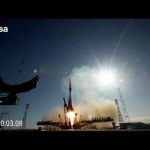
    This unique video shows a full launch of the Soyuz MS-09: from liftoff to orbit.

    Watch the launch from inside the crew capsule with first-ever shots from outside the spacecraft recorded by cameras fixed to the exterior of the Soyuz.

    The intense launch lasts less than ten minutes whereby the Soyuz spacecraft is propelled 1640 km and gains 210 km altitude. Every second for nine minutes, the spacecraft accelerates 50 km/h on average as the rocket’s boosters burn their fuel and are discarded.
    See the astronaut’s reactions and what the spacecraft looks like as the main steps are carried out to get into orbit:

    -00:12 Launch command issued
    -00:10 Engine turbopumps at flight speed
    -00:05 Engines at maximum thrust
    00:00 Launch
    +1:54 Separation of emergency rescue system
    +1:57 First stage separation
    +2:38 Fairing separation
    +4:48 Second stage separation
    +4:58 Tail adapter separation
    +8:45 Third stage engine cut off having arrived in orbit
    +8:49 Soyuz separation, deploy solar arrays and antennae

    The astronauts, from left to right, are NASA astronaut Serena Auñón-Chancellor, Roscosmos commander Sergei Prokopyev and ESA astronaut and flight engineer Alexander Gerst launched in the Soyuz MS-09 spacecraft from the Baikonur cosmodrome in Kazakhstan to the International Space Station on 6 June 2018. ESA astronaut Matthias Maurer and ESA television host Richard Hollingham provide commentary taken from the live event.

    Hunched in their Sokol flight suits that offer protection in case of fire or depressurisation, the trio stay in the crew capsule of the Soyuz – the only module that is also designed to survive a return to Earth. The bags above their heads contain supplies for the International Space Station as every bit of space is used.

    During a Soyuz launch astronauts typically experience forces of up to 4g – having to work while being pressed into their seats with a force that is four times more than the gravity felt on Earth. The Soyuz commander uses a stick to press buttons as they are too far away from the control panel.

    The fluffy toys above the astronauts’ heads are mascots and good luck charms but also serve as a simple but effective test to see when the spacecraft is in orbit: when they start to float the spacecraft is weightless and orbiting Earth. Above Sergei is the mascot for the 2018 FIFA soccer World Cup held in Russia. Alexander took German children television icon “Die Maus” with him.

    The launch went as planned as the 50-m tall Soyuz rocket propelled the astronauts to their cruising speed of around 28 800 km/h.
    For this launch the astronauts took 34 orbits of Earth over two days to arrive at their destination spending their time in the cramped orbital module of the Soyuz that is no larger than a car. With limited communications and living space the astronauts had time to adapt to weightlessness and reflect on their mission ahead. They aligned their spacecraft with the International Space Station and approached the orbital outpost for docking on 8 June 2018. The files for this video were downloaded by the astronauts after arriving at the Space Station.

    Alexander is a returning visitor to the International Space Station, the first of ESA’s 2009 class of astronauts to be sent into space for a second time. During the second part of his mission Alexander will take over as commander of the International Space Station, only the second time an ESA astronaut will take on this role so far.

    Credits: ESA / NASA / Roscosmos

    ★ Subscribe: http://bit.ly/ESAsubscribe

    Follow Alexander and the Horizons mission on social media via http://bit.ly/AlexanderGerstESA and on http://bit.ly/HorizonsBlogESA.

  • Sentinel-3B highlights

    Sentinel-3B highlights

    The Copernicus Sentinel-3B satellite spent six weeks at the Plesetsk cosmodrome in Russia being carefully prepared for liftoff. After being shipped from France to the launch site, the satellite was tested, joined to the rocket launch adapter, sealed from view in the fairing and taken by train to the launch pad. Sentinel-3B lifted off on 25 April 2018 at 17:57 GMT (19:57 CEST).

    It joins its twin, Sentinel-3A, in orbit. The pairing of identical satellites provides the best coverage and data delivery for Europe’s Copernicus programme – the largest environmental monitoring programme in the world. The satellites carry the same suite of cutting-edge instruments to measure oceans, land, ice and atmosphere. While these data are fed primarily into the Copernicus Marine Environment Monitoring Service, all the Copernicus services benefit to produce knowledge and information products in near-real time for a wide range of applications. The Sentinel-3 mission is essential for applications for ocean and coastal monitoring, numerical weather and ocean prediction, sea-level change and sea-surface topography monitoring, ocean primary production estimation and land-cover change mapping.

    ★ Subscribe: http://bit.ly/ESAsubscribe

  • NASA’s RS-25 Rocket Engine Fires Up Again
    NASA’s RS-25 Rocket Engine Fires Up Again
    Engineers conduct the third in a series of RS-25 flight controller tests on July 25, 2017, for NASA’s Space Launch System (SLS) rocket. The more than 8 1/2 minute test on the A-1 Test Stand at NASA’s Stennis Space Center in Mississippi signaled another step toward launch of NASA’s new Space Launch System (SLS). The SLS rocket, powered by four RS-25 engines, along with the Orion spacecraft will take astronauts on a new era of exploration beyond Earth’s orbit into deep space.

  • RS-25 Rocket Engine Test Firing
    RS-25 Rocket Engine Test Firing
    The 7.5-minute test conducted at NASA’s Stennis Space Center is part of a series of tests designed to put the upgraded former space shuttle engines through the rigorous temperature and pressure conditions they will experience during a launch. The tests also support the development of a new controller, or “brain,” for the engine, which monitors engine status and communicates between the rocket and the engine, relaying commands to the engine and transmitting data back to the rocket.

  • Women @NASA: Charlie Blackwell-Thompson

    Women @NASA: Charlie Blackwell-Thompson

    Daisy Ridley of Star Wars fame introduces us to Charlie Blackwell-Thompson, Space Launch System/Orion Launch Director.

    http://www.nasa.gov/feature/blackwell-thompson-named-launch-director-for-slsorion

  • ESA Euronews: It’s rocket science!
    ESA Euronews: It’s rocket science!

    Years in the building, seconds in the launching; rocket engines are truly awesome in their sheer power, but are also amazing feats of engineering and design.

    The scientific principle remains quite simple: accelerated gas creating thrust through a nozzle. However, extrapolating that concept to the point where the rocket has sufficient power to lift people and satellites beyond Earth’s gravity and into orbit is far more complex. Don’t let anybody tell you otherwise, the manufacturing and testing process IS rocket science.

    In Europe one of the key centres of work on rocket engines is done at the Snecma factory complex in a remote location in forests near the town of Vernon in Normandy. Many of the components are built elsewhere in Europe, but the assembly and testing are carried at the site in northern France.

    The pieces are carefully milled from titanium or lightweight alloys over a period of weeks. When construction is finally completed then comes the critical test phase, where the rockets are fired into life inside a vast tower.

    Space reporter Jeremy Wilks visited the Snecma site to find out more about this unique and constantly evolving industrial sector.

    This video is also available in the following languages:
    French: https://www.youtube.com/watch?v=OZBJLWDpcsw />German: https://www.youtube.com/watch?v=4NqwfcnC7n4 />Spanish: https://www.youtube.com/watch?v=cqjek6gLBU4 />Italian: https://www.youtube.com/watch?v=BWLYS5lLh3g />Portuguese: https://www.youtube.com/watch?v=t8c7hJn6-34 />Greek: https://www.youtube.com/watch?v=k-e6FMJQZls />Hungarian: https://www.youtube.com/watch?v=2TMVZ_5dErI

  • Rocket welding tool ready on This Week @NASA – September 12, 2014

    Rocket welding tool ready on This Week @NASA – September 12, 2014

    NASA Administrator Charlie Bolden, other NASA officials and representatives from The Boeing Company participated in a September 12 ribbon cutting for the new 170-foot-high Vertical Assembly Center at NASA’s Michoud Assembly Facility in New Orleans. The Vertical Assembly Center is a new tool that will be used to assemble parts of NASA’s Space Launch System rocket that will send humans to an asteroid and Mars. The administrator also visited Stennis Space Center in nearby Bay St. Louis, Mississippi, where engineers plan to test the RS-25 engines that will power the core stage of SLS. Also, Orion moved for fueling, Curiosity to climb Martian mountain, Possible geological activity on Europa, Expedition 40 returns, Earth Science on ISS and Hurricane-hunting aircraft!

  • Antares Rocket Raised on Launch Pad

    Antares Rocket Raised on Launch Pad

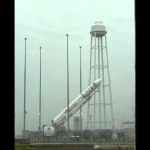
    The Orbital Sciences Corporation Antares rocket, with the Cygnus spacecraft onboard, is seen in this time-lapse movie as it is raised at launch Pad-0A, Thursday, July 10, 2014, at NASA’s Wallops Flight Facility in Virginia. The Antares will launch with the Cygnus spacecraft filled with over 3,000 pounds of supplies for the International Space Station, including science experiments, experiment hardware, spare parts, and crew provisions. The Orbital-2 mission is Orbital Sciences’ second contracted cargo delivery flight to the space station for NASA. Photo Credit: (NASA/Bill Ingalls)

  • The Soyuz launch sequence explained

    The Soyuz launch sequence explained

    What are the parts of the Soyuz rocket? What are the stages into orbit? What is the launch sequence? Watch and find out. This video has been produced from an actual lesson delivered to the ESA astronaut class of 2009 (also known as the #Shenanigans09) during their ESA Basic Training in 2009-2010

    This video is a joint production of the ESA Human Spaceflight & Operation Astronaut Training Division & Promotion Office

    Note: Subtitles are available for English, Italian, Russian and German. Click on the caption button to choose.

    Technical Experts: Stephane Ghiste, Dmitriy Churkin
    Content Design: Stephane Ghiste, Dmitriy Churkin, Pascal Renten, Simon Trim, Matthew Day
    Video Production & Editing: Pascal Renten, Simon Trim, Andrea Conigli
    Narration Voice: Bernard Oattes
    Project Co-ordination: Loredana Bessone, Matthew Day

    Special Thanks to:

    Massimo Sabbatini, Guillaume Weerts ESA Human Spaceflight & Operation Promotion Office
    Martin Schweiger (for use of his Orbiter software: http://orbit.medphys.ucl.ac.uk)
    Nikita Vtyurin, Andrew Thielmann (Orbiter Soyuz model)
    Iacopo Baroncini (Soyuz model)
    Joey P. Wade (Google Earth Soyuz models)
    NASA
    ROSCOSMOS

    Watch Part 2: Soyuz rendezvous and docking explained
    https://www.youtube.com/watch?v=M2_NeFbFcSw

    Watch Part 3: Soyuz undocking, reentry and landing explained
    https://www.youtube.com/watch?v=-l7MM9yoxII

  • ESA Euronews: The rocket factory

    ESA Euronews: The rocket factory

    The launch of a rocket is the crowning moment, the culmination of a long process of careful machining and construction. What comes out of a rocket factory is a unique blend of power, scale and engineering skill.

    “To give you an idea of scale, the thrust at liftoff of a rocket like Ariane is like the power of two units of a nuclear power station, and the turbo pump that feeds the rocket engine has the power of a TGV train,” says Michel Freuchet, Head of Launchers at Astrium, near Paris, where the Ariane 5 launcher was born.

    Piece by piece, it is hewn from solid aluminium and brought to life. The central structure of Ariane 5 is made from huge sheets of top-grade aluminium. Aluminium is used because it is best suited to withstand the extremely low temperatures of the liquid hydrogen and oxygen propellants. One by one, the panels are machined into shape — with many areas as thin as two milimetres. More than 90% of the aluminium is removed and recycled, leaving behind the perfect central part of each panel.

    There are three main European launchers ready to rocket into space.

    Ariane 5 is the biggest, capable of lifting 10 tonnes into orbit. Soyuz is the Russian workhorse, with a three-tonne payload capacity, while Vega is the European Space Agency’s new rocket, designed to take 1.5 tonne satellites into low orbit.

    Faced with increased competition from the Far East and private companies in the US, the European Space Agency is treating Ariane to a make-over. The Ariane 5 ME, or Midlife Evolution, will be able to combine the launch of communication satellites and scientific missions.

    Looking ahead a decade, some of the new technology in Ariane 5 ME will be included in its successor Ariane 6. The European Space Agency sees the evolution as a strategic move to meet the demands of both commercial and scientific customers.

  • ESA Euronews: Private Space

    ESA Euronews: Private Space

    Boldly going where no private company has gone before.

    On 25 May 2012 the first commercial spacecraft berthed with the International Space Station. A private company achieved something only national agencies have ever done before: flying and recovering an orbital craft. With private companies launching their own spaceships and designing their own orbital stations, it’s the dawn of commercial spacefaring.
    We talk to people involved in that development and we explore the world’s first commercial spaceport.

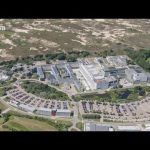
  • ESTEC: ESA’s Space Research and Technology Centre

    ESTEC: ESA’s Space Research and Technology Centre

    ESTEC: ESA’s Space Research and Technology Centre

  • Rocket Powered Skateboard – Sick Science! #090

    Rocket Powered Skateboard – Sick Science! #090

    Read the full experiment at http://www.stevespanglerscience.com/experiment/rocket-powered-skateboard Anyone who has tried the Mentos and Diet Coke Geyser will tell you that it is totally awesome! But how awesome would it be if you turned that geyser horizontal, strapped it to a skateboard, and made the whole thing an eruption-powered rocket car? You might not believe the amazing results.

    Want more experiments like this? Check out http://www.stevespanglerscience.com/product/naked-eggs-and-flying-potatoes

    Sick Science™ is a trademark of Steve Spangler, inc.

    © 2012 Steve Spangler Science all rights reserved

  • Sir Elton John greets the ‘Rocket Men’

    Sir Elton John greets the ‘Rocket Men’

    This video was specially recorded during Sir Elton John’s Million Dollar Piano Show in Las Vegas, on 17 April 2012, 40 years to the day after his single Rocket Man was released around the world.

    Continuing the celebration of ESA astronaut André Kuipers’ music in space, British rock legend Sir Elton sent a special message to ESA, André and the crew of the ISS on the 40th anniversary of this classic song.

    Sir Elton said, “When I was a boy Dan Dare was a comic book hero, and space travel just a romantic idea, not a reality. I was 14 years old when Yuri Gagarin became the first man in space; my songwriting partner Bernie Taupin was just 11. Bernie and I did not meet until 1967, and two years after we met, Neil Armstrong became the first man to step on to the moon.

    “Our generation was smitten with the glory and excitement of space travel. ‘Rocket Man’ – and indeed ‘Dan Dare’ on the Rock of the Westies album – came from those boyhood dreams of travelling beyond the stars and looking back on Earth.

    “Not long after the Rocket Man single was released, my band and I were invited to the NASA headquarters in Texas and shown around by Al Worden, Apollo 15 command module pilot. It was thrilling to find that real astronauts liked our song, Rocket Man, which was about an imaginary astronaut.

    “Now, 40 years later, it’s amazing to hear from the astronauts at the European Space Agency that they like the song and that it has been on the playlist on the International Space Station. I send my best wishes to ESA and all the crew, and my thanks for keeping those boyhood dreams alive.”

    André said, “This song has been an inspiration to many people who are interested in space, and especially those who wanted to become astronauts, including myself. It is certainly one of the most played songs here on the ISS, and we know it will accompany more astronauts into space in the future.”

    Rocket Man appeared on Elton John’s album Honky Château, released also 40 years ago next week, on 19 May 1972.

    Video copyright ESA/Rocket Music
    Rocket Man written by E. John and B. Taupin
    Music and concert excerpts, courtesy Rocket Music
    Video produced by ESA/J. Makinen

  • Kool-Aid Squeeze Rocket Launcher – Sick Science! #083

    Kool-Aid Squeeze Rocket Launcher – Sick Science! #083

    Read the full experiment at http://www.stevespanglerscience.com/content/experiment/squeeze-bottle-rocket It’s easy to turn a juice bottle into a rocket launcher. How? Grab a few straws of different sizes, some modeling clay, and an empty juice bottle to make a launcher that will send the straw rocket soaring across the room. Don’t worry, you aren’t just playing. You’ll learn something about Newton’s Third Law of Motion at the same time.

    Want more experiments like this? Check out http://www.stevespanglerscience.com/product/naked-eggs-and-flying-potatoes

    Sick Science™ is a trademark of Steve Spangler, inc.

    © 2012 Steve Spangler Science all rights reserved

  • ESA Euronews: A star rocket is born

    ESA Euronews: A star rocket is born

    The family of European rockets is growing. The next one is the youngest, called Vega, soon to be launched from Europe’s Spaceport in French Guiana.
    This new rocket complements the range that Europe already has to offer in the commercial market.

  • ESA Euronews: Nasce una stella tra i lanciatori spaziali europei

    ESA Euronews: Nasce una stella tra i lanciatori spaziali europei

    La famiglia dei vettori spaziali europei si allarga con il prossimo lancio di Vega dalla base europea della Guyana francese. Questo nuovo lanciatore va a completare l’offerta della gamma europea nell’ambito dei razzi commerciali. Ne parliamo nella rubrica Space.

  • 2012 ESA Missions Preview

    2012 ESA Missions Preview

    This video presents the key events in 2012 for ESA.

    André Kuipers continues his PromISSe mission aboard the International Space Station until May, the 4th ESA long duration mission. During his stay the third European ATV cargo ship will bring food and supplies to the orbital outpost. Early in the year the new Vega launcher will make its qualifying flight from Europe’s Spaceport in French Guiana. The end of the year will be marked by an ESA Conference at Ministerial level, a major decision point for the future of Europe in Space.

    More backgroud information can be found on: www.esa.int

  • First Soyuz transfer and liftoff from French Guiana

    First Soyuz transfer and liftoff from French Guiana

    The Russian Soyuz vehicle lifted off for the first time from its new launch complex at Europe’s Spaceport in French Guiana on 21 October 2011. Flight VS01 carried the first two operational satellites of Europe’s Galileo navigation system into orbit.
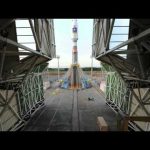
    This time-lapse movie shows the three-stage Soyuz transfer from the assembly and testing building to the launch pad where it is then raised to the vertical. Once in the Mobile gantry, the Upper Composite containing the satellites and Fregat-MT upper stage is hoisted into position on top of the vehicle. The gantry is then rolled back, clearing the way for Soyuz to lift off.

  • ESA Euronews: Soyuz descola pela primeira vez do Porto Espacial da Europa

    ESA Euronews: Soyuz descola pela primeira vez do Porto Espacial da Europa

    Lançou o Sputnik e Gagarin para o espaço. O mítico foguetão russo Soyuz conta já com mais de 1700 voos. O lançamento do Porto Espacial Europeu, na Guiana Francesa, abre um novo capítulo na sua longa carreira.

  • Film Canister Explosion – Sick Science! #032

    Film Canister Explosion – Sick Science! #032

    What happens when you have a build-up of gas? Don’t answer that question! The gas in question is carbon dioxide and the explosion is nothing short of fun. Warning: It’s impossible to do this activity just once. It is addicting and habit-forming. Proceed at your own risk!

    Want more experiments like this? Check out http://www.stevespanglerscience.com/product/fire-bubbles-exploding-toothpaste-book

    Sick Science™ is a trademark of Steve Spangler, inc.

    © 2011 Steve Spangler Science all rights reserved

  • Flying Tea Rocket – Sick Science! #024

    Flying Tea Rocket – Sick Science! #024

    The Tea Bag Rocket is really an adaptation of a classic science demonstration called the Ditto Paper Rocket. If you’re old enough to have experienced Ditto paper, you’ll recall the bluish-purple ink and that unforgettable smell of freshly printed copies. (Come to find out… both the Ditto machine solvent and the ink were highly toxic, but no one seemed to care back then.) Each piece of Ditto paper had a sheet of tissue paper that separated the two-part form, and it was this discarded piece of paper that teachers and kids used to make Ditto paper “rockets.” Since Ditto paper is a thing of the past, science enthusiasts have found a simple replacement – a tea bag.

    Want more experiments like this? Check out http://www.stevespanglerscience.com/product/naked-eggs-and-flying-potatoes

    Sick Science™ is a trademark of Steve Spangler, inc.

    © 2011 Steve Spangler Science all rights reserved

  • ESA Euronews: A can-size challenge for European students (Español)

    ESA Euronews: A can-size challenge for European students (Español)

    Flying your very own rocket with its model satellite – this was the challenge facing high-school students from all over Europe this summer for the first ever European CanSat competition in Norway.