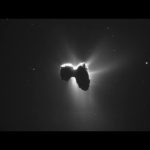
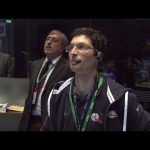
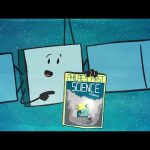
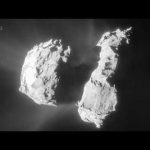
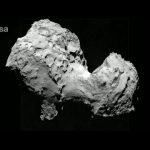
This footage is from 20 January 2014, when ESA’s Rosetta spacecraft awoke from deep space hibernation, more than 800 million kilometres from Earth. After spending 31 months in a power-saving sleep mode to conserve energy while travelling through the cold, outer regions of the Solar System, Rosetta successfully reactivated and sent a signal back to Earth — a simple “Hello, world!” that marked the beginning of one of the most ambitious space missions in history. Rosetta went on to become the first spacecraft to rendezvous with a comet (67P/Churyumov–Gerasimenko), orbit it, and deploy a lander, Philae, to its surface.
Ακολουθήστε τον Paxi στην άκρη του ηλιακού συστήματος στο ταξίδι του για να ανακαλύψει τον κόσμο των κομητών και μάθετε περισσότερα για τη συναρπαστική αποστολή Rosetta στον κομήτη 67P/Churyumov-Gerasimenko.
Σε αυτό το βίντεο, το οποίο απευθύνεται σε παιδιά ηλικίας 6 έως 12 ετών, ο Paxi προσκαλεί τα παιδιά να ανακαλύψουν μαζί του τους κομήτες και το Rosetta, το συναρπαστικό διαστημόπλοιο της ESA που πέταξε δίπλα στον κομήτη 67P/Churyumov-Gerasimenko και επιχείρησε στις 12 Νοεμβρίου 2014 να εκτοξεύσει έναν προσεδαφιστή στον κομήτη.
Αυτό το βίντεο είναι το τρίτο βίντεο μιας σειράς κινουμένων σχεδίων στην οποία ο Paxi, η εκπαιδευτική μασκότ της ESA, ασχολείται με διάφορες πτυχές του ηλιακού συστήματος, το Σύμπαν, τα μυστήρια του πλανήτη Γη και πολλά ακόμη.
★ Subscribe: http://bit.ly/ESAsubscribe and click twice on the bell button to receive our notifications.
We are Europe’s gateway to space. Our mission is to shape the development of Europe’s space capability and ensure that investment in space continues to deliver benefits to the citizens of Europe and the world. Check out https://www.esa.int/ to get up to speed on everything space related.
Comets are small objects of loosely packed ice and dust. Sometimes oddly shaped, they can tell us much about the formation of our Solar System. Cometary scientist Charlotte Götz discusses comets, their formation and their study in this week’s episode of Meet the Experts.
We are Europe’s gateway to space. Our mission is to shape the development of Europe’s space capability and ensure that investment in space continues to deliver benefits to the citizens of Europe and the world. Check out http://www.esa.int/ESA to get up to speed on everything space related.
As the year comes to a close, it is once again time to look back and reflect on some of the achievements and highlights of European spaceflight. The new Gaia star catalogue and the launch of Cheops are keeping ESA at the forefront of space science, as will Solar Orbiter, being prepared for launch next year. The Copernicus programme continues to be the largest Earth observation programme in the world, with ESA preparing even more missions. On the Space Station, Luca Parmitano became the third European to command an ISS expedition. During his second mission, he made some of the space programme’s most complex and demanding spacewalks. At the end of 2019, the ESA Space19+ ministerial conference agreed to give ESA its largest budget ever and expressed continued support for Europe’s independent access to space with Ariane 6 and Vega-C.
★ Subscribe: http://bit.ly/ESAsubscribe and click twice on the bell button to receive our notifications.
We are Europe’s gateway to space. Our mission is to shape the development of Europe’s space capability and ensure that investment in space continues to deliver benefits to the citizens of Europe and the world. Check out http://www.esa.int/ESA to get up to speed on everything space related.
Three years after the Rosetta mission officially ended in 2016, scientists met at ESA’s ESTEC facility in The Netherlands to discuss the latest findings at the final Science Working Team (SWT) meeting.
From the launch in 2004, to its arrival at comet 67P in 2014, Rosetta has been an emotional and inspiring mission. Its findings have furthered our understanding of comets and changed our perceptions of how the Solar System formed.
The mission produced an enormous amount of data which will keep many scientists busy for years. The OSIRIS camera, for example, took 100 000 images. These are archived – with the analysis of images recently providing further insight into the comet’s activity.
Rosetta’s legacy of cometary science and data is not just continuing to produce more work, however, it’s also inspiring the next generation of scientists. Some began working on Rosetta as students and are now taking their experience forward onto ESA’s future Comet Interceptor mission.
We are Europe’s gateway to space. Our mission is to shape the development of Europe’s space capability and ensure that investment in space continues to deliver benefits to the citizens of Europe and the world. Check out http://www.esa.int/ESA to get up to speed on everything space related.
Science is the underpinning theme of ESA, driving the spiral of inspiration, innovation, information exchange and interaction with our stakeholders. In this video, Günther Hasinger, ESA Director of Science, reflects on the growth of ESA’s space science programme over the past decades, as well as on its current and future challenges. He also highlights the importance of long-term strategic planning and international cooperation in these endeavours, and finally looks back at some recent successes of ESA’s space science missions.
Science is everywhere at ESA. As well as exploring the Universe and answering the big questions about our place in space we develop the satellites, rockets and technologies to get there. Science also helps us to care for our home planet. All this week we’re highlighting different aspects of science at ESA. Join the conversation with #ScienceAtESA.
Credits: ESA/NASA/JPL/University of Arizona (Huygens landing); ESA/Rosetta/Philae/ROLIS/DLR, Stefano Mottola (Philae landing); ESA/Planck Collaboration (cosmic microwave background); ESA/Gaia/DPAC (Milky Way); MPG/ESO (Eagle Nebula, visible); ESA/Herschel/PACS/SPIRE/Hill, Motte, HOBYS Key Programme Consortium (Eagle Nebula, far-infrared); ESA/XMM-Newton/EPIC/XMM-Newton-SOC/Boulanger (Eagle Nebula, X-rays); NASA, ESA/Hubble and the Hubble Heritage Team (Pillars of Creation); ESO (Pillars of Creation, ground-based view); Koppelman, Villalobos & Helmi, Kapteyn Astronomical Institute, University of Groningen (Milky Way simulation); ESA/XMM-Newton/F. Nicastro et al./R. Cen (warm-hot intergalactic medium); ESA/DLR/FU Berlin, CC BY-SA 3.0 IGO (Mars surface); ESA/NASA/JPL/ASI/Univ. Rome (Mars, liquid water under south pole); NASA/JPL-Caltech (Mars view); ESO, M. Kornmesser, L. Calcada (`Oumuamua animation)
★ Subscribe: http://bit.ly/ESAsubscribe and click twice on the bell button to receive our notifications.
ESA is Europe’s gateway to space. Our mission is to shape the development of Europe’s space capability and ensure that investment in space continues to deliver benefits to the citizens of Europe and the world. Check out http://www.esa.int/ESA to get up to speed on everything space related.
This video recorded during the Rosetta Science Operations Scheduling Legacy Workshop in October 2017, show university students learning how science operations scheduling is done at ESA and what tools are used. Exercises were performed with the support of the experts who did the scheduling for the real mission using the actual science operations scheduling software (MAPPS) that produced the final experiment commanding for the spacecraft.
ESA Academy’s training courses are part of the Training and Learning Programme that aims at complementing the standard academic formation in space-related disciplines offered in the ESA Member and Associate States’ universities. The goal is to better prepare the future workforce for the space community, and to show students the many opportunities offered by space research, facilities, and applications for science and engineering in fields unrelated to space.
ESA is Europe’s gateway to space. Our mission is to shape the development of Europe’s space capability and ensure that investment in space continues to deliver benefits to the citizens of Europe and the world. Check out http://www.esa.int/ESA to get up to speed on everything space related.
This short movie shares an impression of some of the scientific highlights from Rosetta’s mission at Comet 67P/Churyumov–Gerasimenko, as told through the voices of scientists working with Rosetta’s vast dataset, two years after the mission ended.
Rosetta launched in 2004 and travelled for ten years to its destination before deploying the lander Philae to the comet’s surface. Following the comet along its orbit around the Sun, Rosetta studied the comet’s surface changes, its dusty, gassy environment and its interaction with the solar wind. Even though scientific operations concluded in September 2016 with Rosetta’s own descent to the comet’s surface, analysis of the mission’s data will continue for decades.
Credits: This is an ESA Web TV production. The video contains artist impressions of the spacecraft (credit: ESA/ATG medialab) and animations/infographics by ESA. Images of the comet are from Rosetta’s OSIRIS and NAVCAM cameras, as well as Philae’s CIVA camera (credits: ESA/Rosetta/MPS for OSIRIS Team MPS/UPD/LAM/IAA/SSO/INTA/UPM/DASP/IDA – CC BY SA 4.0; ESA/Rosetta/NavCam – CC BY-SA IGO 3.0; ESA/Rosetta/Philae/CIVA). Ground-based images were provided by Colin Snodgrass/Alan Fitzsimmons/Liverpool Telescope. The plasma visualisation is based on modelling and simulation by Technische Universität Braunschweig and Deutsches Zentrum für Luft- und Raumfahrt, and visualised by Zuse-Institut Berlin. The animation of Philae’s flight across the surface is based on data from Philae’s ROMAP, RPC-MAG, OSIRIS, ROLIS, CIVA CONSERT, SESAME and MUPUS instrument teams, the Lander Control Centre at DLR and the Science Operation and Navigation Center at CNES.
ESA is Europe’s gateway to space. Our mission is to shape the development of Europe’s space capability and ensure that investment in space continues to deliver benefits to the citizens of Europe and the world. Check out http://www.esa.int/ESA to get up to speed on everything space related.
Enjoy this compilation of with the last images taken by Rosetta’s high resolution OSIRIS camera during the mission’s final hours at Comet 67P/Churyumov-Gerasimenko. As it moved closer towards the surface it scanned across an ancient pit and sent back images showing what would become its final resting place.
Credits: Images: ESA/Rosetta/MPS for OSIRIS Team MPS/UPD/LAM/IAA/SSO/INTA/UPM/DASP/IDA – CC BY-SA 4.0
Image compilation: ESA–D. C. Jimeno and M. P. Ayucar
These 210 images reflect Rosetta’s ever-changing view of Comet 67P/Churyumov–Gerasimenko between July 2014 and September 2016.
The sequence begins in the month leading up to Rosetta’s arrival on 6 August, when the comet was barely a few pixels in the field of view. Suddenly, the curious shape was revealed and Rosetta raced to image its surface, coming within 10 km, to find a suitable place for Philae to land just three months later.
Philae’s landing is featured with the ‘farewell’ images taken by both spacecraft of each other shortly after separation, and by Philae as it drew closer to the surface at its first touchdown point. An image taken at the final landing site is also shown.The subsequent images, taken by Rosetta, reflect the varying distance from the comet as well as the comet’s rise and fall in activity as they orbited the Sun.
Before the comet reached its most active phase in August 2015, Rosetta was able to make some close flybys, including one in which the lighting geometry from the Sun was such that the spacecraft’s shadow could be seen on the surface.
Then, owing to the increase of dust in the local environment, Rosetta had to maintain a safer distance and carry out scientific observations from afar, but this also gave some impressive views of the comet’s global activity, including jets and outburst events.
Once the activity began to subside, Rosetta could come closer again and conduct science nearer to the nucleus, including capturing more high-resolution images of the surface, and looking out for changes after this active period.
Eventually, as the comet returned to the colder outer Solar System, so the available solar power to operate Rosetta fell. The mission concluded with Rosetta making its own dramatic descent to the surface on 30 September 2016, the final images taken reflected in the last images shown in this montage.
Credits: ESA/Rosetta/NavCam – CC BY-SA IGO 3.0; ESA/Rosetta/MPS for OSIRIS Team MPS/UPD/LAM/IAA/SSO/INTA/UPM/DASP/IDA; ESA/Rosetta/Philae/CIVA; ESA/Rosetta/Philae/ROLIS/DLR
Watch the amazing cartoon adventures of Rosetta and Philae, now back-to-back in one special feature-length production.
Find out how Rosetta and Philae first got inspired to visit a comet, and follow them on their incredible ten-year journey through the Solar System to their destination, flying around planets and past asteroids along the way. Watch as Philae tries to land on the comet and deals with some unexpected challenges!
Learn about the fascinating observations that Rosetta made as she watched the comet change before her eyes as they got closer to the Sun and then further away again. Finally, wish Rosetta farewell, as she, too, finishes her amazing adventure on the surface of the comet. Keep watching for one last surprise!
Watch the amazing cartoon adventures of Rosetta and Philae, now back-to-back in one special feature-length production.
Find out how Rosetta and Philae first got inspired to visit a comet, and follow them on their incredible ten-year journey through the Solar System to their destination, flying around planets and past asteroids along the way. Watch as Philae tries to land on the comet and deals with some unexpected challenges!
Learn about the fascinating observations that Rosetta made as she watched the comet change before her eyes as they got closer to the Sun and then further away again. Finally, wish Rosetta farewell, as she, too, finishes her amazing adventure on the surface of the comet. Keep watching for one last surprise!
Watch the amazing cartoon adventures of Rosetta and Philae, now back-to-back in one special feature-length production.
Find out how Rosetta and Philae first got inspired to visit a comet, and follow them on their incredible ten-year journey through the Solar System to their destination, flying around planets and past asteroids along the way. Watch as Philae tries to land on the comet and deals with some unexpected challenges!
Learn about the fascinating observations that Rosetta made as she watched the comet change before her eyes as they got closer to the Sun and then further away again. Finally, wish Rosetta farewell, as she, too, finishes her amazing adventure on the surface of the comet. Keep watching for one last surprise!
Watch the amazing cartoon adventures of Rosetta and Philae, now back-to-back in one special feature-length production.
Find out how Rosetta and Philae first got inspired to visit a comet, and follow them on their incredible ten-year journey through the Solar System to their destination, flying around planets and past asteroids along the way. Watch as Philae tries to land on the comet and deals with some unexpected challenges!
Learn about the fascinating observations that Rosetta made as she watched the comet change before her eyes as they got closer to the Sun and then further away again. Finally, wish Rosetta farewell, as she, too, finishes her amazing adventure on the surface of the comet. Keep watching for one last surprise!
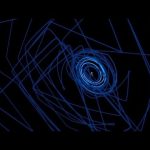
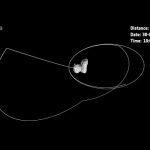
Animation visualising Rosetta’s trajectory around Comet 67P/Churyumov–Gerasimenko, from arrival to mission end.
The animation begins on 31 July 2014, during Rosetta’s final approach to the comet after its ten-year journey through space. The spacecraft arrived at a distance of 100 km on 6 August, from where it gradually approached the comet and entered initial mapping orbits that were needed to select a landing site for Philae. These observations also enabled the first comet science of the mission.The manoeuvres in the lead up to, during and after Philae’s release on 12 November are seen, before Rosetta settled into longer-term science orbits.
In February and March 2015 the spacecraft made several flybys. One of the closest triggered a ‘safe mode’ that forced it to retreat temporarily until it was safe to draw gradually closer again.
The comet’s increased activity in the lead up to and after perihelion in August 2015 meant that Rosetta remained well beyond 100 km for several months.In June 2015, contact was restored with Philae again – albeit temporary, with no permanent link able to be maintained, despite a series of dedicated trajectories flown by Rosetta for several weeks.
Following the closest approach to the Sun, Rosetta made a dayside far excursion some 1500 km from the comet, before re-approaching to closer orbits again, enabled by the reduction in the comet’s activity.
In March–April 2016 Rosetta went on another far excursion, this time on the night side, followed by a close flyby and orbits dedicated to a range of science observations.
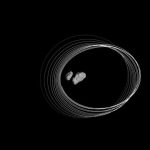
In early August the spacecraft started flying elliptical orbits that brought it progressively closer to the comet. On 24 September Rosetta left its close, flyover orbits and switched into the start of a 16 x 23 km orbit that was used to prepare and line up for the final descent.
On the evening of 29 September Rosetta manoeuvred onto a collision course with the comet, beginning the final, slow descent from an altitude of 19 km. It collected scientific data throughout the descent and gently struck the surface at 10:39 GMT on 30 September in the Ma’at region on the comet’s ‘head’, concluding the mission.
The trajectory shown in this animation is created from real data, but the comet rotation is not. Distances are given with respect to the comet centre (except for the zero at the end to indicate completion), but may not necessarily follow the exact comet distance because of natural deviations from the comet’s gravity and outgassing. An arrow indicates the direction to the Sun as the camera viewpoint changes during the animation.
Inside the main control room at ESA’s operation centre as the Rosetta spacecraft sends its last signal from Comet 67P/Churyumov–Gerasimenko, confirming the end of the spacecraft’s 12.5 year journey in space.
On the last day of her incredible mission, Rosetta slowly descends to the surface of Comet 67P/Churyumov-Gerasimenko. After having sent her extraordinary data back home, she is ready to join Philae for a well deserved rest on the comet. But is there one last surprise in store?
On the last day of her incredible mission, Rosetta slowly descends to the surface of Comet 67P/Churyumov-Gerasimenko. After having sent her extraordinary data back home, she is ready to join Philae for a well deserved rest on the comet. But is there one last surprise in store?
On the last day of her incredible mission, Rosetta slowly descends to the surface of Comet 67P/Churyumov-Gerasimenko. After having sent her extraordinary data back home, she is ready to join Philae for a well deserved rest on the comet. But is there one last surprise in store?
On the last day of her incredible mission, Rosetta slowly descends to the surface of Comet 67P/Churyumov-Gerasimenko. After having sent her extraordinary data back home, she is ready to join Philae for a well deserved rest on the comet. But is there one last surprise in store?
Besides its scientific and operational successes, the Rosetta mission has captured the imagination of many people worldwide, stimulating them to produce art and music, and undertake other creative activities with friends and families. Many even made further education or career choices inspired by the mission.This video features a selection of contributions that were shared on the Rosetta Legacy tumblr in September 2016.
Rosetta revisits the exciting scientific discoveries she made during her time at Comet 67P/Churyumov-Gerasimenko, including the successful search to find Philae. Finally, she starts preparing to descend to the comet for the end of her extraordinary mission.
Animation visualising Rosetta’s descent to Comet 67P/Churyumov–Gerasimenko on 30 September 2016. The sequence is speeded up to show the relative motion of Rosetta and the rotating comet below.
Rosetta will target a smooth region close to several large pits measuring more than 100 m across and 60 m deep, on the small lobe of the comet.
The impact time is predicted as 11:20 GMT +/- 20 minutes on 30 September.
In just a few days’ time ESA’s Rosetta mission is going to come to a close in a most extraordinary fashion, because the spacecraft is going to slowly, and deliberately crash-land into the comet that it has been orbiting for the past two years.
Euronews is with the team as they prepare for this dramatic finale.
Le 30 septembre prochain, la sonde Rosetta s’écrasera lentement et délibérément sur la comète autour de laquelle elle orbite depuis deux ans. Or elle n’a pas été conçue pour cela. L’issue sera fatale. Mais avant cette dernière manoeuvre, les scientifiques ont prévu d’effectuer des relevés inédits à l’approche de “Tchouri”.
Animation of Rosetta’s trajectory over the last two months of its mission at Comet 67P/Churyumov–Gerasimenko.
The animation begins in early August, when the spacecraft started flying elliptical orbits that brought it progressively closer to the comet at its closest approach.
On 24 September 2016, Rosetta will leave its current close, flyover orbits and transfer into the start of a 16 x 23 km orbit that will be used to prepare and line up for the final descent.
On the evening of 29 September (20:50 GMT) Rosetta will manoeuvre onto a collision course with the comet, beginning the descent from an altitude of 19 km. The spacecraft will fall freely, without further manoeuvres, collecting scientific data during the descent.
The trajectory shown here was created from real data provided over the last month, but may not necessarily follow the exact comet distance because of natural deviations from the comet’s gravity and outgassing.
Animation of Rosetta’s final trajectory in the last 10 days of its mission at Comet 67P/Churyumov–Gerasimenko.
On 24 September 2016, Rosetta will leave a close flyover orbit and transfer into the start of a 16 x 23 km orbit that will be used to prepare and line up for the final descent. In the evening of 29 September (20:50 GMT) Rosetta will manoeuvre onto a collision course with the comet, beginning the descent from an altitude of 19 km. The spacecraft will fall freely, without further manoeuvres, collecting scientific data during the descent.
The trajectory shown in this animation is created from real data provided in the last month, but may not necessarily follow the exact distance/time details because of natural deviations in the trajectory associated with the comet’s gravity and outgassing.
How did it all begin? What are the origins of our planet? To understand our place in the Universe we need to explore space. Find out how we’re doing this with ESA’s incredible fleet of space science missions to study our Sun and chart the stars around us, probe the dark matter and dark energy of the Universe, and tour various planets, moons and other small bodies in our Solar System.
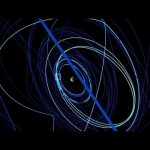
Animation visualising Rosetta’s two-year journey around Comet 67P/Churyumov–Gerasimenko.
The animation begins on 31 July 2014, during Rosetta’s final approach to the comet after its ten-year journey through space. The spacecraft arrived at a distance of 100 km on 6 August whereupon it gradually approached the comet and entered initial mapping orbits that were needed to select a landing site for Philae. These observations also enabled the first comet science of the mission. The manoeuvres in the lead up to, during and after Philae’s deployment on 12 November are seen, before Rosetta settled into longer-term science orbits.
In February and March 2015 the spacecraft made several flybys. One of the closest flybys triggered a ‘safe mode’ event that forced it to retreat temporarily until it was safe to gradually draw closer again. The comet’s increased activity in the lead up to and after perihelion in August 2015 meant that Rosetta remained well beyond 100 km distances for several months.
In June 2015, contact was restored with Philae again – albeit temporary, with no permanent link able to be maintained, despite a series of dedicated trajectories flown by Rosetta for several weeks.
Following perihelion, Rosetta performed a dayside far excursion some 1500 km from the comet, before re-approaching to closer orbits again, enabled by the reduction in the comet’s activity. In March–April 2016 Rosetta went on another far excursion, this time on the night side, followed by a close flyby and orbits dedicated to a range of science observations.
The animation finishes at 9 August 2016, before the details of the end of mission orbits were known. A visualisation of the trajectories leading to the final descent to the surface of the comet on 30 September will be provided once available.
The trajectory shown in this animation is created from real data, but the comet rotation is not. An arrow indicates the direction to the Sun as the camera viewpoint changes during the animation.
Følg Paxi til randen av solsystemet, oppdag kometenes verden og lær om det fantastiske Rosetta har på kometen 67P/Churyumov-Gerasimenko.
I videoen, som retter seg mot barn mellom 6–12 år, tar Paxi barna med seg for å oppdage kometer og Rosetta – det fantastiske ESA-romfartøyet som flyr langs kometen 67P/Churyumov-Gerasimenko. 12.11.2014 skal det prøve å slippe en lander på denne.
Videoen er den tredje i en serie av animasjoner hvor Paxi, ESAs utdannelsesmaskot, kommer i kontakt med forskjellige sider ved solsystemet, universet, jordens hemmeligheter og mye mer.
Rosetta describes the exciting discoveries she made during her second year at Comet 67P/Churyumov-Gerasimenko, after the comet made its closest approach to the Sun along its orbit. She also tells us about her efforts to contact Philae, and starts counting down to her own mission finale.
Rosetta has another three months of science to collect before its historic mission comes to an end. But the mission is not resting on its laurels. It has just broken a new record by flying an orbit 7 kms from the comet’s centre – just 5 kms from the surface – and there are more breathtaking manoeuvres to come.
This film describes the orbits that Rosetta will undertake around comet 67P/Churyumov-Gerasimenko, the changes in the amount of gas coming off the comet, and examines the importance of finding phosphorus and glycine – an amino acid that is essential for life.
It also discusses the mission’s most recent discoveries of Xenon and Krypton, together with most of their isotopes. These noble gases were detected by the ROSINA instrument during the period when Rosetta was flying extremely close to the comet. More important science is expected to be released during the next few months.
Följ med Paxi till utkanten av Solsystemet för att upptäcka en värld av kometer och lära dig om det fascinerande Rosetta-projektet till kometen 67P/Churyumov-Gerasimenko.
I den här videofilmen, som är avsedd för barn mellan 6 och 12 år, tar Paxi med sig barn för att utforska kometer och Rosetta, ESA:s fascinerande rymdfarkost som flyger sida vid sida med kometen 67P/Churyumov-Gerasimenko och ska försöka släppa ned en landningsenhet på kometen den 12 November 2014.
Den här videofilmen är den tredje i en serie av animationer i vilka Paxi, ESA:s utbildningsmaskot, berör olika aspekter av Solsystemet, Universum, planeten Jordens hemligheter och mycket mer.
Følg Paxi til udkanten af solsystemet for at udforske kometernes verden og lære om den fantastiske Rosetta-mission til kometen 67P/Churyumov-Gerasimenko.
I denne video, som er rettet mod børn i aldersgruppen 6 til 12 år, tager Paxi børnene med for at udforske kometer og se på Rosetta – det fantastiske ESA-rumfartøj, som flyver ved siden af kometen 67P/Churyumov-Gerasimenko, hvorpå den prøver at placere en lander den 12. november 2014.
Denne video er den tredje i en serie af animationer, hvori Paxi, ESA’s uddannelsesmaskot, kommer ind på forskellige aspekter af solsystemet, universet, hemmelighederne bag planeten Jorden og meget mere.
Lähde Paxin mukaan aurinkokunnan laidalle. Löydä komeettojen maailma ja tutustu Rosetan ihmeelliseen matkaan komeetta 67P/Churyumov-Gerasimenkon luo.
Tällä 6–12-vuotiaille suunnatulla videolla Paxi vie lapset tutkimaan komeettoja ja Rosettaa, ESAn ihmeellistä avaruusalusta, joka lentää 67P/Churyumov-Gerasimenko-komeetan rinnalla ja yrittää laskeutua sille 12. marraskuuta 2014.
Tällä animaatiosarjan kolmannella videolla Paxi, ESAn koulutusmaskotti, esittelee eri näkökulmista aurinkokuntaa, maailmankaikkeutta, Maa-planeetan salaisuuksia ja paljon, paljon muuta.
Leć z Paxim do granic Układu Słonecznego, aby odkryć świat komet i dowiedzieć się więcej o niesamowitej misji statku Rosetta do komety 67P/Czuriumow-Gierasimienko.
W tym filmie, przeznaczonym dla dzieci w wieku od 6 do 12 lat, Paxi zabiera dzieci ze sobą, aby pokazać im komety i niesamowity statek kosmiczny ESA Rosetta, lecący obok komety 67P/Czuriumow-Gierasimienko, a także próbę umieszczenia na niej lądownika, jaka miała miejsce 12 listopada 2014 r.
Film ten jest trzecią z całej serii animacji, w których Paxi, edukacyjna maskotka ESA, przedstawia różne zagadnienia związane z Układem Słonecznym, Wszechświatem, tajemnicami planety Ziemi i wiele innych tematów.
Následujte Paxiho k okraji sluneční soustavy, objevte svět komet a naučte se něco o úžasné misi Rosetta ke kometě 67P/Churyumov-Gerasimenko.
V tomto videu určeném pro děti od 6 do 12 let Paxi vezme děti na objevování komet a Rosetty, skvělé kosmické lodi ESA létající po boku komety 67P/Churyumov-Gerasimenko, na kterou 12. listopadu 2014 vypustila přistávací modul.
Jedná se o třetí ze série animací, ve které se Paxi, vzdělávací maskot ESA, dotýká různých aspektů sluneční soustavy, vesmíru, tajemství planety Země a mnoha dalších zajímavostí.
Urmează-l pe Paxi la marginea Sistemului Solar pentru a descoperi lumea cometelor şi pentru a afla mai multe despre uimitoarea misiune Rosetta către cometa 67P / Ciuriumov-Gherasimenko.
În acest video, destinat copiilor cu vârste cuprinse între 6 şi 12 ani, Paxi îi va lua cu el pe copii într-o călătorie pentru a descoperi cometele şi pe Rosetta, uluitoarea navă spaţială a ESA care zboară alături de cometa 67P / Ciuriumov-Gherasimenko şi care va încerca, la data de 12 noiembrie 2014, să plaseze o sondă de aterizare pe aceasta.
Acest videoclip este al treilea dintr-o serie de desene animate în care Paxi, mascota educaţională a ESA, abordează diferite aspecte ale Sistemului Solar, Universul, secretele planetei Pământ şi multe altele.
It’s been an extraordinary year for the Rosetta comet mission since Philae landed on the surface of Comet 67P/Churyumov-Gerasimenko on 12 November 2014.
Continual data from the orbiter, together with information collected over several days from the lander, is providing a comprehensive picture of a remnant from our Solar System.
This film covers the most recent science news from the Rosetta mission, as well as selected scientific highlights from the last year. It includes the comet’s unusual surface terrace structure, its formation from two colliding objects producing the unusual rubber duck shape, how water is transported from inside the comet towards the surface, and the surprising detection of molecular oxygen – familiar on Earth but not on a comet.
The Rosetta Mission has captured the interest and imagination of a generation and it is not over yet! Take a look at this Royal Observatory Greenwich video which explains what Rosetta and Philae have achieved as well as the impact the mission has had on our knowledge of our very own solar system. http://bit.ly/rogvideo #rogrosetta