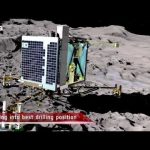
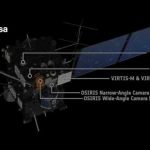
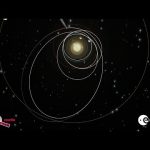
Annotated version of the Philae’s mission at comet 67P animation.
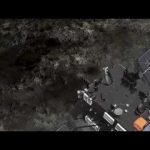
The animation begins with the deployment of Philae from Rosetta at comet 67P/Churyumov–Gerasimenko in November 2014. It will take several hours for it to reach the surface. Because of the comet’s extremely low gravity, landing gear will absorb the small forces of landing while ice screws in the probe’s feet and a harpoon system will lock the probe to the surface. At the same time a thruster on top of the lander will push it down to counteract the impulse of the harpoon imparted in the opposite direction.
Once it is anchored to the comet, the lander will begin its primary science mission, based on its 64-hour initial battery lifetime. The animation shows a number of the science instruments in action on the surface.
Rosetta’s Philae lander is provided by a consortium led by DLR, MPS, CNES and ASI.
Animation highlighting the imaging and spectroscopy instruments on ESA’s Rosetta spacecraft. The animation focuses on the wavelengths and the fields of view of the Alice, MIRO, OSIRIS and VIRTIS instruments.
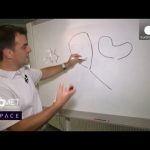
Die Rosetta-Sonde hat ihren Zielkometen Tschuri erreicht. Damit hat für die Wissenschaftler von der ESA, die Rosetta vor zehn Jahren ins All geschickt haben, ein Wettlauf gegen die Zeit begonnen. Denn nun müssen sie den Kometen kartografieren und Daten sammeln, bevor sie im November den Landeroboter aus Rosetta ausklinken und auf Tschuri landen lassen. Dafür muss nun eine geeignete Landestelle gefunden werden – keine leichte Aufgabe. In der aktuellen Ausgabe von euronews Space zeigen uns die Kometen-Jäger in Darmstadt, wie man um einen Kometen fliegt, wie Rosetta ihr Ziel “sieht” und welche Bedeutung das ganze Projekt für die Wissenschaft und das Team hat.
The Rosetta mission is now on a race against time to prepare maps and collect data before the Philae lander is due to be sent down to the surface of comet 67P in November. In this edition of Euronews Space, the ‘Comet Hunters’ show us how to orbit a comet, how Rosetta ‘sees’ its target, and what the mission means to the world of science, and to this team in particular.
ESA astronaut Alexander Gerst talks with US media about the Rosetta mission, amongst other topics. Alexander is onboard the International Space Station at a member of the Expedition 40 crew and is living and working on the ISS for five and a months for the Bluedot mission. On 6 August, ESA’s comet chaser Rosetta arrived at comet 67P/Churyumov-Gerasimenko after a 10-year journey.
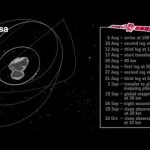
What happens after Rosetta arrives at comet 67P/Churyumov–Gerasimenko? This animation describes the key dates for the next set of manoeuvres that will bring Rosetta even closer to the comet between August and October.
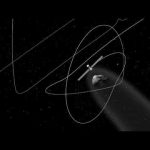
After arriving on 6 August, Rosetta will follow a set of two, three-legged triangular trajectories that require a small thruster burn at each apex. The legs are about 100 km long and it will take Rosetta between three and four days to complete each one.
The first triangle is conducted at a distance of about 100 km from the comet, the second at around 50 km. Then Rosetta will switch to a ‘global mapping phase’ at an altitude of about 30 km. During this period, it will make a ‘night excursion’, whereby the ground track of the spacecraft will be on the night-side of the comet (with the spacecraft still fully illuminated the Sun).
In October Rosetta will transfer to a close mapping phase to observe the comet from a distance of 10 km. The spacecraft will move even closer to dispatch lander Philae to the surface in November.
In this animation the comet is an artist’s impression and is not to scale with the spacecraft. The comet rotation is not representative (67P rotates once per 12.4 hours). Dates may be subject to change.
Extended version of Philae touchdown animation to include visualisations of some of the science experiments on the lander.
The animation begins with the deployment of Philae from Rosetta at comet 67P/Churyumov–Gerasimenko in November 2014. Rosetta will come to within about 10 km of the nucleus to deploy Philae, which will take several hours to reach the surface. Because of the comet’s extremely low gravity, landing gear will absorb the small forces of landing while ice screws in the probe’s feet and a harpoon system will lock the probe to the surface. At the same time a thruster on top of the lander will push it down to counteract the impulse of the harpoon imparted in the opposite direction. Once it is anchored to the comet, the lander will begin its primary science mission, based on its 64-hour initial battery lifetime. The animation then shows five of Philae’s 10 instruments in action: CIVA, ROLIS, SD2, MUPUS and APXS.
Rosetta’s Philae lander is provided by a consortium led by DLR, MPS, CNES and ASI.
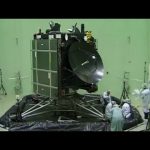
The road to humankind’s first rendezvous with a comet began at ESA’s technical centre in the Netherlands. The pioneering Rosetta spacecraft and its Philae lander were tested in simulated space conditions to ensure they could withstand the difficult journey.
Long, long ago men and women on Earth gazed in wonder at comets that appeared in the sky. What where these mysterious objects? Rosetta and Philae learn about the history of comets from their grandfather, Giotto.
We don’t know where you’re going, but we do know that Rosetta is about to arrive at comet 67P/Churyumov-Gerasimenko. Join the adventure and share your ‘are we there yet?’ photos to win great prizes.
..there was a spacecraft called Rosetta. Rosetta had been travelling in space for 10 years, towards a comet called 67P/Churyumov-Gerasimenko. Before long, Rosetta was able to see the comet in the distance, and she took stunning pictures as she got closer and closer. There was only a little way to go now…
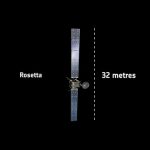
This short animation explains the relative sizes of the Rosetta spacecraft and comet 67P/Churyumov–Gerasimenko.
Rosetta is 32 m from tip to tip of the solar wings. Assuming the comet measures about 4 km across, that’s 125 times the width of Rosetta.
Unlike typical artist’s impressions, this image is scaled to convey the vast difference in size between Rosetta and the comet, even when the spacecraft is in a close 10 km orbit, as depicted here.
Rosetta arrives at the comet at an altitude of 100 km in the first week of August, and will move progressively closer over the following two months, with the intention to orbit at an altitude of just 10 km, depending on the comet’s activity. For Philae’s deployment in November, Rosetta will come to within a few kilometres of the surface.
The comet depicted in this animation is an artist’s impression.
After a 10-year journey, Rosetta and Philae are impatient to arrive at their destination!
In July 2014, the public were invited to join the “Rosetta, are we there yet?” campaign, a photo contest to support the last leg of the spacecraft’s epic 10-year voyage to comet 67P/Churyumov–Gerasimenko.
Animation using a sequence of raw NAVCAM frames from 8 May to 22 June. The NAVCAM has a 5-degree field of view and takes 1024 x 1024 12-bit per pixel images.
Rosetta is about to put on the brakes to ensure that it is on target for comet 67P/Churyumov-Gerasimenko.
This video explains the crucial orbit correction manoeuvres that are required to slow down Rosetta’s speed, relative to the comet, from 750 metres per second to just one metre per second between 21 May and 5 August. By then, nine thruster burns (including one test burn in early May) will have reduced the distance between them from one million kms to just under 200 kms.
We also see the first images of the comet from the spacecraft’s OSIRIS camera (Optical, Spectroscopic and Infrared Remote Imaging System), taken between 24 March and 4 May 2014. As the spacecraft gets closer to the comet, further images will improve the orbital corrections and provide more details about the comet’s shape, size and rotation.
MIRO, built by an international team for the European Space Agency, will start taking measurements from late May onwards and will measure gases released from the comet as it approaches the Sun.
The exploits of comet-hunting spacecraft Rosetta are generating intense interest as it speeds towards a dramatic climax this autumn.
The craft will catch up with comet 67p/Churyumov–Gerasimenko, fly alongside, and put a lander on its surface. Throughout this fantastic voyage, Euronews will have special access to the engineers and scientists who are making it happen.
On 20th January Rosetta woke up from two and a half years of hibernation. It was a moment of extreme tension for everyone at ESA’s European Space Operations Centre in Darmstadt, Germany. Strained, nervous faces searched for a signal from a probe in deep space.
After some 45 minutes of anxiety the all-important first signal came through. The scientists burst into energetic applause.
Hace unos días, la sonda Rosetta se reactivó tras casi dos años y medio de hibernación. La comunidad científica del mundo entero estaba pendiente de la sala de control en el momento en el que Rosetta, tras reactivarse, enviaba su señal de confirmación.
A ocho cientos millones de kilómetros, en algún lugar del espacio, Rosetta se despertaba.
Este proceso tardó varias horas, a las 18:18 de la tarde, hora central europea, el equipo del Centro de Operaciones de la Agencia Espacial Europea, en Darmstadt, Alemania, estallaba de alegría.
Pár nappal ezelőtt az Európai Űrügynökség sikeresen felébresztette a hibernációból a Rosetta nevű műholdat, amely hamarosan egyedülálló küldetésre indul: leszállóegységet próbál ereszteni egy üstökös felszínére.
2014. január huszadikán a világ szeme az Európai Űrügynökség csapatára szegeződött, amint arra vártak, hogy az űreszköz válaszoljon.
Replay of Part 3 of the Rosetta wake-up media briefing at the ESA Operations Centre ESOC, in Darmstadt, Germany, on 20 January 2014.
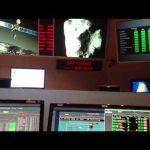
Waiting for the signal from Rosetta. View inside the Mission Control Room at ESOC as the team waits for a first signal that Rosetta has successfully come out of deep space hibernation.
Rosetta was launched in 2004 and has since travelled around the Sun five times, picking up energy from Earth and Mars to line it up with its final destination: comet 67P/Churyumov–Gerasimenko. For the coldest, loneliest leg of the mission, as Rosetta travelled out towards the orbit of Jupiter, the spacecraft was put into deep-space hibernation.
In 2014, Rosetta will complete its cruise towards the comet, rendezvousing with it in August, before putting its Philae lander onto the comet’s surface in November, as it begins its journey closer to the Sun.
The spacecraft’s internal alarm clock is set for 10:00 GMT (11:00 CET) on 20 January. Once it has warmed itself up, it should re-establish communication with Earth several hours later.
Video highlight showing receipt of signal from ESA’s Rosetta comet chaser after 31 months of deep-space hibernation. Teams at ESA’s operations centre in Darmstadt, Germany, leapt for joy as the signal was confirmed via NASA’s 70m tracking stations in California and Australia.
The clock inside ESOC’s Main Mission Control counts down to 10:00 GMT (11:00 CET) on 20 January 2014 – the moment when ESA’s Rosetta spacecraft was woken from a 31-month deep space hibernation.
Space missions have been chasing comets since the launch of the Giotto spacecraft in 1985. NASA’s Stardust mission flew through a comet’s tail in 2006 and brought a sample of dust back to Earth. Glycene was found in this sample, one of the four basic amino acids in our DNA. We can make a fake comet on Earth using a recipe of water ice, liquid nitrogen and fine carbon particles. By testing the fake comet and simulating the conditions of space, this will help scientists interpret data from ESA’s latest comet chaser – Rosetta. With ESA’s comet chaser Rosetta expectations are great : for the first time a probe will be flying alongside a comet and even placing a lander on its surface.
Singer Tasmin Archer kindly sent this message to Europe’s ‘sleeping satellite’, ESA’s comet-chaser Rosetta. Thanks, Tasmin!
Tasmin Archer is the well-known British singer, whose song ‘Sleeping Satellite’ about the Apollo missions to the Moon was her first single released in 1992. The song went to Number 1 in the UK and Ireland singles charts, and also broke into the US, German and Australian music charts. The song has been covered by numerous artists, including Kim Wilde. Tasmin famously performed an acoustic version of Sleeping Satellite at the International Astronautical Congress Opening ceremony in Glasgow, September 2008 (see http://youtu.be/owYZOOIXUAs).
Video copyright: T. Archer Sleeping Satellite written by: T. Archer, J. Beck, J. Hughes (courtesy Quiverdisc) Video produced by tasminarcher.com
This short movie tells the story of Rosetta’s journey through the Solar System so far, through the voices of some of the many people involved in this exciting mission. ESA’s Rosetta spacecraft launched in March 2004 and has since been chasing down comet 67P/Churyumov-Gerasimenko, where it will become the first space mission to orbit a comet, the first to attempt a landing on a comet’s surface, and the first to follow a comet as it swings around the Sun. In the last ten years Rosetta has made 3 flybys of Earth and 1 of Mars, and passed by and imaged asteroids Steins and Lutetia. Operating on solar energy alone, in June 2011 Rosetta was placed into deep space hibernation as it cruised nearly 800 million kilometres from the warmth of the Sun, close to the orbit of Jupiter. On 20 January, Rosetta will wake up at 673 million kilometres from the Sun and about 9 million km from the comet, ready for the next leg of its epic adventure.
After a ten year journey through space, ESA’s Rosetta spacecraft will reach comet 67P/Churyumov-Gerasimenko in August 2014. After catching up with the comet Rosetta will slightly overtake and enter orbit from the ‘front’ of the comet as both the spacecraft and 67P/CG move along their orbits around the Sun. Rosetta will carry out a complex series of manoeuvres to reduce the separation between the spacecraft and comet from around 100 km to 25-30 km. From this close orbit, detailed mapping will allow scientists to determine the landing site for the mission’s Philae lander. Immediately prior to the deployment of Philae in November, Rosetta will come to within just 2.5 km of the comet’s nucleus.
This animation is not to scale; Rosetta’s solar arrays span 32 m, and the comet is approximately 4 km wide.
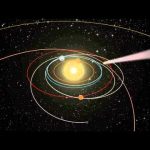
Rosetta’s journey from launch in March 2004 to comet 67P/Churyumov-Gerasimenko in August 2014, including 3 flybys of Earth and 1 of Mars. By January 2014 Rosetta is about 9 million kilometres from comet 67P/CG. By early May, Rosetta will be 2 million kilometres from the comet and at the end of May the spacecraft will execute a major rendezvous manoeuvre to line it up for orbit insertion at the start of August.
The comet and planets are not to scale.
At 10:00 UTC on 20 January 2014, ESA’s comet-chasing Rosetta spacecraft will wake up from 31 months in deep space hibernation. Save the date and join the adventure — enter our #wakeuprosetta contest by adding your wake up shout video to the Rosetta Mission Facebook page http://www.facebook.com/rosettamission.
Az üstökösök évszázadok óta felcsigázták az emberek fantáziáját. Az Európai Űrügynökség Rosetta nevű missziója megkísérel műszereket eljuttatni egy üstökös felszínére.
Szénből, porból és vízjégből álló égitestek, amelyek a Naphoz közelítve annak fénye miatt csóvát fejlesztenek a maguk mögött húzott törmelékből. Több okból is érdekesek a tudomány számára, de a legizgalmasabb kérdés, hogy van-e közük a földi élet eredetéhez.
A Space üstökösvadász stábjának első útja Jénába, a türingiai tartományi csillagvizsgálóba vezet. A tudósok itt azon dolgoznak, hogy megállapítsák, mi maradt a darabjaira hullott ISON üstökösből. A gyanú az volt, hogy az égitest megsemmisült, de kérdéses volt, hogy a magnak maradtak-e látható darabkái. Azonban napfelkeltéig a tudósoknak nem sikerült megpillantaniuk az ISON maradványait.
Mindeközben Svájcban a berni egyetem kutatói vízjégből, folyékony nitrogénből és szénből mesterséges üstököst állítanak elő. Az így elkészült mintával vákuumkamrában kísérleteznek: arra kíváncsiak, milyen folyamatok mennek végbe egy üstökös felszínén.
Mindezek a kísérletek és megfigyelések csak előkészületek az igazi nagy dobásra: az Európai Űrközpont Rosetta fedőnevű missziója megkísérel műszereket eljuttatni egy üstökös felszínére, és onnan mintákat szállítani.
Ez azért tölti el lelkesedéssel a tudósokat, mert az utolsó hasonló akció, a NASA Csillagpor (Stardust) nevű küldetése meglepő eredményeket hozott. Akkor egy szondát reptettek át a Halley üstökös csóváján, és az így megszerzett minta glicint, egy fontos, DNS-alkotó aminosavat is tartalmazott. Tehát nem életet, de az élet egyik fontos alkotóelemét – ez pedig felveti az üstökösök szerepét a földi élet kialakulásában.
– A földi élethez meghatározott típusú, úgynevezett balkezes aminosavak szükségesek. A kémia elő tud állítani bal és jobbekezes aminosavakat is, de az élet ezek közül csak a balkezeseket használja és szeretnénk érteni, hogy miért – magyarázta az Euronews riporterének Hermann Böhnhardt, a Max Planck Intézet kutatója – Nem tudjuk, de szeretnénk tudni, hogy az üstökösökben található aminosavak jobb vagy balkezesek, mert ha balkezesek, akkor ez újabb arra utaló jel, hogy talán az élet, vagy legalábbis annak alkotóelemei az űrből kerültek a Földre.
A tudományos közösség abban reménykedik, hogy az üstökösöket érintő kérdések sokaságára kapnak választ 2014-ben, ha a Rosetta misszója sikerrel zárul.
Visualisation of how the Rosetta spacecraft wakes up from deep space hibernation, 673 million kilometres from the Sun, on 20 January 2014.
Prior to entering hibernation on 8 June 2011, Rosetta was oriented so that its solar arrays faced the Sun, and it began rotating once per minute for stability. The only devices left running were its computer and several heaters.
Rosetta’s computer is programmed to carry out a sequence of events to re-establish contact with the Earth on 20 January, starting with an ‘alarm clock’ at 10:00 GMT. Immediately after, the star trackers begin to warm up. Around 6 hours later the thrusters are fired and the slow rotation stops. A slight adjustment is made to Rosetta’s orientation to ensure that the solar arrays now face the Sun. Then the star trackers switch on to determine its attitude. The spacecraft rotates towards Earth, and the transmitter is switched on. Then Rosetta’s high-gain antenna points to Earth and the signal is sent. The journey takes 45 minutes before the signal is received and mission controllers can begin to check Rosetta’s health, ready for the next phase of the mission.
The first opportunity for receiving a signal on Earth is between 17:30 GMT and 18:30 GMT.
#WakeUpRosetta – What do you do Mondays at 10 am? At 10:00 UTC on 20 January 2014, ESA’s comet-chasing Rosetta spacecraft will wake up from 31 months in deep-space hibernation. Save the date and join the adventure. More info at www.esa.int/rosetta.
#WakeUpRosetta – Save the date. At 10:00 UTC on 20 January 2014, ESA’s comet-chasing Rosetta spacecraft will wake up from 31 months in deep-space hibernation. Save the date and join the adventure. More info at www.esa.int/rosetta.
This animation tracks Rosetta’s journey through the Solar System, using gravity slingshots from Earth and Mars to reach its final destination: Comet 67P/Churyumov–Gerasimenko. Rosetta made three flybys of Earth, on 4 March 2005, 13 November 2007 and 13 November 2009, and one of Mars, on 25 February 2007. Rosetta has also visited two asteroids, taking extensive close-up images of 2867 Steins on 5 September 2008 and 21 Lutetia on 10 July 2010. Once the spacecraft is woken up from deep space hibernation on 20 January 2014, it will head for rendezvous with the comet in May. In November the Philae probe will be deployed to the comet surface. Rosetta will follow the comet to its closest distance to the Sun on 13 August 2015 and as it moves back towards the outer Solar System. The nominal mission end is December 2015.
Credits: ESA