Tag: rosetta

  • ESAHangout: Rosetta mission’s day in the Sun

    ESAHangout: Rosetta mission’s day in the Sun

    A Google hangout with Rosetta mission experts to celebrate perihelion – the closest point to the Sun along the comet’s orbit – which occurred on the morning of on 13 August 2015.

    Joining our host Emily Baldwin (ESA Space Science Editor) were:
    Nico Altobelli – Acting Rosetta Project Scientist, ESAC
    Michael Küppers – Rosetta Science Operations Coordinator, ESAC
    Sylvain Lodiot – Rosetta Spacecraft Operations Manager, ESOC
    Armelle Hubault – Rosetta spacecraft operations engineer, ESOC
    Barbara Cozzoni – Philae Lander engineer, DLR
    Holger Sierks – OSIRIS Principal Investigator, MPS
    Joel Parker – Alice instrument Deputy-PI, SwRI
    Colin Snodgrass – Professional ground-based observing campaign coordinator, Open University
    Aurelie Moussi-Soffys – Science activities manager SONC (Philae)

    Date: 13 August 2015
    Time: 15:00-17:00 CEST (13:00-15:00 GMT)

    Background info on perihelion: http://www.esa.int/Our_Activities/Space_Science/Rosetta/Rosetta_preparing_for_perihelion

    #Perihelion2015 #Rosetta #hangoutsonair
  • Rosetta update

    Rosetta update

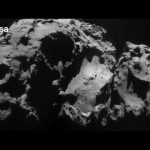
    The Rosetta spacecraft is still orbiting comet 67P/Churyumov-Gerasimenko while it now approaches the Sun. Six months ago Rosetta made history by delivering its Philae lander onto a comet’s surface – something no other space mission has done before.

    This video covers the mission’s highlights so far: from its launch in 2004; its journey across the solar system and waking up after deep space hibernation ten years later, its arrival at the selection of a landing site and Philae’s unexpected multiple landings on the comet. It also reviews what we have learnt about the comet to this point.

    Credit: ESA, with footage by DLR, licenced under CC-BY 3.0 DE

  • Paxi – Rosetta et les comètes

    Paxi – Rosetta et les comètes

    Suis Paxi aux frontières du système solaire pour découvrir le monde des comètes et en apprendre plus sur l’incroyable mission « Rosetta » sur la comète 67P/Churyumov-Gerasimenko.

    Dans cette vidéo, destinée aux enfants de 6 à 12 ans, Paxi emmène les enfants à la découverte des comètes et de Rosetta, l’incroyable engin spatial de l’ESA qui vole aux côtés de la comète 67P/Churyumov-Gerasimenko et qui va essayer, le 12 novembre 2014, d’y envoyer un petit robot.

    Cette vidéo est la troisième d’une série d’animations dans lesquelles Paxi, la mascotte du bureau de l’éducation de l’ESA, vous fait découvrir différents aspects du système solaire, de l’Univers, des secrets de la planète Terre et bien plus encore.

    Credit: ESA; produced by Science Office, illustrations by Kaleidoscope Design, NL

    Qui est Paxi ? : http://youtu.be/aWxtjvRzyRQ
    Paxi – Le système solaire: http://youtu.be/shQJd3oGYn8
    Paxi – Rosetta et les comètes: http://youtu.be/5nHMTpl4aUk

    These videos are also available in the following languages:
    English: https://www.youtube.com/playlist?list=PLbyvawxScNbucdsnNdB9p89RmePmGv5cM
    Spanish: https://www.youtube.com/playlist?list=PLbyvawxScNbsiYWkwXlb3WMdm2IFWoMyc
    Dutch: https://www.youtube.com/playlist?list=PLbyvawxScNbs-7xR5B6QgJeEK89RtGdoK
    Italian: https://www.youtube.com/playlist?list=PLbyvawxScNbt11Hfg6Cww2ckfHnvXeOdv
    German: https://www.youtube.com/playlist?list=PLbyvawxScNbvwcIVrGQV4p6g6cp9pH0To

  • Paxi – Rosetta und Kometen

    Paxi – Rosetta und Kometen

    Begleite Paxi an den Rand unseres Sonnensystems, entdecke das Reich der Kometen und lerne mehr über die erstaunliche Mission Rosetta zum Kometen 67P/Churyumov-Gerasimenko.

    In diesem Video, das sich an Kinder zwischen 6 und 12 Jahren richtet, nimmt Paxi Kinder mit auf die Reise um mehr über Kometen und die spektakuläre Mission „Rosetta“ zu lernen: Die Raumsonde der ESA, die um den Kometen 67P/Churyumov-Gerasimenko kreist und am 12 November 2014 versuchen wird ein Mini-Labor darauf zu landen.

    Dieses Video ist die dritte einer Serie von Animationen mit Paxi, dem Maskottchen von ESA-Education, in denen verschiedene Aspekte unseres Sonnensystems, das Universum, Geheimnisse des Planeten Erde und vieles andere thematisiert werden.

    Credit: ESA; produced by Science Office, illustrations by Kaleidoscope Design, NL

    Wer ist Paxi? http://youtu.be/-uXtNhRr060
    Paxi – Das Sonnensystem http://youtu.be/N7ezarEYKxk
    Paxi – Rosetta und Kometen http://youtu.be/QAxCiaUwY-U

    These videos are also available in the following languages:
    English: https://www.youtube.com/playlist?list=PLbyvawxScNbucdsnNdB9p89RmePmGv5cM
    Spanish: https://www.youtube.com/playlist?list=PLbyvawxScNbsiYWkwXlb3WMdm2IFWoMyc
    Dutch: https://www.youtube.com/playlist?list=PLbyvawxScNbs-7xR5B6QgJeEK89RtGdoK
    Italian: https://www.youtube.com/playlist?list=PLbyvawxScNbt11Hfg6Cww2ckfHnvXeOdv
    French: https://www.youtube.com/playlist?list=PLbyvawxScNbsiKIAXeo63bGr1QjYJ4QiL

  • Paxi – Rosetta e le comete

    Paxi – Rosetta e le comete

    Seguite Paxi ai confini del Sistema Solare per scoprire il mondo delle comete e saperne di più sull’incredibile missione di Rosetta verso la cometa 67P/Churyumov-Gerasimenko.

    In questo video, indirizzato a bambini tra i 6 e i 12 anni, Paxi porta i bambini alla scoperta di comete e Rosetta, l’incredibile sonda dell’ESA che vola insieme alla cometa 67P/Churyumov-Gerasimenko e che proverà, il 12 Novembre 2014, a rilasciare un veicolo d’atterraggio su di essa.

    Questo video è il terzo di una serie di animazioni in cui Paxi, la mascotte dell’Education Office dell’ESA, descrive diverse caratteristiche del Sistema Solare, dell’Universo, i segreti del pianeta Terra e molto altro.

    Credit: ESA; produced by Science Office, illustrations by Kaleidoscope Design, NL

    Chi è Paxi? http://youtu.be/gKQYsjr4fis
    Paxi – Il Sistema Solare http://youtu.be/A9bEEiXWYEc
    Paxi – Rosetta e le comete http://youtu.be/z6zCjaUcwfQ

    These videos are also available in the following languages:
    English: https://www.youtube.com/playlist?list=PLbyvawxScNbucdsnNdB9p89RmePmGv5cM
    Spanish: https://www.youtube.com/playlist?list=PLbyvawxScNbsiYWkwXlb3WMdm2IFWoMyc
    Dutch: https://www.youtube.com/playlist?list=PLbyvawxScNbs-7xR5B6QgJeEK89RtGdoK
    German: https://www.youtube.com/playlist?list=PLbyvawxScNbvwcIVrGQV4p6g6cp9pH0To
    French: https://www.youtube.com/playlist?list=PLbyvawxScNbsiKIAXeo63bGr1QjYJ4QiL

  • Paxi – Rosetta en kometen

    Paxi – Rosetta en kometen

    Volg Paxi tot de rand van onze zonnestelsel om een wereld van kometen te ontdekken, en te leren over de verbazingwekkende Rosetta missie naar de komeet 67P/Churyumov-Gerasimenko.

    In deze video, met als doelgroep kinderen tussen de 6 en 12 jaar oud, neemt Paxi kinderen met hem mee om kometen en Rosetta te ontdekken, de verbazingwekkende ESA ruimtevaartuig die naast komeet 67P/Churyumov-Gerasimenko vliegt en op 12 November 2014 een poging zal doen om een lander te landen.

    Deze video is de derde in een animatie serie waarin Paxi, de mascotte van ESA Education, verschillende aspecten van het zonnestelsel, het universum, de geheimen van planeet aarde, en nog veel meer zal toelichten.

    Credit: ESA; produced by Science Office, illustrations by Kaleidoscope Design, NL

    Wie is Paxi? http://youtu.be/6iWfNh8RcJQ
    Paxi – Het zonnestelsel http://youtu.be/4lSQE8LCDiU
    Paxi – Rosetta en kometen http://youtu.be/6ItAdZNwMEg

    These videos are also available in the following languages:
    English: https://www.youtube.com/playlist?list=PLbyvawxScNbucdsnNdB9p89RmePmGv5cM
    Spanish: https://www.youtube.com/playlist?list=PLbyvawxScNbsiYWkwXlb3WMdm2IFWoMyc
    Italian: https://www.youtube.com/playlist?list=PLbyvawxScNbt11Hfg6Cww2ckfHnvXeOdv
    German: https://www.youtube.com/playlist?list=PLbyvawxScNbvwcIVrGQV4p6g6cp9pH0To
    French: https://www.youtube.com/playlist?list=PLbyvawxScNbsiKIAXeo63bGr1QjYJ4QiL

  • Paxi – Rosetta y los cometas

    Paxi – Rosetta y los cometas

    Sigue a Paxi hasta los confines del Sistema Solar para descubrir el mundo de los cometas y aprender sobre la asombrosa misión Rosetta hacia el cometa 67P/ Churyumov-Gerasimenko.

    En este vídeo, destinado a niños de entre 6 y 12 años, Paxi se lleva a los niños con él a descubrir cometas y Rosetta, la asombrosa nave de la ESA que vuela junto al cometa 67P/ Churyumov-Gerasimenko al que intentará, el 12 de Noviembre 2014, aterrizar mediante un módulo de aterrizaje.

    Este vídeo es el tercero de una serie de animaciones en las que Paxi, la mascota de la Oficina de Educación de la ESA, explica diferentes aspectos del Sistema Solar, el Universo, los secretos del planeta Tierra y mucho más.

    Credit: ESA; produced by Science Office, illustrations by Kaleidoscope Design, NL

    Quién es Paxi? http://youtu.be/V1rkchtH2_I
    Paxi – El Sistema Solar http://youtu.be/vQIsQK4m7Qk
    Paxi – Rosetta y los cometas http://youtu.be/N5Yq42XgYHU

    These videos are also available in the following languages:
    English: https://www.youtube.com/playlist?list=PLbyvawxScNbucdsnNdB9p89RmePmGv5cM
    Dutch: https://www.youtube.com/playlist?list=PLbyvawxScNbs-7xR5B6QgJeEK89RtGdoK
    Italian: https://www.youtube.com/playlist?list=PLbyvawxScNbt11Hfg6Cww2ckfHnvXeOdv
    German: https://www.youtube.com/playlist?list=PLbyvawxScNbvwcIVrGQV4p6g6cp9pH0To
    French: https://www.youtube.com/playlist?list=PLbyvawxScNbsiKIAXeo63bGr1QjYJ4QiL

  • Rosetta mission: Results from comet landing: 14 Nov, 13:00 GMT

    Rosetta mission: Results from comet landing: 14 Nov, 13:00 GMT

    Update on the Rosetta mission, including status of the Philae lander.

    Hosted by Emily Baldwin – ESA Science Editor, with:
    Andrea Accomazzo – ESA Rosetta Flight Director, ESOC
    Stephan Ulamec – Philae Lander Manager, DLR
    Matt Taylor – Rosetta Project Scientist, ESA
    Philippe Gaudon – CNES Rosetta Project Manager, SONC
    Holger Sierks – PI for OSIRIS, Max-Planck-Institute for Solar System Research
    Valentina Lommatsch – DLR-Lander Control Center, mission team
    Jeff Grossman – OSIRIS-REx Program Scientist, NASA
    Gordon Johnston – OSIRIS-REx Program Scientist, NASA

    Starts 13:00 GMT (14:00 CET)

    More about the Rosetta mission:
    http://www.esa.int/rosetta

  • Paxi – Rosetta and comets

    Paxi – Rosetta and comets

    Follow Paxi to the edge of the Solar System to discover the world of comets, and learn about the amazing Rosetta mission to comet 67P/Churyumov-Gerasimenko.

    In this video, targeted at children aged between 6 and 12, Paxi takes kids with him to discovery comets and Rosetta, the amazing ESA spacecraft flying alongside comet 67P/Churyumov-Gerasimenko that will attempt, on 12 November 2014, to release a lander onto it.

    This video is the third of a series of animations in which Paxi, ESA’s Education mascot, touches on different aspects of the Solar System, the Universe, the secrets of planet Earth, and much more.

    More Paxi videos in this playlist:
    https://www.youtube.com/playlist?list=PLbyvawxScNbucdsnNdB9p89RmePmGv5cM

    Copyright: ESA; produced by Science Office, illustrations by Kaleidoscope Design, NL

    The Paxi videos are also available in the following languages, follow the link for a full playlist
    Spanish: https://www.youtube.com/playlist?list=PLbyvawxScNbsiYWkwXlb3WMdm2IFWoMyc
    Dutch: https://www.youtube.com/playlist?list=PLbyvawxScNbs-7xR5B6QgJeEK89RtGdoK
    Italian: https://www.youtube.com/playlist?list=PLbyvawxScNbt11Hfg6Cww2ckfHnvXeOdv
    German: https://www.youtube.com/playlist?list=PLbyvawxScNbvwcIVrGQV4p6g6cp9pH0To
    French: https://www.youtube.com/playlist?list=PLbyvawxScNbsiKIAXeo63bGr1QjYJ4QiL

  • Rosetta orbiting around the comet

    Rosetta orbiting around the comet

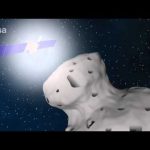
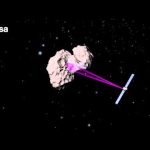
    Rosetta orbiting Comet 67P/Churyumov–Gerasimenko and scanning its surface to make scientific measurements. The colours of the beams and their shape on the surface represent two different instruments imaging and analysing the comet.

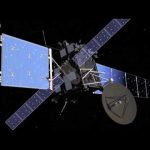
    The Rosetta orbiter has a total of 11 instruments to study the characteristics and environment of the comet. Rosetta is taking images of the comet at a variety of different wavelengths, measuring its gravity, mass, density, internal structure, shape and rotation, and assessing the properties of its gaseous, dust-laden atmosphere, or coma. It is also probing the surrounding plasma environment and analysing how it interacts with the solar wind.

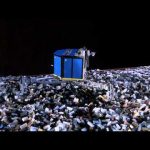
    Rosetta also carries a small lander, Philae, which will descend to the surface of the comet and make in situ measurements using its suite of 10 instruments.

    The animation is not to scale; the comet is about 4.1 km wide and Rosetta is 32 m across including its solar wings, and it conducts scientific investigations at a range of altitudes. The comet shape is based on a true comet shape model.

    Credits: ESA

  • ESAHangout: Rosetta science and countdown to comet landing

    ESAHangout: Rosetta science and countdown to comet landing

    Media and interested members of the public joined Rosetta mission experts online on Friday, 7 November for a briefing ahead of the historic comet landing on 12 November.

    Programme:
    Introduction: Emily Baldwin, ESA space science editor
    Overview of media events: Jocelyne Landeau-Constantin, Head of ESOC communication office
    Science from Rosetta so far: Matt Taylor, ESA Rosetta project scientist
    Spacecraft status and operations timeline: Andrea Accomazzo, ESA Rosetta flight director
    Key messages: Fred Jansen, ESA Rosetta mission manager
    Q&A: all

    Follow the Rosetta mission at: http://rosetta.esa.int

  • How big is Rosetta compared with the comet?

    How big is Rosetta compared with the comet?

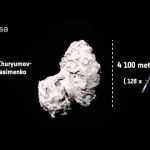
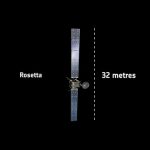
    This short animation explains the relative sizes of the Rosetta spacecraft and comet 67P/Churyumov–Gerasimenko. Rosetta is 32 m from tip to tip of the solar wings. The comet measures 4.1 km along its longest length, 128 times the width of Rosetta.

    Unlike typical artist’s impressions, this image is scaled to convey the vast difference in size between Rosetta and the comet, even when the spacecraft is in a close 10 km orbit, as depicted here.

    Rosetta reached 10 km distance from the comet centre by October 2014.

    Credits: ESA

  • Rosetta Spacecraft at ESA’s ESTEC Test Centre

    Rosetta Spacecraft at ESA’s ESTEC Test Centre

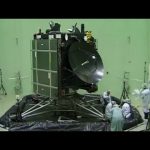
    The road to humankind’s first rendezvous with a comet began at ESA’s technical centre in the Netherlands. The pioneering Rosetta spacecraft and its Philae lander were tested in simulated space conditions to ensure they could withstand the difficult journey.

    Credits: ESA

  • How big is Rosetta compared with the comet?

    How big is Rosetta compared with the comet?

    This short animation explains the relative sizes of the Rosetta spacecraft and comet 67P/Churyumov–Gerasimenko.

    Rosetta is 32 m from tip to tip of the solar wings. Assuming the comet measures about 4 km across, that’s 125 times the width of Rosetta.

    Unlike typical artist’s impressions, this image is scaled to convey the vast difference in size between Rosetta and the comet, even when the spacecraft is in a close 10 km orbit, as depicted here.

    Rosetta arrives at the comet at an altitude of 100 km in the first week of August, and will move progressively closer over the following two months, with the intention to orbit at an altitude of just 10 km, depending on the comet’s activity. For Philae’s deployment in November, Rosetta will come to within a few kilometres of the surface.

    The comet depicted in this animation is an artist’s impression.

    #Rosettaarewethereyet

    Credits: ESA

  • Rosetta puts on the brakes

    Rosetta puts on the brakes

    Rosetta is about to put on the brakes to ensure that it is on target for comet 67P/Churyumov-Gerasimenko.

    This video explains the crucial orbit correction manoeuvres that are required to slow down Rosetta’s speed, relative to the comet, from 750 metres per second to just one metre per second between 21 May and 5 August. By then, nine thruster burns (including one test burn in early May) will have reduced the distance between them from one million kms to just under 200 kms.

    We also see the first images of the comet from the spacecraft’s OSIRIS camera (Optical, Spectroscopic and Infrared Remote Imaging System), taken between 24 March and 4 May 2014. As the spacecraft gets closer to the comet, further images will improve the orbital corrections and provide more details about the comet’s shape, size and rotation.

    MIRO, built by an international team for the European Space Agency, will start taking measurements from late May onwards and will measure gases released from the comet as it approaches the Sun.

  • ESA Euronews: Rosetta prepara su cita con el cometa

    ESA Euronews: Rosetta prepara su cita con el cometa

    Hace unos días, la sonda Rosetta se reactivó tras casi dos años y medio de hibernación. La comunidad científica del mundo entero estaba pendiente de la sala de control en el momento en el que Rosetta, tras reactivarse, enviaba su señal de confirmación.

    A ocho cientos millones de kilómetros, en algún lugar del espacio, Rosetta se despertaba.

    Este proceso tardó varias horas, a las 18:18 de la tarde, hora central europea, el equipo del Centro de Operaciones de la Agencia Espacial Europea, en Darmstadt, Alemania, estallaba de alegría.

  • ESA Euronews: Rosetta lassú ébredése

    ESA Euronews: Rosetta lassú ébredése

    Pár nappal ezelőtt az Európai Űrügynökség sikeresen felébresztette a hibernációból a Rosetta nevű műholdat, amely hamarosan egyedülálló küldetésre indul: leszállóegységet próbál ereszteni egy üstökös felszínére.

    2014. január huszadikán a világ szeme az Európai Űrügynökség csapatára szegeződött, amint arra vártak, hogy az űreszköz válaszoljon.

  • Thank you for helping us to wake up Rosetta!

    Thank you for helping us to wake up Rosetta!

    Compilation of some of the 218 video entries and messages received as part of the “Wake up, Rosetta!” video shout-out contest.

    http://www.esa.int/rosetta
    http://www.facebook.com/rosettamission

    Credits: ESA

    #wakeuprosetta

  • Rosetta wakes up from deep space hibernation

    Rosetta wakes up from deep space hibernation

    Replay of Part 3 of the Rosetta wake-up media briefing at the ESA Operations Centre ESOC, in Darmstadt, Germany, on 20 January 2014.

    Waiting for the signal from Rosetta. View inside the Mission Control Room at ESOC as the team waits for a first signal that Rosetta has successfully come out of deep space hibernation.

    Rosetta was launched in 2004 and has since travelled around the Sun five times, picking up energy from Earth and Mars to line it up with its final destination: comet 67P/Churyumov–Gerasimenko. For the coldest, loneliest leg of the mission, as Rosetta travelled out towards the orbit of Jupiter, the spacecraft was put into deep-space hibernation.

    In 2014, Rosetta will complete its cruise towards the comet, rendezvousing with it in August, before putting its Philae lander onto the comet’s surface in November, as it begins its journey closer to the Sun.

    The spacecraft’s internal alarm clock is set for 10:00 GMT (11:00 CET) on 20 January. Once it has warmed itself up, it should re-establish communication with Earth several hours later.

  • Rosetta calls home

    Rosetta calls home

    Video highlight showing receipt of signal from ESA’s Rosetta comet chaser after 31 months of deep-space hibernation. Teams at ESA’s operations centre in Darmstadt, Germany, leapt for joy as the signal was confirmed via NASA’s 70m tracking stations in California and Australia.

  • Rosetta — the story so far

    Rosetta — the story so far

    This short movie tells the story of Rosetta’s journey through the Solar System so far, through the voices of some of the many people involved in this exciting mission. ESA’s Rosetta spacecraft launched in March 2004 and has since been chasing down comet 67P/Churyumov-Gerasimenko, where it will become the first space mission to orbit a comet, the first to attempt a landing on a comet’s surface, and the first to follow a comet as it swings around the Sun. In the last ten years Rosetta has made 3 flybys of Earth and 1 of Mars, and passed by and imaged asteroids Steins and Lutetia. Operating on solar energy alone, in June 2011 Rosetta was placed into deep space hibernation as it cruised nearly 800 million kilometres from the warmth of the Sun, close to the orbit of Jupiter. On 20 January, Rosetta will wake up at 673 million kilometres from the Sun and about 9 million km from the comet, ready for the next leg of its epic adventure.

    Credits: ESA

  • How Rosetta wakes up from deep space hibernation

    How Rosetta wakes up from deep space hibernation

    Visualisation of how the Rosetta spacecraft wakes up from deep space hibernation, 673 million kilometres from the Sun, on 20 January 2014.

    Prior to entering hibernation on 8 June 2011, Rosetta was oriented so that its solar arrays faced the Sun, and it began rotating once per minute for stability. The only devices left running were its computer and several heaters.

    Rosetta’s computer is programmed to carry out a sequence of events to re-establish contact with the Earth on 20 January, starting with an ‘alarm clock’ at 10:00 GMT. Immediately after, the star trackers begin to warm up. Around 6 hours later the thrusters are fired and the slow rotation stops. A slight adjustment is made to Rosetta’s orientation to ensure that the solar arrays now face the Sun. Then the star trackers switch on to determine its attitude. The spacecraft rotates towards Earth, and the transmitter is switched on. Then Rosetta’s high-gain antenna points to Earth and the signal is sent. The journey takes 45 minutes before the signal is received and mission controllers can begin to check Rosetta’s health, ready for the next phase of the mission.

    The first opportunity for receiving a signal on Earth is between 17:30 GMT and 18:30 GMT.

    Credits: ESA/ATG medialab; music: B. Lynne.

  • Rosetta’s view of Lutetia, July 2010

    Rosetta’s view of Lutetia, July 2010

    This movie shows a sequence of images taken as ESA’s Rosetta spacecraft flew past the main-belt asteroid (21) Lutetia, during the spacecraft’s 10-year journey towards comet 67P/Churyumov-Gerasimenko.

    The flyby took place on 10 July 2010, when Rosetta flew past the asteroid at a distance of 3168.2 km and at a relative speed of 15 km/s. The first image shown in the sequence was taken nine and a half hours before closest approach, from a distance of 500 000 km to Lutetia; the last image was taken six minutes after closest approach, at 6300 km from the asteroid.

    The OSIRIS camera on board Rosetta has surveyed the part of Lutetia that was visible during the flyby – about half of its entire surface, mostly coinciding with the asteroid’s northern hemisphere. These unique, close-up images have allowed scientists to study the asteroid’s surface morphology, composition and other properties in unprecedented detail.

  • Using LEGO®  to simulate ESA’s touchdown on a comet

    Using LEGO® to simulate ESA’s touchdown on a comet

    Comets are primeval leftovers from the origins of the Solar System. To fully understand these ancient objects and perhaps the origins of life on Earth, ESA’s Rosetta mission will rendezvous with comet Churyumov-Gerasimenko in 2014. In November of that year, Rosetta’s Philae lander will touchdown on the comet and thoroughly investigate its composition.

    Copyright © Lightcurve Films/Maarten Roos, ESA, DLR, Europlanet, LEGO

  • ESA Space Scientist Detlef Koschny explains why he originally built Rosetta in LEGO®

    ESA Space Scientist Detlef Koschny explains why he originally built Rosetta in LEGO®

    Space missions are complicated pieces of orbital choreography. When planning a mission, spacecraft engineers must calculate how to point the solar panels towards the Sun, the main antenna towards Earth and the instruments towards the target. ESA Space Scientist Detlef Koschny build a LEGO model of Rosetta mission in order to visualise these precise orientations.

    Copyright © Lightcurve Films/Maarten Roos, ESA, DLR, Europlanet, LEGO

  • ESA Space Scientist Detlef Koschny demonstrates the prototype LEGO®  Philae lander

    ESA Space Scientist Detlef Koschny demonstrates the prototype LEGO® Philae lander

    Built using LEGO Mindstorms, the Philae lander model can be controlled using a home computer. It can rotate and move the drill up and down to simulate the behaviour of the real lander. As part of ESA’s Rosetta space mission, Philae will land on comet Churyumov-Gerasimenko in November 2014 to study its composition.

    Copyright © Lightcurve Films/Maarten Roos, ESA, DLR, Europlanet, LEGO

  • ESA’s comet chaser Rosetta revisits Earth

    ESA’s comet chaser Rosetta revisits Earth

    After making its third and last Earth flyby in November 2009 to pick up extra speed, Rosetta will eventually arrive in the vicinity of Comet 67P/Churyumov-Gerasimenko in May 2014.