Tag: Satellites

  • How do radar satellites work?

    How do radar satellites work?

    Radar allows us to see through what would otherwise be invisible. By sending out radio waves that bounce off objects and return as echoes, radar creates a detailed picture of our surrounding world.

    This technology is everywhere: from guiding air traffic and enabling self-driving cars to tracking the movements of athletes. But its reach doesn’t stop there—radar is also transforming how we observe our Earth from space.

    Satellites like the Copernicus Sentinel-1 mission use radar to see through clouds, darkness and any weather conditions. This capability is invaluable for detecting subtle changes on Earth’s surface—changes that are often hidden from the human eye. Discover how radar technology is helping us unlock these hidden insights about our planet.

    Credit: ESA – European Space Agency

    ★ Subscribe: http://bit.ly/ESAsubscribe and click twice on the bell button to receive our notifications.

    Check out our full video catalog: http://bit.ly/SpaceInVideos
    Follow us on Twitter: http://bit.ly/ESAonTwitter
    On Facebook: http://bit.ly/ESAonFacebook
    On Instagram: http://bit.ly/ESAonInstagram
    On LinkedIn: https://bit.ly/ESAonLinkedIn
    On Pinterest: https://bit.ly/ESAonPinterest
    On Flickr: http://bit.ly/ESAonFlickr

    We are Europe’s gateway to space. Our mission is to shape the development of Europe’s space capability and ensure that investment in space continues to deliver benefits to the citizens of Europe and the world. Check out https://www.esa.int/ to get up to speed on everything space related.

    Copyright information about our videos is available here: https://www.esa.int/ESA_Multimedia/Terms_and_Conditions

    #ESA #Sentinel-1 #Satellite
  • Satellites in a box: students prepare for launch

    Satellites in a box: students prepare for launch

    Two university CubeSats, 3Cat4 and ISTSat-1, are catching a ride to space on the inaugural flight of Ariane 6. Ahead of launch, the student teams traveled to Exolaunch facilities in Berlin to integrate their satellites, a crucial milestone ahead of launch.

    Credits: ESA – European Space Agency

    —————————————————

    Chapters:
    00:00 – Introduction
    01:13 – Act 1 – Testing 1,2,3
    05:15 – Act 2 – Satellite in a box
    07:01 – Act 3 – Ready, steady, integrate

    ★ Subscribe: http://bit.ly/ESAsubscribe and click twice on the bell button to receive our notifications.

    Check out our full video catalog: http://bit.ly/SpaceInVideos
    Follow us on Twitter: http://bit.ly/ESAonTwitter
    On Facebook: http://bit.ly/ESAonFacebook
    On Instagram: http://bit.ly/ESAonInstagram
    On LinkedIn: https://bit.ly/ESAonLinkedIn
    On Pinterest: https://bit.ly/ESAonPinterest
    On Flickr: http://bit.ly/ESAonFlickr

    We are Europe’s gateway to space. Our mission is to shape the development of Europe’s space capability and ensure that investment in space continues to deliver benefits to the citizens of Europe and the world. Check out https://www.esa.int/ to get up to speed on everything space related.

    Copyright information about our videos is available here: https://www.esa.int/ESA_Multimedia/Terms_and_Conditions

    #ESA #ESAEducation #CubeSat

  • Integrating mini satellites for Ariane 6 first launch 🚀 #shorts

    Integrating mini satellites for Ariane 6 first launch 🚀 #shorts

    There’s a key milestone in the development of a satellite: integration. 🛰✅

    🎓 Join ISTSat-1 and ³Cat-4 #student teams as they integrate their satellites with the deployer in preparation for launch this summer!

    🚀 This exciting experience is part of our Fly Your Satellite! programme, which gives tertiary education students the chance to design, build, test and launch a #satellite.

    Credits: ESA – European Space Agency

    #ESA #CubeSat #Rocket

  • Advanced Research in Telecommunications Systems (ARTES) 4.0

    Advanced Research in Telecommunications Systems (ARTES) 4.0

    Satellite communication underpins everyday life, enabling fundamental improvements not just in communication, but also in transport, healthcare, safety and security, environmental services and many other industries.

    The Advanced Research in Telecommunications Systems (ARTES) 4.0 programme enables European and Canadian industry to explore, through research and development, innovative concepts that stimulates the wider economy, creating new business and jobs across almost every industry. ARTES 4.0 supports the production of market-leading and cutting-edge products and services within a fiercely competitive global satellite communications market.

    Learn more: https://connectivity.esa.int/

    Credits: ESA – European Space Agency

    ★ Subscribe: http://bit.ly/ESAsubscribe and click twice on the bell button to receive our notifications.

    Check out our full video catalog: http://bit.ly/SpaceInVideos
    Follow us on Twitter: http://bit.ly/ESAonTwitter
    On Facebook: http://bit.ly/ESAonFacebook
    On Instagram: http://bit.ly/ESAonInstagram
    On LinkedIn: https://bit.ly/ESAonLinkedIn
    On Pinterest: https://bit.ly/ESAonPinterest
    On Flickr: http://bit.ly/ESAonFlickr

    We are Europe’s gateway to space. Our mission is to shape the development of Europe’s space capability and ensure that investment in space continues to deliver benefits to the citizens of Europe and the world. Check out https://www.esa.int/ to get up to speed on everything space related.

    Copyright information about our videos is available here: https://www.esa.int/ESA_Multimedia/Terms_and_Conditions

    #ESA #Satellite #Telecommunications

  • What secrets lie beneath the frozen ground?

    What secrets lie beneath the frozen ground?

    Ice is without doubt one of the first casualties of climate change, but the effects of our warming world are not only limited to ice melting on Earth’s surface. Ground that has been frozen for thousands of years, called permafrost, is thawing – adding to the climate crisis and causing serious issues for local communities.

    Scientists estimate that the world’s permafrost holds almost double the amount of carbon that is currently in the atmosphere. When permafrost warms and thaws, it releases methane and carbon dioxide, adding these greenhouse gases to the atmosphere and making global warming even worse.

    While permafrost cannot be directly observed from space, a lot of different types of satellite data, along with ground measurements and modelling, allow scientists to paint a picture of permafrost ground conditions.

    Credits: ESA – European Space Agency

    ★ Subscribe: http://bit.ly/ESAsubscribe and click twice on the bell button to receive our notifications.

    Check out our full video catalog: http://bit.ly/SpaceInVideos
    Follow us on Twitter: http://bit.ly/ESAonTwitter
    On Facebook: http://bit.ly/ESAonFacebook
    On Instagram: http://bit.ly/ESAonInstagram
    On LinkedIn: https://bit.ly/ESAonLinkedIn
    On Pinterest: https://bit.ly/ESAonPinterest
    On Flickr: http://bit.ly/ESAonFlickr

    We are Europe’s gateway to space. Our mission is to shape the development of Europe’s space capability and ensure that investment in space continues to deliver benefits to the citizens of Europe and the world. Check out https://www.esa.int/ to get up to speed on everything space related.

    Copyright information about our videos is available here: https://www.esa.int/ESA_Multimedia/Terms_and_Conditions

    #ESA
    #Permafrost
    #EarthObservation

  • Earth is not as round as you know it… 🌍 #shorts

    Earth is not as round as you know it… 🌍 #shorts

    ESA’s Gravity field and steady-state Ocean Circulation Explorer (GOCE) was launched in 2009 and flew over Earth at 260 km of altitude for 4 years.

    Even after the end of this mission, GOCE’s data is still being used to unearth secrets about our planet.

    Stay with us if you want to learn more about the Earth Explorers: ESA’s pioneering science missions for Earth.

    📽️ ESA – European Space Agency

    #ESA
    #Satellites
    #EarthObservation

  • Paxi on the ISS | Natural and artificial satellites

    Paxi on the ISS | Natural and artificial satellites

    Our alien friend Paxi went to visit ESA astronaut Thomas Pesquet on board the International Space Station during his Alpha mission. Thomas explains the difference between natural satellites – moons orbiting planets – and artificial satellites – human-made machines orbiting a space object.

    You can enjoy the adventures of Paxi in other languages too:
    – Spanish: https://youtu.be/xJU3r3jM4Yw
    – French: https://youtu.be/IoXCLZdpyE0
    – Portuguese: https://youtu.be/qJcFzmQsWac
    – German: https://youtu.be/RyEBETRbccY
    – Italian: https://youtu.be/YUHnayYgNHU
    – Romanian: https://youtu.be/sBT_izXzrOc
    – Czech: https://youtu.be/WvPP2clr8ws
    – Danish: https://youtu.be/3-7fLvbGBpA
    – Dutch: https://youtu.be/2vYTiDrD7Mc
    – Finish: https://youtu.be/VB1kn75Ap3M
    – Norwegian: https://youtu.be/jhqv1Bf6uSQ
    – Swedish: https://youtu.be/E628dQHu-j0
    – Polish: https://youtu.be/Jv6gOQs0UXI

    ★ Subscribe: http://bit.ly/ESAsubscribe and click twice on the bell button to receive our notifications.

    Check out our full video catalog: http://bit.ly/SpaceInVideos
    Follow us on Twitter: http://bit.ly/ESAonTwitter
    On Facebook: http://bit.ly/ESAonFacebook
    On Instagram: http://bit.ly/ESAonInstagram
    On LinkedIn: https://bit.ly/ESAonLinkedIn
    On Pinterest: https://bit.ly/ESAonPinterest
    On Flickr: http://bit.ly/ESAonFlickr

    We are Europe’s gateway to space. Our mission is to shape the development of Europe’s space capability and ensure that investment in space continues to deliver benefits to the citizens of Europe and the world. Check out https://www.esa.int/ to get up to speed on everything space related.

    Copyright information about our videos is available here: https://www.esa.int/ESA_Multimedia/Terms_and_Conditions

    #ESAKids
    #Satellite
    #Paxi

  • Shoebox-size satellites for Artemis I #shorts

    Shoebox-size satellites for Artemis I #shorts

    Joining @NASA’s Orion spacecraft on the powerful Space Launch System rocket are ten CubeSats that will help prepare for the return of astronauts to our lunar companion. Our deep space antennas, along with the Goonhilly Earth Station in the UK, are tracking six of the small satellites, ensuring they arrive where they need to be, and their data gets back home.

    Learn more: https://www.esa.int/Enabling_Support/Operations/ESA_Ground_Stations/Europe_to_support_Artemis_CubeSats_in_return_to_Moon

    ★ Subscribe: http://bit.ly/ESAsubscribe and click twice on the bell button to receive our notifications.

    Check out our full video catalog: http://bit.ly/SpaceInVideos
    Follow us on Twitter: http://bit.ly/ESAonTwitter
    On Facebook: http://bit.ly/ESAonFacebook
    On Instagram: http://bit.ly/ESAonInstagram
    On LinkedIn: https://bit.ly/ESAonLinkedIn
    On Pinterest: https://bit.ly/ESAonPinterest
    On Flickr: http://bit.ly/ESAonFlickr

    We are Europe’s gateway to space. Our mission is to shape the development of Europe’s space capability and ensure that investment in space continues to deliver benefits to the citizens of Europe and the world. Check out https://www.esa.int/ to get up to speed on everything space related.

    Copyright information about our videos is available here: https://www.esa.int/ESA_Multimedia/Terms_and_Conditions

    #ESA
    #CubeSats
    #ForwardToTheMoon

  • Mission from ground | Meet the experts

    Mission from ground | Meet the experts

    How do we control a spacecraft from Earth and will satellites in space be autonomous one day soon? ESA mission control experts answer these questions and discuss the challenges of manoeuvring a mission from the ground in this episode of Meet the Experts.

    * Erratum: the title of the last 3 speakers is ‘spacecraft engineer’ instead of ‘safecraft engineer’ as stated in the video.

    Learn more: http://bit.ly/ExpeditionHome12_18YearsOld

    ★ Subscribe: http://bit.ly/ESAsubscribe and click twice on the bell button to receive our notifications.

    Check out our full video catalog: http://bit.ly/SpaceInVideos
    Follow us on Twitter: http://bit.ly/ESAonTwitter
    On Facebook: http://bit.ly/ESAonFacebook
    On Instagram: http://bit.ly/ESAonInstagram
    On Flickr: http://bit.ly/ESAonFlickr

    We are Europe’s gateway to space. Our mission is to shape the development of Europe’s space capability and ensure that investment in space continues to deliver benefits to the citizens of Europe and the world. Check out http://www.esa.int/ESA to get up to speed on everything space related.

    Copyright information about our videos is available here: http://www.esa.int/spaceinvideos/Terms_and_Conditions

    #ESA
    #MeetTheExperts
    #ExpeditionHome

  • Tracking satellites from the Arctic

    Tracking satellites from the Arctic

    Many of the satellites that gather information on the health of our planet pass over the polar regions pass above the North and South Poles. Satellite ground stations located in these remote areas are best positioned to collect the data and talk to the missions passing above them. This video presents the most northern ground station ESA is using – SvalSat, located within the Arctic Circle – where contact is made with many of ESA’s Earth observation missions. The Svalsat station contributes to ESA’s global tracking station network, Estrack.

    ★ Subscribe: http://bit.ly/ESAsubscribe and click twice on the bell button to receive our notifications.

    Check out our full video catalog: http://bit.ly/SpaceInVideos
    Follow us on Twitter: http://bit.ly/ESAonTwitter
    On Facebook: http://bit.ly/ESAonFacebook
    On Instagram: http://bit.ly/ESAonInstagram
    On Flickr: http://bit.ly/ESAonFlickr

    We are Europe’s gateway to space. Our mission is to shape the development of Europe’s space capability and ensure that investment in space continues to deliver benefits to the citizens of Europe and the world. Check out http://www.esa.int/ESA to get up to speed on everything space related.

    Copyright information about our videos is available here: http://www.esa.int/spaceinvideos/Terms_and_Conditions

    #ESA
    #ESTRACK
    #SvalSat

  • How NASA Earth Satellites Track Hurricanes

    How NASA Earth Satellites Track Hurricanes

    NASA has a unique and important view of hurricanes around the planet. Satellites and aircraft watch as storms form, travel across the ocean and sometimes, make landfall. After the hurricanes have passed, the satellites and aircraft see the aftermath of hurricanes, from downed forests to mass power loss. Complete transcript available.

    Music credit: “Northern Breeze” by Denis Levaillant [SACEM], “Stunning Horizon” by Maxime Lebidois [SACEM], Ronan Maillard [SACEM], “Magnetic Force” by JC Lemay [SACEM] from Killer Tracks

    This video is public domain and along with other supporting visualizations can be downloaded from the Scientific Visualization Studio at: http://svs.gsfc.nasa.gov/13216

    Credit: NASA’s Goddard Space Flight Center/Joy Ng

  • The power of satellite data

    The power of satellite data

    Satellites provides us with large volumes of spatio-temporal data, creating great opportunities for innovative entrepreneurs. ESA’s Business Applications programme is supporting European projects to turn these data into solutions for a wide range of socio-economic situations, as well as jobs and products. This video highlights three concrete examples: automated trains, rehabilitation and money transfers in isolated areas.

    ★ Subscribe: http://bit.ly/ESAsubscribe and click twice on the bell button to receive our notifications.

    Check out our full video catalog: http://bit.ly/SpaceInVideos
    Follow ESA on Twitter: http://bit.ly/ESAonTwitter
    On Facebook: http://bit.ly/ESAonFacebook
    On Instagram: http://bit.ly/ESAonInstagram
    On Flickr: http://bit.ly/ESAonFlickr

    ESA is Europe’s gateway to space. Our mission is to shape the development of Europe’s space capability and ensure that investment in space continues to deliver benefits to the citizens of Europe and the world. Check out http://www.esa.int/ESA to get up to speed on everything space related.

    Copyright information about our videos is available here: http://www.esa.int/spaceinvideos/Terms_and_Conditions

    #ESA
    #SpaceUpYourLife
    #Space19plus

  • Applications: Space at your service

    Applications: Space at your service

    Satellites bring immense benefits to everyone on Earth. From monitoring our changing planet and increasingly severe natural disasters, to providing resilient telecom networks and delivering services such as precise navigation that help economies grow and humans in need, satellites are the ‘eyes and ears’ in space that help us to help ourselves. Increasing opportunities in our fast-changing, interconnected world contrast with threats from climate change and an unpredictable environment, and cutting-edge space-based applications are part of the solution.
    Now is the time for decisions.

    Science & Exploration, Applications for Earth, Space Safety & Security and Enabling & Support – these are ESA’s four emblematic pillars of inspiration for Space19+, the Council at ministerial level in November 2019. This is a crucial opportunity to secure new investment to ensure Europe’s leadership in global space endeavours and bring the future down to all of us on Earth. ESA’s proposals range from hunting asteroids and the exploration of icy moons to 5G (5th generation) satellite-based communication for everyone. And did we mention we’re working hard to safeguard our planet?

    Discover more: http://bit.ly/ESAonTheWayToSpace19AndBeyond

    ★ Subscribe: http://bit.ly/ESAsubscribe and click twice on the bell button to receive our notifications.

    Check out our full video catalog: http://bit.ly/SpaceInVideos
    Follow ESA on Twitter: http://bit.ly/ESAonTwitter
    On Facebook: http://bit.ly/ESAonFacebook
    On Instagram: http://bit.ly/ESAonInstagram
    On Flickr: http://bit.ly/ESAonFlickr

    ESA is Europe’s gateway to space. Our mission is to shape the development of Europe’s space capability and ensure that investment in space continues to deliver benefits to the citizens of Europe and the world. Check out http://www.esa.int/ESA to get up to speed on everything space related.

    Copyright information about our videos is available here: http://www.esa.int/spaceinvideos/Terms_and_Conditions

    #ESA
    #SpaceUpYourLife
    #Space19plus

  • The European Space Agency Explained

    The European Space Agency Explained

    Sign up for the in60Learning
    Learning List: https://www.in60learning.com/
    Check out in60Learning’s titles on Amazon: https://amzn.to/2qAfdMq

    If you enjoyed the video, please drop a like!

    When people think about the big players of the space industry, they don’t tend to think about Europe. But believe it or not the European Space Agency or ESA has the second highest budget out of any space agency. So what are they doing with all that money?

    Narration by Mark Lurenana

    Written and Edited by David Blom – https://twitter.com/leavedavidalone

    Music:
    Cycles – Audionautix
    European Union Anthem
    Simon Bichbihler – In the 1980’s

    Thank you to In60learning for sponsoring this video.

    #EuropeanSpaceAgency #ESA #Explained

  • ESA Euronews: 60 years since Sputnik

    ESA Euronews: 60 years since Sputnik

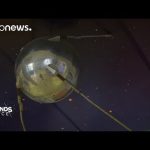
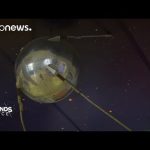
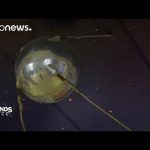
    Sixty years ago, Sputnik became the first satellite in space and changed the world forever.

    Launched by the Soviet Union on 4 October 1957, this shiny orb kick-started the space race, and opened up the heavens for mankind to explore.

    To mark the occasion ESA Euronews arranged access to the private museum of RSC Energia, the Russian state company that actually built the world’s first satellite, officially called Sputnik-1. Hanging in this Moscow treasure trove of pioneering space probes is one of the original Sputnik flight spares, built in 1957. Compact, at just over 80 kilogrammes, its polished surfaces and distinctive antennae are now unmistakable – look at this satellite, and the first word in your mind is ‘Sputnik’.

    This video is also available in the following languages:
    French https://www.youtube.com/watch?v=6zXMNip4J_s />German https://www.youtube.com/watch?v=L-owwwTkfHM />Italian https://www.youtube.com/watch?v=MPm0M9uOhuA />Spanish https://www.youtube.com/watch?v=0jTbD-mKvbU />Portguese https://www.youtube.com/watch?v=OsCMaCE27TM />Hungarian https://www.youtube.com/watch?v=G-DM2H5O1bA />Greek https://www.youtube.com/watch?v=Ub2rbxloMys

  • ESA Euronews: Soixante ans après, Spoutnik reste une légende

    ESA Euronews: Soixante ans après, Spoutnik reste une légende

    Il y a soixante ans, le premier satellite artificiel Spoutnik était mis en orbite devançant la chienne Laïka, Youri Gagarine et Alexeï Leonov dans la longue liste des légendes soviétiques de l’espace. Aujourd’hui, ce minuscule engin est encore dans toutes les mémoires comme notre reporter Jeremy Wilks a pu le constater à Moscou auprès de vétérans de l’époque comme Alexeï Leonov et de représentants du secteur spatial russe.

    Nous avons eu l’autorisation exceptionnelle de visiter un lieu unique : le musée privé de RSC Energia, la société d’Etat russe à l’origine du premier satellite artificiel. Son nom officiel Spoutnik-1. L’un de ses exemplaires originaux construit en 1957 trône parmi les trésors de l’espace exposés sur place.

  • ESA Euronews: Szputnyik: sosem felejtjük el az elsőt

    ESA Euronews: Szputnyik: sosem felejtjük el az elsőt

    Hatvan évvel ezelőtt állt Föld körüli pályára a Szputnyik, az első ember készítette űrjármű. Szovjet űrlegendák sora követte: Lajka kutya, Jurij Gagarin, Alekszej Leonov – akiknek az öröksége ma is él.

    Minisorozatunkban, az űrkutatás legendáiban rendszeresen megemlékeztünk erről, és most a Space teljes adását ennek az apró szerkezetnek szenteltük, ami megváltoztatta a világot.

    Az RSC Energija múzeumában vagyunk, ez az állami vállalat építette a világ első műholdját, a Szputnyik1-et. Ebben az űrkutatási relikviákkal teli kincsesraktárban van egy 1957-ben készült tartalék Szputnyik is.

  • ESA’s Space Operations Centre – “Where missions come alive”

    ESA’s Space Operations Centre – “Where missions come alive”

    ESA’s European Space Operations Centre links people with spacecraft travelling to the frontiers of human knowledge.

    Our world is about systems, communication and exploration; our passion is for humanity’s voyages into the Universe.

    And even the grandest journey begins with just a few steps.

    More about ESOC:
    http://www.esa.int/About_Us/ESOC

  • ESOC: Where missions come alive

    ESOC: Where missions come alive

    ESOC – European Space Operations Centre 2017

    As a centre of excellence for mission operations since 1967, ESA’s ‘mission control’ delivers expertise and experience in a unique mix that serves the scientific and engineering goals of ESA, and enables economically vital European programmes like Copernicus and Galileo.

    ESOC is home to highly specialised teams who control and navigate spacecraft, manage ESA’s worldwide tracking station network, and build the ground systems that enable satellites to conduct their missions. Spacecraft flown from ESOC are studying our planet and helping us understand climate change through realtime Earth data, and are exploring our Sun and Solar System or peering deep into the mysteries of time and space.

    The centre is unique and unparalleled in its ability to control sophisticated probes, and to design, develop and build everything needed on ground to successfully fly satellites in space.

    Our world is about systems, communication and exploration; our passion is for humanity’s voyages into the Universe.

    In 2017, ESOC celebrates its 50th anniversary #esoc50
    http://www.esa.int/esoc
    http://www.esa.int/esoc50

    This video is also available in the following languages:
    German: https://www.youtube.com/watch?v=Tl4W91VF_SM />French: https://www.youtube.com/watch?v=8-VHgc6kWMQ

  • Launching satellites from Space Station – step one

    Launching satellites from Space Station – step one

    ESA astronaut Thomas Pesquet working in the Kibo laboratory to prepare a CubeSat launch – at 30 times increased speed.

    The cylinder in the back is the mini-airlock that allows objects to be sent outside the Space Station. First Thomas and NASA astronaut Shane Kimbrough retrieved the Robotics External Leak Locator and wrapped it up for storage.

    Afterwards Thomas installs the platform that the robotic arm grabs. The pointy bit is the connector for the robotic arm.
    This video was recorded in December 2016 and was the first step for launching the CubeSats on 16 January 2017. Later Thomas put the satellite launcher on the platform and a third step is to connect the satellites themselves.

    Thomas is spending six months on the International Space Station as part of his Proxima mission. During Proxima, Thomas will perform around 50 scientific experiments for ESA and France’s space agency CNES as well as take part in many research activities for the other Station partners. The mission is part of ESA’s vision to use Earth-orbiting spacecraft as a place to live and work for the benefit of European society while using the experience to prepare for future voyages of exploration further into the Solar System.

    Connect with Thomas Pesquet: http://thomaspesquet.esa.int

    Music: Dynamic Systems – Gledden / Pedder

  • ESA Euronews: CubeSat, a satellite in a shoe box

    ESA Euronews: CubeSat, a satellite in a shoe box

    Tiny satellites the size of a small cube, jam-packed with the most advanced nanotechnologies: is this the future of Space missions?

    To find out, ESA Euronews went to Tallin, Estonia, where students at the Mektory Space Centre are preparing the launch of their first nanosatellite.

    Nanosatellites – tiny cubes of 10cm x 10cm x 10cm, full of nanotechnologies — are going to be more and more important in the future of space exploration, from Mars missions, to the surveillance of asteroids, which could potentially be dangerous for our planet.

    Also known as ‘CubeSats’ these tiny satellites open up a whole world of possibilities for those who want to explore space.

    This video is also available in the following languages:
    French: https://www.youtube.com/watch?v=RFVJ0ZGW2nI
    German: https://www.youtube.com/watch?v=rOdjO5bhoiU
    Italian: https://www.youtube.com/watch?v=5cP0baTNDYo
    Spanish: https://www.youtube.com/watch?v=NlZSt0WfMTo
    Portuguese: https://www.youtube.com/watch?v=6tM5AXZtY18
    Greek: https://www.youtube.com/watch?v=WIIVLxcOlT0
    Hungarian: https://www.youtube.com/watch?v=XAlfhpzadWc

  • ESA Euronews: De mi az a nanoműhold?

    ESA Euronews: De mi az a nanoműhold?

    A nanoműholdak egyre fontosabbak lesznek az űrkutatásban, a Mars megfigyelésétől a Földre veszélyt jelentő aszteroidák felkutatásáig. A bennük rejlő potenciált mindenki igyekszik kiaknázni, a nagy űrügynökségektől a tudományos diákkörökig. Ez a helyzet a Mektory Űrközpontban, az észt főváros, Talinn műszaki egyetemén, ahol a diákok az első nanoműholdjuk Föld körüli pályára állítását készítik elő.

    – Azt hittem, soha nem fogok műholdat építeni, hiszen ilyesmit csak a NASA-nál csinálnak. Most meg műholdat építek az egyetemi laborban – hitetlenkedett az Euronewsnak Marta Hang, az űrközpont programasszisztense.

    A Mektory nanoműhold-programja egy nemzetközi egyetemi kezdeményezés, amelyben az oktatók és a hallgatók együttműködnek az űrkutatásban érdekelt és más technológiai cégekkel. A cél az, hogy felkészítsék a hallgatókat arra, hogy az űriparban helyezkedjenek el. A csapat jelenleg az első űrküldetését tervezi.

    – Egy kockaműholdat fejlesztünk, amely egy egységből áll, és távérzékelési célokat szolgál, vagyis képeket készít majd a Földről – magyarázza a Mektory Űrközpont igazgatója, Mart Vihmand.

  • Galileo satellites recovered

    Galileo satellites recovered

    Last summer, they were considered lost: two Galileo satellites ended in the wrong orbit after their launch by a Soyuz from Kourou, French Guiana. But now the two satellites have been recovered and they should be able to fulfil at least partially their mission – a situation made possible thanks to expertise and hard work in the extended Galileo team, from ESA, to agencies partners and industry.

    More about Galileo:
    http://esa.int/galileo

  • Galileo deployment phase

    Galileo deployment phase

    On 21 August, at 12:31 UTC/14:31 CEST, a Soyuz rocket will launch the fifth and six Galileo satellites from Europe’s Spaceport in Kourou, French Guiana.

    These are the first ‘Full Operational Capability’ satellites for the deployment phase of Galileo, following the so-called ‘In Orbit Validation’ (IOV) phase, which allowed the European Space Agency to make sure that the design of the Galileo system provided its expected performance both in space and on the ground.

    Now it is time to build the full Galileo constellation, allowing full deployment to take place, the IOV satellites having paved the way for this European navigation programme, the first civilian system with worldwide services.

    This phase of the Galileo programme is being managed and funded by the European Commission, with ESA acting as design and procurement agent on behalf of the Commission.

    This video recalls the success of the In Orbit Validation phase and explains what will be the mission of these fifth and sixth Galileo satellites.

    It includes an interview with Sylvain Loddo, Galileo Ground Segment Manager.

    More about launching Galileo:
    http://www.esa.int/Our_Activities/Navigation/The_future_-_Galileo/Launching_Galileo

  • NASA’s Fleet of Satellites Help Understand Climate Change on This Week @NASA

    NASA’s Fleet of Satellites Help Understand Climate Change on This Week @NASA

    The third U.S. National Climate Assessment was released which took observations from NASA’s fleet of satellites to help understand climate change in the United States. Also, NASA’s Orbiting Carbon Observatory-2 spacecraft arrived at California’s Vandenberg Air Force Base to begin final preparations for a scheduled July 1 launch. In Florida, the remaining flight hardware for the Delta IV rocket that will launch NASA’s Orion spacecraft on Exploration Flight Test-1 in December arrived at Port Canaveral. At the Stennis Space Center, a cold-shock test for the RS-25 engine that will help power NASA’s new Space Launch System rocket was completed. The Chandra X-ray Observatory found new stars, simulated space dust was created on earth, a new ISS crew trains in Russia, Shannon Lucid and Jerry Ross are inducted into the Astronaut Hall of Fame and NASA recognizes the small business community for helping the agency work toward achieving its goals!

  • Ariane 5 performs 50th successful launch in a row

    Ariane 5 performs 50th successful launch in a row

    Thursday 2 August 2012 marked the 50th successful Ariane flight in a row: an Ariane 5 was launched from Europe’s Spaceport in French Guiana to perform a dual deployment of two telecommunications satellites, Intelsat 20 and Hylas-2, into their planned transfer orbits.

    Lift off of flight VA208 took place at 22:54 CEST; 17:54 French Guiana time. This was Ariane 5’s fourth launch of 2012, continuing a line of launch successes unbroken since 2003.

  • Earth from Space: Mississippi River Delta

    Earth from Space: Mississippi River Delta

    Earth from Space is presented by Kelsea Brennan-Wessels from the ESA Web-TV virtual studios.
    In the twenty-fourth edition we look at the Mississippi River Delta, where the largest river in the United States empties into the Gulf of Mexico.

  • Earth from Space: The future of Earth observation

    Earth from Space: The future of Earth observation

    Earth from Space is presented by Kelsea Brennan-Wessels from the ESA Web-TV virtual studios.

    In the nineteenth edition we look at an example of what a high-resolution image could look like from the future Sentinel-2 mission — envisaged for launch next year. The mockup was constructed using 82 images from the German RapidEye satellites.