A rusted iron ball bearing seems like it might be past its prime, as far as uses go. Thankfully, all you need to do is wrap one of the bearings in some aluminum foil. You’re almost ready to create a thermite reaction. BANG!
We’ll admit, we take a little bit of offense when someone says, “Snow only comes in white.” Apparently, they’ve never seen the Rainbow Snow activity. If you’ve ever played with our Insta-Snow® powder, especially with our Color Fizzers, you know exactly how superabsorbent polymers can create a colorful blizzard of the most realistic fake snow out there.
Sugar is delicious, sweet and… perfect for creating colorful, beautiful ornaments? This holiday season, grab a bag of Imperial Sugar or Dixie Crystals granulated sugar and mix yourself a supersaturated solution. Don’t know how to make a supersaturated solution? We’ll teach you! Once you’ve learned the science behind Sugar Crystal Ornaments, you’re tree, house, or classroom will have some of the most awesome (and scientific) ornaments around.
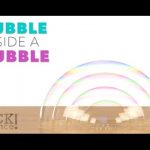
Grab a bag of Imperial Sugar or Dixie Crystals and let’s blow some bubbles. Wait… let’s blow bubbles INSIDE of other bubbles! When you mix-up a batch of super strong bubble solution and know a bit about volume and elasticity, you can blow bubble inside of bubble, inside of bubble. How many Bubble Inside a Bubble challenges can you do?
Sugar is tasty, but it can also be beautiful. Learn about awesome science like crystallization while creating a delicious and colorful treat! Stained Glass Sugar takes a tried and true recipe for sugar glass and creates vibrant, edible stained glass. The recipe is simple and easy, but by the end you’ll have made sugar glass that’s awesome enough for use on a movie set!
Food always tastes better when it’s homemade, and the same is true for ice cream. We went out and got some brown sugar from Imperial Sugar and Dixie Crystals to concoct a tasty ice cream creation. You can make your own ice cream, too! With the easy-to-follow steps below, you’ll have Brown Sugar Homemade Ice Cream in less than 30 minutes!
You’ve let your friend in on a secret: you bought some magical Imperial Sugar or Dixie Crystals sugar cubes. Seriously! This Sugar Cube Magic will blow the socks off of your friends. Have your friend pick a number between 1 and 10, then write it on the sugar cube. From there, it’s a fun experience in misdirection and magic as you dissolve the sugar cube in water!
Media and interested members of the public joined Rosetta mission experts online on Friday, 7 November for a briefing ahead of the historic comet landing on 12 November.
Programme:
Introduction: Emily Baldwin, ESA space science editor
Overview of media events: Jocelyne Landeau-Constantin, Head of ESOC communication office
Science from Rosetta so far: Matt Taylor, ESA Rosetta project scientist
Spacecraft status and operations timeline: Andrea Accomazzo, ESA Rosetta flight director
Key messages: Fred Jansen, ESA Rosetta mission manager
Q&A: all
Discovering density has never been more colorful, or fun! The Sugar Rainbow is a creative and engaging method of teaching about how different densities will stack atop each other. There’s even an additional lesson about adhesion and cohesion! Combine gorgeous colors and awesome science with a little bit of sugar and water!
Stephen Hawking, one of the most prominent cosmologists of our time, has given voice to the great heights humanity can achieve. Recently, actor Eddie Redmayne, who plays Professor Hawking in the film “The Theory of Everything,” took time to explain the inspirational relationship between Professor Hawking and NASA’s mission and programs.
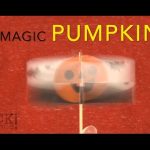
Many people have wondered exactly how a Magic Pumpkin is created. Well, sorry to burst your bubble, but the secret it animation. It’s a cartoon. Want to create your own illustrated Magic Pumpkin? Check out the amazing Magic Pumpkin designed by our team of scientists. It’s an activity that will have you spinning… literally!
Steve Spangler is a celebrity teacher, science toy designer, speaker, author and an Emmy award-winning television personality. Spangler is probably best known for his Mentos and Diet Coke geyser experiment that went viral in. Spangler is the founder of www.SteveSpanglerScience.com, a Denver-based company specializing in the creation of science toys, classroom science demonstrations, teacher resources and home for Spangler’s popular science experiment archive and video collection. Spangler is a frequent guest on the Ellen DeGeneres Show and Denver 9 News where he takes classroom science experiments to the extreme. For teachers, parents or DIY Science ideas – check out other sources of learning:
There’s nothing better than having a bowl full of worms without the hassle of digging them out of the ground… and all by using fascinating polymer science. Now our worm-ologists have made an exciting new kind of Insta-Worms that are heat sensitive! You won’t believe your eyes as temperature changes the appearance of this special kind of Insta-Worms.
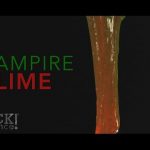
Where does slime come from, you ask? Monsters, of course. But thanks to some cool genetic mutations, vampires now have their own slime. Telling the difference between monster slime and vampire slime can be tricky at first glance, unless you know the vampire secret… hold the slime up to the light. Ordinary monster slime just looks green (because monster blood is green, dah). Vampire slime, on the other hand, shows its true color when you hold it up to the light because the green turns dark red to reveal what vampires drink… well… you know… that stuff. Leave it to the vampires to find another way to hide their true identity.
This activity will prove that Mom was right… “Wash your hands with soap and warm water!” A Petri dish prepared with nutrient agar (a seaweed derivative with beef nutrients) is an ideal food source for the bacteria you’ll be growing. In this experiment, Steve Spangler collected samples from items around the office – you will not believe what he found.
Science staples involve things that go boom and things that blast off. With the Ping Pong Popper kids’ science experiment, you’ll take both the booming and blasting to new, hands-on levels. You get to construct popper toy and learn about combustion!
Joe Hanson – Host and writer
Joe Nicolosi – Director
Amanda Fox – Producer, Spotzen IncKate Eads – Associate Producer
Katie Graham – Director of Photography
Editing/Motion Graphics – Andrew Matthews/Kirby Conn
Gaffers – John Knudsen/Philip Sheldon
Post-production intern – Dalton Allen
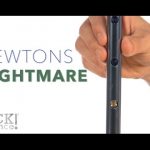
Drop one weight into the tube and, no surprise here, the weight drops to the ground with a thud. Go figure… it’s gravity at work! The second weight might bend your mind a little, though. Drop this weight into the aluminum tube and… wait… why didn’t it come out the bottom? Give it a second, that weight just takes a while longer, but figuring it out may be a bit tricky. That’s why we call it Newton’s Nightmare!
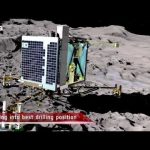
Annotated version of the Philae’s mission at comet 67P animation.
The animation begins with the deployment of Philae from Rosetta at comet 67P/Churyumov–Gerasimenko in November 2014. It will take several hours for it to reach the surface. Because of the comet’s extremely low gravity, landing gear will absorb the small forces of landing while ice screws in the probe’s feet and a harpoon system will lock the probe to the surface. At the same time a thruster on top of the lander will push it down to counteract the impulse of the harpoon imparted in the opposite direction.
Once it is anchored to the comet, the lander will begin its primary science mission, based on its 64-hour initial battery lifetime. The animation shows a number of the science instruments in action on the surface.
Rosetta’s Philae lander is provided by a consortium led by DLR, MPS, CNES and ASI.
Air pressure is one of our favorite invisible forces, especially when Bernoulli’s Principle is involved. The Soda Can Jump utilizes this awesome principle to launch an empty soda can out of a coffee mug. It’s a hands-on experience in physics that you won’t want to miss.
When it comes to scientific muses, Sir Isaac Newton is definitely near the top of our list. Our favorite laws to break involve physics, movement, and motion! That’s why we came up with the Coin Tower demonstration. Using a butter knife, you’ll remove the bottom coin from an entire tower of coins. What’s the secret? Perform the project to find out!
Do you know what a voltaic battery is? You probably do! Voltaic batteries come in all shapes and sizes, turning chemical energy into the electrical energy we need to power our cell phones, iPods, tablets, cars… you name it! These batteries seem pretty complicated, but you can make a real voltaic battery right at home! Grab some vinegar, nails, copper wire, and an ice tray… you’re in for a lesson in circuits you’ll never forget.
It’s probably the world’s most baffling optical illusion. Hold one arc above the other and ask the question, “Which arc is bigger?” The bottom arc will always look bigger than the top one, yet they are actually the same size! Reverse the arcs to make the other one look bigger. What you see is not always what you get! Keep reading and we’ll let you in on some presentation ideas and stunts that will really amaze and fool your friends.
Five cool physics tricks, but how do they work?
Explanations: http://youtu.be/jIMihpDmBpY
Check out Audible.com: http://bit.ly/AudibleVe
Leave your ideas in the comments below or subscribe for the answers next week.
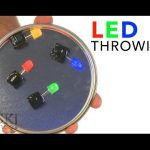
Graffiti Research Lab first introduced us to the awesome throwie idea, and we loved it. Ever since, we’ve been playing around with the idea of using light-emitting diodes (LED) and throwies as a great hands-on method to teaching science. You can do it, too, and we’ll show you how!
Smartphones are used more frequently than for watching videos than ever before, but sometimes you just want a bigger viewing area. For those strapped for cash or in the mood to do something creative, you can construct your own Homemade Projector. All the project takes is a cardboard box, a smart phone, and a few basic tools. The result is a real, working projector that you’ve made with your own hands!
We’ve found an awesome new science activity that uses Cartesian divers. No, it’s not Hook or Squidy, although they are pretty awesome, too. We’re talking about the Five Divers experiment. This project features, you guessed it, five individual Cartesian divers, but they’re all in the same bottle. Give the bottle a squeeze and watch as more divers sink as the pressure increases. Try it for yourself!
Notebooks are a necessity in every science setting. Graphs, observations, procedures… all of science falls by the wayside without a way of recording the information. Here’s a fun fact: two notebooks are even better than one! When you intertwine two notebooks, page by page, they become Inseparable Books! Check out this hands-on activity and see if you can overpower the friction between the books!
Photographic paper has long been a popular warm weather activity for kids and adults, but did you know that you can use fabric, too? With Sun Sensitive Fabric, just lay objects on the UV reactive cloth and expose it to the sun’s rays. After ten minutes, rinse the fabric with water and lock the images in place. You even have multiple colors to choose from! Try making images from red, green, or even yellow fabric. Get out in the sun and enjoy Sun Sensitive Fabric!
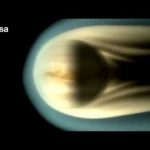
After eight years in orbit, ESA’s Venus Express has completed routine science observations and is preparing for a daring plunge into the planet’s hostile atmosphere.
Venus Express was launched on 9 November 2005, and arrived at Venus on 11 April 2006.
It has been orbiting Venus in an elliptical 24-hour loop that takes it from a distant 66 000 km over the south pole — affording incredible global views — to an altitude of around 250 km above the surface at the north pole, close to the top of the planet’s atmosphere.
With a suite of seven instruments, the spacecraft has provided a comprehensive study of the ionosphere, atmosphere and surface of Venus.
This video includes interviews in English with Håkan Svedhem, ESA mission scientist and Patrick Martin, ESA Venus Express mission manager
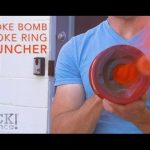
You’ve seen Steve use a giant smoke ring launcher made from a modified trash can, but there’s a way you can construct a smaller version at home! Using an empty coffee container and a smoke bomb, you’ll be creating swirling vortexes of smoke in under 10 minutes. In addition to the awesome smoke ring launcher you’ll have, you will also gain a new understanding of the movement of air and vortexes!
Just imagine if the solution to an oil spill was this simple: Sprinkle a small amount of a non-toxic powder onto the layer of oil and in seconds the powder bonds to the oil, forming a sponge-like material that can be easily removed from the surface of the water. It’s more than just a dream… a new form of superabsorbent polymer technology is changing the way environmental scientists approach oil spills and waste management problems. The results are amazing!
Do you think you can successfully perform the Steve Spangler Science inertia challenge? Balance a yellow ring on the mouth of an empty 1 or 2 liter bottle and place a hex nut or other heavy object on top of the ring. When the yellow ring is removed, the hex nut will drop straight into the bottle. It might take a little bit of practice, but you’ll get it. Inertia rings are a perfect tool for introducing students to physics, motion, and inertia.
If you’ve ever needed to clean a coin like a nickel or a dime, you might have used vinegar. That’s a perfect combination, unless you forget to dry the vinegar off of the coin! With the Colorful Coins activity, you’ll see how there is more to a shiny nickel or dime that initially meets the eyes.
You may have seen your favorite circus performers or magicians perform the classic Bed of Nails Trick… but what is the secret? Using a smaller version of the bed and a clear balloon, you can see the science behind the trick.
Scientists are getting closer than ever to understanding the origins of the Universe. For the first time, they have glimpsed behind the veil that covers the ‘Big Bang’ with the announcement that the Background Imaging of Cosmic Extragalactic Polarisation — BICEP2 — experiment at the South Pole had spotted the footprints of something called primordial gravitational waves. These waves may be a sign that a theory known as cosmic inflation can be confirmed. For those studying the Big Bang — the beginning of the Universe — this is big news.
Segíthetnek-e a gravitációs hullámok megérteni az univerzum kezdetét? Ez még mindig nagy kérdés, ezért izgatják annyira az elsődleges gravitációs hullámok a tudósokat.
Πλησιάζουμε περισσότερο από ποτέ στην κατανόηση της προέλευσης του σύμπαντος. Για πρώτη φορά αφαιρούμε το πέπλο που καλύπτει το Big Bang. Τι καταλαβαίνουμε λοιπόν για τη γέννηση του κόσμου.