Tag: Space Observatory

  • Gaia leaves for retirement orbit

    Gaia leaves for retirement orbit

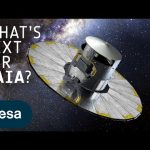
    From 25 July 2014 to 15 January 2025, the Gaia space observatory performed high-precision measurements of nearly two billion stars from its Lissajous orbit around the L2 Lagrange point, 1.5 million km from Earth.

    After 10.5 years of groundbreaking observations, Gaia’s cold gas supply for attitude control has been depleted. On 27 March 2025, Gaia will leave its Lissajous orbit and transition into a stable heliocentric orbit. Soon after, the spacecraft will be passivated, with its instruments and transmitters switched off.

    While Gaia will no longer collect new data, its scientific mission is far from over! The team continues working on Gaia Data Release 4 (expected 2026) and the final legacy catalogue (to be published not before the end of 2030), ensuring that Gaia’s discoveries will shape astronomy for decades to come.

    This video visualises how Gaia leaves its Lissajous orbit and enters its final heliocentric orbit.

    This video was made with Gaia Sky (https://gaiasky.space) by Tiago Nogueira, Toni Sagristà, and Stefan Jordan.

    Text: Stefan Jordan, Tiago Nogueira, Tineke Roegiers

    The creators would like to thank Alessandro Masat and Ander Martinez from ESA for providing Gaia’s orbit and attitude data.

    Credit: ESA/Gaia/DPAC, CC BY-SA 3.0 IGO

    ★ Subscribe: http://bit.ly/ESAsubscribe and click twice on the bell button to receive our notifications.

    Check out our full video catalog: http://bit.ly/SpaceInVideos
    Follow us on Twitter: http://bit.ly/ESAonTwitter
    On Facebook: http://bit.ly/ESAonFacebook
    On Instagram: http://bit.ly/ESAonInstagram
    On LinkedIn: https://bit.ly/ESAonLinkedIn
    On Pinterest: https://bit.ly/ESAonPinterest
    On Flickr: http://bit.ly/ESAonFlickr

    We are Europe’s gateway to space. Our mission is to shape the development of Europe’s space capability and ensure that investment in space continues to deliver benefits to the citizens of Europe and the world. Check out https://www.esa.int/ to get up to speed on everything space related.

    Copyright information about our videos is available here: https://www.esa.int/ESA_Multimedia/Terms_and_Conditions
  • Cheops: the hunt for exoplanets

    Cheops: the hunt for exoplanets

    A powerful space telescope, due for launch from Europe’s Spaceport in French Guiana on 17 December 2019, will give scientists a new insight into the nature of planets outside our Solar System.

    Cheops, the ‘Characterising Exoplanet Satellite’, will study known exoplanets that are orbiting bright stars.

    More than 4000 exoplanets have been discovered and Cheops will be targeting known planets between the size of Earth and Neptune, to find out more about their composition, internal structure and whether they might be able to support life.

    Cheops’ mission is a partnership between ESA and Switzerland with additional contributions from Austria, Belgium, France, Germany, Hungary, Italy, Portugal, Spain, Sweden and the UK.

    This film examines the nature of exoplanets, the challenge of exoplanet exploration and features the Cheops Science Operations Centre in Geneva, it includes interviews with Didier Queloz, Chair of the Cheops Science Team and 2019 Nobel Physics Laureate, University of Geneva; Willy Benz, Cheops Principal Investigator, University of Bern; and Matthias Beck, Cheops Ground Segment Manager, University of Geneva).

    Learn more: http://bit.ly/ESACheops

    ★ Subscribe: http://bit.ly/ESAsubscribe and click twice on the bell button to receive our notifications.

    Check out our full video catalog: http://bit.ly/SpaceInVideos
    Follow us on Twitter: http://bit.ly/ESAonTwitter
    On Facebook: http://bit.ly/ESAonFacebook
    On Instagram: http://bit.ly/ESAonInstagram
    On Flickr: http://bit.ly/ESAonFlickr

    We are Europe’s gateway to space. Our mission is to shape the development of Europe’s space capability and ensure that investment in space continues to deliver benefits to the citizens of Europe and the world. Check out http://www.esa.int/ESA to get up to speed on everything space related.

    Copyright information about our videos is available here: http://www.esa.int/spaceinvideos/Terms_and_Conditions

    #ESA
    #Cheops
    #ExoPlanets

  • Cheops: Europe’s exoplanet mission

    Cheops: Europe’s exoplanet mission

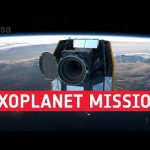
    ESA’s first mission dedicated to investigating planets outside our solar system is scheduled for launch on a Soyuz rocket from the European spaceport in French Guiana on 17 December 2019.

    Cheops – Characterising ExOPlanet Satellite – will study known exoplanets that are orbiting bright stars. The aim is to obtain detailed information about these planets to find out more about their composition and internal structure.

    The mission is a partnership between ESA and Switzerland with additional contributions from Austria, Belgium, France, Germany, Hungary, Italy, Portugal, Spain, Sweden and the UK.

    Learn more: http://sci.esa.int/cheops/

    ★ Subscribe: http://bit.ly/ESAsubscribe and click twice on the bell button to receive our notifications.

    Check out our full video catalog: http://bit.ly/SpaceInVideos
    Follow us on Twitter: http://bit.ly/ESAonTwitter
    On Facebook: http://bit.ly/ESAonFacebook
    On Instagram: http://bit.ly/ESAonInstagram
    On Flickr: http://bit.ly/ESAonFlickr

    We are Europe’s gateway to space. Our mission is to shape the development of Europe’s space capability and ensure that investment in space continues to deliver benefits to the citizens of Europe and the world. Check out http://www.esa.int/ESA to get up to speed on everything space related.

    Copyright information about our videos is available here: http://www.esa.int/spaceinvideos/Terms_and_Conditions

    #ESA
    #Cheops
    #ExoPlanets

  • Cheops: science in action

    Cheops: science in action

    Scientists at the Geneva Observatory in Switzerland will be processing data from Cheops, ESA’s Characterising Exoplanet Satellite, scheduled to launch soon to study planets orbiting stars outside our Solar System.

    The Observatory has a rich history studying exoplanets. In 1995, Michel Mayor and Didier Queloz discovered the first exoplanet orbiting a Sun-like star. Now, over 4000 planets are known around stars other than the Sun.

    By observing stars that are already known to host exoplanets, Cheops will make measure very precisely the sizes of planets in the super-Earth to Neptune size range. Combined with existing measurements of planet masses, the Cheops data will make it possible to determine the density of these planets, giving us vital clues about its composition and structure, indicating for example if it is predominantly rocky or gassy, or perhaps harbours significant oceans.

    The Cheops mission is a partnership between ESA and Switzerland with important contributions from Austria, Belgium, France, Germany, Hungary, Italy, Portugal, Spain, Sweden, and the United Kingdom. The Cheops launch slot is scheduled for the last quarter of 2019. This film contains contributions from Didier Queloz, Chair of the Cheops Science Team (University of Geneva); Willy Benz, the Cheops Principal Investigator (University of Bern); and the Cheops Ground Segment Manager, Matthias Beck (University of Geneva).

    Learn more: http://sci.esa.int/cheops/

    ★ Subscribe: http://bit.ly/ESAsubscribe and click twice on the bell button to receive our notifications.

    Check out our full video catalog: http://bit.ly/SpaceInVideos
    Follow us on Twitter: http://bit.ly/ESAonTwitter
    On Facebook: http://bit.ly/ESAonFacebook
    On Instagram: http://bit.ly/ESAonInstagram
    On Flickr: http://bit.ly/ESAonFlickr

    We are Europe’s gateway to space. Our mission is to shape the development of Europe’s space capability and ensure that investment in space continues to deliver benefits to the citizens of Europe and the world. Check out http://www.esa.int/ESA to get up to speed on everything space related.

    Copyright information about our videos is available here: http://www.esa.int/spaceinvideos/Terms_and_Conditions

    #ESA
    #Cheops
    #ExoPlanets