Tag: Space Transportation

  • Europe’s future space transport ecosystem

    Europe’s future space transport ecosystem

    ESA’s future launcher preparatory programme is crafting a space transportation ecosystem, guiding the companies and engineers of today to develop and test the technologies required to meet future needs.

    Space transportation will be moving towards frequent reusable launchers supporting a complete industrial ecosystem around Earth. In the coming decades, the European Space Agency (ESA) foresees transportation hubs in orbit around our planet providing logistic services much like airports or train stations on Earth. These hubs will offer refilling and maintenance services for spacecraft and provide platforms for manufacturing and assembly and in space transportation to other destinations.

    To create this new transportation ecosystem, new technology developments are needed, such as automatic rendezvous and capturing of spacecraft, transfer of fuel and payloads between spacecraft, tugging spacecraft to other orbits around Earth or destinations in space.

    The end goal for companies working on a proof of concept is to fly a demonstrator mission in space. Together with ESA, industry will get to this point through a process that starts with discussing needs and proposing solutions, and is followed by proving their use-case and collaborating on standards and regulations.  Developing and demonstrating these new technologies is also expected to open commercial opportunities for European space transportation companies.

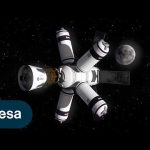
    Finally, the Odyssey project proposes to put all these key technologies together into one package by providing a dedicated service for transport vehicles and spacecraft in orbit: an uncrewed propellant depot offering refilling services. Called Odyssey (a loose abbreviation for Orbital Depot for Your Sustained Space Exploration & beYond) this depot would store propellant brought from visiting supply rockets and distribute it as needed to spacecraft on a stopover to destinations farther away such as the Moon or Mars, or to Earth-orbiting navigation satellites that have used all their propellant and need a refill to extend their working life.

    The Odyssey concept, if it can be demonstrated to be viable, would also be a contribution to a more sustainable use of space, by providing important elements of a future circular space economy.

    Credits: European Space Agency (ESA)

    Access the video on the ESA video library: https://www.esa.int/ESA_Multimedia/Videos/2025/09/Europe_s_future_space_transport_ecosystem

    ★ Subscribe: http://bit.ly/ESAsubscribe and click twice on the bell button to receive our notifications.

    Check out our full video catalog: http://bit.ly/SpaceInVideos
    Follow us on Twitter: http://bit.ly/ESAonTwitter
    On Facebook: http://bit.ly/ESAonFacebook
    On Instagram: http://bit.ly/ESAonInstagram
    On LinkedIn: https://bit.ly/ESAonLinkedIn
    On Pinterest: https://bit.ly/ESAonPinterest
    On Flickr: http://bit.ly/ESAonFlickr

    We are Europe’s gateway to space. Our mission is to shape the development of Europe’s space capability and ensure that investment in space continues to deliver benefits to the citizens of Europe and the world. Check out https://www.esa.int/ to get up to speed on everything space related.

    Copyright information about our videos is available here: https://www.esa.int/ESA_Multimedia/Terms_and_Conditions

  • Europe’s future in space transportation

    Europe’s future in space transportation

    Space is huge and essential to humankind, fuelling knowledge, supporting our economies and driving global prosperity. None of this would be possible without reliable access to space.

    Since 1979, Europe has relied on the Ariane rockets and Vega series to launch its missions. Today, with Ariane 6 and Vega-C, ESA ensures Europe’s autonomous and independent access to space. But we are also looking ahead. With the Ariane Smart Transfer and Release In-orbit Ship (ASTRIS), Phoebus, P160C boosters, the MR-10 engine and more, ESA is enhancing its rockets with new innovations that improve cost, performance, capability and sustainability.

    ESA is also leading the way in developing new propulsion systems to power the European launchers of the future. In collaboration with industry, ESA is supporting the development of new technologies to be used on rocket, boosters, upper stages, landers and spacecraft.

    Initiates like Boosters for European Space Transportation (BEST!), Technologies for High-thrust Re-Usable Space Transportation (THRUST!) and Future Innovation and Research in Space Transportation programme (FIRST!), are advancing key technologies for reusable boosters, engines and other innovations crucial for the future of space exploration. ESA’s Space Rider is a reusable spacecraft and robotic laboratory, designed to stay in low Earth-orbit for two months and return payloads to Earth. Themis is a prototype for testing reusable rocket technologies, including vertical takeoff, landing and reuse, powered by the Prometheus engine.

    The future of space transport extends beyond Earth launches, with in-orbit operations, transportation systems to support satellite servicing, orbital refuelling, and payload transfers between orbits.

    To support all of this, ESA is upgrading its ground support and Europe’s Spaceport in French Guiana, to accommodate more launches.

    Through programmes like ‘Boost!’ ESA is empowering the European Space Industry, supporting innovative companies which are creating new launch services. The European Launcher Challenge is shaping a competitive European launch sector for the future, strengthening Europe’s autonomous access to space.

    Credit: European Space Agency (ESA)

    Access the video on the ESA video library: https://www.esa.int/ESA_Multimedia/Videos/2025/06/The_future_of_ESA_Transportation

    ★ Subscribe: http://bit.ly/ESAsubscribe and click twice on the bell button to receive our notifications.

    Check out our full video catalog: http://bit.ly/SpaceInVideos
    Follow us on Twitter: http://bit.ly/ESAonTwitter
    On Facebook: http://bit.ly/ESAonFacebook
    On Instagram: http://bit.ly/ESAonInstagram
    On LinkedIn: https://bit.ly/ESAonLinkedIn
    On Pinterest: https://bit.ly/ESAonPinterest
    On Flickr: http://bit.ly/ESAonFlickr

    We are Europe’s gateway to space. Our mission is to shape the development of Europe’s space capability and ensure that investment in space continues to deliver benefits to the citizens of Europe and the world. Check out https://www.esa.int/ to get up to speed on everything space related.

    Copyright information about our videos is available here: https://www.esa.int/ESA_Multimedia/Terms_and_Conditions
  • ESA 2025: A fifty-years legacy of building the future

    ESA 2025: A fifty-years legacy of building the future

    In 1975, 10 European countries came together with a vision to collaborate on key space activities: science and astronomy, launch capabilities and space applications: the European Space Agency, ESA, was born.

    In 2025, we mark half a century of joint European achievement – filled with firsts and breakthroughs in science, exploration and technology, and the space infrastructure and economy that power Europe today.

    During the past five decades ESA has grown, developing ever bolder and bigger projects and adding more Member States, with Slovenia joining as the latest full Member State in January.

    We’ll also celebrate the 50th anniversary of ESA’s Estrack network, 30 years of satellite navigation in Europe and 20 years since ESA launched the first demonstration satellite Giove-A which laid the foundation for the EU’s own satnav constellation Galileo. Other notable celebrations are the 20th anniversary of ESA’s Business Incubation Centres, or BICs, and the 30th year in space for SOHO, the joint ESA and NASA Solar and Heliospheric Observatory.

    Sadly though, 2025 will mean end of science operations for Integral and Gaia. Integral, ESA’s gamma-ray observatory has exotic objects in space since 2002 and Gaia concludes a decade of mapping the stars. But as some space telescopes retire, another one provides its first full data release. Launched in 2023, we expect Euclid’s data release early in the new year.

    Launch-wise, we’re looking forward to Copernicus Sentinel-4 and -5 (Sentinel-4 will fly on an MTG-sounder satellite and Sentinel-5 on the MetOp-SG-A1 satellite), Copernicus Sentinel-1D, Sentinel-6B and Biomass. We’ll also launch the SMILE mission, or Solar wind Magnetosphere Ionosphere Link Explorer, a joint mission with the Chinese academy of science.

    The most powerful version of Europe’s new heavy-lift rocket, Ariane 6, is set to fly operationally for the first time in 2025. With several European commercial launcher companies planning to conduct their first orbital launches in 2025 too, ESA is kicking off the European Launcher Challenge to support the further development of European space transportation industry.

    In human spaceflight, Polish ESA project astronaut Sławosz Uznański will fly to the ISS on the commercial Axiom-4 mission. Artemis II will be launched with the second European Service Module, on the first crewed mission around the Moon since 1972.

    The year that ESA looks back on a half century of European achievement will also be one of key decisions on our future. At the Ministerial Council towards the end of 2025, our Member States will convene to ensure that Europe’s crucial needs, ambitions and the dreams that unite us in space become reality.

    So, in 2025, we’ll celebrate the legacy of those who came before but also help establish a foundation for the next 50 years. Join us as we look forward to a year that honours ESA’s legacy and promises new milestones in space.

    Credits: ESA – European Space Agency

    ★ Subscribe: http://bit.ly/ESAsubscribe and click twice on the bell button to receive our notifications.

    Check out our full video catalog: http://bit.ly/SpaceInVideos
    Follow us on Twitter: http://bit.ly/ESAonTwitter
    On Facebook: http://bit.ly/ESAonFacebook
    On Instagram: http://bit.ly/ESAonInstagram
    On LinkedIn: https://bit.ly/ESAonLinkedIn
    On Pinterest: https://bit.ly/ESAonPinterest
    On Flickr: http://bit.ly/ESAonFlickr

    We are Europe’s gateway to space. Our mission is to shape the development of Europe’s space capability and ensure that investment in space continues to deliver benefits to the citizens of Europe and the world. Check out https://www.esa.int/ to get up to speed on everything space related.

    Copyright information about our videos is available here: https://www.esa.int/ESA_Multimedia/Terms_and_Conditions
    #ESA #2025 #Space

  • Boosting the next generation of European rockets and space transport

    Boosting the next generation of European rockets and space transport

    ESA supports Europe’s space transportation visionaries and entrepreneurs through Boost! This video shows just some of the companies that have received co-funding from ESA’s Boost! programme: Orbex with its Prime launcher, D-Orbit offering orbital transportation and precise payload delivery with InOrbitNow, Skyrora’s XL launcher, HyImpulse’s SL1, ForgeStar from SpaceForge preparing for manufacturing in microgravity and returning them to Earth, Isar Aerospace’s Spectrum launcher, Rocket Factory Augsburg’s RFA One and PLD Space’s Miura.

    Space is open for business – space transportation gets you there!
    With its Boost! programme, ESA is boosting commercial initiatives that offer transportation services to space, in space, and returning from space.

    To achieve this, ESA nurtures industrial entrepreneurship and stimulates growth and competitiveness within the privately led and funded space sector in Europe via Boost! – ESA’s Commercial Space Transportation Services and Support programme.

    This programme also supports ESA Member States in implementing national space transportation objectives in the field of spaceports, testing facilities and associated services.

    Read more: www.esa.int/boost

    Access this content on the ESA video library: https://www.esa.int/ESA_Multimedia/Videos/2024/06/Boost

    Credits: ESA – European Space Agency

    ★ Subscribe: http://bit.ly/ESAsubscribe and click twice on the bell button to receive our notifications.

    Check out our full video catalog: http://bit.ly/SpaceInVideos
    Follow us on Twitter: http://bit.ly/ESAonTwitter
    On Facebook: http://bit.ly/ESAonFacebook
    On Instagram: http://bit.ly/ESAonInstagram
    On LinkedIn: https://bit.ly/ESAonLinkedIn
    On Pinterest: https://bit.ly/ESAonPinterest
    On Flickr: http://bit.ly/ESAonFlickr

    We are Europe’s gateway to space. Our mission is to shape the development of Europe’s space capability and ensure that investment in space continues to deliver benefits to the citizens of Europe and the world. Check out https://www.esa.int/ to get up to speed on everything space related.

    Copyright information about our videos is available here: https://www.esa.int/ESA_Multimedia/Terms_and_Conditions

    #ESA #Europe #Rocket

  • Closing a chapter in style! 🚀 #shorts

    Closing a chapter in style! 🚀 #shorts

    The Ariane 5 launch vehicle liftoff for flight VA261 from Europe’s Spaceport in French Guiana on 5 July at 23:00 BST (6 July at 00:00 CEST). Flight VA261 carried two payloads into space – the German space agency DLR’s experimental communications satellite Heinrich Hertz and the French communications satellite Syracuse 4b. The flight was the 117th and final mission for Ariane 5, a series which began in 1996.

    Credits: ESA/CNES/Arianespace

    ★ Subscribe: http://bit.ly/ESAsubscribe and click twice on the bell button to receive our notifications.

    Check out our full video catalog: http://bit.ly/SpaceInVideos
    Follow us on Twitter: http://bit.ly/ESAonTwitter
    On Facebook: http://bit.ly/ESAonFacebook
    On Instagram: http://bit.ly/ESAonInstagram
    On LinkedIn: https://bit.ly/ESAonLinkedIn
    On Pinterest: https://bit.ly/ESAonPinterest
    On Flickr: http://bit.ly/ESAonFlickr

    We are Europe’s gateway to space. Our mission is to shape the development of Europe’s space capability and ensure that investment in space continues to deliver benefits to the citizens of Europe and the world. Check out https://www.esa.int/ to get up to speed on everything space related.

    Copyright information about our videos is available here: https://www.esa.int/ESA_Multimedia/Terms_and_Conditions

    #ESA
    #Ariane5
    #Rocket

  • ESA announces the Zero Debris Charter initiative

    ESA announces the Zero Debris Charter initiative

    ESA DG Josef Aschbacher, accompanied by TAS CEO Hervé Derrey, Airbus DS EVP Jean-Marc Nasr and OHB Board Member Lutz Bertling, among others, will unveil the Zero Debris Charter initiative, an ambitious drive towards European leadership in space debris mitigation and remediation.

    ★ Subscribe: http://bit.ly/ESAsubscribe and click twice on the bell button to receive our notifications.

    Check out our full video catalog: http://bit.ly/SpaceInVideos
    Follow us on Twitter: http://bit.ly/ESAonTwitter
    On Facebook: http://bit.ly/ESAonFacebook
    On Instagram: http://bit.ly/ESAonInstagram
    On LinkedIn: https://bit.ly/ESAonLinkedIn
    On Pinterest: https://bit.ly/ESAonPinterest
    On Flickr: http://bit.ly/ESAonFlickr

    We are Europe’s gateway to space. Our mission is to shape the development of Europe’s space capability and ensure that investment in space continues to deliver benefits to the citizens of Europe and the world. Check out https://www.esa.int/ to get up to speed on everything space related.

    Copyright information about our videos is available here: https://www.esa.int/ESA_Multimedia/Terms_and_Conditions

    #ESA
    #Space
    #ParisAirShow2023

  • Conference on Ariane 6 programme | Paris Air Show 2023

    Conference on Ariane 6 programme | Paris Air Show 2023

    Watch the replay of the live session from the Paris Air Show 2023 to watch the press briefing on space transportation. Speakers will share the current status of the Ariane 6 programme, and the next key milestones towards the inaugural flight.

    ★ Subscribe: http://bit.ly/ESAsubscribe and click twice on the bell button to receive our notifications.

    Check out our full video catalog: http://bit.ly/SpaceInVideos
    Follow us on Twitter: http://bit.ly/ESAonTwitter
    On Facebook: http://bit.ly/ESAonFacebook
    On Instagram: http://bit.ly/ESAonInstagram
    On LinkedIn: https://bit.ly/ESAonLinkedIn
    On Pinterest: https://bit.ly/ESAonPinterest
    On Flickr: http://bit.ly/ESAonFlickr

    We are Europe’s gateway to space. Our mission is to shape the development of Europe’s space capability and ensure that investment in space continues to deliver benefits to the citizens of Europe and the world. Check out https://www.esa.int/ to get up to speed on everything space related.

    Copyright information about our videos is available here: https://www.esa.int/ESA_Multimedia/Terms_and_Conditions

    #ESA
    #Space
    #ParisAirShow2023

  • Europe’s new ambitions for space exploration | Paris Air Show 2023

    Europe’s new ambitions for space exploration | Paris Air Show 2023

    Watch the recording of the live session from the Paris Air Show 2023 for a conference examining Europe’s aspirations in human and robotic space exploration. Speakers include ESA Director General Josef Aschbacher, CNES CEO Philippe Baptiste, Director General of the German Space Agency Walther Pelzer, and President of the Italian Space Agency (ASI) Teodoro Valente. ESA astronauts Thomas Pesquet, Samantha Cristoforetti, and Matthias Maurer will provide their perspectives.

    ★ Subscribe: http://bit.ly/ESAsubscribe and click twice on the bell button to receive our notifications.

    Check out our full video catalog: http://bit.ly/SpaceInVideos
    Follow us on Twitter: http://bit.ly/ESAonTwitter
    On Facebook: http://bit.ly/ESAonFacebook
    On Instagram: http://bit.ly/ESAonInstagram
    On LinkedIn: https://bit.ly/ESAonLinkedIn
    On Pinterest: https://bit.ly/ESAonPinterest
    On Flickr: http://bit.ly/ESAonFlickr

    We are Europe’s gateway to space. Our mission is to shape the development of Europe’s space capability and ensure that investment in space continues to deliver benefits to the citizens of Europe and the world. Check out https://www.esa.int/ to get up to speed on everything space related.

    Copyright information about our videos is available here: https://www.esa.int/ESA_Multimedia/Terms_and_Conditions
    #ESA
    #Space
    #ParisAirShow2023

  • Session on understanding Earth’s water and carbon cycles from space | Paris Air Show 2023

    Session on understanding Earth’s water and carbon cycles from space | Paris Air Show 2023

    By using concrete examples of the water and carbon cycles, the speakers in this session will focus on the grand science questions before us and how we can turn them into answers and solutions most useful to decision-makers at the front line of the climate crisis. Earth is a highly dynamic system where the transport and exchanges of energy and matter are influenced by a multitude of processes and feedback mechanisms. Untangling these complex processes to better understand how Earth works as a system is a major challenge; a challenge that satellites, with their global view, are ideally positioned to tackle. While each mission gives us unique insights, it is by combining their data that makes scientific findings shine the brightest. This, in turn, puts European and international collaboration at the heart of Earth observation today.

    ★ Subscribe: http://bit.ly/ESAsubscribe and click twice on the bell button to receive our notifications.

    Check out our full video catalog: http://bit.ly/SpaceInVideos
    Follow us on Twitter: http://bit.ly/ESAonTwitter
    On Facebook: http://bit.ly/ESAonFacebook
    On Instagram: http://bit.ly/ESAonInstagram
    On Flickr: http://bit.ly/ESAonFlickr

    We are Europe’s gateway to space. Our mission is to shape the development of Europe’s space capability and ensure that investment in space continues to deliver benefits to the citizens of Europe and the world. Check out https://www.esa.int/ to get up to speed on everything space related.

    Copyright information about our videos is available here: https://www.esa.int/ESA_Multimedia/Terms_and_Conditions
    #ESA
    #Space
    #ParisAirShow2023

  • Artemis II | European Service Module perspective

    Artemis II | European Service Module perspective

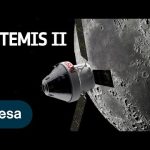
    After the uncrewed Artemis I test flight, the Artemis II mission will have astronauts demonstrate what the Orion spacecraft – powered by a European Service Module – can do on its voyage around the Moon.

    Two astronauts will fly on the second Artemis mission and take over controls to show how Orion handles at close-quarter flying. While in Earth orbit the spacecraft will detach from its second stage, fly away, turn around, approach the second stage and then fly away again – all using the European Service Module’s 33 thrusters.

    Whereas in the first Artemis mission the second stage fired Orion into its lunar orbit, for the second mission it will be the European Service Module that will give the spacecraft its final push to its voyage around the Moon.

    The crew will fly Orion to 8889 km beyond the Moon before completing a lunar flyby and returning to Earth. The mission will take a minimum of eight days and will collect valuable flight test data.

    The European Service Module is one of ESA’s many contributions to NASA’s Orion spacecraft and the Artemis programme that will send astronauts to the Moon and beyond. It provides electricity, water, oxygen and nitrogen as well as keeping the spacecraft at the right temperature and on course.

    The European Service Module has 33 thrusters, 11 km of electrical wiring, four propellant and two pressure tanks that all work together to supply propulsion and everything needed to keep astronauts alive far from Earth – there is no room for error.

    ★ Subscribe: http://bit.ly/ESAsubscribe and click twice on the bell button to receive our notifications.

    Check out our full video catalog: http://bit.ly/SpaceInVideos
    Follow us on Twitter: http://bit.ly/ESAonTwitter
    On Facebook: http://bit.ly/ESAonFacebook
    On Instagram: http://bit.ly/ESAonInstagram
    On Flickr: http://bit.ly/ESAonFlickr

    We are Europe’s gateway to space. Our mission is to shape the development of Europe’s space capability and ensure that investment in space continues to deliver benefits to the citizens of Europe and the world. Check out https://www.esa.int/ to get up to speed on everything space related.

    Copyright information about our videos is available here: https://www.esa.int/ESA_Multimedia/Terms_and_Conditions
    #ESA
    #Orion
    #Artemis

  • Artemis I launch

    Artemis I launch

    The Space Launch System (SLS) rocket with the Orion spacecraft aboard lifted off at 07:47 CET from @NASA’s Kennedy Space Center in Florida, USA on 16 November 2022.

    The most powerful rocket ever built sent NASA’s Orion spacecraft and ESA’s European Service Module (ESM) to a journey beyond the Moon and back. No crew will be on board Orion this time, and the spacecraft will be controlled by teams on Earth.

    ESM provides for all astronauts’ basic needs, such as water, oxygen, nitrogen, temperature control, power and propulsion.

    Much like a train engine pulls passenger carriages and supplies power, the European Service Module will take the Orion capsule to its destination and back.

    Learn more about Artemis I: https://www.esa.int/Science_Exploration/Human_and_Robotic_Exploration/Orion/Artemis_I

    ★ Subscribe: http://bit.ly/ESAsubscribe and click twice on the bell button to receive our notifications.

    Check out our full video catalog: http://bit.ly/SpaceInVideos
    Follow us on Twitter: http://bit.ly/ESAonTwitter
    On Facebook: http://bit.ly/ESAonFacebook
    On Instagram: http://bit.ly/ESAonInstagram
    On LinkedIn: https://bit.ly/ESAonLinkedIn
    On Pinterest: https://bit.ly/ESAonPinterest
    On Flickr: http://bit.ly/ESAonFlickr

    We are Europe’s gateway to space. Our mission is to shape the development of Europe’s space capability and ensure that investment in space continues to deliver benefits to the citizens of Europe and the world. Check out https://www.esa.int/ to get up to speed on everything space related.

    Copyright information about our videos is available here: https://www.esa.int/ESA_Multimedia/Terms_and_Conditions

    #ESA
    #Orion
    #Artemis

  • To orbit and back with Space Rider

    To orbit and back with Space Rider

    Space Rider is an uncrewed robotic laboratory about the size of two minivans. After launch on Vega-C, this reusable spacecraft will stay in low orbit for about two months, conducting research in microgravity or observing the Earth or deep space. At the end of its mission, Space Rider will return to Earth with its payloads to be unloaded and refurbished for another flight.

    Credit: ESA/Frame by Frame

    ★ Subscribe: http://bit.ly/ESAsubscribe and click twice on the bell button to receive our notifications.

    Check out our full video catalog: http://bit.ly/SpaceInVideos
    Follow us on Twitter: http://bit.ly/ESAonTwitter
    On Facebook: http://bit.ly/ESAonFacebook
    On Instagram: http://bit.ly/ESAonInstagram
    On LinkedIn: https://bit.ly/ESAonLinkedIn
    On Pinterest: https://bit.ly/ESAonPinterest
    On Flickr: http://bit.ly/ESAonFlickr

    We are Europe’s gateway to space. Our mission is to shape the development of Europe’s space capability and ensure that investment in space continues to deliver benefits to the citizens of Europe and the world. Check out https://www.esa.int/ to get up to speed on everything space related.

    Copyright information about our videos is available here: https://www.esa.int/ESA_Multimedia/Terms_and_Conditions
    #ESA
    #Orbit
    #SpaceRider

  • 10 facts about the European Service Module | Artemis #shorts

    10 facts about the European Service Module | Artemis #shorts

    The European Service Module is ESA’s contribution to @NASA’s Orion spacecraft that will send astronauts to the Moon and beyond. It provides electricity, water, oxygen and nitrogen as well as keeping the spacecraft at the right temperature and on course.

    Learn more about the European Service Module: https://www.esa.int/Science_Exploration/Human_and_Robotic_Exploration/Orion/Orion_European_Service_Module_media_kit

    ★ Subscribe: http://bit.ly/ESAsubscribe and click twice on the bell button to receive our notifications.

    Check out our full video catalog: http://bit.ly/SpaceInVideos
    Follow us on Twitter: http://bit.ly/ESAonTwitter
    On Facebook: http://bit.ly/ESAonFacebook
    On Instagram: http://bit.ly/ESAonInstagram
    On LinkedIn: https://bit.ly/ESAonLinkedIn
    On Pinterest: https://bit.ly/ESAonPinterest
    On Flickr: http://bit.ly/ESAonFlickr

    We are Europe’s gateway to space. Our mission is to shape the development of Europe’s space capability and ensure that investment in space continues to deliver benefits to the citizens of Europe and the world. Check out https://www.esa.int/ to get up to speed on everything space related.

    Copyright information about our videos is available here: https://www.esa.int/ESA_Multimedia/Terms_and_Conditions
    #ESA
    #ESM
    #Artemis

  • Media briefing: Artemis I getting ready for launch

    Media briefing: Artemis I getting ready for launch

    The Artemis I mission is almost ready for launch: it will send an uncrewed spacecraft beyond the Moon and back. Join this virtual Q&A to learn more about Europe’s contribution to the mission: ESA is overseeing the development of the European Service Module, that provides air, electricity and propulsion to the spacecraft. Participants to this media briefing include Josef Aschbacher, ESA Director General ; David Parker, ESA Director for Human and Robotic Exploration ; Jean-Marc Nasr, @Airbus EVP Space Systems and Marc Steckling, Airbus Head of Space Exploration.

    Learn more about Artemis I: https://www.esa.int/Science_Exploration/Human_and_Robotic_Exploration/Orion/Artemis_I

    ★ Subscribe: http://bit.ly/ESAsubscribe and click twice on the bell button to receive our notifications.

    Check out our full video catalog: http://bit.ly/SpaceInVideos
    Follow us on Twitter: http://bit.ly/ESAonTwitter
    On Facebook: http://bit.ly/ESAonFacebook
    On Instagram: http://bit.ly/ESAonInstagram
    On LinkedIn: https://bit.ly/ESAonLinkedIn
    On Pinterest: https://bit.ly/ESAonPinterest
    On Flickr: http://bit.ly/ESAonFlickr

    We are Europe’s gateway to space. Our mission is to shape the development of Europe’s space capability and ensure that investment in space continues to deliver benefits to the citizens of Europe and the world. Check out https://www.esa.int/ to get up to speed on everything space related.

    Copyright information about our videos is available here: https://www.esa.int/ESA_Multimedia/Terms_and_Conditions
    #ESA
    #Orion
    #Artemis

  • Artemis I – European Service Module perspective

    Artemis I – European Service Module perspective

    The Orion spacecraft with European Service Module will fly farther from Earth than any human-rated vehicle has ever flown before. This video gives an overview of the first mission – without astronauts – for Artemis, focussing on ESA’s European Service Module that powers the spacecraft.

    The spacecraft will perform a flyby of the Moon, using lunar gravity to gain speed and propel itself 70 000 km beyond the Moon, almost half a million km from Earth – further than any human has ever travelled, where it will inject itself in a Distant Retrograde Orbit around the Moon.

    On its return journey, Orion will do another flyby of the Moon before heading back to Earth.

    The total trip will take around 20 days, ending with a splashdown in the Pacific Ocean without the European Service Module – it separates and burns up harmlessly in the atmosphere.

    The second Artemis mission will have a simplified flight plan with only a flyby of the Moon but with four astronauts. The third Artemis mission will see astronauts taken to the lunar surface.

    The European Service Module is ESA’s contribution to @NASA’s Orion spacecraft that will send astronauts to the Moon and beyond. It provides electricity, water, oxygen and nitrogen as well as keeping the spacecraft at the right temperature and on course.

    The European Service Module has 33 thrusters, 11 km of electrical wiring, four propellant and two pressure tanks that all work together to supply propulsion and everything needed to keep astronauts alive far from Earth – there is no room for error.

    ★ Subscribe: http://bit.ly/ESAsubscribe and click twice on the bell button to receive our notifications.

    Check out our full video catalog: http://bit.ly/SpaceInVideos
    Follow us on Twitter: http://bit.ly/ESAonTwitter
    On Facebook: http://bit.ly/ESAonFacebook
    On Instagram: http://bit.ly/ESAonInstagram
    On Flickr: http://bit.ly/ESAonFlickr

    We are Europe’s gateway to space. Our mission is to shape the development of Europe’s space capability and ensure that investment in space continues to deliver benefits to the citizens of Europe and the world. Check out https://www.esa.int/ to get up to speed on everything space related.

    Copyright information about our videos is available here: https://www.esa.int/ESA_Multimedia/Terms_and_Conditions
    #ESA
    #Orion
    #Artemis

  • Vega-C inaugural launch campaign timelapse, VV21

    Vega-C inaugural launch campaign timelapse, VV21

    ESA’s new Vega-C rocket lifted off for its inaugural flight VV21 at 15:13 CEST/13:13 UTC/10:13 local time from Europe’s Spaceport in French Guiana. With new first and second stages and an uprated fourth stage, Vega-C increases performance to about 2.3 t in a reference 700 km polar orbit, from the 1.5 t capability of its predecessor, Vega. For flight VV21, Vega-C’s payload is LARES-2, a scientific mission of @AsiTVit and six research CubeSats from France, Italy and Slovenia.

    Learn more about Vega-C: https://bit.ly/VegaRocketESA

    Directed by:
    Manuel Pedoussaut/Zetapress
    Stéphane Corvaja/ESA

    Music by: Hubrid – Cosmic Breath

    ★ Subscribe: http://bit.ly/ESAsubscribe and click twice on the bell button to receive our notifications.

    Check out our full video catalog: http://bit.ly/SpaceInVideos
    Follow us on Twitter: http://bit.ly/ESAonTwitter
    On Facebook: http://bit.ly/ESAonFacebook
    On Instagram: http://bit.ly/ESAonInstagram
    On LinkedIn: https://bit.ly/ESAonLinkedIn
    On Pinterest: https://bit.ly/ESAonPinterest
    On Flickr: http://bit.ly/ESAonFlickr

    We are Europe’s gateway to space. Our mission is to shape the development of Europe’s space capability and ensure that investment in space continues to deliver benefits to the citizens of Europe and the world. Check out https://www.esa.int/ to get up to speed on everything space related.

    Copyright information about our videos is available here: https://www.esa.int/ESA_Multimedia/Terms_and_Conditions
    #ESA
    #VegaC
    #SpaceRockets

  • Vega-C launch (operational audio only)

    Vega-C launch (operational audio only)

    Enjoy the inaugural flight of ESA’s new Vega-C rocket. The principal payload of this flight is LARES-2, a scientific mission of @AsiTV. Also onboard are six European research CubeSats.

    – Stay tuned: 00:00 – 7:06
    – 1st launch attempt: 7:07 – 36:49
    – Intermission: 36:50 – 1:29:36
    – 2nd launch attempt: 1:29:37 – 1:35:43
    – 2nd Intermission: 1:35:44 – 2:29:56
    – Liftoff and stage separation: 2:29:57 – 3:00:31
    – 1st break of the speakers: 3:00:32 – 3:44:55
    – LARES-2 separation: 3:44:56 – 4:13:50
    – 2nd break of the speakers: 4:13:51 – 4:35:53
    – Cubesats separation: 4:35:54 – 4:57:45
    – Intermission: 4:57:46 – 5:24:38
    – Press conference: 5:24:39 – 6:11:30

    Channels with commentary are available here:
    English: https://youtu.be/_uXUM6xC0Vk
    Italian: https://youtu.be/mgxx3A2FIQ8
    French: https://youtu.be/XnijRbDBxZE

    Learn more: https://bit.ly/VegaCSuccessfullyCompletesInaugalFlight

    ★ Subscribe: http://bit.ly/ESAsubscribe and click twice on the bell button to receive our notifications.

    Check out our full video catalog: http://bit.ly/SpaceInVideos
    Follow us on Twitter: http://bit.ly/ESAonTwitter
    On Facebook: http://bit.ly/ESAonFacebook
    On Instagram: http://bit.ly/ESAonInstagram
    On Flickr: http://bit.ly/ESAonFlickr

    We are Europe’s gateway to space. Our mission is to shape the development of Europe’s space capability and ensure that investment in space continues to deliver benefits to the citizens of Europe and the world. Check out https://www.esa.int/ to get up to speed on everything space related.

    Copyright information about our videos is available here: https://www.esa.int/ESA_Multimedia/Terms_and_Conditions
    #ESA
    #VegaC
    #SpaceRockets

  • Lancement de Vega-C

    Lancement de Vega-C

    Enjoy the inaugural flight of ESA’s new Vega-C rocket. The principal payload of this flight is LARES-2, a scientific mission of @AsiTV. Also onboard are six European research CubeSats.

    – Stay tuned: 00:00 – 7:06
    – 1st launch attempt: 7:07 – 36:49
    – Intermission: 36:50 – 1:29:36
    – 2nd launch attempt: 1:29:37 – 1:35:43
    – 2nd Intermission: 1:35:44 – 2:29:56
    – Liftoff and stage separation: 2:29:57 – 3:00:31
    – 1st break of the speakers: 3:00:32 – 3:44:55
    – LARES-2 separation: 3:44:56 – 4:13:50
    – 2nd break of the speakers: 4:13:51 – 4:35:53
    – Cubesats separation: 4:35:54 – 4:57:45
    – Intermission: 4:57:46 – 5:24:38
    – Press conference: 5:24:39 – 6:11:30

    Learn more: https://bit.ly/VegaCSuccessfullyCompletesInaugalFlight

    ★ Subscribe: http://bit.ly/ESAsubscribe and click twice on the bell button to receive our notifications.

    Check out our full video catalog: http://bit.ly/SpaceInVideos
    Follow us on Twitter: http://bit.ly/ESAonTwitter
    On Facebook: http://bit.ly/ESAonFacebook
    On Instagram: http://bit.ly/ESAonInstagram
    On Flickr: http://bit.ly/ESAonFlickr

    We are Europe’s gateway to space. Our mission is to shape the development of Europe’s space capability and ensure that investment in space continues to deliver benefits to the citizens of Europe and the world. Check out https://www.esa.int/ to get up to speed on everything space related.

    Copyright information about our videos is available here: https://www.esa.int/ESA_Multimedia/Terms_and_Conditions
    #ESA
    #VegaC
    #SpaceRockets

  • Vega-C launch

    Vega-C launch

    Enjoy the inaugural flight of ESA’s new Vega-C rocket. The principal payload of this flight is LARES-2, a scientific mission of the @AsiTV. Also onboard are six European research CubeSats.

    – Stay tuned: 00:00 – 7:06
    – 1st launch attempt: 7:07 – 36:49
    – Intermission: 36:50 – 1:29:36
    – 2nd launch attempt: 1:29:37 – 1:35:43
    – 2nd Intermission: 1:35:44 – 2:29:56
    – Liftoff and stage separation: 2:29:57 – 3:00:31
    – 1st break of the speakers: 3:00:32 – 3:44:55
    – LARES-2 separation: 3:44:56 – 4:13:50
    – 2nd break of the speakers: 4:13:51 – 4:35:53
    – Cubesats separation: 4:35:54 – 4:57:45
    – Intermission: 4:57:46 – 5:24:38
    – Press conference: 5:24:39 – 6:11:30

    Live commentary is provided by Matt Russell from @The Interplanetary Podcast, together with ESA’s Dante Galli, Space Rider Programme Manager.

    Other audio channels available are:
    – Italian: https://youtu.be/mgxx3A2FIQ8
    – French: https://youtu.be/XnijRbDBxZE
    – No commentary: https://youtu.be/sJTm-3QxDQc

    Learn more: https://bit.ly/VegaCSuccessfullyCompletesInaugalFlight

    ★ Subscribe: http://bit.ly/ESAsubscribe and click twice on the bell button to receive our notifications.

    Check out our full video catalog: http://bit.ly/SpaceInVideos
    Follow us on Twitter: http://bit.ly/ESAonTwitter
    On Facebook: http://bit.ly/ESAonFacebook
    On Instagram: http://bit.ly/ESAonInstagram
    On Flickr: http://bit.ly/ESAonFlickr

    We are Europe’s gateway to space. Our mission is to shape the development of Europe’s space capability and ensure that investment in space continues to deliver benefits to the citizens of Europe and the world. Check out https://www.esa.int/ to get up to speed on everything space related.

    Copyright information about our videos is available here: https://www.esa.int/ESA_Multimedia/Terms_and_Conditions
    #ESA
    #VegaC
    #SpaceRockets

  • Vega-C: Stacked and ready to launch

    Vega-C: Stacked and ready to launch

    ESA’s newest launcher stands nearly 35m tall when its four stages and payload are fully stacked. For its inaugural flight, VV21, the main payload is LARES-2, a scientific mission of @AsiTV.

    Learn more about Vega-C: https://bit.ly/VegaRocketESA

    ★ Subscribe: http://bit.ly/ESAsubscribe and click twice on the bell button to receive our notifications.

    Check out our full video catalog: http://bit.ly/SpaceInVideos
    Follow us on Twitter: http://bit.ly/ESAonTwitter
    On Facebook: http://bit.ly/ESAonFacebook
    On Instagram: http://bit.ly/ESAonInstagram
    On LinkedIn: https://bit.ly/ESAonLinkedIn
    On Pinterest: https://bit.ly/ESAonPinterest
    On Flickr: http://bit.ly/ESAonFlickr

    We are Europe’s gateway to space. Our mission is to shape the development of Europe’s space capability and ensure that investment in space continues to deliver benefits to the citizens of Europe and the world. Check out https://www.esa.int/ to get up to speed on everything space related.

    Copyright information about our videos is available here: https://www.esa.int/ESA_Multimedia/Terms_and_Conditions
    #ESA
    #VegaC
    #SpaceRockets

  • Vega-C inaugural launch: mission highlights

    Vega-C inaugural launch: mission highlights

    This animated preview of flight VV21 illustrates gantry rollout and liftoff from Europe’s Spaceport in French Guiana, stage and fairing separations, and deployment of the Italian Space Agency’s LARES-2 scientific payload and six research CubeSats. Vega-C represents a dramatic capability boost compared to its predecessor, Vega, which has flown since 2012. With new first and second stages and an uprated fourth stage, Vega-C increases performance from Vega’s 1.5 t to about 2.2 t in a reference 700 km polar orbit and handles larger payloads.

    Learn more about Vega-C: https://bit.ly/VegaRocketESA

    ★ Subscribe: http://bit.ly/ESAsubscribe and click twice on the bell button to receive our notifications.

    Check out our full video catalog: http://bit.ly/SpaceInVideos
    Follow us on Twitter: http://bit.ly/ESAonTwitter
    On Facebook: http://bit.ly/ESAonFacebook
    On Instagram: http://bit.ly/ESAonInstagram
    On Flickr: http://bit.ly/ESAonFlickr

    We are Europe’s gateway to space. Our mission is to shape the development of Europe’s space capability and ensure that investment in space continues to deliver benefits to the citizens of Europe and the world. Check out https://www.esa.int/ to get up to speed on everything space related.

    Copyright information about our videos is available here: https://www.esa.int/ESA_Multimedia/Terms_and_Conditions
    #ESA
    #VegaC
    #SpaceRockets

  • Artemis: crawling towards launch

    Artemis: crawling towards launch

    One of the many milestones in the leadup to the launch of Artemis is its rollout: this is when a crawler will carry the SLS rocket with Orion and ESM from the Vehicle Assembly Building to launchpad 39B. @NASA’s John Giles gives us a tour of the crawler and explains the adaptations made to this “wonderful piece of machinery” since it was first built for the Apollo programme in the 1960s. ESA is playing a key role in NASA’s Artemis programme, which will bring astronauts back to the Moon. The European Service Module – or ESM – will provide propulsion, power and thermal control for the Orion spacecraft.

    Learn more: https://bit.ly/Artemis1ESA

    Video credits: European Space Agency
    Thumbnail image credits: NASA/Leif Heimbold

    ★ Subscribe: http://bit.ly/ESAsubscribe and click twice on the bell button to receive our notifications.

    Check out our full video catalog: http://bit.ly/SpaceInVideos
    Follow us on Twitter: http://bit.ly/ESAonTwitter
    On Facebook: http://bit.ly/ESAonFacebook
    On Instagram: http://bit.ly/ESAonInstagram
    On Flickr: http://bit.ly/ESAonFlickr

    We are Europe’s gateway to space. Our mission is to shape the development of Europe’s space capability and ensure that investment in space continues to deliver benefits to the citizens of Europe and the world. Check out https://www.esa.int/ to get up to speed on everything space related.

    Copyright information about our videos is available here: https://www.esa.int/ESA_Multimedia/Terms_and_Conditions
    #ESA
    #Orion
    #Artemis

  • European push to the Moon

    European push to the Moon

    The European Space Agency is playing a vital role in humankind’s return to the Moon. In a few months @NASA will launch Artemis I from the Kennedy Space Center. The uncrewed mission will carry NASA’s Orion spacecraft incorporating ESA’s European Service Module (ESM-1), built and tested by Airbus Bremen, in Germany, with the help of 10 European nations. ESM-1’s main engine and 32 thrusters will propel Orion into orbit around the Moon and return it to Earth.

    As Artemis I prepares for launch, the second European Service Module (ESM-2) is about to ship to the US with ESM-3 also currently under construction. The second Artemis mission, however, has a crucial difference: it will carry four astronauts for a lunar flyby. ESM-2 will provide propulsion, power, oxygen, water and life support as well as controlling the temperature in the orbiting crew module. ESM-3 will go one step further and put the first person on the Moon for 50 years.

    Learn more about Orion: https://bit.ly/ESAsOrion

    ★ Subscribe: http://bit.ly/ESAsubscribe and click twice on the bell button to receive our notifications.

    Check out our full video catalog: http://bit.ly/SpaceInVideos
    Follow us on Twitter: http://bit.ly/ESAonTwitter
    On Facebook: http://bit.ly/ESAonFacebook
    On Instagram: http://bit.ly/ESAonInstagram
    On Pinterest: https://bit.ly/ESAonPinterest
    On Flickr: http://bit.ly/ESAonFlickr

    We are Europe’s gateway to space. Our mission is to shape the development of Europe’s space capability and ensure that investment in space continues to deliver benefits to the citizens of Europe and the world. Check out https://www.esa.int/ to get up to speed on everything space related.

    Copyright information about our videos is available here: https://www.esa.int/ESA_Multimedia/Terms_and_Conditions
    #ESA
    #Orion
    #Artemis

  • Vega-C: power and versatility

    Vega-C: power and versatility

    Europe’s new launch vehicle, Vega-C, is near completion. Elements will soon be shipped to Kourou for assembly and preparation for Vega-C’s inaugural flight.

    This new launcher improves its Vega predecessor by offering more power and versatility at similar cost. This new design allows Vega-C to transport larger and heavier payloads into space making it a world-class competitor on the global launcher market while ensuring Europe’s independent access to space.

    Learn more about Vega-C: https://bit.ly/VegaRocketESA

    ★ Subscribe: http://bit.ly/ESAsubscribe and click twice on the bell button to receive our notifications.

    Check out our full video catalog: http://bit.ly/SpaceInVideos
    Follow us on Twitter: http://bit.ly/ESAonTwitter
    On Facebook: http://bit.ly/ESAonFacebook
    On Instagram: http://bit.ly/ESAonInstagram
    On Flickr: http://bit.ly/ESAonFlickr

    We are Europe’s gateway to space. Our mission is to shape the development of Europe’s space capability and ensure that investment in space continues to deliver benefits to the citizens of Europe and the world. Check out https://www.esa.int/ to get up to speed on everything space related.

    Copyright information about our videos is available here: https://www.esa.int/ESA_Multimedia/Terms_and_Conditions
    #ESA
    #SpaceRockets
    #VegaC

  • Ariane 6 upper stage installed for tests | Timelapse

    Ariane 6 upper stage installed for tests | Timelapse

    This timelapse video shows the hot firing model of the Ariane 6 upper stage being installed on the P5.2 test stand at the @DLR German Aerospace Center in Lampoldshausen, Germany on 16 February 2021.

    After arrival from the @ArianeGroup facilities in Bremen, this 5.4 m-diameter upper stage was hoisted out of its container, tilted vertical and installed on the test stand.

    Tests will simulate all aspects of flight including stage preparation such as fuelling with liquid oxygen and liquid hydrogen, and draining its tanks.

    Data will be gathered on non-propulsive ballistic phases, tank pressurisation to increase performance, Vinci engine reignitions, exhaust nozzle manoeuvres, ending with passivation where all remaining internal energy is removed. Tests will typically last about 18 hours each.

    ★ Subscribe: http://bit.ly/ESAsubscribe and click twice on the bell button to receive our notifications.

    Check out our full video catalog: http://bit.ly/SpaceInVideos
    Follow us on Twitter: http://bit.ly/ESAonTwitter
    On Facebook: http://bit.ly/ESAonFacebook
    On Instagram: http://bit.ly/ESAonInstagram
    On Flickr: http://bit.ly/ESAonFlickr

    We are Europe’s gateway to space. Our mission is to shape the development of Europe’s space capability and ensure that investment in space continues to deliver benefits to the citizens of Europe and the world. Check out https://www.esa.int/ to get up to speed on everything space related.

    Copyright information about our videos is available here: https://www.esa.int/ESA_Multimedia/Terms_and_Conditions
    #ESA
    #VinciEngine
    #Ariane6

  • See the European Service Modules taking humankind forward to the Moon

    See the European Service Modules taking humankind forward to the Moon

    From the @Airbus integration halls in Bremen, Germany, this replay of a live event shows a sneak peek of the two European Service Modules that will power astronauts to the Moon and back as part of @NASA’s Orion spacecraft.

    Orion is NASA’s next exploration spacecraft to send astronauts farther into space than ever before, beyond the Moon to asteroids and even Mars.

    ESA has contracted and is overseeing the development of the European Service Module, the part of the Orion spacecraft that provides air, electricity and propulsion. Much like a train engine pulls passenger carriages and supplies power, the European Service Module will power the Orion crew module to its destination and back to Earth.

    The programme includes Andreas Hammer, Head of @Airbus Defence and Space Exploration showing the European Service Modules in production, ESA Director General Jan Wörner announcing future developments, a statement by ESA’s head of European Service Module programme Philippe Deloo, a statement by Airbus head of European Service Module programme Didier Radola, a Moon missions overview with ESA astronaut Alexander Gerst and ESA’s head of Space Transportation Nico Dettmann on how ESA is building Orion with industry.

    ★ Subscribe: http://bit.ly/ESAsubscribe and click twice on the bell button to receive our notifications.

    Check out our full video catalog: http://bit.ly/SpaceInVideos
    Follow us on Twitter: http://bit.ly/ESAonTwitter
    On Facebook: http://bit.ly/ESAonFacebook
    On Instagram: http://bit.ly/ESAonInstagram
    On Flickr: http://bit.ly/ESAonFlickr

    We are Europe’s gateway to space. Our mission is to shape the development of Europe’s space capability and ensure that investment in space continues to deliver benefits to the citizens of Europe and the world. Check out https://www.esa.int/ to get up to speed on everything space related.

    Copyright information about our videos is available here: https://www.esa.int/ESA_Multimedia/Terms_and_Conditions
    #ESA
    #Artemis
    #Orion

  • Artemis I – European Service Module perspective

    Artemis I – European Service Module perspective

    The Orion spacecraft with European Service Module will fly farther from Earth than any human-rated vehicle has ever flown before. This video gives an overview of the first mission – without astronauts – for Artemis, focussing on ESA’s European Service Module that powers the spacecraft.

    The spacecraft will perform a flyby of the Moon, using lunar gravity to gain speed and propel itself 70 000 km beyond the Moon, almost half a million km from Earth – further than any human has ever travelled.

    On its return journey, Orion will do another flyby of the Moon before heading back to Earth.
    The total trip will take around 20 days, ending with a splashdown in the Pacific Ocean without the European Service Module – it separates and burns up harmlessly in the atmosphere.

    The second Artemis mission will have a similar flight plan but with astronauts. The third Artemis mission will see astronauts taken to the lunar surface.

    The European Service Module is ESA’s contribution to NASA’s Orion spacecraft that will send astronauts to the Moon and beyond. It provides electricity, water, oxygen and nitrogen as well as keeping the spacecraft at the right temperature and on course.

    The European Service Module has 33 thrusters, 11 km of electrical wiring, four propellant and two pressure tanks that all work together to supply propulsion and everything needed to keep astronauts alive far from Earth – there is no room for error.

    ★ Subscribe: http://bit.ly/ESAsubscribe and click twice on the bell button to receive our notifications.

    Check out our full video catalog: http://bit.ly/SpaceInVideos
    Follow us on Twitter: http://bit.ly/ESAonTwitter
    On Facebook: http://bit.ly/ESAonFacebook
    On Instagram: http://bit.ly/ESAonInstagram
    On Flickr: http://bit.ly/ESAonFlickr

    We are Europe’s gateway to space. Our mission is to shape the development of Europe’s space capability and ensure that investment in space continues to deliver benefits to the citizens of Europe and the world. Check out https://www.esa.int/ to get up to speed on everything space related.

    Copyright information about our videos is available here: https://www.esa.int/ESA_Multimedia/Terms_and_Conditions
    #ESA
    #Artemis
    #Orion

  • Back to business – Europe’s Spaceport

    Back to business – Europe’s Spaceport

    Workers are returning to Europe’s Spaceport in Kourou, French Guiana to resume preparations for Vega and Ariane 5 launches. Construction of the new Ariane 6 launch pad has also restarted.

    COVID-19 lockdown measures introduced in March meant that all but safety-critical operations were suspended at the Spaceport and the vast site had to be secured. Strict new safety and hygiene procedures have now been introduced. Launch teams returning from mainland Europe will spend two weeks in quarantine.

    Vega is due to return to flight this summer on its first rideshare mission dedicated to small satellites and Vega’s new dispenser called the Small Spacecraft Mission Service.

    ★ Subscribe: http://bit.ly/ESAsubscribe and click twice on the bell button to receive our notifications.

    Check out our full video catalog: http://bit.ly/SpaceInVideos
    Follow us on Twitter: http://bit.ly/ESAonTwitter
    On Facebook: http://bit.ly/ESAonFacebook
    On Instagram: http://bit.ly/ESAonInstagram
    On Flickr: http://bit.ly/ESAonFlickr

    We are Europe’s gateway to space. Our mission is to shape the development of Europe’s space capability and ensure that investment in space continues to deliver benefits to the citizens of Europe and the world. Check out http://www.esa.int/ESA to get up to speed on everything space related.

    Copyright information about our videos is available here: http://www.esa.int/spaceinvideos/Terms_and_Conditions
    #ESA
    #SpacePort
    #FrenchGuiana

  • 40 years of Ariane

    40 years of Ariane

    The 250th flight of an Ariane launcher was another success. The Ariane launcher programme has effectively put Europe on the map in the worldwide commercial satellites launcher market. Next 24 December will mark the 40th anniversary of the first Ariane Launch from Europe’ Spaceport in French Guiana and the situation has evolved along the years. An opportunity to look at what has been achieved and what can be expected for the future of Space Transportation in Europe.

    ★ Subscribe: http://bit.ly/ESAsubscribe and click twice on the bell button to receive our notifications.

    Check out our full video catalog: http://bit.ly/SpaceInVideos
    Follow us on Twitter: http://bit.ly/ESAonTwitter
    On Facebook: http://bit.ly/ESAonFacebook
    On Instagram: http://bit.ly/ESAonInstagram
    On Flickr: http://bit.ly/ESAonFlickr

    We are Europe’s gateway to space. Our mission is to shape the development of Europe’s space capability and ensure that investment in space continues to deliver benefits to the citizens of Europe and the world. Check out http://www.esa.int/ESA to get up to speed on everything space related.

    Copyright information about our videos is available here: http://www.esa.int/spaceinvideos/Terms_and_Conditions
    #ESA
    #Ariane
    #Rockets

  • A new generation of European Launch Vehicles

    A new generation of European Launch Vehicles

    We strive for the future of Europe in space and key to this endeavour is maintaining access to space.

    This objective is accomplished by supporting the development of new launch vehicles and next year will be an important year: Vega-C and Ariane 6 will fly for the first time.

    Vega-C is an enhanced version of Europe’s current Vega, with increased power and capacity.

    Ariane 6 is Europe’s next heavy-lift launcher which will replace Ariane 5. With Ariane 6 the approach is evolving for the assembly and production processes, and also in the sharing of responsibilities between us and Industry.

    In parallel to preparing a new generation of launchers, we are also working on its first reusable spacecraft, Space Rider, that will fly on top of a Vega-C and which should be confirmed at Space19+, the Ministerial Conference in Seville in November 2019.

    Already, the future of European Space transportation is clearly visible in Kourou where Vega-C and Ariane 6 are step-by-step becoming a reality.

    ★ Subscribe: http://bit.ly/ESAsubscribe and click twice on the bell button to receive our notifications.

    Check out our full video catalog: http://bit.ly/SpaceInVideos
    Follow us on Twitter: http://bit.ly/ESAonTwitter
    On Facebook: http://bit.ly/ESAonFacebook
    On Instagram: http://bit.ly/ESAonInstagram
    On Flickr: http://bit.ly/ESAonFlickr

    We are Europe’s gateway to space. Our mission is to shape the development of Europe’s space capability and ensure that investment in space continues to deliver benefits to the citizens of Europe and the world. Check out http://www.esa.int/ESA to get up to speed on everything space related.

    Copyright information about our videos is available here: http://www.esa.int/spaceinvideos/Terms_and_Conditions
    #ESA
    #Ariane6
    #VegaC

  • Space Rider animation

    Space Rider animation

    This animation shows the launch of our reusable lifting body called Space Rider atop Vega-C.

    On reaching low-Earth orbit, Space Rider will serve as an unmanned high-tech space laboratory operating for periods longer than two months. It offers an array of orbit altitudes and inclinations for a large variety of experiments and demonstrations in microgravity.

    After each mission Space Rider will return to Earth to land on ground to return its cargo before minimal refurbishment for its next mission.

    More info about Space Rider: https://bit.ly/ESASpaceRider

    ★ Subscribe: http://bit.ly/ESAsubscribe and click twice on the bell button to receive our notifications.

    Check out our full video catalog: http://bit.ly/SpaceInVideos
    Follow us on Twitter: http://bit.ly/ESAonTwitter
    On Facebook: http://bit.ly/ESAonFacebook
    On Instagram: http://bit.ly/ESAonInstagram
    On Flickr: http://bit.ly/ESAonFlickr

    We are Europe’s gateway to space. Our mission is to shape the development of Europe’s space capability and ensure that investment in space continues to deliver benefits to the citizens of Europe and the world. Check out http://www.esa.int/ESA to get up to speed on everything space related.

    Copyright information about our videos is available here: http://www.esa.int/spaceinvideos/Terms_and_Conditions
    #ESA
    #SpaceRider
    #Rocket

  • Preparing for Vega-C

    Preparing for Vega-C

    At the end of 2019 Vega-C will be launched from Europe’s Spaceport in French Guiana increasing performance from Vega’s current 1.5 t to about 2.2 t in its reference 700 km polar orbit, with no increase in launch costs.

    Vega-C’s first stage is based on the P120, the largest single segment carbon fibre solid-propellant rocket motor ever built. It was successfully tested in July 2018. Its development relies on new technologies derived from Vega’s current first stage P80 motor. Two or four P120C motors will also be used for the liftoff boosters on Ariane 6.

    Vega-C’s 3.3 m diameter fairing will accommodate larger payloads such as Earth observation satellites of more than two tonnes, and ESA’s Space Rider reentry vehicle.

    The Vega launch pad and mobile gantry are being modified to accommodate Vega-C leading into a period when launch facilities will accommodate both vehicles.

    Learn more about #VegaC: http://bit.ly/VegaC

    ★ Subscribe: http://bit.ly/ESAsubscribe

    Check out our full video catalog: http://bit.ly/SpaceInVideos
    Follow ESA on Twitter: http://bit.ly/ESAonTwitter
    On Facebook: http://bit.ly/ESAonFacebook
    On Instagram: http://bit.ly/ESAonInstagram
    On Flickr: http://bit.ly/ESAonFlickr

    ESA is Europe’s gateway to space. Our mission is to shape the development of Europe’s space capability and ensure that investment in space continues to deliver benefits to the citizens of Europe and the world. Check out http://www.esa.int/ESA to get up to speed on everything space related.

    Copyright information about our videos is available here: http://www.esa.int/spaceinvideos/Terms_and_Conditions
  • Galileo 23-26 – Liftoff

    Galileo 23-26 – Liftoff

    Europe’s next four Galileo satellites lifted off at 11:25 GMT (13:25 CEST, 08:25 local time) on 25 July from Europe’s Spaceport in French Guiana atop an Ariane 5 launcher.

    Copyright: ESA/CNES/Arianespace

    ★ Subscribe: http://bit.ly/ESAsubscribe

  • ESA highlights 2017

    ESA highlights 2017

    With 2018 approaching rapidly and 2017 coming to a close, ESA can look back on a fruitful year. It has been a year dominated by the ESA astronaut missions to the International Space Station, the launch of more Sentinel satellites and the first launch of a small Geo satellite.

    This video looks back at the highlights of 2017 for ESA.

    More about ESA: http://www.esa.int