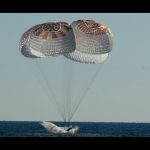
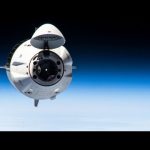
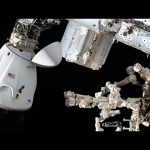
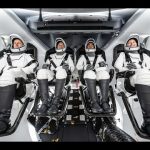
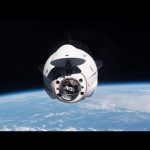
NASA astronauts Josh Cassada and Nicole Mann, JAXA astronaut Koichi Wakata, and Roscosmos cosmonaut Anna Kikina—the four members of NASA’s SpaceX Crew-5 mission—are scheduled to splash down off the coast of Florida at 9:02 p.m. EST on Saturday, March 11 (0202 UTC March 12), concluding their five-month stay in low-Earth orbit.
Join NASA and SpaceX for live coverage of Crew-5 and their Dragon Endurance spacecraft from reentry through recovery. Crew-5 spent five months aboard the International Space Station, conducting scientific research to help us learn how to live in space while making life better back on Earth: https://go.nasa.gov/3T2gbgw
From growing tomatoes to studying cosmic rays to observing quantum mechanics, the four crew members of NASA’s SpaceX Crew-5 mission contributed to more than 100 scientific investigations and technology demonstrations during their five months aboard the International Space Station. These experiments help prepare humans for future space exploration missions while bringing benefits for humanity back to Earth.
Learn more about the science of Crew-5 as our astronauts get ready to head home: https://go.nasa.gov/3T2gbgw
Our #Crew6 mission to the International Space Station is targeted for liftoff at 12:34 a.m. EST (0534 UTC) on Thursday, March 2, 2023, from Launch Complex 39A at NASA’s Kennedy Space Center in Florida. The Feb. 27 launch attempt was scrubbed so mission teams could investigate a ground systems issue. NASA astronauts Stephen Bowen and Warren “Woody” Hoburg, as well as UAE (United Arab Emirates) astronaut Sultan Alneyadi and Roscosmos cosmonaut Andrey Fedyaev, will launch aboard their Dragon Endeavour spacecraft atop a SpaceX Falcon 9 rocket.
This will be the fourth trip to space for Bowen, the Crew-6 mission commander, and the first space launch for the rest of the crew. They’ll spend approximately six months on the station, helping us learn how to live in space while conducting research to make life better back on Earth. Learn more about the mission, its crew, and some of the science they’ll be working on at https://go.nasa.gov/3jclMmJ.
Following launch and ascent, NASA coverage of agency’s Crew-6 flight to the space station will temporarily switch to a streaming, audio-only feed accessible via YouTube, between ascent and the beginning of rendezvous operations. Viewers can continue to listen to real-time audio between Crew-6 and flight controllers at NASA’s Mission Audio stream (https://www.youtube.com/live/3slokO2g1v0), which also includes conversations with astronauts aboard the space station and a live video feed from the orbiting laboratory.
Update: The Feb. 27 launch attempt was scrubbed so mission teams could investigate an issue preventing data from confirming a full load of the ignition source for the Falcon 9 rocket’s first stage Merlin engines. The next possible launch attempt is targeted for Thursday, March 2, at 12:34 a.m. EST (0534 UTC). More details: https://blogs.nasa.gov/crew-6/
Our #Crew6 mission to the International Space Station is targeted for liftoff at 1:45 a.m. EST (0645 UTC) on Monday, Feb. 27, 2023, from Launch Complex 39A at NASA’s Kennedy Space Center in Florida.
NASA astronauts Stephen Bowen and Warren “Woody” Hoburg, as well as UAE (United Arab Emirates) astronaut Sultan Alneyadi and Roscosmos cosmonaut Andrey Fedyaev, will launch aboard their Dragon Endeavour spacecraft atop a SpaceX Falcon 9 rocket. Visit our Crew-6 blog for the latest mission updates: https://blogs.nasa.gov/crew-6/
This will be the fourth trip to space for Bowen, the Crew-6 mission commander, and the first space launch for the rest of the crew. They’ll spend approximately six months on the station, helping us learn how to live in space while conducting research to make life better back on Earth. Learn more about the mission, its crew, and some of the science they’ll be working on at https://go.nasa.gov/3jclMmJ.
Following launch and ascent, NASA coverage of agency’s Crew-6 flight to the space station will temporarily switch to a streaming, audio-only feed accessible via YouTube, between ascent and the beginning of rendezvous operations. Viewers can continue to listen to real-time audio between Crew-6 and flight controllers at NASA’s Mission Audio stream (https://www.youtube.com/live/3slokO2g1v0), which also includes conversations with astronauts aboard the space station and a live video feed from the orbiting laboratory. Full coverage on NASA TV will resume at 12:45 p.m. EST (1745 UTC) on Feb. 27.
Credit: NASA Thumbnail credit: NASA/Aubrey Gemignani
NASA and SpaceX are targeting no earlier than 1:45 a.m. EST Monday, Feb. 27, 2023, for the launch of the agency’s Crew-5 mission to the International Space Station.
The four Crew-6 crewmates – Commander Stephen Bowen, Pilot Warren “Woody” Hoburg, Mission Specialist UAE (United Arab Emirates) astronaut Sultan Alneyadi, and Mission Specialist Roscosmos cosmonaut Andrey Fedyaev – will dock the Dragon spacecraft, named Endeavour, to the forward port on the space station’s Harmony module about 23 hours after liftoff.
Crew-6’s science mission includes cutting edge research aimed at keeping astronauts and spacecraft safe during deep space exploration, and studies that could lead to improved medical treatments for humans back on Earth. Experiments will include studies of how particular materials burn in microgravity, tissue chip research on heart, brain, and cartilage functions, and an investigation that will collect microbial samples from the outside of the space station. These are just some of the more than 200 science experiments and technology demonstrations that will take place during their mission.
You can watch the launch live on NASA TV, NASA.gov, the NASA app, and on social media (@NASA).
SpaceX’s CRS-26 cargo mission is now targeted to lift off at 2:20 p.m. EST (1920 UTC) Saturday, Nov. 26 from Launch Complex 39A at NASA’s Kennedy Space Center in Florida. A Nov. 22 launch attempt was scrubbed due to poor weather conditions along Florida’s Space Coast. The Dragon spacecraft will deliver a variety of NASA investigations, including the next pair of International Space Station Roll Out Solar Arrays (iROSAs), which will augment power to the orbiting laboratory.
The spacecraft also will carry a study to grow dwarf tomatoes to help create a continuous fresh-food production system in space, as well as an experiment that tests an on-demand method to create specific quantities of key nutrients.
SpaceX’s CRS-26 cargo mission is set to lift off at 3:54 p.m. EST (2054 UTC) Tuesday, Nov. 22 from Launch Complex 39A at NASA’s Kennedy Space Center in Florida. The Dragon spacecraft will deliver a variety of NASA investigations, including the next pair of International Space Station Roll Out Solar Arrays (iROSAs), which will augment power to the orbiting laboratory.
The spacecraft also will carry a study to grow dwarf tomatoes to help create a continuous fresh-food production system in space, as well as an experiment that tests an on-demand method to create specific quantities of key nutrients.
The astronauts of Crew-4 have undocked from the International Space Station and are on their way home to Earth. Watch live with NASA as the Dragon spacecraft Freedom reenters the atmosphere and splashes down off the coast of Florida. Splashdown is targeted for 4:55 p.m. EDT (2055 UTC), Friday, Oct. 14.
NASA astronauts Kjell Lindgren, Jessica Watkins, Bob Hines, and ESA (European Space Agency) astronaut Samantha Cristoforetti spent five and a half months living and working aboard the orbiting laboratory. During their stay, they contributed to a number of experiments to expand our understanding of space while benefitting life on Earth: https://go.nasa.gov/3yCDeW0
Watch live as the Dragon Freedom spacecraft undocks with the four crew members of NASA’s SpaceX Crew-4 mission aboard: NASA astronauts Kjell Lindgren, Bob Hines, and Jessica Watkins, as well as ESA (European Space Agency) astronaut Samantha Cristoforetti.
Undocking from the International Space Station (ISS) is targeted for Friday, Oct. 14. Splashdown is targeted several hours later at 4:55 p.m. EDT (2055 UTC) Friday off the coast of Florida.
During their stay of nearly six months on the ISS, Crew-4 members contributed to ongoing and new scientific investigations and technology demonstrations, work that is helping to prepare humans for future space exploration missions and generating innovations and benefits for humanity on Earth: https://youtu.be/J61Y5AJ-Kog
After months aboard the International Space Station, the astronauts of NASA’s SpaceX Crew-4 mission are returning home.
Traveling back to Earth inside a SpaceX Dragon capsule are NASA astronauts Kjell Lindgren, Robert Hines, and Jessica Watkins, along with ESA (European Space Agency) astronaut Samantha Cristoforetti. During their time aboard the orbiting laboratory, these crew members contributed to ongoing and new scientific investigations and technology demonstrations, work that is helping to prepare humans for future space exploration missions and generating innovations and benefits for humanity on Earth.
Our #Crew5 mission to the International Space Station is targeted for liftoff at noon EDT (1600 UTC) Wednesday, Oct. 5, 2022, from Launch Complex 39A at NASA’s Kennedy Space Center in Florida.
NASA astronauts Nicole Mann and Josh Cassada, as well as JAXA (Japan Aerospace Exploration Agency) astronaut Koichi Wakata and Roscosmos cosmonaut Anna Kikina, will launch aboard their Dragon Endurance spacecraft atop a SpaceX Falcon 9 rocket. For the latest updates: https://blogs.nasa.gov/commercialcrew/
ESA astronaut Matthias Maurer returned from his first mission to the International Space Station, known as ‘Cosmic Kiss’, on Friday 6 May 2022. Revisit some of the highlights of his first stay in orbit with us. During his mission, Matthias became the 600th person in space, conducted his first spacewalk, and supported over one hundred cutting-edge scientific experiments – the findings of which will improve life back here on Earth.
We are Europe’s gateway to space. Our mission is to shape the development of Europe’s space capability and ensure that investment in space continues to deliver benefits to the citizens of Europe and the world. Check out https://www.esa.int/ to get up to speed on everything space related.
SpaceX’s CRS-25 mission is set to lift off atop a Falcon 9 rocket from launchpad 39-A at the Kennedy Space Center in Cape Canaveral, Florida. Launch is targeted for 8:44 p.m. EDT (00:44 UTC), Friday, July 14. The Dragon spacecraft will deliver new science investigations, supplies, and equipment for the international crew, including an image spectrometer to be mounted on the exterior of the station to better understand how dust plumes affect our climate, and a study of immune aging and potential for reversing those effects. It also will carry an investigation from a team of students at Stanford University that will test the process of creating biopolymer soil composite, a concrete alternative, in microgravity. https://www.nasa.gov/mission_pages/station/research/news/spacex-25-research-highlights
The Crew Dragon capsule carrying ESA astronaut Matthias Maurer and @NASA astronauts Raja Chari, Thomas Marshburn and Kayla Barron home from the International Space Station splashed down off the coast of Florida, USA, on Friday 6 May 2022 at 05:43 BST/06:43 CEST.
Its return marks the end of Crew-3’s almost six-month stay in orbit and the end of Matthias’s first mission, known as Cosmic Kiss.
Crew-3 undocked from the International Space Station in Crew Dragon spacecraft Endurance at 06:20 BST/07:20 CEST Thursday 5 May.
When a Crew capsule splashes down, it is met by nearby ships with experts ready to bring it on board, open the hatch, and welcome the astronauts home. After initial medical checks, the crew is transported by helicopter to shore.
Now that his mission has come to an end, Matthias will return to ESA’s European Astronaut Centre in Cologne, Germany, where he will participate in post-flight debriefings, provide samples for scientific evaluation and readapt to Earth’s gravity with the support of ESA experts.
We are Europe’s gateway to space. Our mission is to shape the development of Europe’s space capability and ensure that investment in space continues to deliver benefits to the citizens of Europe and the world. Check out https://www.esa.int/ to get up to speed on everything space related.
The four astronauts of Crew-3 are on the way home to Earth. Watch live as they reenter the atmosphere and splash down off the coast of Florida. Splashdown is targeted for 12:37 a.m. EDT (4:37 UTC), Friday, May 6.
NASA astronauts Raja Chari, Tom Marshburn, and Kayla Barron, and ESA (European Space Agency) astronaut Matthias Maurer spent six months living and working on the International Space Station. During their stay, they contributed to experiments to benefit life on Earth: https://go.nasa.gov/3vQmSXL
This live broadcast has now completed. Watch continuous coverage of #Crew3’s return to Earth on https://nasa.gov/live. Don’t miss splashdown, targeted for 12:43am ET (4:43 UTC).
—————————————————
Join us to watch the Crew Dragon Endurance undock live from space with the four crew members of NASA’s SpaceX Crew-3 aboard: NASA astronauts Raja Chari, Tom Marshburn, and Kayla Barron, as well as ESA (European Space Agency) astronaut Matthias Maurer.
Undocking from the International Space Station (ISS) is targeted to begin at 1:05 a.m. EDT (5:00 UTC), on Thursday, May 5.
For the first time since mid 2011, ESA has two astronauts living and working together aboard the International Space Station. Watch a conversation between Samantha Cristoforetti and Matthias Maurer in this rare moment for Europe in space.
The astronauts’ meeting marks a brief crossover between the start of Samantha’s second space mission, Minerva, and Matthias’s final days in orbit for his first mission, Cosmic Kiss.
Samantha arrived with Crew-4 on 28 April in @SpaceX Crew Dragon Freedom, while Matthias will depart with Crew-3 in SpaceX Crew Dragon Endurance in May after almost six months on the Station.
In this video Matthias is impressed by Samantha’s floating ability and says it’s like she never left. Samantha confirms weightless was the thing she missed the most on Earth and talks about the differences on Station since her Italian Space Agency ASI-sponsored Futura mission in 2014-15.
Matthias is pleased with what he’s achieved in his time on Station, including the science he’s supported and the spacewalk he performed. He wishes Samantha all the best for her mission as she wishes him a safe return to Earth.
We are Europe’s gateway to space. Our mission is to shape the development of Europe’s space capability and ensure that investment in space continues to deliver benefits to the citizens of Europe and the world. Check out https://www.esa.int/ to get up to speed on everything space related.
After more than six months aboard the International Space Station, the astronauts of NASA’s SpaceX Crew-3 mission are returning home. The four crew members — NASA astronauts Kayla Barron, Raja Chari, and Tom Marshburn, and ESA (European Space Agency) astronaut Matthias Maurer — will travel back to Earth inside a SpaceX Crew Dragon capsule. These crew members contributed to hundreds of scientific investigations and technology demonstrations while aboard the orbiting laboratory. This valuable research helps to prepare humans for future space exploration missions while generating numerous innovations and benefits for humanity on Earth.
ESA astronaut Samantha Cristoforetti and @NASA astronauts Kjell Lindgren, Robert “Bob” Hines and Jessica Watkins arrive to the International Space Station after docking at 01:37 CEST on Thursday 28 April 2022.
Collectively known as Crew-4, the four astronauts were launched from @NASA’s Kennedy Space Center in Florida, USA, at 09:52 CEST on 27 April 2022.
Samantha is the third ESA astronaut to travel to the orbital outpost in a Crew Dragon. During the journey she and Jessica served as Mission Specialists. Kjell is Crew-4 Commander and Bob is Crew-4 Pilot.
Crew-4 was welcomed aboard by the Station’s current inhabitants, including ESA astronaut Matthias Maurer who was launched to the Station as part of Crew-3 and is expected to return shortly to Earth.
Samantha first flew to space in 2014 for her @AsiTV-sponsored mission Futura. Her ESA space mission, known as Minerva, will officially begin once she reaches the Station.
Throughout her mission, Samantha will hold the role of US Orbital Segment (USOS) lead, taking responsibility for all operations within the US, European, Japanese and Canadian modules and components of the Space Station. She will support around 35 European and many more international experiments in orbit.
We are Europe’s gateway to space. Our mission is to shape the development of Europe’s space capability and ensure that investment in space continues to deliver benefits to the citizens of Europe and the world. Check out https://www.esa.int/ to get up to speed on everything space related.
Watch NASA’s SpaceX Crew-4 astronauts arrive at the International Space Station aboard their Dragon spacecraft Freedom. Docking is scheduled for approximately 7:40 p.m. EDT (23:40 UTC).
Once aboard the orbiting laboratory, astronauts Bob Hines, Jessica Watkins, and Kjell Lindgren of NASA, alongside Samantha Cristoforetti of ESA (European Space Agency), will spend nearly six months conducting new scientific research in areas such as materials science, health technologies, and plant science to prepare for human exploration beyond low-Earth orbit and to benefit life on Earth.
Crew-4 lifted off on April 27 at 3:52 a.m. ET (7:52 UTC) from NASA’s Kennedy Space Center aboard a SpaceX Falcon 9 rocket.
Crew Dragon Freedom is launched to the International Space Station, carrying ESA astronaut Samantha Cristoforetti and @NASA astronauts Kjell Lindgren, Robert “Bob” Hines and Jessica Watkins.
Collectively known as Crew-4, the four astronauts were launched from @NASA’s Kennedy Space Center in Florida, USA.
Samantha is the third ESA astronaut to travel to the orbital outpost in a @SpaceX Crew Dragon. During the journey she and Jessica will serve as Mission Specialists. Kjell is Crew-4 Commander and Bob is Crew-4 Pilot.
Upon arrival, Crew-4 will be greeted by the Space Station’s current crew – including ESA astronaut Matthias Maurer. Samantha and Matthias will enjoy a brief handover in orbit before he returns to Earth with Crew-3.
Samantha first flew to space in 2014 for her @AsiTV-sponsored mission Futura. Her ESA space mission, known as Minerva, will officially begin once she reaches the Station.
Throughout her mission, Samantha will hold the role of US Orbital Segment (USOS) lead, taking responsibility for all operations within the US, European, Japanese and Canadian modules and components of the Space Station. She will support around 35 European and many more international experiments in orbit.
We are Europe’s gateway to space. Our mission is to shape the development of Europe’s space capability and ensure that investment in space continues to deliver benefits to the citizens of Europe and the world. Check out https://www.esa.int/ to get up to speed on everything space related.
ESA astronaut Samantha Cristoforetti arrives at @NASA’s Kennedy Space Center in Florida, USA, with @NASA astronauts Kjell Lindgren, Bob Hines and Jessica Watkins on 18 April 2022.
Collectively known as Crew-4, the astronauts flew in from Houston, Texas, and will spend the next week in quarantine before being launched to the International Space Station on a @SpaceX Crew Dragon spacecraft.
When they arrive at the Station, Samantha’s Minerva mission will officially begin. This is the second long-duration space mission for Samantha who first flew to the orbital outpost in 2014 for her @AsiTV-sponsored mission Futura.
Samantha will be welcomed on board by fellow ESA astronaut Matthias Maurer and enjoy a short handover in orbit before Matthias returns to Earth in April as part of Crew-3.
Throughout her mission, Samantha will hold the role of US Orbital Segment (USOS) lead, taking responsibility for all operations within the US, European, Japanese and Canadian modules and components of the Space Station. She will support around 35 European and many more international experiments in orbit.
We are Europe’s gateway to space. Our mission is to shape the development of Europe’s space capability and ensure that investment in space continues to deliver benefits to the citizens of Europe and the world. Check out https://www.esa.int/ to get up to speed on everything space related.
Watch the replay of our live Q&A media session (In English and Italian) with ESA astronaut Samantha Cristoforetti.
Samantha is scheduled to be launched to the International Space Station from NASA’s Kennedy Space Centre in Florida, USA, no earlier than 21 April 2022. She will fly to the Station as a Mission Specialist aboard a SpaceX Crew Dragon spacecraft alongside NASA astronauts Kjell Lindgren, Bob Hines and Jessica Watkins.
Upon arrival at the orbital outpost her ESA mission ‘Minerva’ will officially begin. This is the second space mission for Samantha and will see her support over 35 European and many more international experiments in microgravity.
We are Europe’s gateway to space. Our mission is to shape the development of Europe’s space capability and ensure that investment in space continues to deliver benefits to the citizens of Europe and the world. Check out https://www.esa.int/ to get up to speed on everything space related.
NASA and SpaceX are targeting 3:52 a.m. EDT Wednesday, April 27, for launch of the agency’s SpaceX Crew-4 mission to the International Space Station from Launch Complex 39A at NASA’s Kennedy Space Center in Florida.
NASA astronauts Kjell Lindgren, Bob Hines, and Jessica Watkins, as well as ESA (European Space Agency) astronaut Samantha Cristoforetti, will launch aboard a Crew Dragon spacecraft atop a SpaceX Falcon 9 rocket. For the latest updates: https://blogs.nasa.gov/commercialcrew/
Feel like a guest and join ESA astronaut Matthias Maurer and his Expedition 66 crew mates enjoying a festive Thanksgiving meal on board the International Space Station in 360°. Explore the space station’s dining area and see what’s on the menu for this year’s orbital Thanksgiving.
Matthias says: “One of the best things about international collaboration, beyond our daily work on science and operations, is sharing international celebrations and culture. I’m thankful for all my crew mates up here on the International Space Station and everyone supporting our mission from Earth”.
Matthias was launched to the International Space Station on Crew Dragon Endurance as part of Crew-3 at 02:03 GMT/03:03 CET Thursday 11 November 2021. His ESA mission is known as Cosmic Kiss and will see him live and work in orbit for approximately six months.
We are Europe’s gateway to space. Our mission is to shape the development of Europe’s space capability and ensure that investment in space continues to deliver benefits to the citizens of Europe and the world. Check out https://www.esa.int/ to get up to speed on everything space related.
Watch the 24th SpaceX cargo resupply mission to the International Space Station lift off from NASA’s Kennedy Space Center.
Launch is targeted for 5:07 a.m. (10:07 UTC). On board are a variety of scientific investigations, including a protein crystal growth study that could improve how cancer treatment drugs are delivered to patients and a handheld bioprinter that could one day be used to print tissue directly onto wounds for faster healing.
There are also experiments from students at several universities as part of the Student Payload Opportunity with Citizen Science (SPOCS) program and an investigation that examines using clothes detergent in microgravity. Dragon will arrive to the space station the following day at about 4:30 a.m. (09:30 EST).
Join ESA astronaut Matthias Maurer inside the seven-windowed cupola, the International Space Station’s “window to the world” and pan around to enjoy the view.
The ESA – European Space Agency-built Cupola is the favourite place of many astronauts on the International Space Station.
It serves not only as a unique photo spot, but also for observing robotic activities of the Canadian Space Agency’s robotic arm Canadarm2, arriving spacecraft and spacewalks.
Just outside the cupola and behind Matthias is a portion of the Soyuz MS-19 crew ship docked to the Rassvet module and the Prichal docking module attached to the Nauka multipurpose laboratory service module.
Matthias was launched to the International Space Station on Crew Dragon Endurance as part of Crew-3 at 02:03 GMT/03:03 CET Thursday 11 November. His ESA mission on board is known as Cosmic Kiss and will see him live and work for approximately six months in orbit.
We are Europe’s gateway to space. Our mission is to shape the development of Europe’s space capability and ensure that investment in space continues to deliver benefits to the citizens of Europe and the world. Check out https://www.esa.int/ to get up to speed on everything space related.
Even astronauts in orbit cannot escape housework. Join ESA astronaut Matthias Maurer as he vacuums the European Columbus and Japanese Kibo modules of the International Space Station in this 360° video.
Unlike on Earth, dust on the Space Station does not settle. Astronauts vacuum regularly to prevent floating dust from getting in their eyes and noses, causing irritation and allergic reactions. Pan to explore the different modules and follow Matthias’s work.
Matthias was launched to the International Space Station on Crew Dragon Endurance as part of Crew-3 at 02:03 GMT/03:03 CET Thursday 11 November. His ESA mission on board is known as Cosmic Kiss and will see him live and work for approximately six months in orbit.
We are Europe’s gateway to space. Our mission is to shape the development of Europe’s space capability and ensure that investment in space continues to deliver benefits to the citizens of Europe and the world. Check out https://www.esa.int/ to get up to speed on everything space related.
Explore the International Space Station’s Cupola module in 360 degrees while ESA astronaut Matthias Maurer lifts weights in weightlessness. This 360 timelapse video was shot over 53 minutes, at a rate one frame every two seconds, as Matthias completed a workout on the Advanced Resistive Exercise Device (ARED).
Pan to watch the world go by as the Station orbits Earth at around 28 000 km/h, then see how Matthias keeps his muscles and bones healthy for a safe return to Earth.
Exercise is an important part of an astronaut’s daily routine. It not only keeps them fit and ready for demanding tasks like a spacewalk, but it also helps to combat bone and muscle loss caused by a prolonged stay in orbit. ARED is one of several exercise devices astronauts use on Station. They also have a treadmill called T2 and an exercycle known as CEVIS.
Matthias was launched to the International Space Station on Crew Dragon Endurance as part of Crew-3 at 02:03 GMT/03:03 CET Thursday 11 November. His ESA mission on board is known as Cosmic Kiss and will see him live and work for approximately six months in orbit.
We are Europe’s gateway to space. Our mission is to shape the development of Europe’s space capability and ensure that investment in space continues to deliver benefits to the citizens of Europe and the world. Check out https://www.esa.int/ to get up to speed on everything space related.
Watch the SpaceX Crew-3 astronauts arrive at the International Space Station aboard the Crew Dragon Endurance spacecraft. Kayla Barron, Raja Chari, and Thomas Marshburn of NASA, and Matthias Maurer of the European Space Agency will begin a six-month mission aboard the orbiting laboratory. Once aboard, they will join their station crewmates to conduct hundreds of scientific experiments and perform space station maintenance and upgrades. Endurance is scheduled to automatically dock to the space station at 6:32 p.m. EST (23:32 UTC).
Crew-3 lifted off from NASA’s Kennedy Space Center in Florida at 9:03 p.m. EST on Nov. 10 (02:03 UTC Nov. 11).
On Nov. 10 at 9:03 p.m. EST (02:03 UTC Nov. 11), the Crew-3 flight will carry NASA astronauts Raja Chari, mission commander; Tom Marshburn, pilot; and Kayla Barron, mission specialist; as well as ESA (European Space Agency) astronaut Matthias Maurer, who will serve as a mission specialist, to the International Space Station for a six-month science mission. Once there, they will perform space station upgrades, conduct science experiments to benefit life on Earth, and continue preparing humanity for future missions to the Moon – and eventually Mars. This is the third crew rotation mission with four astronauts flying on a commercial spacecraft.
Their spacecraft has undocked from the International Space Station, and four astronauts are on the journey home to Earth. Watch live as the SpaceX Crew Dragon Endeavour re-enters the atmosphere, and parachutes to splashdown in a landing zone off the coast of Pensacola, Florida. Splashdown is targeted for 10:33 p.m. EST Nov. 8 (03:33 UTC Nov. 9).
Shane Kimbrough and Megan McArthur of NASA, Thomas Pesquet of the European Space Agency, and Akihiko Hoshide of the Japan Aerospace Exploration Agency spent over six months living and working on the space station. They contributed to hundreds of scientific investigations and technology demonstrations to help prepare for future exploration missions and generate innovations to benefit life on Earth: https://youtu.be/AtjR-gHufxg
Watch the Crew Dragon Endeavour spacecraft undock from the International Space Station, with four astronauts aboard: Shane Kimbrough and Megan McArthur of NASA, Thomas Pesquet of the European Space Agency, and Akihiko Hoshide of the Japan Aerospace Exploration Agency. The Crew Dragon fired its thrusters for a 360-degree flyaround of the space station, making it the first spacecraft to do so since the space shuttle.
The Crew Dragon safely splashed down off the coast of Pensacola, Florida at 10:33 p.m. EST Mon., Nov. 8 (03:33 UTC Nov. 9).
After more than six months aboard the International Space Station, the astronauts of NASA’s SpaceX Crew-2 mission are returning home. The four crew members — NASA astronauts Shane Kimbrough and Megan McArthur, JAXA (Japan Aerospace Exploration Agency) astronaut Akihiko Hoshide, and ESA (European Space Agency) astronaut Thomas Pesquet — will travel back to Earth inside a SpaceX Crew Dragon capsule.
These crew members contributed to hundreds of scientific investigations and technology demonstrations while aboard the orbiting laboratory. This valuable scientific research helps to prepare humans for future space exploration missions while generating numerous innovations and benefits for humanity on Earth. Here is a look at some of the scientific milestones accomplished during the Crew-2 mission.
NASA’s SpaceX Crew-3 mission is set to lift off on Wednesday, Nov. 3 at 1:10 a.m. EDT (0510 UTC) from Kennedy Space Center in Florida. Astronauts Kayla Barron, Raja Chari, and Thomas Marshburn of NASA will fly to the International Space Station alongside astronaut Matthias Maurer of the European Space Agency. Once there, the crew of four will spend about six months conducting science experiments and performing maintenance upgrades aboard the orbiting laboratory. For Barron, Chari, and Maurer, this will be their first spaceflight, and the third for Marshburn.
The Crew Dragon ‘Endurance’ spacecraft will dock to the space station on Wednesday, Nov. 3 at 11:00 p.m. EDT (0300 UTC Thursday). Watch continuous coverage of their entire ride, on NASA TV: https://youtu.be/21X5lGlDOfg
Watch the full replay of ESA astronaut Matthias Maurer’s pre-launch news conference at ESA’s European Astronaut Centre (EAC) in Cologne, Germany.
Held in both English and German on 9 September 2021, the conference covers ESA’s vision for human and robotic exploration as well as the science and operations Matthias will support on the International Space Station during his six-month Cosmic Kiss mission.
Cosmic Kiss is Matthias’s first space mission. He will be launched from the Kennedy Space Center in Florida, USA as a member of US Commercial Crew-3 alongside @NASA astronauts Thomas Marshburn, Raja Chari and Kayla Barron.
While in orbit, Matthias will support over 35 European experiments and many more international experiments. He will also be the first European to perform a Russian spacewalk since Thomas Reiter in the 1990s. Knowledge gained through the Cosmic Kiss mission will shape the future of space exploration and help enhance life on Earth.
Conference panellists are: ESA Director General Josef Aschbacher, ESA Director of Human and Robotic Exploration David Parker, ESA International Space Station Programme Manager and Head of EAC Frank De Winne, Director General of @DLR and Member of the DLR Executive Board Walther Pelzer, and ESA Astronaut Matthias Maurer. This conference was moderated by ESA Communication Programme Officer for Human and Robotic Exploration Marco Trovatello.
We are Europe’s gateway to space. Our mission is to shape the development of Europe’s space capability and ensure that investment in space continues to deliver benefits to the citizens of Europe and the world. Check out https://www.esa.int/ to get up to speed on everything space related.
LAUNCH UPDATE: Due to weather, today’s SpaceX cargo mission is postponed. The next attempt is Sun. Aug. 29 with our live coverage beginning at 2:45 a.m. EDT (06:45 UTC). Liftoff is targeted for 3:14 a.m. EDT (07:14 UTC).
Join us Sat. Aug. 28 at 3:15 a.m. EDT (07:15 UTC) for live coverage of the next SpaceX mission to the International Space Station! Liftoff of the Falcon 9 rocket and Dragon cargo spacecraft is targeted for 3:37 a.m. EDT (07:37 UTC) from Launch Complex 39A at Kennedy Space Center in Florida.
Riding aboard the spacecraft are approximately 2,300 pounds (1,000 kilograms) of science experiments, including research on osteoporosis, a remote-controlled drug delivery system, and more! Docking to the orbiting lab is targeted for Sun., Aug. 29, at 11 a.m. EDT (15:00 UTC).
Capturing a spacecraft requires a complex choreography between human and machine, but these two make it look easy. In this video ESA astronaut Thomas Pesquet and @NASA astronaut Megan McArthur work together to grapple and berth the @Northrop Grumman Cygnus 16 spacecraft on the Earth-facing port of the Unity module on the International Space Station.
At 12:07 CEST (11:07 BST) Thursday 12 August, Megan used the International Space Station’s robotic Canadarm2 to grapple the spacecraft packed with over 3700 kg of science and supplies as Thomas monitored Cygnus systems during its approach.
The Cygnus will remain docked to the Station for about three months before it departs in November 2021.
We are Europe’s gateway to space. Our mission is to shape the development of Europe’s space capability and ensure that investment in space continues to deliver benefits to the citizens of Europe and the world. Check out https://www.esa.int/ to get up to speed on everything space related.
NASA’s SpaceX Crew-2 astronauts on the International Space Station will board Crew Dragon Endeavour on Wednesday, July 21, to relocate the spacecraft to another docking port. The maneuver will free up up a “parking space” for the uncrewed Boeing Starliner spacecraft, currently targeted to launch on its second Orbital Flight Test on July 30.
Starliner’s arrival on July 31 will mark the first time two different U.S. commercial spacecraft built for crew will be docked to our orbiting laboratory at the same time.
Live NASA TV coverage of Crew Dragon relocation begins at 6:30 a.m. EDT (10:30 UTC), with undocking at 6:45 a.m. (10:45 UTC) and redocking at 7:32 a.m. (11:32 UTC).