On the last day of his Huginn mission, ESA astronaut Andreas Mogensen takes us on a tour of the place he called home for 6 months: the International Space Station. From the beautiful views of Cupola to the kitchen in Node 1 filled with food and friends and all the way to the science of Columbus, the Space Station is the work and living place for astronauts as they help push science forward.
Credits: ESA – European Space Agency
★ Subscribe: http://bit.ly/ESAsubscribe and click twice on the bell button to receive our notifications.
We are Europe’s gateway to space. Our mission is to shape the development of Europe’s space capability and ensure that investment in space continues to deliver benefits to the citizens of Europe and the world. Check out https://www.esa.int/ to get up to speed on everything space related.
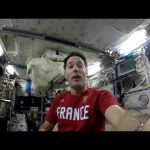
ESA astronaut Thomas Pesquet is sharing scenes from life on board the International Space Station during his second mission “Alpha”. Here he gives a quick tour of the @SpaceX Cargo Dragon Endeavour that brought him to the Space Station together with @JAXA | 宇宙航空研究開発機構 astronaut Aki Hoshide and @NASA astronauts Shane Kimbrough and Megan McArthur. The same astronauts, Crew-2, will use the spacecraft to return home after undocking with the Station and fly to Earth for a splashdown off the coast of Florida, USA.
Over 200 experiments are planned during Thomas’ time in space, with 40 European ones and 12 new experiments led by the French space agency @CNES.
We are Europe’s gateway to space. Our mission is to shape the development of Europe’s space capability and ensure that investment in space continues to deliver benefits to the citizens of Europe and the world. Check out https://www.esa.int/ to get up to speed on everything space related.
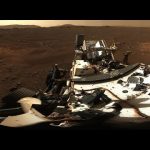
Take a guided tour around the first high-definition 360-degree view of Jezero Crater provided by NASA’s Perseverance Mars Rover. Mission experts will walk us through the new Martian terrain, explain why it’s got scientists excited, and answer your questions. The image shows the crater rim and cliff face of the ancient river delta in the distance. The camera system can reveal details as small as 3 to 5 millimeters across near the rover and 2 to 3 meters across in the distant slopes along the horizon.
Speakers: • Jim Bell — Mastcam-Z principal investigator, Arizona State University • Elsa Jensen — Mastcam-Z uplink lead, Malin Space Science Systems • Kjartan Kinch — Mastcam-Z calibration target lead, Niels Bohr Institute of The University Of Copenhagen #CountdownToMars
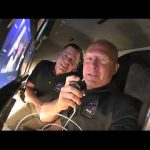
In this video, NASA astronauts Robert Behnken and Douglas Hurley take viewers on a tour of the SpaceX Crew Dragon spacecraft that will take them on a 19-hour-journey to their new home in orbit.
The SpaceX Falcon 9 rocket and Crew Dragon spacecraft successfully launched from Kennedy Space Center’s historic Launch Pad 39A at 3:22 p.m. EDT on May 30 with the astronauts aboard for a mission to the orbiting laboratory. Crew Dragon will perform a series of phasing maneuvers to gradually approach and autonomously dock with the International Space Station on Sunday, May 31, at approximately 10:29 a.m. EDT.
ESA astronaut Luca Parmitano and NASA astronaut Drew Morgan take you on a unique tour of the International Space Station shot in one take with two cameras strapped together. Luca and Drew take it in turns to guide you through the modules and spacecraft docked to the orbital outpost.
Starting from the Soyuz MS-15 spacecraft that bought Drew to the Space Station, the duo show each module and spacecraft docked with the International Space Station at the time it was recorded around the New Year 2020. Passing colleagues include NASA astronaut Jessica Meir and Christina Koch exercising and Russian cosmonauts Alexander Skvortsov and Oleg Skripochka.
This is the first tour of the International Space Station with two astronauts presenting and the first done in a single take.
At the time of recording three supply vehicles were docked, the Russian Progress MS-13, Space-X’s Dragon-19 and Northrup Grumman’s Cygnus-12, as well as two astronaut vehicles the Soyuz MS-15 and Soyuz MS-13.
The map overlay graphic erroneously shows the future Nauka module instead of Pirs. The Russian Multipurpose Laboratory Module Nauka is planned for launch in the future and will replace Pirs, but we put it on the map already.
Skip to specific modules or features such as the toilets using the timestamps below:
00:00:06 Soyuz MS-15
00:04:53 Zvezda service module
00:08:01 Pirs
00:09:27 Mini Research Module-2 (MRM-2)
00:10:30 Soyuz MS-13
00:11:44 MRM-2
00:12:27 Progress
00:13:19 Functional Cargo Block (FGB)
00:07:12 Mini Research Module-1 (MRM-1)
00:19:36 Pressurised Mating Adapter
00:20:42 Node-1 Unity
00:22:46 Northrup Grumman Cygnus-12
00:27:32 Quest Airlock
00:29:27 Node-3 Tranquility
00:30:58 T2 Treadmill
00:31:17 Toilet
00:33:38 Cupola at night
00:34:11 Permanent Multipurpose Module Leonardo (PMM)
00:36:42 US laboratory Destiny
00:37:45 Robotics station for Canadarm2
00:38:40 Exercise bike
00:42:21 Node-2 Harmony
00:44:40 Space X Dragon
00:46:35 European laboratory Columbus
00:49:53 Japanese laboratory Kibo
00:56:17 Space Station fly through
01:00:43 Cupola daytime
01:04:27 Goodbye from Cupola
★ Subscribe: http://bit.ly/ESAsubscribe and click twice on the bell button to receive our notifications.
We are Europe’s gateway to space. Our mission is to shape the development of Europe’s space capability and ensure that investment in space continues to deliver benefits to the citizens of Europe and the world. Check out http://www.esa.int/ESA to get up to speed on everything space related.
ESA astronaut Thomas Pesquet takes us on a six-minute tour of the International Space Station, recorded 23 March 2017 during his Proxima mission.
During his Proxima mission, Thomas will perform around 50 scientific experiments for ESA and France’s space agency CNES as well as take part in many research activities for the other Station partners.
The mission is part of ESA’s vision to use Earth-orbiting spacecraft as a place to live and work for the benefit of European society while using the experience to prepare for future voyages of exploration further into the Solar System.
Put your 3D glasses on and take this narrated tour of the International Space Station. Visit all the modules of humankind’s weightless laboratory orbiting Earth 400 km above.
Ponte las gafas 3D y siguenos en este tour por la Estación Espacial Internacional. Puedes visitar todos los módulos de este gran laboratorio en micro gravedad que se encuentra orbitando a 400km de la Tierra.
Mettete i vostri occhiali 3D e fate un giro della Stazione Spaziale Internazionale, guidati dalla voce narrante. Visitate tutti i moduli del laboratorio dell’umanità situato in assenza di gravità, che orbita a circa 400 km sopra alla Terra.
ESA astronaut Samantha Cristoforetti shows how to use the most unglamorous but often asked-about part of living on the International Space Station: the toilet.
A fan creates suction to avoid smells and floating waste. Solid waste is stored and put in cargo ferries to burn up when the spacecraft leaves the Space Station. The astronaut urine is recycled – into drinking water.
Put your 3D glasses on for this virtual visit of the International Space Station’s modules. Float through the space laboratories and connecting modules from the perspective of an astronaut.
ESA astronaut Andre Kuipers invites you to follow a guided tour of the complete International Space Station. Andre himself is the tour guide during this unique visit to the Station.
In the space of one hour Andre shows every module of the International Space Station and explains the ins and outs of living in the largest laboratory in space. This video gives a wonderful glimpse of how life is for an astronaut living in the Station. From science and maintenance to operating robotic arms and finding lost equipment, Andre takes you from the Japanese research module via the Station’s cellar and ‘garden’ to the Russian segment, ending his tour with breath-taking views of Earth from the European-built Cupola observation module.
This video was recorded during the end of ESA’s PromISSe mission. Andre spent a total of 193 days in space before returning to Earth on 1 July 2012.
Tour of the Space Zone at Farnborough International Air show 2012 in the UK. ESA’s exhibition, alongside other space agencies and industries, is in the Space Zone between 9 — 15 July.
A personal guided tour and explanation of the layout and functioning of the various control rooms at ESA’s ATV Control Centre, located at the CNES establishment at Toulouse, France. ESA’s Kris Capelle is the lead Mission Director overseeing all ATV flight operations.
A year’s worth of collaboration between NASA and U2 both in space and on the Irish rock band’s “360” world tour is highlighted in a new video produced by the group. In 2009, U2 approached NASA with the idea to include the crew of the International Space Station in its shows, and the astronauts agreed to participate in this unique experience. Bono, The Edge, Adam Clayton and Larry Mullen, Jr. spoke with the Expedition 20 crew on the space station several times before the astronauts recorded a video segment that U2 incorporated into its concerts. The crew members include Michael Barratt of NASA, Frank De Winne of the European Space Agency, Bob Thirsk of the Canadian Space Agency, Koichi Wakata of the Japan Aerospace Exploration Agency, and Gennady Padalka and Roman Romanenko of the Russian Federal Space Agency.
Expedition 20 Flight Engineer Michael Barratt provides a 20-minute tour of the International Space Station, documenting the full 167 feet of the space station’s pressurized modules. Barratts commentary describes to Mission Control in Houston how equipment and supplies are arranged and stored, and provides engineers with a detailed assessment of each module-to-module hatchway.
![Dragon Endeavour tour [in French with English subtitles]](https://video.kidibot.ro/wp-content/uploads/2021/11/11313-dragon-endeavour-tour-in-french-with-english-subtitles-150x150.jpg)