These spectacular images feature the spiral galaxy IC 5332, taken by the @NASA/ESA Hubble Space Telescope and the NASA/ESA/ @Canadian Space Agency James Webb Space Telescope. The images display the powerful capabilities that both world-leading space telescopes provide, especially when combining their data.
We are Europe’s gateway to space. Our mission is to shape the development of Europe’s space capability and ensure that investment in space continues to deliver benefits to the citizens of Europe and the world. Check out https://www.esa.int/ to get up to speed on everything space related.
Most striking about Webb’s new image is the crisp view of the planet’s dynamic rings — some of which haven’t been seen at all, let alone with this clarity, since the Voyager 2 flyby in 1989. In addition to several bright narrow rings, the Webb images clearly show Neptune’s fainter dust bands. Webb’s extremely stable and precise image quality also permits these very faint rings to be detected so close to Neptune.
We are Europe’s gateway to space. Our mission is to shape the development of Europe’s space capability and ensure that investment in space continues to deliver benefits to the citizens of Europe and the world. Check out https://www.esa.int/ to get up to speed on everything space related.
Thousands of never-before-seen young stars are spotted in a stellar nursery called 30 Doradus, captured by the @NASA/ESA/@Canadian Space Agency James Webb Space Telescope. Nicknamed the Tarantula Nebula for the appearance of its dusty filaments in previous telescope images, the nebula has long been a favourite for astronomers studying star formation. In addition to young stars, Webb reveals distant background galaxies, as well as the detailed structure and composition of the nebula’s gas and dust.
We are Europe’s gateway to space. Our mission is to shape the development of Europe’s space capability and ensure that investment in space continues to deliver benefits to the citizens of Europe and the world. Check out https://www.esa.int/ to get up to speed on everything space related.
New images of the spectacular Phantom Galaxy, M74, showcase the power of space observatories working together in multiple wavelengths. In this case, data from the @NASA / ESA / @canadianspaceagency James Webb Space Telescope and the NASA/ESA Hubble Space Telescope compliment each other to provide a comprehensive view of the galaxy.
We are Europe’s gateway to space. Our mission is to shape the development of Europe’s space capability and ensure that investment in space continues to deliver benefits to the citizens of Europe and the world. Check out https://www.esa.int/ to get up to speed on everything space related.
A transmission spectrum of the hot gas giant exoplanet WASP-39 b, captured by Webb’s Near-Infrared Spectrograph on 10 July 2022, reveals the first definitive evidence for carbon dioxide in the atmosphere of a planet outside the Solar System. This is the first detailed transmission spectrum ever captured that covers wavelengths between 3 and 5.5 microns.
We are Europe’s gateway to space. Our mission is to shape the development of Europe’s space capability and ensure that investment in space continues to deliver benefits to the citizens of Europe and the world. Check out https://www.esa.int/ to get up to speed on everything space related.
Webb’s Jupiter observations will give scientists even more clues to Jupiter’s inner life since with giant storms, powerful winds, aurorae, and extreme temperature and pressure conditions, the planet has a lot going on.
We are Europe’s gateway to space. Our mission is to shape the development of Europe’s space capability and ensure that investment in space continues to deliver benefits to the citizens of Europe and the world. Check out https://www.esa.int/ to get up to speed on everything space related.
The Webb Space Telescope’s new look at the cosmos, technology used to fine tune Webb improves the vision of millions on Earth, and a new climate study heads to the space station … a few of the stories to tell you about – This Week at NASA!
Producer: Andre Valentine Editor: Shane Apple Music: Universal Production Music Credit: NASA
NASA revealed the first five full-color images and spectrographic data from the world’s most powerful space telescope, the James Webb Space Telescope, a partnership with ESA (European Space Agency), and CSA (Canadian Space Agency). The world got its first look at the full capabilities of the mission at a live event streamed from the agency’s Goddard Space Flight Center in Greenbelt, Maryland, on July 12, 2022.
The event showcased these targets: – Carina Nebula: A landscape speckled with glittering stars and cosmic cliffs – Stephan’s Quintet: An enormous mosaic with a visual grouping of five galaxies – Southern Ring Nebula: A nebula with rings of gas and dust for thousands of years in all directions – WASP 96-b: A distinct signature of water in the atmosphere of an exoplanet orbiting a distant Sun-like star – SMACS 0723: The deepest and sharpest infrared image of the distant universe to date
The full set of the telescope’s first full-color images and spectroscopic data are available at: https://nasa.gov/webbfirstimages
Webb’s first observations were selected by a group of representatives from NASA, ESA, CSA, and the Space Telescope Science Institute:
– WASP-96b: Webb’s detailed observation of this hot, puffy planet outside our solar system reveals the clear signature of water, along with evidence of haze and clouds that previous studies of this planet did not detect. With Webb’s first detection of water in the atmosphere of an exoplanet, it will now set out to study hundreds of other systems to understand what other planetary atmospheres are made of.
– Carina Nebula: Webb’s look at the ‘Cosmic Cliffs’ in the Carina Nebula unveils the earliest, rapid phases of star formation that were previously hidden. Looking at this star-forming region in the southern constellation Carina, as well as others like it, Webb can see newly forming stars and study the gas and dust that made them.
– Southern Ring: This planetary nebula, an expanding cloud of gas that surrounds a dying star, is approximately 2,000 light years away. Here, Webb’s powerful infrared eyes bring a second dying star into full view for the first time. From birth to death as a planetary nebula, Webb can explore the expelling shells of dust and gas of aging stars that may one day become a new star or planet.
– Stephan’s Quintet: Webb’s view of this compact group of galaxies, located in the constellation Pegasus, pierced through the shroud of dust surrounding the center of one galaxy, to reveal the velocity and composition of the gas near its supermassive black hole. Now, scientists can get a rare look, in unprecedented detail, at how interacting galaxies are triggering star formation in each other and how the gas in these galaxies is being disturbed.
– SMACS 0723: Webb has delivered the deepest and sharpest infrared image of the distant Universe so far – and in only 12.5 hours. This new image, a color composite of multiple exposures each about two hours long, is approximately the size of a grain of sand held at arm’s length. This deep field uses a lensing galaxy cluster to find some of the most distant galaxies ever detected. This image only scratches the surface of Webb’s capabilities in studying deep fields and tracing galaxies back to the beginning of cosmic time.
We are Europe’s gateway to space. Our mission is to shape the development of Europe’s space capability and ensure that investment in space continues to deliver benefits to the citizens of Europe and the world. Check out https://www.esa.int/ to get up to speed on everything space related.
The Webb Telescope is closer to starting its mission of science, an historic look at the center of our galaxy, and the Crew-3 astronauts reflect on their mission … a few of the stories to tell you about – This Week at NASA!
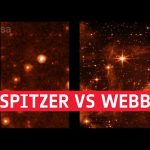
This comparison between @NASA’s Spitzer Space Telescope’s Infrared Array Camera and Webb’s Mid-Infrared Instrument shows a part of the Large Magellanic Cloud. A small satellite galaxy of the Milky Way providing a dense star field to test Webb’s performance.
We are Europe’s gateway to space. Our mission is to shape the development of Europe’s space capability and ensure that investment in space continues to deliver benefits to the citizens of Europe and the world. Check out https://www.esa.int/ to get up to speed on everything space related.
How long would it take us to reach our closest neighbour? How do astronomers know so much about the universe? Why is astronomy important for society? In this Meet the Experts episode, ESA research fellow Tereza Jerabkova discusses our place in the universe and takes us on a journey through space.
We are Europe’s gateway to space. Our mission is to shape the development of Europe’s space capability and ensure that investment in space continues to deliver benefits to the citizens of Europe and the world. Check out https://www.esa.int/ to get up to speed on everything space related.
Are you curious to know how a telescope works? Join ESA astronomer Giovanna Giardino as she gives an insight into the inner workings of the world’s largest telescope in space, the extraordinary James Webb Space Telescope.
We are Europe’s gateway to space. Our mission is to shape the development of Europe’s space capability and ensure that investment in space continues to deliver benefits to the citizens of Europe and the world. Check out https://www.esa.int/ to get up to speed on everything space related.
How did the universe go from a dark and cold place after the Big Bang, to the mesmerizing cosmos we see today? In this episode of Meet the Experts, ESA research fellow Rachana Bhatawdekar takes us on a tour of the early universe, to discover how the very first stars and galaxies were born after the Big Bang.
We are Europe’s gateway to space. Our mission is to shape the development of Europe’s space capability and ensure that investment in space continues to deliver benefits to the citizens of Europe and the world. Check out https://www.esa.int/ to get up to speed on everything space related.
Fine-tuning the James Webb Space Telescope, a different view of Venus, and the science on an upcoming space station resupply mission … a few of the stories to tell you about – This Week at NASA!
Producer: Andre Valentine Editor: Sonnet Apple Music: Universal Production Music
0:00 Introduction 0:13 Aligning the James Webb Space Telescope 1:02 Parker Solar Probe’s First Visible Light Images of Venus’ Surface 1:34 Upcoming Commercial Resupply Mission to the Space Station 2:13 Airborne Science Mission Studying Snowstorms 2:45 RS-25 Engine Test Series Continues
Embark on a mission with ESA astronomers Mark McCaughrean and Giovanna Giardino to learn more about the James Webb Space Telescope and the early Universe. This programme is suitable for primary and secondary students. Join the quest!
We are Europe’s gateway to space. Our mission is to shape the development of Europe’s space capability and ensure that investment in space continues to deliver benefits to the citizens of Europe and the world. Check out https://www.esa.int/ to get up to speed on everything space related.
The Webb Space Telescope reaches its new home, remembering our fallen heroes, and testing a VIPER in the sand … a few of the stories to tell you about – This Week at NASA!
The James Webb Space Telescope lifted off on an Ariane 5 rocket from Europe’s Spaceport in French Guiana, at 13:20 CET on 25 December 2021 on its exciting mission to unlock the secrets of the Universe.
This timelapse shows highlights of the launch campaign from the arrival of Webb in French Guiana through to liftoff.
Every launch requires meticulous planning and preparation. For Webb, this process began about 15 years ago. Webb arrived from California on board the MN Colibri which sailed the Panama Canal to Pariacabo harbour in French Guiana. The shallow Kourou river was specially dredged to ensure a clear passage and the vessel followed high tide to safely reach port on 12 October 2021.
Though the telescope weighs only six tonnes, it was more than 10.5 m high and almost 4.5 m wide when folded. At Europe’s Spaceport it was unpacked inside a dedicated spacecraft preparation facility fitted with walls of air filters to protect the telescope from contamination during preparations for launch.
After its arrival in the final assembly building, Webb was lifted slowly about 40 m high and then carefully manoeuvred on top of Ariane 5 – one of the most delicate operations during the entire launch campaign. A ‘shower curtain’ about 12 m high and 8 m in diameter was installed in between two platforms, to create a closed-off space around Webb to avoid any contamination.
On the day of encapsulation, the fairing was lowered over the observatory and locked in place for liftoff. A laser guiding system assisted this particularly delicate operation for a perfect fit inside Ariane 5’s fairing.
Ariane 5 with Webb was rolled out from the final assembly building to the launch pad on 22 December. On 25 December, Ariane 5 performed the flawless launch of this once in a generation mission. Ariane 5’s highly precise launch meant that Webb saved its own fuel which can be used to significantly extend its expected lifetime of 10 years.
Webb is the largest, most powerful telescope ever launched into space. As part of an international collaboration agreement, ESA has provided the telescope’s launch service using the Ariane 5 launch vehicle. Working with partners, ESA was responsible for the development and qualification of Ariane 5 adaptations for the Webb mission and for the procurement of the launch service by @arianespace. ESA has also provided the workhorse spectrograph NIRSpec and 50% of the mid-infrared instrument MIRI, in collaboration with the University of Arizona. Webb is an international partnership between @NASA, ESA and the @Canadian Space Agency.
We are Europe’s gateway to space. Our mission is to shape the development of Europe’s space capability and ensure that investment in space continues to deliver benefits to the citizens of Europe and the world. Check out https://www.esa.int/ to get up to speed on everything space related.
Afla cum cauta telescopul James Webb viata pe alte planete! Intra in direct la intalnirea cu Diana Dragomir, cercetator in cadrul proiectului TESS de monitorizare a exoplanetelor prin metoda tranzitiei si cercetator la University of New Mexico. Diana ne va povesti despre exoplanetele pe care le-a descoperit pana acum dar si despre datele pe care le asteapta de la telescopul James Webb. Intalnirea poate fi urmarita LIVE de la 21:00 aici: https://www.youtube.com/watch?v=JOlCm2dhsPA
As always, a new year brings new and exciting missions and launches for ESA. In science the world looks forward to the first image releases of the recently launched James Webb Space Telescope and the third data release for Gaia, both teaching us more about our galaxy and Universe. ESA’s new Mars rover will be launched with the ExoMars mission, and we will also see the maiden flights of Vega-C, Ariane 6 and the Artemis I flight. Astronaut Samantha Cristoforetti will return to the ISS for her second mission and a new class of astronauts will be presented to the world. After the groundwork has been laid in 2021 a new Ministerial Council Meeting will gather to look at the future of ESA, and the need for ESA and Europe to accelerate space and integrated space technology into the fabric of our lives.
★ Subscribe: http://bit.ly/ESAsubscribe and click twice on the bell button to receive our notifications.
We are Europe’s gateway to space. Our mission is to shape the development of Europe’s space capability and ensure that investment in space continues to deliver benefits to the citizens of Europe and the world. Check out https://www.esa.int/ to get up to speed on everything space related.
James Webb Space Telescope experts give real-time updates on deployment of the telescope’s secondary mirror. The secondary mirror is one of the most important pieces of equipment on the telescope, and is essential to the success of the mission.
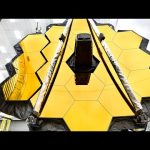
When deployed, this mirror will sit out in front of Webb’s hexagonal primary mirrors, which form an iconic honeycomb-like shape. This smaller circular mirror serves an important role in collecting light from Webb’s 18 primary mirrors into a focused beam. That beam is then sent down into the tertiary and fine steering mirrors, and finally to Webb’s four powerful scientific instruments.
James Webb Space Telescope experts give real-time updates in the final stages of the telescope’s sunshield deployment. A major milestone, the successful shield tensioning will ensure Webb’s mirrors stay cold enough to #UnfoldTheUniverse.
The five-layer, tennis court-sized sunshield is a critical part of the telescope because the infrared cameras and instruments aboard must be kept very cold and out of the Sun’s heat and light to function properly.
This real-time video shows the separation of the James Webb Space Telescope from the Ariane 5 launch vehicle and the subsequent solar array deployment.
Webb’s launch on an ESA-provided Ariane 5 rocket was performed by @arianespace on behalf of ESA from Europe’s Spaceport in French Guiana, at 12:20:07 GMT (13:20:07 CET) on 25 December 2021.
Webb separation from the Ariane 5 occurred at 12:47:14 GMT (13:47:14 CET) with solar array deployment starting 69 seconds later.
Thanks to Ariane 5’s highly precise launch trajectory Webb’s solar array was able to deploy soon after separation from the Ariane 5, capturing sunlight to power the observatory.
This video shows the view from Ariane 5’s upper stage, taken by a camera manufactured by Irish company Réaltra Space Systems Engineering.
Webb is the next great space science observatory following Hubble, designed to answer outstanding questions about the Universe and to make breakthrough discoveries in all fields of astronomy. Webb will see farther into our origins: from the formation of stars and planets, to the birth of the first galaxies in the early Universe. Webb is an international partnership between @NASA, ESA and the @Canadian Space Agency.
We are Europe’s gateway to space. Our mission is to shape the development of Europe’s space capability and ensure that investment in space continues to deliver benefits to the citizens of Europe and the world. Check out https://www.esa.int/ to get up to speed on everything space related.
Highlights of the launch campaign for the James Webb Space Telescope, from its arrival at Europe’s Spaceport in Kourou, French Guiana, weeks of launch preparations, to launch on board an Ariane 5, and separation of the spacecraft and solar panel deployment.
Now in space and on its way to L2, Webb will undergo a complex unfolding sequence. In the months after, the instruments will be turned on and their capabilities tested. After half a year in space, Webb will start its routine science observations.
Webb will see farther into our origins: from the Universe’s first galaxies, to the birth of stars and planets, to exoplanets with the potential for life, and our own Solar System.
We are Europe’s gateway to space. Our mission is to shape the development of Europe’s space capability and ensure that investment in space continues to deliver benefits to the citizens of Europe and the world. Check out https://www.esa.int/ to get up to speed on everything space related.
From one space flier to another, ESA astronaut Matthias Maurer shares a message of support for the James Webb Space Telescope (Webb) launch, from ESA’s Columbus science laboratory on the International Space Station.
Matthias is currently living and working in space for his first mission known as Cosmic Kiss. He describes the mission of Webb as part of humankind’s biggest adventure, as we explore the cosmos to understand our place within it.
Webb is the next great space science observatory following Hubble, designed to answer outstanding questions about the Universe and to make breakthrough discoveries in all fields of astronomy. It is an international partnership between the European Space Agency ESA, US space agency @NASA, and the @Canadian Space Agency, and will be launched on an Ariane 5 rocket from Europe’s Spaceport in French Guiana.
Webb is designed to see farther into our origins: from the formation of stars and planets to the birth of the first galaxies in the early Universe, just as the International Space Station enables us to learn more about our home planet.
We are Europe’s gateway to space. Our mission is to shape the development of Europe’s space capability and ensure that investment in space continues to deliver benefits to the citizens of Europe and the world. Check out https://www.esa.int/ to get up to speed on everything space related.
We don’t yet know what the James Webb Space Telescope will uncover. Will we get answers? Will we have more questions? One thing’s certain: The story of us is a never-ending quest for knowledge.
As Carl Sagan said: “We can’t help it.” #UnfoldTheUniverse
Produced by Lindeman & Associates Voice of Carl Sagan courtesy of Druyan-Sagan Associates, Inc., used with permission Imagery courtesy of NASA and ESA, with Druyan-Sagan Associates, Inc., used with permission
The Copernicus Sentinel-2 takes us over Kourou – home to Europe’s Spaceport in French Guiana, where the James Webb Space Telescope is being prepared for its upcoming launch – in this edition of the Earth from Space programme.
We are Europe’s gateway to space. Our mission is to shape the development of Europe’s space capability and ensure that investment in space continues to deliver benefits to the citizens of Europe and the world. Check out https://www.esa.int/ to get up to speed on everything space related.
Watch the launch of the James Webb Space Telescope—the most powerful space telescope ever made. This mission is scheduled to lift off at 7:20 a.m. EST (12:20 UTC), Dec. 24, 2021, aboard an Ariane 5 rocket from Europe’s Spaceport in French Guiana.
With revolutionary technology, Webb will observe a part of space and time never seen before, providing a wealth of amazing views into an era when the very first stars and galaxies formed––over 13.5 billion years ago.
It can explore our own solar system’s residents with exquisite new detail and study the atmospheres of distant worlds. From new forming stars to devouring black holes, Webb will reveal all this and more! It’s the world’s largest and most powerful space telescope ever built.
Webb is an international collaboration between NASA, ESA (European Space Agency), and CSA (Canadian Space Agency). Thousands of engineers and hundreds of scientists worked to make Webb a reality, along with over 300 universities, organizations, and companies from 29 U.S. states and 14 countries!
Ready to #UnfoldTheUniverse? The greatest origin story of all unfurls soon. Learn more at https://nasa.gov/jwst
The world’s next generation cosmic observatory, the James Webb Space Telescope, is due for launch on an Ariane 5 from Europe’s Spaceport in French Guiana in late December.
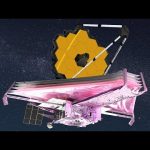
Developed and constructed over more than 30 years, Webb is a remarkable feat of engineering and technology – with the largest astronomical mirror ever flown in space, sophisticated new scientific instruments, and a sunshield the size of a tennis court.
Webb is an international partnership between @NASA, ESA and the @Canadian Space Agency and will reveal the Universe in a whole new light. Optimised for infrared wavelengths, its detectors will be able to look back to shortly after the very dawn of time, revealing the formation of the first galaxies, as well as study stars and planets in our own Milky Way.
We are Europe’s gateway to space. Our mission is to shape the development of Europe’s space capability and ensure that investment in space continues to deliver benefits to the citizens of Europe and the world. Check out https://www.esa.int/ to get up to speed on everything space related.
The James Webb Space Telescope, configured for flight, was moved from the cleanroom to the payload preparation facility for fuelling at Europe’s Spaceport in French Guiana on 11–12 November 2021.
Webb will be loaded with propellants before being mounted on top of the rocket and then encapsulated by the Ariane 5 fairing.
Webb will be the largest, most powerful telescope ever launched into space. As part of an international collaboration agreement, ESA is providing the telescope’s launch service using the Ariane 5 launch vehicle. Working with partners, ESA was responsible for the development and qualification of Ariane 5 adaptations for the Webb mission and for the procurement of the launch service by Arianespace.
Webb is an international partnership between @NASA , ESA and the @Canadian Space Agency.
We are Europe’s gateway to space. Our mission is to shape the development of Europe’s space capability and ensure that investment in space continues to deliver benefits to the citizens of Europe and the world. Check out https://www.esa.int/ to get up to speed on everything space related.
The James Webb Space Telescope, a once in a generation space mission, arrived safely at Pariacabo harbour in French Guiana on 12 October 2021, ahead of its launch on an Ariane 5 rocket from Europe’s Spaceport.
Webb was packed in a 30 m long container with additional equipment. It arrived from California on board the MN Colibri which sailed the Panama Canal to French Guiana on a 16-day voyage. The shallow Kourou river was specially dredged to ensure a clear passage and the vessel followed high tide to safely reach port.
The MN Colibri, like its sister vessel the MN Toucan, were built to ship Ariane 5 rocket parts from Europe to French Guiana. They were specifically designed to carry a complete set of Ariane 5 parts across the Atlantic, while having a low enough draft to enable them to follow a route along the shallow Kourou river to the Pariacabo harbour.
Webb will be the largest, most powerful telescope ever launched into space. As part of an international collaboration agreement, ESA is providing the telescope’s launch service using the Ariane 5 launch vehicle. Working with partners, ESA was responsible for the development and qualification of Ariane 5 adaptations for the Webb mission and for the procurement of the launch service by @arianespace.
Webb is an international partnership between @NASA, ESA and the @Canadian Space Agency.
We are Europe’s gateway to space. Our mission is to shape the development of Europe’s space capability and ensure that investment in space continues to deliver benefits to the citizens of Europe and the world. Check out https://www.esa.int/ to get up to speed on everything space related.
James Webb Space Telescope – the largest, most powerful telescope to be sent into space is getting ready for launch in autumn 2021!
Watch the replay of the media presentation and Q&A with representatives from Webb’s partners ESA, @NASA and the @Canadian Space Agency, as well as ESA’s partner @arianespace, to hear more about it and its upcoming launch. Following in the footsteps of the Hubble Space Telescope as the next great space science observatory, the International James Webb Space Telescope is designed to help answer outstanding questions about the Universe and make breakthrough discoveries in all fields of astronomy.
We are Europe’s gateway to space. Our mission is to shape the development of Europe’s space capability and ensure that investment in space continues to deliver benefits to the citizens of Europe and the world. Check out https://www.esa.int/ to get up to speed on everything space related.
Thomas Zurbuchen, associate administrator of NASA’s Science Mission Directorate, and John Mather, senior project scientist, comment on an independent review board’s findings on the agency’s James Webb Space Telescope. Webb is now targeting March 2021 as a new launch date, after the board assessed delays in integration and testing. NASA and the board unanimously agree that Webb can still achieve mission success.
The James Webb Space Telescope’s cryogenic vacuum testing at our Johnson Space Center verified it’s ready for the cold, harsh environment of space, and its mission to uncover a part of the universe we have not seen. From distant worlds orbiting other stars, to mysterious cosmic structures, Webb could help answer questions about our universe and our place in it. Launch of Webb is set for 2019. Also, Flight through Orion Nebula, 360 Degree View from the Center of the Galaxy, and Raging Water on Launch Pad!
This video is available for download from NASA’s Image and Video Library: https://images.nasa.gov/details-NHQ_2018_0112_Webb%20Space%20Telescope%20Update%20on%20This%20Week%20@NASA%20%E2%80%93%20January%2012,%202018.html
NASA’s James Webb Space Telescope (JWST) has successfully passed the center of curvature test at Goddard Space Flight Center, in Greenbelt, Md. This important optical measurement of Webb’s fully assembled primary mirror was the final test held at Goddard before the telescope is shipped off for end-to-end cryogenic testing at Johnson Space Center in Houston. When that’s complete, the world’s most advanced observatory goes to Northrop Grumman Aerospace Systems in Redondo Beach, California, for final assembly and testing. Webb is targeted for launch in 2018 on a mission to help unravel some of the greatest mysteries of the universe. Also, Cassini Update, NASA Visits Midwest Company Helping Build Orion, Orion’s Launch Abort System Motor Tested, Wind Tunnel Tests Continue with SLS, and Community College Aerospace Scholars!
Engineers at Kennedy Space Center have finished installing the Orion spacecraft’s backshell – the black protective tiles on the cone-shaped sides of NASA’s new deep space capsule. The backshell tiles are the same type that protected the underside of space shuttles — and will not only provide protection from debris while in space but from extreme temperatures in that area of the spacecraft as it returns from space – which could exceed 31-hundred degrees Fahrenheit. Also, SLS anti-geyser testing, Webb’s replica backplane, Arctic Sea ice loss, Ancient Earth, Alien Earths and more!
Voice actor Peter Cullen, known for bringing to film and television numerous characters including Optimus Prime of “Transformers”, Disney’s Eeyore and many more, describes NASA’s next generation space telescope.
NASA Administrator Charlie Bolden, Senator Barbara Mikulski of Maryland and Goddard Center Director Chris Scolese congratulated the Goddard team recently for progress in development of the James Webb Space Telescope. The telescope’s flight instruments and primary mirrors are being integrated at Goddard. JWST is the agency’s flagship science project and the most powerful space telescope ever built. Scheduled to launch in 2018, it will study every phase in the history of our universe, including the first luminous glows after the big bang and the evolution of our own solar system. Also, Crawler-Transporter test drive, Adapter ring complete, Engine test, Progress up, Progress down and more!
Also: Deputy Administrator Lori Garver delivers keynote at Space Launch System Industry Day; flight teams compete for the title, most fuel-efficient aircraft in the world, James Webb Space Telescope gets a new coat; President Obama visit Ames’ Moffett Field; Casualty Drills at Wallops; Dryden honors shuttle workers; Profile: Astronomer Rosa Diaz, and three 135 crew members visit Glenn.
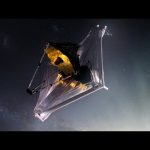
Seen here in this short movie, the JWST is the successor to the NASA/ESA Hubble Space Telescope and, with a six-metre mirror, it will be almost three times the size of Hubble.